Rural Māori Migration to Wainuiomata
A free social sciences worksheet ready for your classroom. Open in Kuraplan to grab the print-ready PDF, customize it for your students, or generate a fresh version in seconds.
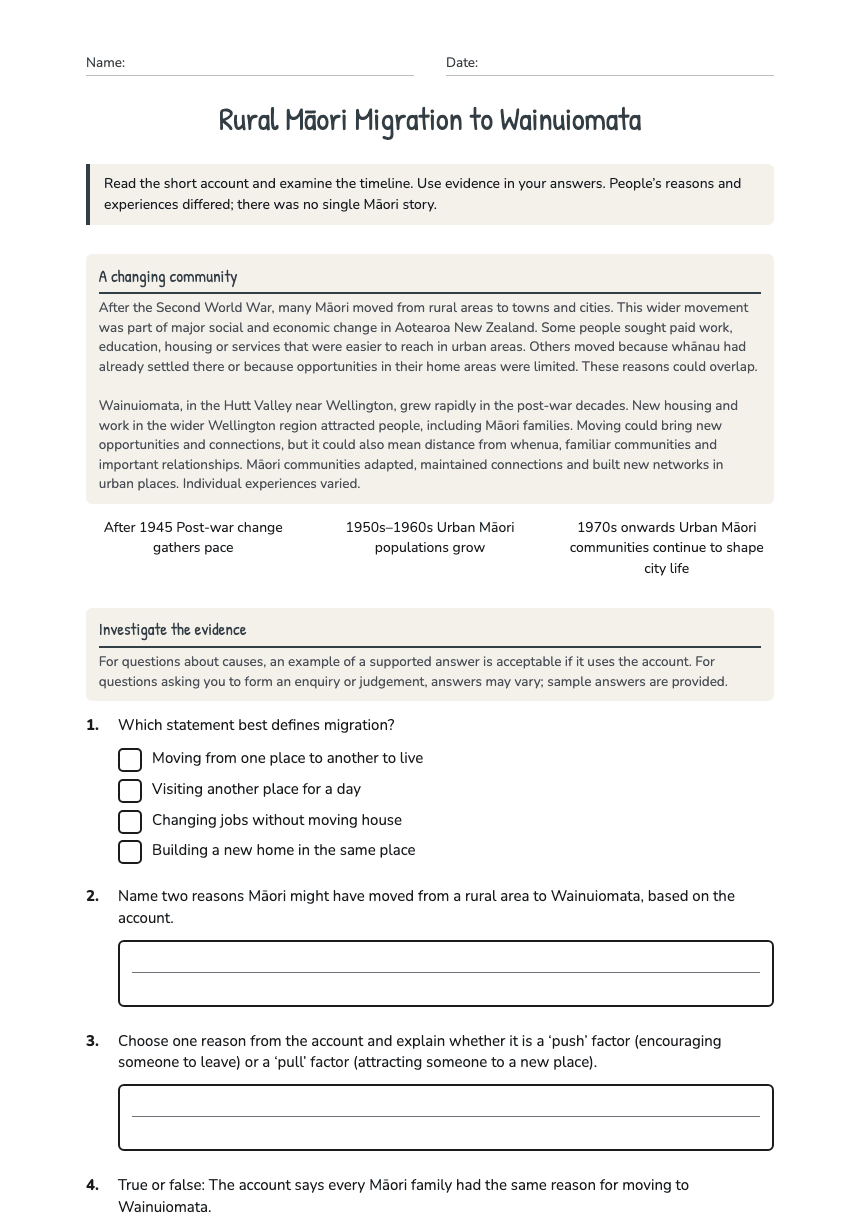
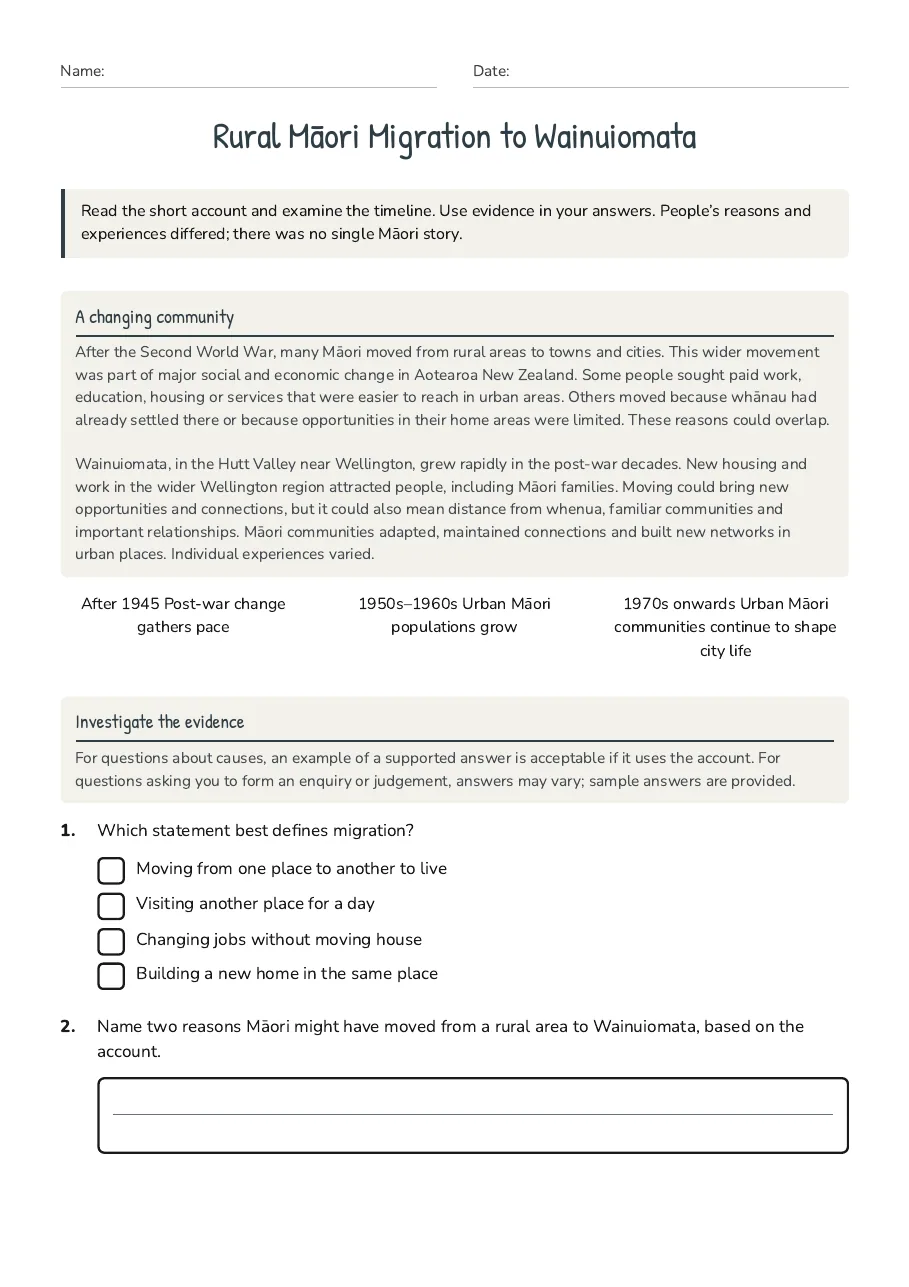
Rural Māori Migration to Wainuiomata
A changing community
After the Second World War, many Māori moved from rural areas to towns and cities. This wider movement was part of major social and economic change in Aotearoa New Zealand. Some people sought paid work, education, housing or services that were easier to reach in urban areas. Others moved because whānau had already settled there or because opportunities in their home areas were limited. These reasons could overlap. Wainuiomata, in the Hutt Valley near Wellington, grew rapidly in the post-war decades. New housing and work in the wider Wellington region attracted people, including Māori families. Moving could bring new opportunities and connections, but it could also mean distance from whenua, familiar communities and important relationships. Māori communities adapted, maintained connections and built new networks in urban places. Individual experiences varied.
After 1945 Post-war change gathers pace
1950s–1960s Urban Māori populations grow
1970s onwards Urban Māori communities continue to shape city life
Investigate the evidence
For questions about causes, an example of a supported answer is acceptable if it uses the account. For questions asking you to form an enquiry or judgement, answers may vary; sample answers are provided.
- Moving from one place to another to live
- Visiting another place for a day
- Changing jobs without moving house
- Building a new home in the same place
3 printable pages
Page 1
Page 2
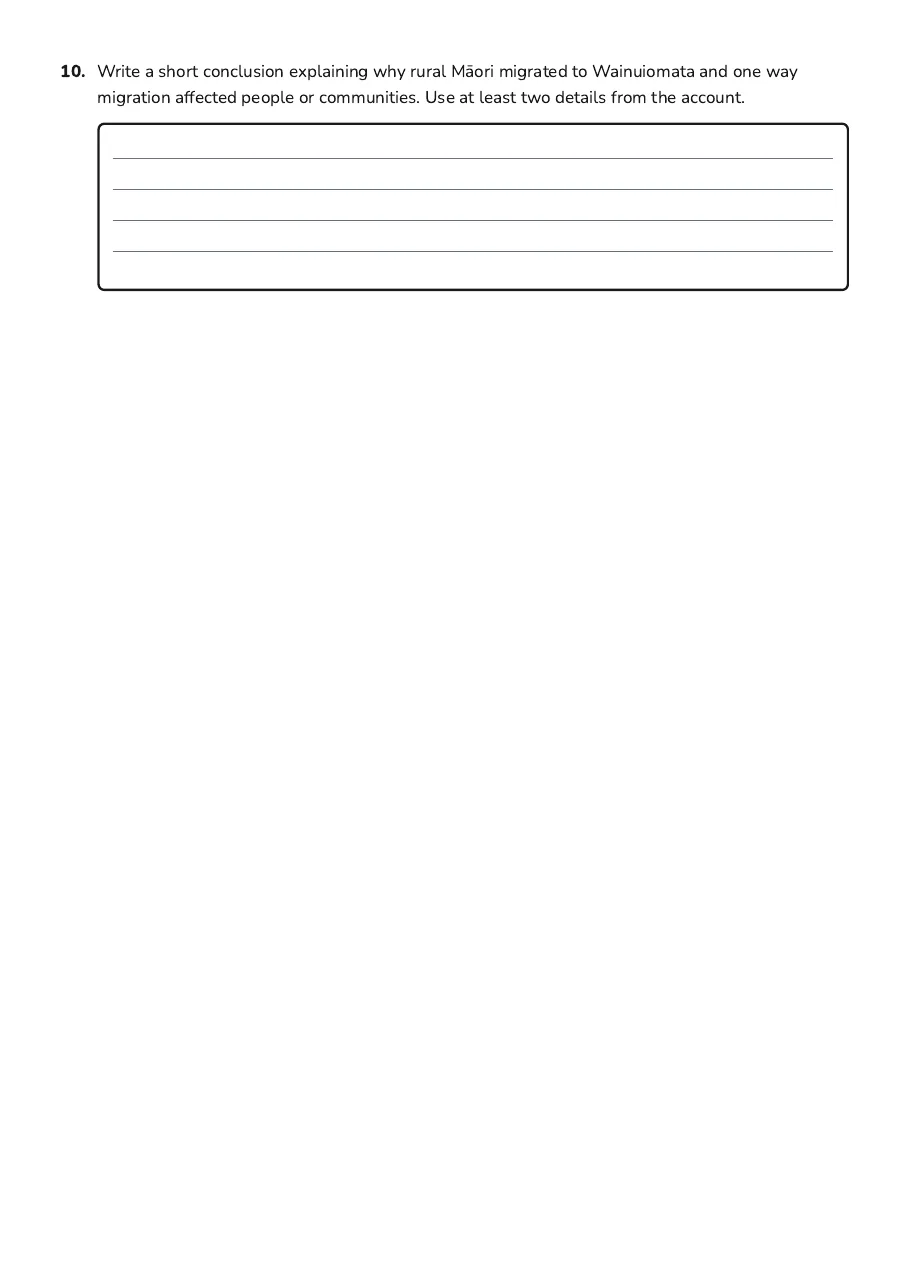
Page 3
About This Worksheet
Free in Kuraplan
Sign up free, grab the PDF, and customize it for your class.
Print-Ready
Formatted for standard paper. Clean layout, easy to read.
AI-Generated
Created with Kuraplan's AI, designed for real classroom use.
For Teachers & Parents
Use in classrooms, for homework, tutoring, or homeschool.
Need a custom version of this worksheet?
Kuraplan's AI generates custom worksheets in seconds — differentiated for every learner, aligned to your curriculum.
Generate Custom Worksheets — FreeMore Social Sciences Worksheets
Parihaka: Historical Perspectives Worksheet
Free
Ancient Egyptian Burial Practices
Free
Russell Church Research
Free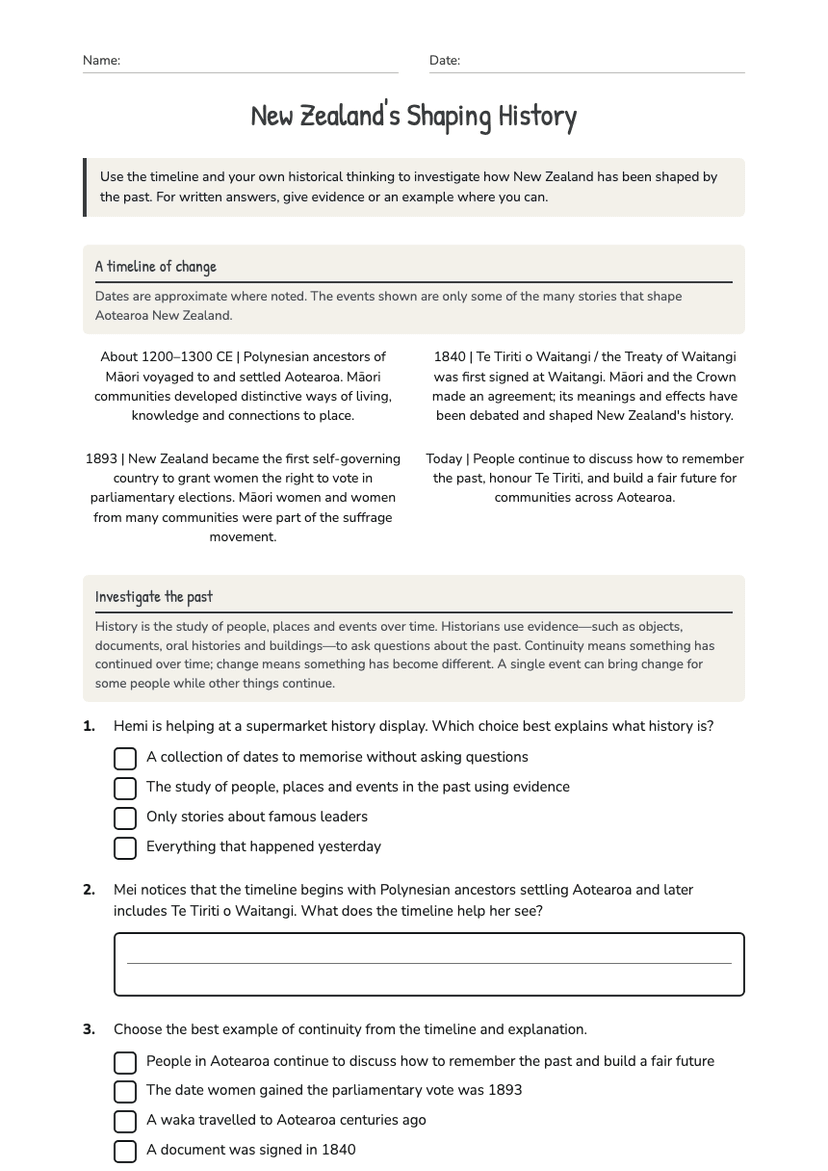
New Zealand's Shaping History
Free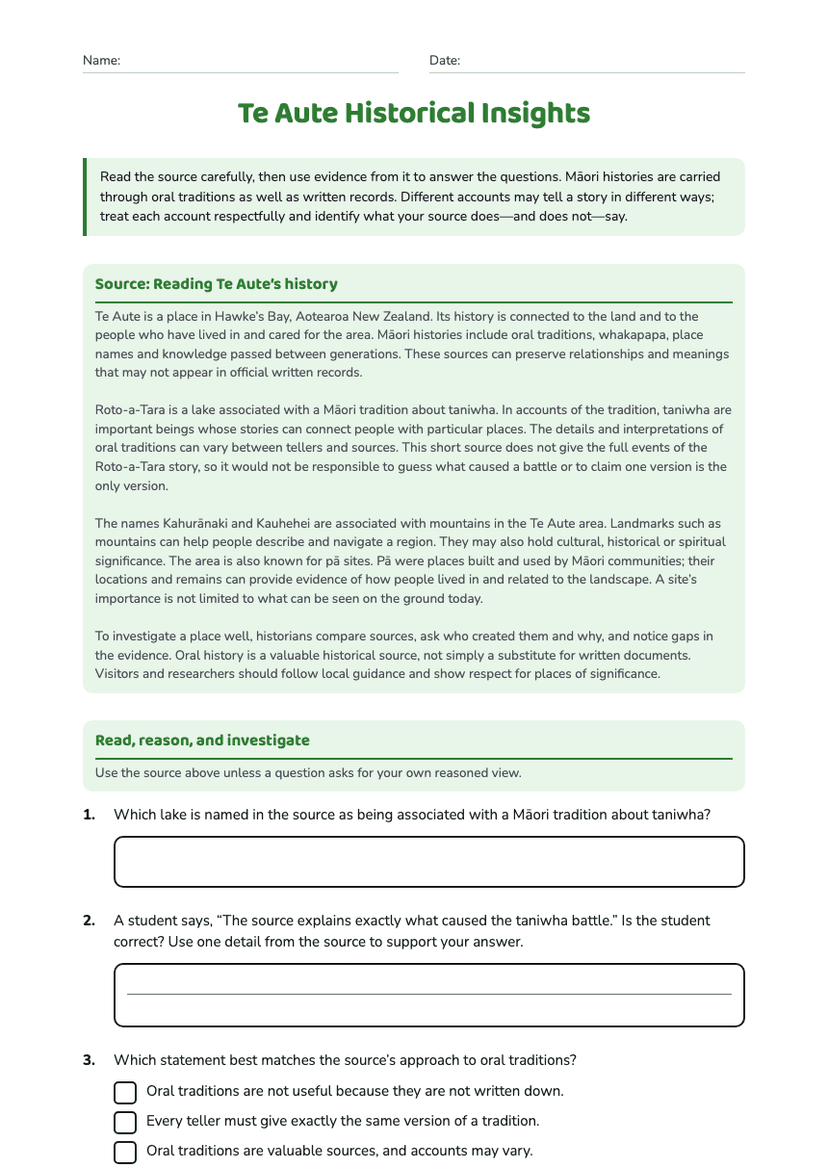
Te Aute Historical Insights
Free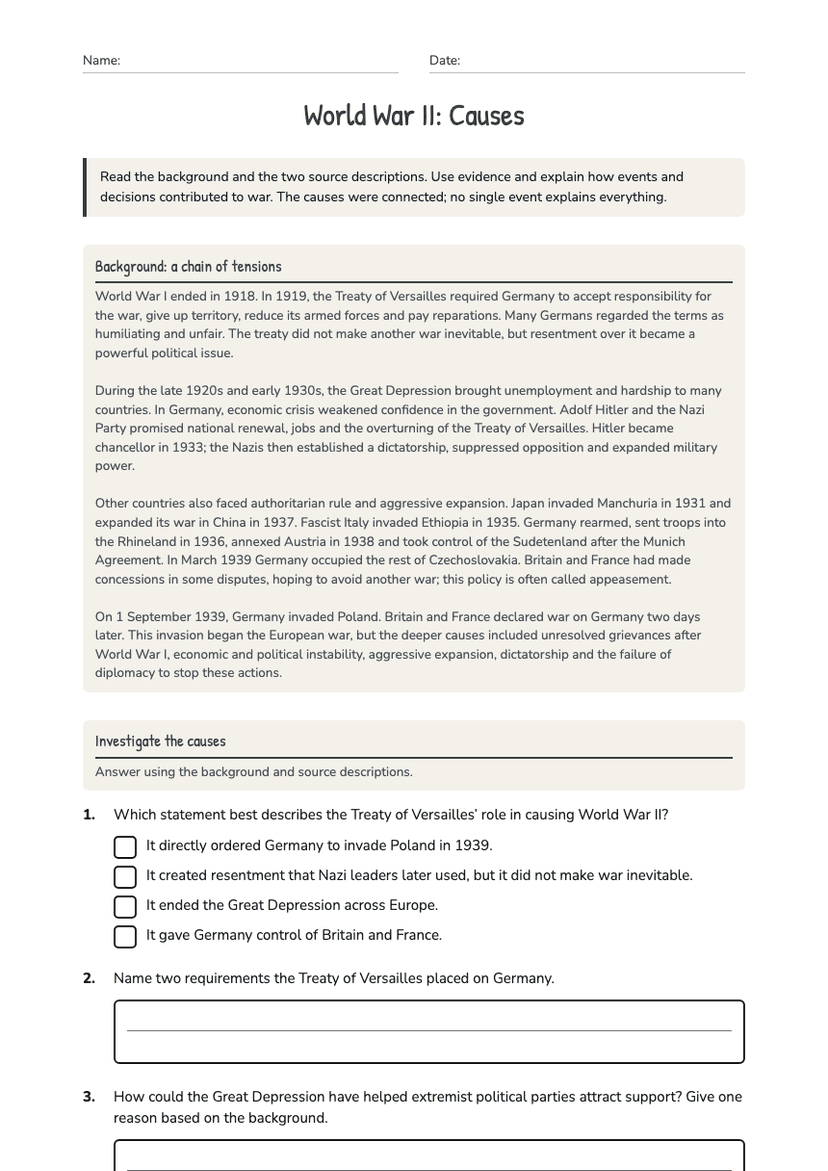
World War II: Causes
Free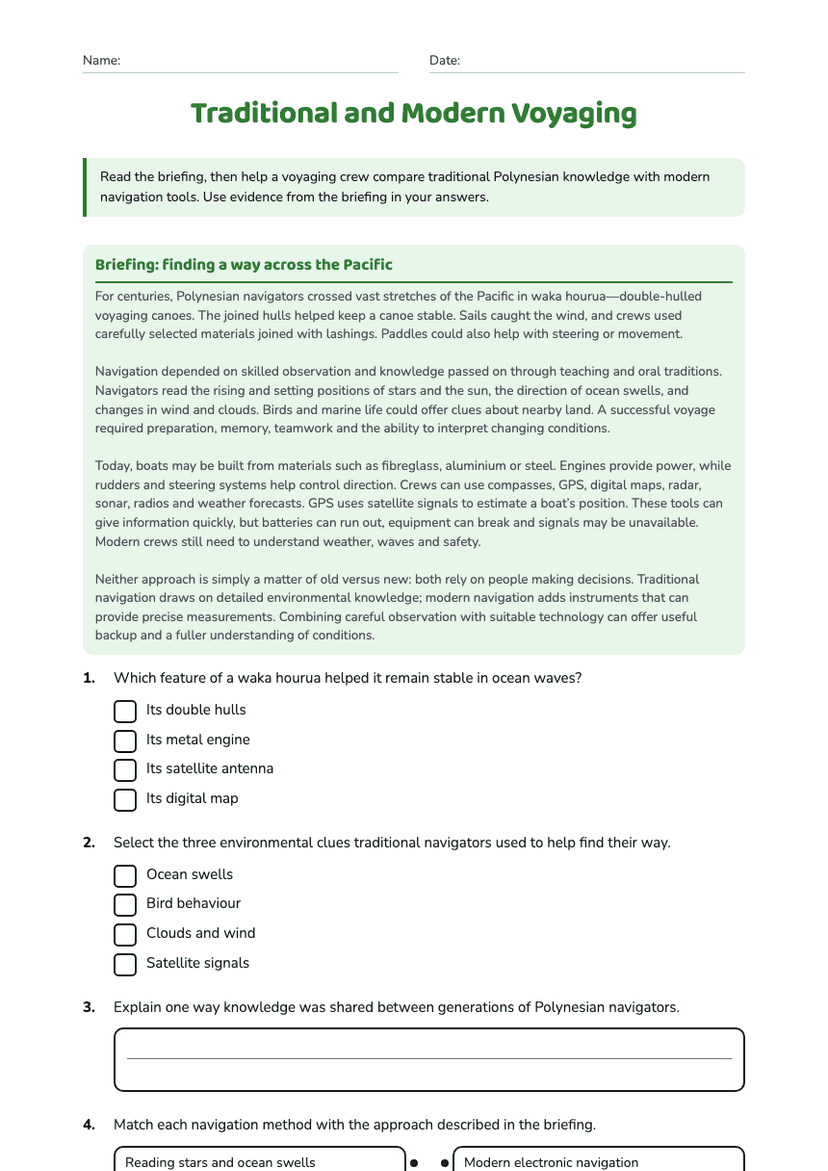
Traditional and Modern Voyaging
Free