States of Matter
A free science worksheet ready for your classroom. Open in Kuraplan to grab the print-ready PDF, customize it for your students, or generate a fresh version in seconds.

States of Matter
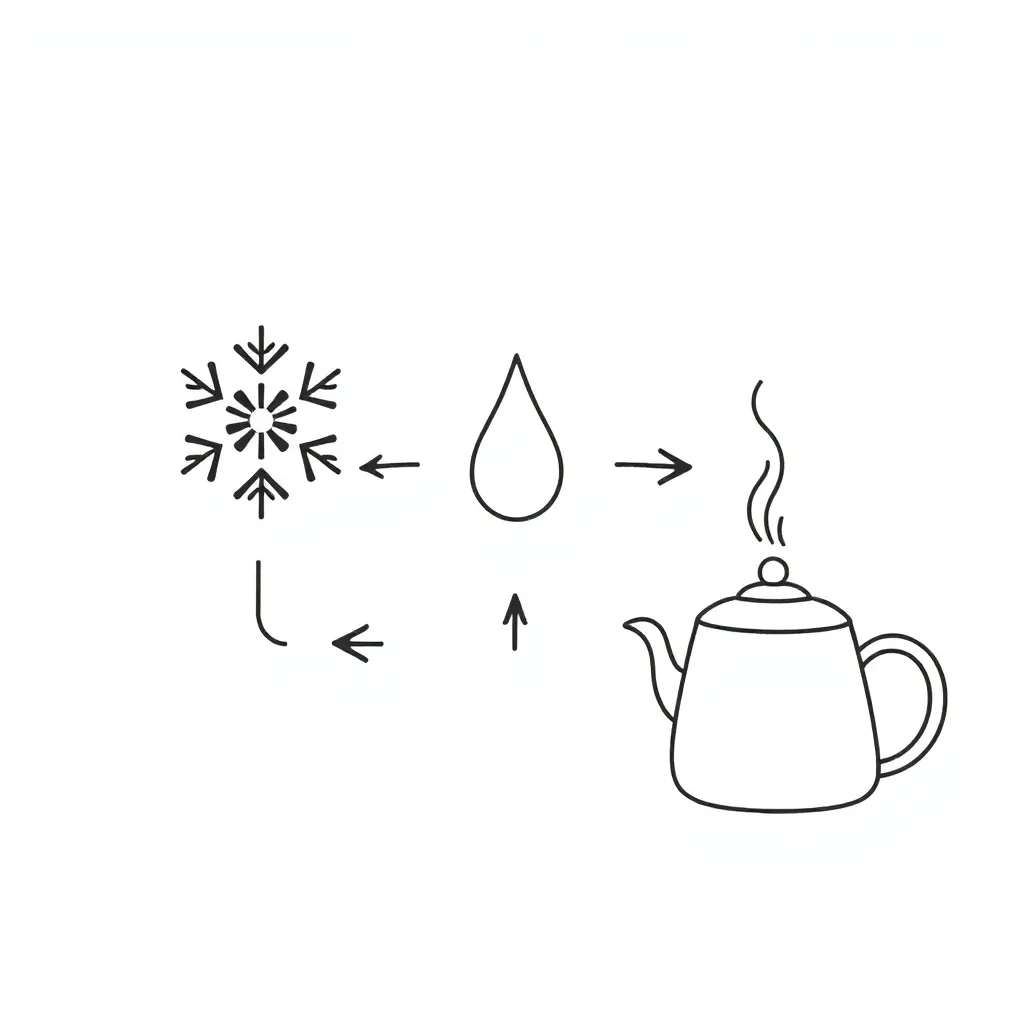
🧊 Part 1: Understanding States of Matter
In a solid, particles are:
In a liquid, particles are:
In a gas, particles are:
🌡️ Part 2: Changes of State
When ice changes to water, this process is called ______________. When water changes to steam, this process is called ______________. When steam changes back to water droplets, this process is called ______________. When water changes to ice, this process is called ______________.
🔬 Part 3: Particle Diagrams
Solid (ice):
Liquid (water):
Gas (steam):
🌍 Part 4: Real-Life Examples
🧪 Part 5: Experiment Observations
Starting temperature of ice: ______°C
Temperature when ice completely melted: ______°C
Time taken for ice to melt: ______ minutes
💭 Part 6: Critical Thinking
Example 1: _________________________________________________
Example 2: _________________________________________________
Example 3: _________________________________________________
About This Worksheet
Free in Kuraplan
Sign up free, grab the PDF, and customize it for your class.
Print-Ready
Formatted for standard paper. Clean layout, easy to read.
AI-Generated
Created with Kuraplan's AI, designed for real classroom use.
For Teachers & Parents
Use in classrooms, for homework, tutoring, or homeschool.
Need a custom version of this worksheet?
Kuraplan's AI generates custom worksheets in seconds — differentiated for every learner, aligned to your curriculum.
Generate Custom Worksheets — FreeMore Science Worksheets
Exploring Science Materials
Free
Density of Different Liquids
Free
Material Properties Fair Test
Free
States of Matter Worksheet
Free
Hypotheses on Matter Changes
Free
States of Matter Worksheet
Free
Materials Word Search
Free