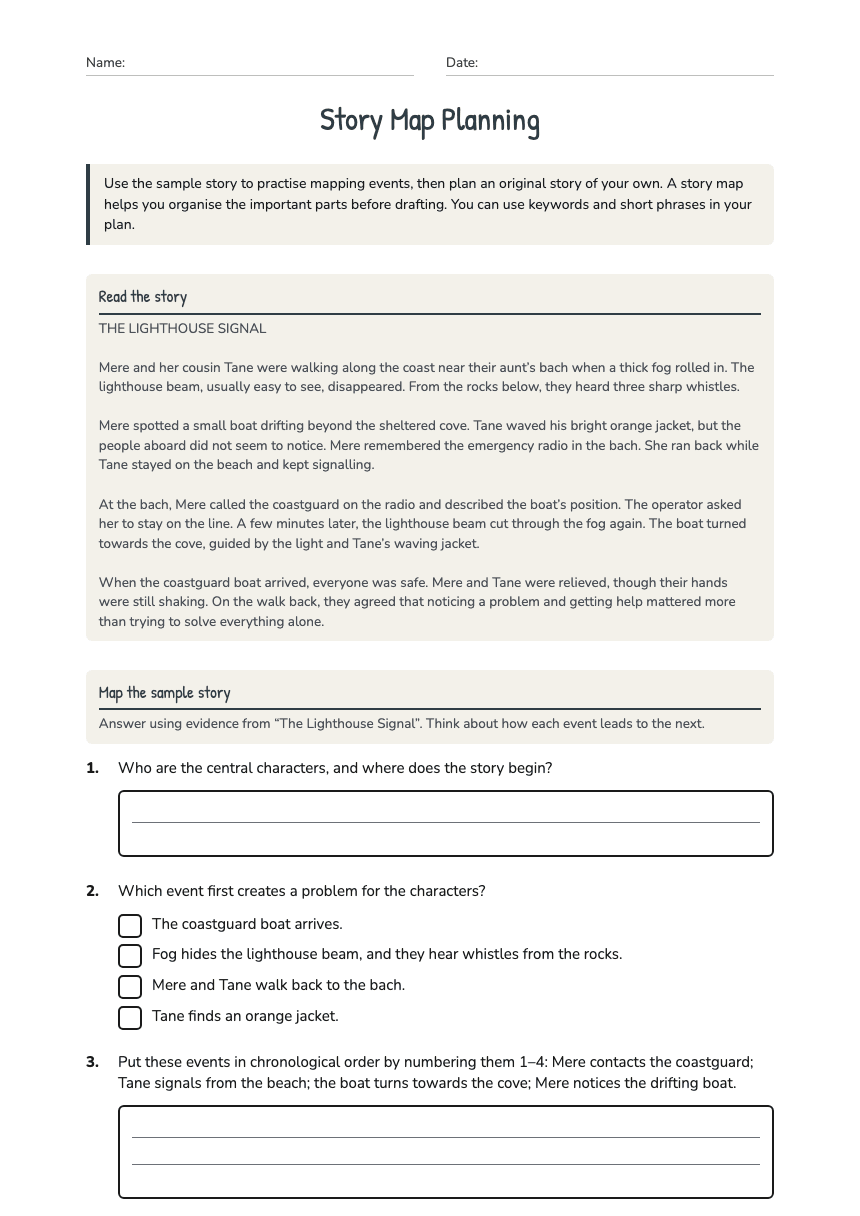
Story Map Planning
A free english worksheet ready for your classroom. Open in Kuraplan to grab the print-ready PDF, customize it for your students, or generate a fresh version in seconds.
Story Map Planning
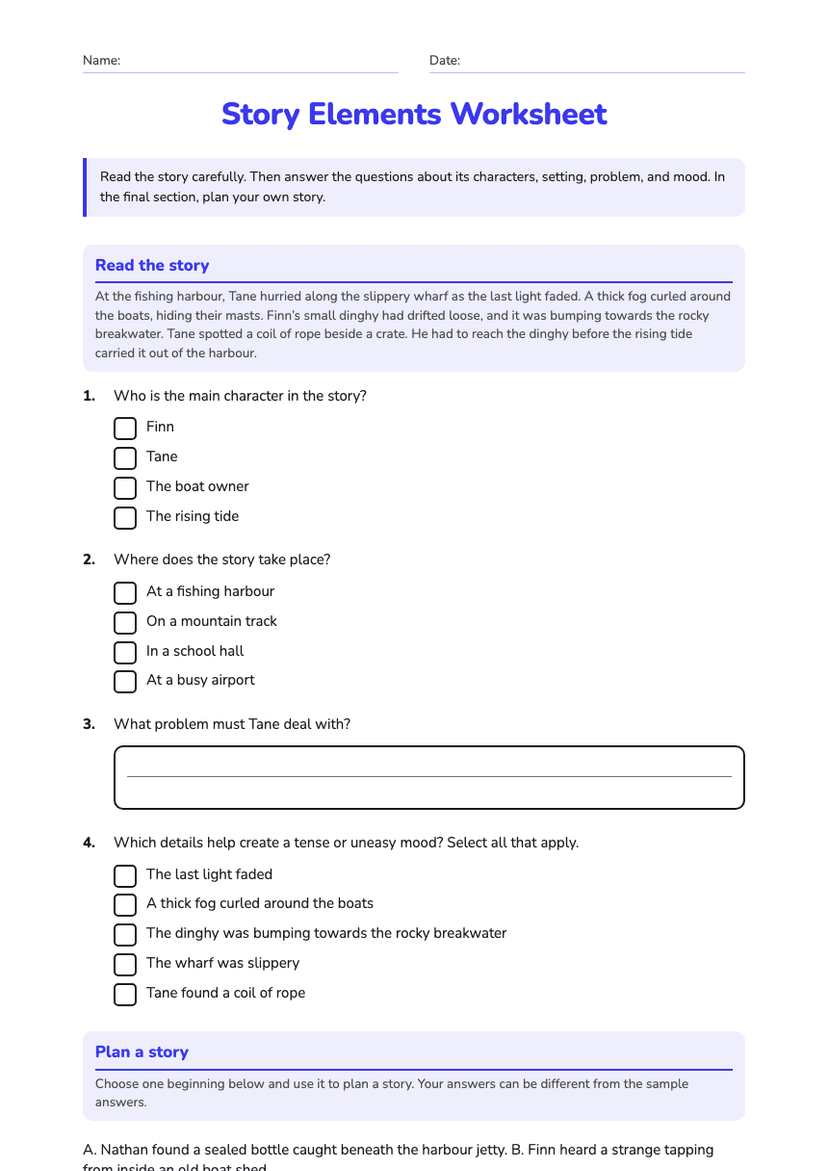
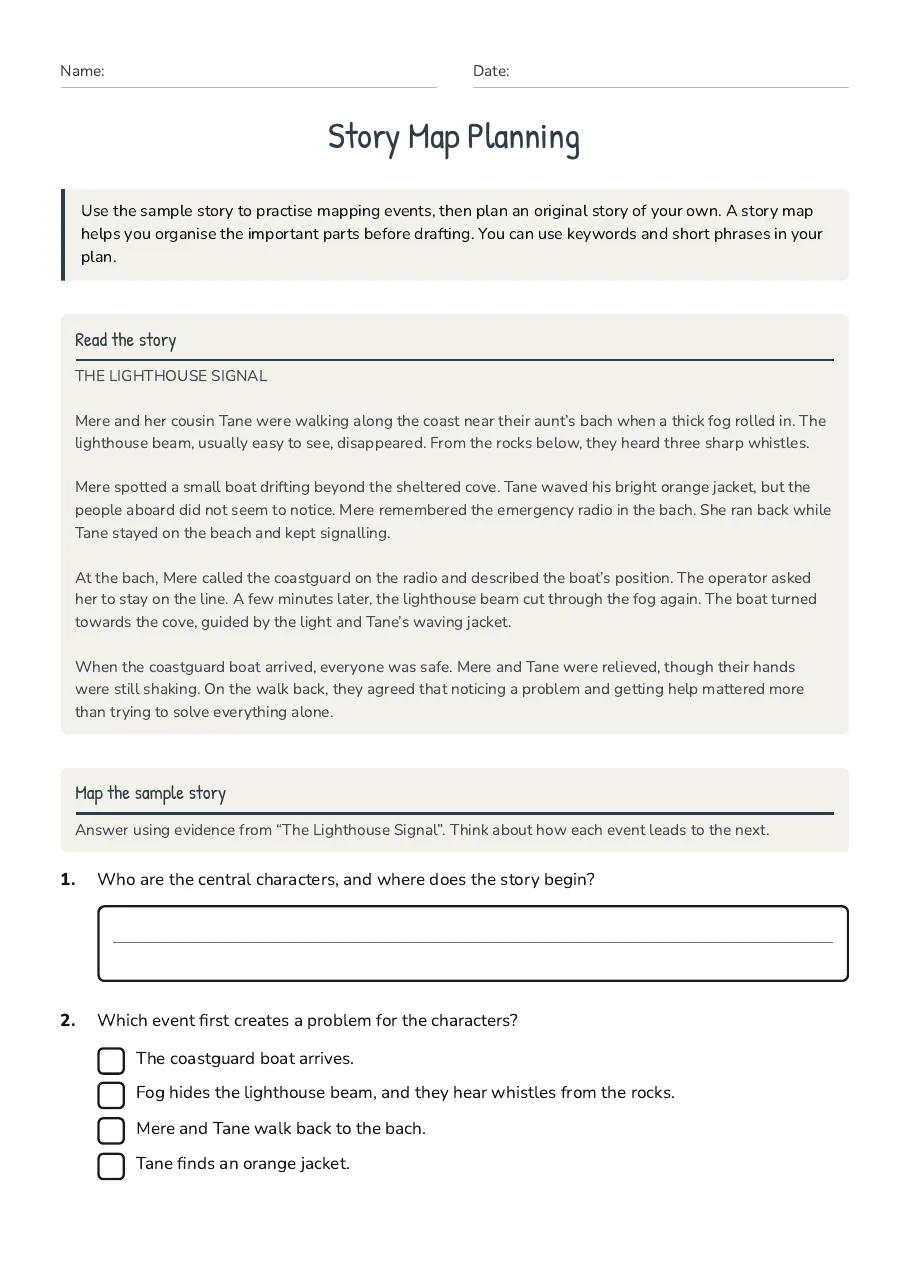
Read the story
THE LIGHTHOUSE SIGNAL Mere and her cousin Tane were walking along the coast near their aunt’s bach when a thick fog rolled in. The lighthouse beam, usually easy to see, disappeared. From the rocks below, they heard three sharp whistles. Mere spotted a small boat drifting beyond the sheltered cove. Tane waved his bright orange jacket, but the people aboard did not seem to notice. Mere remembered the emergency radio in the bach. She ran back while Tane stayed on the beach and kept signalling. At the bach, Mere called the coastguard on the radio and described the boat’s position. The operator asked her to stay on the line. A few minutes later, the lighthouse beam cut through the fog again. The boat turned towards the cove, guided by the light and Tane’s waving jacket. When the coastguard boat arrived, everyone was safe. Mere and Tane were relieved, though their hands were still shaking. On the walk back, they agreed that noticing a problem and getting help mattered more than trying to solve everything alone.
Map the sample story
Answer using evidence from “The Lighthouse Signal”. Think about how each event leads to the next.
- The coastguard boat arrives.
- Fog hides the lighthouse beam, and they hear whistles from the rocks.
- Mere and Tane walk back to the bach.
- Tane finds an orange jacket.
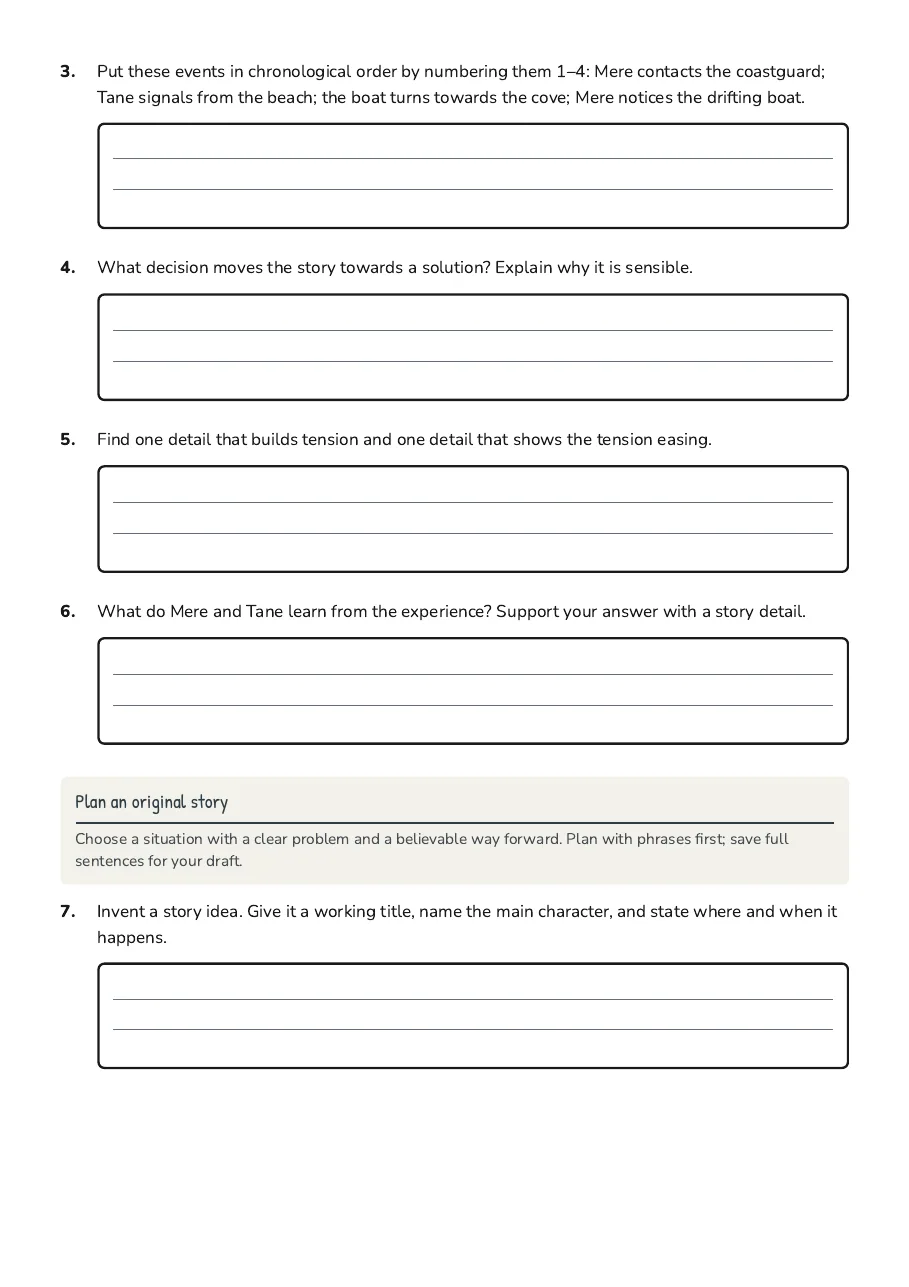
Plan an original story
Choose a situation with a clear problem and a believable way forward. Plan with phrases first; save full sentences for your draft.
3 printable pages
Page 1
Page 2
Page 3
About This Worksheet
Free in Kuraplan
Sign up free, grab the PDF, and customize it for your class.
Print-Ready
Formatted for standard paper. Clean layout, easy to read.
AI-Generated
Created with Kuraplan's AI, designed for real classroom use.
For Teachers & Parents
Use in classrooms, for homework, tutoring, or homeschool.
Need a custom version of this worksheet?
Kuraplan's AI generates custom worksheets in seconds — differentiated for every learner, aligned to your curriculum.
Generate Custom Worksheets — Free