Te Ao Haka Investigation
A free te reo māori worksheet ready for your classroom. Open in Kuraplan to grab the print-ready PDF, customize it for your students, or generate a fresh version in seconds.
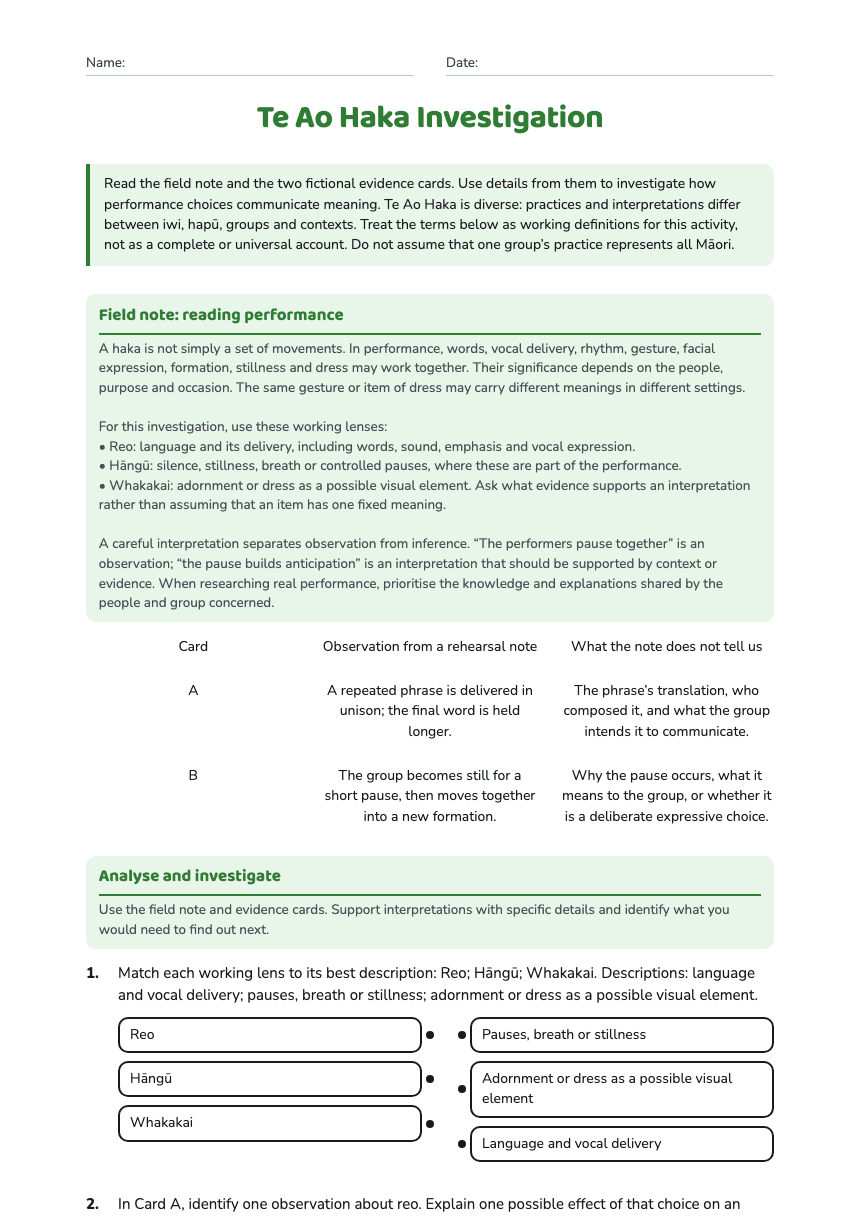
Te Ao Haka Investigation
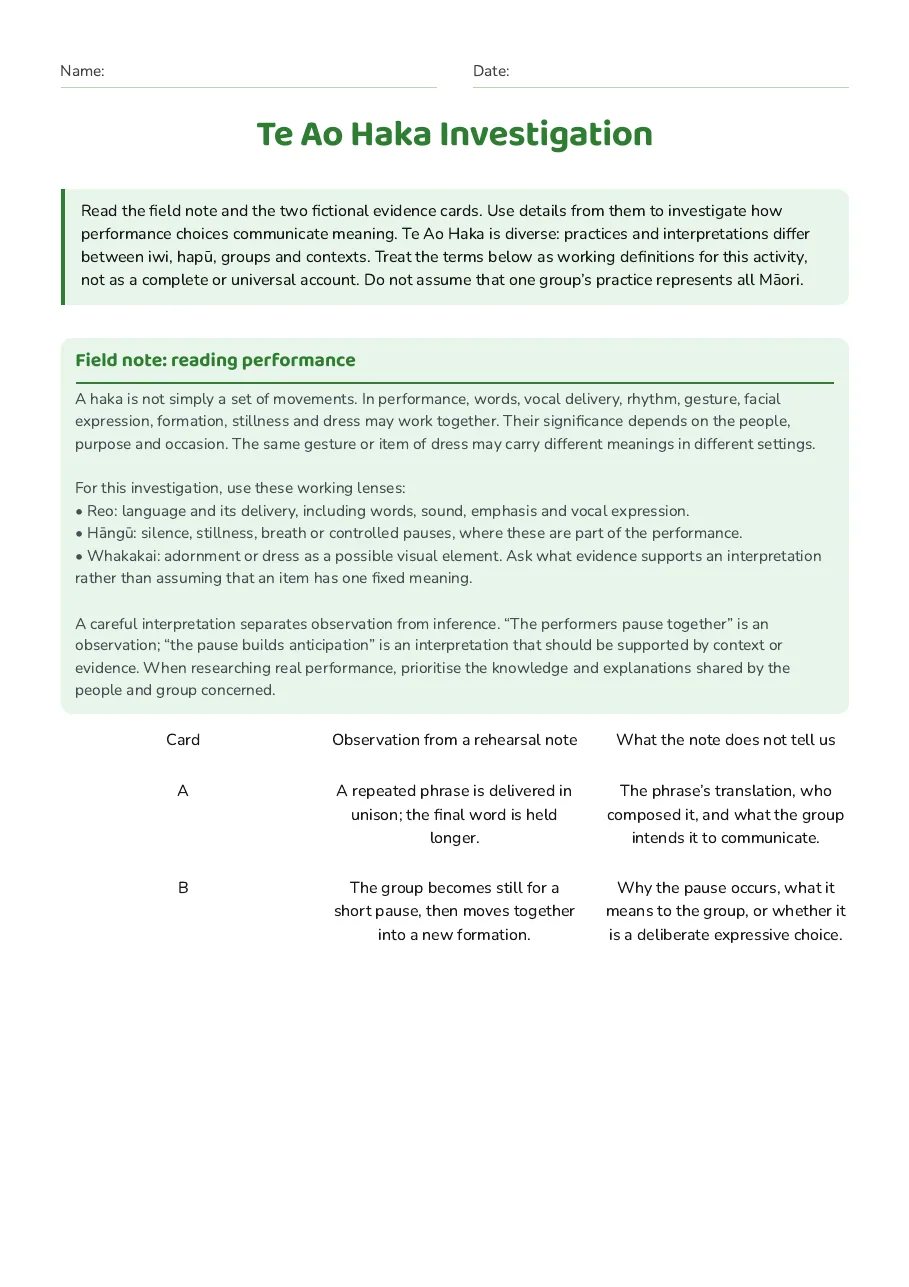
Field note: reading performance
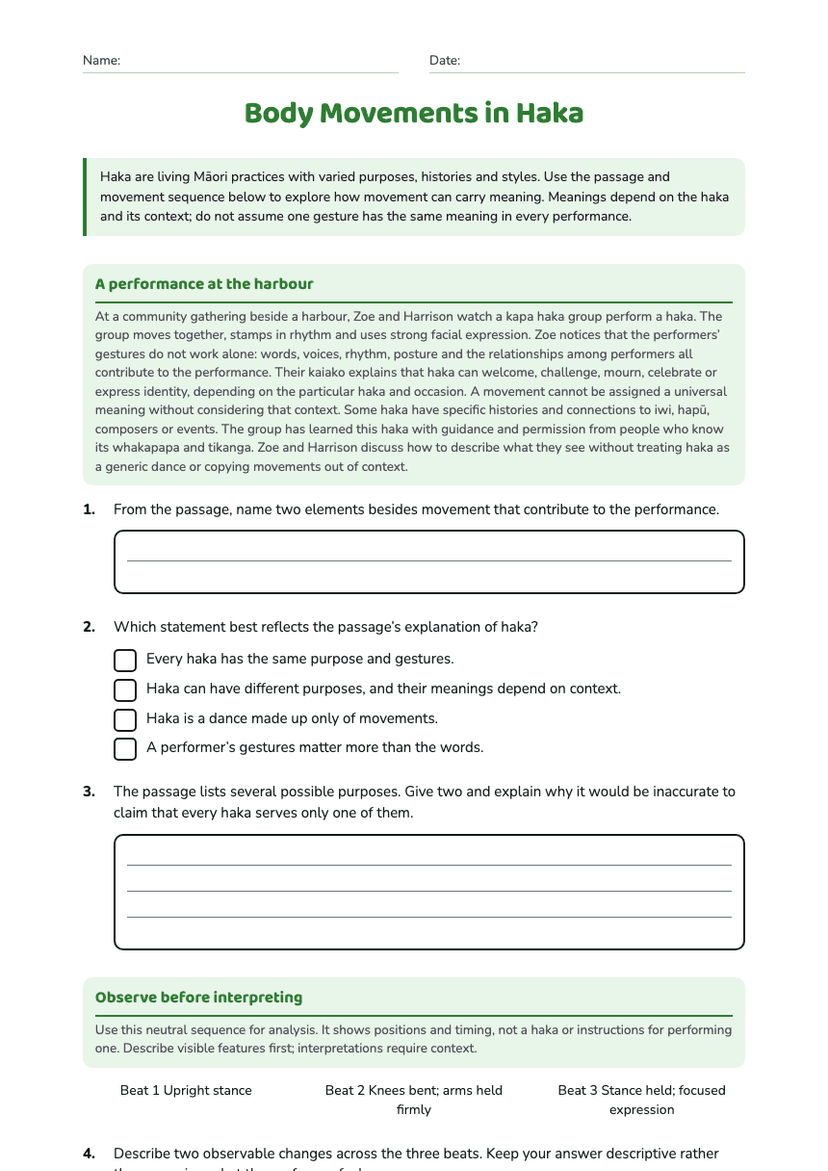
A haka is not simply a set of movements. In performance, words, vocal delivery, rhythm, gesture, facial expression, formation, stillness and dress may work together. Their significance depends on the people, purpose and occasion. The same gesture or item of dress may carry different meanings in different settings. For this investigation, use these working lenses: • Reo: language and its delivery, including words, sound, emphasis and vocal expression. • Hāngū: silence, stillness, breath or controlled pauses, where these are part of the performance. • Whakakai: adornment or dress as a possible visual element. Ask what evidence supports an interpretation rather than assuming that an item has one fixed meaning. A careful interpretation separates observation from inference. “The performers pause together” is an observation; “the pause builds anticipation” is an interpretation that should be supported by context or evidence. When researching real performance, prioritise the knowledge and explanations shared by the people and group concerned.
Card
Observation from a rehearsal note
What the note does not tell us
A
A repeated phrase is delivered in unison; the final word is held longer.
The phrase’s translation, who composed it, and what the group intends it to communicate.
B
The group becomes still for a short pause, then moves together into a new formation.
Why the pause occurs, what it means to the group, or whether it is a deliberate expressive choice.
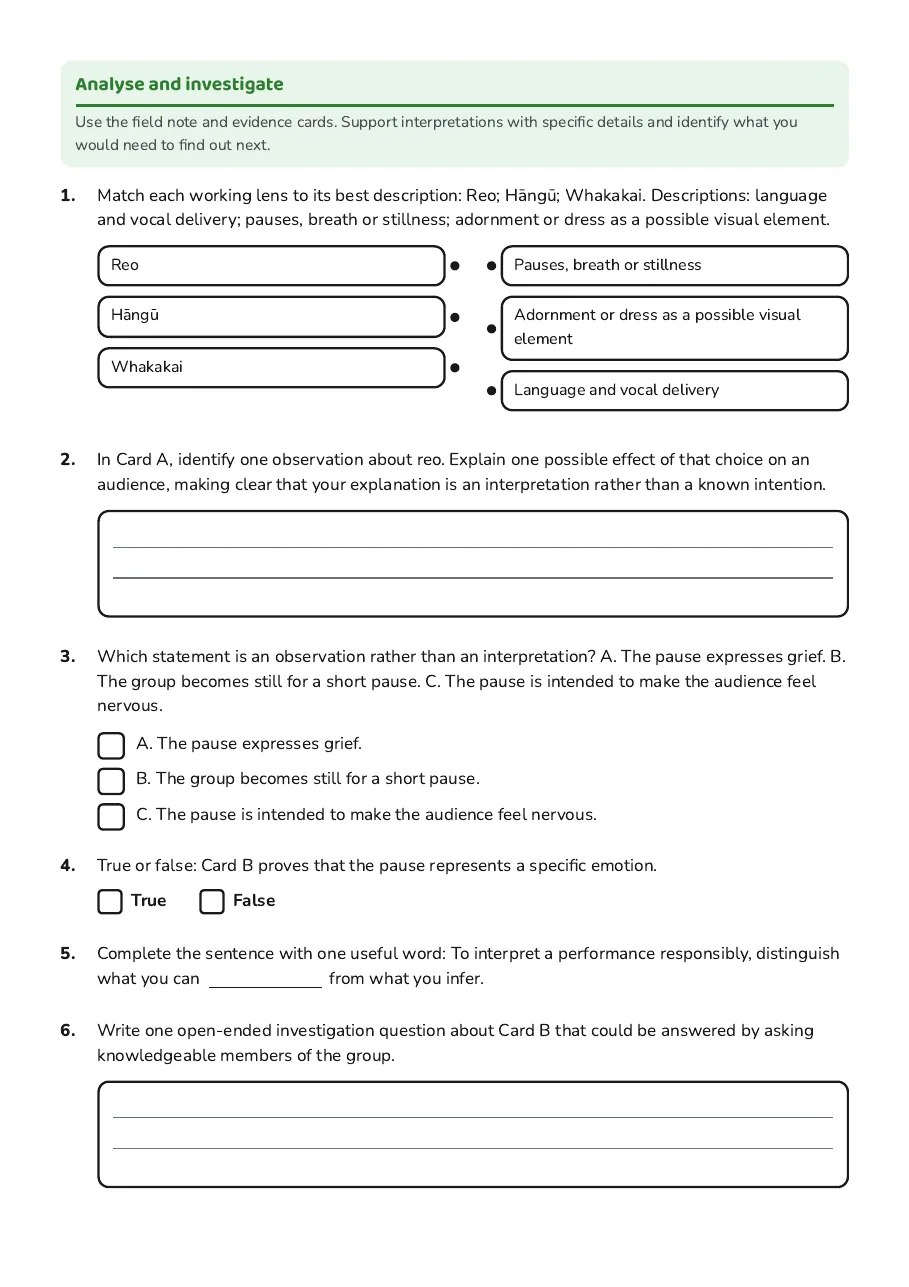
Analyse and investigate
Use the field note and evidence cards. Support interpretations with specific details and identify what you would need to find out next.
- Reo
- Hāngū
- Whakakai
- Pauses, breath or stillness
- Adornment or dress as a possible visual element
- Language and vocal delivery
- A. The pause expresses grief.
- B. The group becomes still for a short pause.
- C. The pause is intended to make the audience feel nervous.
- A. Apply a meaning found online to every haka.
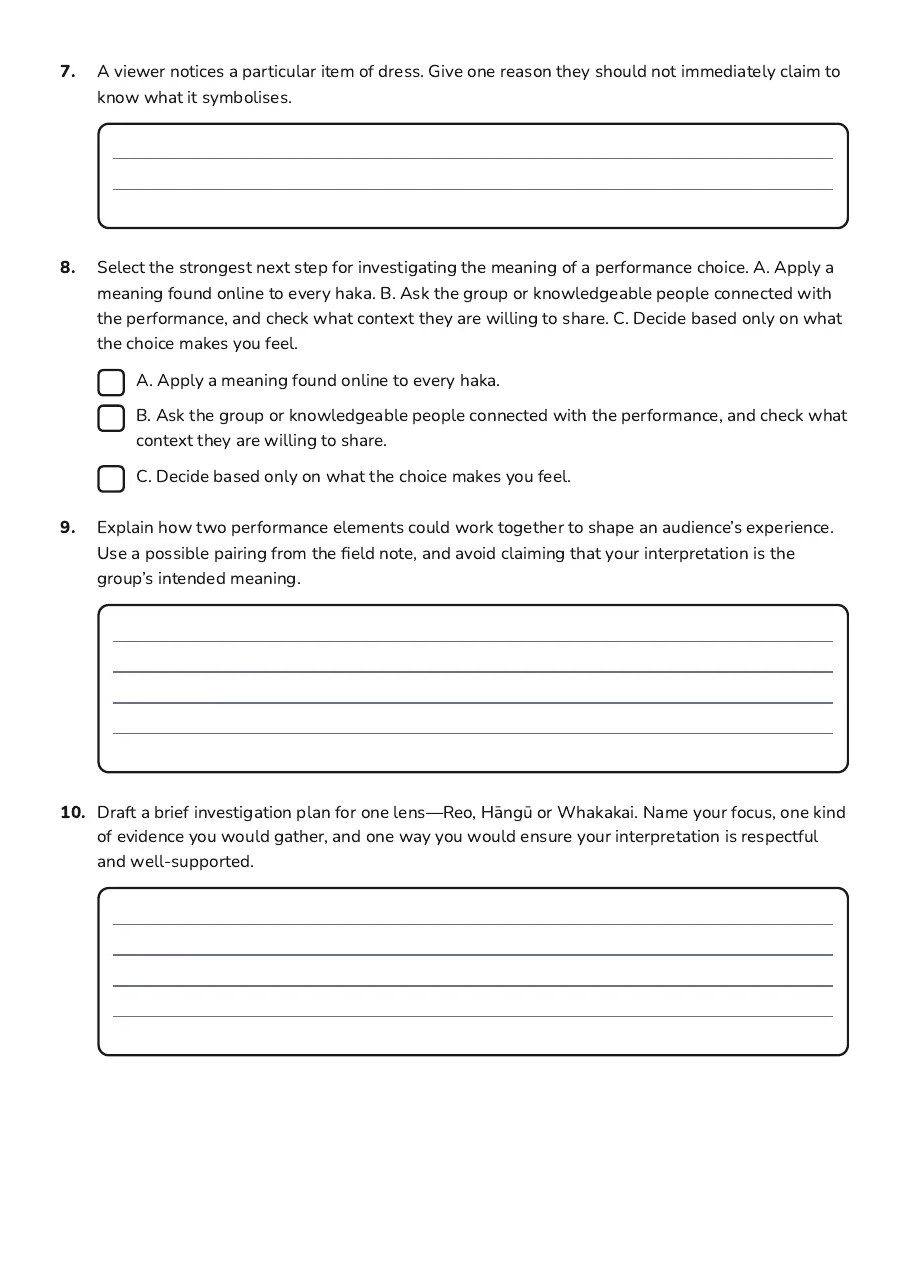
- B. Ask the group or knowledgeable people connected with the performance, and check what context they are willing to share.
- C. Decide based only on what the choice makes you feel.
3 printable pages
Page 1
Page 2
Page 3
About This Worksheet
Free in Kuraplan
Sign up free, grab the PDF, and customize it for your class.
Print-Ready
Formatted for standard paper. Clean layout, easy to read.
AI-Generated
Created with Kuraplan's AI, designed for real classroom use.
For Teachers & Parents
Use in classrooms, for homework, tutoring, or homeschool.
Need a custom version of this worksheet?
Kuraplan's AI generates custom worksheets in seconds — differentiated for every learner, aligned to your curriculum.
Generate Custom Worksheets — Free