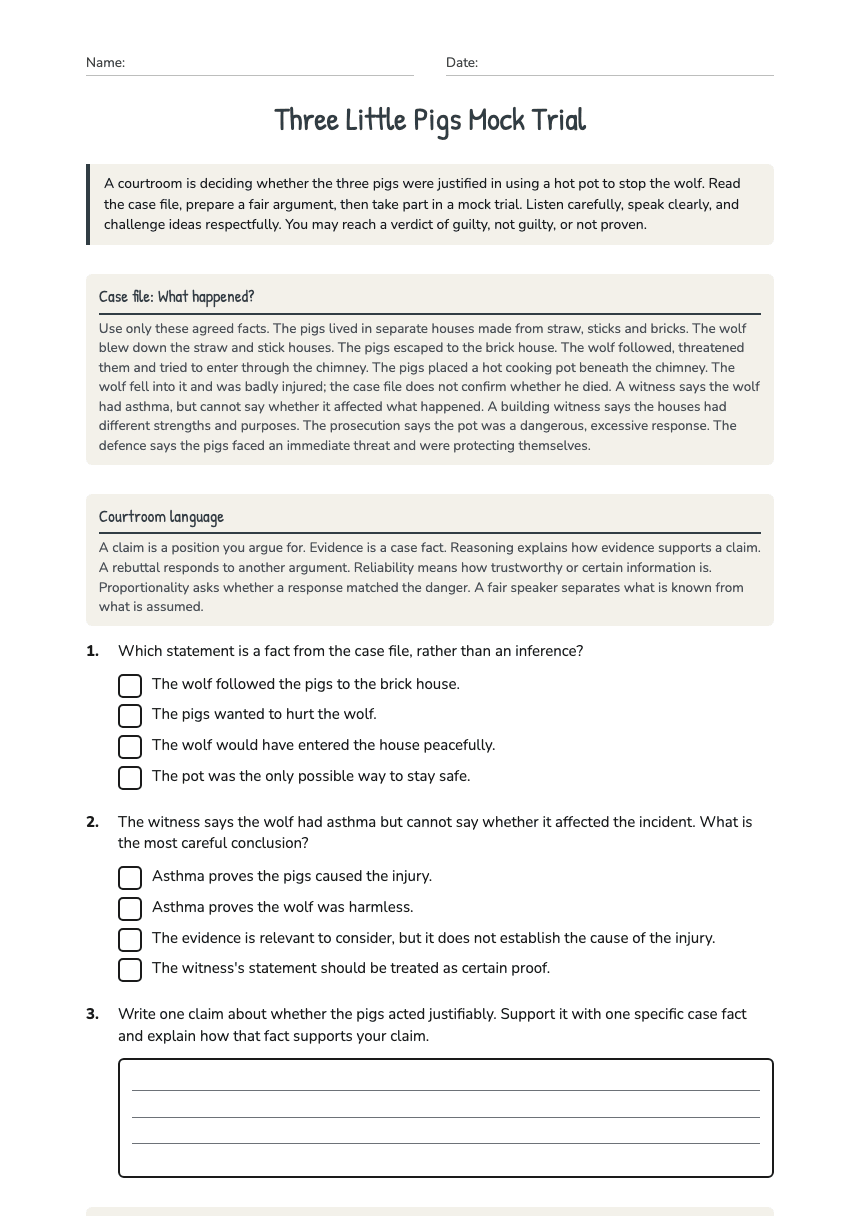
Three Little Pigs Mock Trial
A free english worksheet ready for your classroom. Open in Kuraplan to grab the print-ready PDF, customize it for your students, or generate a fresh version in seconds.
Three Little Pigs Mock Trial
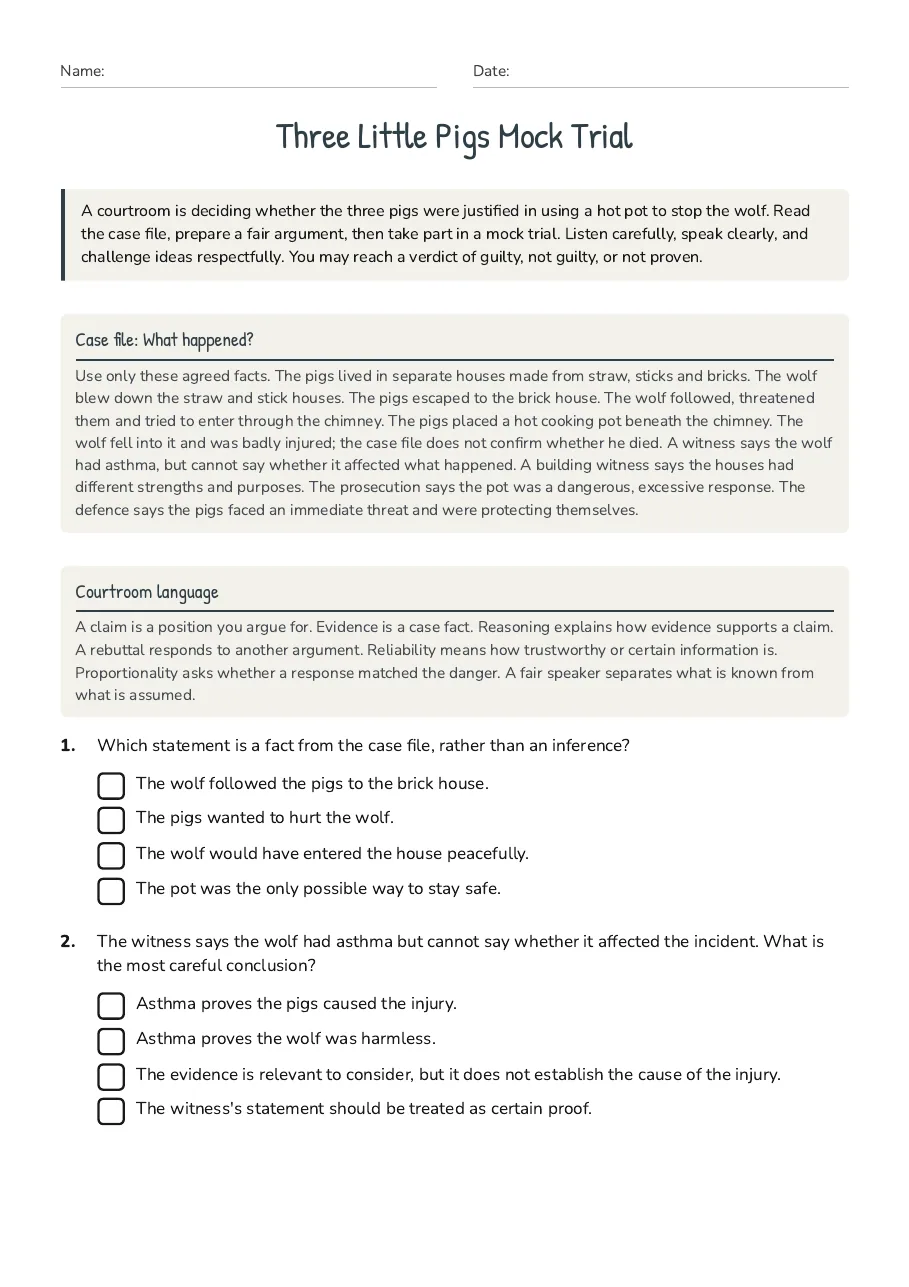
Case file: What happened?
Use only these agreed facts. The pigs lived in separate houses made from straw, sticks and bricks. The wolf blew down the straw and stick houses. The pigs escaped to the brick house. The wolf followed, threatened them and tried to enter through the chimney. The pigs placed a hot cooking pot beneath the chimney. The wolf fell into it and was badly injured; the case file does not confirm whether he died. A witness says the wolf had asthma, but cannot say whether it affected what happened. A building witness says the houses had different strengths and purposes. The prosecution says the pot was a dangerous, excessive response. The defence says the pigs faced an immediate threat and were protecting themselves.
Courtroom language
A claim is a position you argue for. Evidence is a case fact. Reasoning explains how evidence supports a claim. A rebuttal responds to another argument. Reliability means how trustworthy or certain information is. Proportionality asks whether a response matched the danger. A fair speaker separates what is known from what is assumed.
- The wolf followed the pigs to the brick house.
- The pigs wanted to hurt the wolf.
- The wolf would have entered the house peacefully.
- The pot was the only possible way to stay safe.
- Asthma proves the pigs caused the injury.
- Asthma proves the wolf was harmless.
- The evidence is relevant to consider, but it does not establish the cause of the injury.
- The witness's statement should be treated as certain proof.
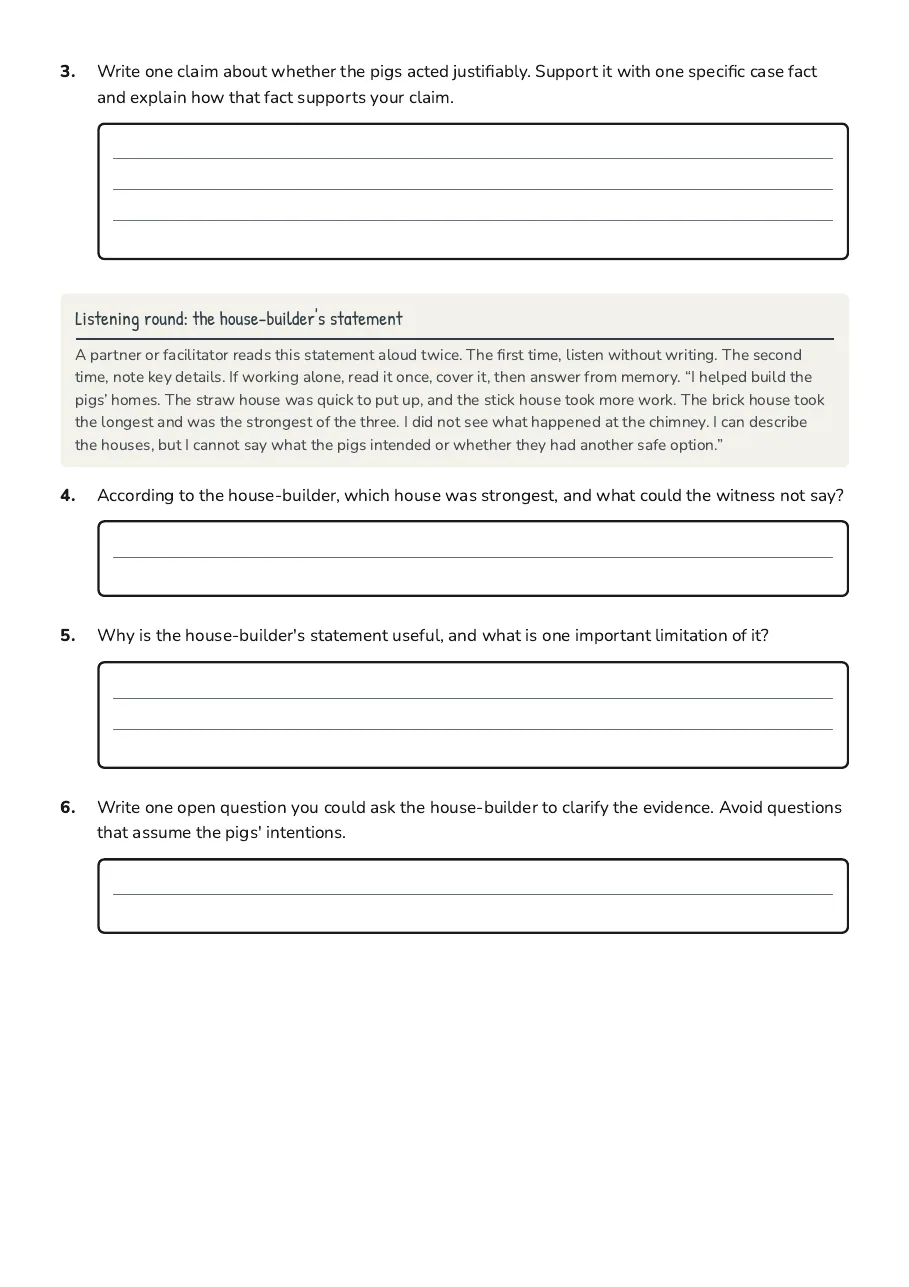
Listening round: the house-builder's statement
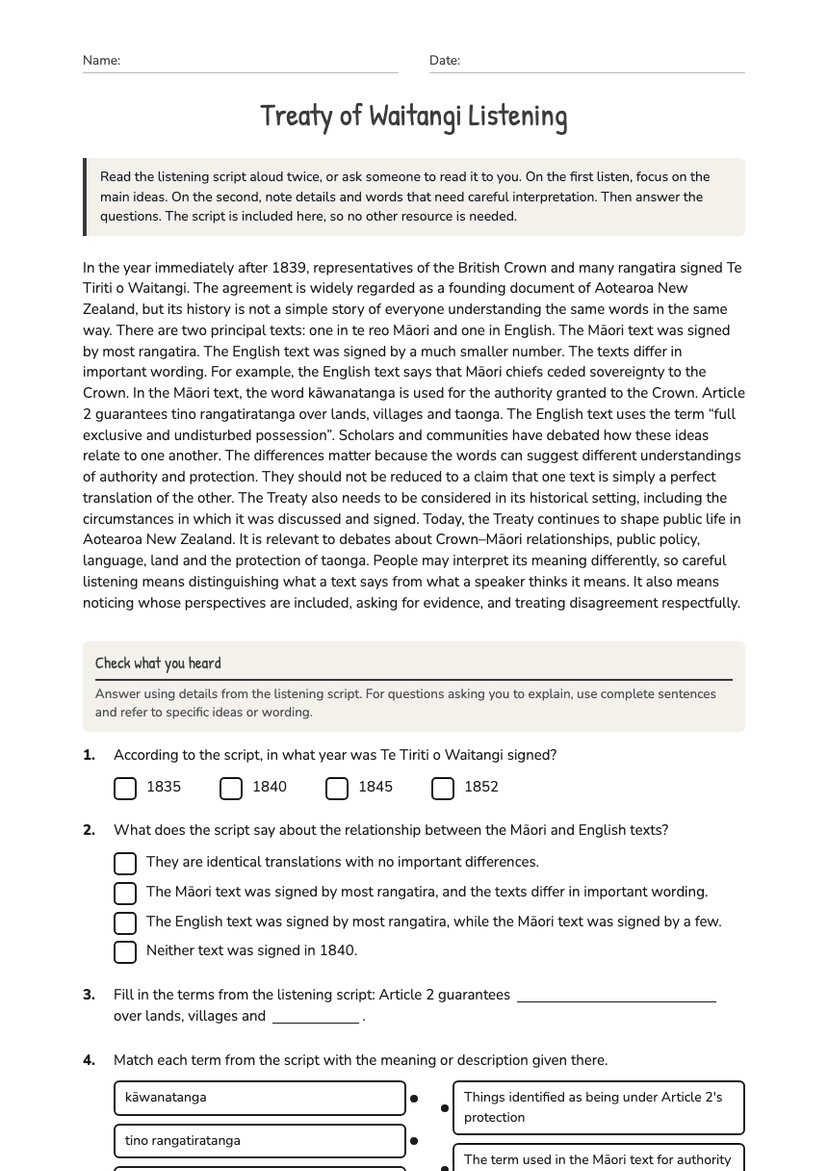
A partner or facilitator reads this statement aloud twice. The first time, listen without writing. The second time, note key details. If working alone, read it once, cover it, then answer from memory. “I helped build the pigs’ homes. The straw house was quick to put up, and the stick house took more work. The brick house took the longest and was the strongest of the three. I did not see what happened at the chimney. I can describe the houses, but I cannot say what the pigs intended or whether they had another safe option.”
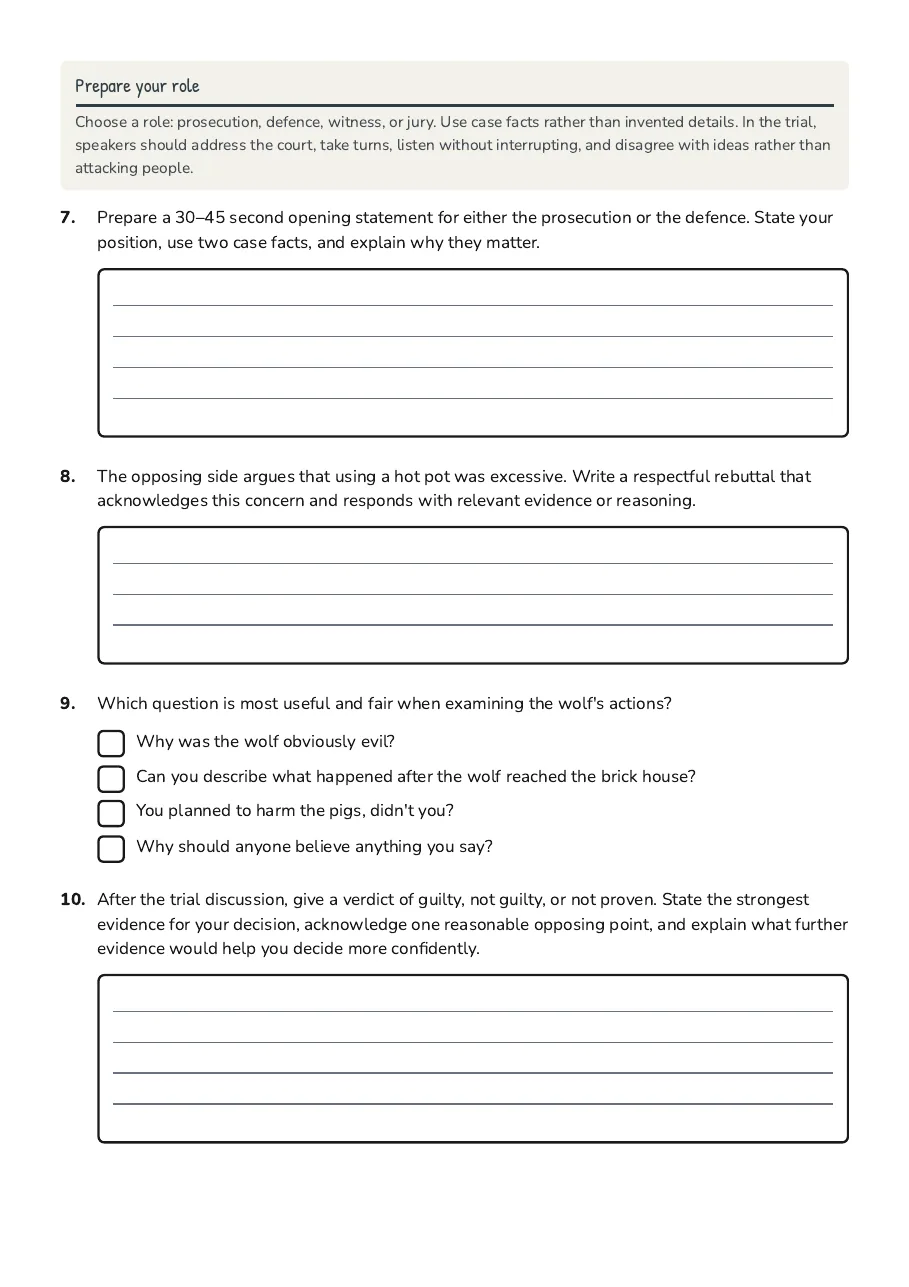
Prepare your role
Choose a role: prosecution, defence, witness, or jury. Use case facts rather than invented details. In the trial, speakers should address the court, take turns, listen without interrupting, and disagree with ideas rather than attacking people.
- Why was the wolf obviously evil?
- Can you describe what happened after the wolf reached the brick house?
- You planned to harm the pigs, didn't you?
- Why should anyone believe anything you say?
4 printable pages
Page 1
Page 2
Page 3
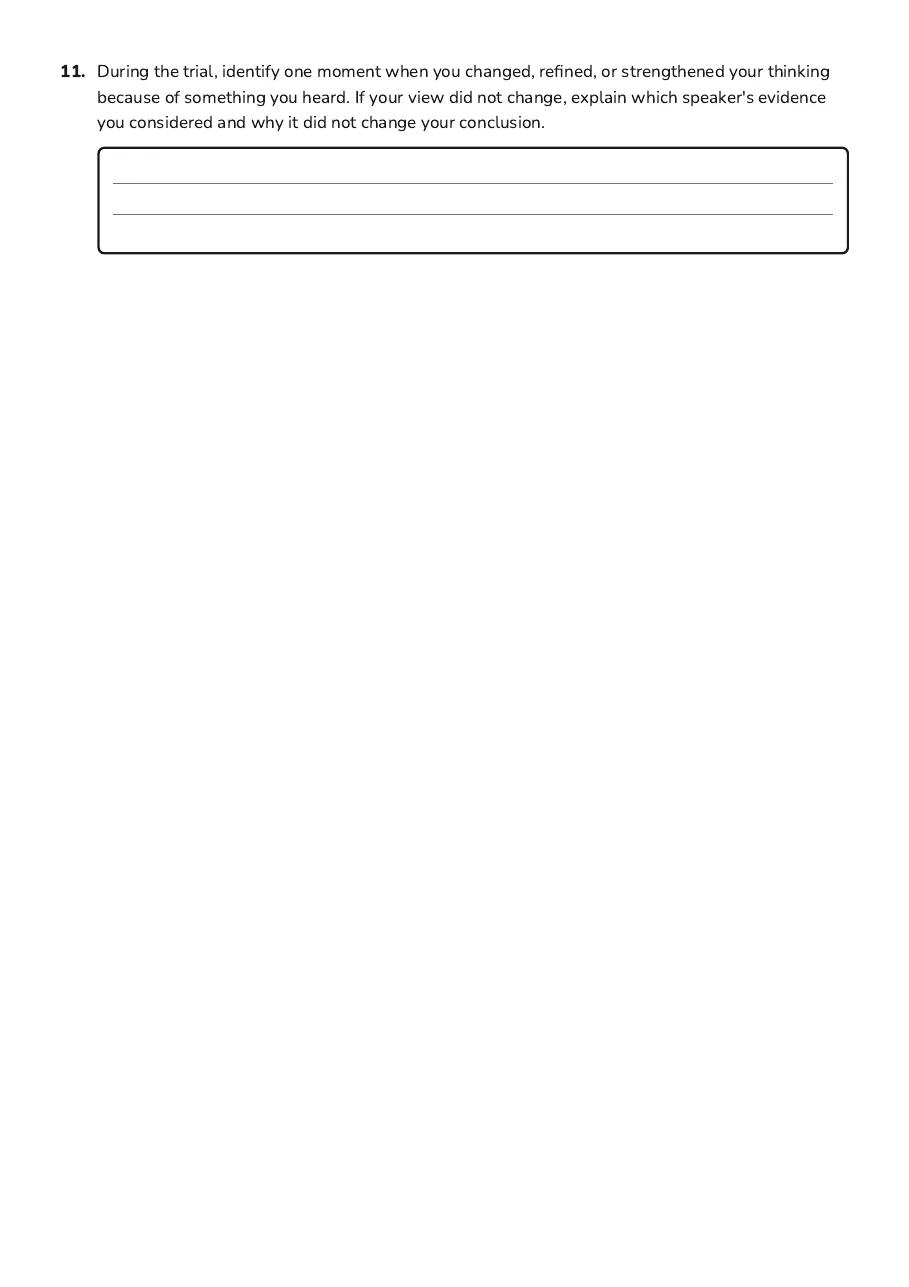
Page 4
About This Worksheet
Free in Kuraplan
Sign up free, grab the PDF, and customize it for your class.
Print-Ready
Formatted for standard paper. Clean layout, easy to read.
AI-Generated
Created with Kuraplan's AI, designed for real classroom use.
For Teachers & Parents
Use in classrooms, for homework, tutoring, or homeschool.
Need a custom version of this worksheet?
Kuraplan's AI generates custom worksheets in seconds — differentiated for every learner, aligned to your curriculum.
Generate Custom Worksheets — Free