Earth Patterns Checkpoint
A free science worksheet ready for your classroom. Open in Kuraplan to grab the print-ready PDF, customize it for your students, or generate a fresh version in seconds.
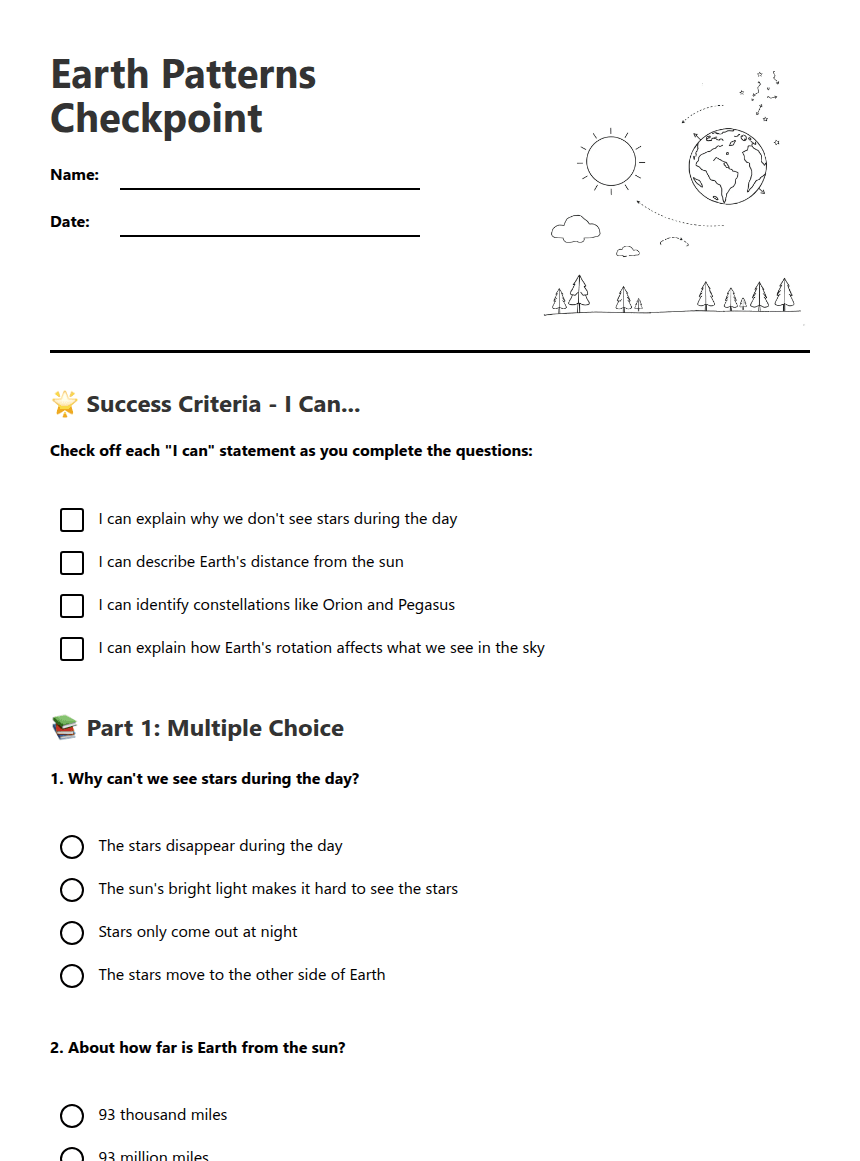
Earth Patterns Checkpoint
🌟 Success Criteria - I Can...
Check off each "I can" statement as you complete the questions:
📚 Part 1: Multiple Choice
✏️ Part 2: Short Answer
🔬 Scientific Method Practice
Question:
How I could find the answer:
🌟 Extension Activity (Advanced Learners)
Challenge: Research the Orion Nebula. Draw what it looks like below and explain how it's connected to the constellation Orion.
📖 Differentiation Support
For struggling readers: Use the glossary in your science book or ask a partner to help explain unfamiliar words like "nebula," "light year," and "scientific method."
For visual learners: Draw pictures next to your written answers to help explain your thinking.
For dyslexia support: Key terms are in bold. You may use bullet points instead of full sentences for short answers.
📝 Key Terms Reminder
Light year: The distance light travels in one year (about 6 trillion miles!)
Nebula: A giant cloud of gas and dust in space where stars can form
Scientific method: A way to ask questions and find answers through observation and testing
About This Worksheet
Free in Kuraplan
Sign up free, grab the PDF, and customize it for your class.
Print-Ready
Formatted for standard paper. Clean layout, easy to read.
AI-Generated
Created with Kuraplan's AI, designed for real classroom use.
For Teachers & Parents
Use in classrooms, for homework, tutoring, or homeschool.
Need a custom version of this worksheet?
Kuraplan's AI generates custom worksheets in seconds — differentiated for every learner, aligned to your curriculum.
Generate Custom Worksheets — FreeMore Science Worksheets
Cloud Forecasting Image Match-Up
Free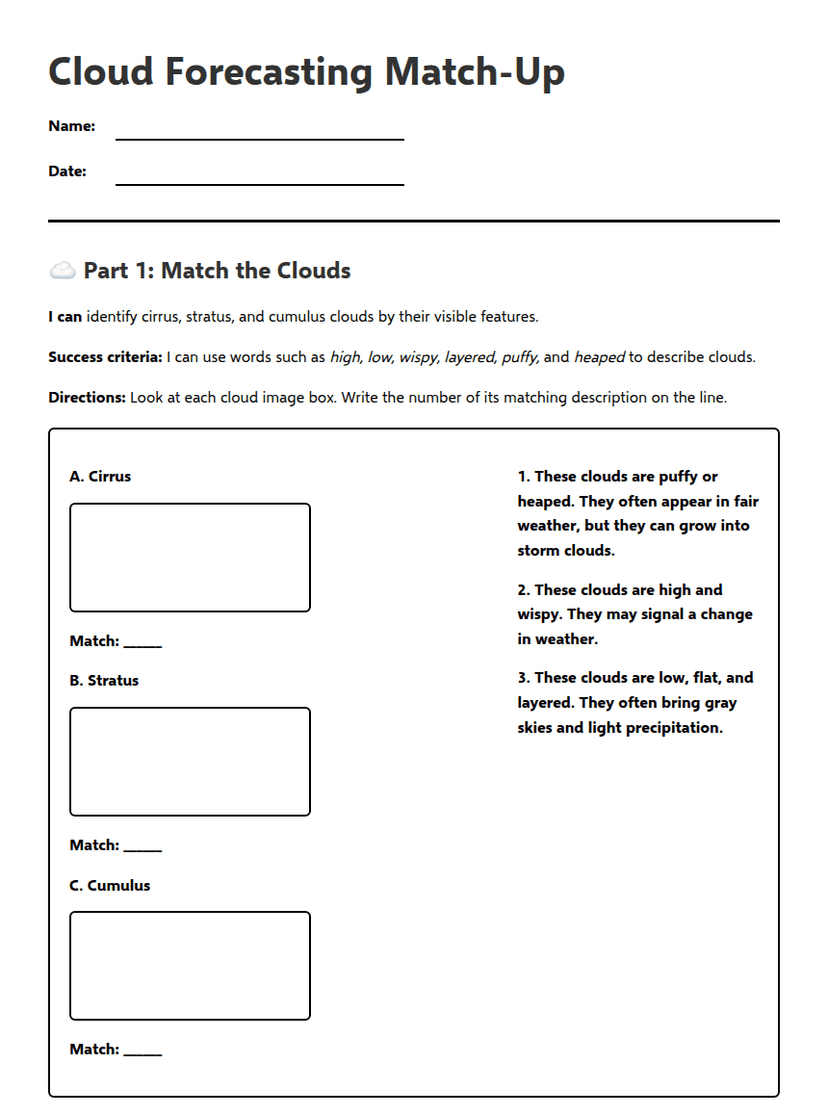
Cloud Forecasting Match-Up
Free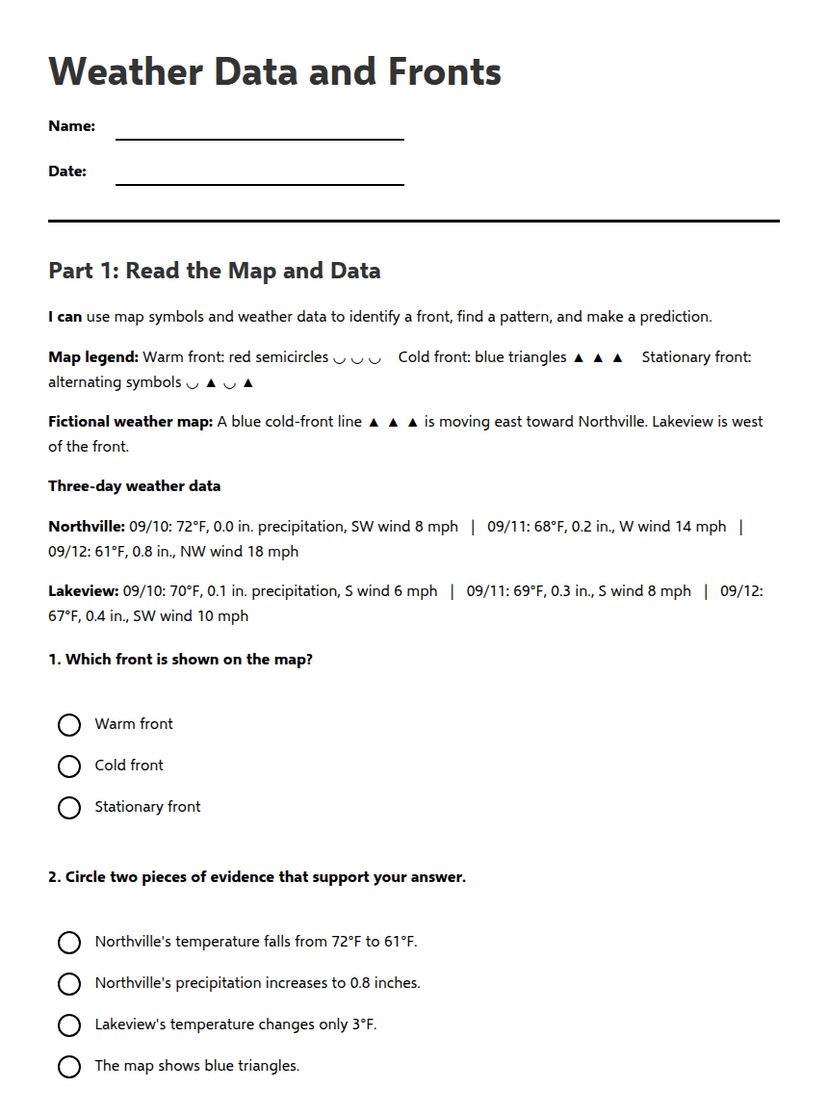
Weather Data and Fronts
Free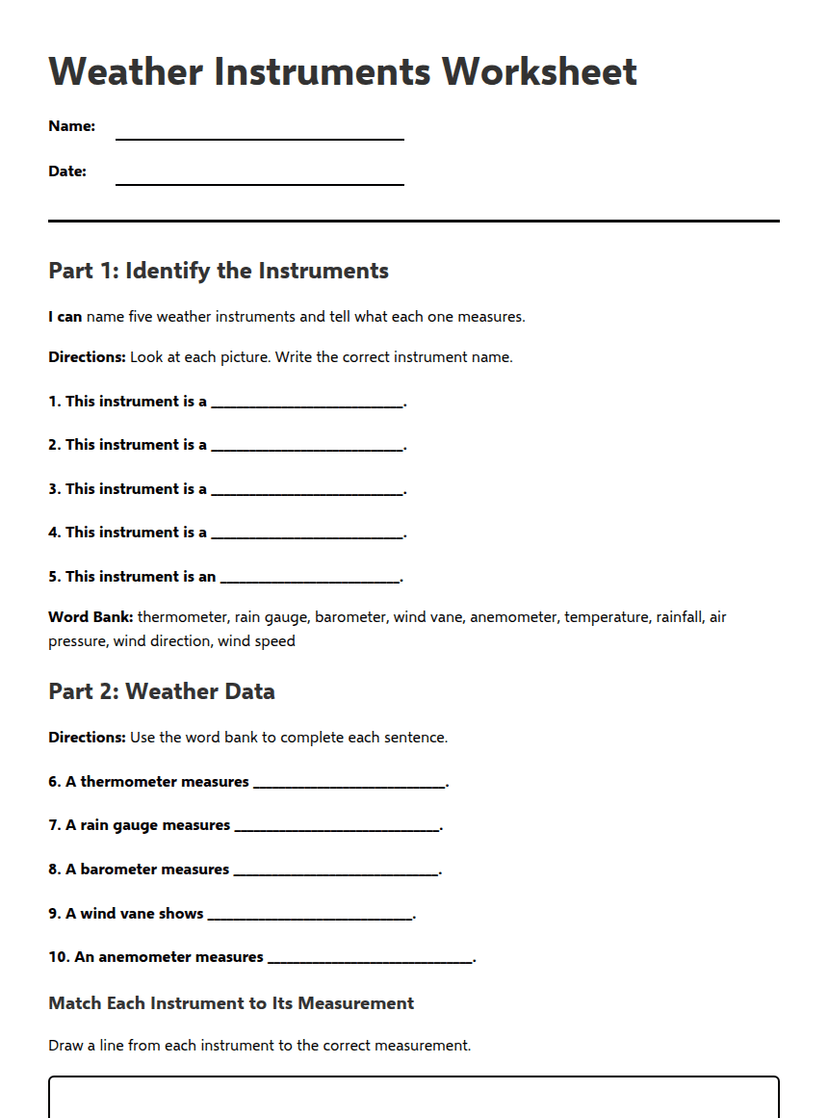
Weather Instruments Worksheet
Free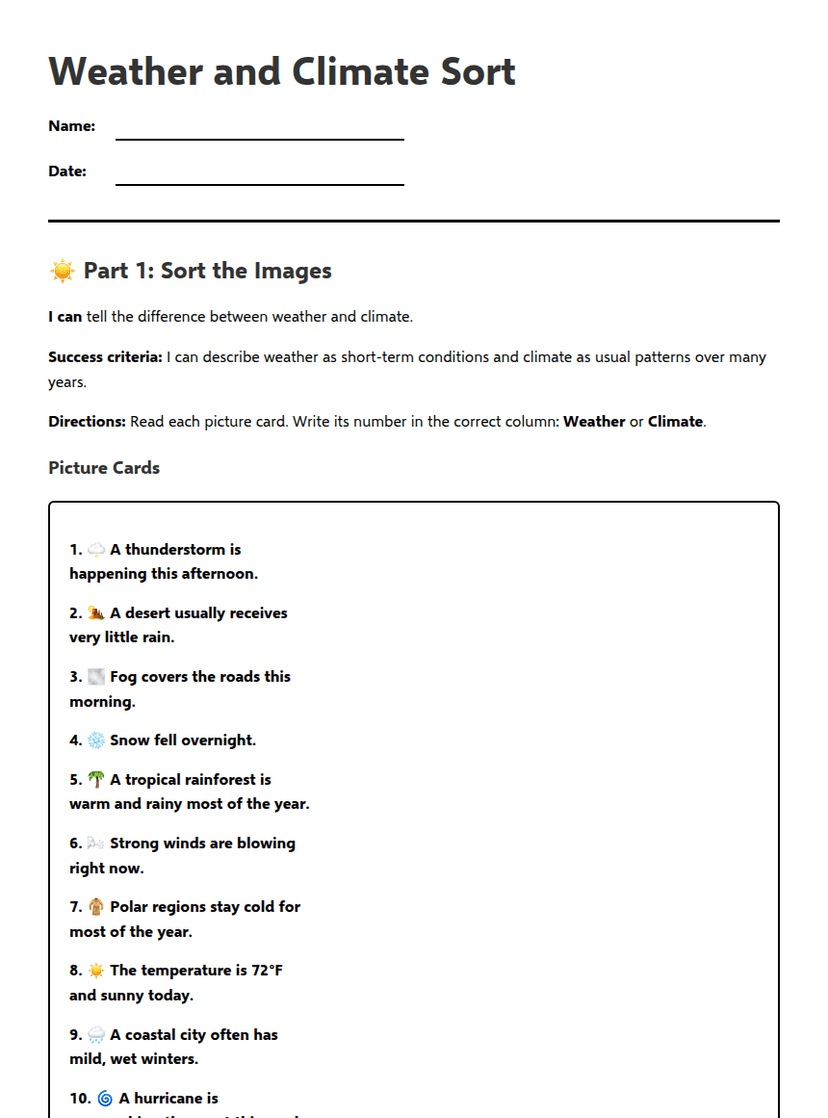
Weather and Climate Sort
Free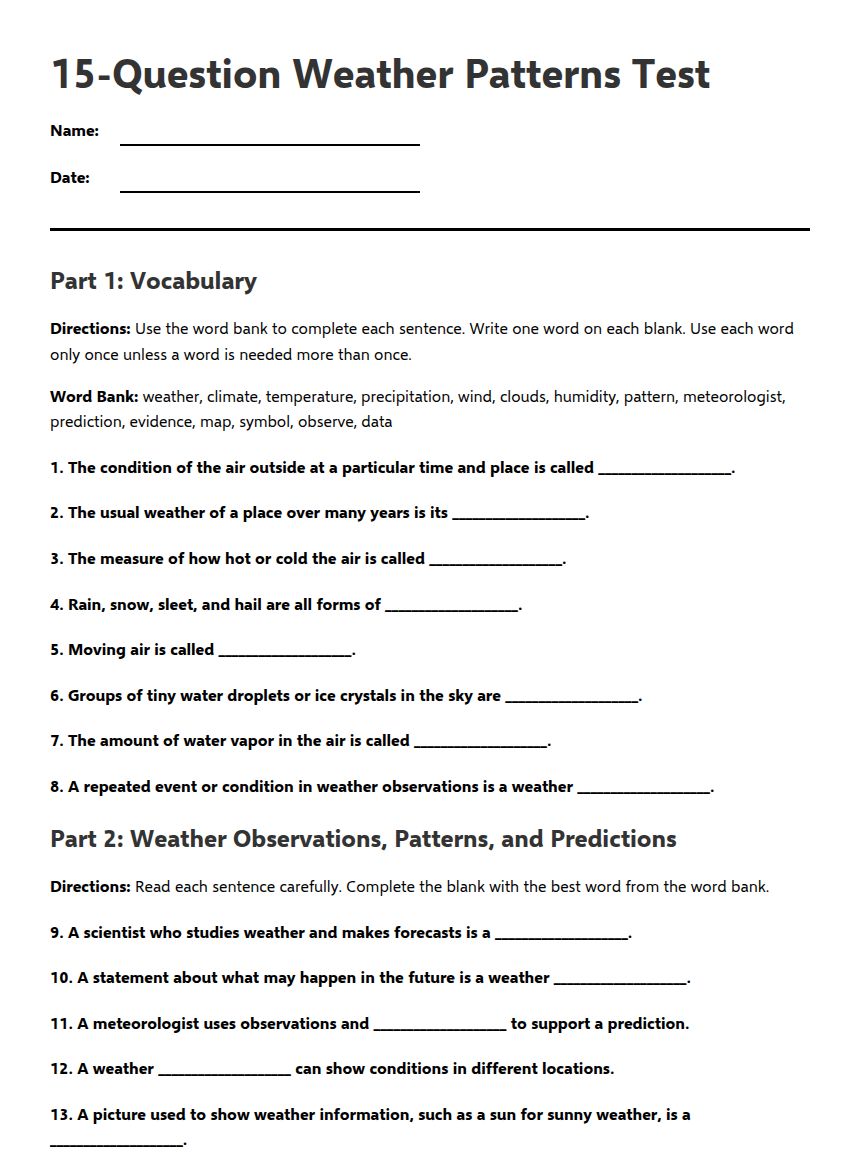
Weather Patterns Test
Free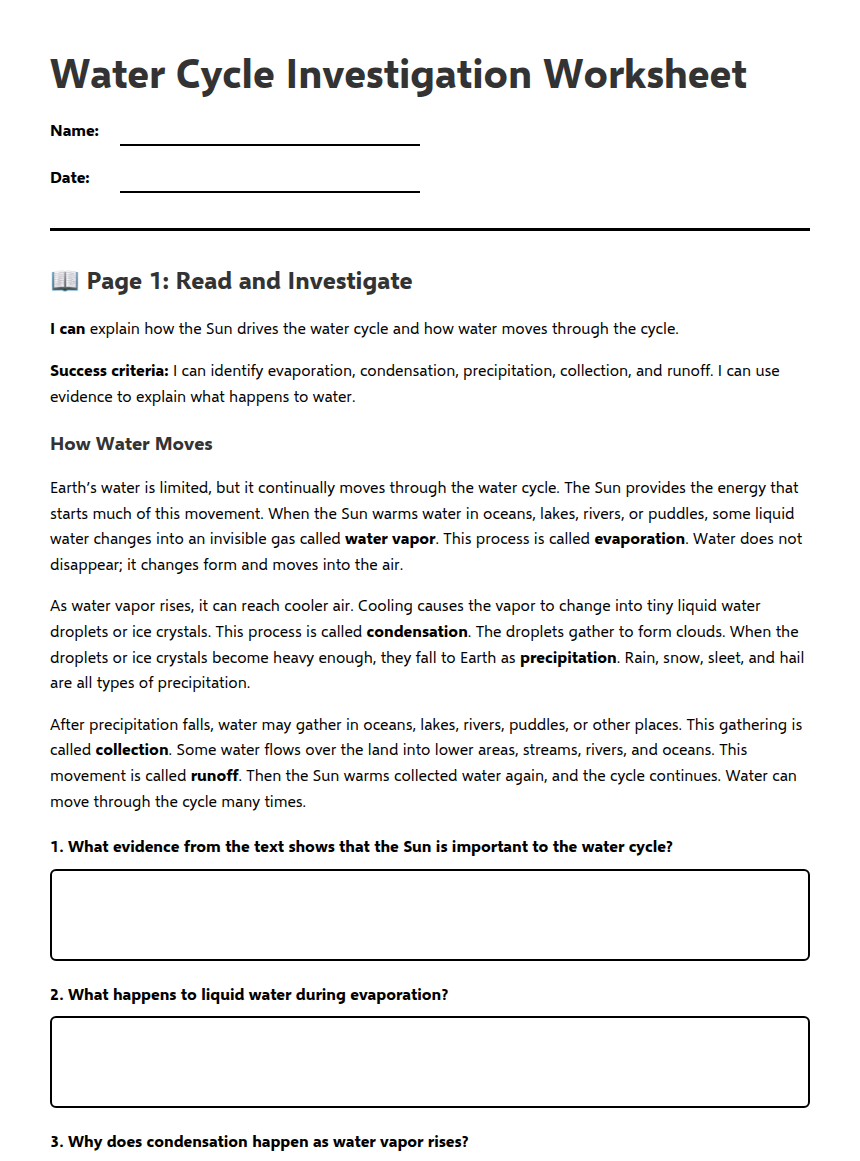
Water Cycle Investigation Worksheet
Free