Earthquake Seismograph Reading Worksheet
A free science worksheet ready for your classroom. Open in Kuraplan to grab the print-ready PDF, customize it for your students, or generate a fresh version in seconds.
Earthquake Seismograph Reading Worksheet
📊 Part 1: Understanding Seismographs
Background: A seismograph is an instrument that measures and records earthquake waves. The wavy lines show how much the ground shook during an earthquake.
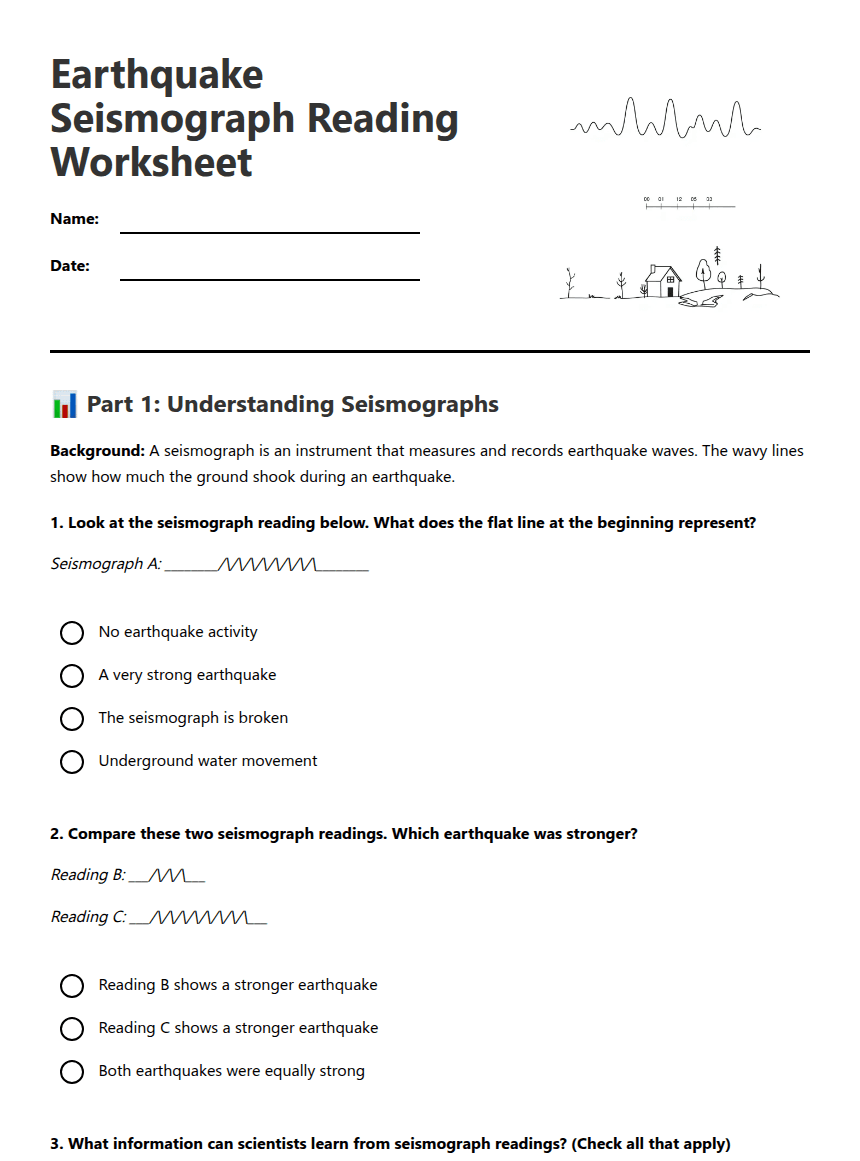
Seismograph A: ________/\/\/\/\/\/\/\/\________
Reading B: ___/\/\/\___
Reading C: ___/\/\/\/\/\/\/\/\___
📏 Part 2: The Richter Scale
Richter Scale Reference:
• 1.0-2.9: Not felt by people
• 3.0-3.9: Felt slightly by some people
• 4.0-4.9: Felt by many people, dishes rattle
• 5.0-5.9: Felt by everyone, some damage to buildings
• 6.0-6.9: Strong earthquake, moderate damage
• 7.0-7.9: Major earthquake, serious damage
• 8.0+: Great earthquake, widespread destruction
🔬 Part 3: Analysis and Application
About This Worksheet
Free in Kuraplan
Sign up free, grab the PDF, and customize it for your class.
Print-Ready
Formatted for standard paper. Clean layout, easy to read.
AI-Generated
Created with Kuraplan's AI, designed for real classroom use.
For Teachers & Parents
Use in classrooms, for homework, tutoring, or homeschool.
Need a custom version of this worksheet?
Kuraplan's AI generates custom worksheets in seconds — differentiated for every learner, aligned to your curriculum.
Generate Custom Worksheets — FreeMore Science Worksheets
Cloud Forecasting Image Match-Up
Free
Cloud Forecasting Match-Up
Free
Weather Data and Fronts
Free
Weather Instruments Worksheet
Free
Weather and Climate Sort
Free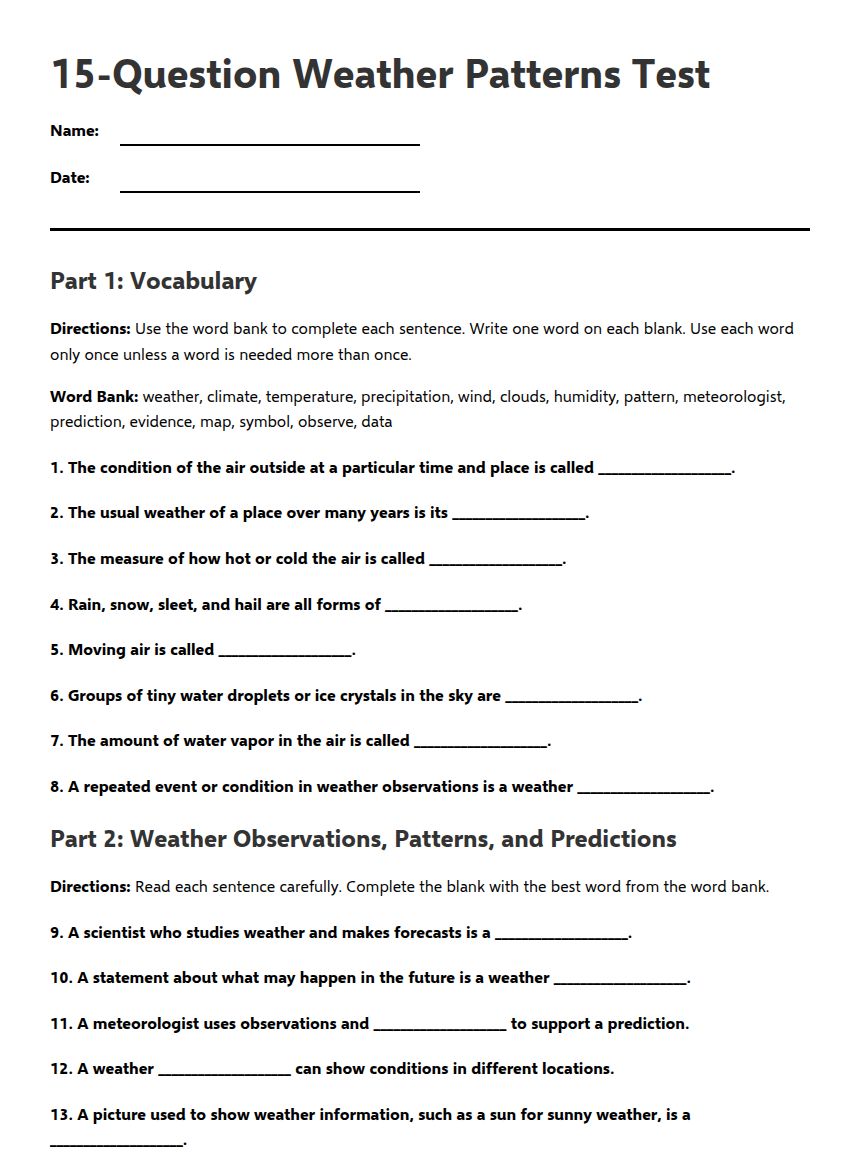
Weather Patterns Test
Free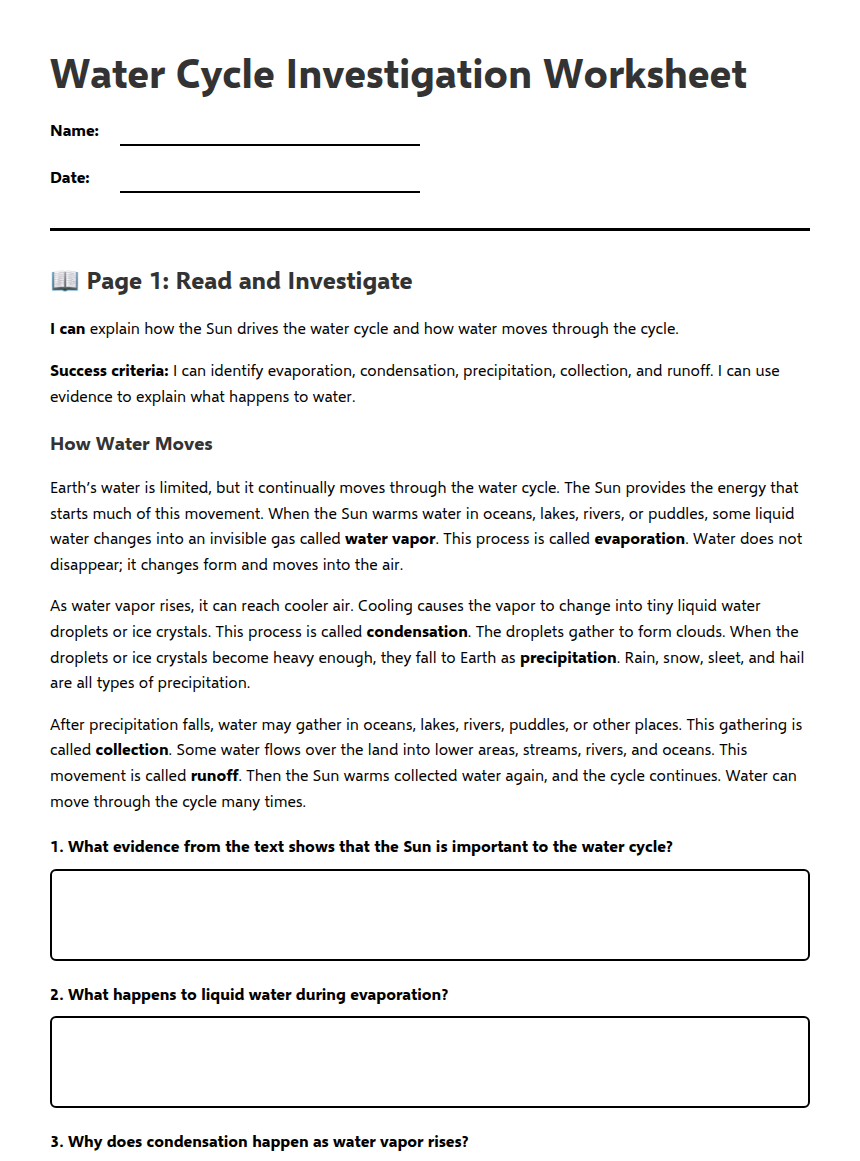
Water Cycle Investigation Worksheet
Free