English Roots of Democracy
A free social studies worksheet ready for your classroom. Open in Kuraplan to grab the print-ready PDF, customize it for your students, or generate a fresh version in seconds.
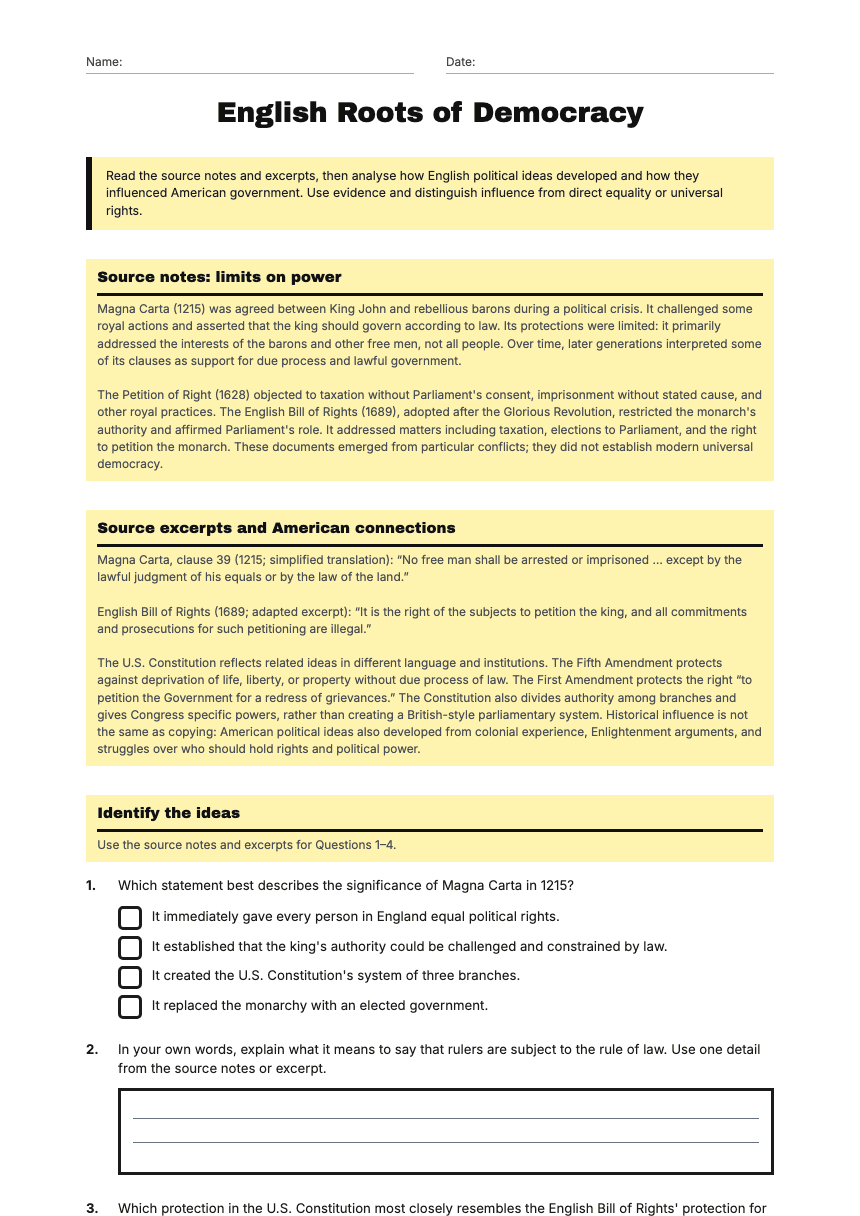
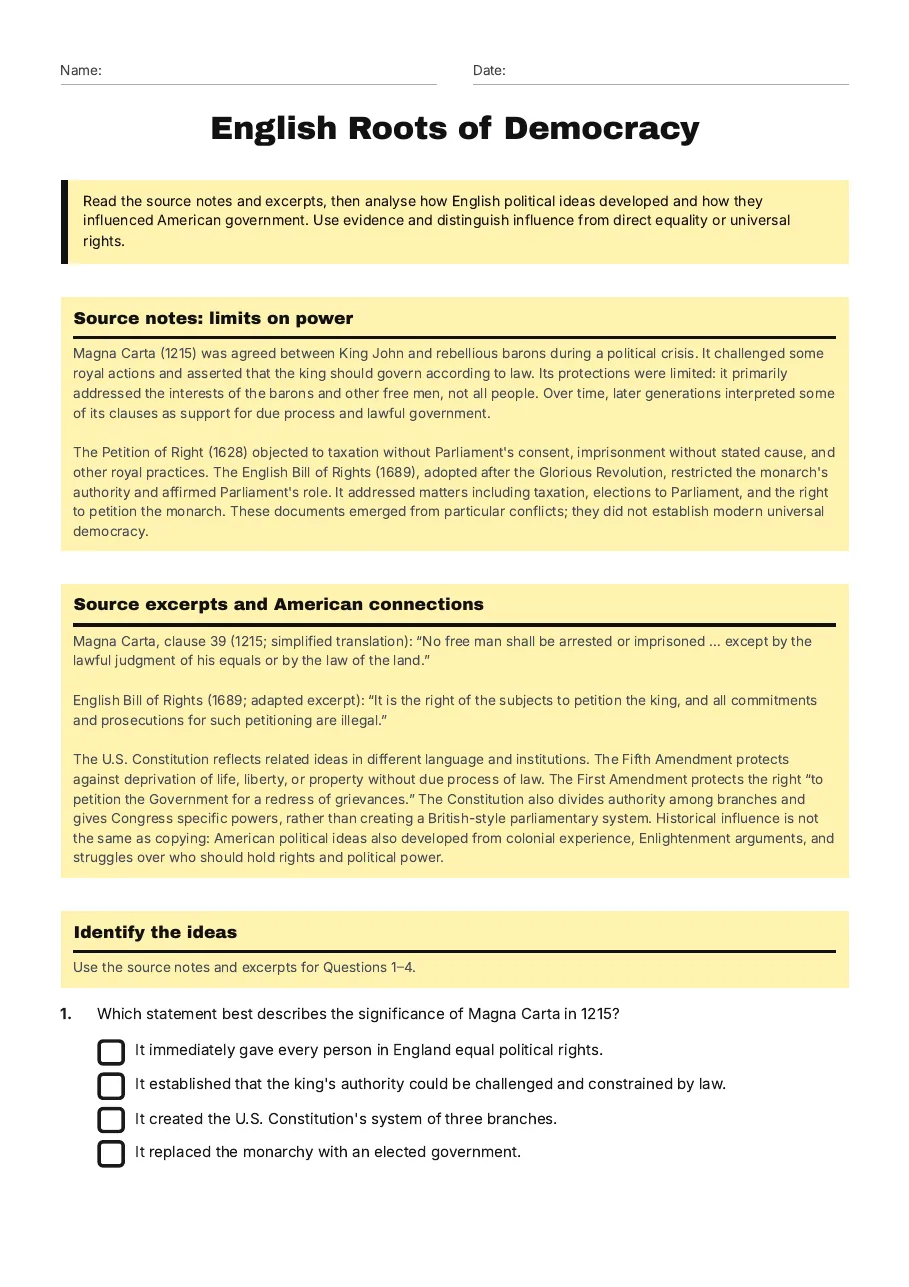
English Roots of Democracy
Source notes: limits on power
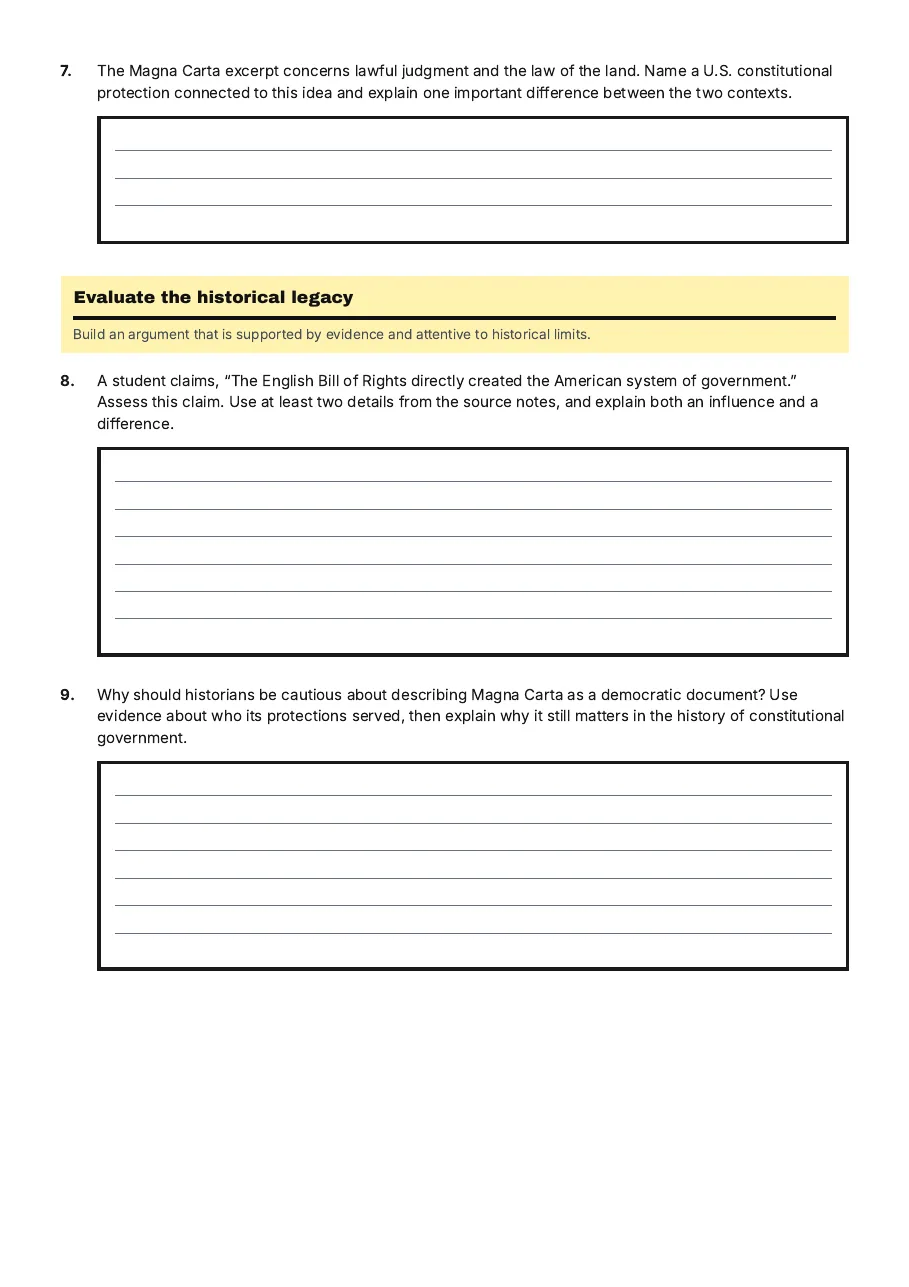
Magna Carta (1215) was agreed between King John and rebellious barons during a political crisis. It challenged some royal actions and asserted that the king should govern according to law. Its protections were limited: it primarily addressed the interests of the barons and other free men, not all people. Over time, later generations interpreted some of its clauses as support for due process and lawful government. The Petition of Right (1628) objected to taxation without Parliament's consent, imprisonment without stated cause, and other royal practices. The English Bill of Rights (1689), adopted after the Glorious Revolution, restricted the monarch's authority and affirmed Parliament's role. It addressed matters including taxation, elections to Parliament, and the right to petition the monarch. These documents emerged from particular conflicts; they did not establish modern universal democracy.
Source excerpts and American connections
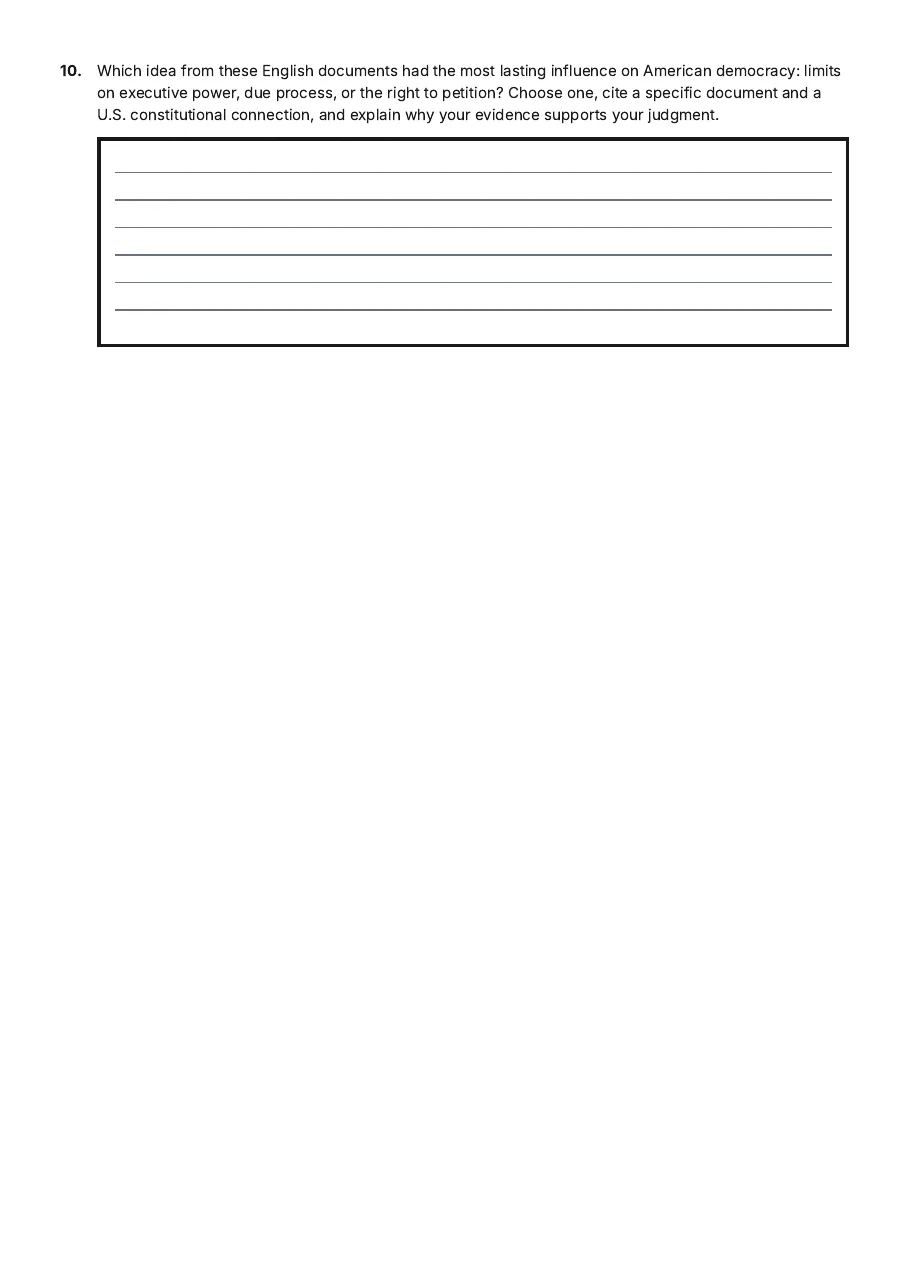
Magna Carta, clause 39 (1215; simplified translation): “No free man shall be arrested or imprisoned … except by the lawful judgment of his equals or by the law of the land.” English Bill of Rights (1689; adapted excerpt): “It is the right of the subjects to petition the king, and all commitments and prosecutions for such petitioning are illegal.” The U.S. Constitution reflects related ideas in different language and institutions. The Fifth Amendment protects against deprivation of life, liberty, or property without due process of law. The First Amendment protects the right “to petition the Government for a redress of grievances.” The Constitution also divides authority among branches and gives Congress specific powers, rather than creating a British-style parliamentary system. Historical influence is not the same as copying: American political ideas also developed from colonial experience, Enlightenment arguments, and struggles over who should hold rights and political power.
Identify the ideas
Use the source notes and excerpts for Questions 1–4.
- It immediately gave every person in England equal political rights.
- It established that the king's authority could be challenged and constrained by law.
- It created the U.S. Constitution's system of three branches.
- It replaced the monarchy with an elected government.
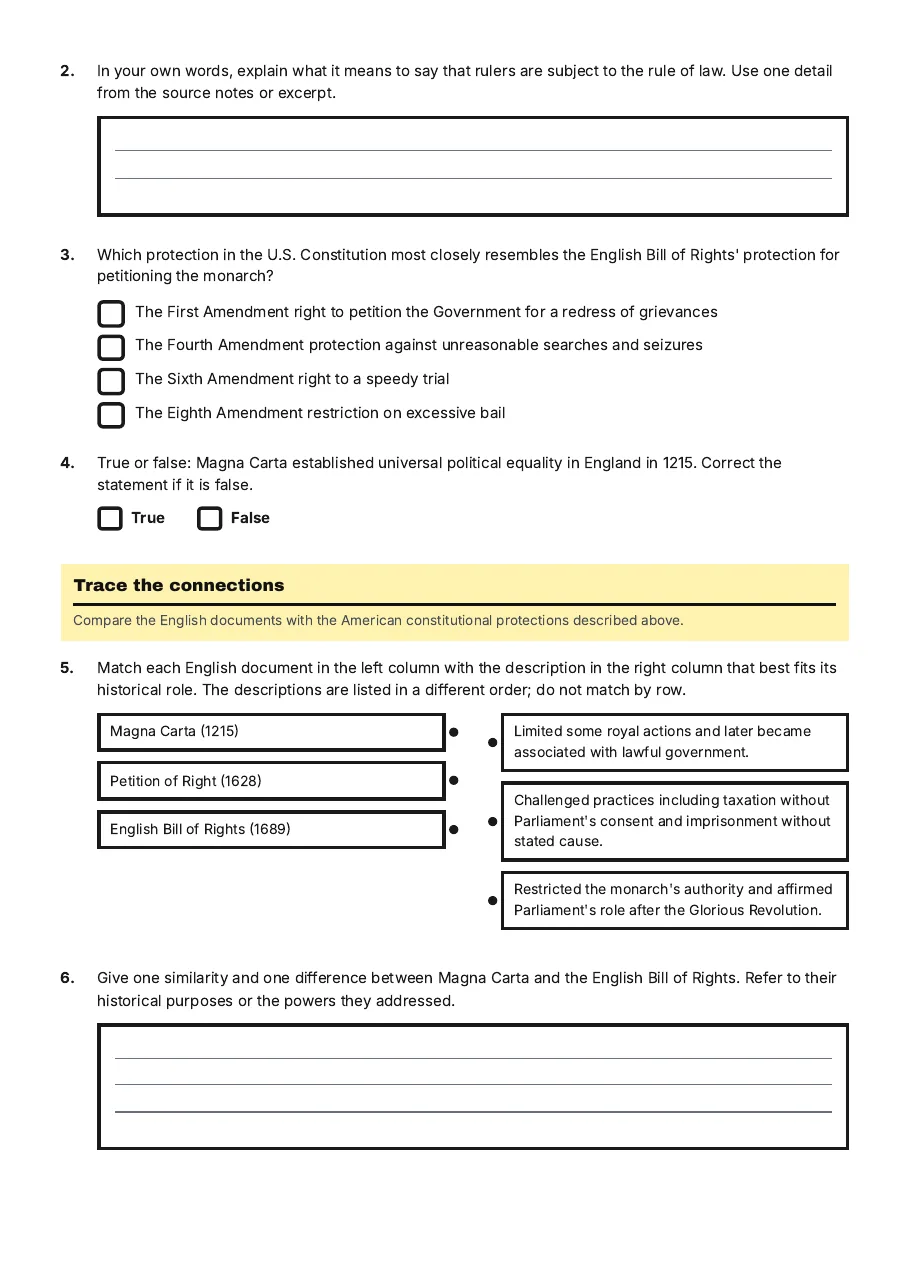
- The First Amendment right to petition the Government for a redress of grievances
- The Fourth Amendment protection against unreasonable searches and seizures
- The Sixth Amendment right to a speedy trial
- The Eighth Amendment restriction on excessive bail
Trace the connections
Compare the English documents with the American constitutional protections described above.
- Magna Carta (1215)
- Petition of Right (1628)
- English Bill of Rights (1689)
- Limited some royal actions and later became associated with lawful government.
- Challenged practices including taxation without Parliament's consent and imprisonment without stated cause.
- Restricted the monarch's authority and affirmed Parliament's role after the Glorious Revolution.
Evaluate the historical legacy
Build an argument that is supported by evidence and attentive to historical limits.
4 printable pages
Page 1
Page 2
Page 3
Page 4
About This Worksheet
Free in Kuraplan
Sign up free, grab the PDF, and customize it for your class.
Print-Ready
Formatted for standard paper. Clean layout, easy to read.
AI-Generated
Created with Kuraplan's AI, designed for real classroom use.
For Teachers & Parents
Use in classrooms, for homework, tutoring, or homeschool.
Need a custom version of this worksheet?
Kuraplan's AI generates custom worksheets in seconds — differentiated for every learner, aligned to your curriculum.
Generate Custom Worksheets — FreeMore Social Studies Worksheets
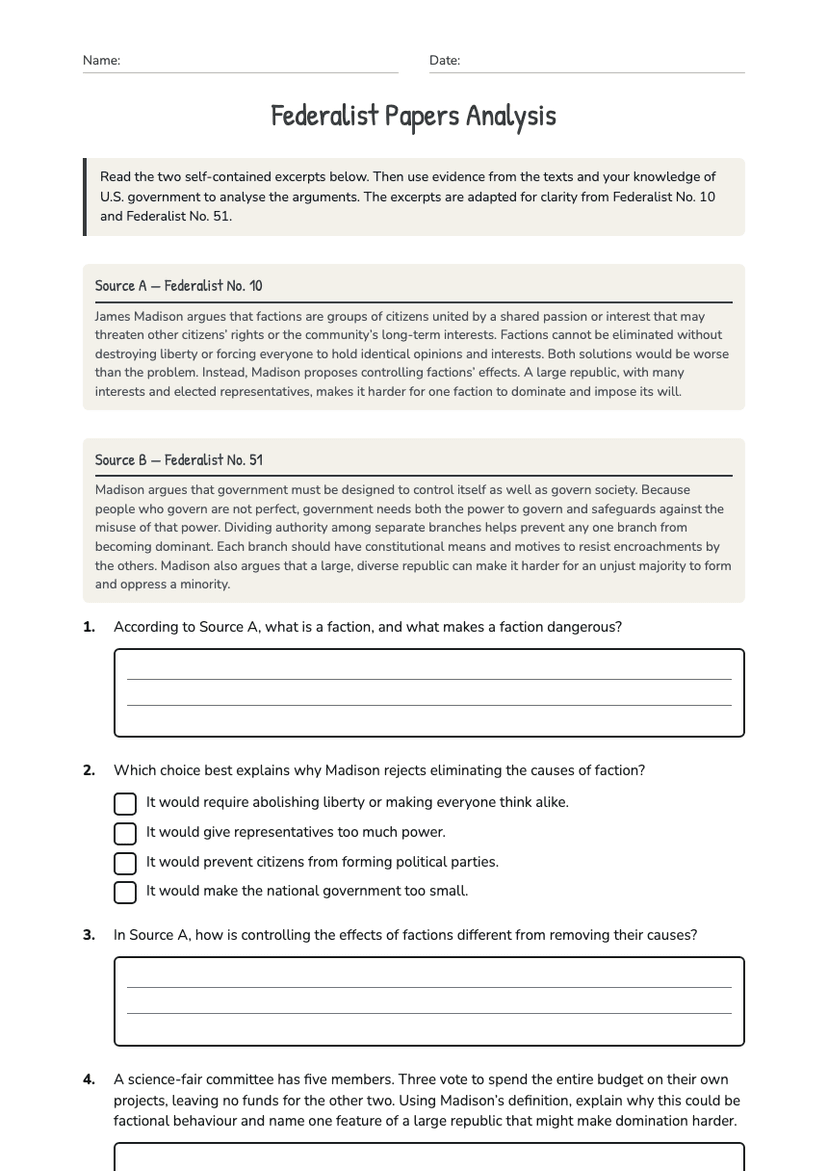
Federalist Papers Analysis
Free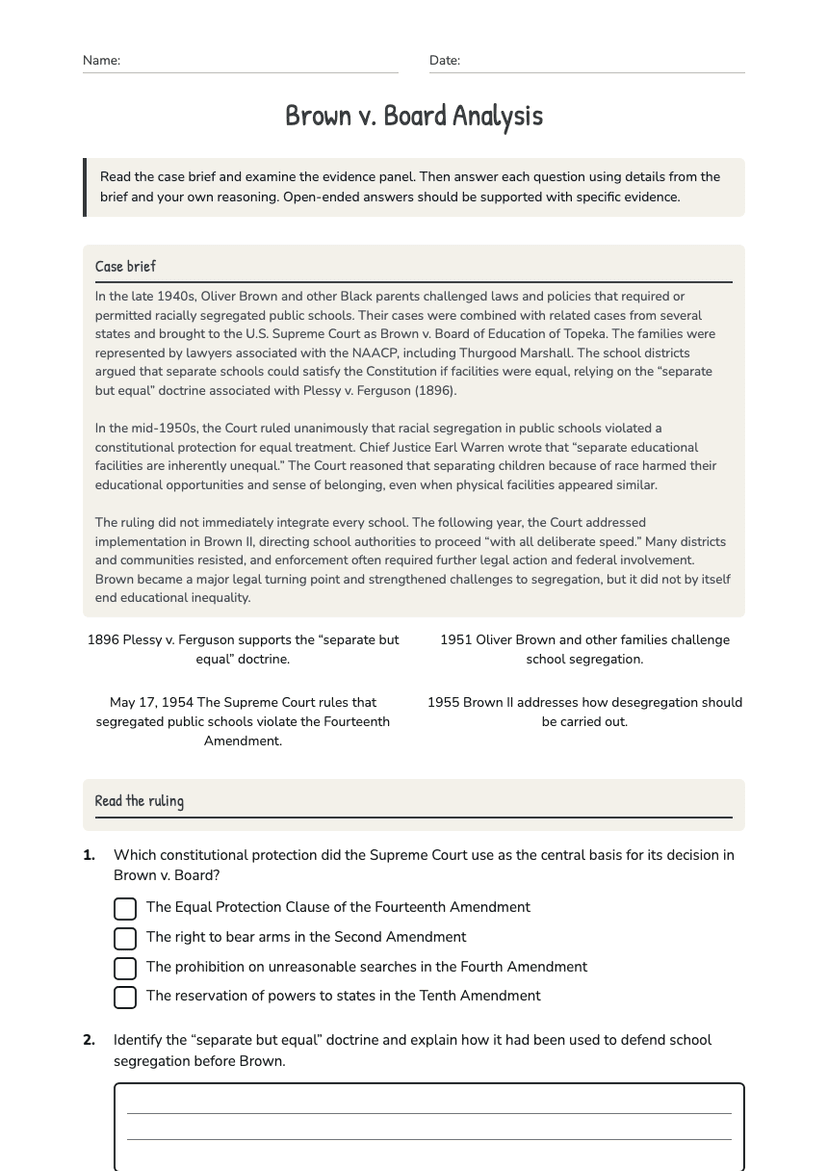
Brown v. Board Analysis
Free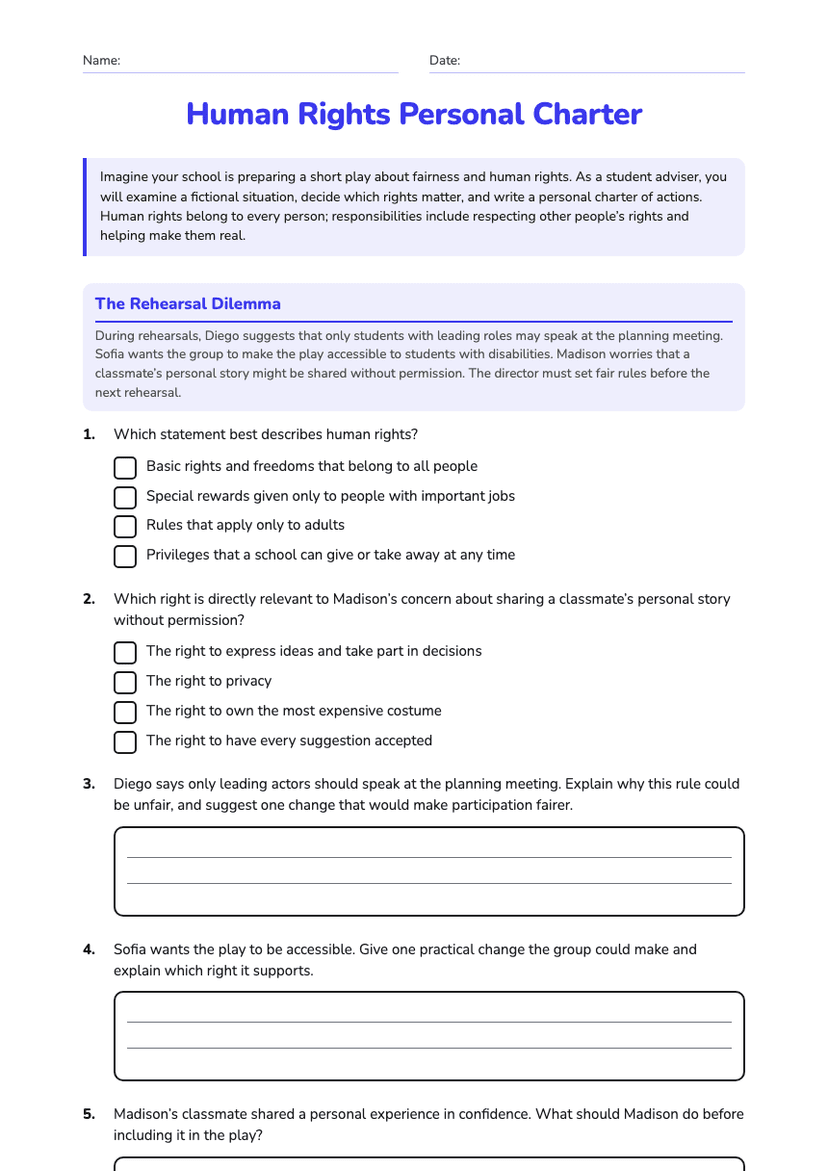
Human Rights Personal Charter
Free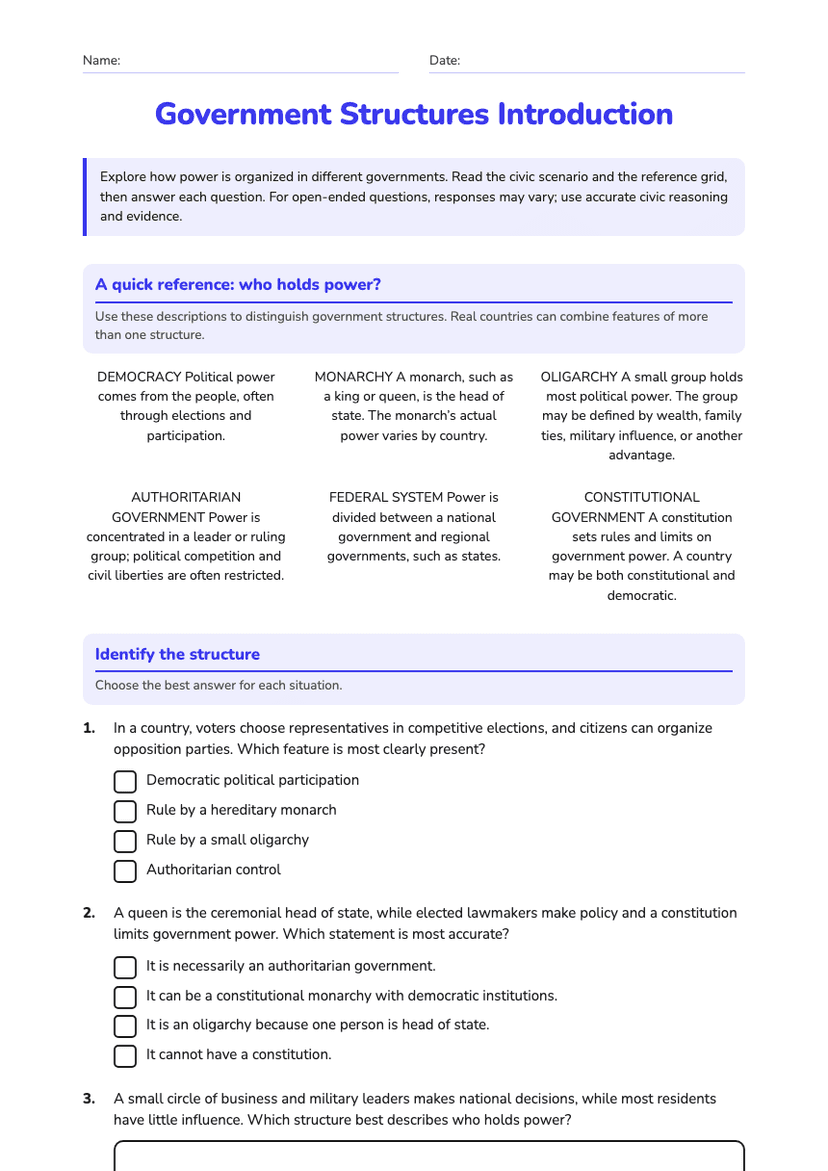
Government Structures Introduction
Free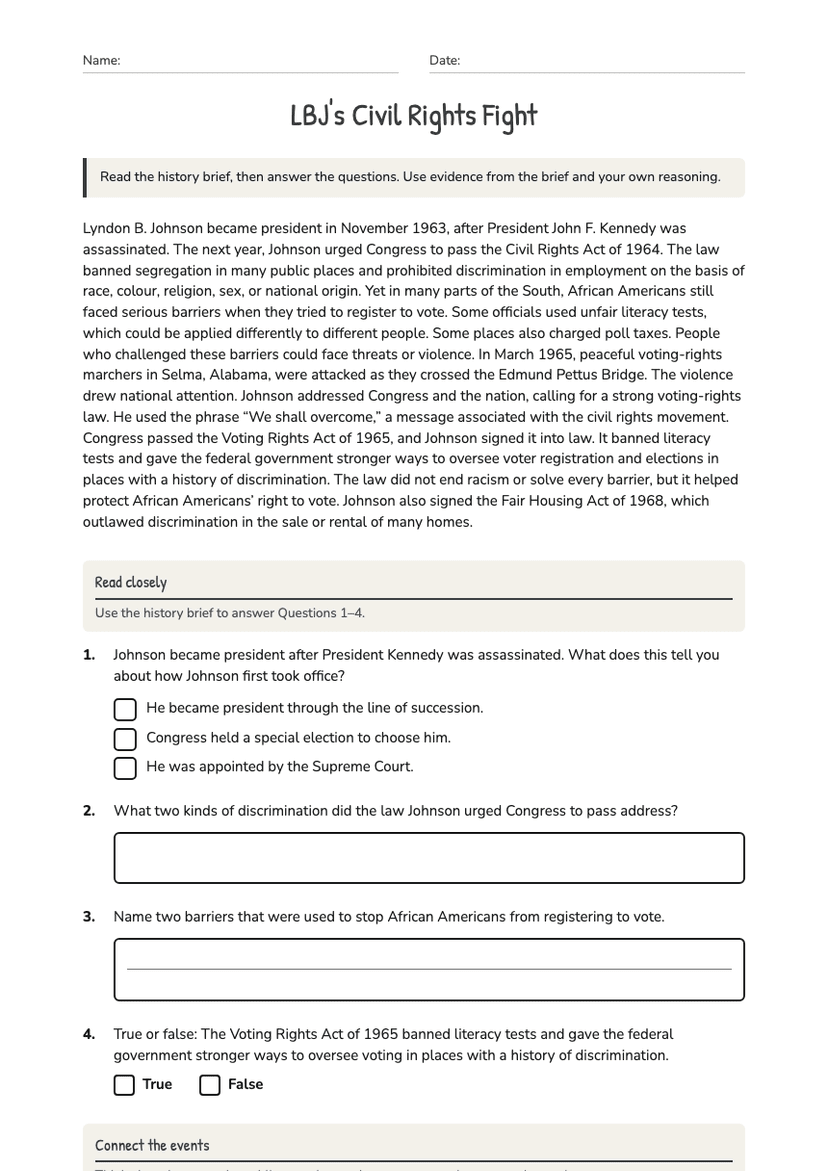
LBJ's Civil Rights Fight
Free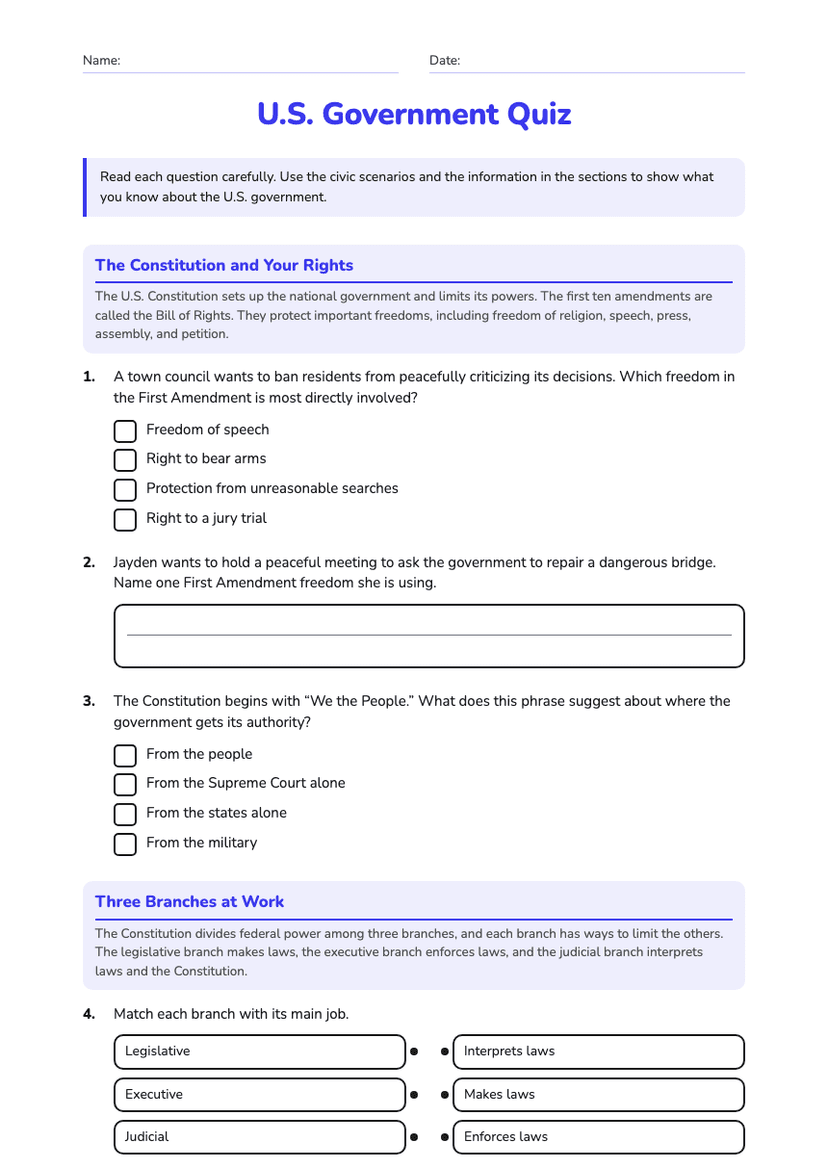
U.S. Government Quiz
Free
Introduction to Government
Free