Intro to Latin Poetry
A free languages worksheet ready for your classroom. Open in Kuraplan to grab the print-ready PDF, customize it for your students, or generate a fresh version in seconds.
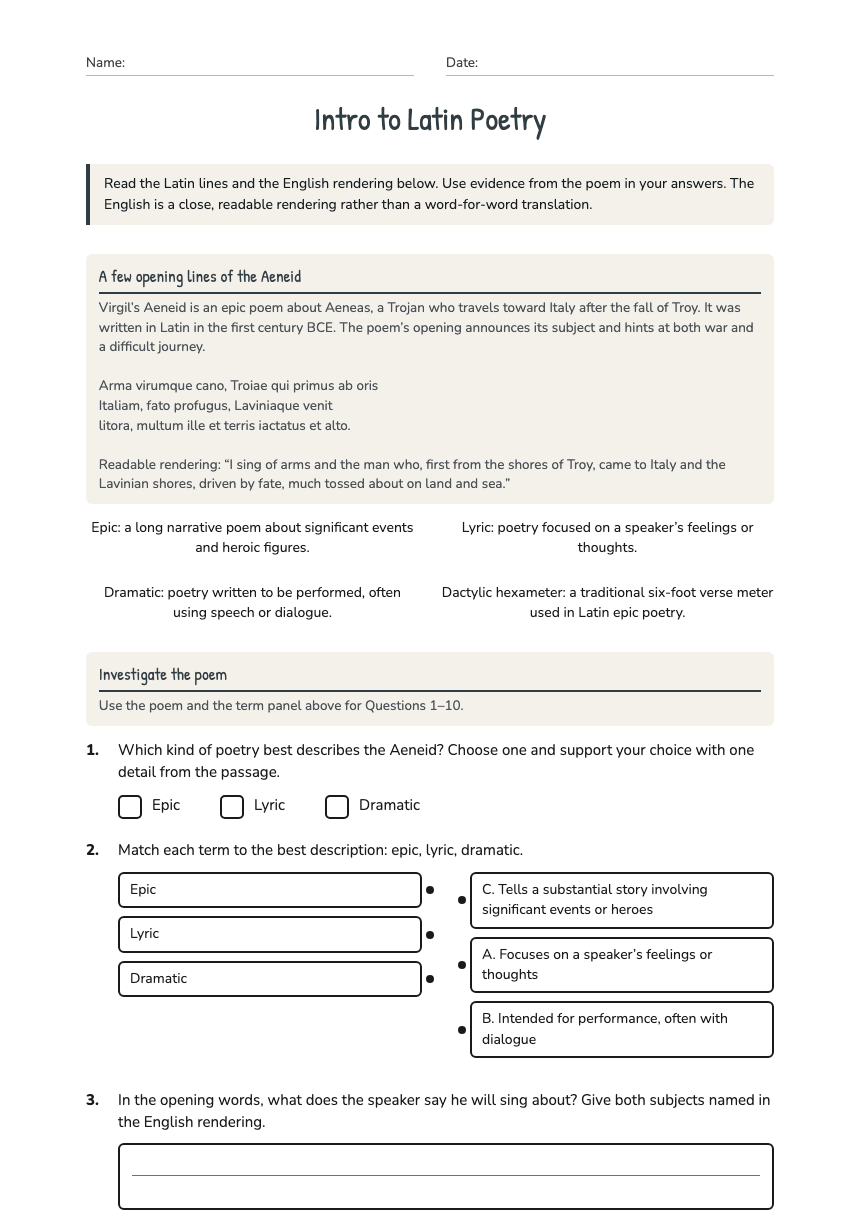
Intro to Latin Poetry
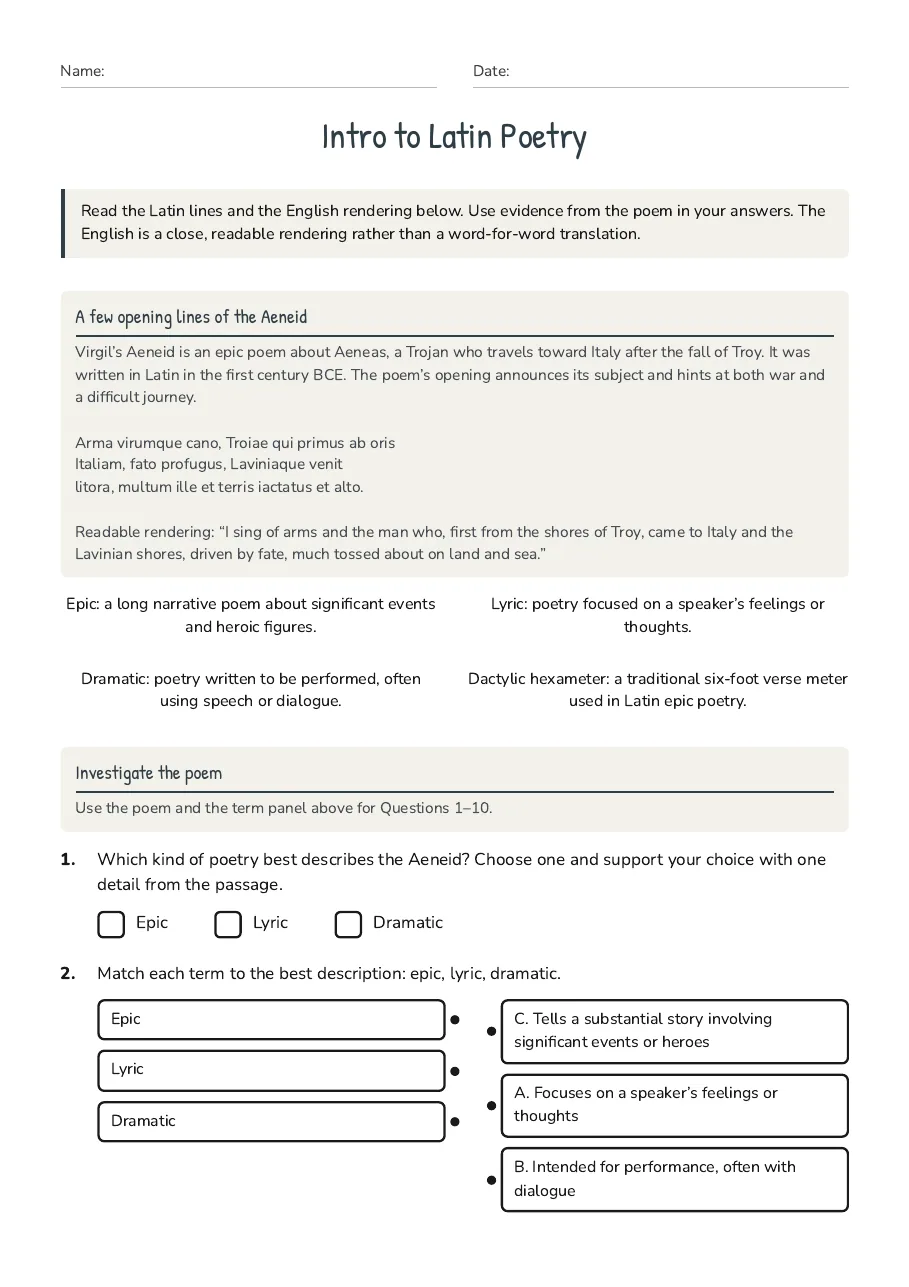
A few opening lines of the Aeneid
Virgil’s Aeneid is an epic poem about Aeneas, a Trojan who travels toward Italy after the fall of Troy. It was written in Latin in the first century BCE. The poem’s opening announces its subject and hints at both war and a difficult journey. Arma virumque cano, Troiae qui primus ab oris Italiam, fato profugus, Laviniaque venit litora, multum ille et terris iactatus et alto. Readable rendering: “I sing of arms and the man who, first from the shores of Troy, came to Italy and the Lavinian shores, driven by fate, much tossed about on land and sea.”
Epic: a long narrative poem about significant events and heroic figures.
Lyric: poetry focused on a speaker’s feelings or thoughts.
Dramatic: poetry written to be performed, often using speech or dialogue.
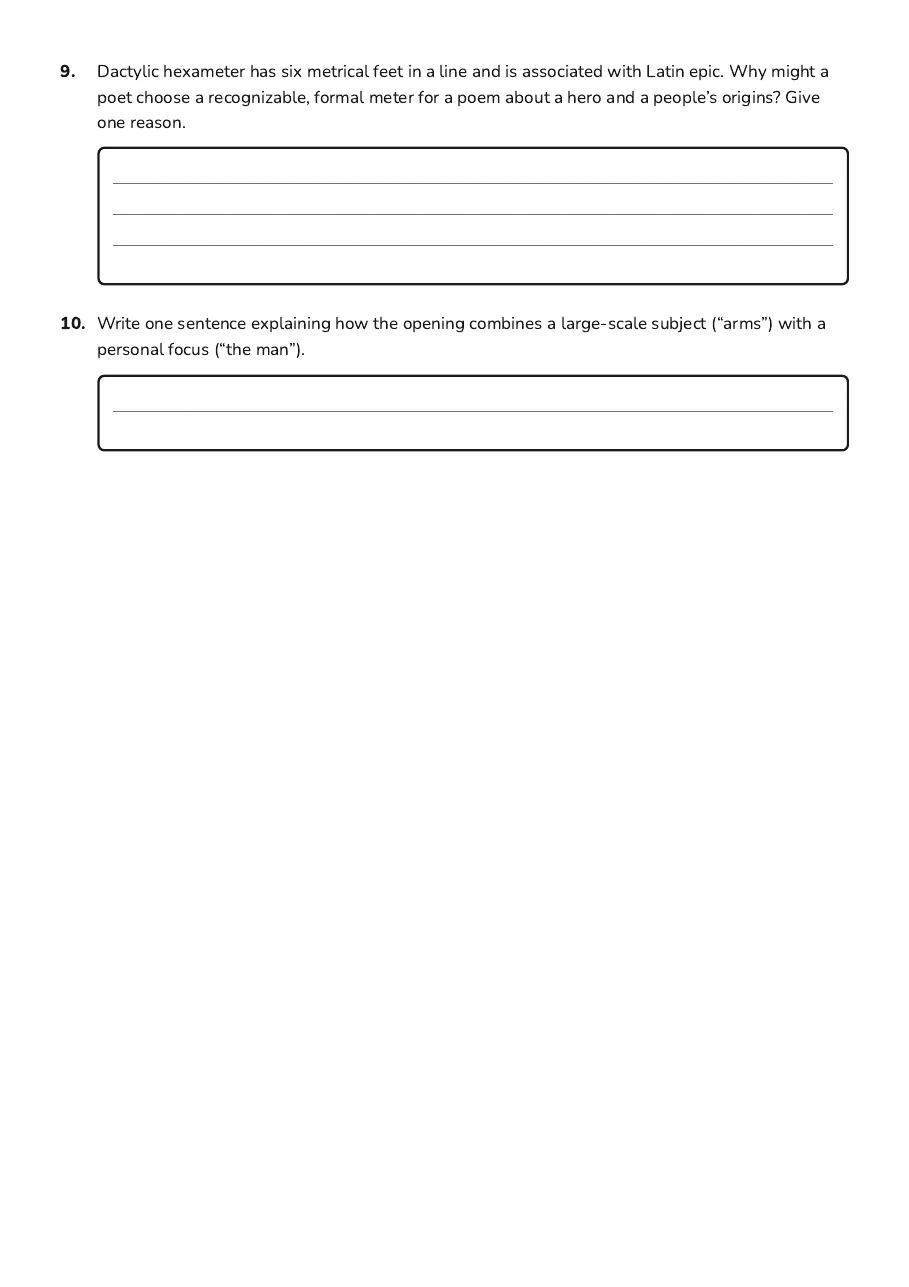
Dactylic hexameter: a traditional six-foot verse meter used in Latin epic poetry.
Investigate the poem
Use the poem and the term panel above for Questions 1–10.
- Epic
- Lyric
- Dramatic
- Epic
- Lyric
- Dramatic
- C. Tells a substantial story involving significant events or heroes
- A. Focuses on a speaker’s feelings or thoughts
- B. Intended for performance, often with dialogue
3 printable pages
Page 1
Page 2
Page 3
About This Worksheet
Free in Kuraplan
Sign up free, grab the PDF, and customize it for your class.
Print-Ready
Formatted for standard paper. Clean layout, easy to read.
AI-Generated
Created with Kuraplan's AI, designed for real classroom use.
For Teachers & Parents
Use in classrooms, for homework, tutoring, or homeschool.
Need a custom version of this worksheet?
Kuraplan's AI generates custom worksheets in seconds — differentiated for every learner, aligned to your curriculum.
Generate Custom Worksheets — FreeMore Languages Worksheets
Genes and Traits Introduction
Free
Coming of Age Introduction
Free
Hands-On Multiplication Introduction
Free
Government Structures Introduction
Free
Personal Narrative Introduction
Free
Latin Roots Practice
Free
Latin American Poetry Introduction
Free