Radicals and Rational Exponents
A free mathematics worksheet ready for your classroom. Open in Kuraplan to grab the print-ready PDF, customize it for your students, or generate a fresh version in seconds.
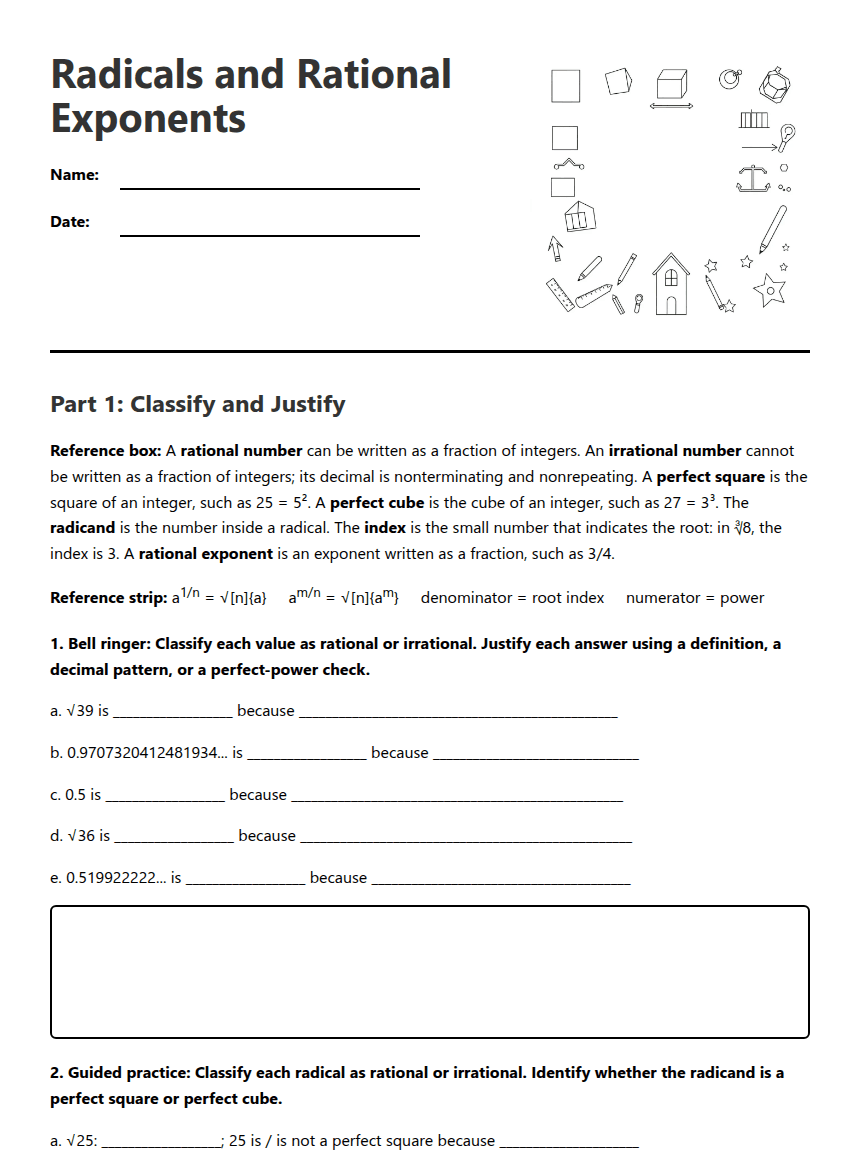
Radicals and Rational Exponents

Part 1: Classify and Justify
Reference box: A rational number can be written as a fraction of integers. An irrational number cannot be written as a fraction of integers; its decimal is nonterminating and nonrepeating. A perfect square is the square of an integer, such as 25 = 5². A perfect cube is the cube of an integer, such as 27 = 3³. The radicand is the number inside a radical. The index is the small number that indicates the root: in ∛8, the index is 3. A rational exponent is an exponent written as a fraction, such as 3/4.
Reference strip: a1/n = √[n]{a} am/n = √[n]{am} denominator = root index numerator = power
a. √39 is __________________ because ________________________________________________
b. 0.9707320412481934... is __________________ because _______________________________
c. 0.5 is __________________ because __________________________________________________
d. √36 is __________________ because __________________________________________________
e. 0.519922222... is __________________ because _______________________________________
a. √25: __________________; 25 is / is not a perfect square because _____________________
b. √10: __________________; 10 is / is not a perfect square because ____________________
c. √27: __________________; 27 is / is not a perfect square because ____________________
d. ∛27: __________________; 27 is / is not a perfect cube because _____________________
e. ∛5: __________________; 5 is / is not a perfect cube because _______________________
A rational number is __________________________________________________________________
A rational exponent is _________________________________________________________________
161/2 = __________ is __________________, while 21/2 = __________ is __________________.
Sentence frame: “The exponent is rational because ____________________. The value is __________________ because ____________________.”
Part 2: Connect Representations
a. √25 = __________________________; rational or irrational: __________________
b. √10 = __________________________; rational or irrational: __________________
c. ∛27 = _________________________; rational or irrational: __________________
d. ∛5 = __________________________; rational or irrational: __________________
e. √[4]{16³} = ____________________; rational or irrational: __________________
a. 491/2 is __________________
b. 101/2 is __________________
c. 82/3 is __________________
d. 51/3 is __________________
Explanation: __________________________________________________________________________
a. Can a rational exponent produce an irrational value? Give an example and explain.
______________________________________________________________________________________
b. How do you know whether a radical is rational?
______________________________________________________________________________________
Sentence frame: “Yes / No, because a rational exponent ________________________________.”
Rational value: ____________________________ Justification: ______________________________
Irrational value: __________________________ Justification: ______________________________
Part 3: Exit Ticket and Reflection
1 — I need substantial help 2 — I need some help 3 — I am mostly confident 4 — I can explain it to someone else
One representation I can now convert is _________________________________________________
One strategy that helped me was ________________________________________________________
Answer Key — Separate Final Page
1. a. Irrational; 39 is not a perfect square. b. Irrational; the decimal is nonterminating and nonrepeating. c. Rational; it terminates and equals 1/2. d. Rational; √36 = 6. e. Rational; the decimal eventually repeats.
2. a. Rational; 25 is a perfect square. b. Irrational; 10 is not a perfect square. c. Irrational; 27 is not a perfect square. d. Rational; 27 is a perfect cube. e. Irrational; 5 is not a perfect cube.
3. A rational number is a number that can be written as a fraction of integers. A rational exponent is an exponent written as a fraction. 161/2 = 4, rational; 21/2 = √2, irrational.
4. a. 251/2, rational. b. 101/2, irrational. c. 271/3, rational. d. 51/3, irrational. e. 163/4, rational.
5. a. Rational, because 49 is a perfect square. b. Irrational, because 10 is not a perfect square. c. Rational, because 8 is a perfect cube and 82/3 = 4. d. Irrational, because 5 is not a perfect cube.
6. Yes. For example, 21/2 = √2, which is irrational. A radical is rational when the relevant radicand is a perfect power, such as a perfect square or perfect cube.
7. Answers vary. Example: 161/2 = 4 is rational; 21/2 = √2 is irrational.
8. x2/3.
9. √[3]{m4}.
10. Rational, because √49 = 7, an integer.
11. A rational number is a value that can be written as a fraction of integers. A rational exponent is an exponent written as a fraction; it may produce either a rational or irrational value.
About This Worksheet
Free in Kuraplan
Sign up free, grab the PDF, and customize it for your class.
Print-Ready
Formatted for standard paper. Clean layout, easy to read.
AI-Generated
Created with Kuraplan's AI, designed for real classroom use.
For Teachers & Parents
Use in classrooms, for homework, tutoring, or homeschool.
Need a custom version of this worksheet?
Kuraplan's AI generates custom worksheets in seconds — differentiated for every learner, aligned to your curriculum.
Generate Custom Worksheets — FreeMore Mathematics Worksheets
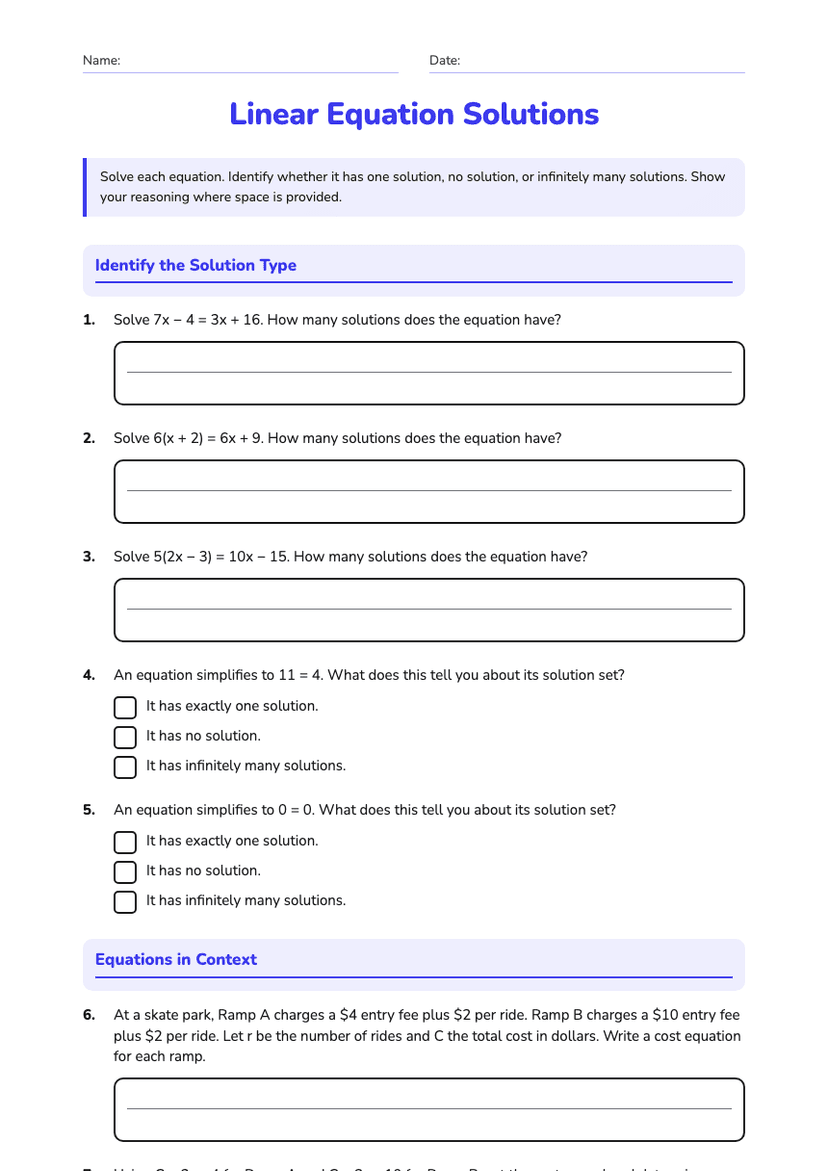
Linear Equation Solutions
Free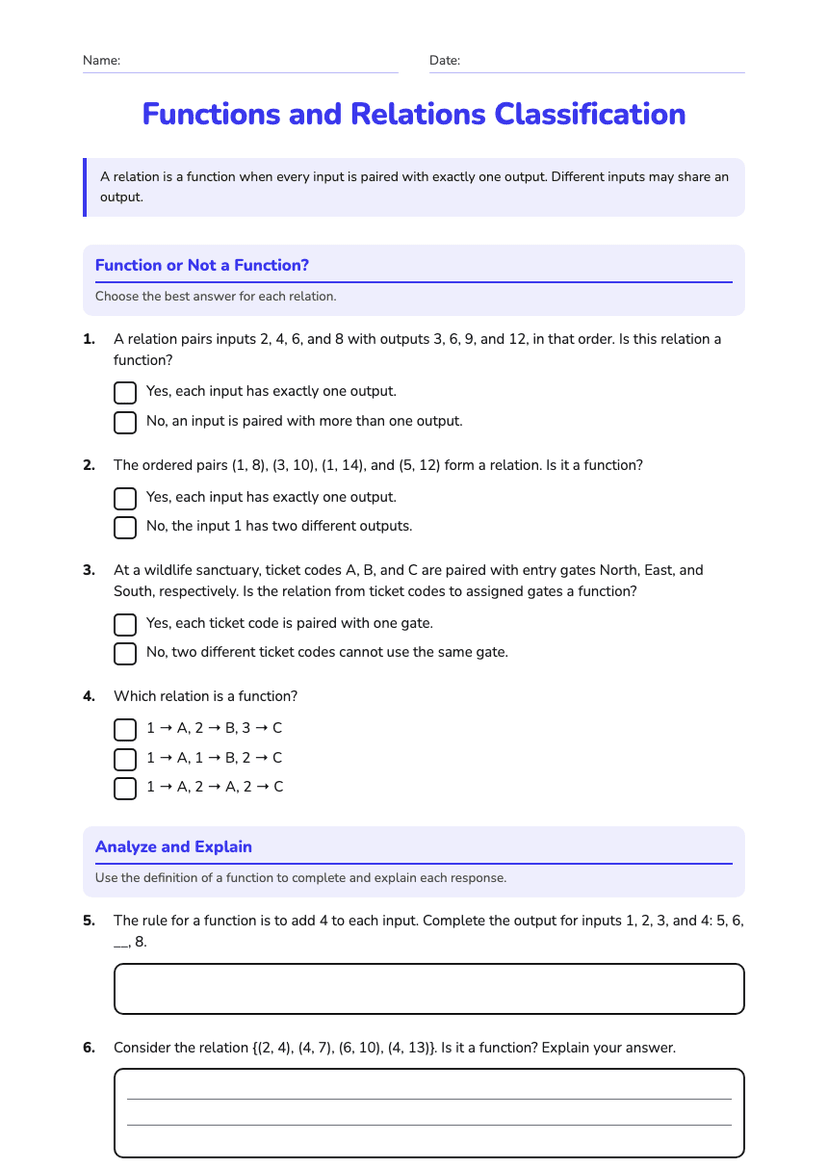
Functions and Relations Classification
Free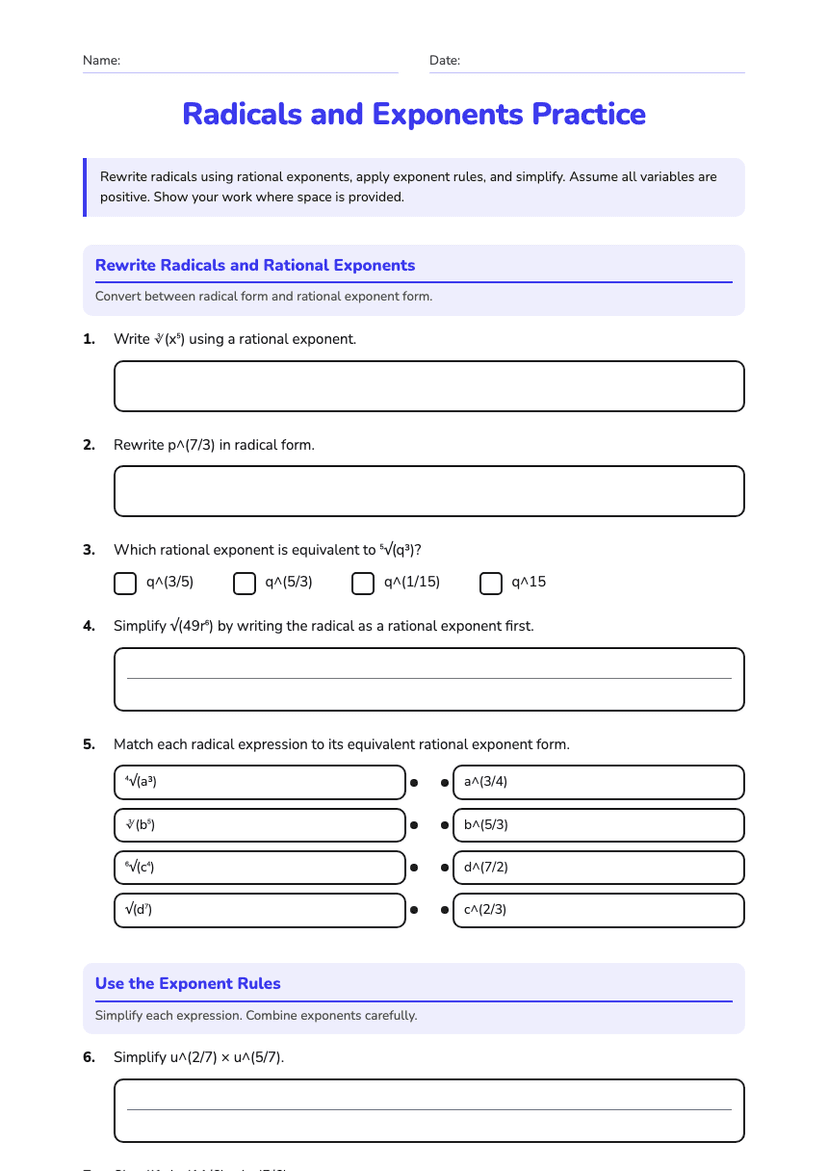
Radicals and Exponents Practice
Free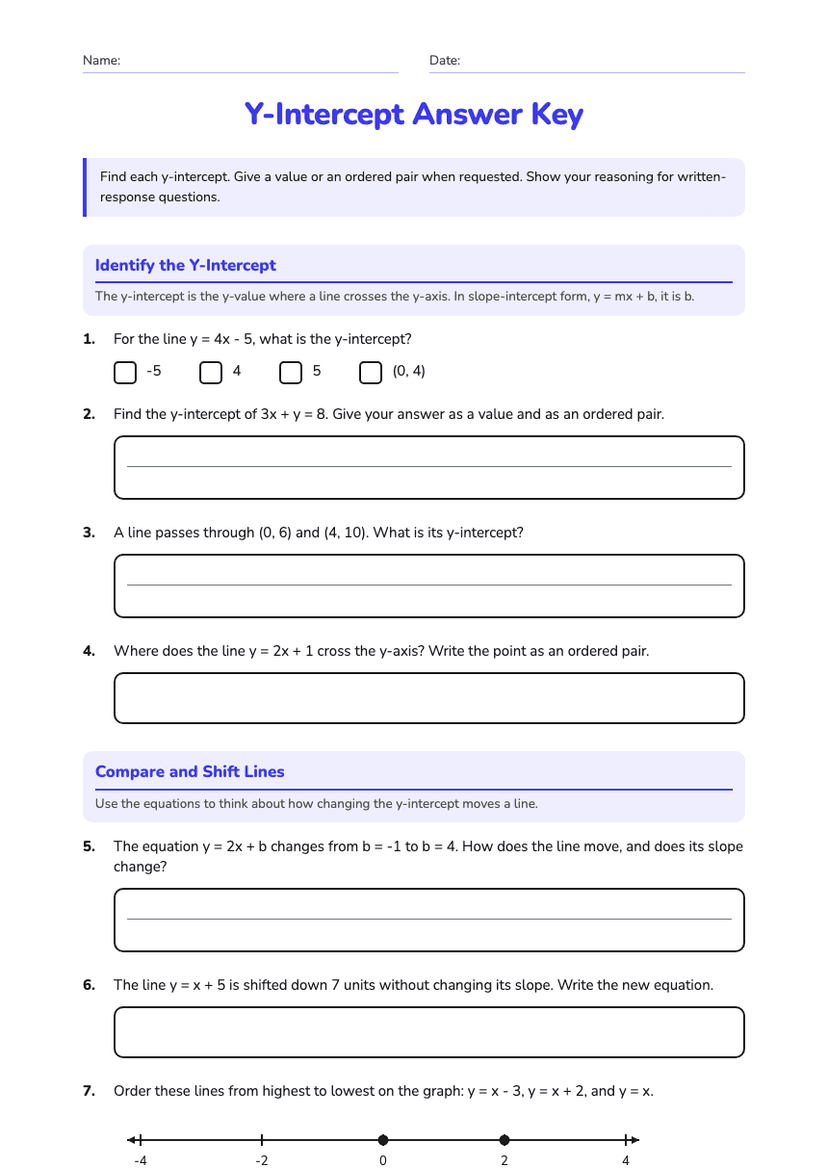
Y-Intercept Answer Key
Free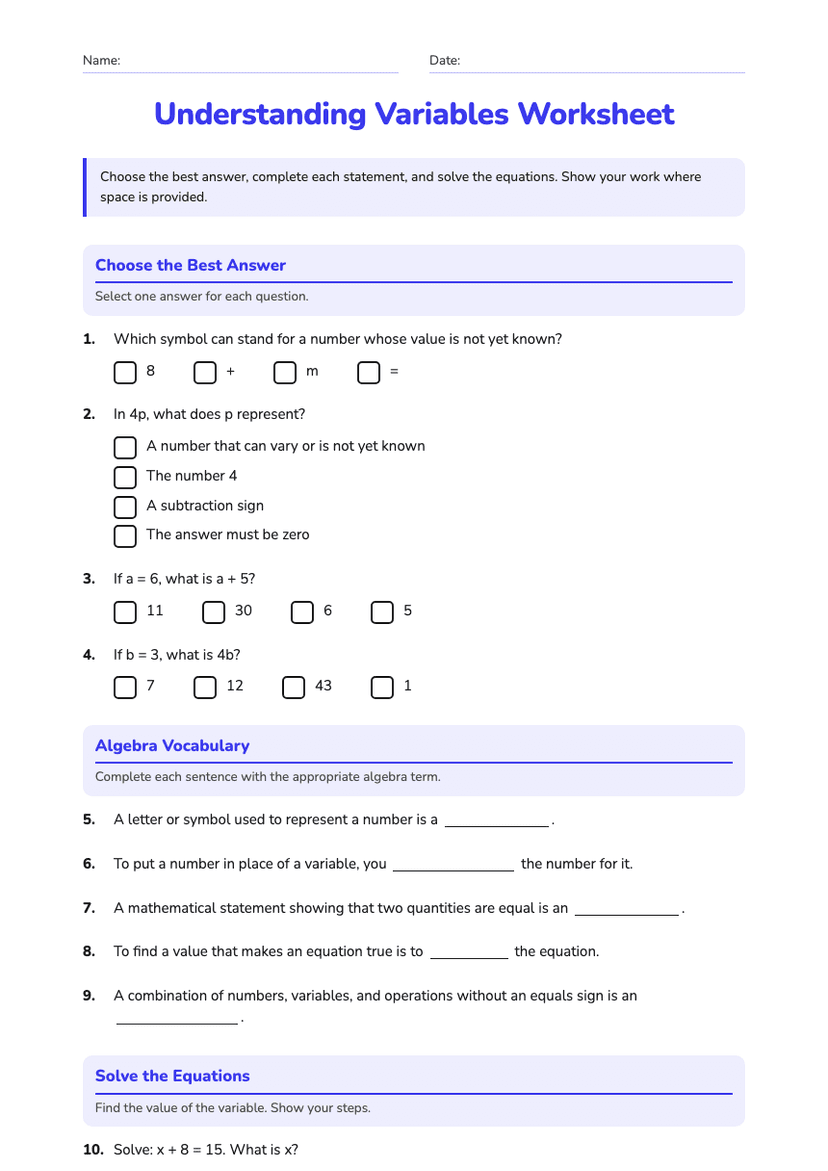
Understanding Variables Worksheet
Free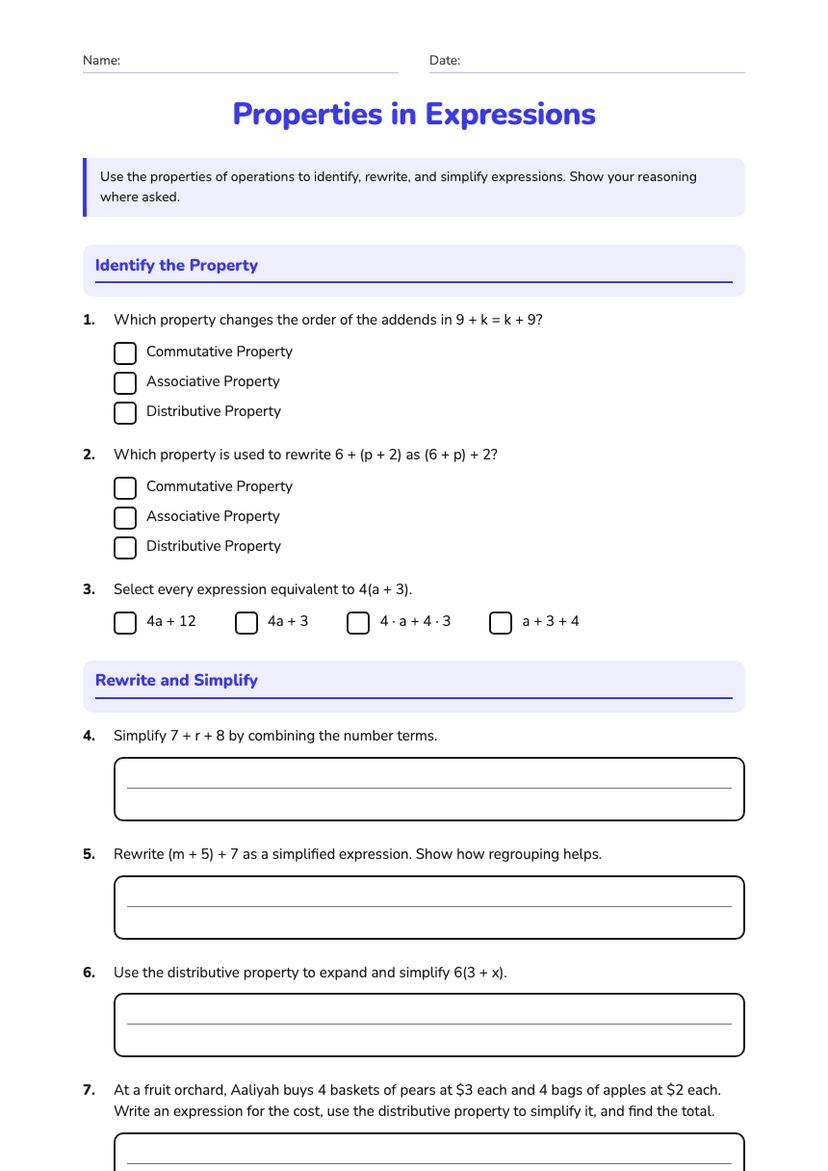
Properties in Expressions
Free
Variables in Real Life
Free