Tectonic Hazards Reading Comprehension
A free science worksheet ready for your classroom. Open in Kuraplan to grab the print-ready PDF, customize it for your students, or generate a fresh version in seconds.
Tectonic Hazards Reading Comprehension
📖 Reading Passage: When the Earth Moves
I can identify the main idea and understand cause and effect relationships in a text about tectonic hazards.
Deep beneath our feet, the Earth is not as solid as it seems. The Earth's outer layer, called the crust, is broken into huge pieces called tectonic plates. These plates are always moving very slowly, like pieces of a giant puzzle that never stays still.
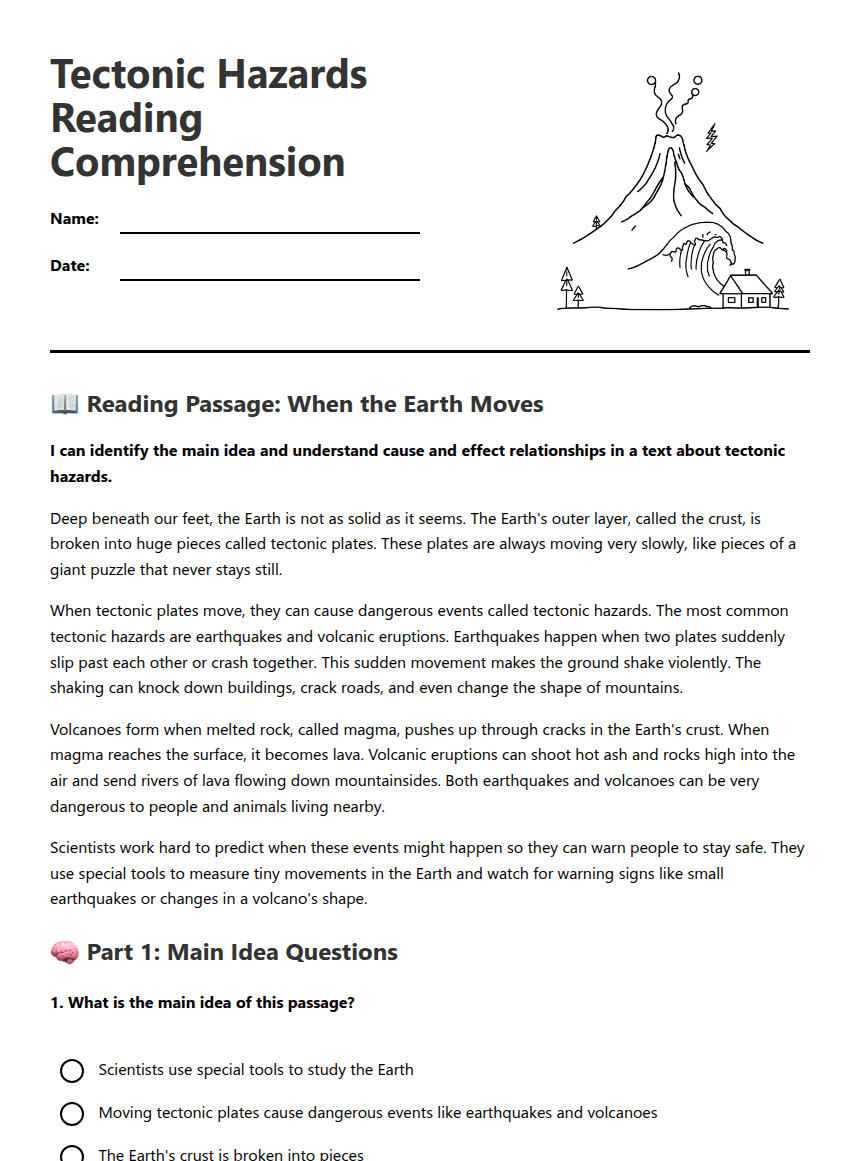
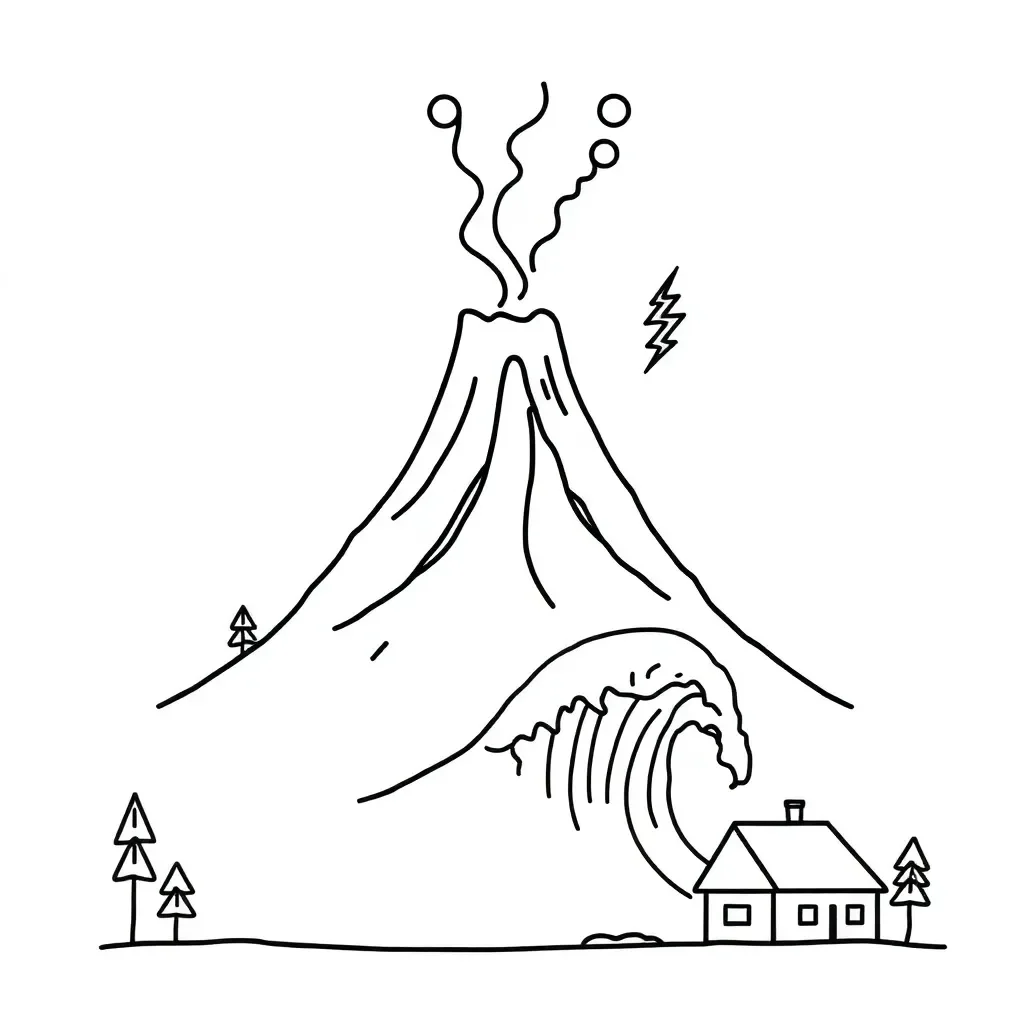
When tectonic plates move, they can cause dangerous events called tectonic hazards. The most common tectonic hazards are earthquakes and volcanic eruptions. Earthquakes happen when two plates suddenly slip past each other or crash together. This sudden movement makes the ground shake violently. The shaking can knock down buildings, crack roads, and even change the shape of mountains.
Volcanoes form when melted rock, called magma, pushes up through cracks in the Earth's crust. When magma reaches the surface, it becomes lava. Volcanic eruptions can shoot hot ash and rocks high into the air and send rivers of lava flowing down mountainsides. Both earthquakes and volcanoes can be very dangerous to people and animals living nearby.
Scientists work hard to predict when these events might happen so they can warn people to stay safe. They use special tools to measure tiny movements in the Earth and watch for warning signs like small earthquakes or changes in a volcano's shape.
🧠 Part 1: Main Idea Questions
🔗 Part 2: Cause and Effect Questions
Effect 1: ________________________________
Effect 2: ________________________________
About This Worksheet
Free in Kuraplan
Sign up free, grab the PDF, and customize it for your class.
Print-Ready
Formatted for standard paper. Clean layout, easy to read.
AI-Generated
Created with Kuraplan's AI, designed for real classroom use.
For Teachers & Parents
Use in classrooms, for homework, tutoring, or homeschool.
Need a custom version of this worksheet?
Kuraplan's AI generates custom worksheets in seconds — differentiated for every learner, aligned to your curriculum.
Generate Custom Worksheets — FreeMore Science Worksheets
Cloud Forecasting Image Match-Up
Free
Cloud Forecasting Match-Up
Free
Weather Data and Fronts
Free
Weather Instruments Worksheet
Free
Weather and Climate Sort
Free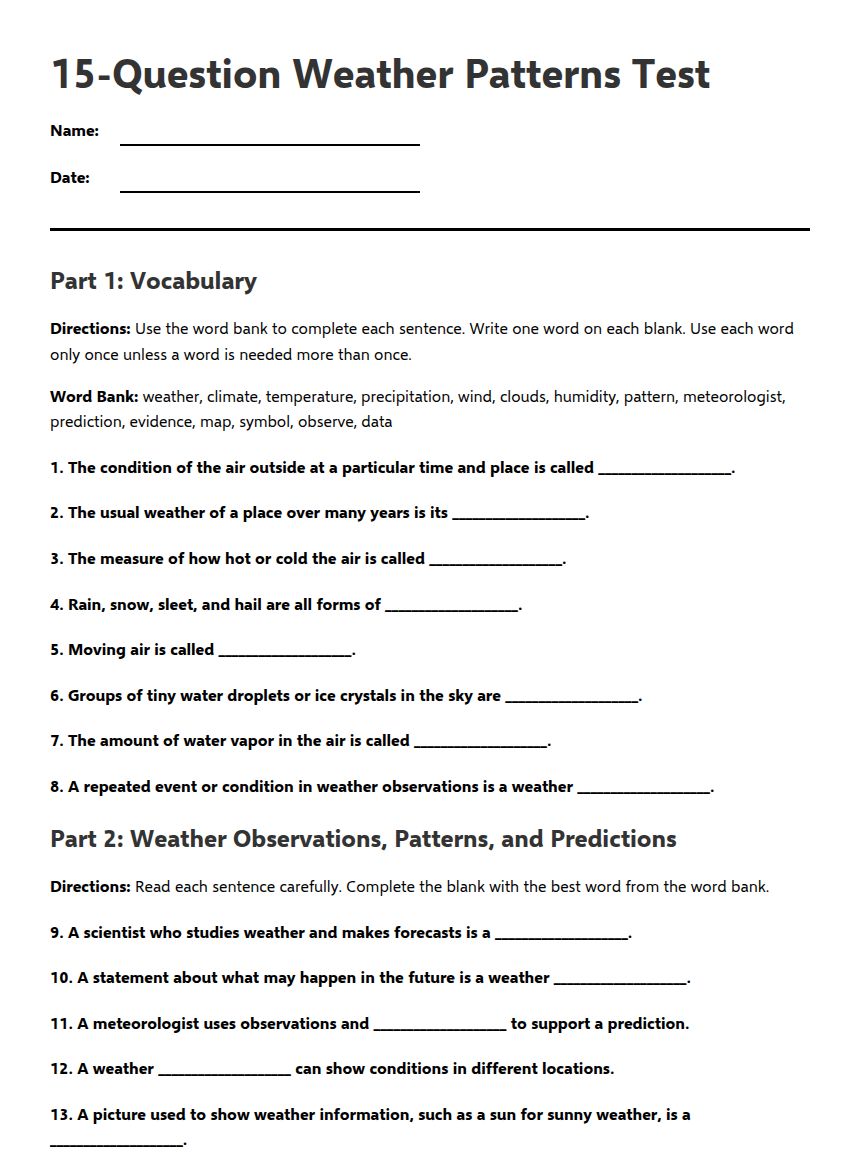
Weather Patterns Test
Free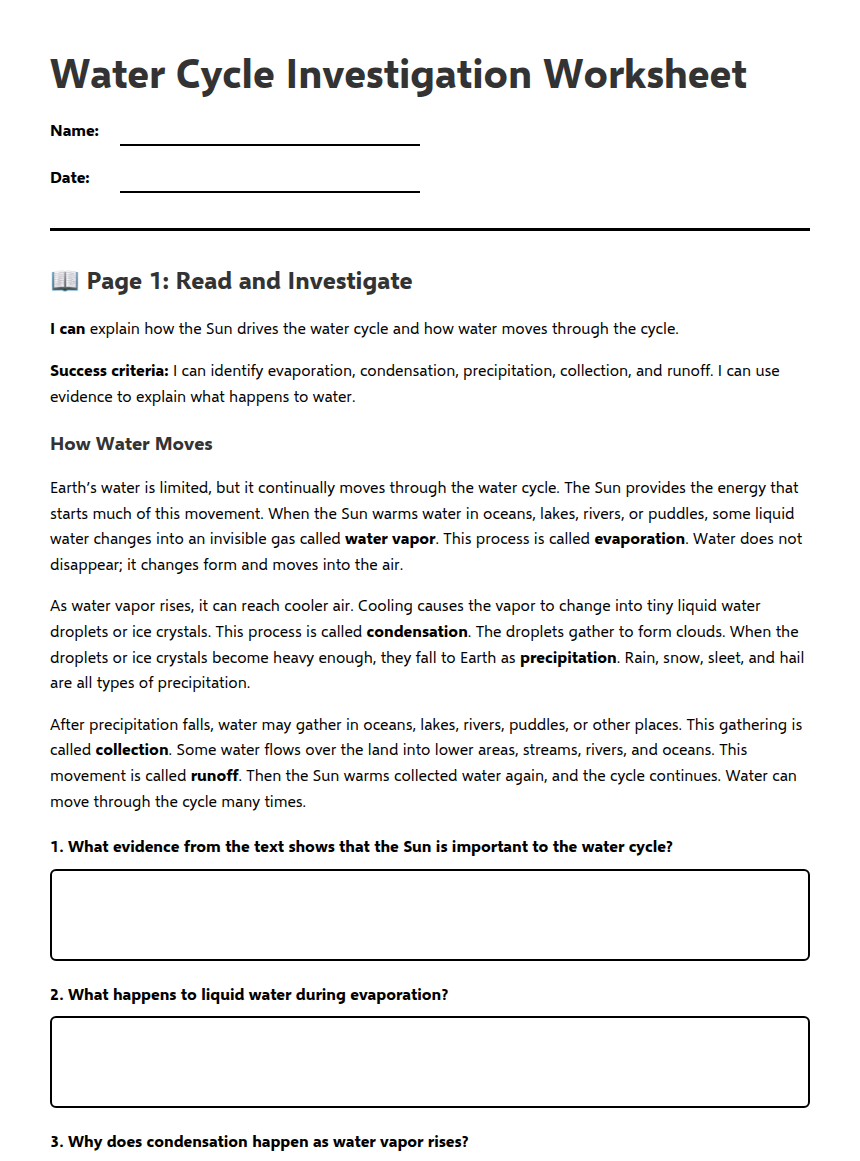
Water Cycle Investigation Worksheet
Free