1920s Stock Market Mania
A free social studies worksheet ready for your classroom. Open in Kuraplan to grab the print-ready PDF, customize it for your students, or generate a fresh version in seconds.
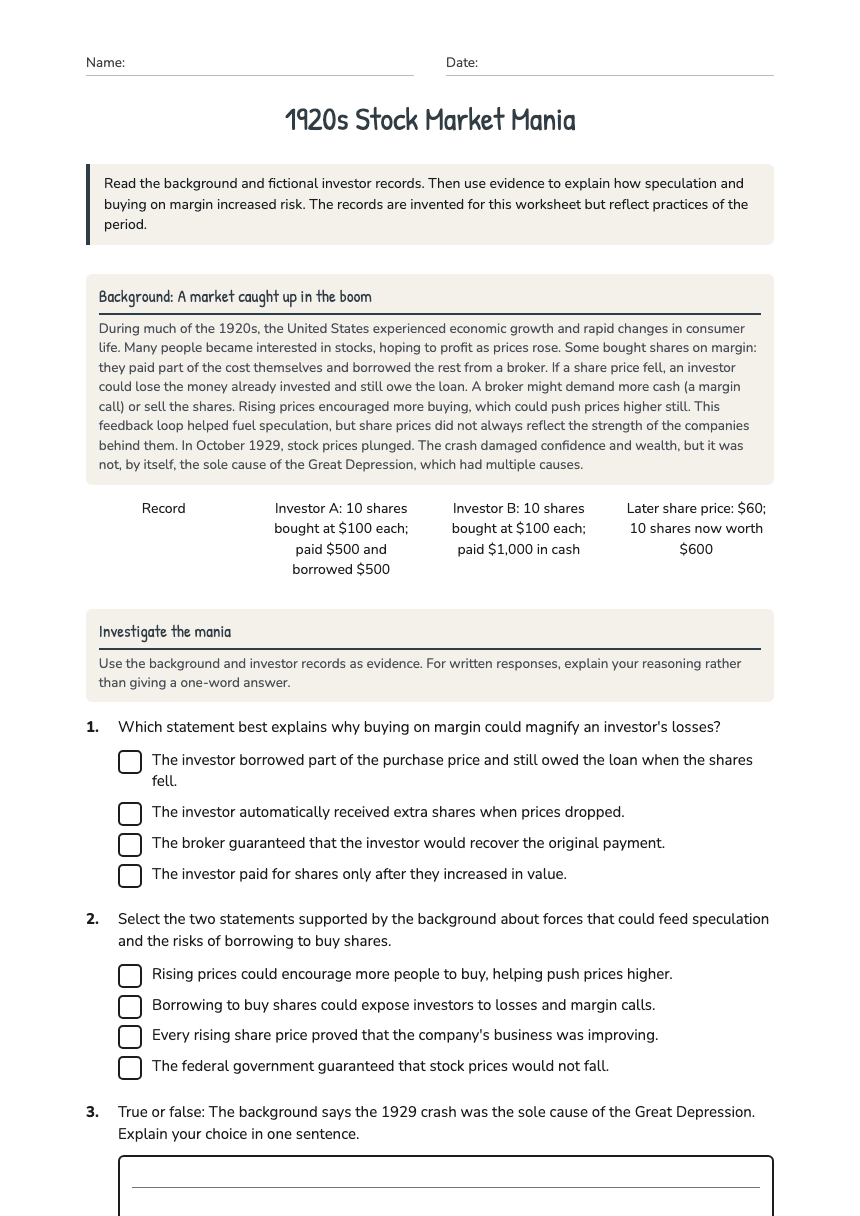
1920s Stock Market Mania
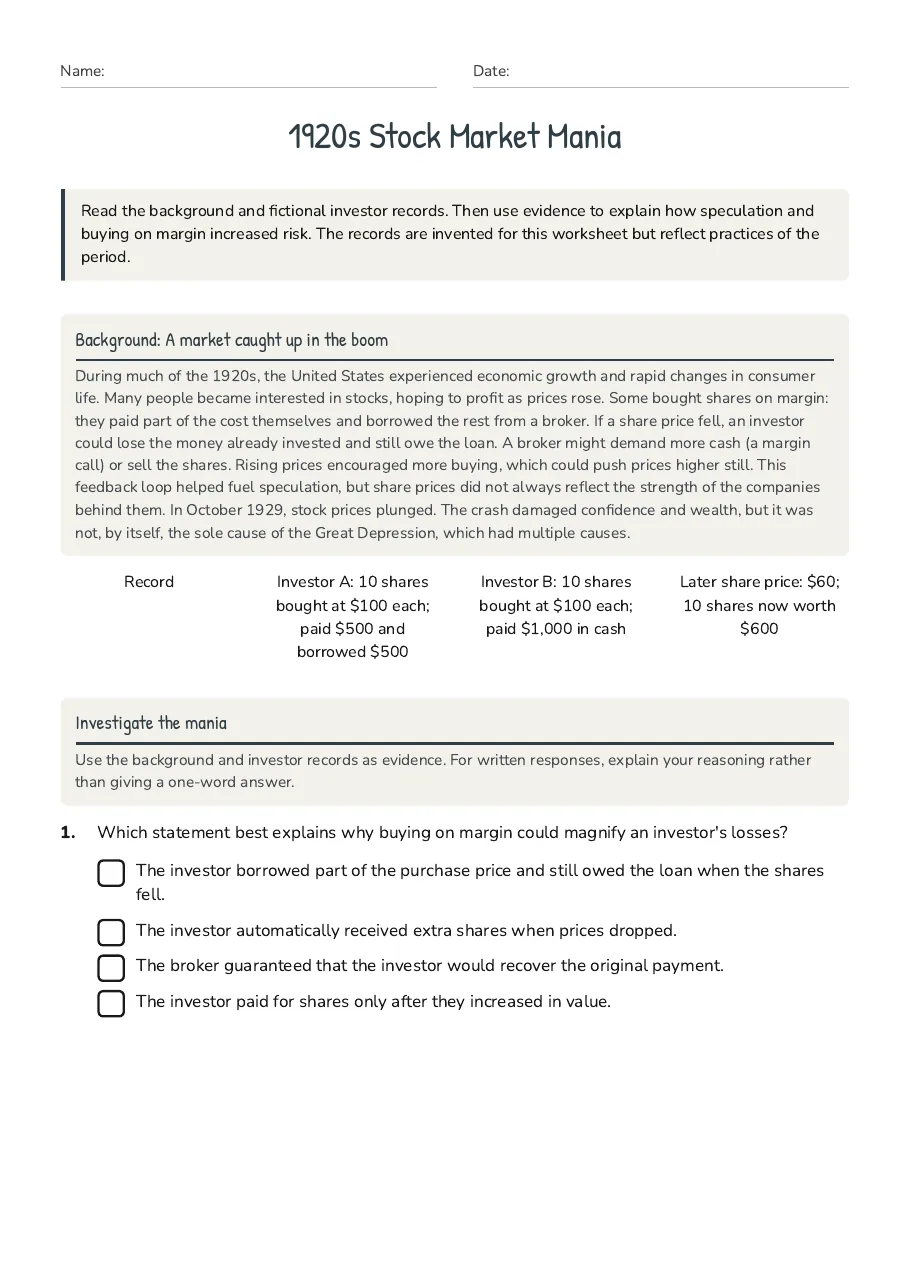
Background: A market caught up in the boom
During much of the 1920s, the United States experienced economic growth and rapid changes in consumer life. Many people became interested in stocks, hoping to profit as prices rose. Some bought shares on margin: they paid part of the cost themselves and borrowed the rest from a broker. If a share price fell, an investor could lose the money already invested and still owe the loan. A broker might demand more cash (a margin call) or sell the shares. Rising prices encouraged more buying, which could push prices higher still. This feedback loop helped fuel speculation, but share prices did not always reflect the strength of the companies behind them. In October 1929, stock prices plunged. The crash damaged confidence and wealth, but it was not, by itself, the sole cause of the Great Depression, which had multiple causes.
Record
Investor A: 10 shares bought at $100 each; paid $500 and borrowed $500
Investor B: 10 shares bought at $100 each; paid $1,000 in cash
Later share price: $60; 10 shares now worth $600
Investigate the mania
Use the background and investor records as evidence. For written responses, explain your reasoning rather than giving a one-word answer.
- The investor borrowed part of the purchase price and still owed the loan when the shares fell.
- The investor automatically received extra shares when prices dropped.
- The broker guaranteed that the investor would recover the original payment.
- The investor paid for shares only after they increased in value.
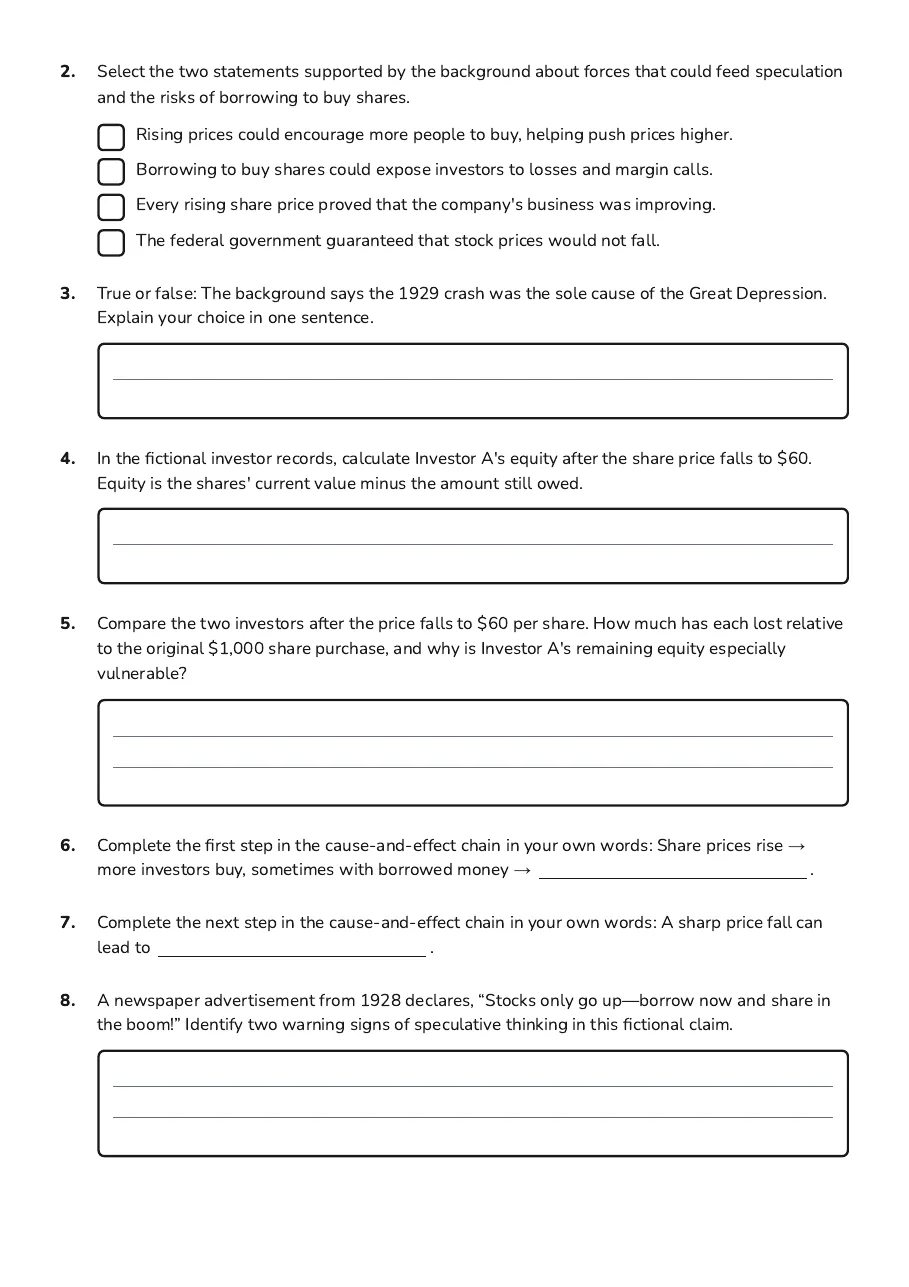
- Rising prices could encourage more people to buy, helping push prices higher.
- Borrowing to buy shares could expose investors to losses and margin calls.
- Every rising share price proved that the company's business was improving.
- The federal government guaranteed that stock prices would not fall.
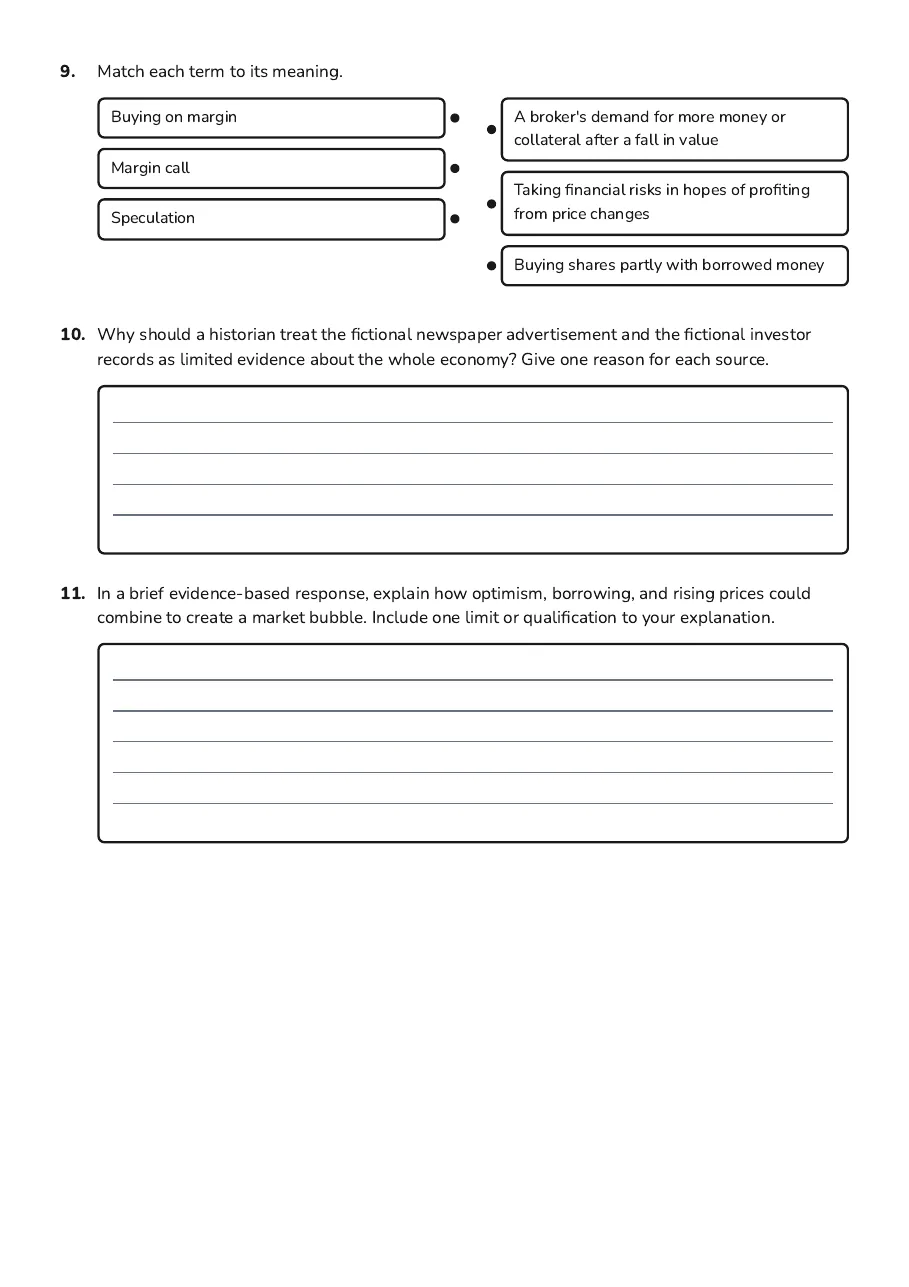
- Buying on margin
- Margin call
- Speculation
- A broker's demand for more money or collateral after a fall in value
- Taking financial risks in hopes of profiting from price changes
- Buying shares partly with borrowed money
3 printable pages
Page 1
Page 2
Page 3
About This Worksheet
Free in Kuraplan
Sign up free, grab the PDF, and customize it for your class.
Print-Ready
Formatted for standard paper. Clean layout, easy to read.
AI-Generated
Created with Kuraplan's AI, designed for real classroom use.
For Teachers & Parents
Use in classrooms, for homework, tutoring, or homeschool.
Need a custom version of this worksheet?
Kuraplan's AI generates custom worksheets in seconds — differentiated for every learner, aligned to your curriculum.
Generate Custom Worksheets — FreeMore Social Studies Worksheets
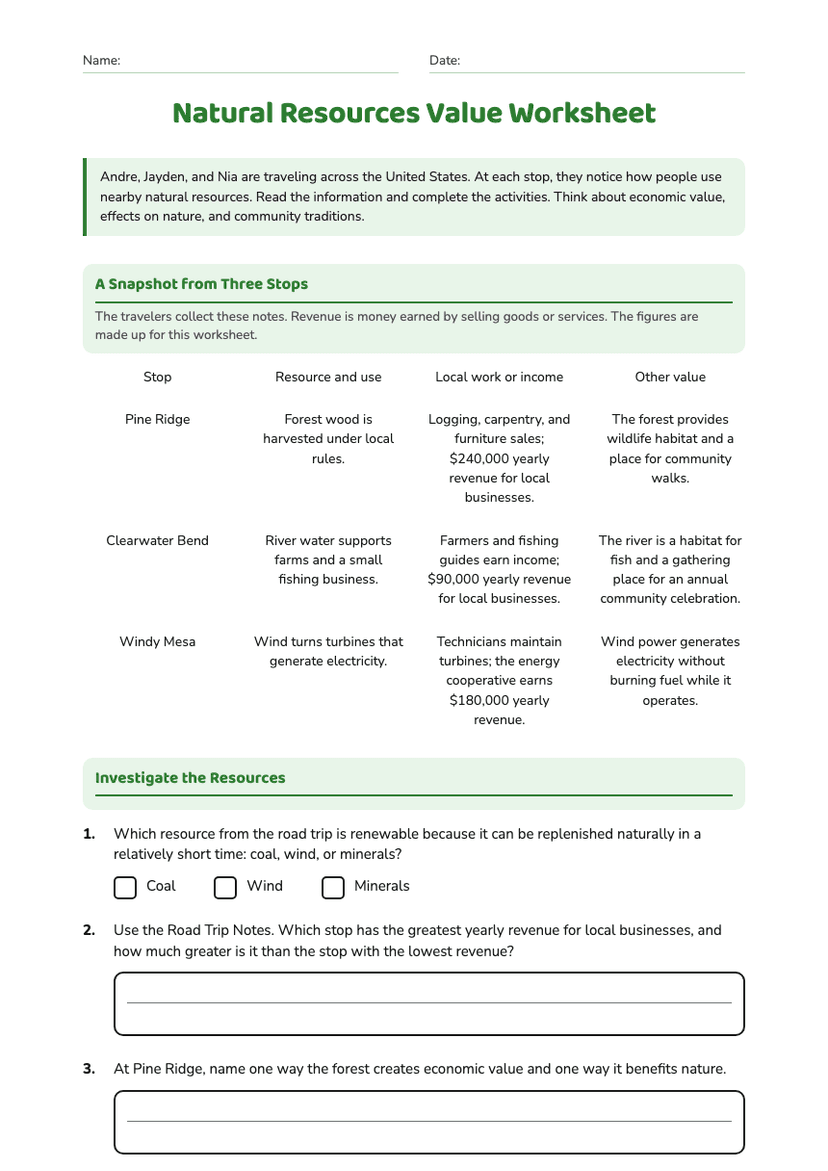
Natural Resources Value Worksheet
Free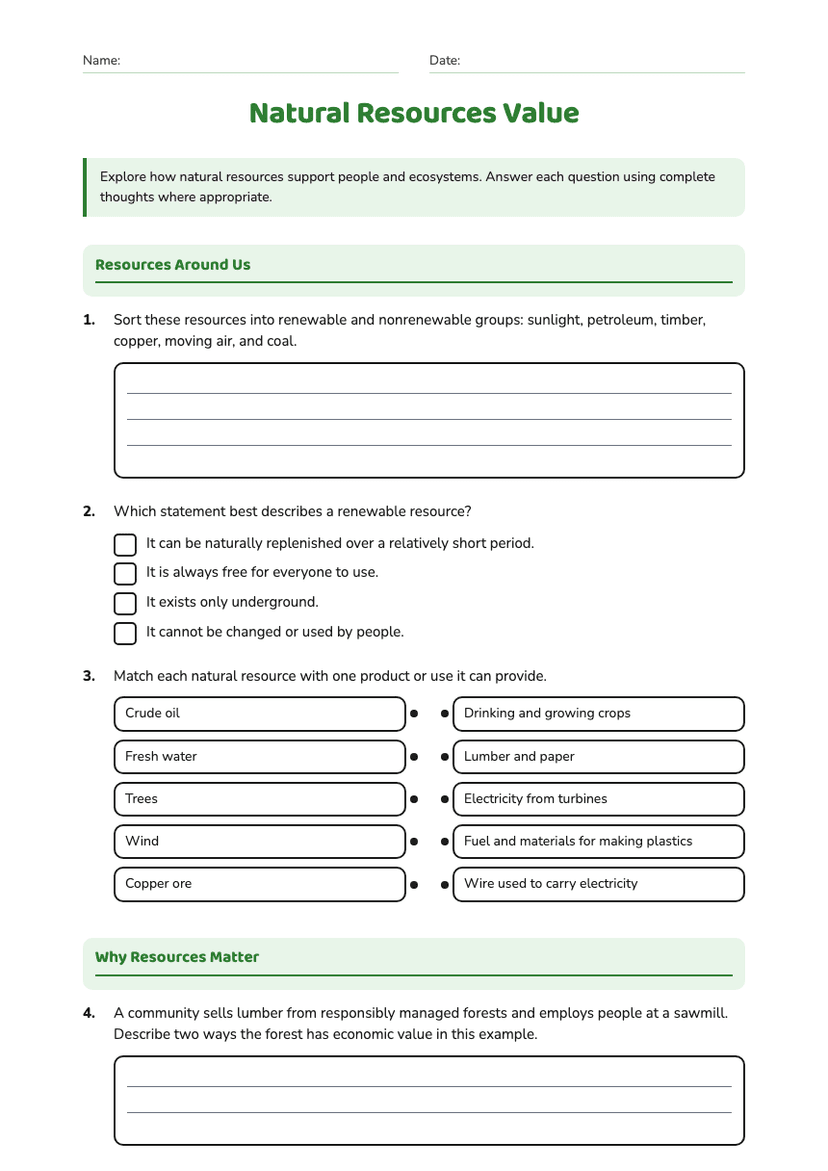
Natural Resources Value
Free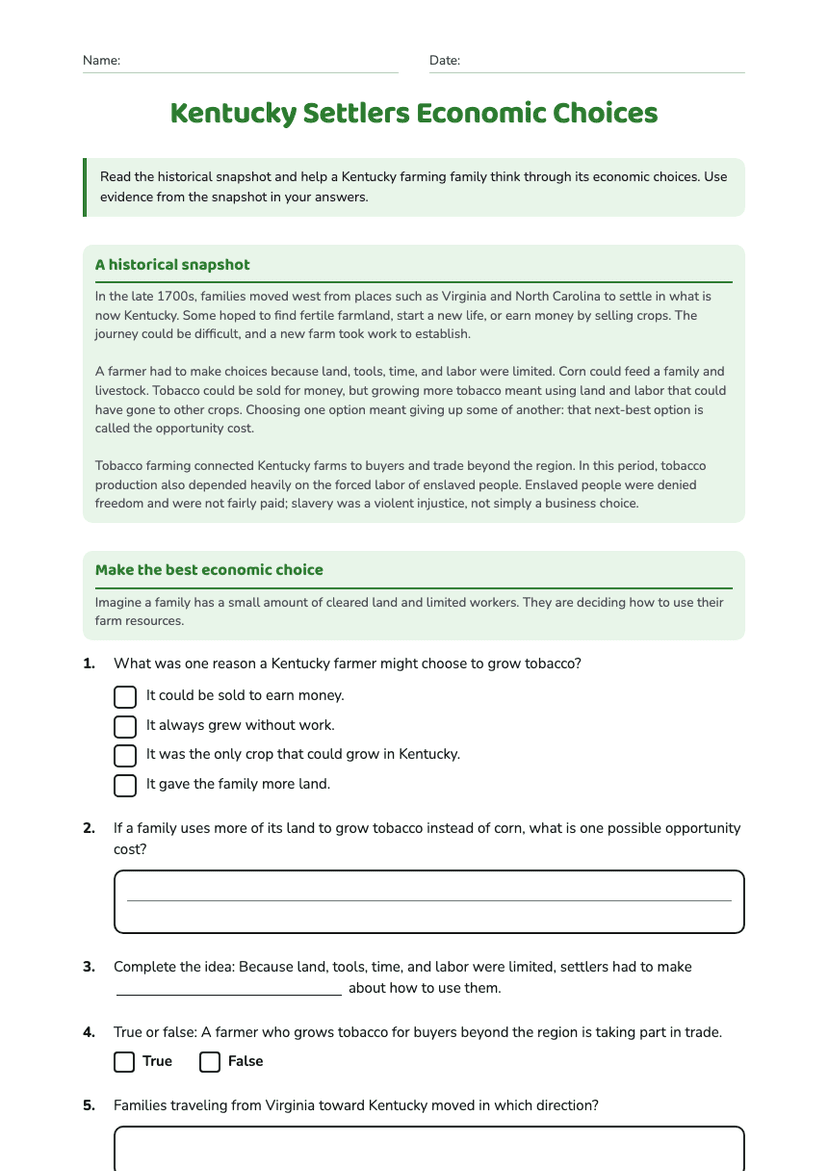
Kentucky Settlers Economic Choices
Free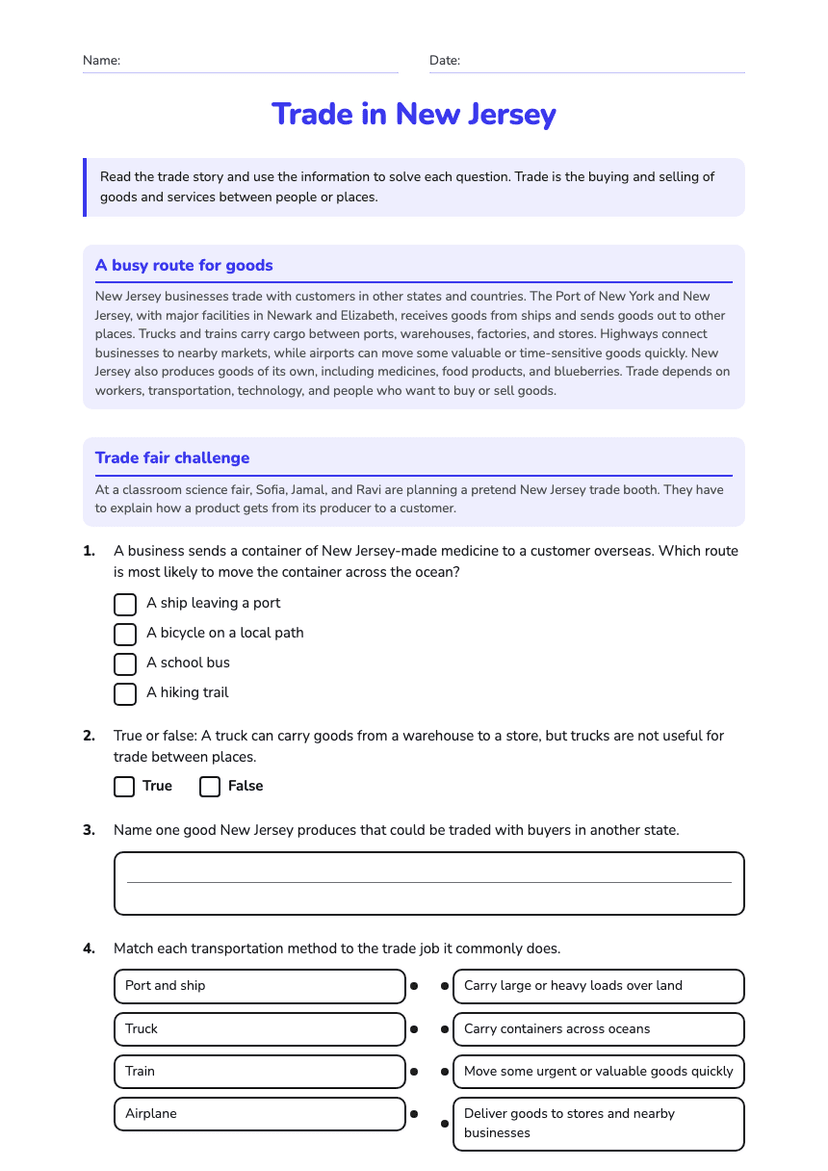
Trade in New Jersey
Free
Needs vs. Wants Sorting
Free
Needs and Wants Sorts
Free
Borrowing Money Responsibly
Free