Advocacy Role-Play Cards
A free other worksheet ready for your classroom. Open in Kuraplan to grab the print-ready PDF, customize it for your students, or generate a fresh version in seconds.
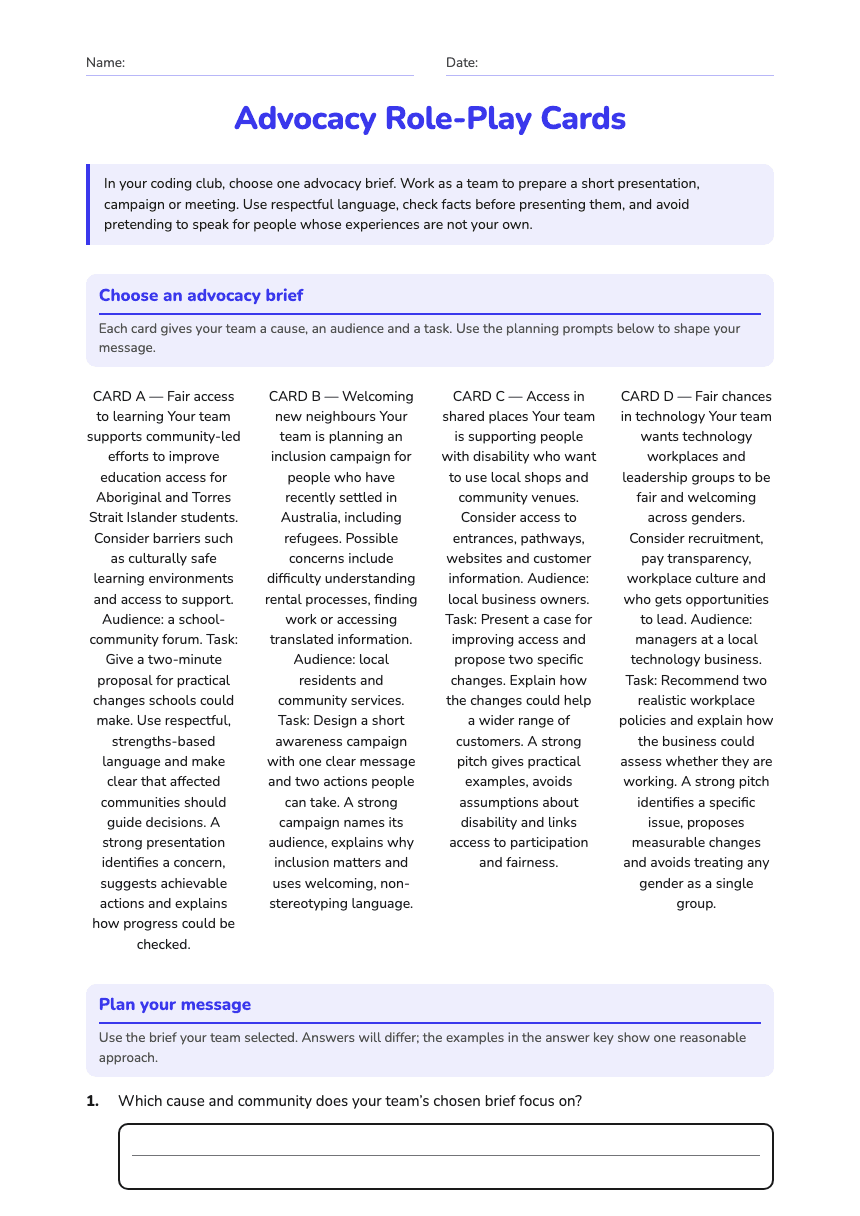
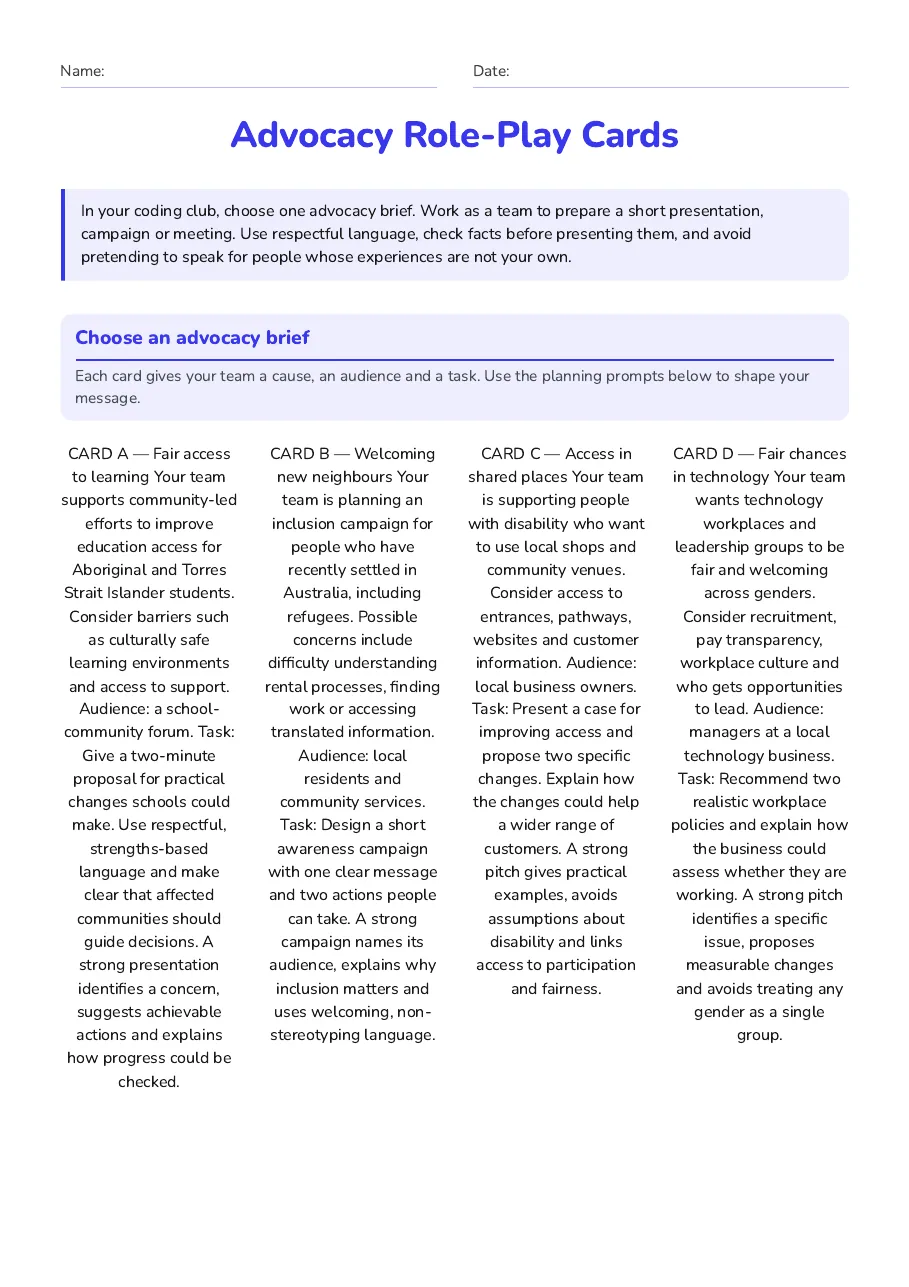
Advocacy Role-Play Cards
Choose an advocacy brief
Each card gives your team a cause, an audience and a task. Use the planning prompts below to shape your message.
CARD A — Fair access to learning Your team supports community-led efforts to improve education access for Aboriginal and Torres Strait Islander students. Consider barriers such as culturally safe learning environments and access to support. Audience: a school-community forum. Task: Give a two-minute proposal for practical changes schools could make. Use respectful, strengths-based language and make clear that affected communities should guide decisions. A strong presentation identifies a concern, suggests achievable actions and explains how progress could be checked.
CARD B — Welcoming new neighbours Your team is planning an inclusion campaign for people who have recently settled in Australia, including refugees. Possible concerns include difficulty understanding rental processes, finding work or accessing translated information. Audience: local residents and community services. Task: Design a short awareness campaign with one clear message and two actions people can take. A strong campaign names its audience, explains why inclusion matters and uses welcoming, non-stereotyping language.
CARD C — Access in shared places Your team is supporting people with disability who want to use local shops and community venues. Consider access to entrances, pathways, websites and customer information. Audience: local business owners. Task: Present a case for improving access and propose two specific changes. Explain how the changes could help a wider range of customers. A strong pitch gives practical examples, avoids assumptions about disability and links access to participation and fairness.
CARD D — Fair chances in technology Your team wants technology workplaces and leadership groups to be fair and welcoming across genders. Consider recruitment, pay transparency, workplace culture and who gets opportunities to lead. Audience: managers at a local technology business. Task: Recommend two realistic workplace policies and explain how the business could assess whether they are working. A strong pitch identifies a specific issue, proposes measurable changes and avoids treating any gender as a single group.
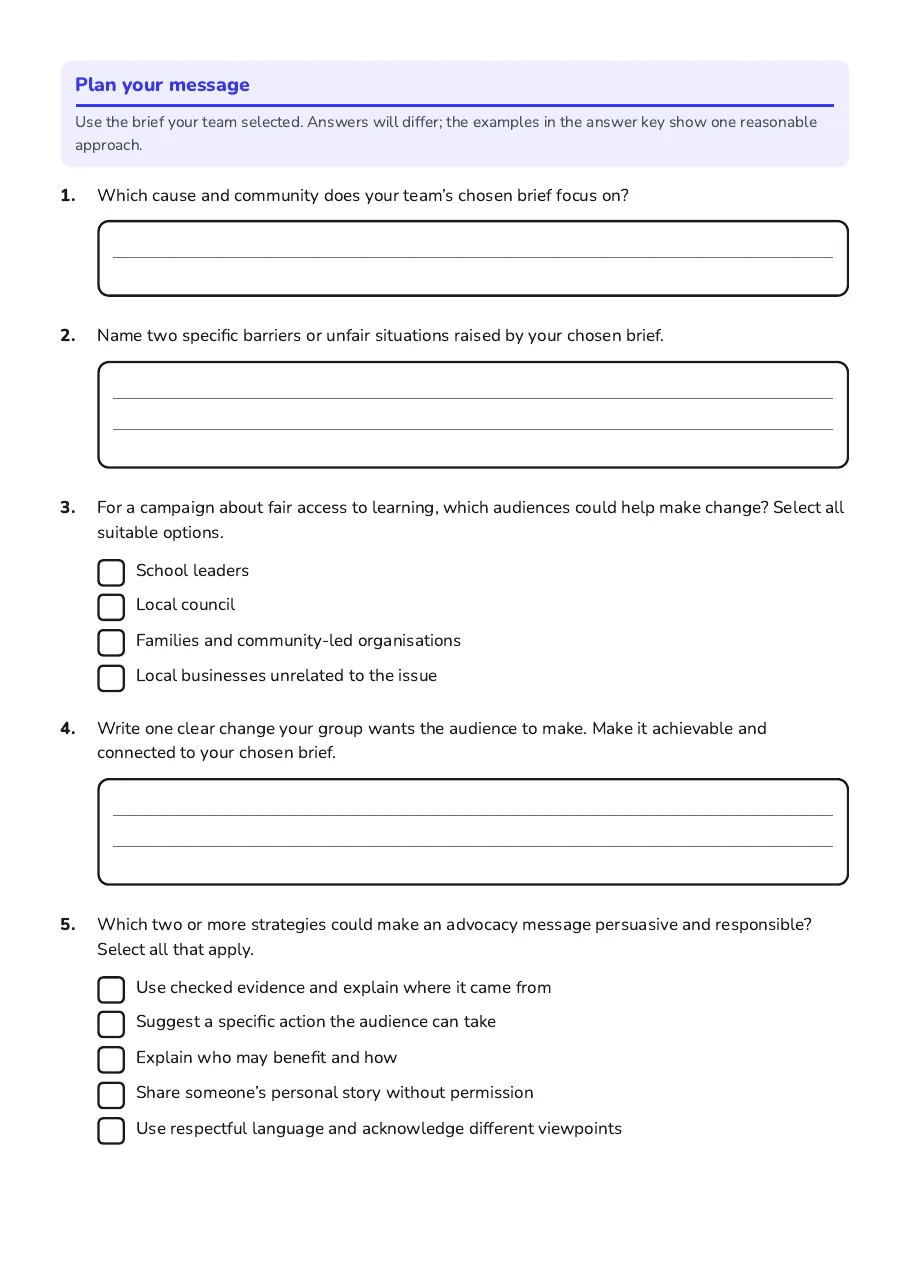
Plan your message
Use the brief your team selected. Answers will differ; the examples in the answer key show one reasonable approach.
- School leaders
- Local council
- Families and community-led organisations
- Local businesses unrelated to the issue
- Use checked evidence and explain where it came from
- Suggest a specific action the audience can take
- Explain who may benefit and how
- Share someone’s personal story without permission
- Use respectful language and acknowledge different viewpoints
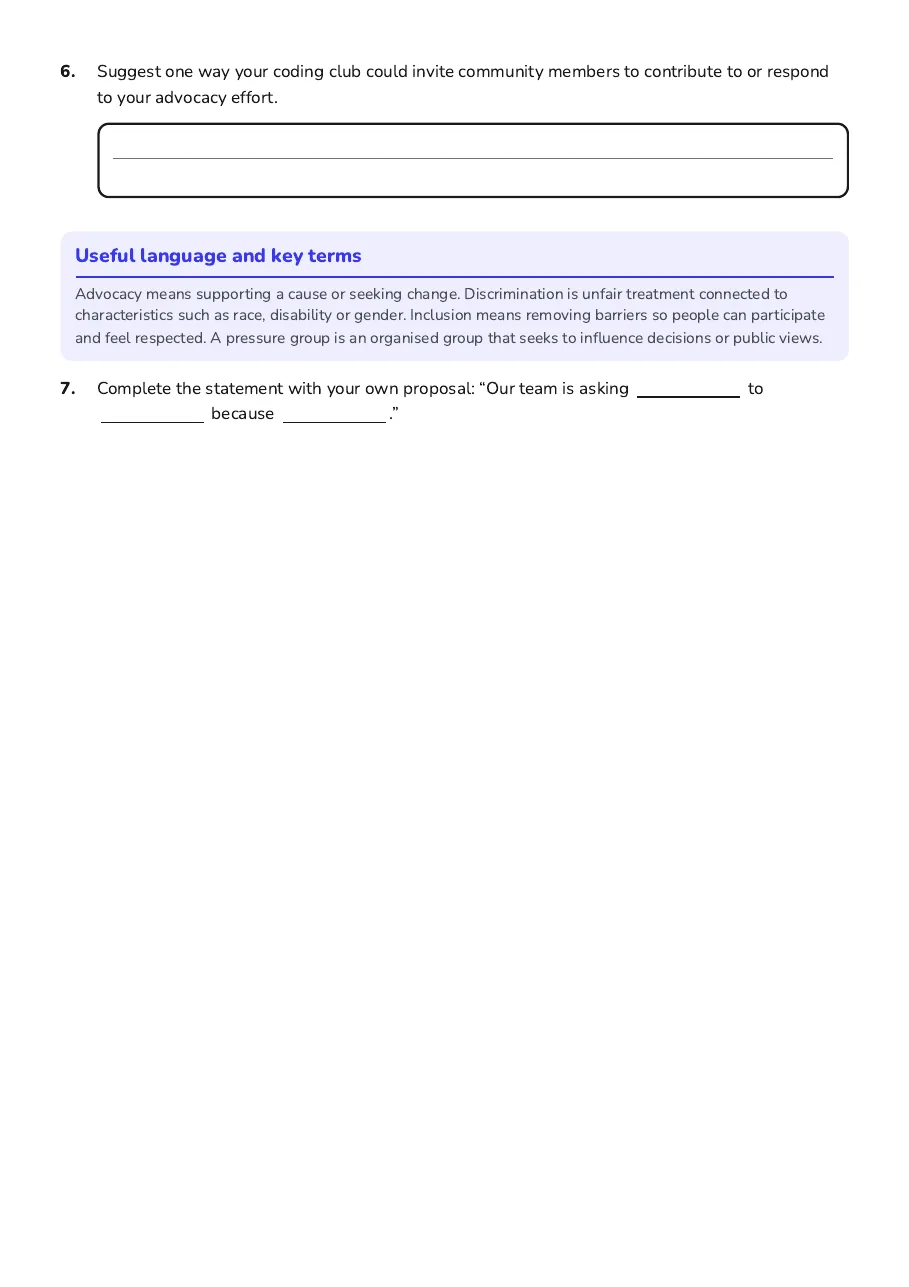
Useful language and key terms
Advocacy means supporting a cause or seeking change. Discrimination is unfair treatment connected to characteristics such as race, disability or gender. Inclusion means removing barriers so people can participate and feel respected. A pressure group is an organised group that seeks to influence decisions or public views.
3 printable pages
Page 1
Page 2
Page 3
About This Worksheet
Free in Kuraplan
Sign up free, grab the PDF, and customize it for your class.
Print-Ready
Formatted for standard paper. Clean layout, easy to read.
AI-Generated
Created with Kuraplan's AI, designed for real classroom use.
For Teachers & Parents
Use in classrooms, for homework, tutoring, or homeschool.
Need a custom version of this worksheet?
Kuraplan's AI generates custom worksheets in seconds — differentiated for every learner, aligned to your curriculum.
Generate Custom Worksheets — FreeMore Other Worksheets
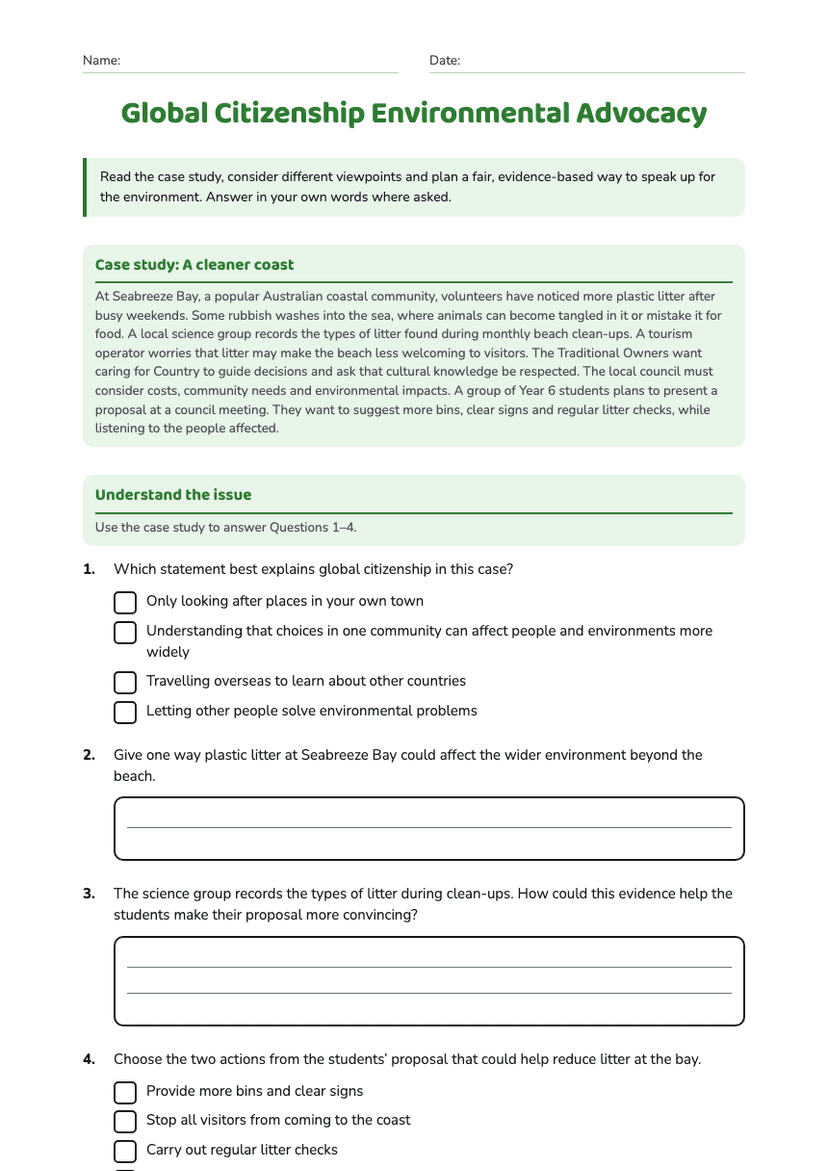
Global Citizenship Environmental Advocacy
Free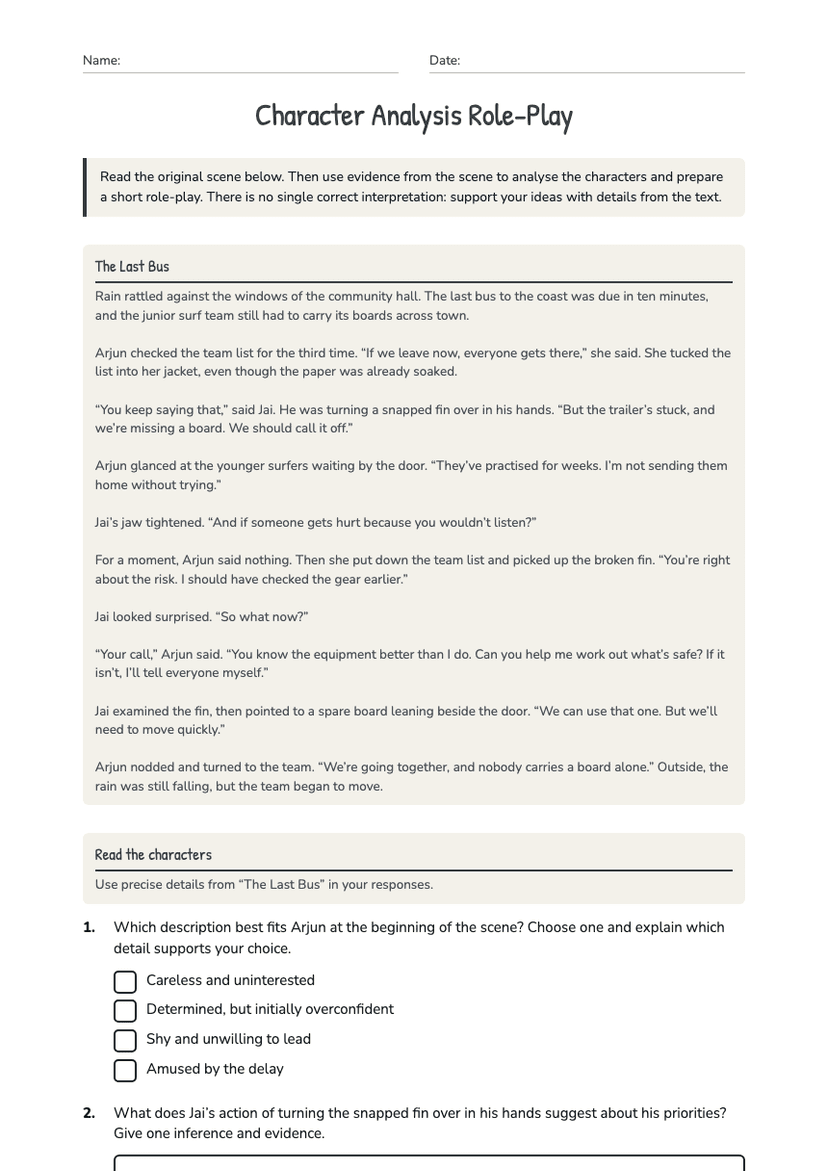
Character Analysis Role-Play
Free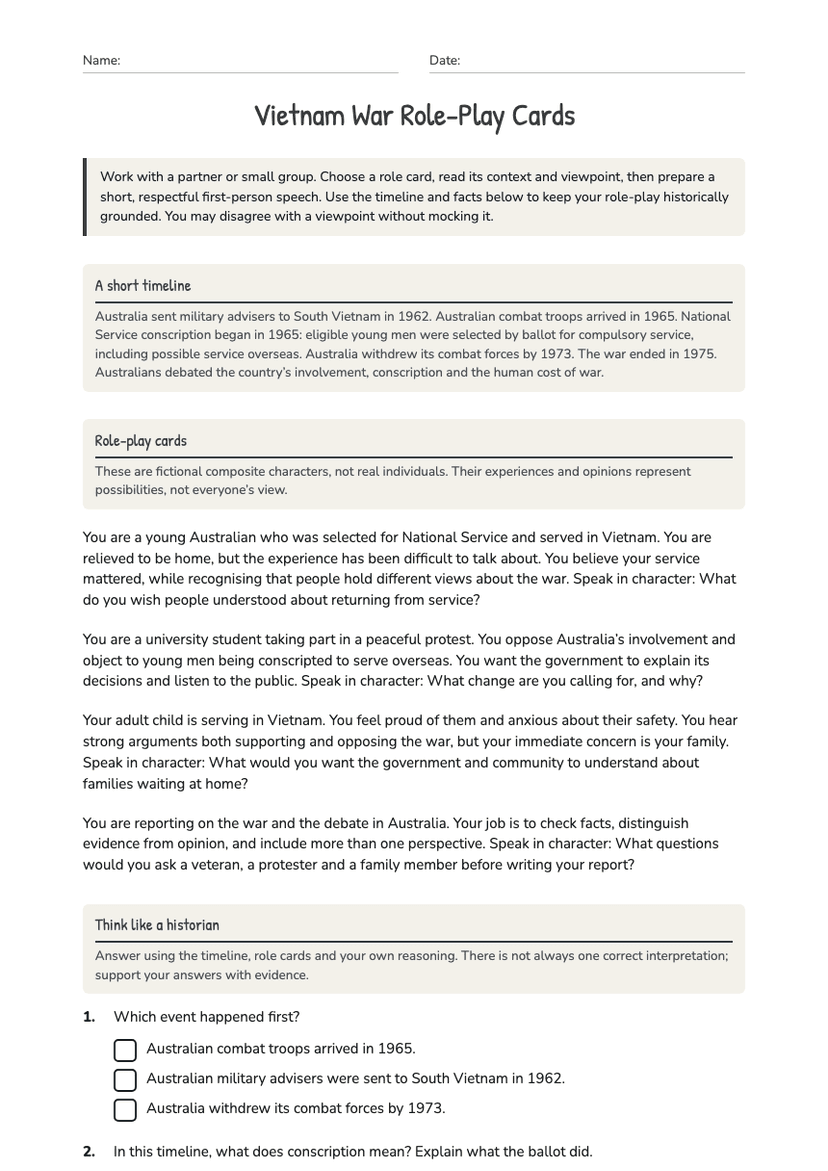
Vietnam War Role-Play Cards
Free
Vietnam War Role-Play
Free
Communication Role-Play Scenarios
Free
Rights and Responsibilities Role-Play
Free
Character Analysis Role-Play
Free