Animal Classification and Habitats
A free science worksheet ready for your classroom. Open in Kuraplan to grab the print-ready PDF, customize it for your students, or generate a fresh version in seconds.
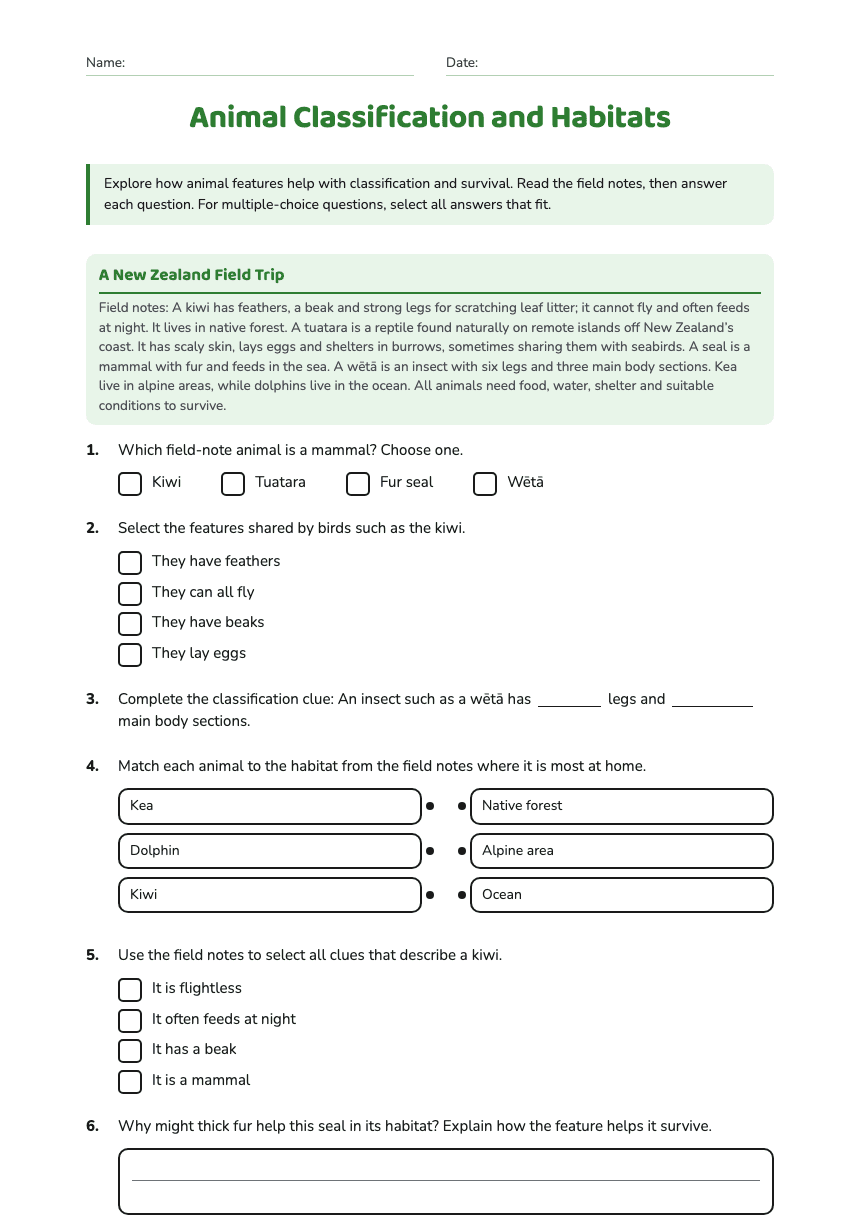
Animal Classification and Habitats
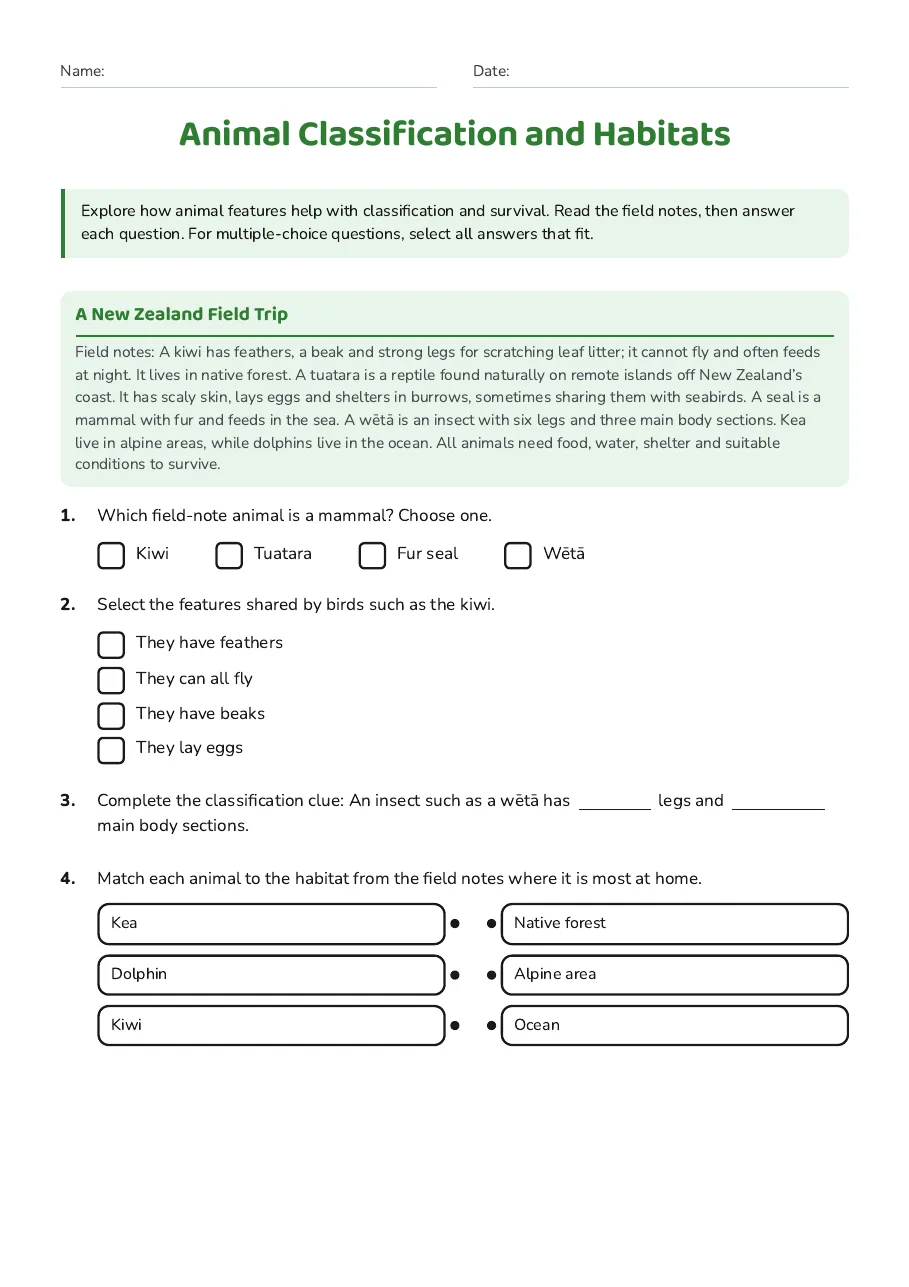
A New Zealand Field Trip
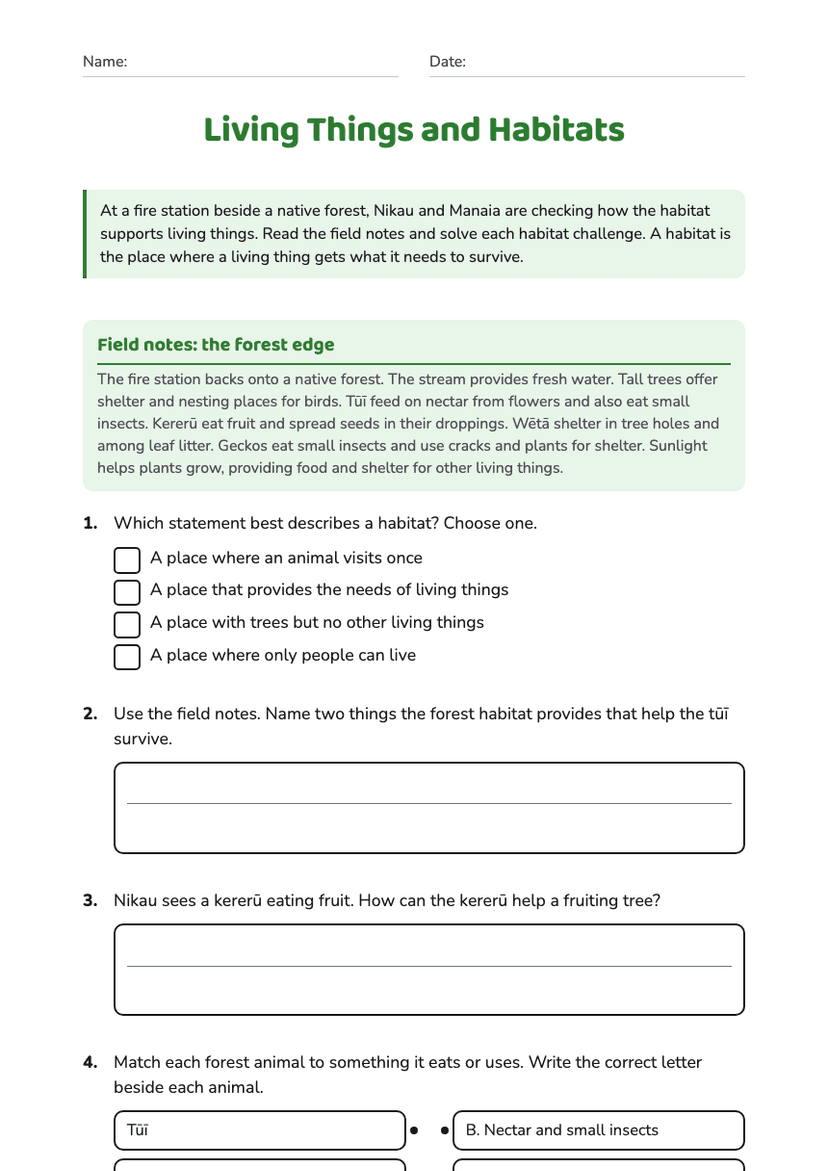
Field notes: A kiwi has feathers, a beak and strong legs for scratching leaf litter; it cannot fly and often feeds at night. It lives in native forest. A tuatara is a reptile found naturally on remote islands off New Zealand’s coast. It has scaly skin, lays eggs and shelters in burrows, sometimes sharing them with seabirds. A seal is a mammal with fur and feeds in the sea. A wētā is an insect with six legs and three main body sections. Kea live in alpine areas, while dolphins live in the ocean. All animals need food, water, shelter and suitable conditions to survive.
- Kiwi
- Tuatara
- Fur seal
- Wētā
- They have feathers
- They can all fly
- They have beaks
- They lay eggs
- Kea
- Dolphin
- Kiwi
- Native forest
- Alpine area
- Ocean
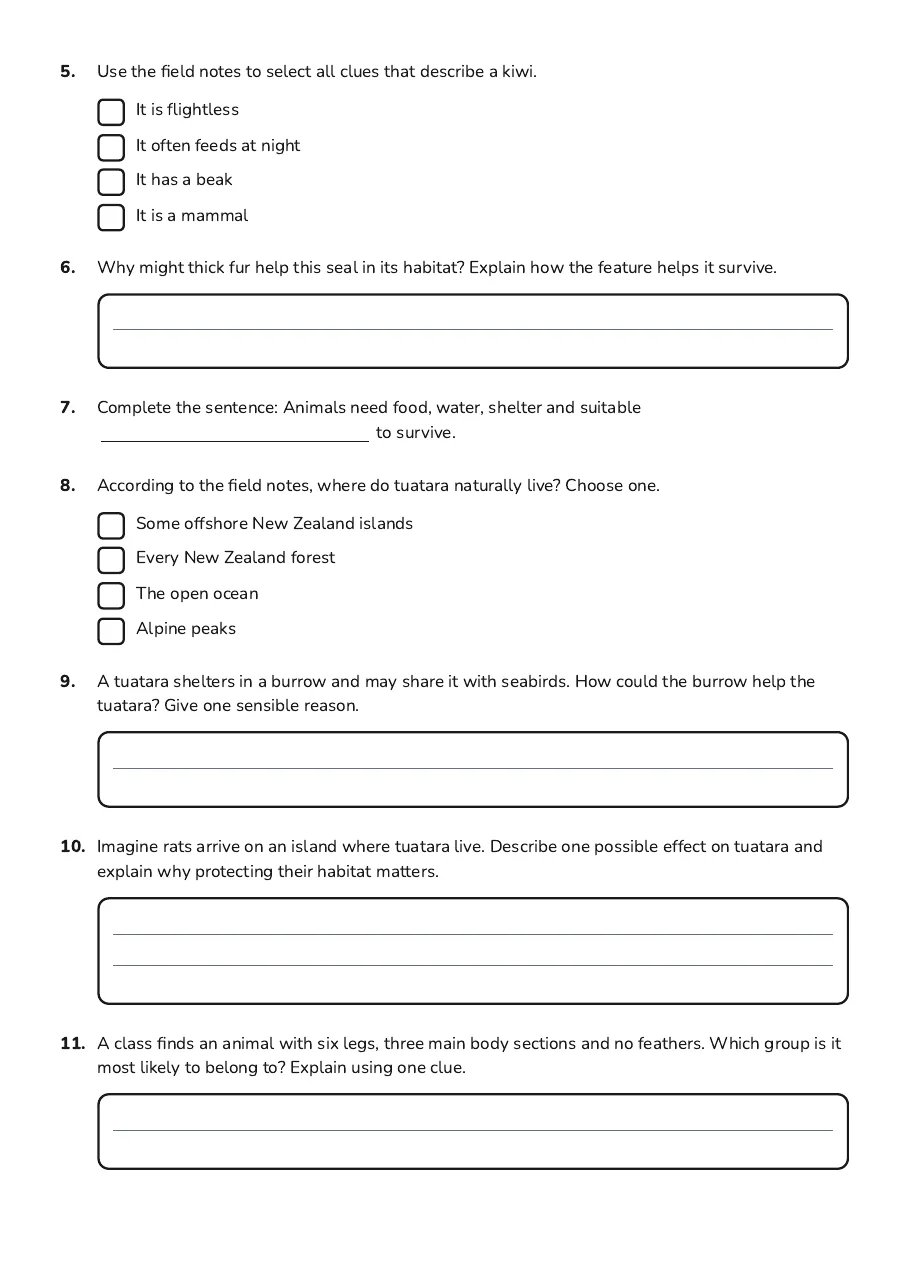
- It is flightless
- It often feeds at night
- It has a beak
- It is a mammal
- Some offshore New Zealand islands
- Every New Zealand forest
- The open ocean
- Alpine peaks
2 printable pages
Page 1
Page 2
About This Worksheet
Free in Kuraplan
Sign up free, grab the PDF, and customize it for your class.
Print-Ready
Formatted for standard paper. Clean layout, easy to read.
AI-Generated
Created with Kuraplan's AI, designed for real classroom use.
For Teachers & Parents
Use in classrooms, for homework, tutoring, or homeschool.
Need a custom version of this worksheet?
Kuraplan's AI generates custom worksheets in seconds — differentiated for every learner, aligned to your curriculum.
Generate Custom Worksheets — Free