Balloon Chemical Reaction Experiment
A free science worksheet ready for your classroom. Open in Kuraplan to grab the print-ready PDF, customize it for your students, or generate a fresh version in seconds.

Balloon Chemical Reaction Experiment
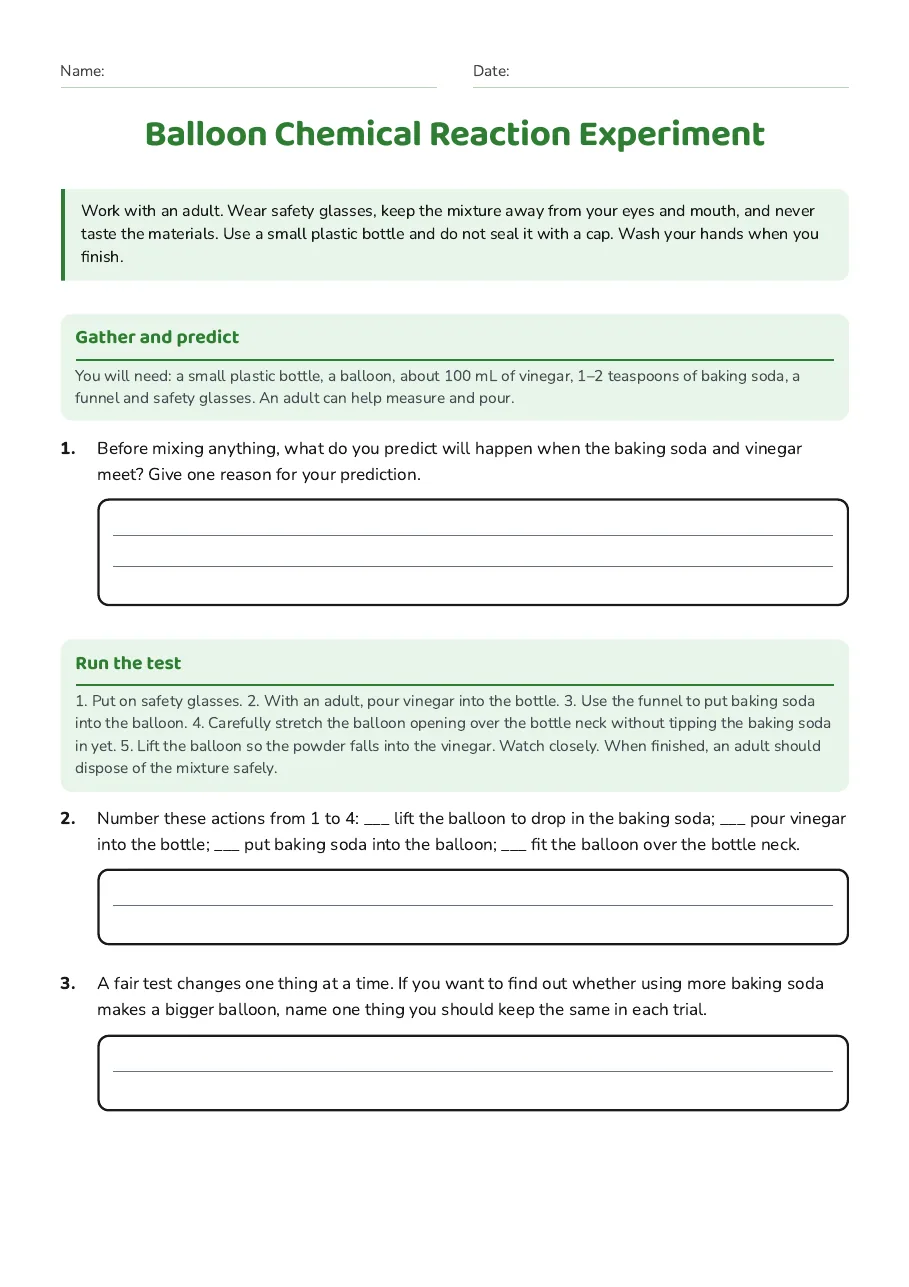
Gather and predict
You will need: a small plastic bottle, a balloon, about 100 mL of vinegar, 1–2 teaspoons of baking soda, a funnel and safety glasses. An adult can help measure and pour.
Run the test
1. Put on safety glasses. 2. With an adult, pour vinegar into the bottle. 3. Use the funnel to put baking soda into the balloon. 4. Carefully stretch the balloon opening over the bottle neck without tipping the baking soda in yet. 5. Lift the balloon so the powder falls into the vinegar. Watch closely. When finished, an adult should dispose of the mixture safely.
- A gas formed in the reaction and moved into the balloon.
- The balloon stretched by itself.
- The vinegar turned into air from outside the bottle.
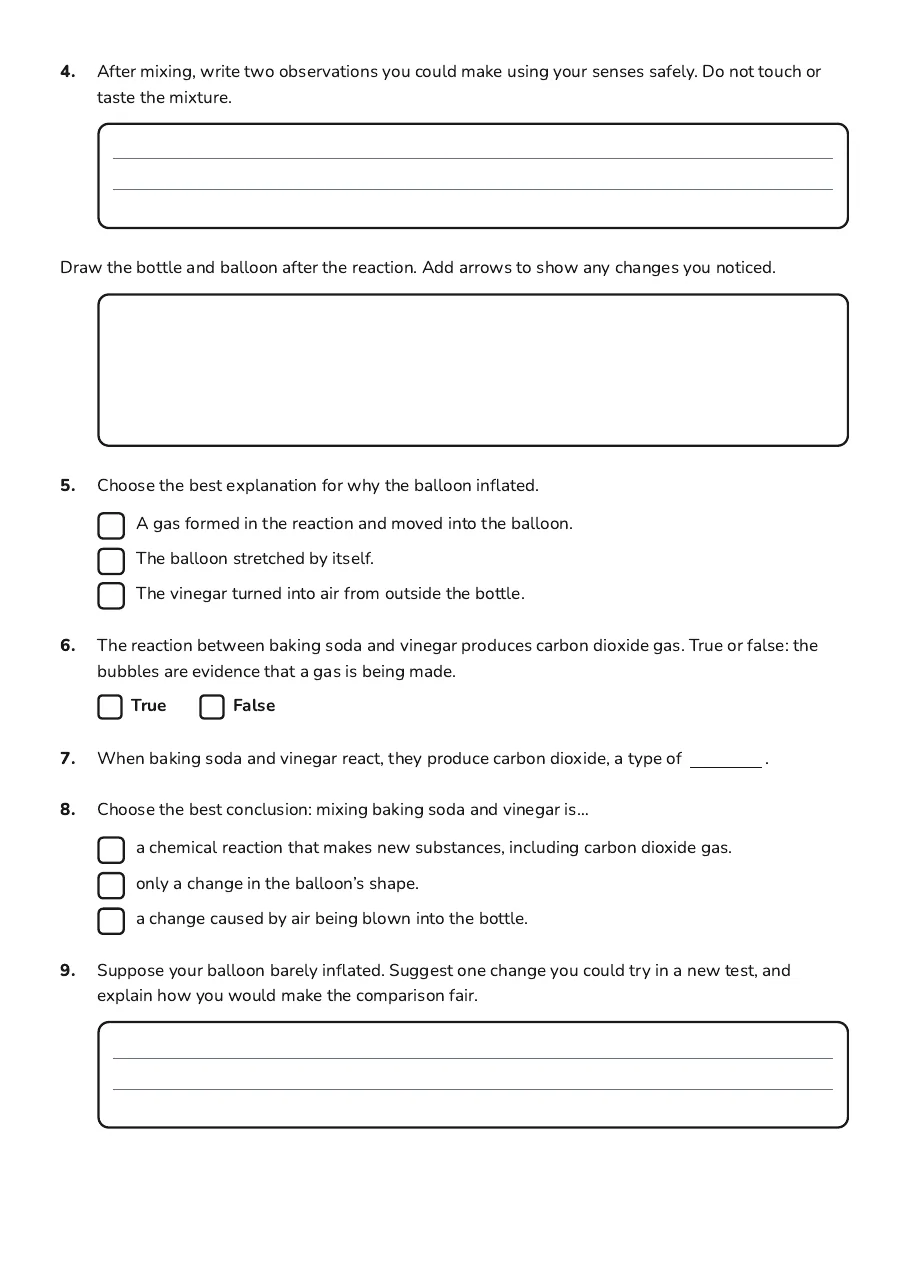
- a chemical reaction that makes new substances, including carbon dioxide gas.
- only a change in the balloon’s shape.
- a change caused by air being blown into the bottle.
2 printable pages
Page 1
Page 2
About This Worksheet
Free in Kuraplan
Sign up free, grab the PDF, and customize it for your class.
Print-Ready
Formatted for standard paper. Clean layout, easy to read.
AI-Generated
Created with Kuraplan's AI, designed for real classroom use.
For Teachers & Parents
Use in classrooms, for homework, tutoring, or homeschool.
Need a custom version of this worksheet?
Kuraplan's AI generates custom worksheets in seconds — differentiated for every learner, aligned to your curriculum.
Generate Custom Worksheets — FreeMore Science Worksheets
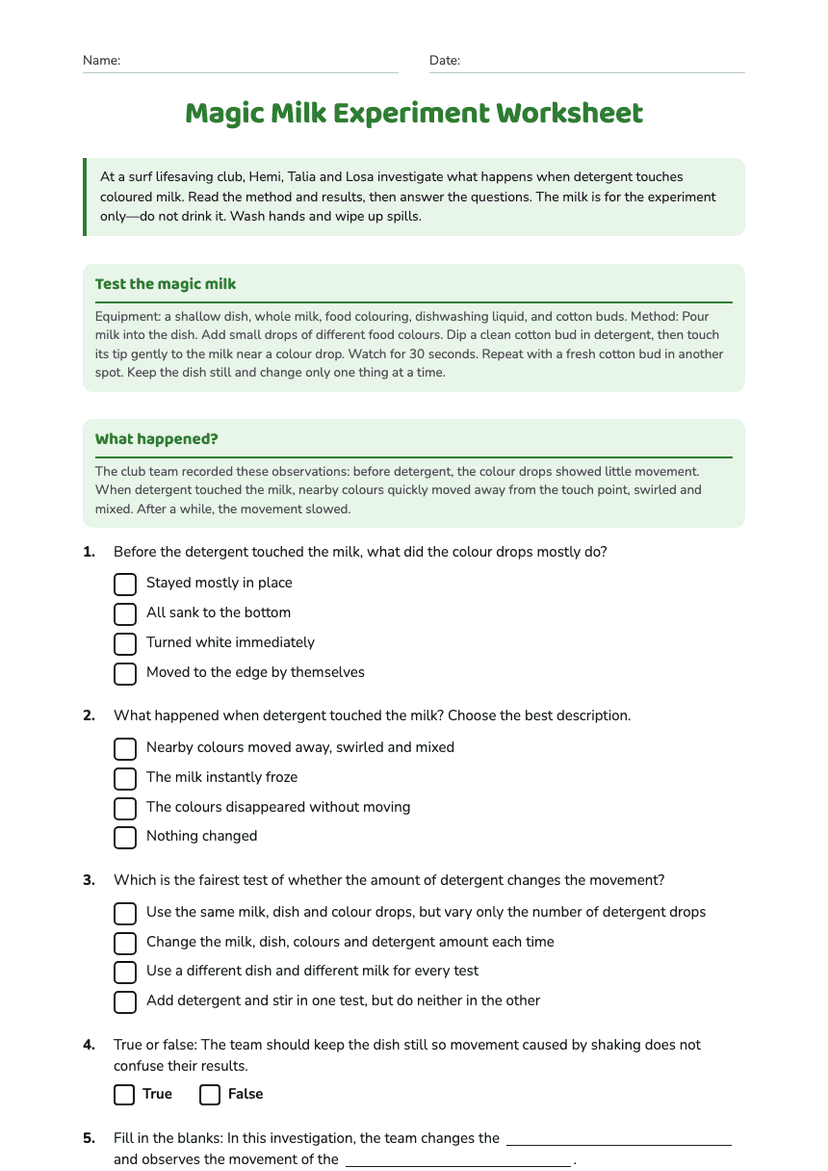
Magic Milk Experiment Worksheet
Free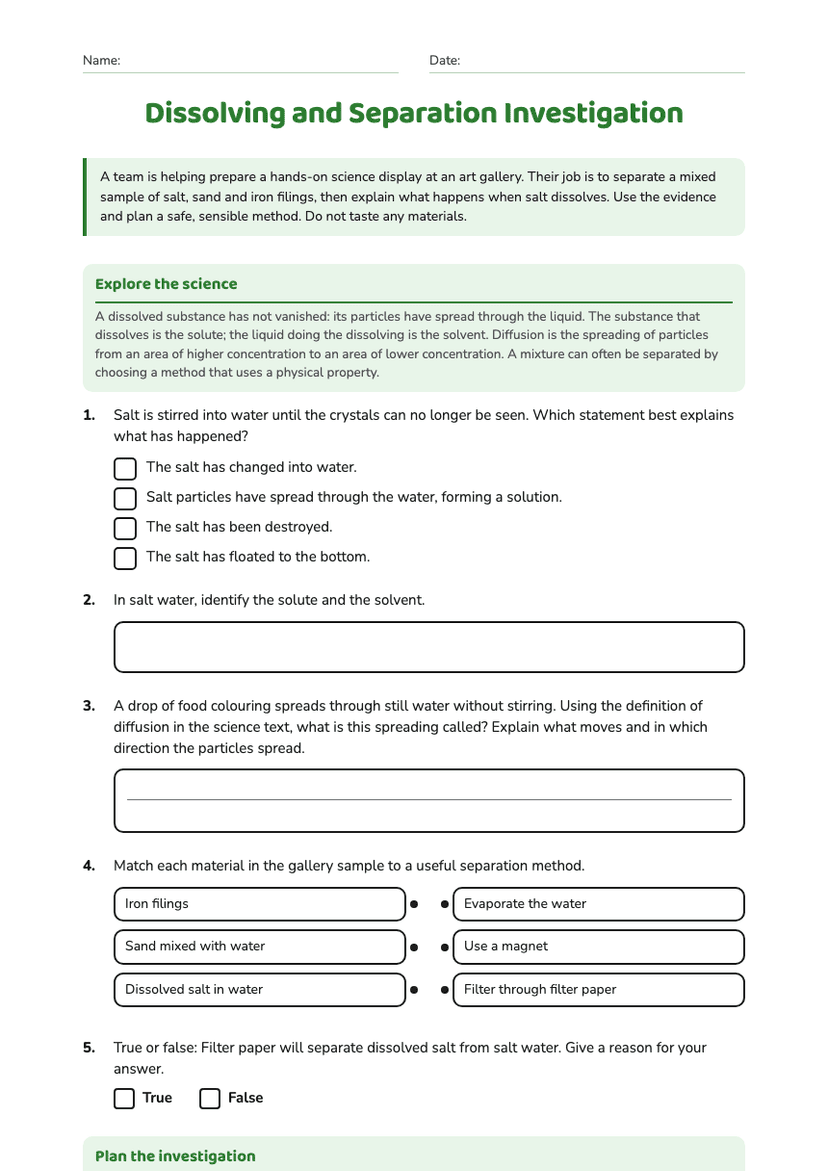
Dissolving and Separation Investigation
Free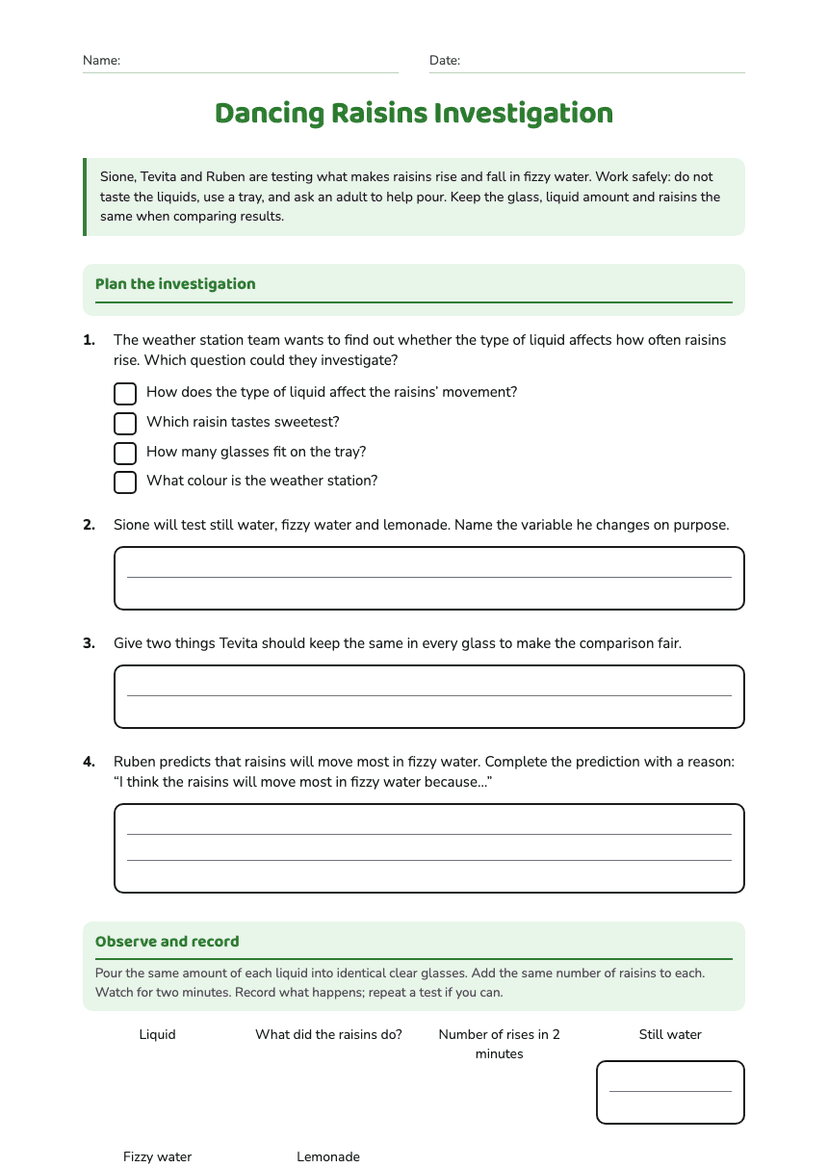
Dancing Raisins Investigation
Free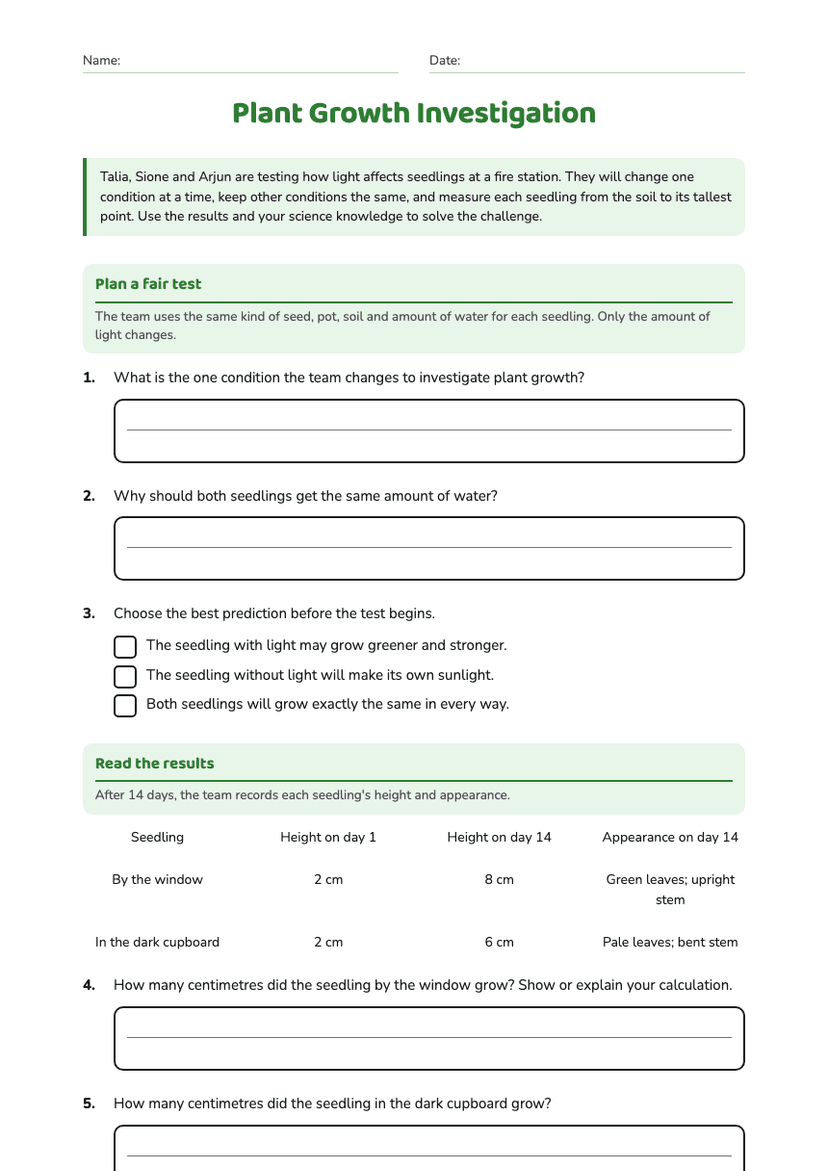
Plant Growth Investigation
Free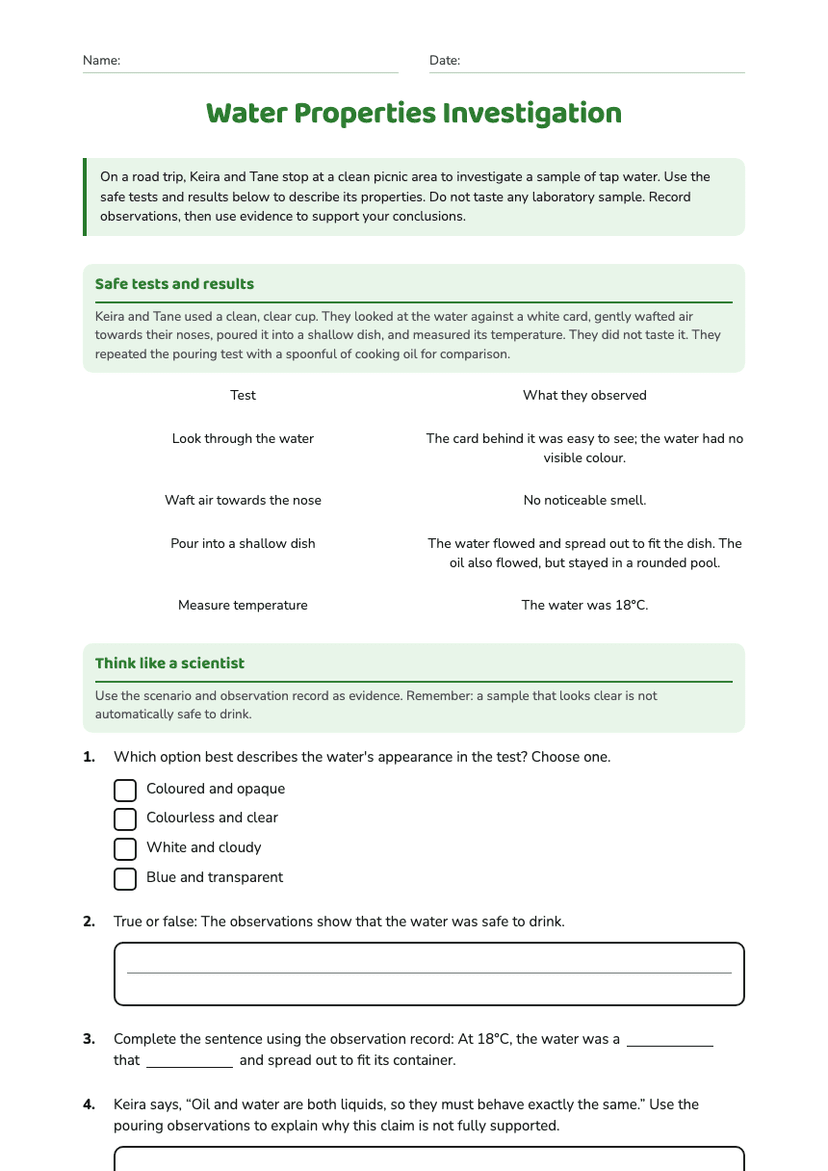
Water Properties Investigation
Free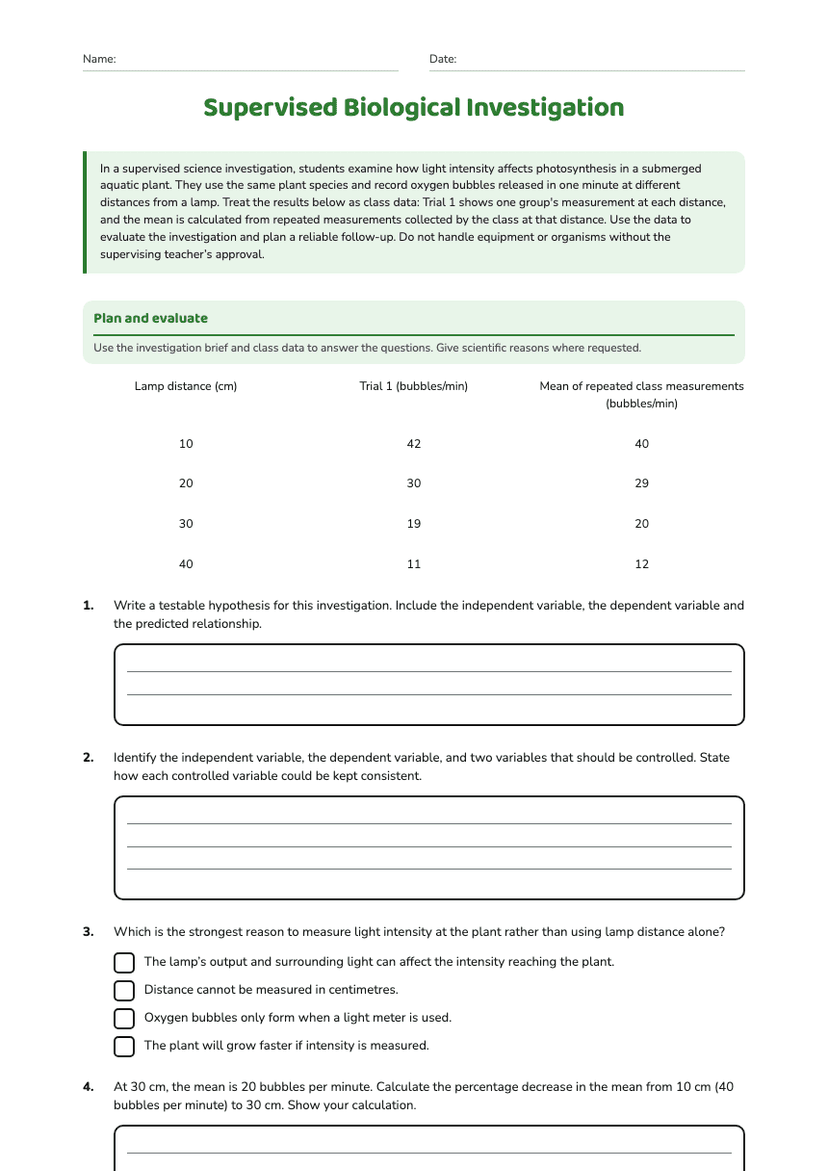
Supervised Biological Investigation
Free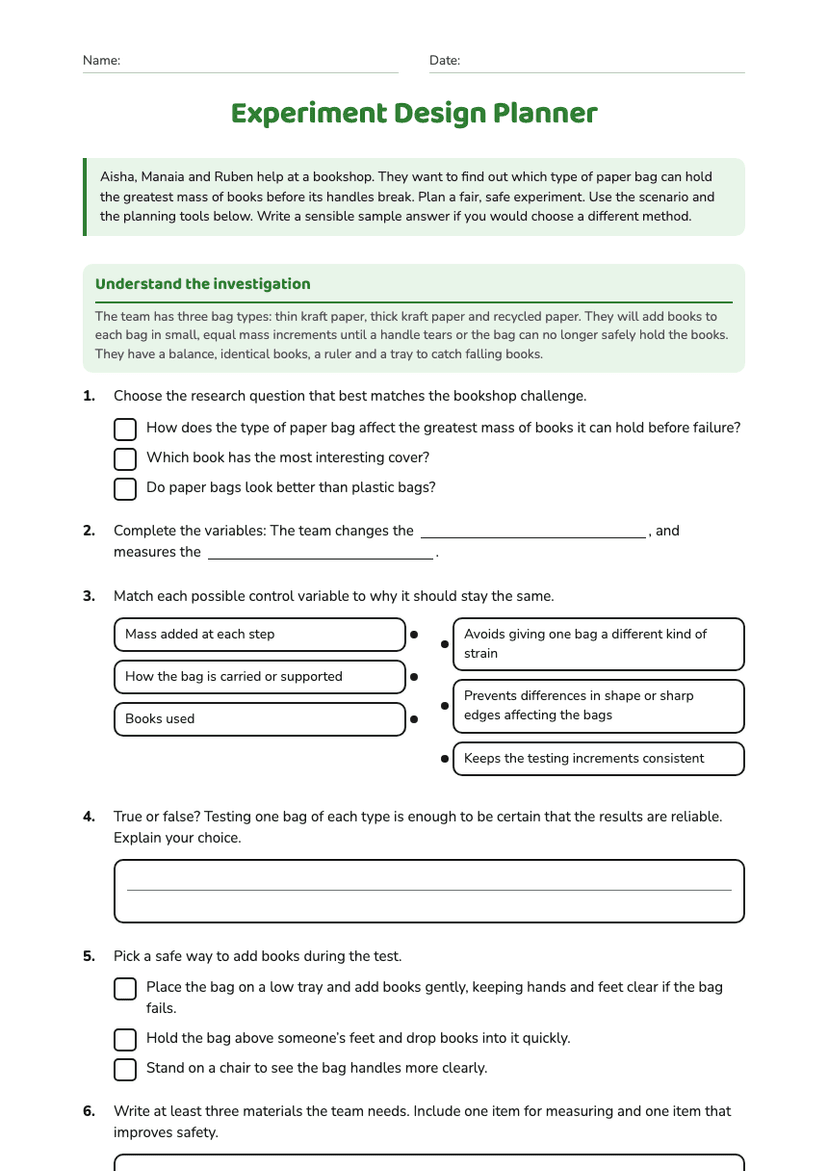
Experiment Design Planner
Free