Birds: Diet, Habitat, Adaptations
A free science worksheet ready for your classroom. Open in Kuraplan to grab the print-ready PDF, customize it for your students, or generate a fresh version in seconds.
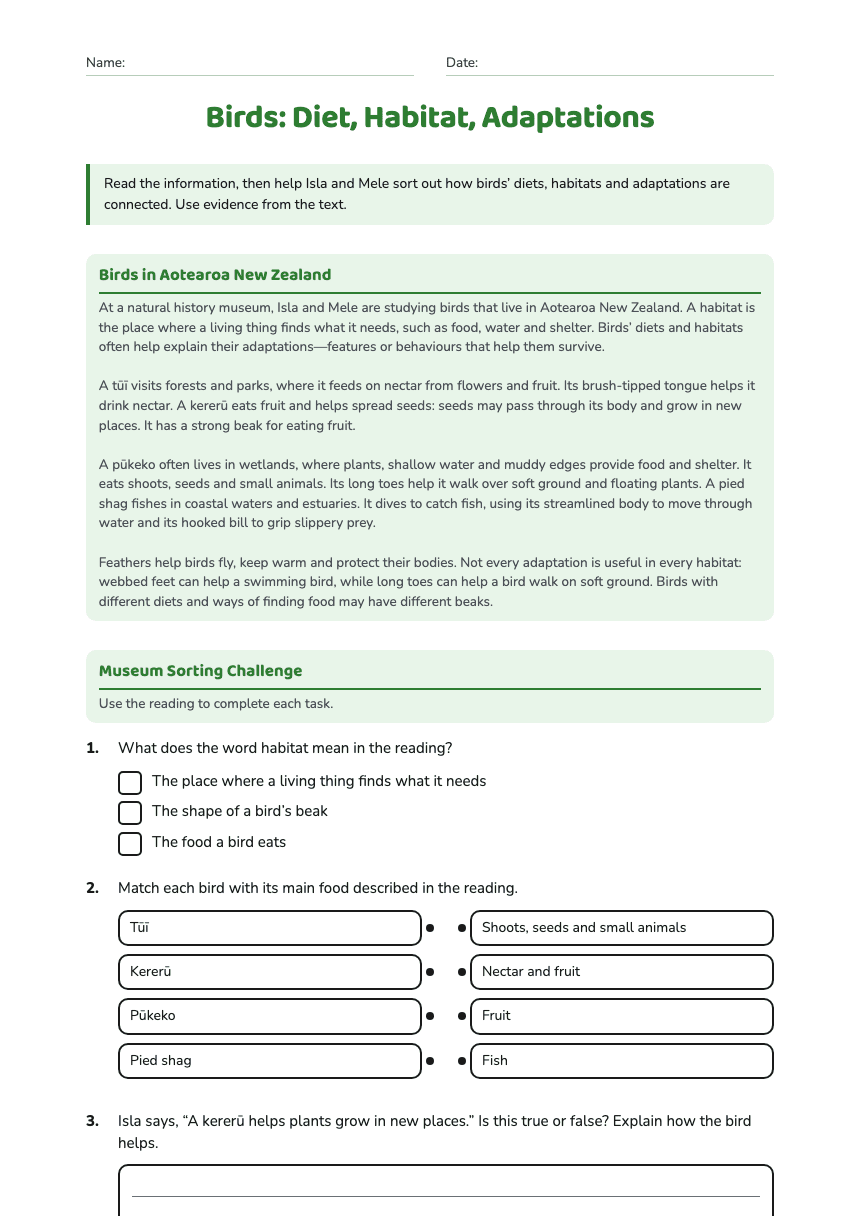
Birds: Diet, Habitat, Adaptations
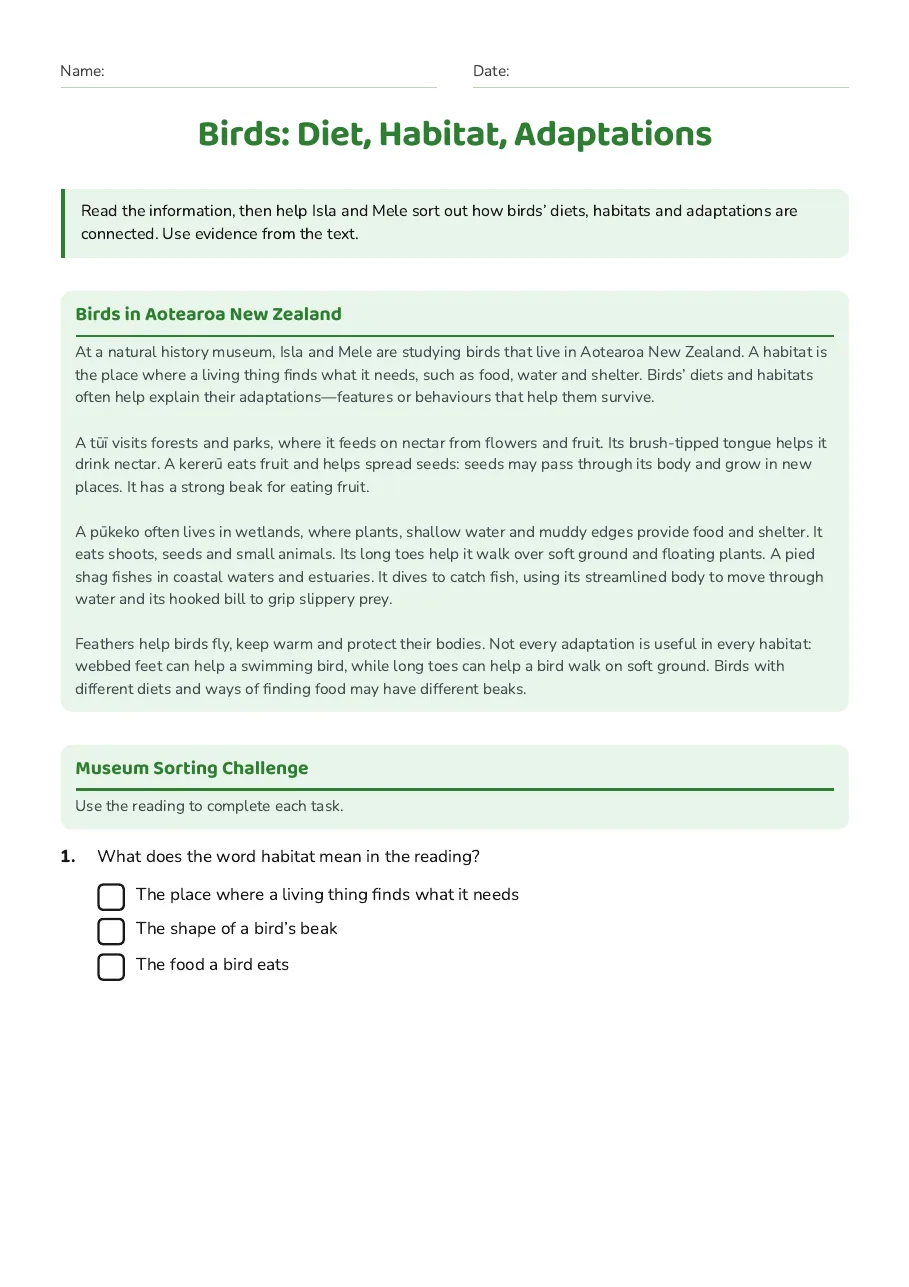
Birds in Aotearoa New Zealand
At a natural history museum, Isla and Mele are studying birds that live in Aotearoa New Zealand. A habitat is the place where a living thing finds what it needs, such as food, water and shelter. Birds’ diets and habitats often help explain their adaptations—features or behaviours that help them survive. A tūī visits forests and parks, where it feeds on nectar from flowers and fruit. Its brush-tipped tongue helps it drink nectar. A kererū eats fruit and helps spread seeds: seeds may pass through its body and grow in new places. It has a strong beak for eating fruit. A pūkeko often lives in wetlands, where plants, shallow water and muddy edges provide food and shelter. It eats shoots, seeds and small animals. Its long toes help it walk over soft ground and floating plants. A pied shag fishes in coastal waters and estuaries. It dives to catch fish, using its streamlined body to move through water and its hooked bill to grip slippery prey. Feathers help birds fly, keep warm and protect their bodies. Not every adaptation is useful in every habitat: webbed feet can help a swimming bird, while long toes can help a bird walk on soft ground. Birds with different diets and ways of finding food may have different beaks.
Museum Sorting Challenge
Use the reading to complete each task.
- The place where a living thing finds what it needs
- The shape of a bird’s beak
- The food a bird eats
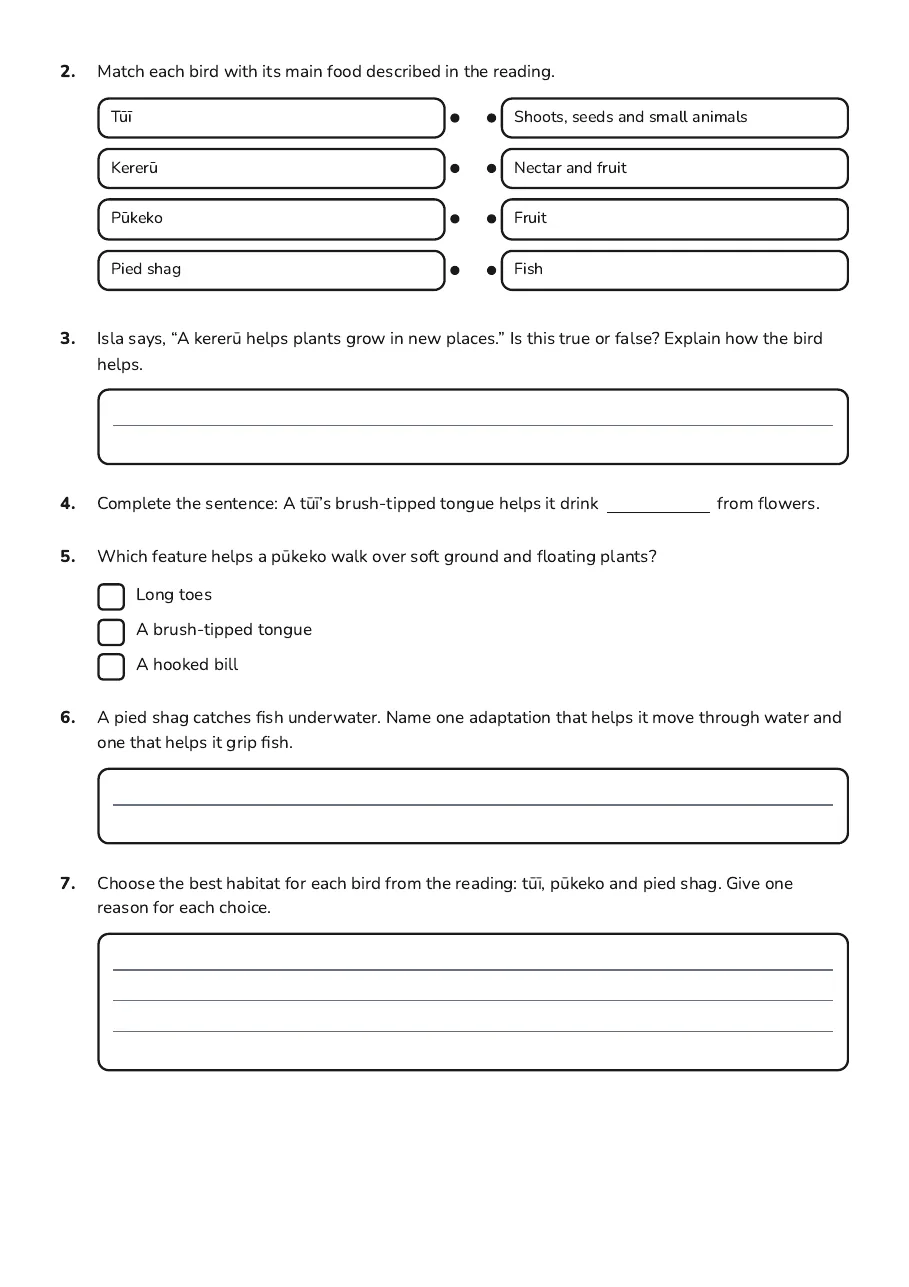
- Tūī
- Kererū
- Pūkeko
- Pied shag
- Shoots, seeds and small animals
- Nectar and fruit
- Fruit
- Fish
- Long toes
- A brush-tipped tongue
- A hooked bill
3 printable pages
Page 1
Page 2
Page 3
About This Worksheet
Free in Kuraplan
Sign up free, grab the PDF, and customize it for your class.
Print-Ready
Formatted for standard paper. Clean layout, easy to read.
AI-Generated
Created with Kuraplan's AI, designed for real classroom use.
For Teachers & Parents
Use in classrooms, for homework, tutoring, or homeschool.
Need a custom version of this worksheet?
Kuraplan's AI generates custom worksheets in seconds — differentiated for every learner, aligned to your curriculum.
Generate Custom Worksheets — Free