Blood Components Functions
A free science worksheet ready for your classroom. Open in Kuraplan to grab the print-ready PDF, customize it for your students, or generate a fresh version in seconds.

Blood Components Functions
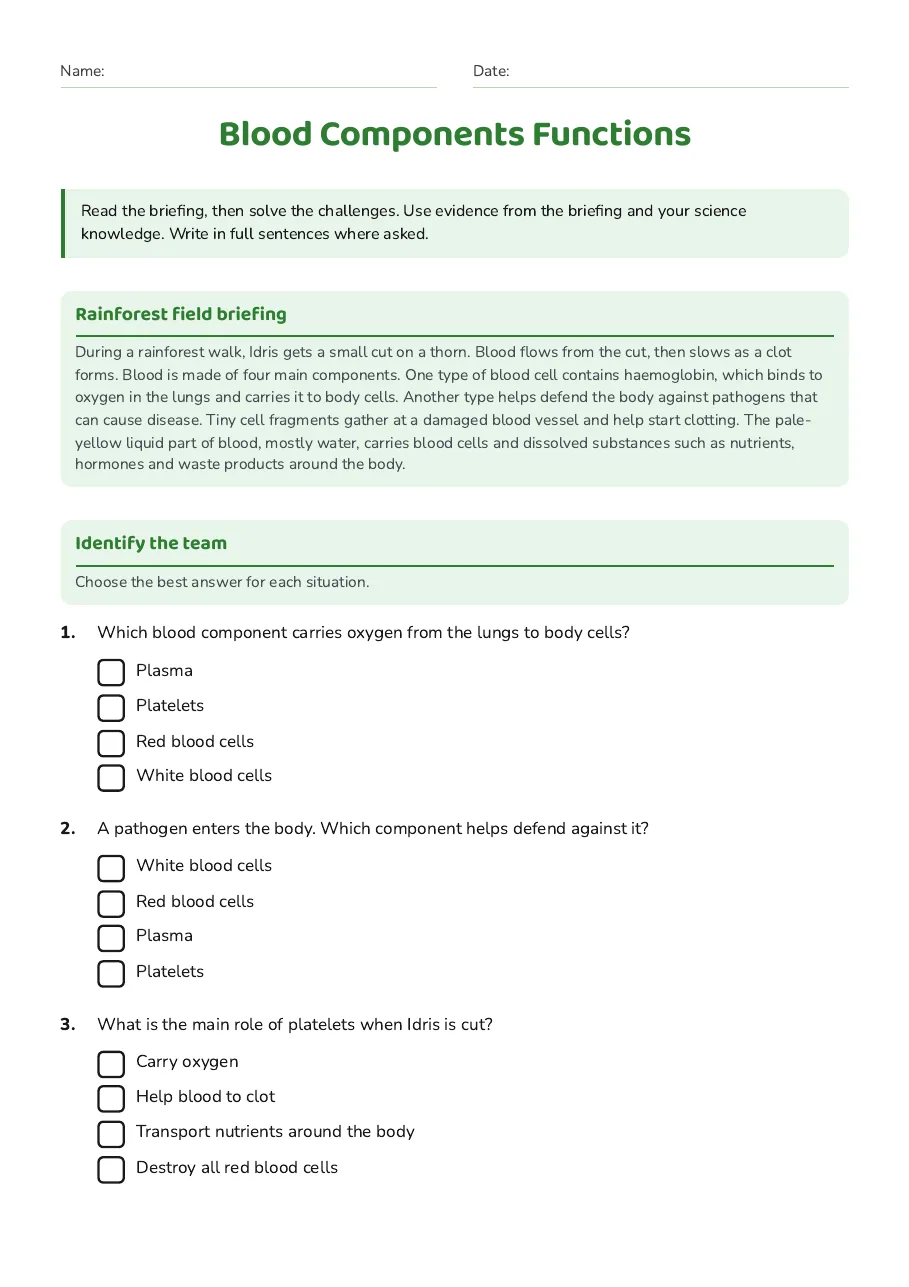
Rainforest field briefing
During a rainforest walk, Idris gets a small cut on a thorn. Blood flows from the cut, then slows as a clot forms. Blood is made of four main components. One type of blood cell contains haemoglobin, which binds to oxygen in the lungs and carries it to body cells. Another type helps defend the body against pathogens that can cause disease. Tiny cell fragments gather at a damaged blood vessel and help start clotting. The pale-yellow liquid part of blood, mostly water, carries blood cells and dissolved substances such as nutrients, hormones and waste products around the body.
Identify the team
Choose the best answer for each situation.
- Plasma
- Platelets
- Red blood cells
- White blood cells
- White blood cells
- Red blood cells
- Plasma
- Platelets
- Carry oxygen
- Help blood to clot
- Transport nutrients around the body
- Destroy all red blood cells
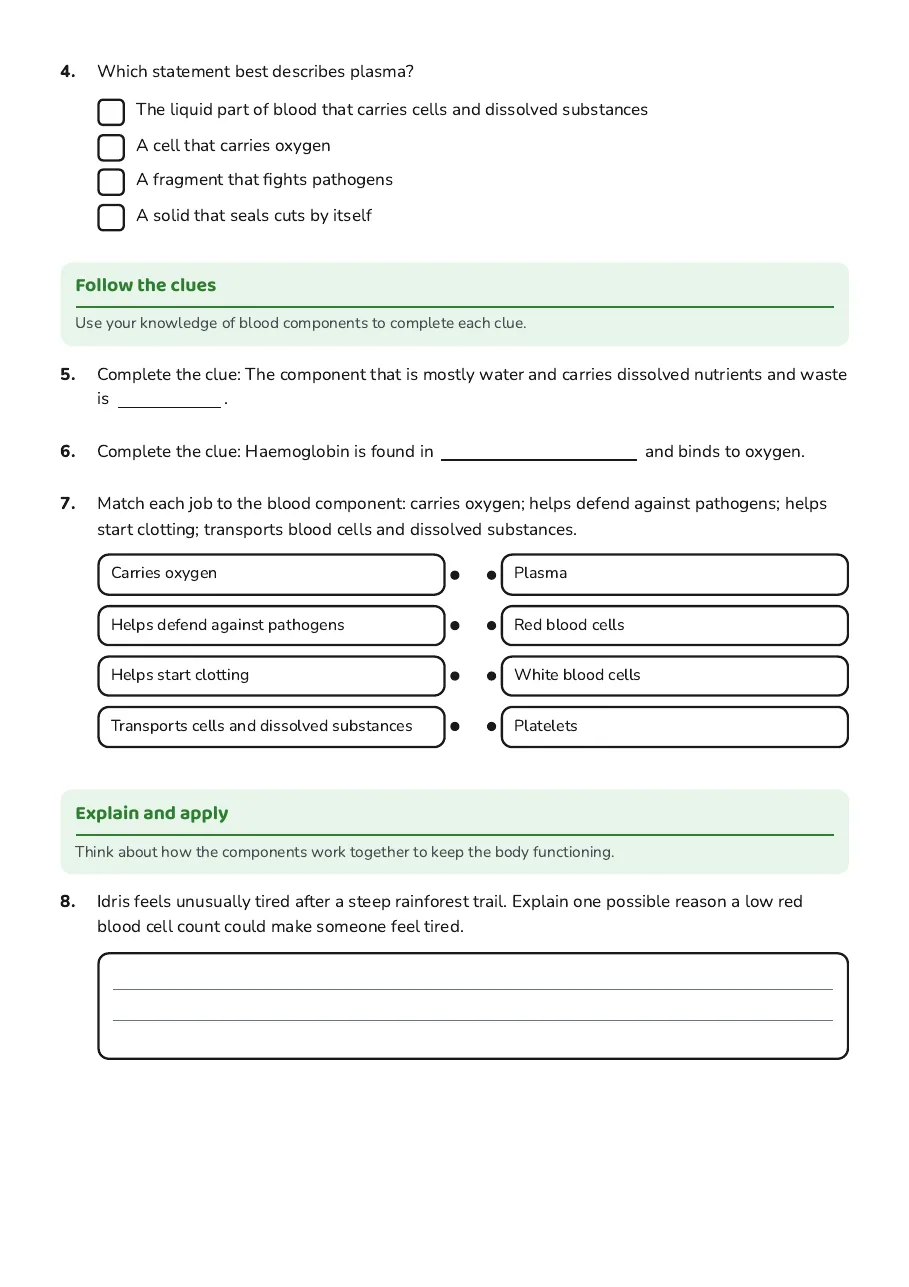
- The liquid part of blood that carries cells and dissolved substances
- A cell that carries oxygen
- A fragment that fights pathogens
- A solid that seals cuts by itself
Follow the clues
Use your knowledge of blood components to complete each clue.
- Carries oxygen
- Helps defend against pathogens
- Helps start clotting
- Transports cells and dissolved substances
- Plasma
- Red blood cells
- White blood cells
- Platelets
Explain and apply
Think about how the components work together to keep the body functioning.
3 printable pages
Page 1
Page 2
Page 3
About This Worksheet
Free in Kuraplan
Sign up free, grab the PDF, and customize it for your class.
Print-Ready
Formatted for standard paper. Clean layout, easy to read.
AI-Generated
Created with Kuraplan's AI, designed for real classroom use.
For Teachers & Parents
Use in classrooms, for homework, tutoring, or homeschool.
Need a custom version of this worksheet?
Kuraplan's AI generates custom worksheets in seconds — differentiated for every learner, aligned to your curriculum.
Generate Custom Worksheets — Free