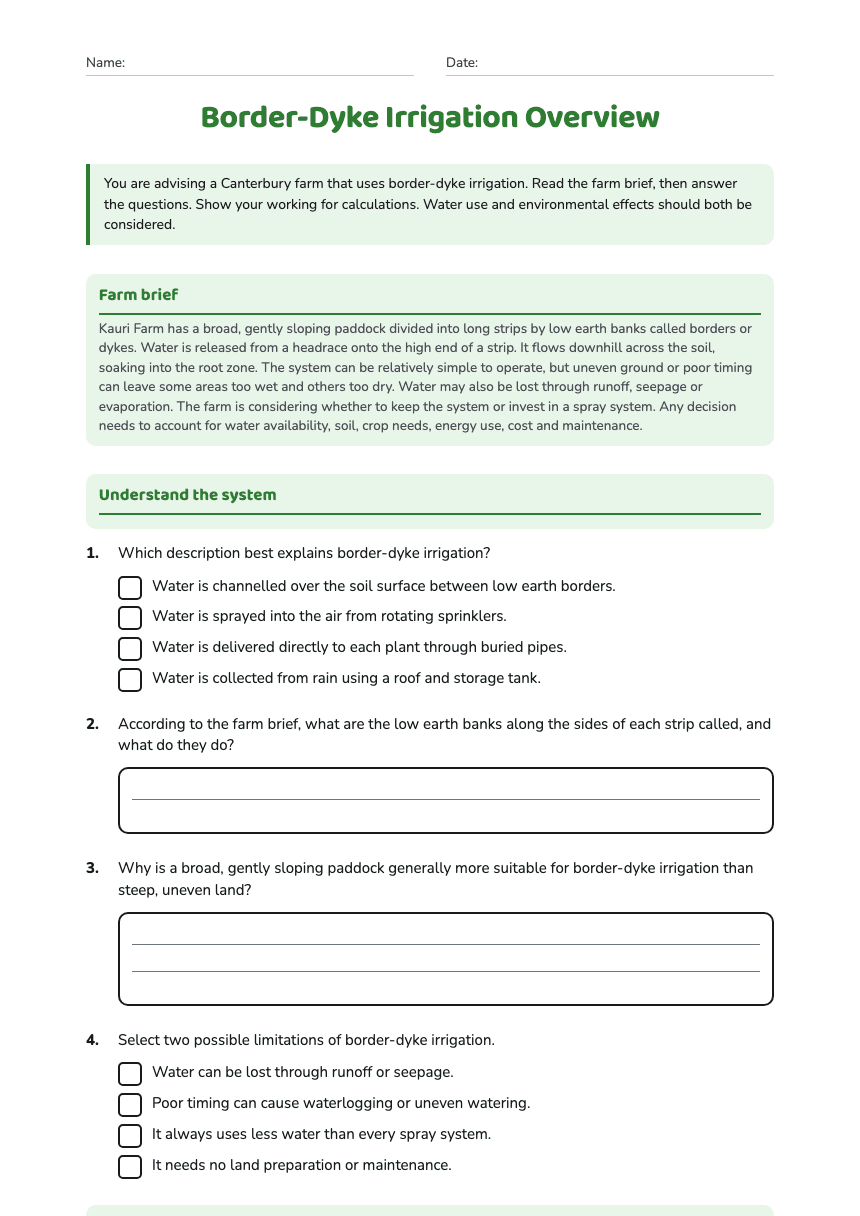
Border-Dyke Irrigation Overview
A free technology worksheet ready for your classroom. Open in Kuraplan to grab the print-ready PDF, customize it for your students, or generate a fresh version in seconds.
Border-Dyke Irrigation Overview
Farm brief
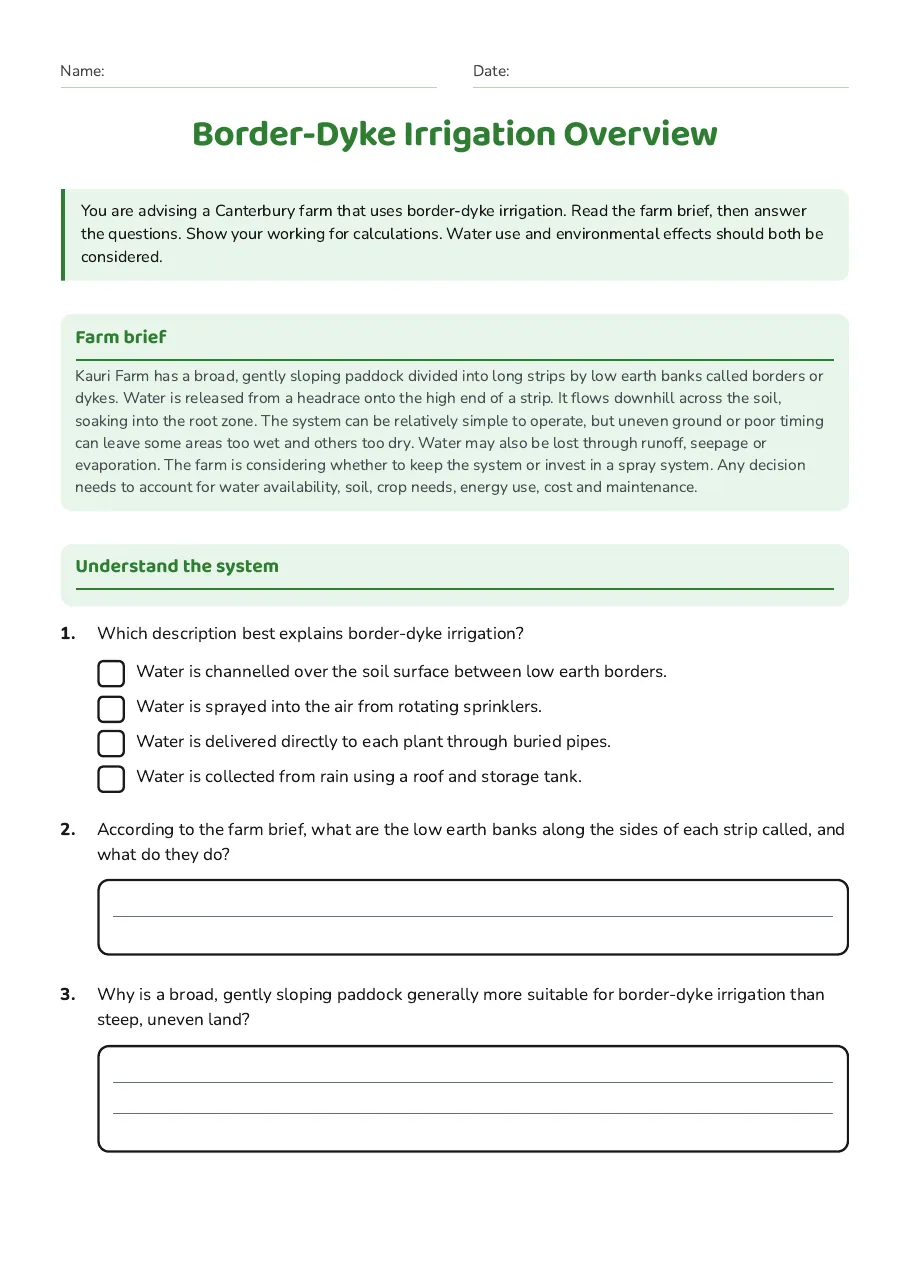
Kauri Farm has a broad, gently sloping paddock divided into long strips by low earth banks called borders or dykes. Water is released from a headrace onto the high end of a strip. It flows downhill across the soil, soaking into the root zone. The system can be relatively simple to operate, but uneven ground or poor timing can leave some areas too wet and others too dry. Water may also be lost through runoff, seepage or evaporation. The farm is considering whether to keep the system or invest in a spray system. Any decision needs to account for water availability, soil, crop needs, energy use, cost and maintenance.
Understand the system
- Water is channelled over the soil surface between low earth borders.
- Water is sprayed into the air from rotating sprinklers.
- Water is delivered directly to each plant through buried pipes.
- Water is collected from rain using a roof and storage tank.
- Water can be lost through runoff or seepage.
- Poor timing can cause waterlogging or uneven watering.
- It always uses less water than every spray system.
- It needs no land preparation or maintenance.
Evaluate and calculate
3 printable pages
Page 1
Page 2

Page 3
About This Worksheet
Free in Kuraplan
Sign up free, grab the PDF, and customize it for your class.
Print-Ready
Formatted for standard paper. Clean layout, easy to read.
AI-Generated
Created with Kuraplan's AI, designed for real classroom use.
For Teachers & Parents
Use in classrooms, for homework, tutoring, or homeschool.
Need a custom version of this worksheet?
Kuraplan's AI generates custom worksheets in seconds — differentiated for every learner, aligned to your curriculum.
Generate Custom Worksheets — FreeMore Technology Worksheets
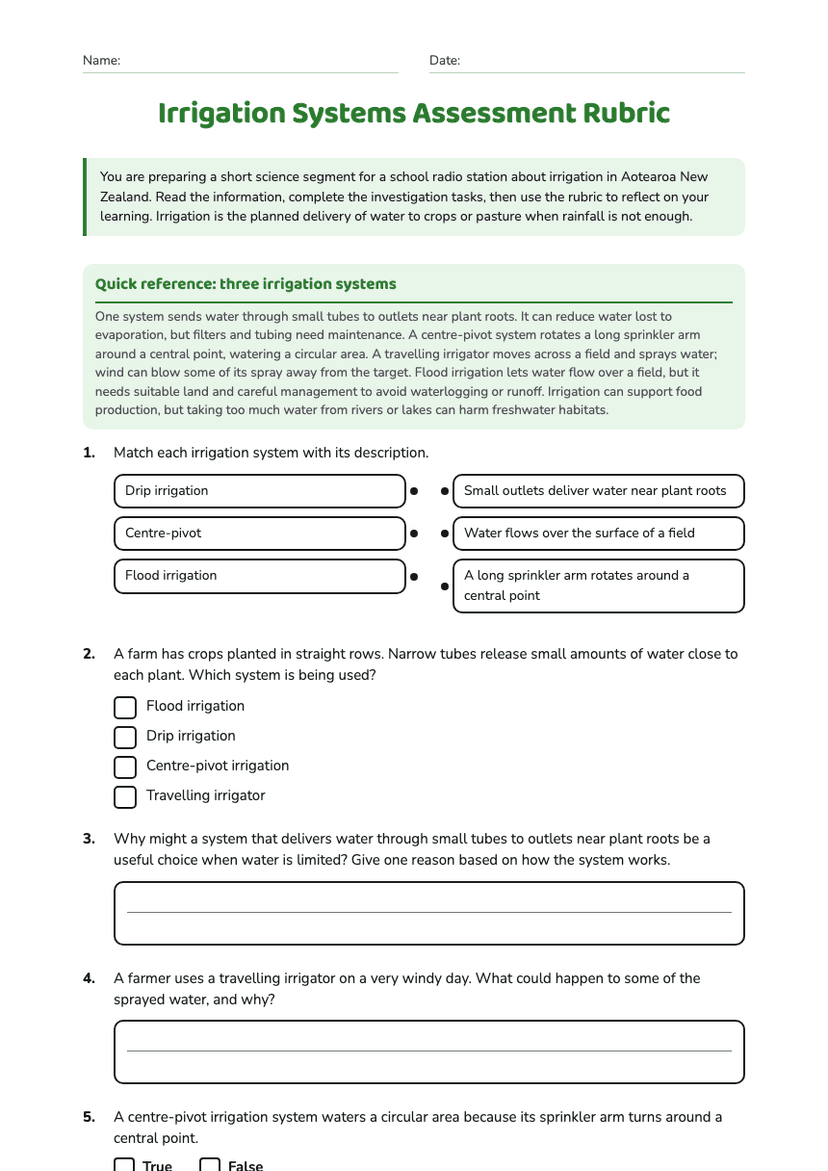
Irrigation Systems Assessment Rubric
Free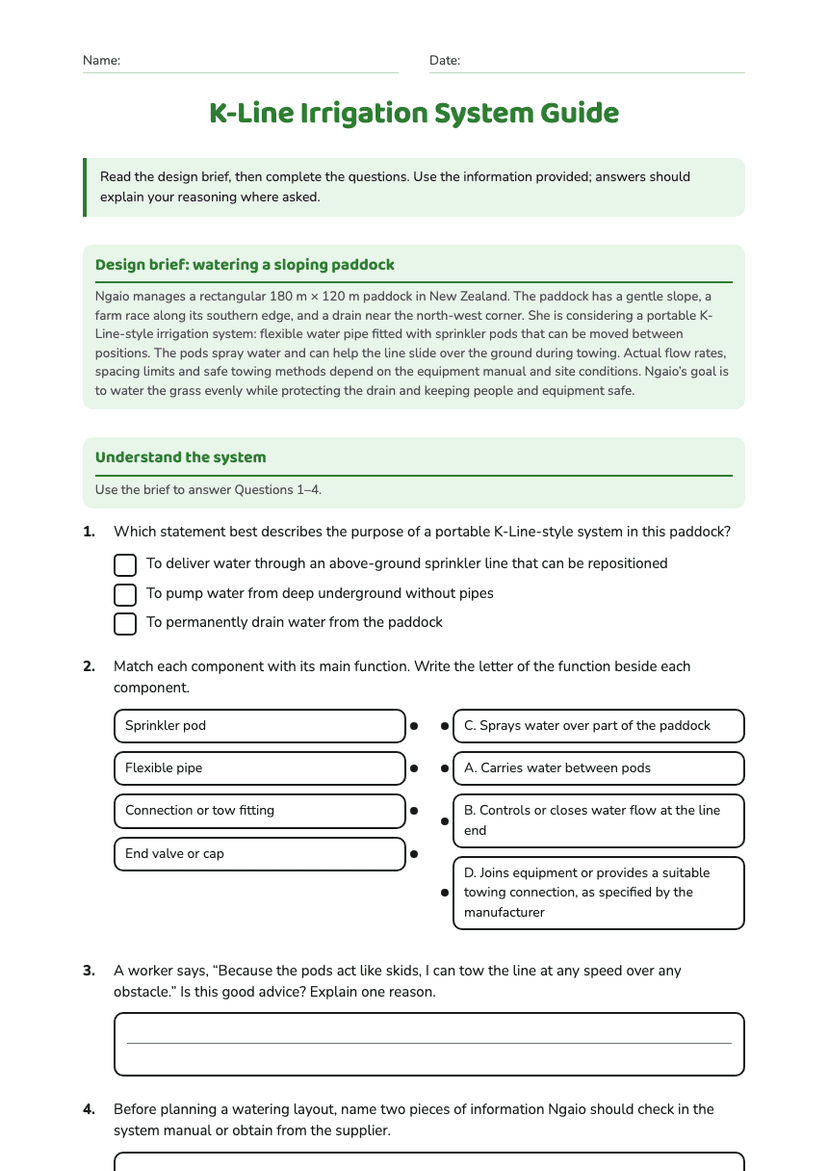
K-Line Irrigation System Guide
Free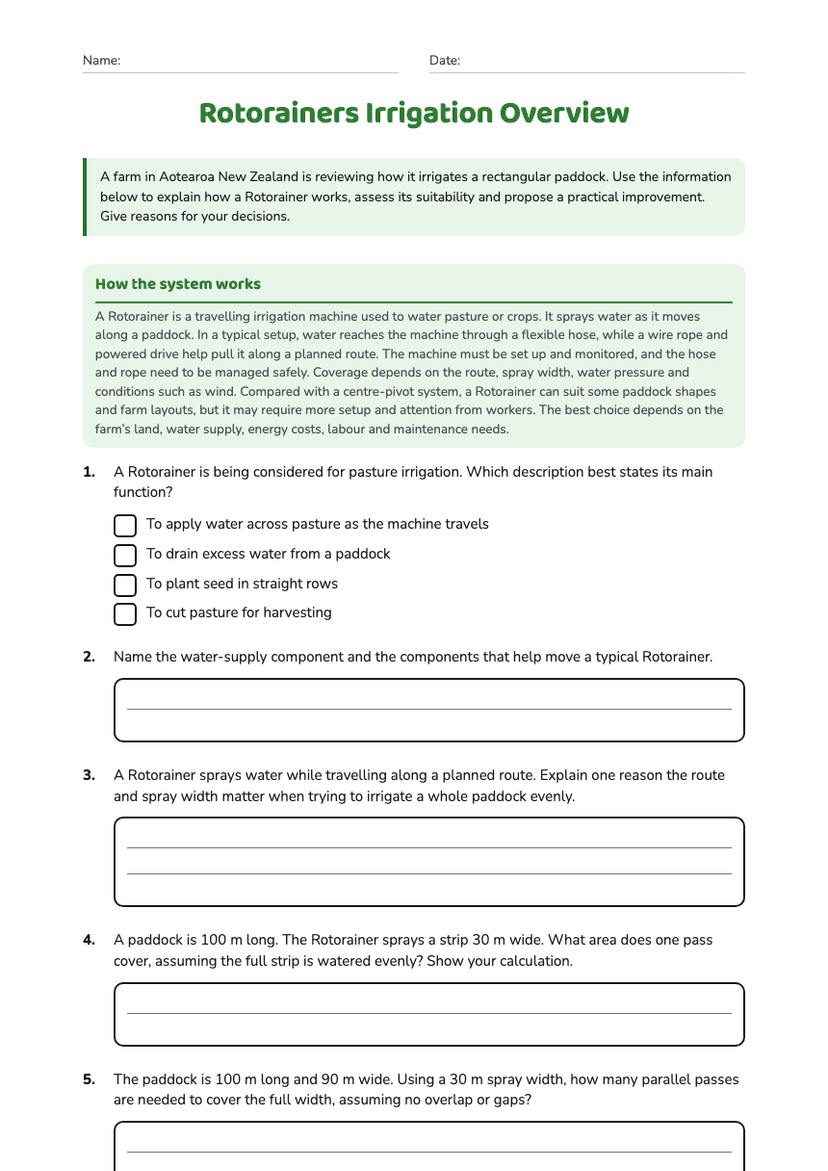
Rotorainers Irrigation Overview
Free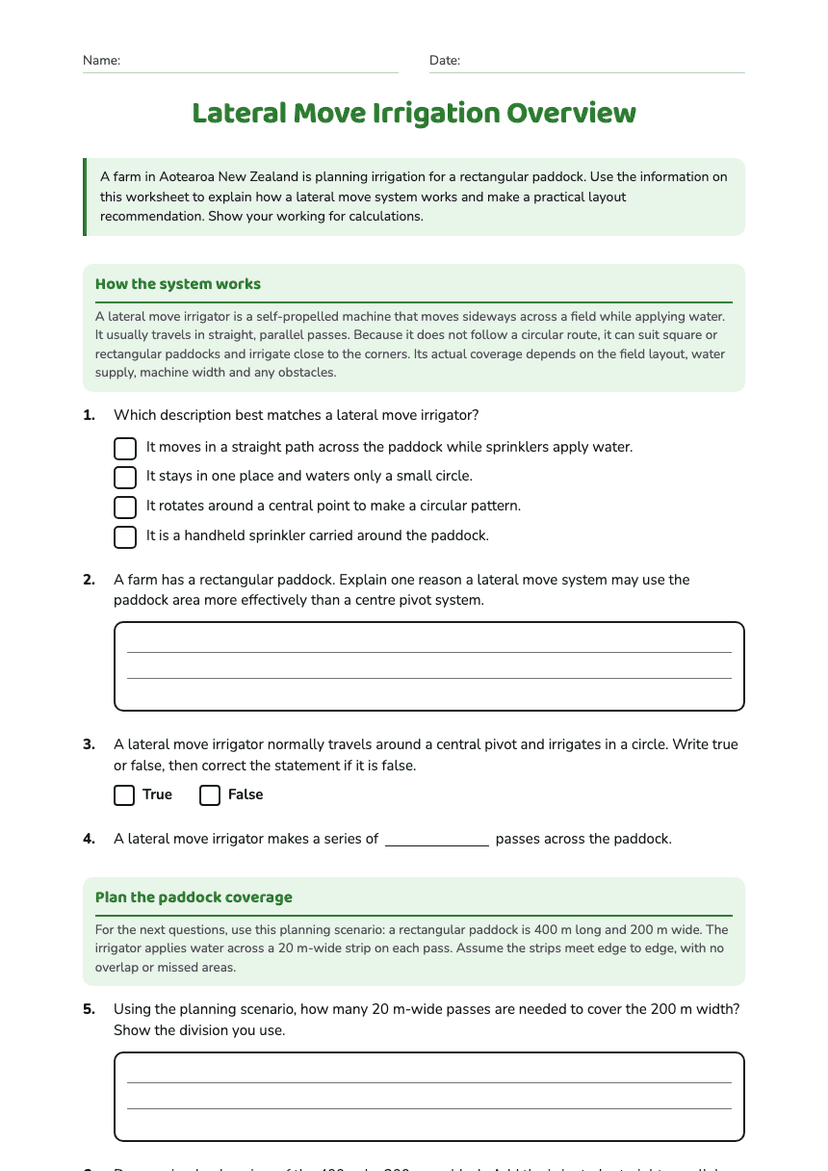
Lateral Move Irrigation Overview
Free
Centre Pivot Irrigation Systems
Free
Drip Irrigation Techniques
Free
Irrigation Systems Assessment
Free