Chakras and Indian Culture
A free social studies worksheet ready for your classroom. Open in Kuraplan to grab the print-ready PDF, customize it for your students, or generate a fresh version in seconds.
Chakras and Indian Culture
📖 Part 1: Reading Text
Understanding Chakras: Ancient Wisdom in Modern India
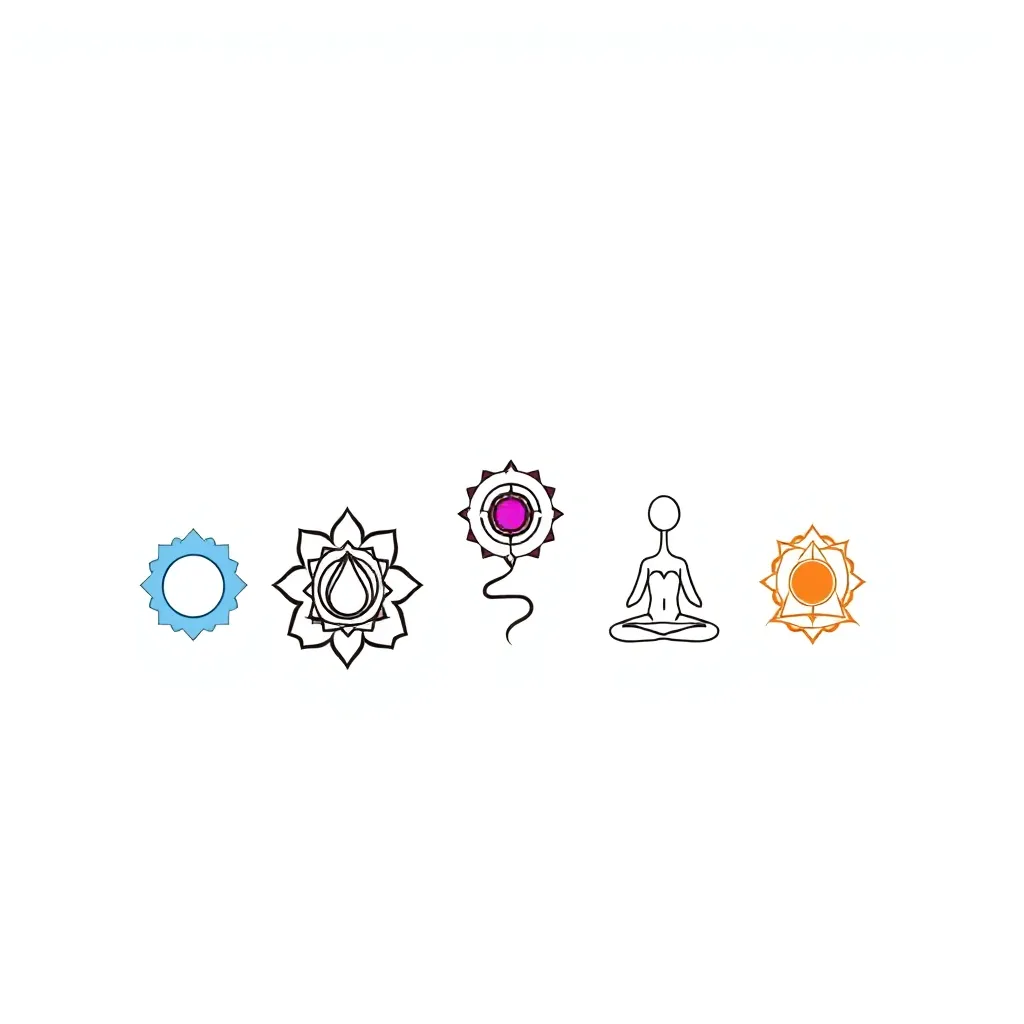
Chakras are energy centres in the human body that have been recognised in Indian culture for thousands of years. The word "chakra" comes from Sanskrit, meaning "wheel" or "circle," representing the spinning energy that flows through our bodies. There are seven main chakras, each located at different points along the spine, from the base to the crown of the head.
According to ancient Indian philosophy, when chakras are balanced and open, energy flows freely, promoting physical health and emotional well-being. However, when chakras become blocked or imbalanced, people may experience various physical symptoms, emotional disturbances, or spiritual disconnection. Signs of blocked chakras include persistent fatigue, anxiety, difficulty concentrating, or feeling spiritually lost.
To realign chakras, practitioners use several techniques including meditation, yoga, breathing exercises, and chanting specific mantras. Each chakra corresponds to particular colours, sounds, and elements. For example, the root chakra is associated with red and represents stability, whilst the heart chakra is linked to green and governs love and compassion.
Although chakras originated in Hinduism, they share similarities with Buddhist concepts of energy and mindfulness. Buddhism emphasises the importance of mental clarity and spiritual balance, which aligns with chakra philosophy. In modern India, millions of people continue practising these ancient traditions alongside contemporary lifestyles. Yoga studios, meditation centres, and spiritual retreats are common in Indian cities, where people seek to maintain harmony between traditional wisdom and modern living. This integration demonstrates how ancient spiritual practices remain relevant in today's fast-paced world, offering tools for managing stress and achieving inner peace.
✅ Part 2: Reading Comprehension - Multiple Choice
🔗 Part 3: Vocabulary Matching
📝 Part 4: Grammar - Fill in the Blanks
a) Chakras __________ energy centres that __________ been recognised in Indian culture for thousands of years. (present simple "be" + present perfect passive)
b) When chakras __________ balanced, energy flows freely, but when they __________ blocked, people may experience problems. (present simple passive)
c) Each chakra __________ to particular colours and sounds. (present simple)
d) Although chakras __________ in Hinduism, they __________ similarities with Buddhist concepts. (past simple + present simple)
e) In modern India, millions of people __________ practising these traditions alongside contemporary lifestyles. (present continuous)
f) This integration __________ how ancient practices __________ relevant today. (present simple + present simple)
🇮🇳 Part 5: Indian Culture Quiz - True or False
a) _____ Hindi is the only official language of India.
b) _____ The Taj Mahal was built as a tomb for an emperor's wife.
c) _____ Diwali is known as the Festival of Lights.
d) _____ Cricket is the most popular sport in India.
e) _____ Indian cuisine never uses spices.
f) _____ Bollywood is located in Mumbai.
g) _____ The cow is considered sacred in Hindu culture.
h) _____ India has only one monsoon season per year.
i) _____ Yoga originated in ancient India.
j) _____ The Indian flag has four colours.
🗺️ Part 6: Indian Geography Quiz
About This Worksheet
Free in Kuraplan
Sign up free, grab the PDF, and customize it for your class.
Print-Ready
Formatted for standard paper. Clean layout, easy to read.
AI-Generated
Created with Kuraplan's AI, designed for real classroom use.
For Teachers & Parents
Use in classrooms, for homework, tutoring, or homeschool.
Need a custom version of this worksheet?
Kuraplan's AI generates custom worksheets in seconds — differentiated for every learner, aligned to your curriculum.
Generate Custom Worksheets — Free