Contraception Myths and Facts
A free health worksheet ready for your classroom. Open in Kuraplan to grab the print-ready PDF, customize it for your students, or generate a fresh version in seconds.

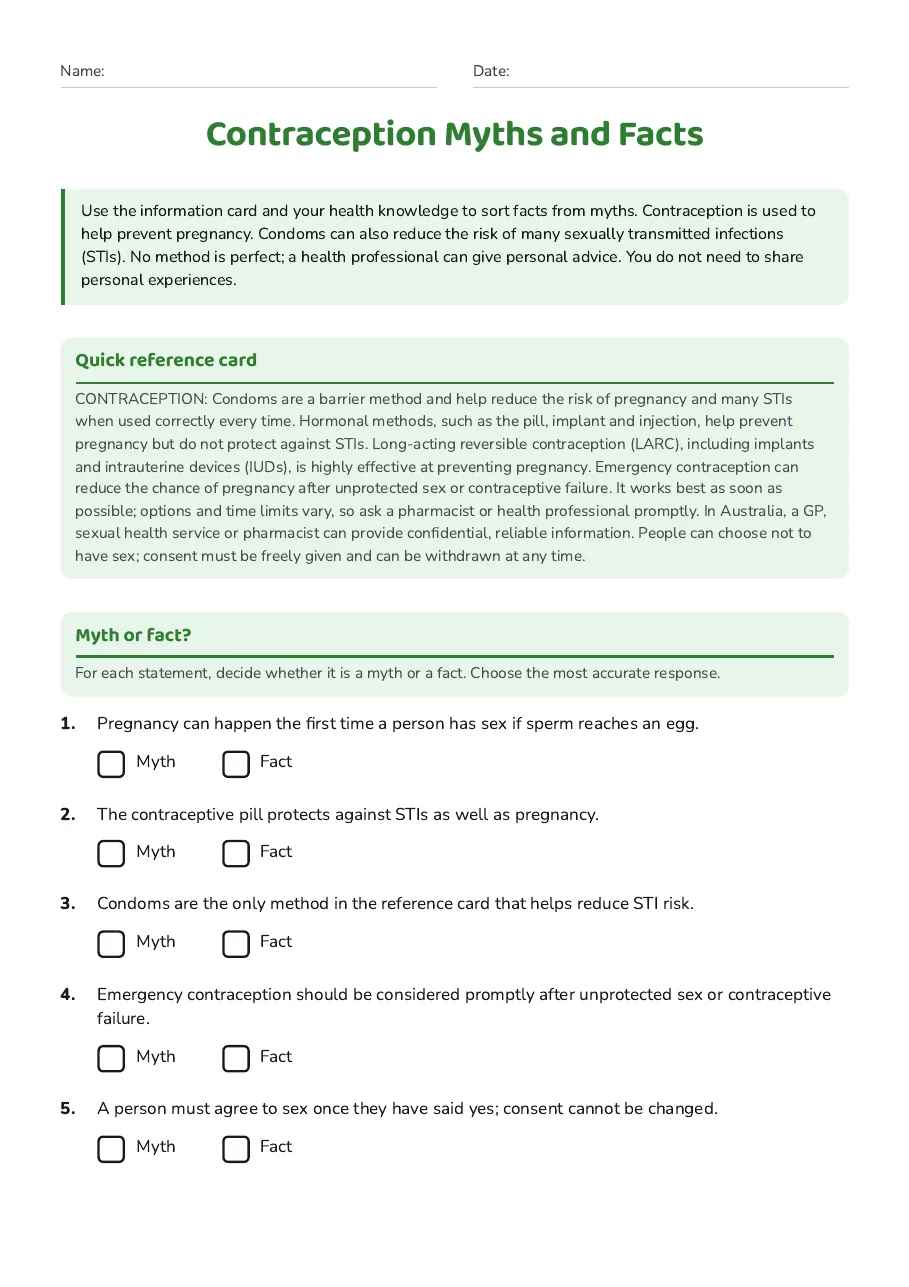
Contraception Myths and Facts
Quick reference card
CONTRACEPTION: Condoms are a barrier method and help reduce the risk of pregnancy and many STIs when used correctly every time. Hormonal methods, such as the pill, implant and injection, help prevent pregnancy but do not protect against STIs. Long-acting reversible contraception (LARC), including implants and intrauterine devices (IUDs), is highly effective at preventing pregnancy. Emergency contraception can reduce the chance of pregnancy after unprotected sex or contraceptive failure. It works best as soon as possible; options and time limits vary, so ask a pharmacist or health professional promptly. In Australia, a GP, sexual health service or pharmacist can provide confidential, reliable information. People can choose not to have sex; consent must be freely given and can be withdrawn at any time.
Myth or fact?
For each statement, decide whether it is a myth or a fact. Choose the most accurate response.
- Myth
- Fact
- Myth
- Fact
- Myth
- Fact
- Myth
- Fact
- Myth
- Fact
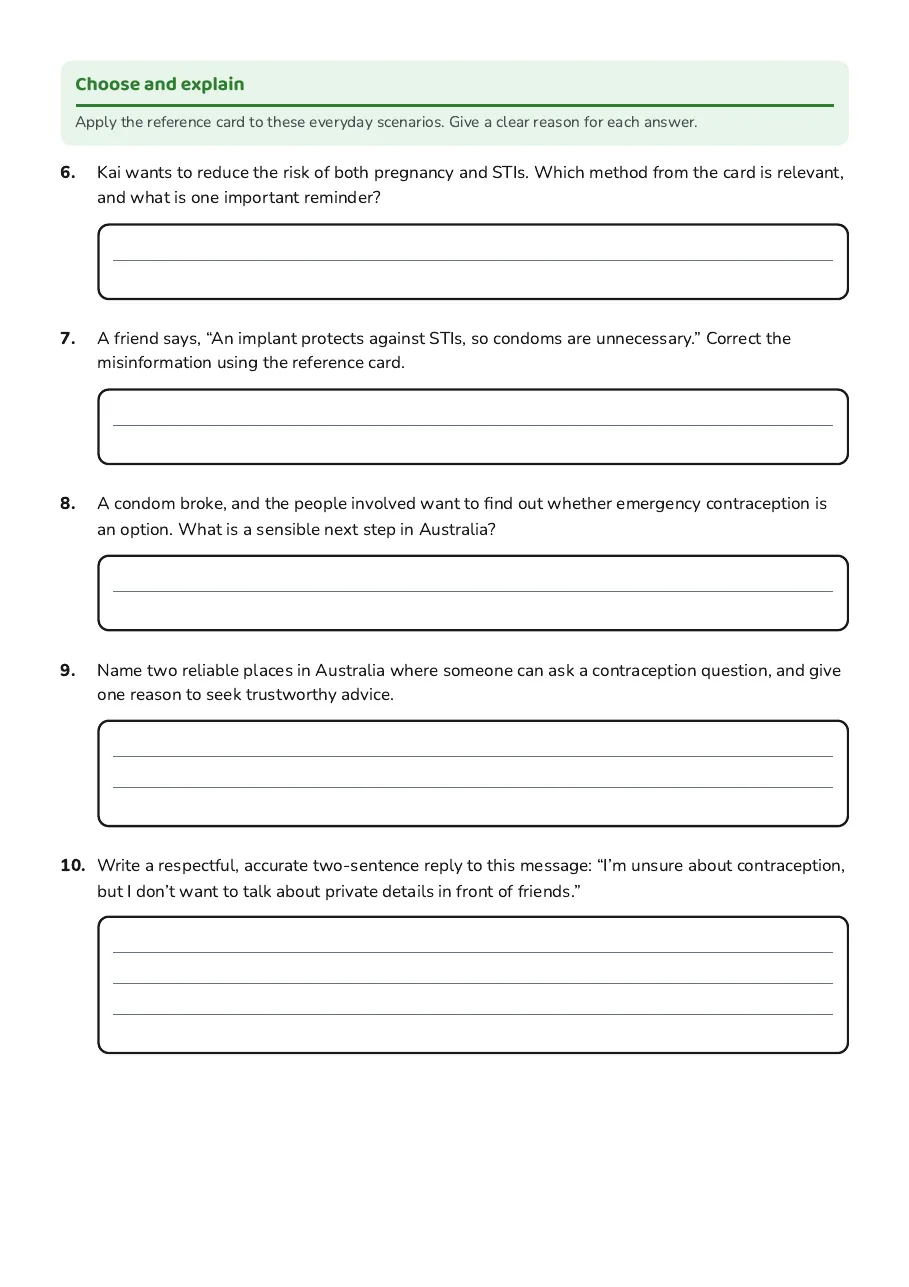
Choose and explain
Apply the reference card to these everyday scenarios. Give a clear reason for each answer.
2 printable pages
Page 1
Page 2
About This Worksheet
Free in Kuraplan
Sign up free, grab the PDF, and customize it for your class.
Print-Ready
Formatted for standard paper. Clean layout, easy to read.
AI-Generated
Created with Kuraplan's AI, designed for real classroom use.
For Teachers & Parents
Use in classrooms, for homework, tutoring, or homeschool.
Need a custom version of this worksheet?
Kuraplan's AI generates custom worksheets in seconds — differentiated for every learner, aligned to your curriculum.
Generate Custom Worksheets — FreeMore Health Worksheets
Cooperation and Inclusion Worksheet
Free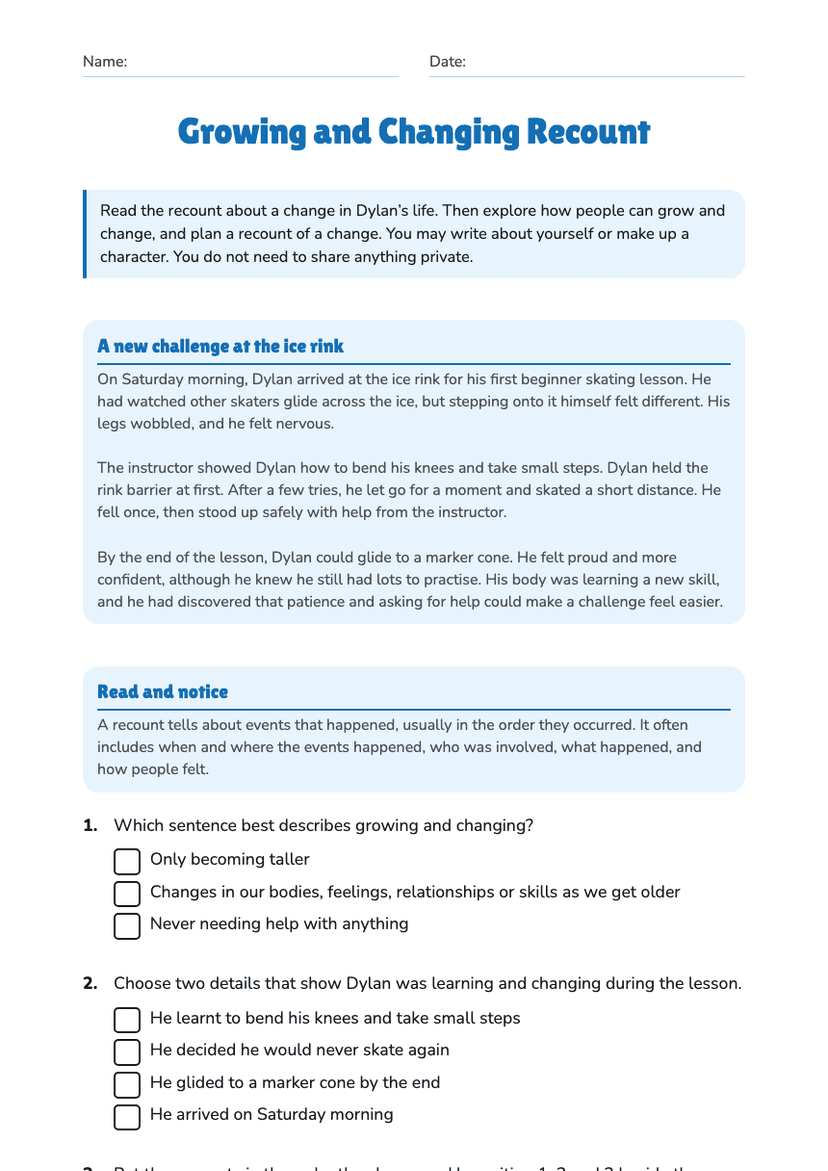
Growing and Changing Recount
Free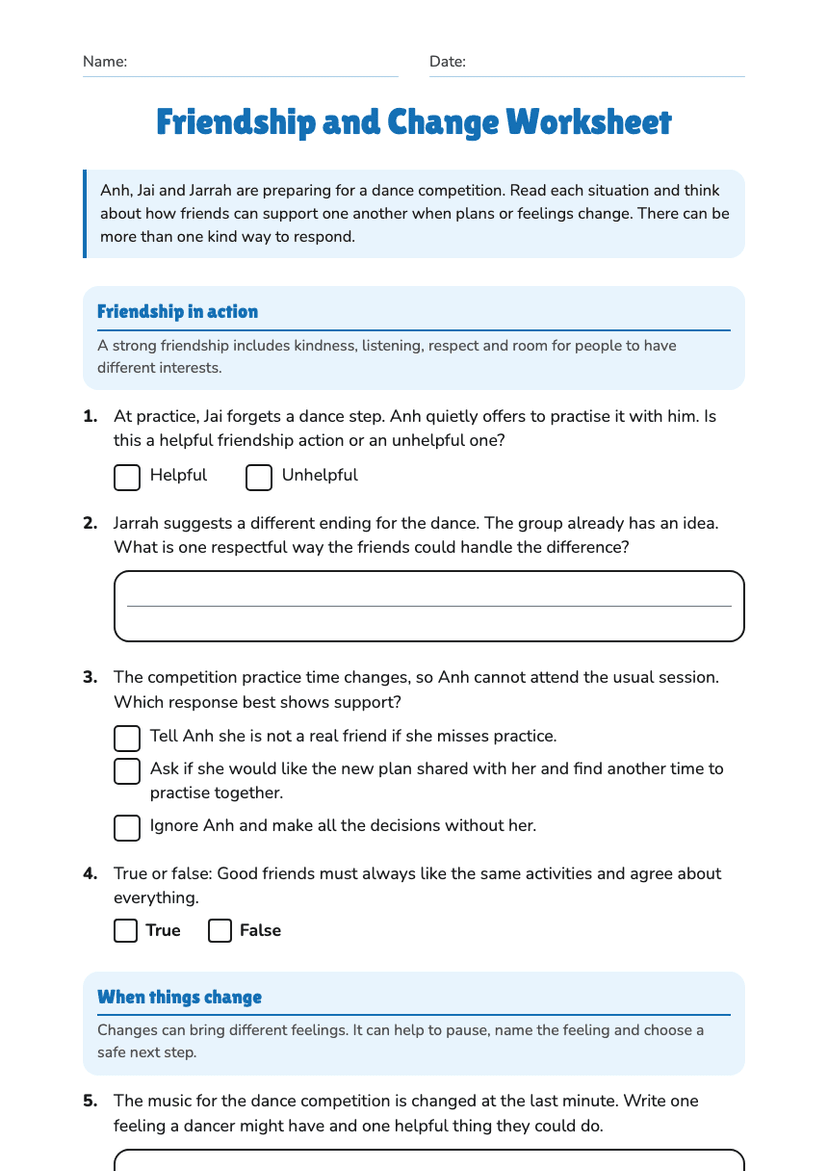
Friendship and Change Worksheet
Free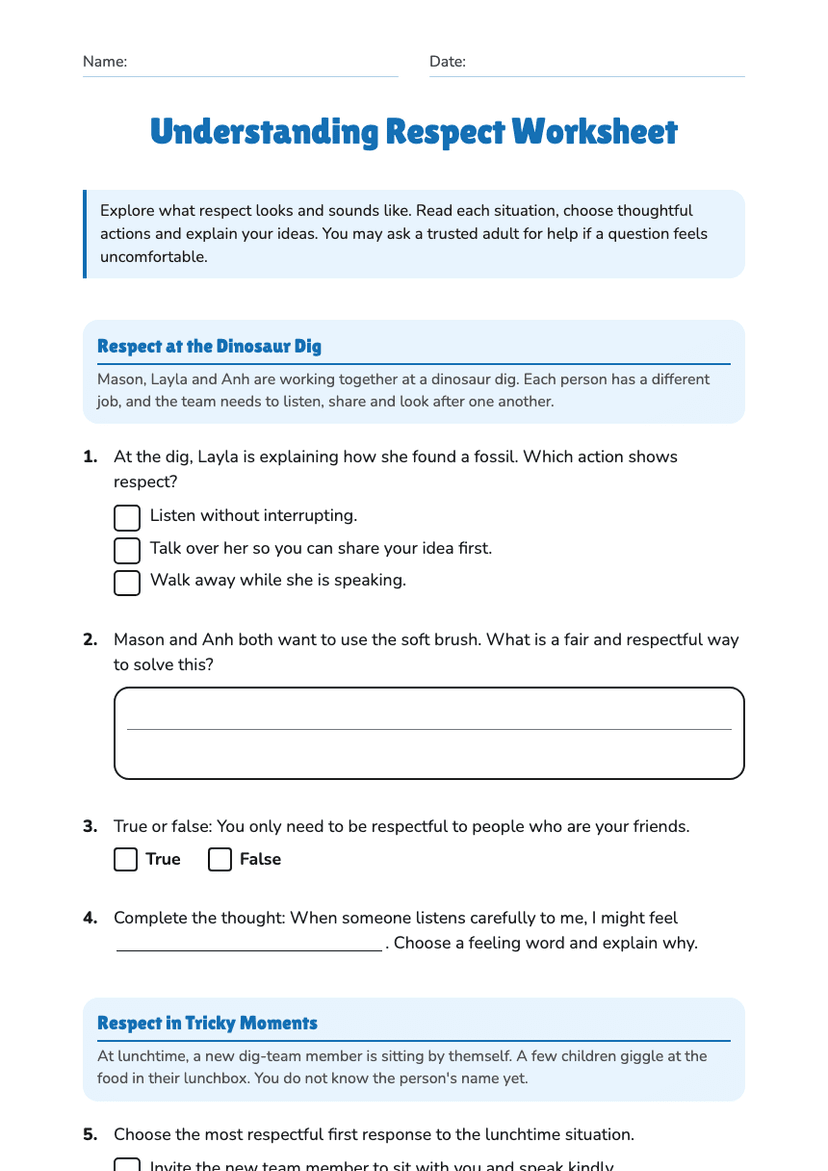
Understanding Respect Worksheet
Free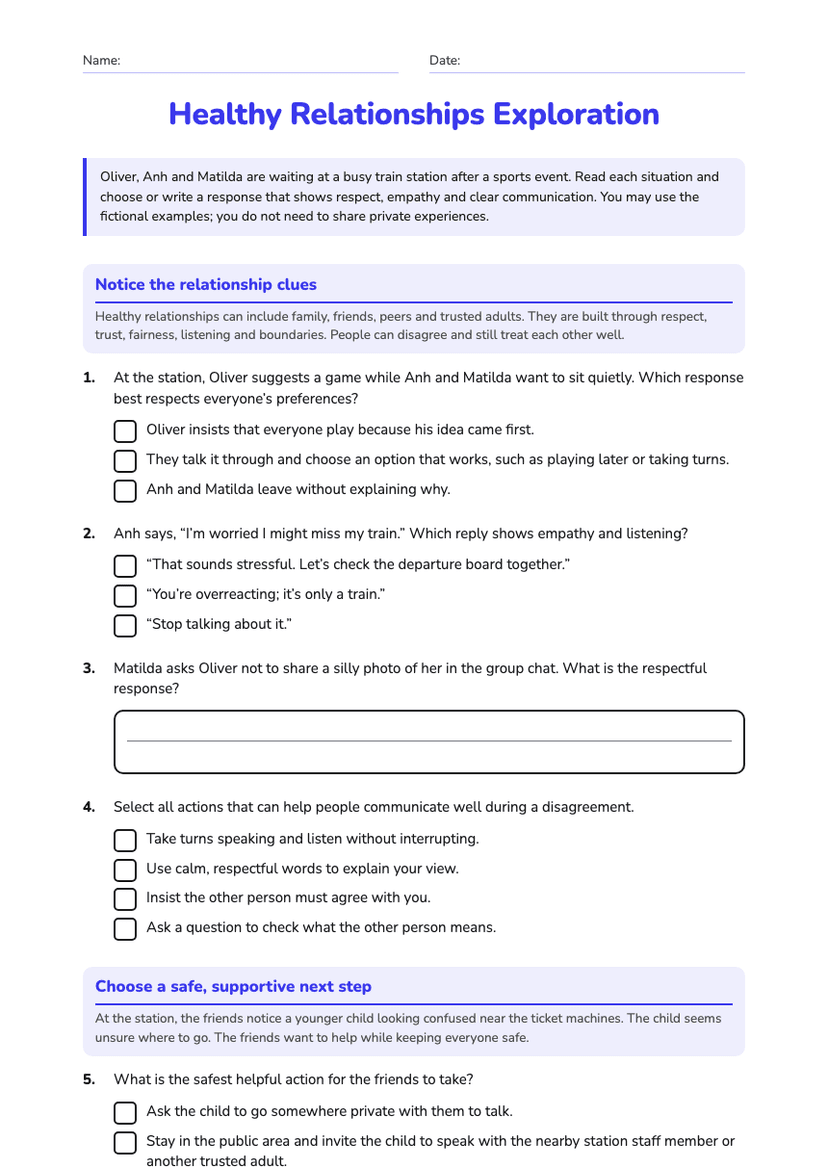
Healthy Relationships Exploration
Free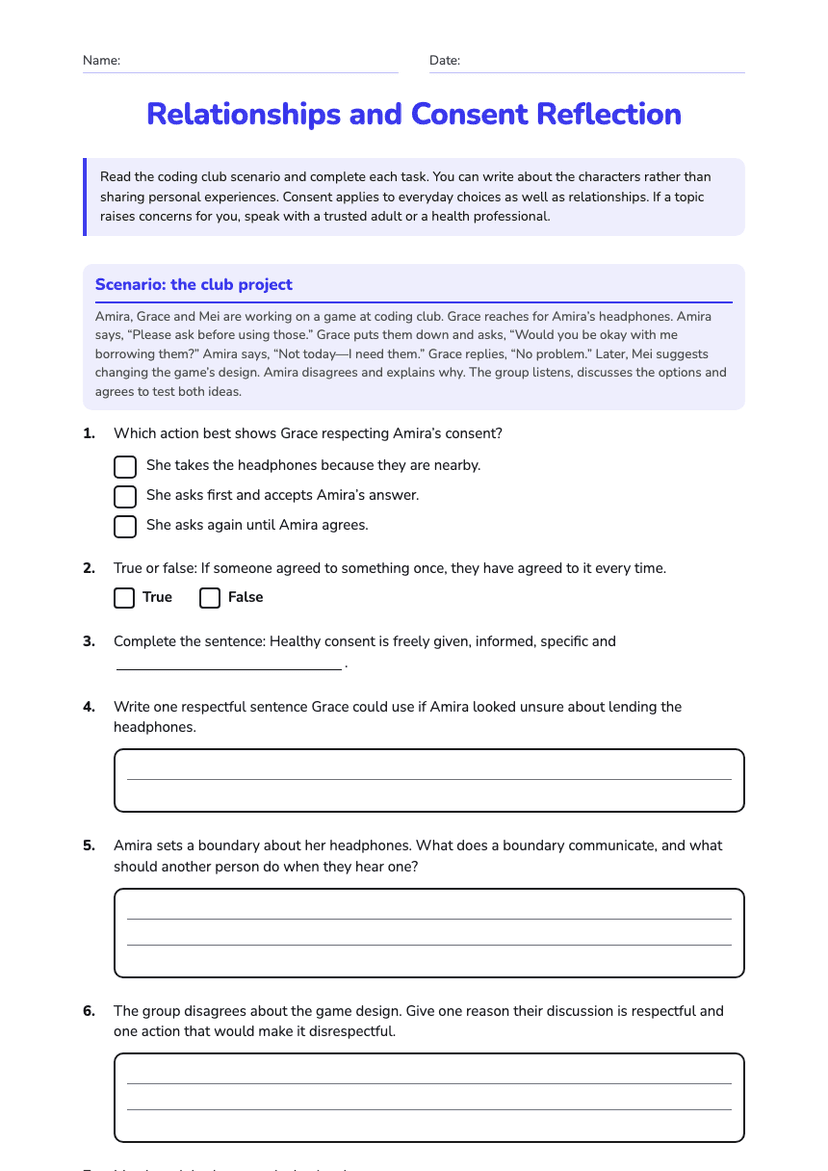
Relationships and Consent Reflection
Free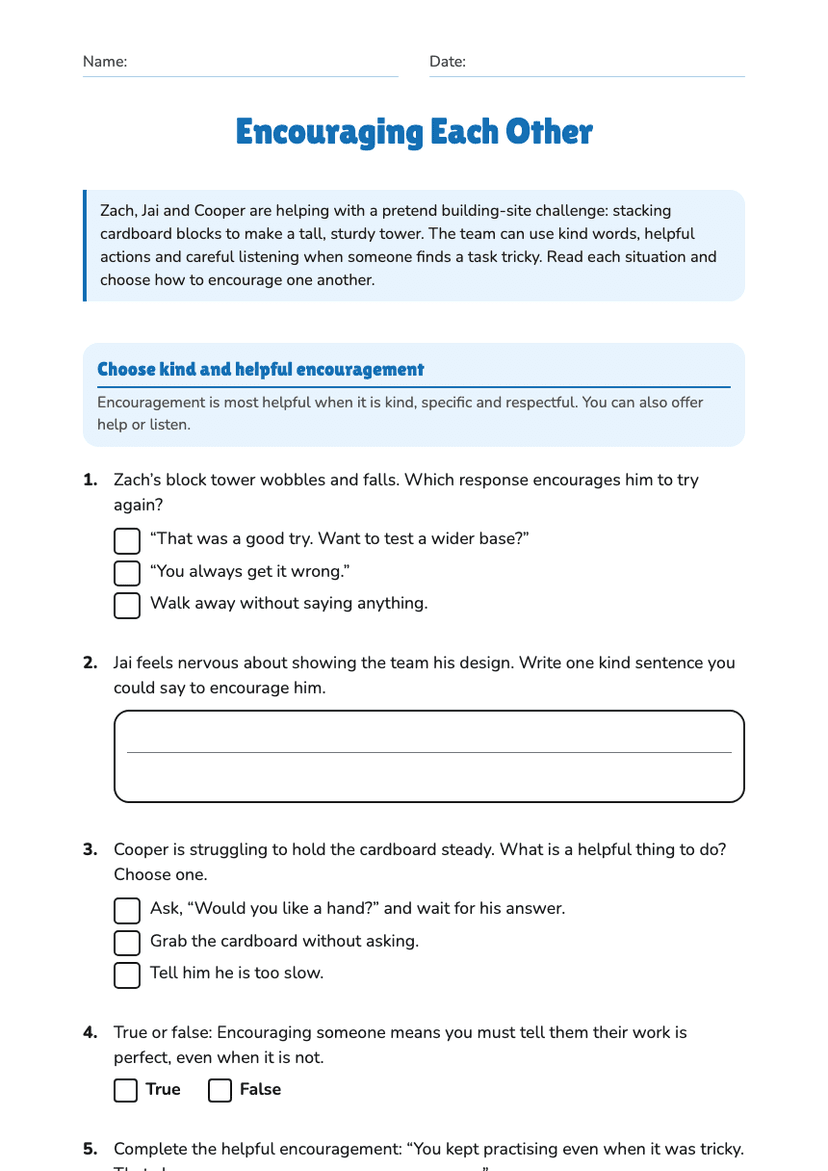
Encouraging Each Other
Free