Earth's Atmosphere Quiz
A free science worksheet ready for your classroom. Open in Kuraplan to grab the print-ready PDF, customize it for your students, or generate a fresh version in seconds.
Earth's Atmosphere Quiz
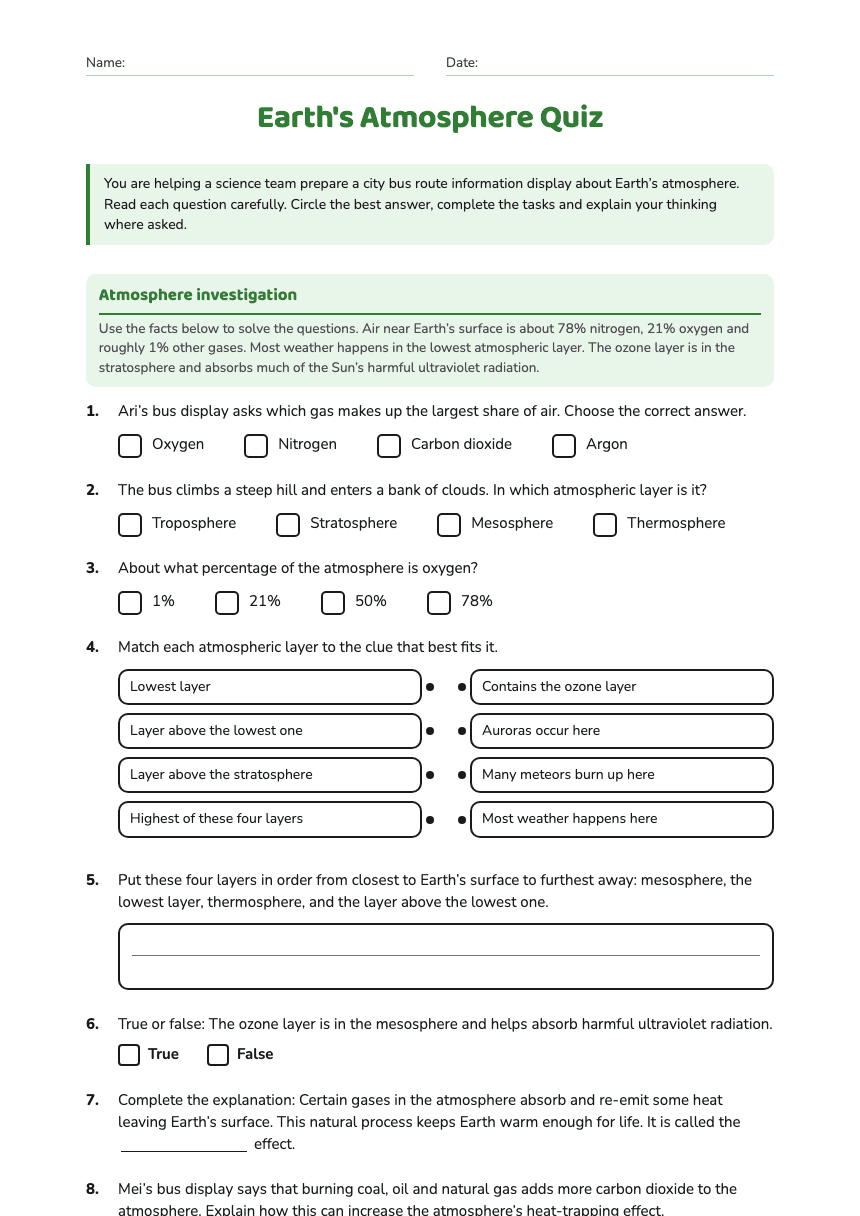
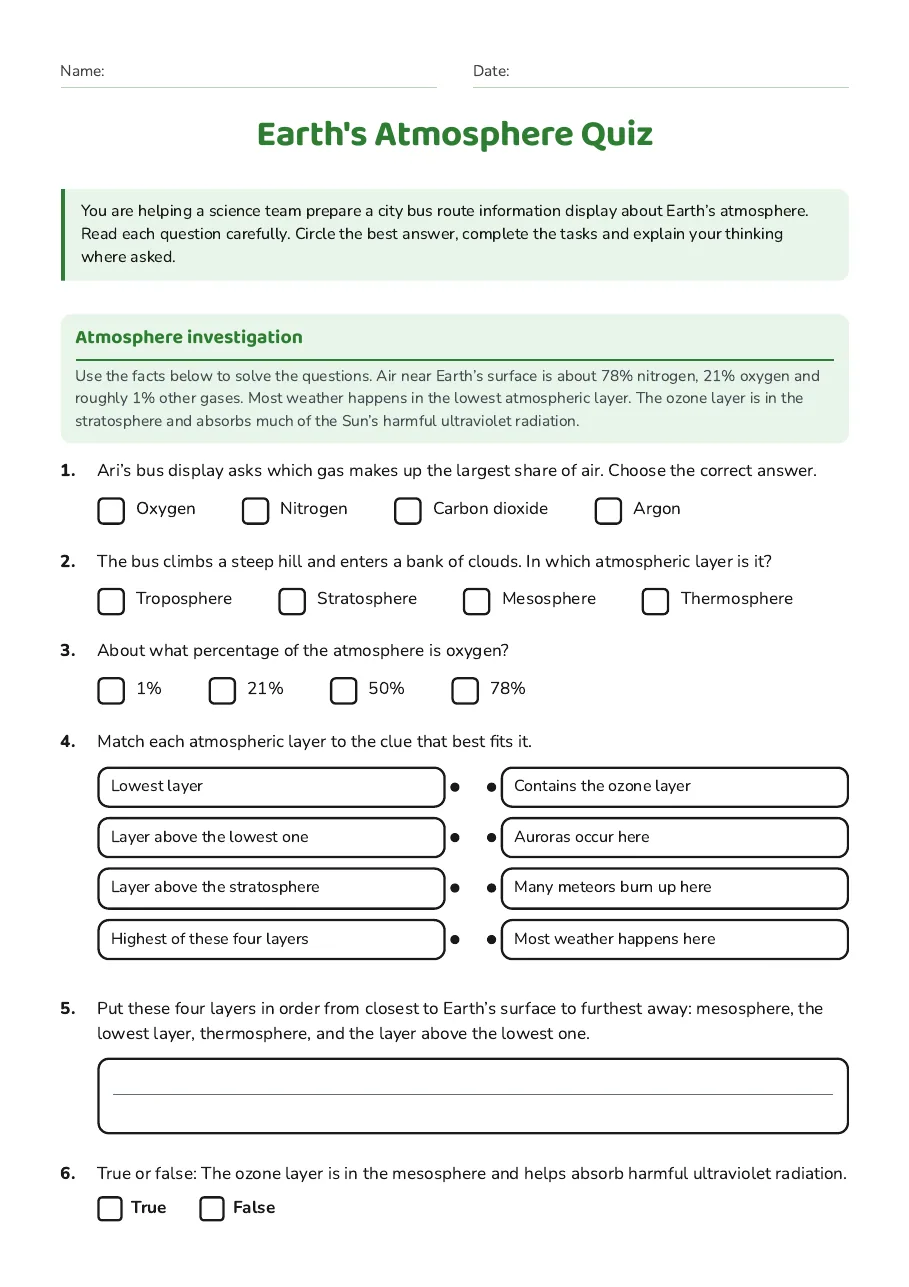
Atmosphere investigation
Use the facts below to solve the questions. Air near Earth’s surface is about 78% nitrogen, 21% oxygen and roughly 1% other gases. Most weather happens in the lowest atmospheric layer. The ozone layer is in the stratosphere and absorbs much of the Sun’s harmful ultraviolet radiation.
- Oxygen
- Nitrogen
- Carbon dioxide
- Argon
- Troposphere
- Stratosphere
- Mesosphere
- Thermosphere
- 1%
- 21%
- 50%
- 78%
- Lowest layer
- Layer above the lowest one
- Layer above the stratosphere
- Highest of these four layers
- Contains the ozone layer
- Auroras occur here
- Many meteors burn up here
- Most weather happens here
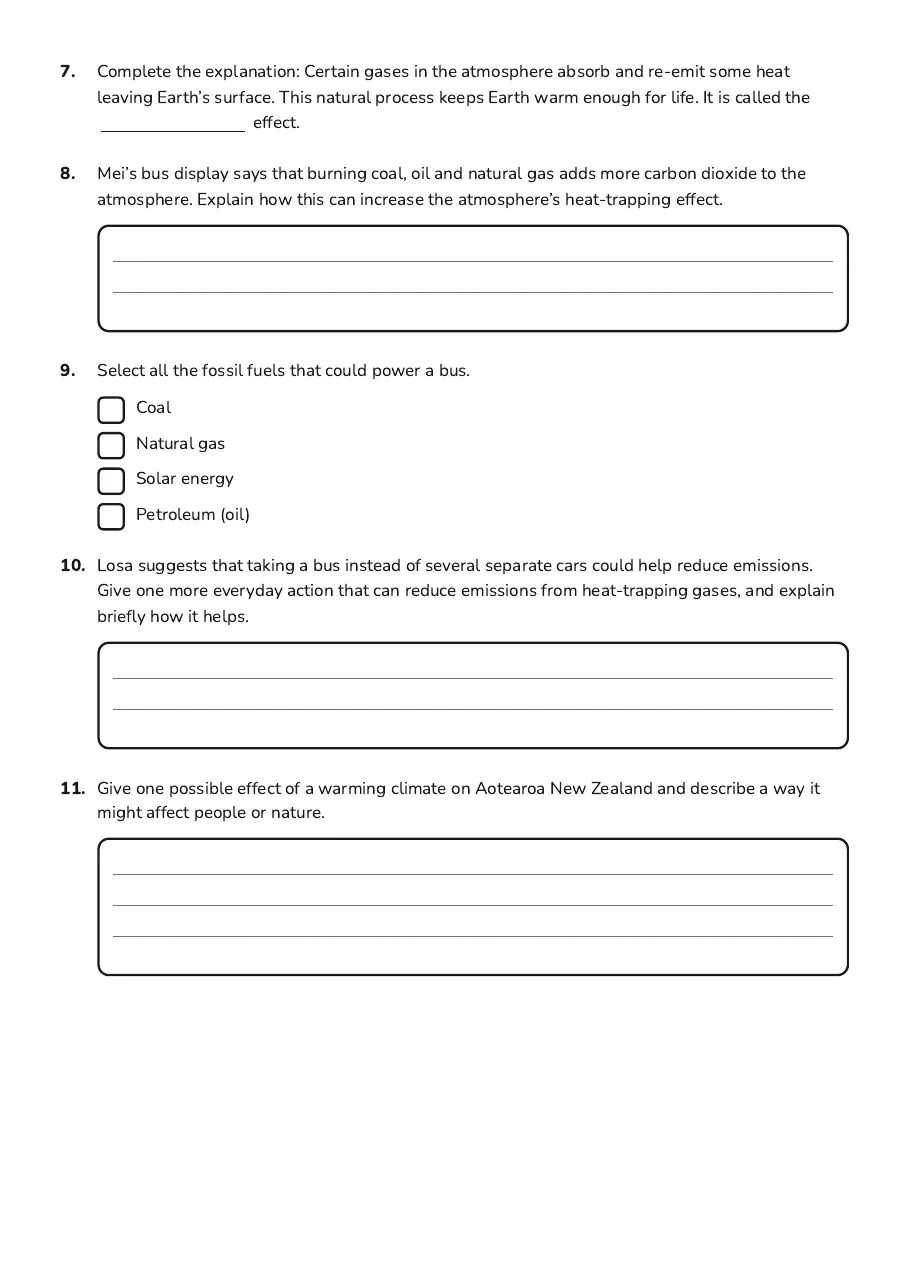
- Coal
- Natural gas
- Solar energy
- Petroleum (oil)
2 printable pages
Page 1
Page 2
About This Worksheet
Free in Kuraplan
Sign up free, grab the PDF, and customize it for your class.
Print-Ready
Formatted for standard paper. Clean layout, easy to read.
AI-Generated
Created with Kuraplan's AI, designed for real classroom use.
For Teachers & Parents
Use in classrooms, for homework, tutoring, or homeschool.
Need a custom version of this worksheet?
Kuraplan's AI generates custom worksheets in seconds — differentiated for every learner, aligned to your curriculum.
Generate Custom Worksheets — FreeMore Science Worksheets
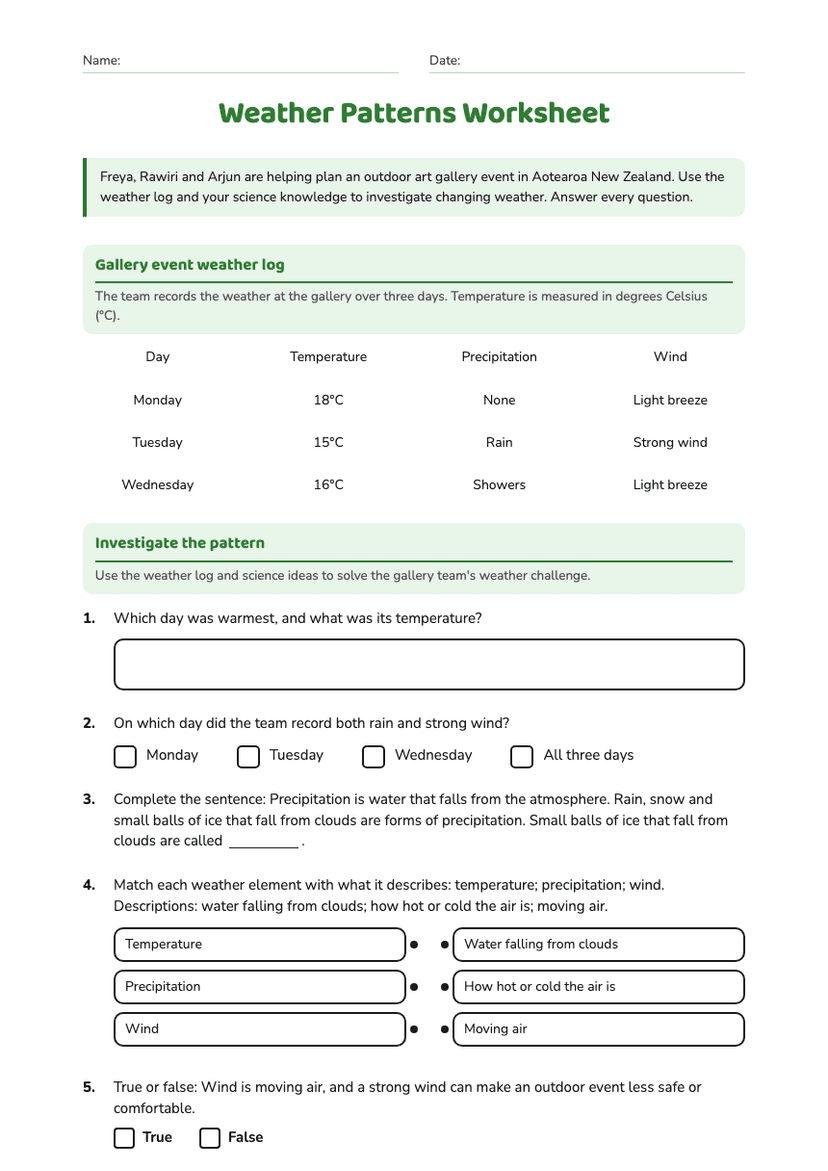
Weather Patterns Worksheet
Free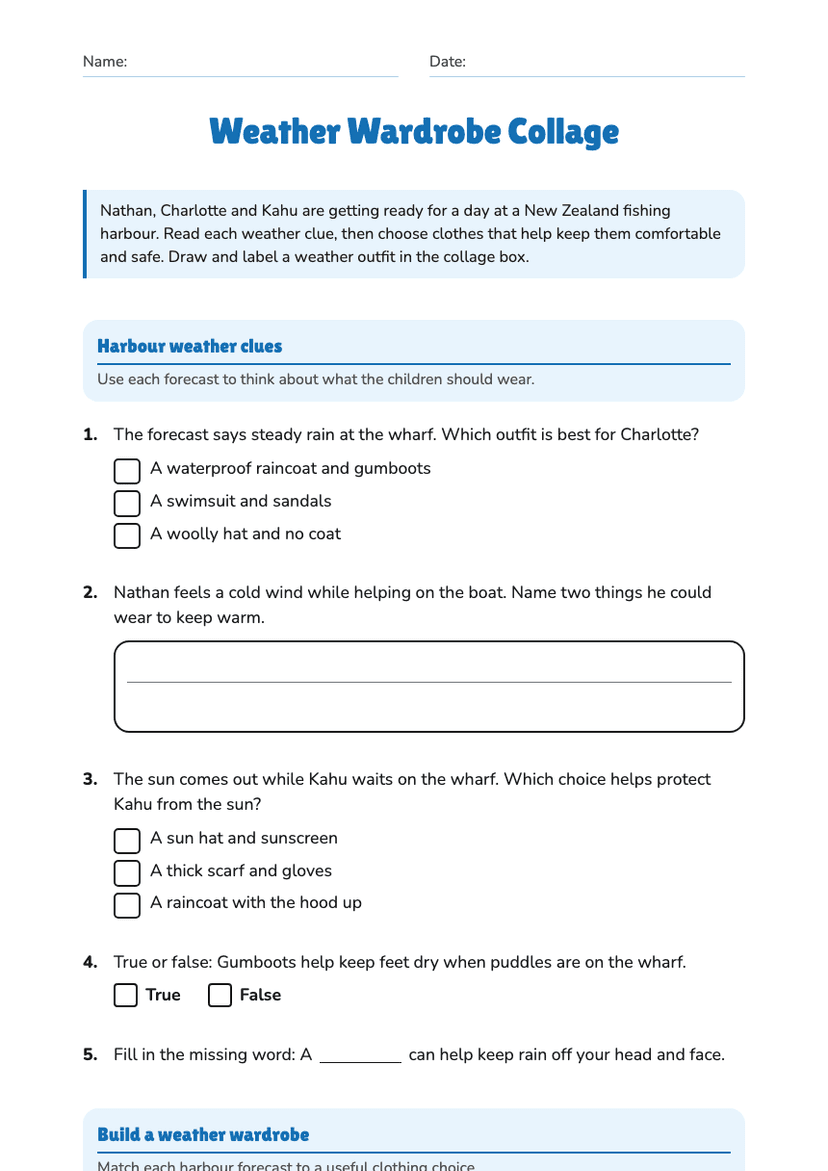
Weather Wardrobe Collage
Free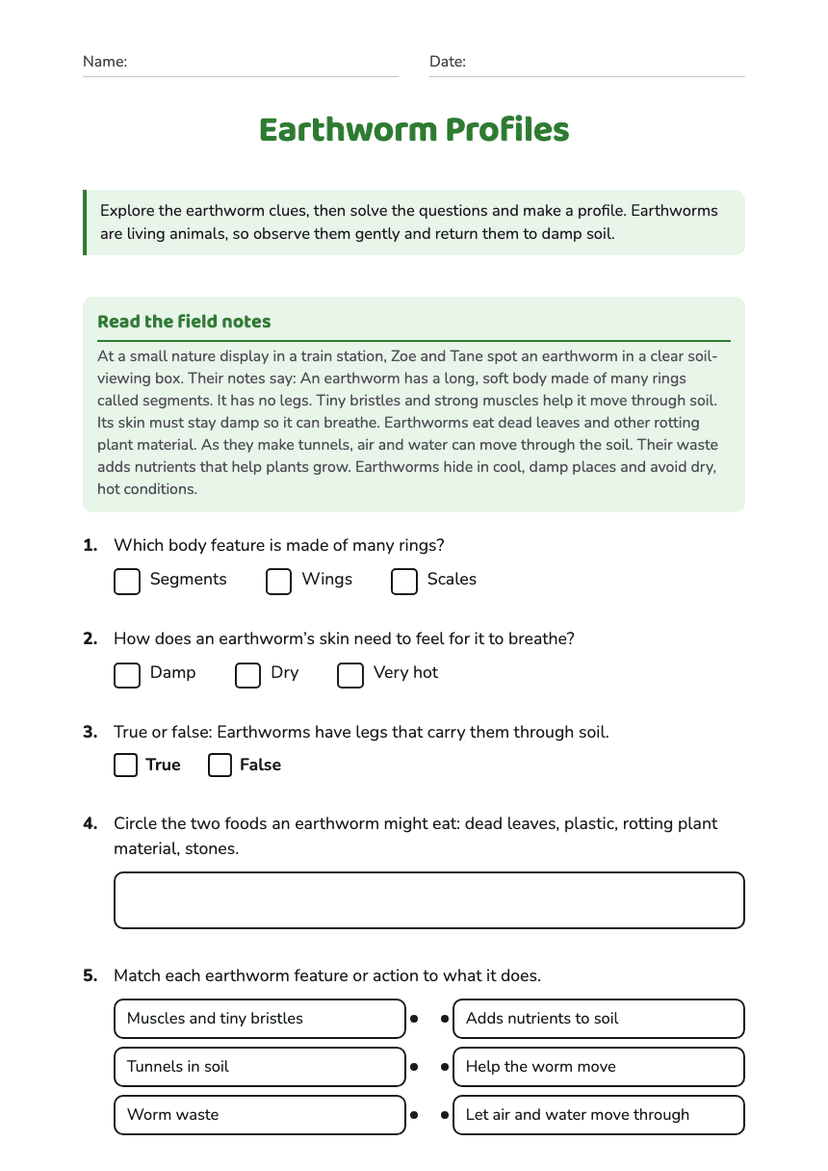
Earthworm Profiles
Free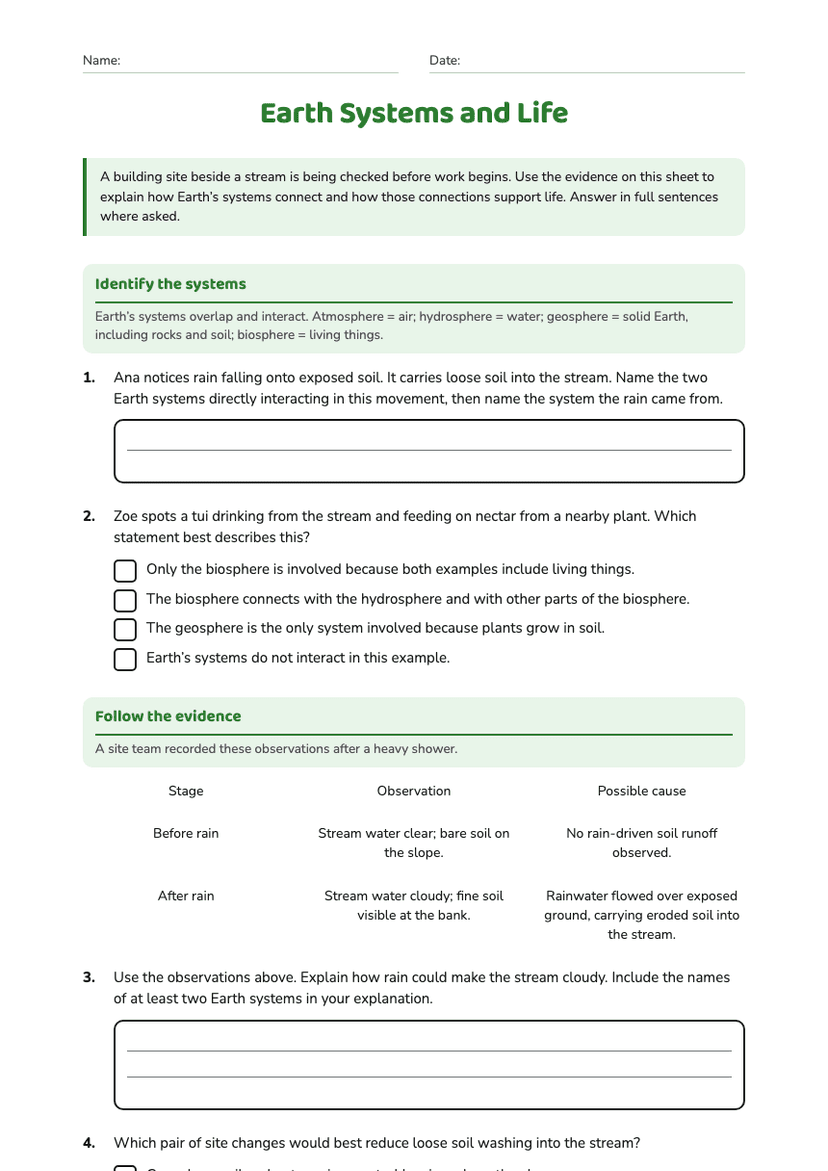
Earth Systems and Life
Free
Moon Facts and Features
Free
Bilingual Soil Science Keyword Cards
Free
Earth's Layers Assessment Worksheet
Free