Earth's Natural Hazards
A free science worksheet ready for your classroom. Open in Kuraplan to grab the print-ready PDF, customize it for your students, or generate a fresh version in seconds.
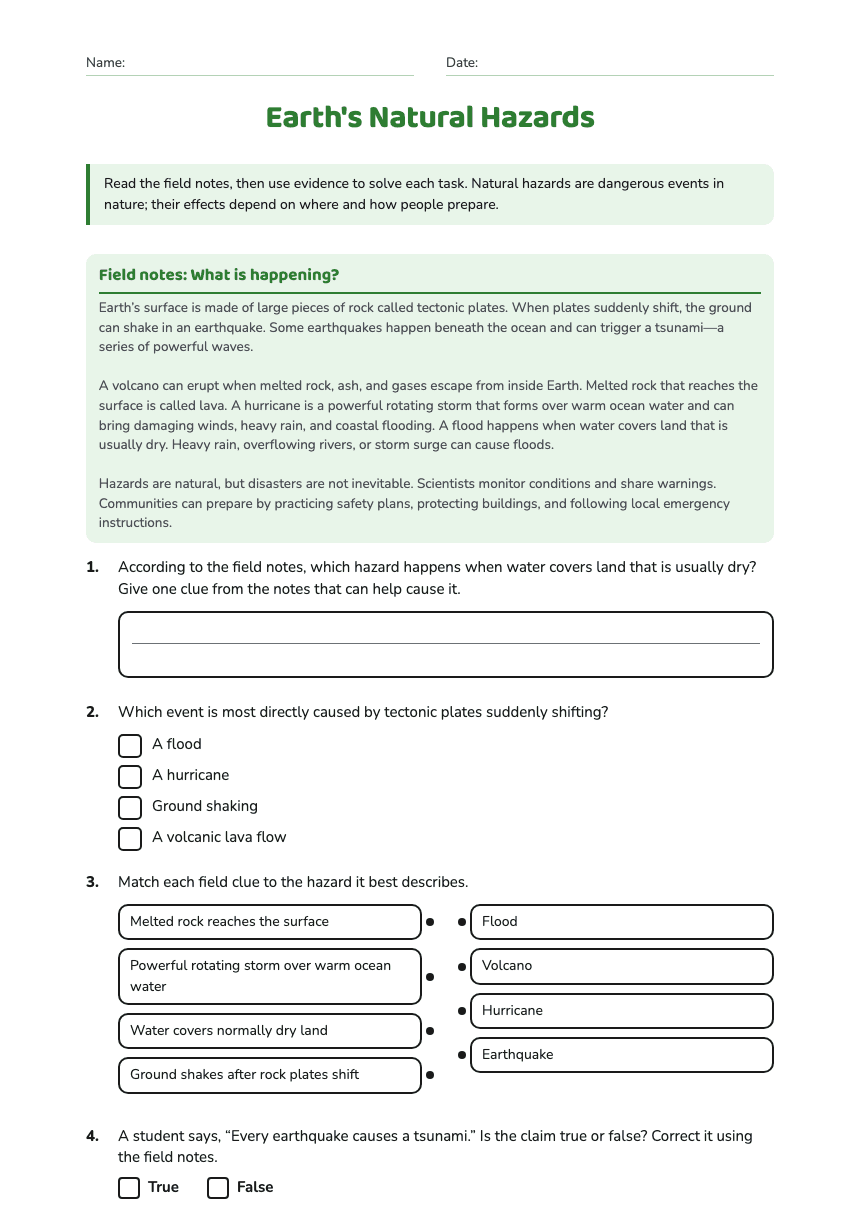
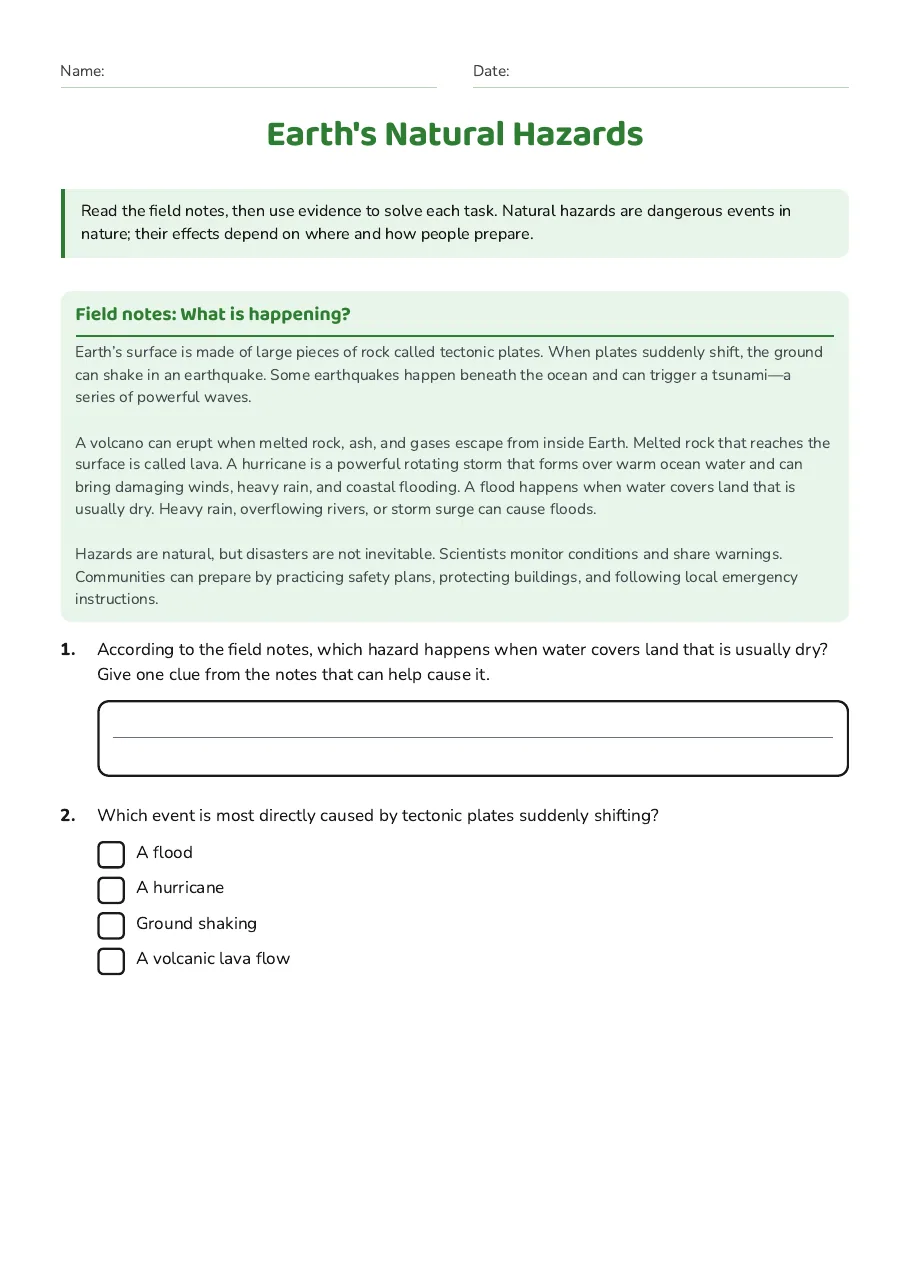
Earth's Natural Hazards
Field notes: What is happening?
Earth’s surface is made of large pieces of rock called tectonic plates. When plates suddenly shift, the ground can shake in an earthquake. Some earthquakes happen beneath the ocean and can trigger a tsunami—a series of powerful waves. A volcano can erupt when melted rock, ash, and gases escape from inside Earth. Melted rock that reaches the surface is called lava. A hurricane is a powerful rotating storm that forms over warm ocean water and can bring damaging winds, heavy rain, and coastal flooding. A flood happens when water covers land that is usually dry. Heavy rain, overflowing rivers, or storm surge can cause floods. Hazards are natural, but disasters are not inevitable. Scientists monitor conditions and share warnings. Communities can prepare by practicing safety plans, protecting buildings, and following local emergency instructions.
- A flood
- A hurricane
- Ground shaking
- A volcanic lava flow
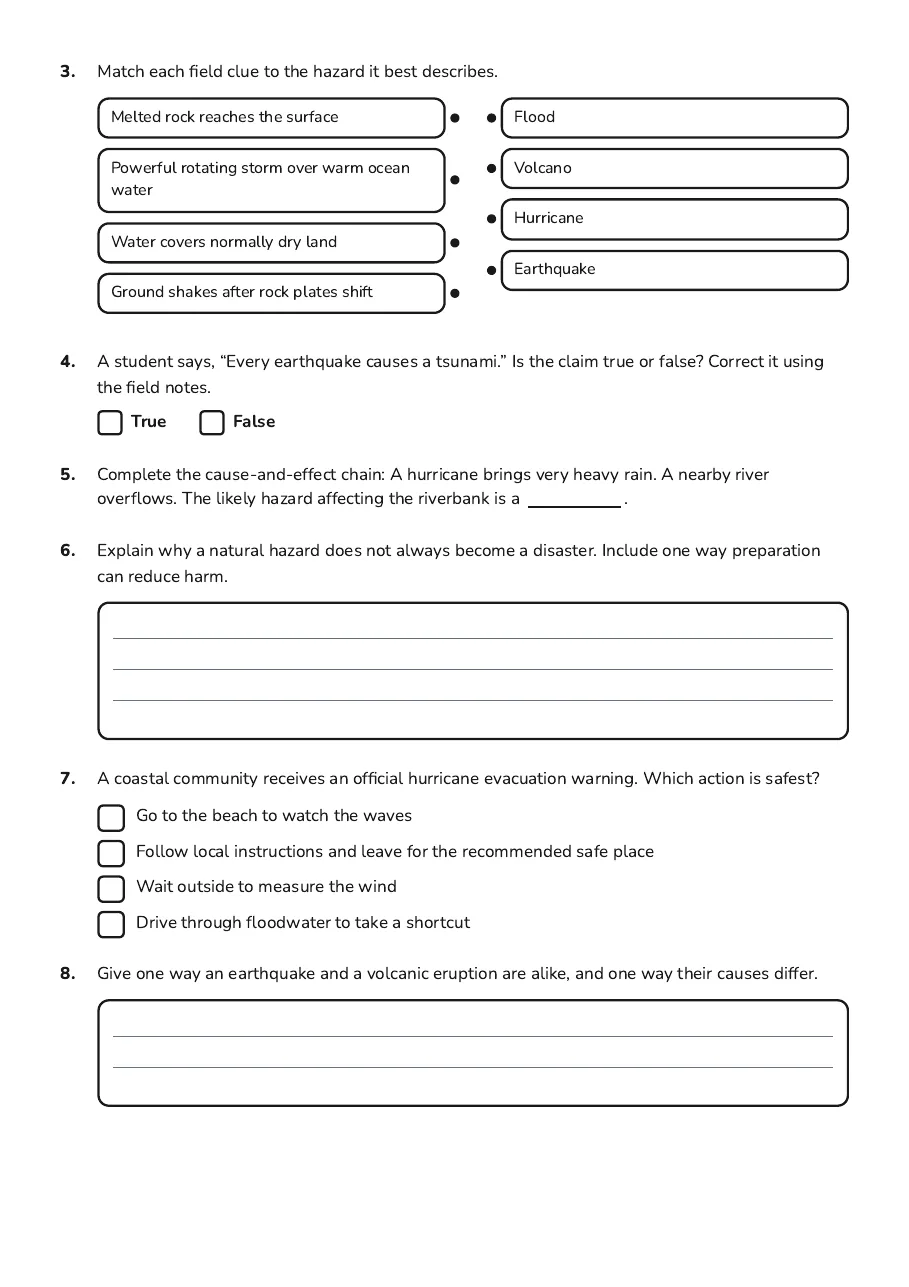
- Melted rock reaches the surface
- Powerful rotating storm over warm ocean water
- Water covers normally dry land
- Ground shakes after rock plates shift
- Flood
- Volcano
- Hurricane
- Earthquake
- Go to the beach to watch the waves
- Follow local instructions and leave for the recommended safe place
- Wait outside to measure the wind
- Drive through floodwater to take a shortcut
3 printable pages
Page 1
Page 2
Page 3
About This Worksheet
Free in Kuraplan
Sign up free, grab the PDF, and customize it for your class.
Print-Ready
Formatted for standard paper. Clean layout, easy to read.
AI-Generated
Created with Kuraplan's AI, designed for real classroom use.
For Teachers & Parents
Use in classrooms, for homework, tutoring, or homeschool.
Need a custom version of this worksheet?
Kuraplan's AI generates custom worksheets in seconds — differentiated for every learner, aligned to your curriculum.
Generate Custom Worksheets — Free