Exploring Electrical Circuits
A free science worksheet ready for your classroom. Open in Kuraplan to grab the print-ready PDF, customize it for your students, or generate a fresh version in seconds.
Exploring Electrical Circuits
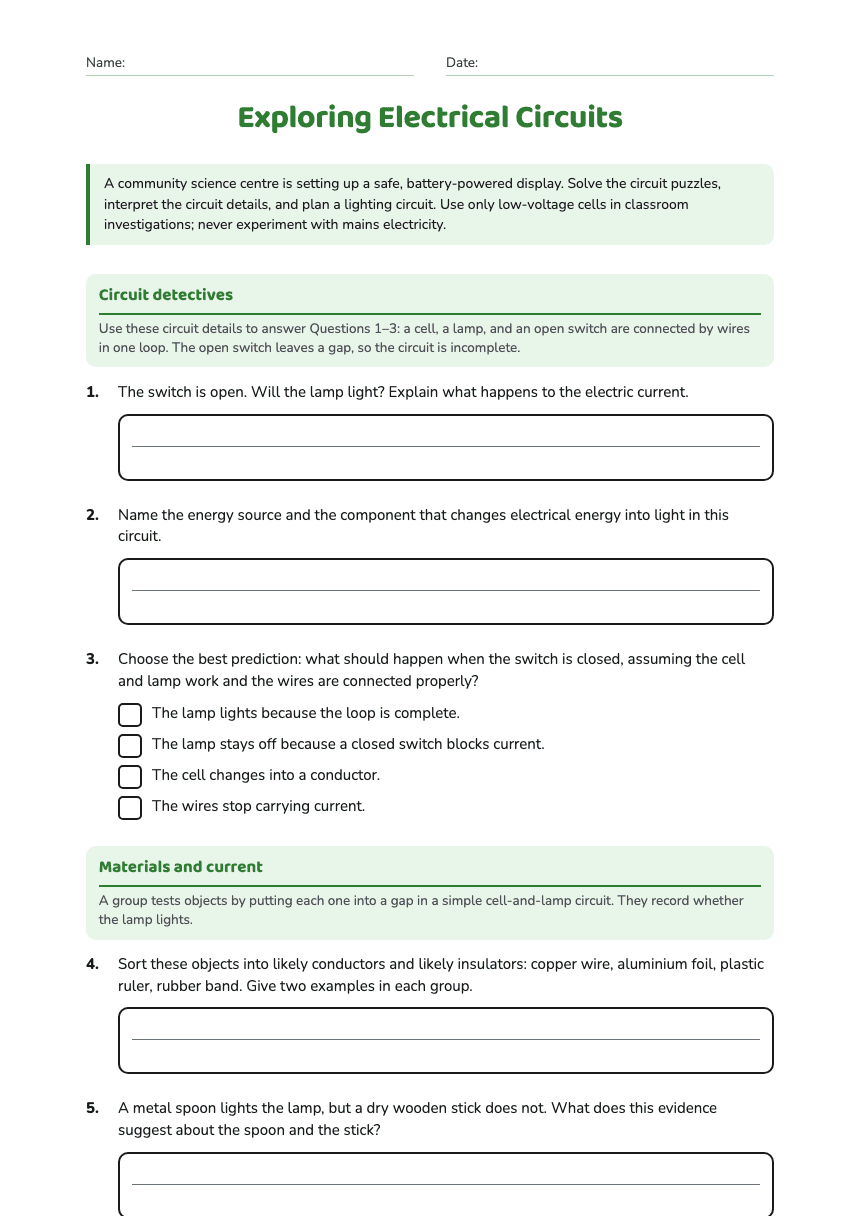
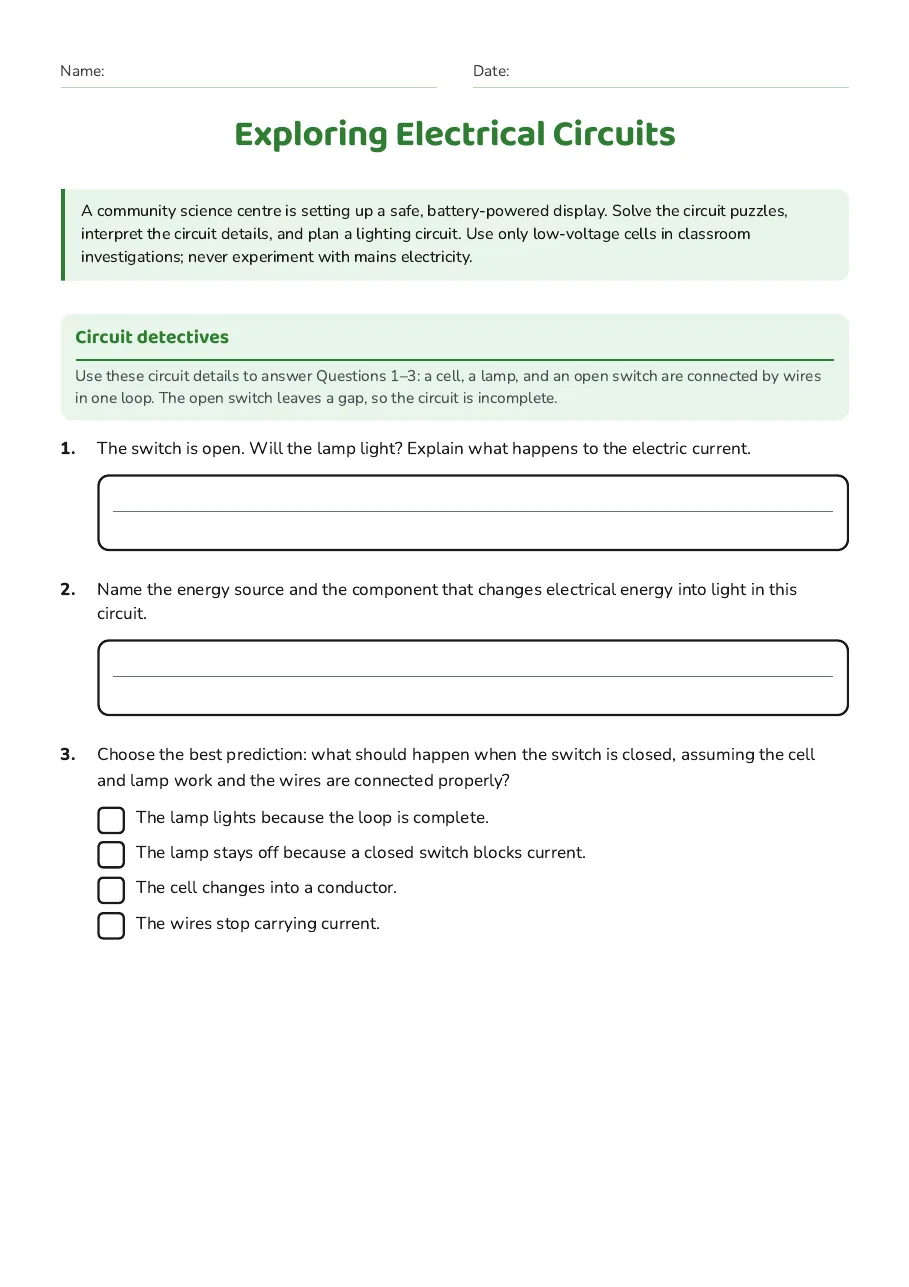
Circuit detectives
Use these circuit details to answer Questions 1–3: a cell, a lamp, and an open switch are connected by wires in one loop. The open switch leaves a gap, so the circuit is incomplete.
- The lamp lights because the loop is complete.
- The lamp stays off because a closed switch blocks current.
- The cell changes into a conductor.
- The wires stop carrying current.
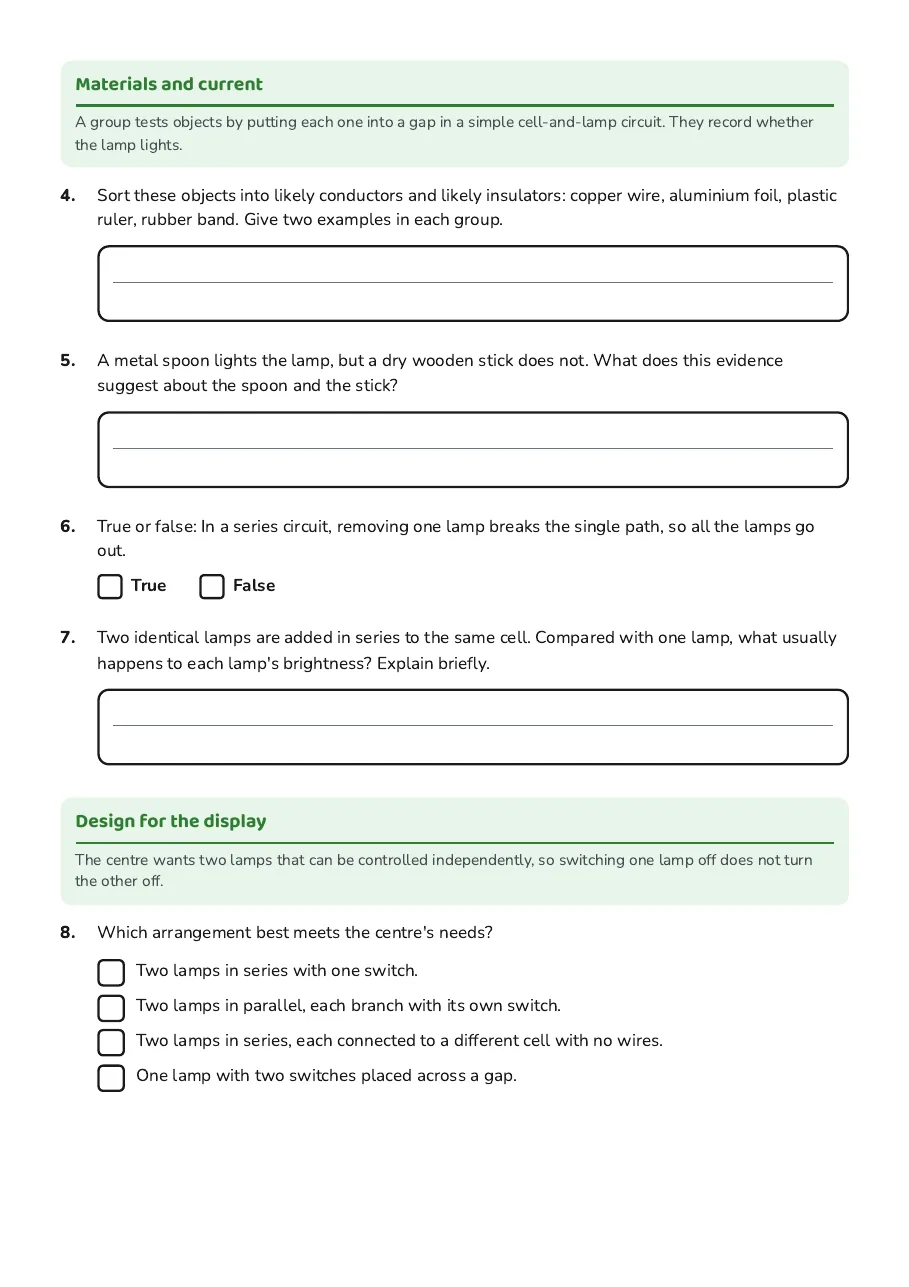
Materials and current
A group tests objects by putting each one into a gap in a simple cell-and-lamp circuit. They record whether the lamp lights.
Design for the display
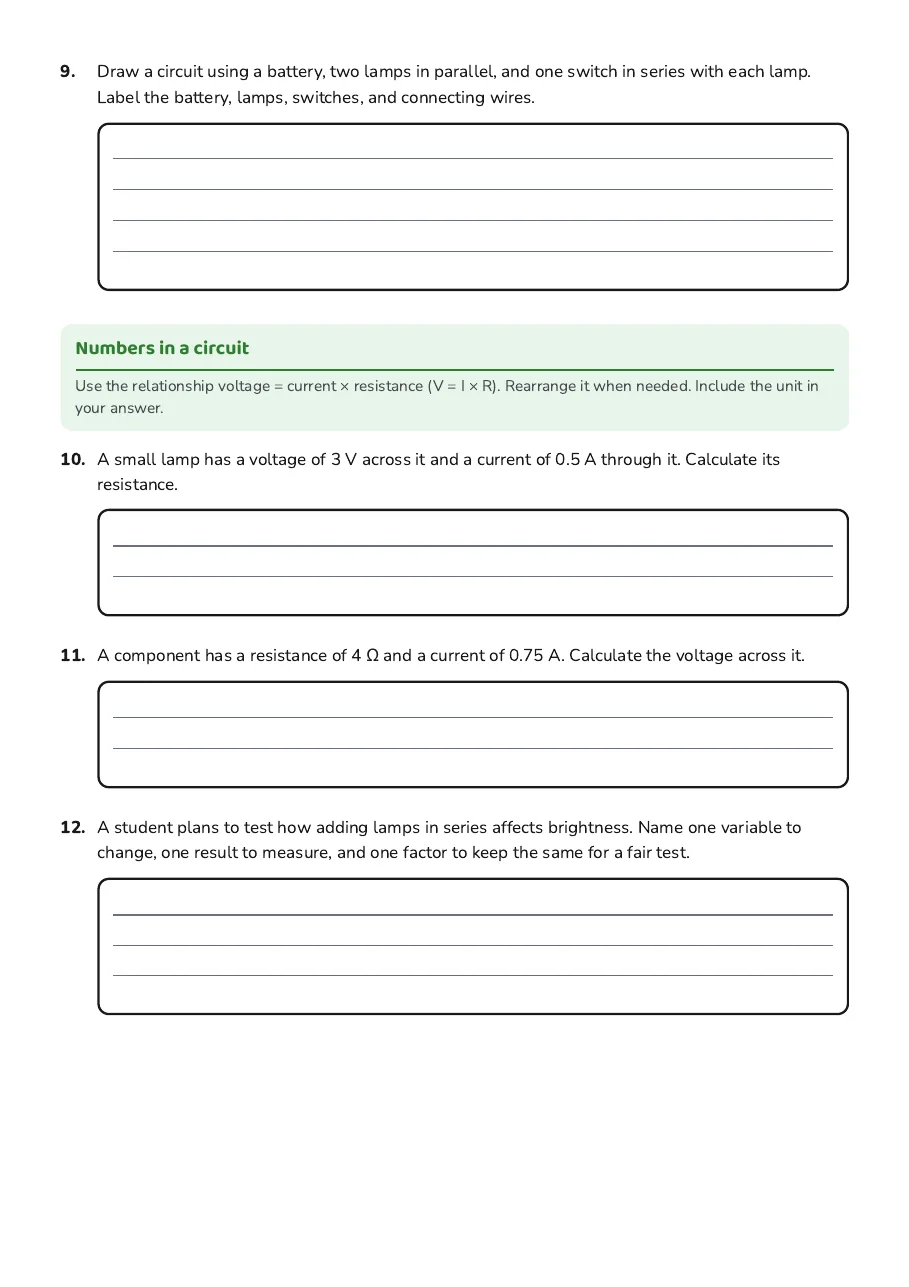
The centre wants two lamps that can be controlled independently, so switching one lamp off does not turn the other off.
- Two lamps in series with one switch.
- Two lamps in parallel, each branch with its own switch.
- Two lamps in series, each connected to a different cell with no wires.
- One lamp with two switches placed across a gap.
Numbers in a circuit
Use the relationship voltage = current × resistance (V = I × R). Rearrange it when needed. Include the unit in your answer.
3 printable pages
Page 1
Page 2
Page 3
About This Worksheet
Free in Kuraplan
Sign up free, grab the PDF, and customize it for your class.
Print-Ready
Formatted for standard paper. Clean layout, easy to read.
AI-Generated
Created with Kuraplan's AI, designed for real classroom use.
For Teachers & Parents
Use in classrooms, for homework, tutoring, or homeschool.
Need a custom version of this worksheet?
Kuraplan's AI generates custom worksheets in seconds — differentiated for every learner, aligned to your curriculum.
Generate Custom Worksheets — FreeMore Science Worksheets
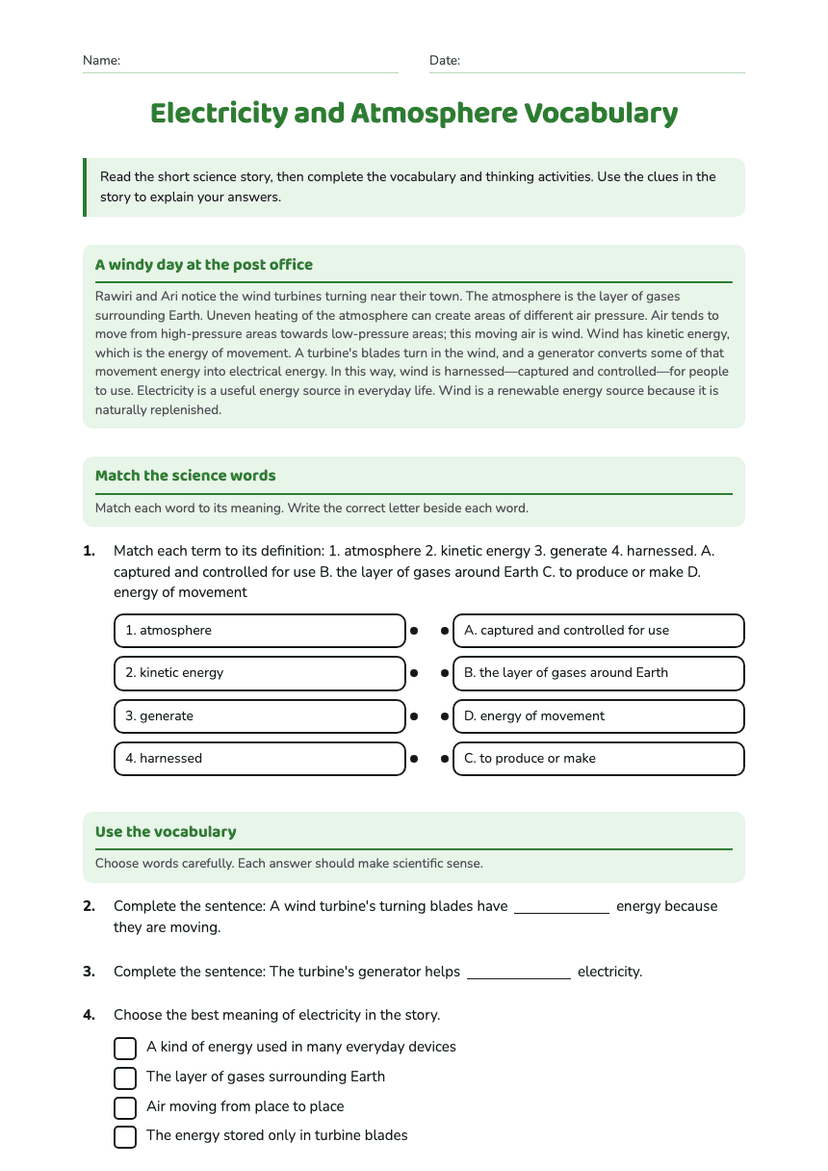
Electricity and Atmosphere Vocabulary
Free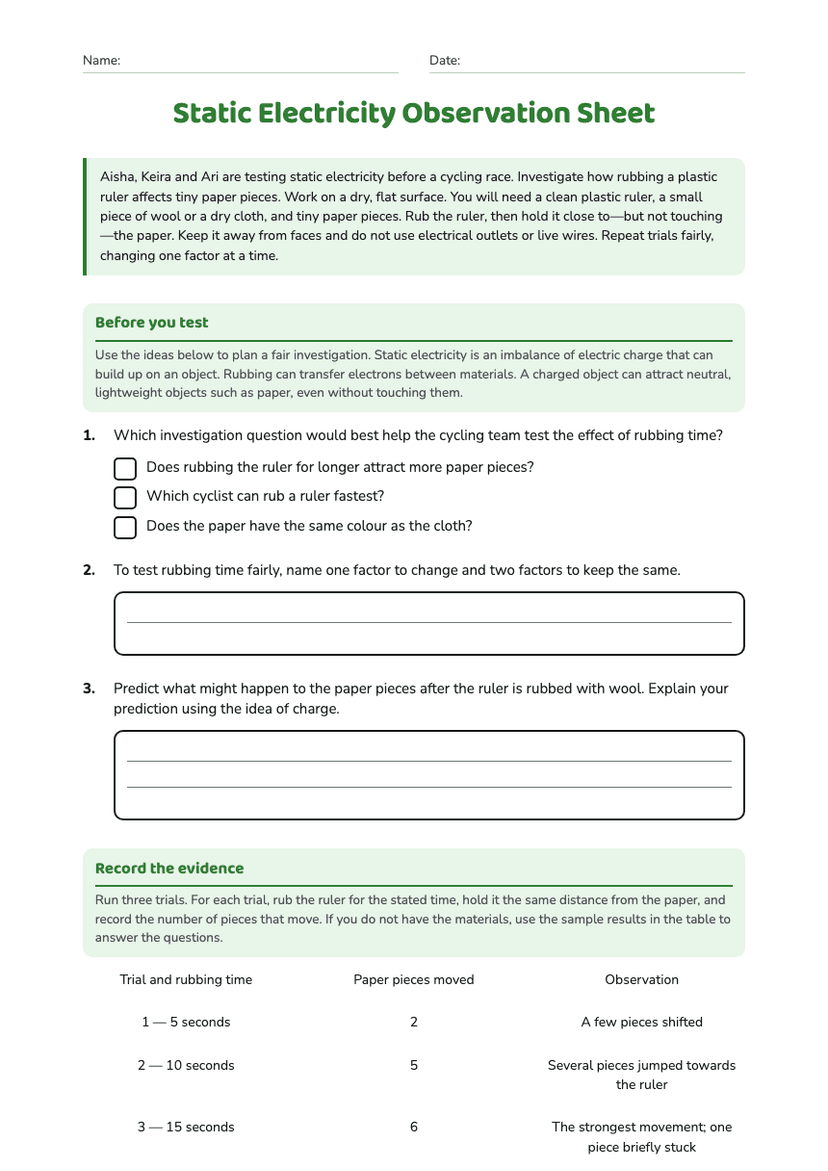
Static Electricity Observation Sheet
Free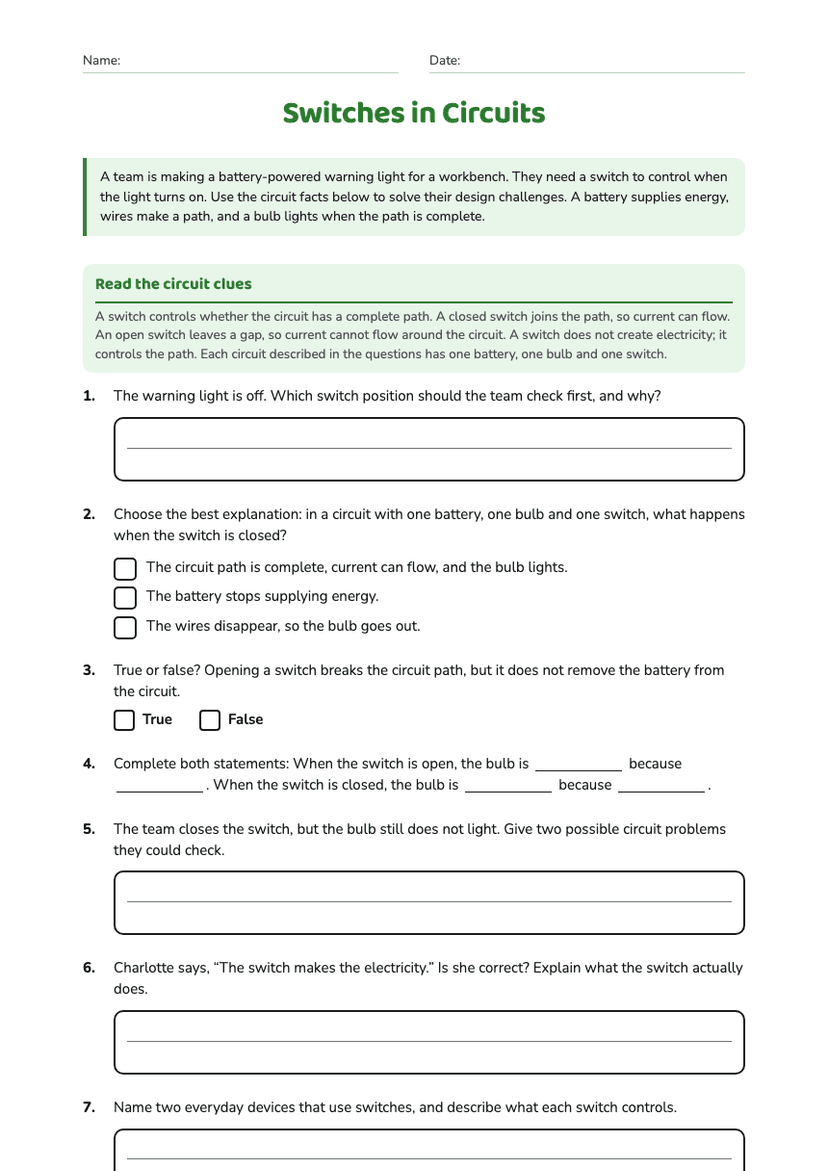
Switches in Circuits
Free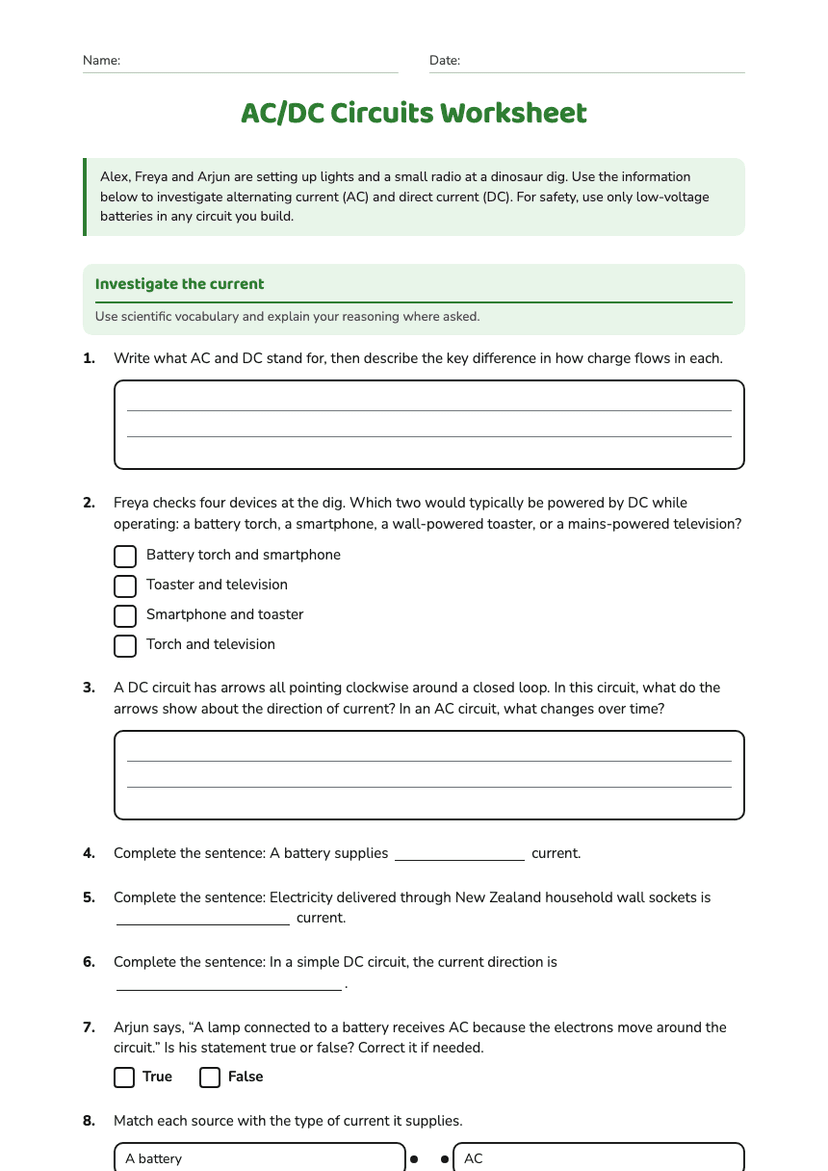
AC/DC Circuits Worksheet
Free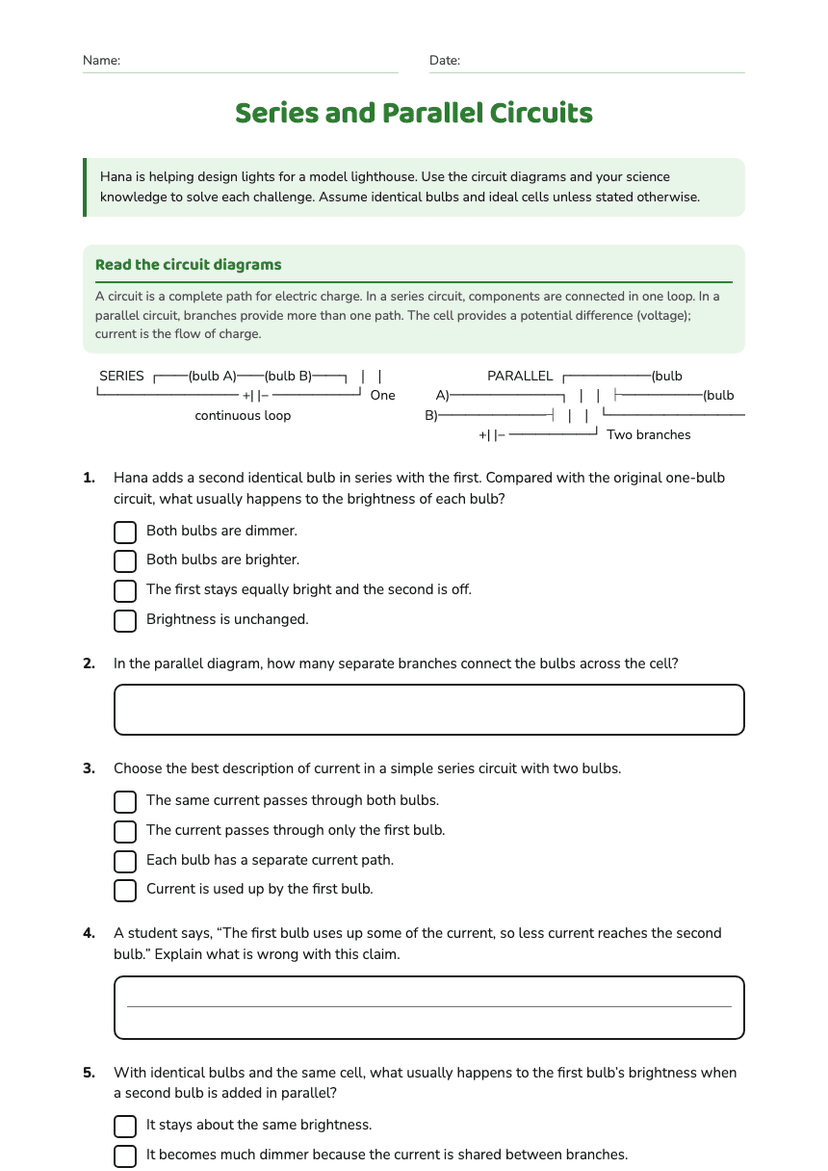
Series and Parallel Circuits
Free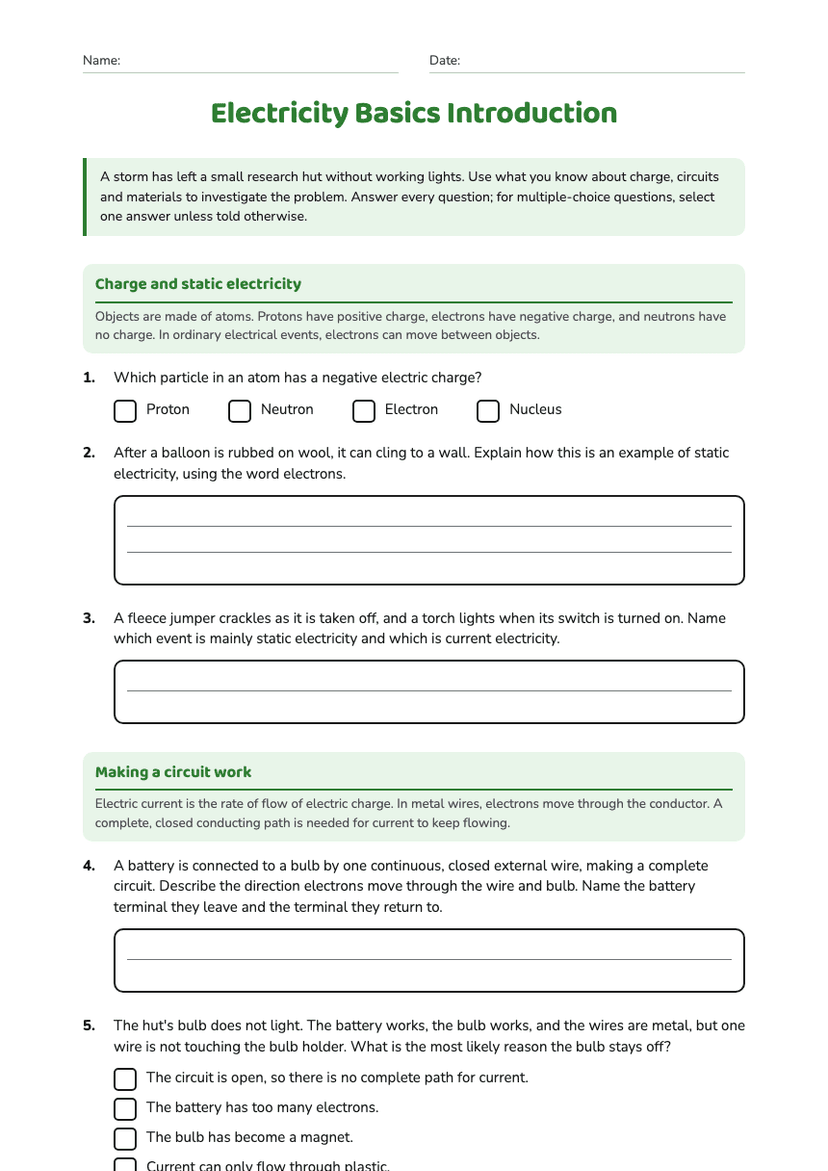
Electricity Basics Introduction
Free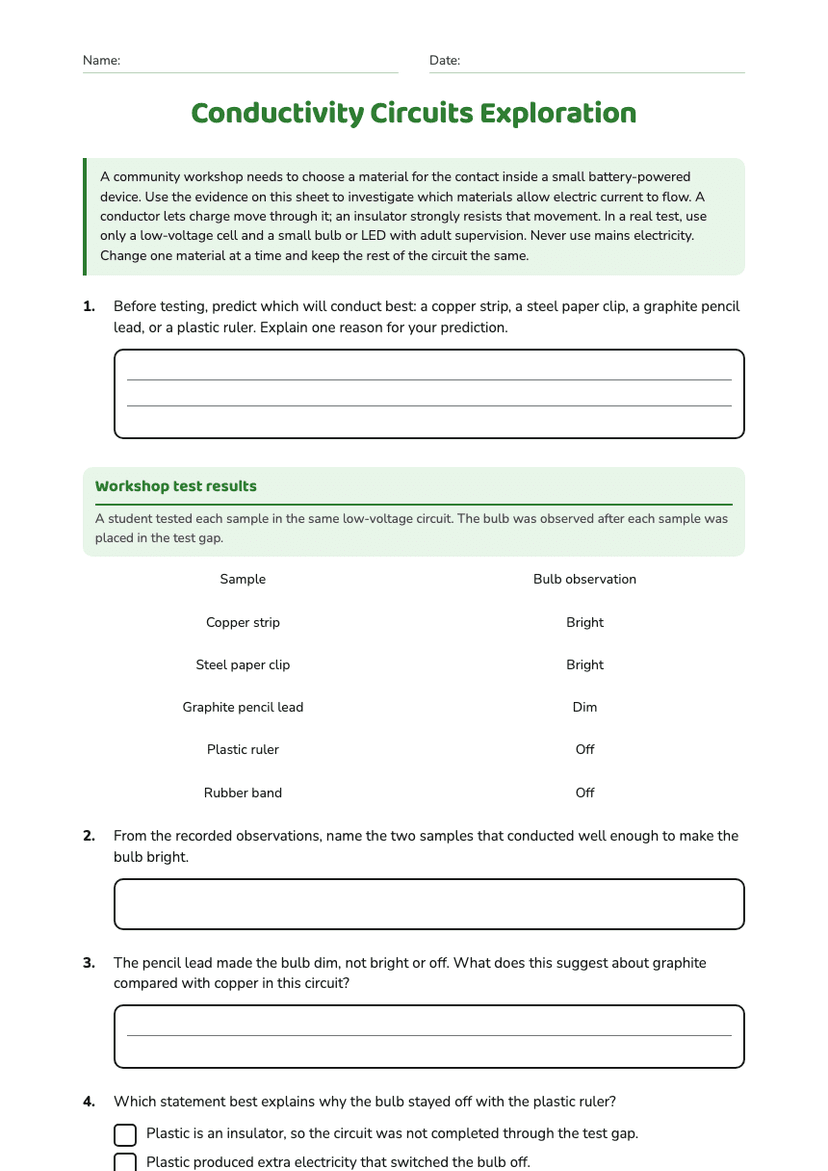
Conductivity Circuits Exploration
Free