Manaaki Marae Worksheet
A free te reo māori worksheet ready for your classroom. Open in Kuraplan to grab the print-ready PDF, customize it for your students, or generate a fresh version in seconds.
Manaaki Marae Worksheet
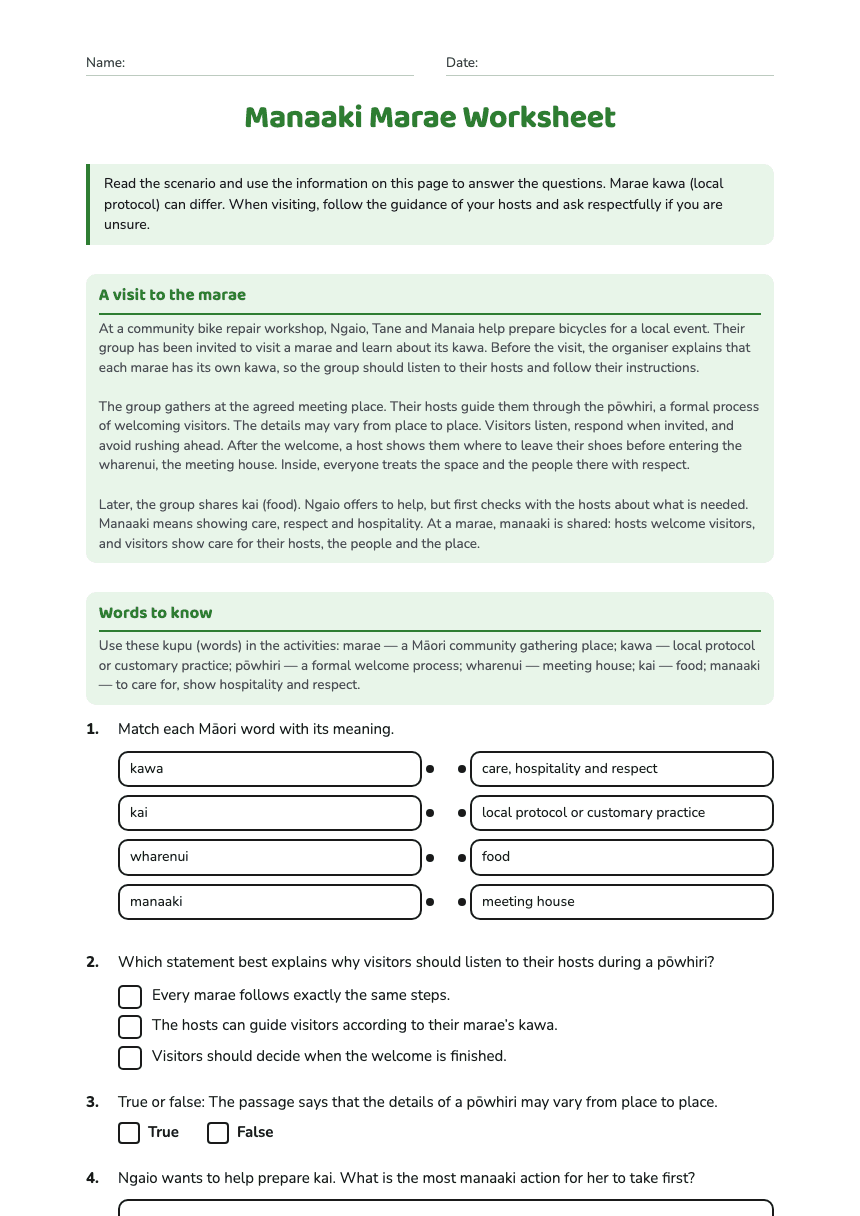
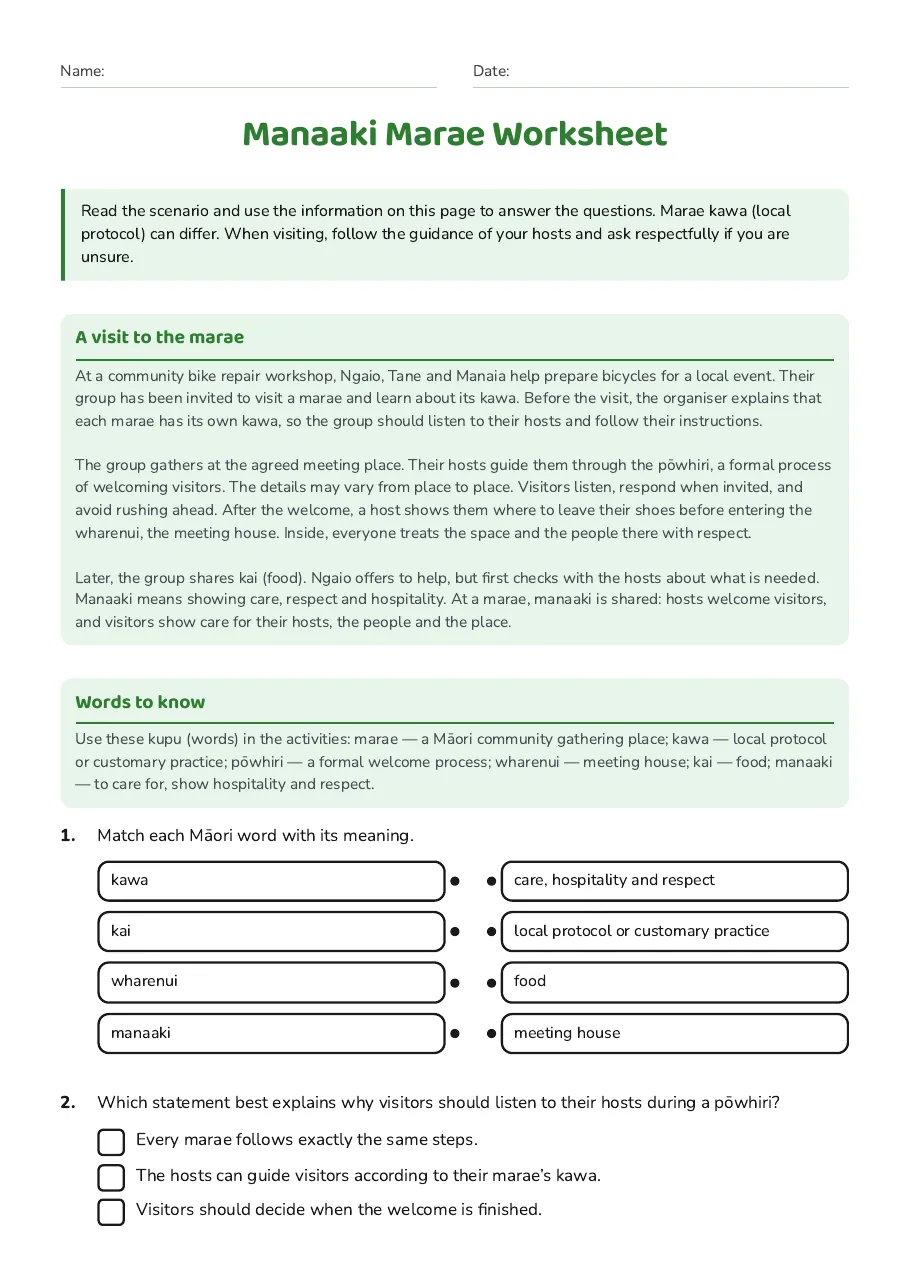
A visit to the marae
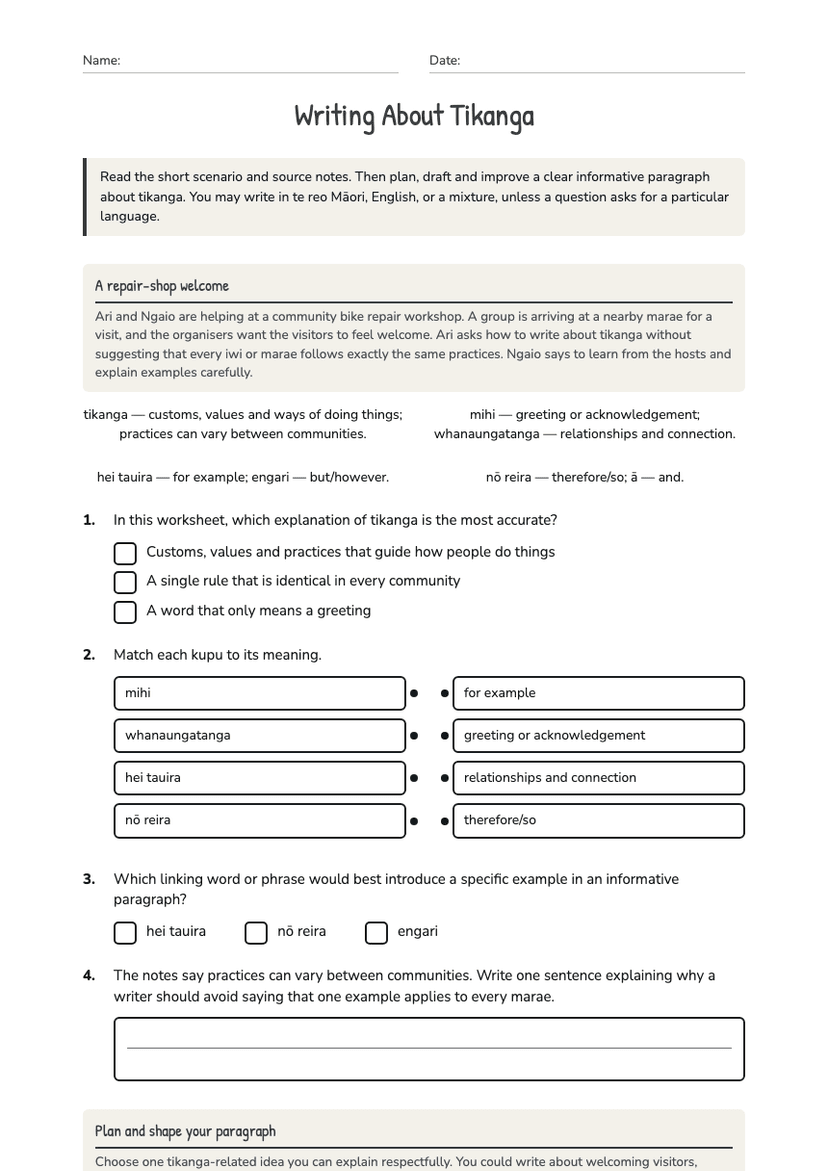
At a community bike repair workshop, Ngaio, Tane and Manaia help prepare bicycles for a local event. Their group has been invited to visit a marae and learn about its kawa. Before the visit, the organiser explains that each marae has its own kawa, so the group should listen to their hosts and follow their instructions. The group gathers at the agreed meeting place. Their hosts guide them through the pōwhiri, a formal process of welcoming visitors. The details may vary from place to place. Visitors listen, respond when invited, and avoid rushing ahead. After the welcome, a host shows them where to leave their shoes before entering the wharenui, the meeting house. Inside, everyone treats the space and the people there with respect. Later, the group shares kai (food). Ngaio offers to help, but first checks with the hosts about what is needed. Manaaki means showing care, respect and hospitality. At a marae, manaaki is shared: hosts welcome visitors, and visitors show care for their hosts, the people and the place.
Words to know
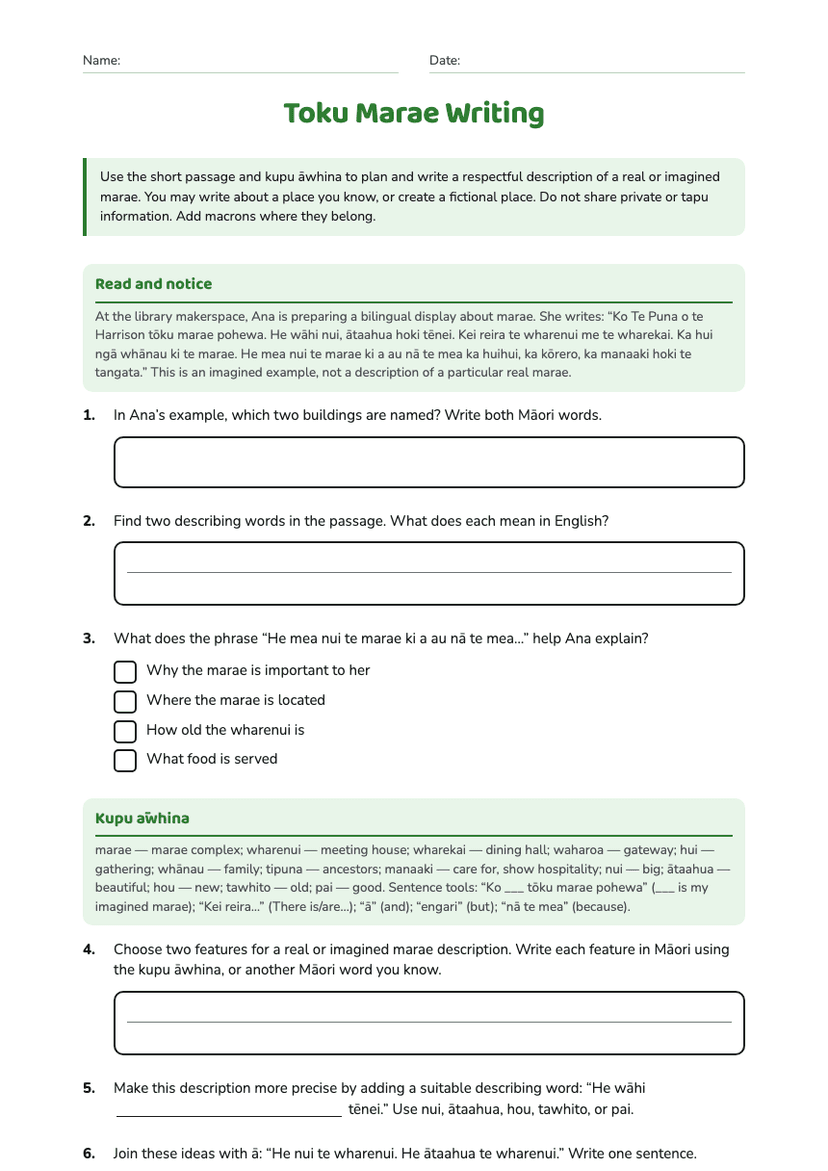
Use these kupu (words) in the activities: marae — a Māori community gathering place; kawa — local protocol or customary practice; pōwhiri — a formal welcome process; wharenui — meeting house; kai — food; manaaki — to care for, show hospitality and respect.
- kawa
- kai
- wharenui
- manaaki
- care, hospitality and respect
- local protocol or customary practice
- food
- meeting house
- Every marae follows exactly the same steps.
- The hosts can guide visitors according to their marae’s kawa.
- Visitors should decide when the welcome is finished.
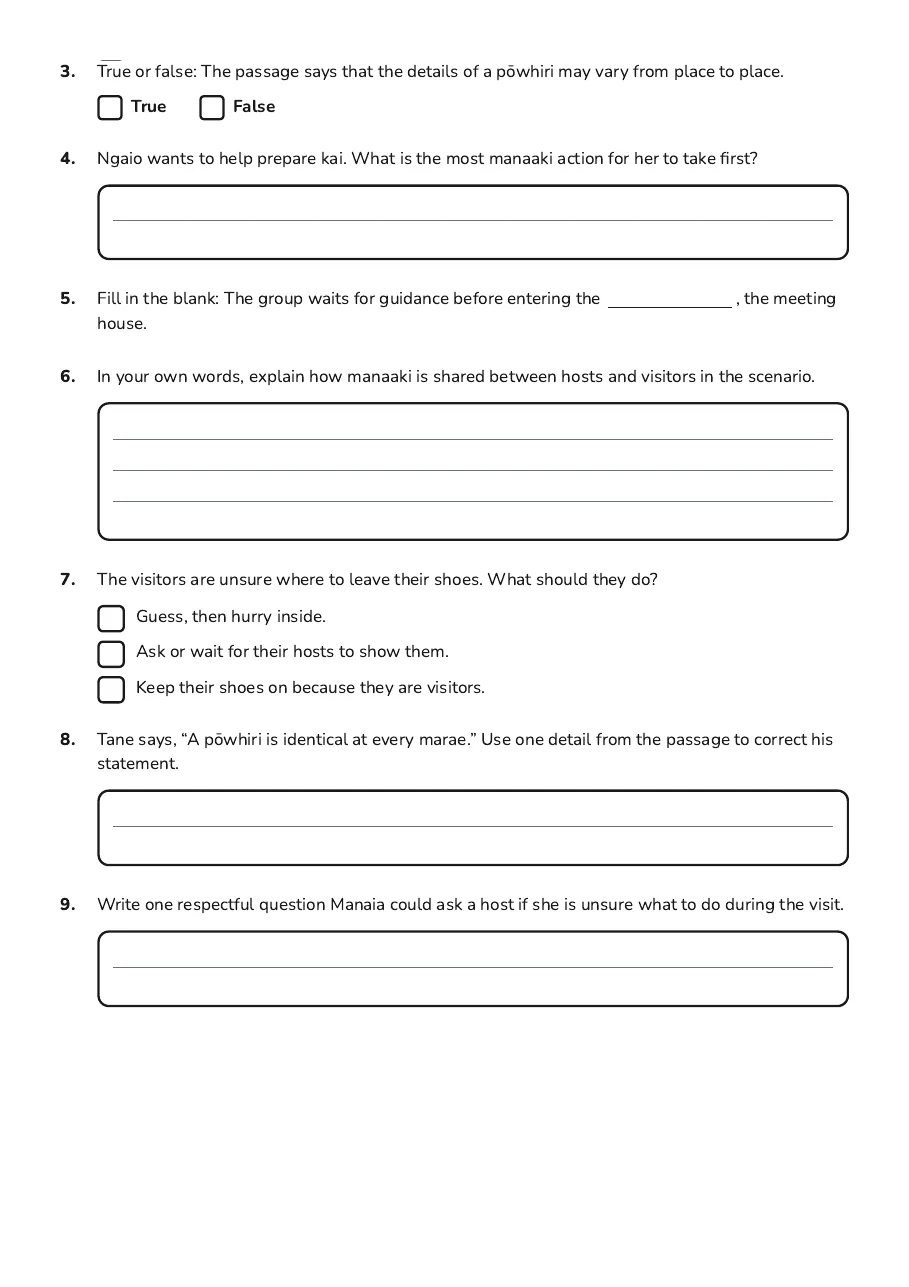
- Guess, then hurry inside.
- Ask or wait for their hosts to show them.
- Keep their shoes on because they are visitors.
2 printable pages
Page 1
Page 2
About This Worksheet
Free in Kuraplan
Sign up free, grab the PDF, and customize it for your class.
Print-Ready
Formatted for standard paper. Clean layout, easy to read.
AI-Generated
Created with Kuraplan's AI, designed for real classroom use.
For Teachers & Parents
Use in classrooms, for homework, tutoring, or homeschool.
Need a custom version of this worksheet?
Kuraplan's AI generates custom worksheets in seconds — differentiated for every learner, aligned to your curriculum.
Generate Custom Worksheets — Free