Medieval Castle Hygiene Investigation
A free science worksheet ready for your classroom. Open in Kuraplan to grab the print-ready PDF, customize it for your students, or generate a fresh version in seconds.
Medieval Castle Hygiene Investigation
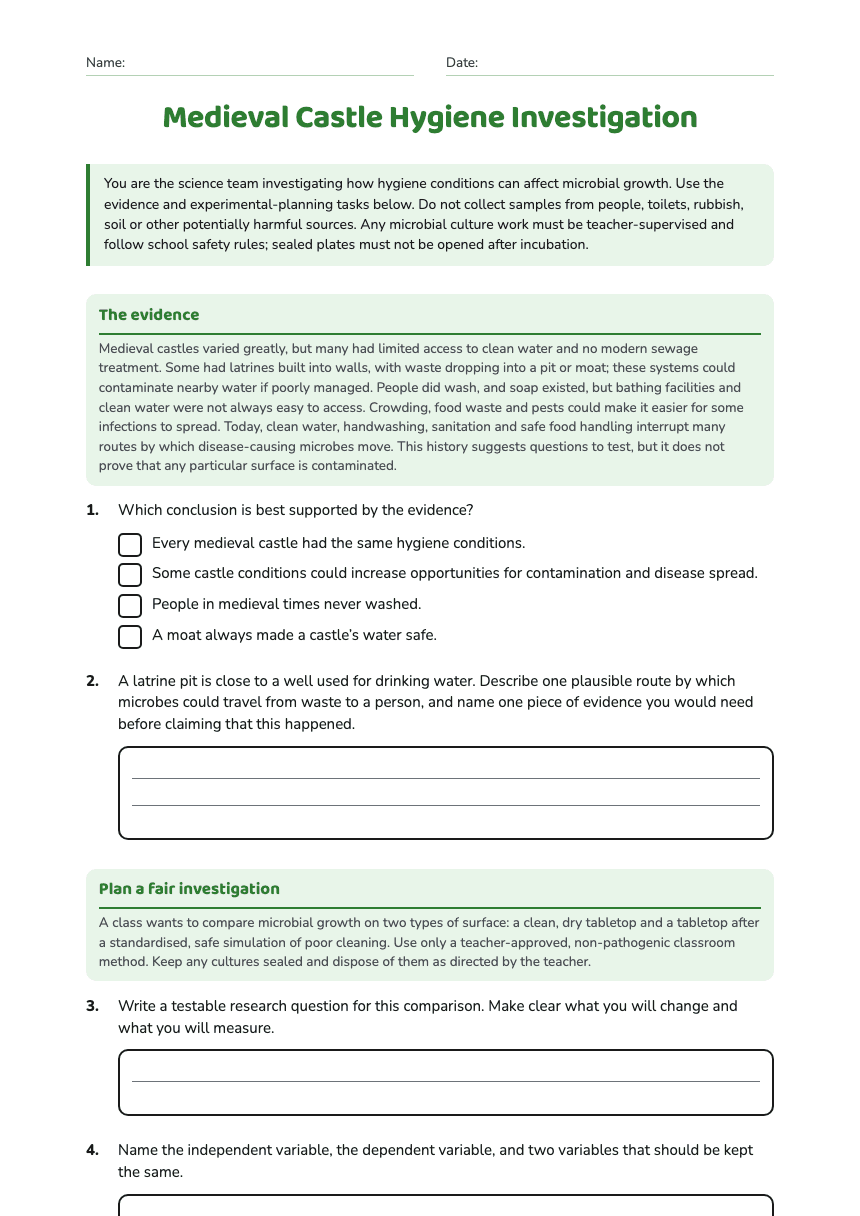
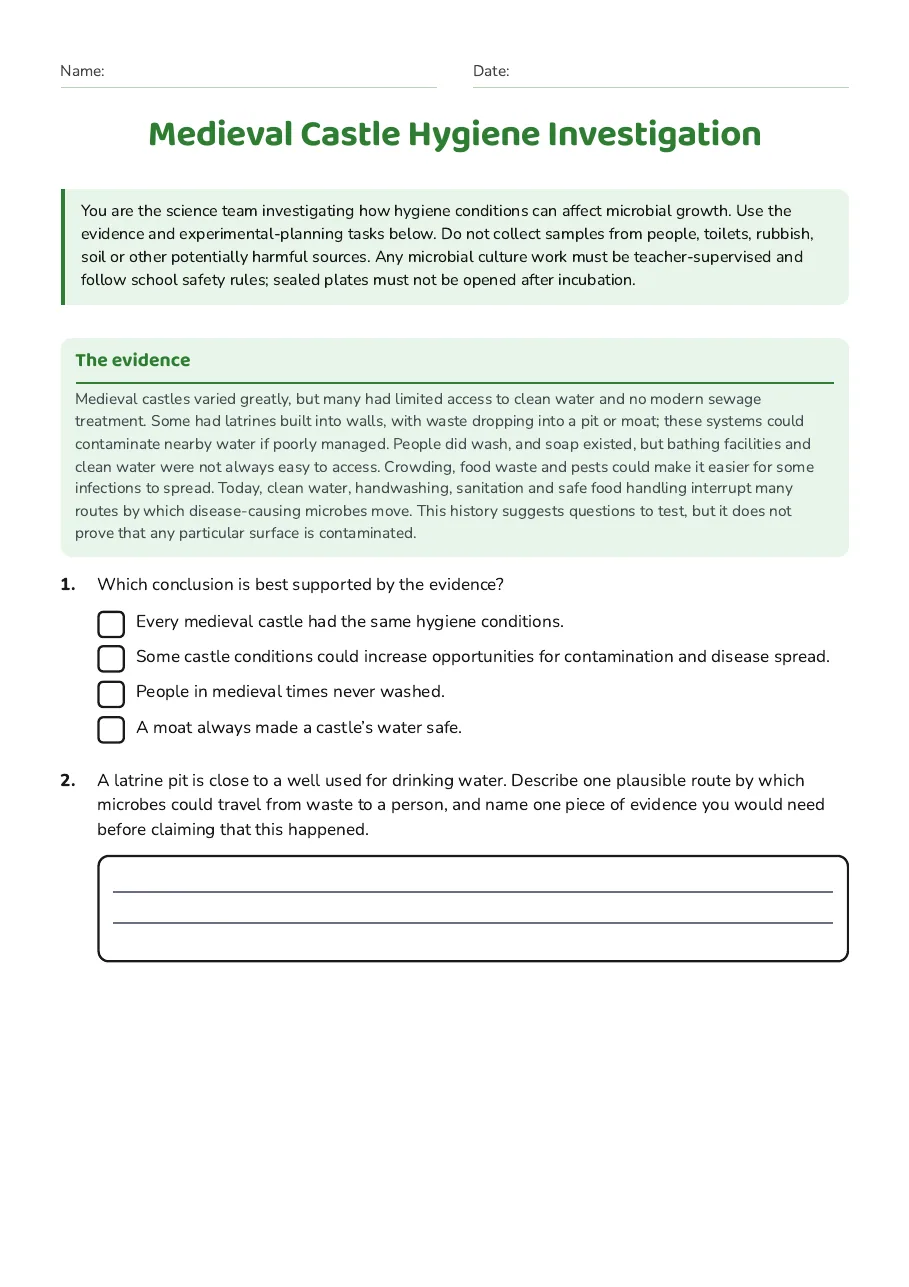
The evidence
Medieval castles varied greatly, but many had limited access to clean water and no modern sewage treatment. Some had latrines built into walls, with waste dropping into a pit or moat; these systems could contaminate nearby water if poorly managed. People did wash, and soap existed, but bathing facilities and clean water were not always easy to access. Crowding, food waste and pests could make it easier for some infections to spread. Today, clean water, handwashing, sanitation and safe food handling interrupt many routes by which disease-causing microbes move. This history suggests questions to test, but it does not prove that any particular surface is contaminated.
- Every medieval castle had the same hygiene conditions.
- Some castle conditions could increase opportunities for contamination and disease spread.
- People in medieval times never washed.
- A moat always made a castle’s water safe.
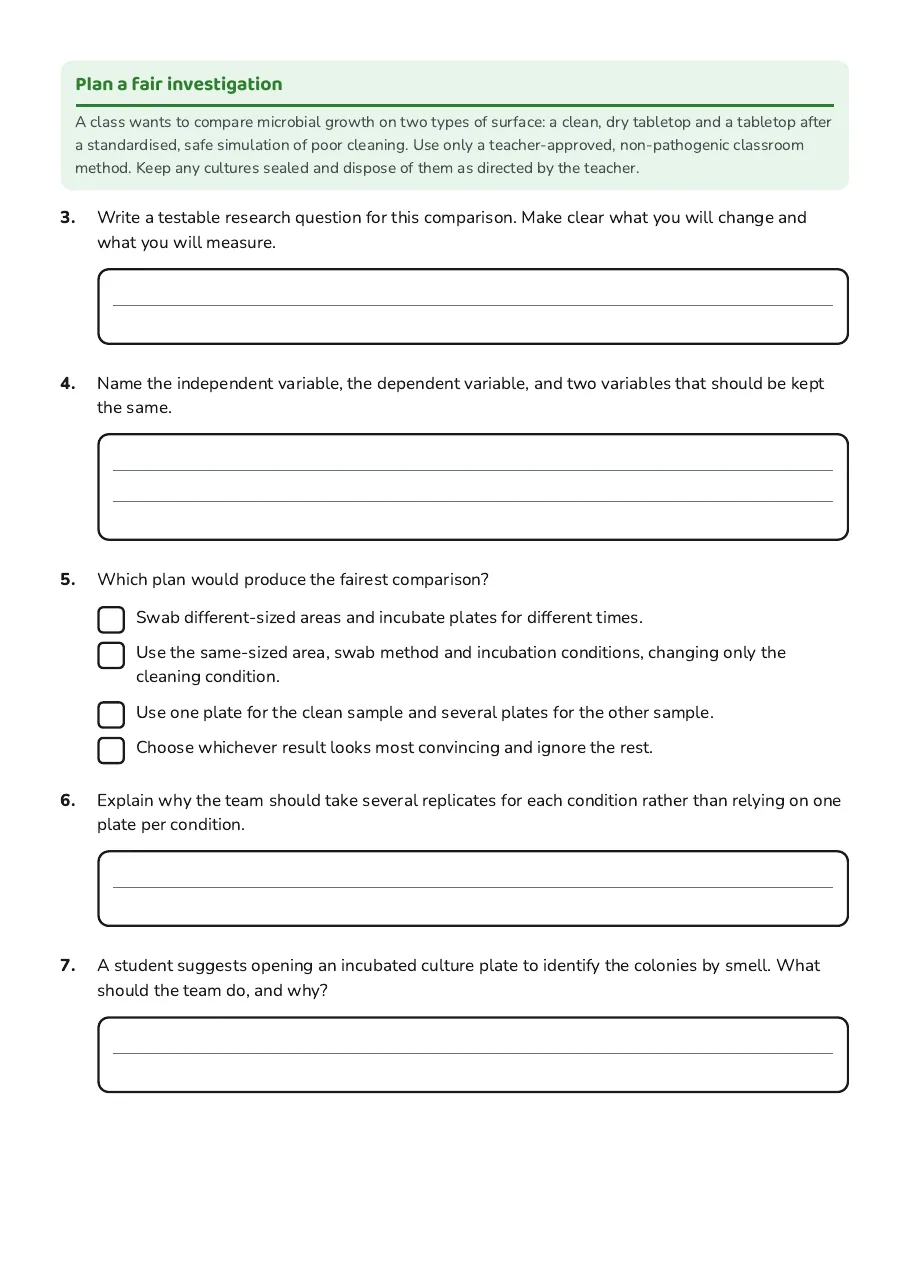
Plan a fair investigation
A class wants to compare microbial growth on two types of surface: a clean, dry tabletop and a tabletop after a standardised, safe simulation of poor cleaning. Use only a teacher-approved, non-pathogenic classroom method. Keep any cultures sealed and dispose of them as directed by the teacher.
- Swab different-sized areas and incubate plates for different times.
- Use the same-sized area, swab method and incubation conditions, changing only the cleaning condition.
- Use one plate for the clean sample and several plates for the other sample.
- Choose whichever result looks most convincing and ignore the rest.
Interpret results and apply the idea
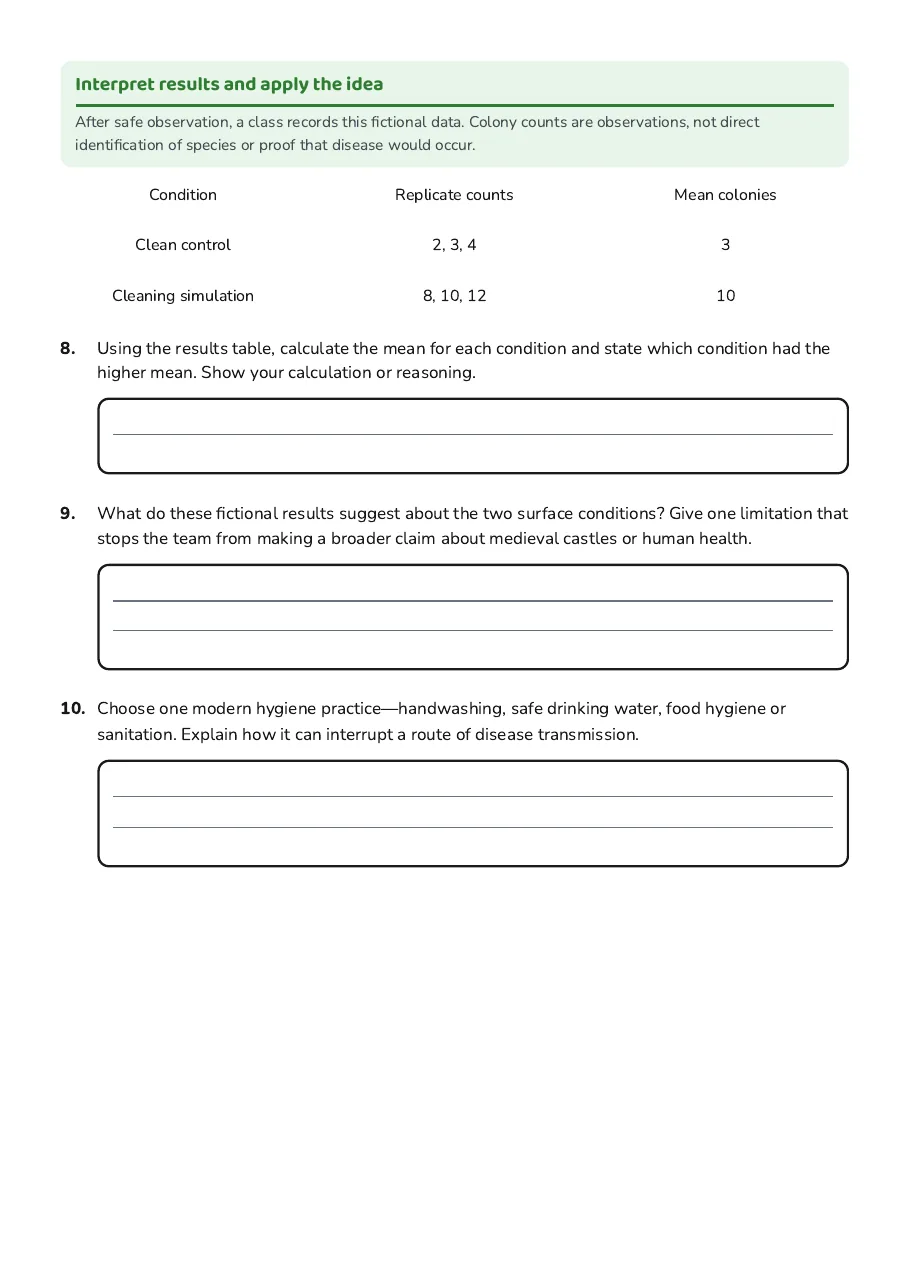
After safe observation, a class records this fictional data. Colony counts are observations, not direct identification of species or proof that disease would occur.
Condition
Replicate counts
Mean colonies
Clean control
2, 3, 4
3
Cleaning simulation
8, 10, 12
10
3 printable pages
Page 1
Page 2
Page 3
About This Worksheet
Free in Kuraplan
Sign up free, grab the PDF, and customize it for your class.
Print-Ready
Formatted for standard paper. Clean layout, easy to read.
AI-Generated
Created with Kuraplan's AI, designed for real classroom use.
For Teachers & Parents
Use in classrooms, for homework, tutoring, or homeschool.
Need a custom version of this worksheet?
Kuraplan's AI generates custom worksheets in seconds — differentiated for every learner, aligned to your curriculum.
Generate Custom Worksheets — FreeMore Science Worksheets
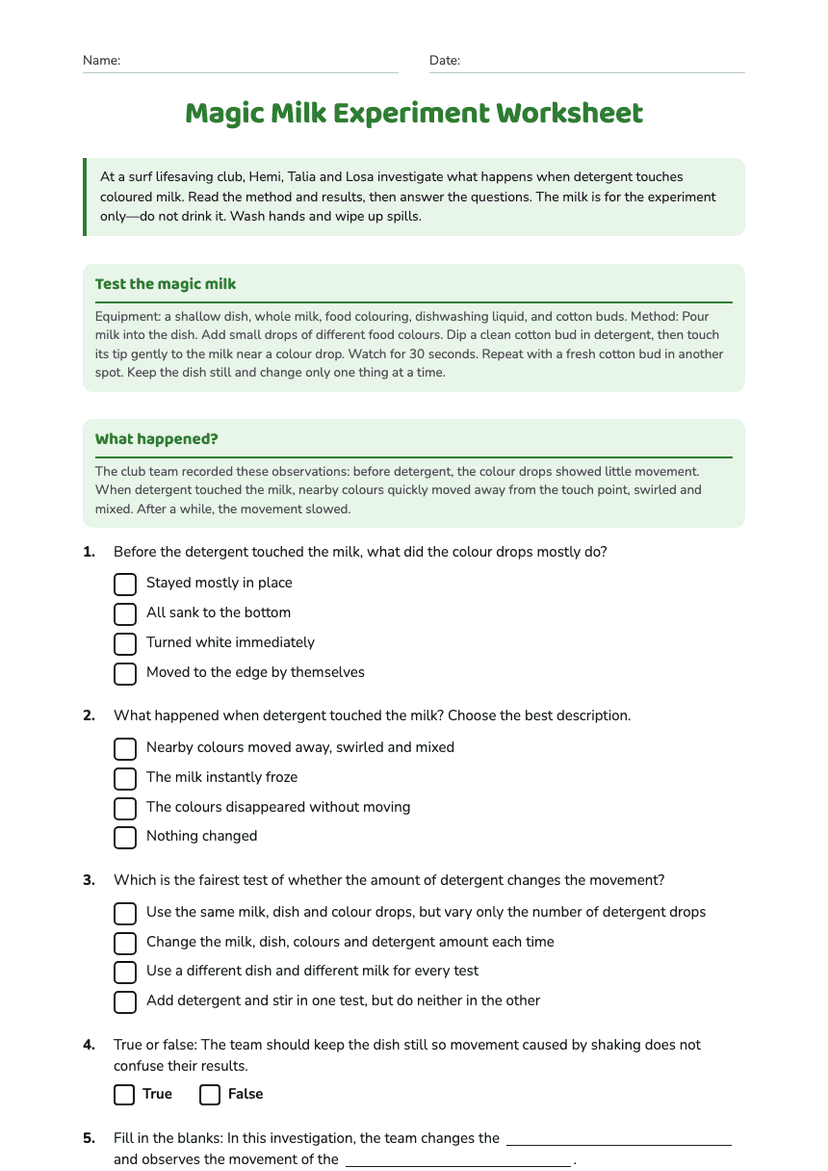
Magic Milk Experiment Worksheet
Free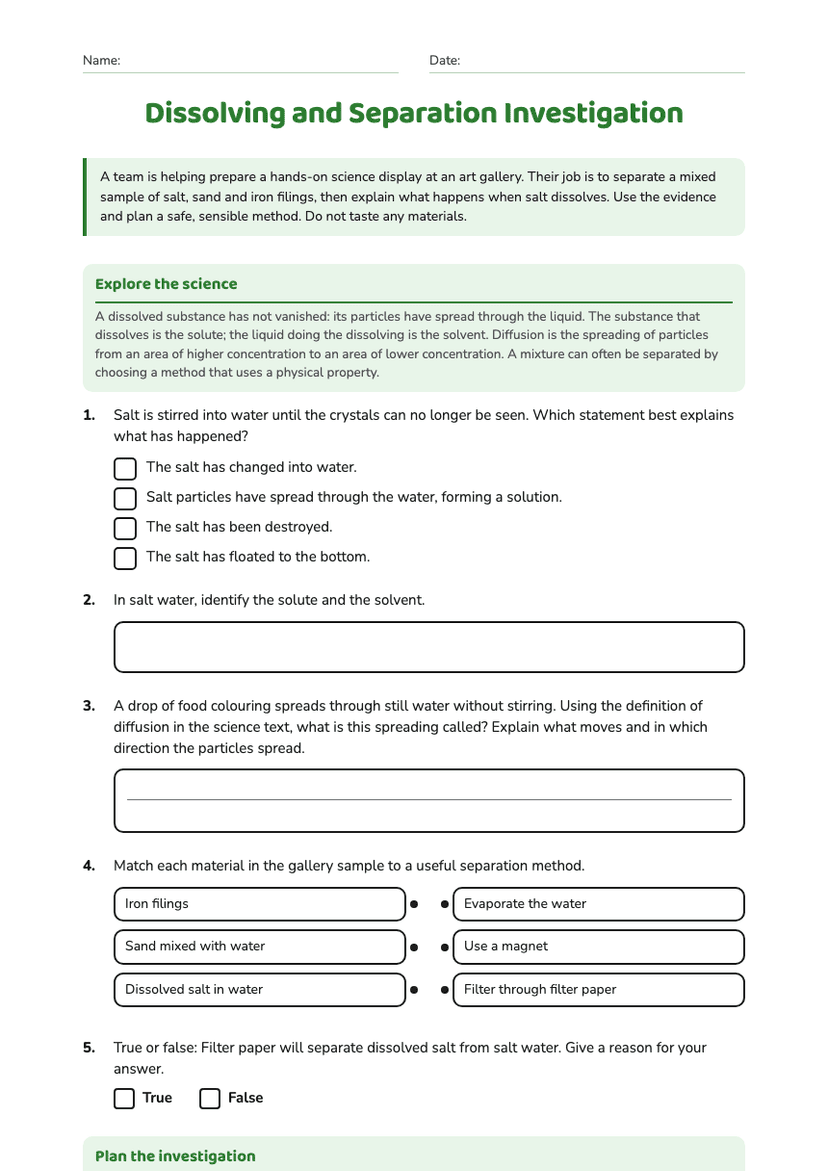
Dissolving and Separation Investigation
Free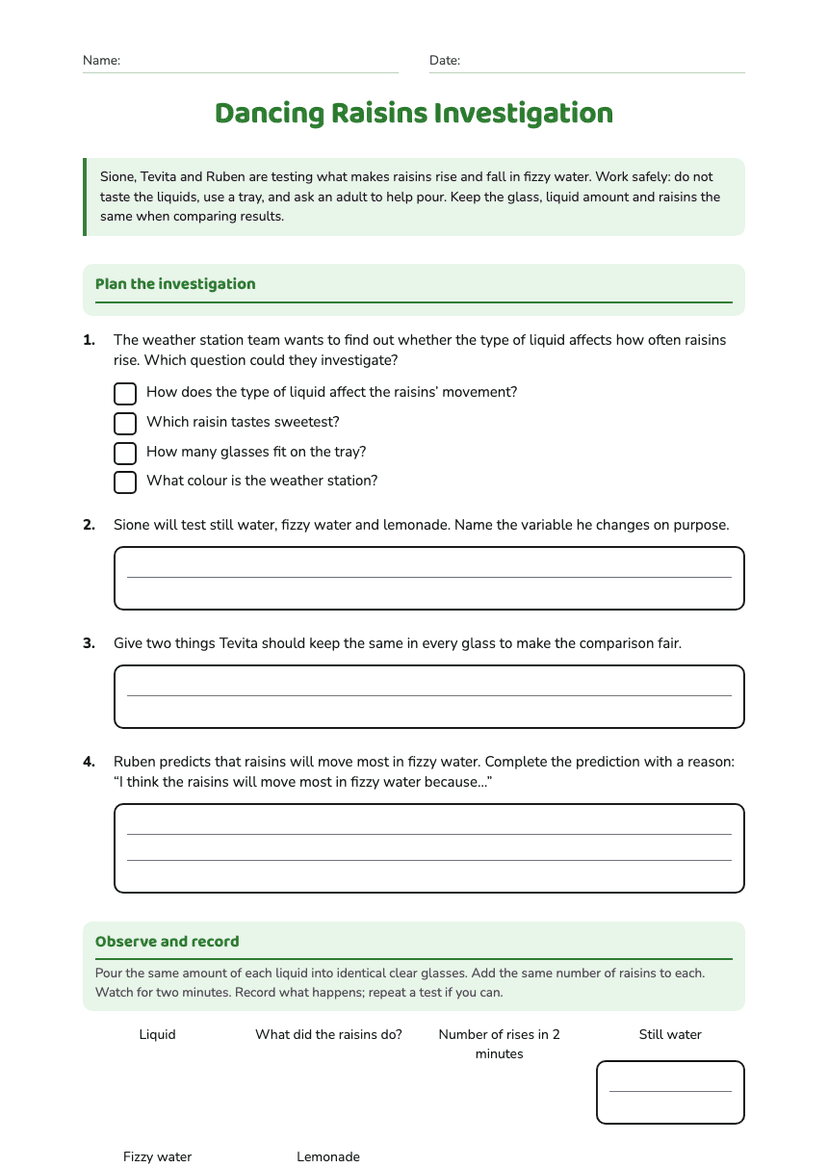
Dancing Raisins Investigation
Free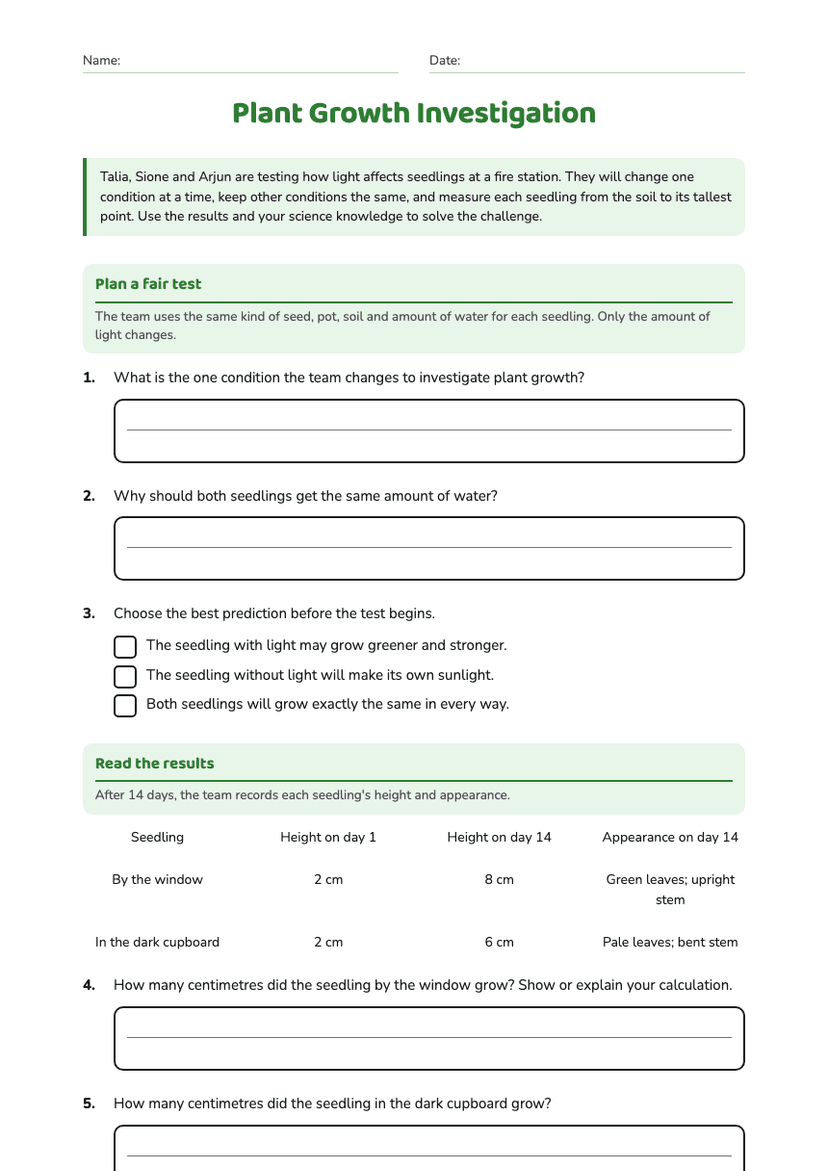
Plant Growth Investigation
Free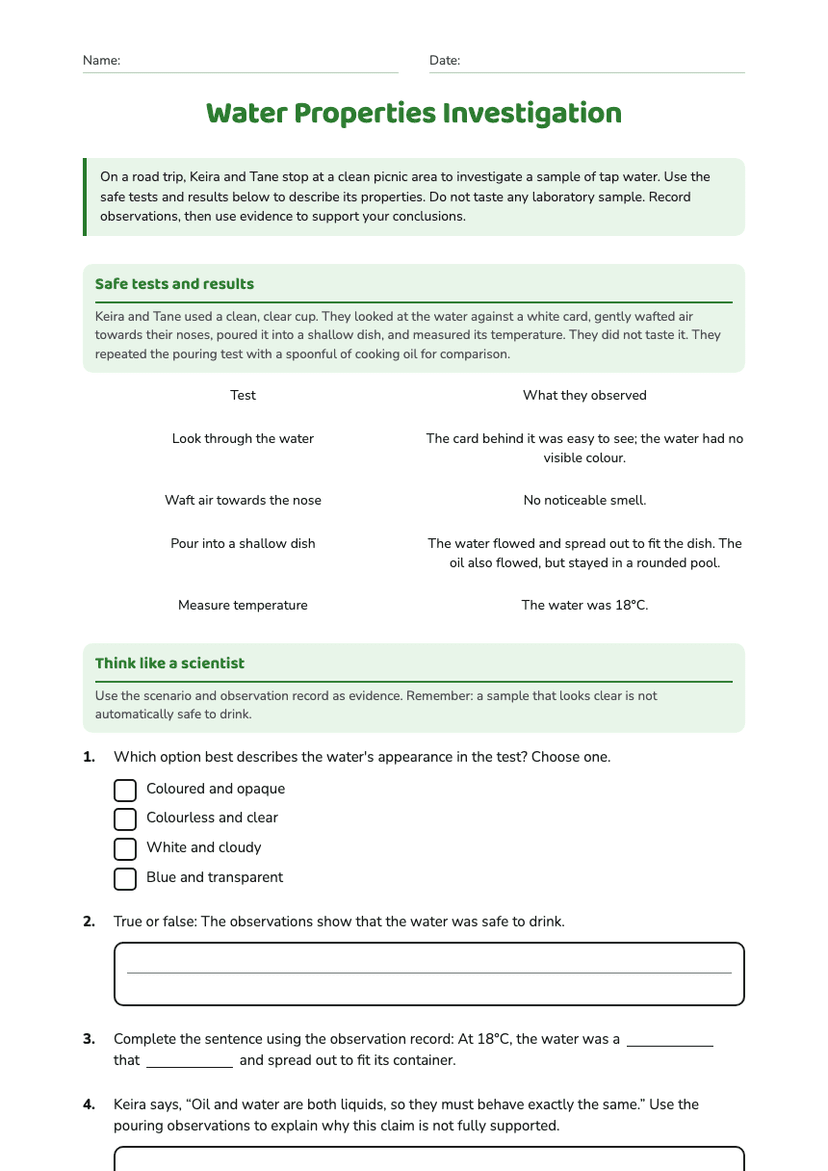
Water Properties Investigation
Free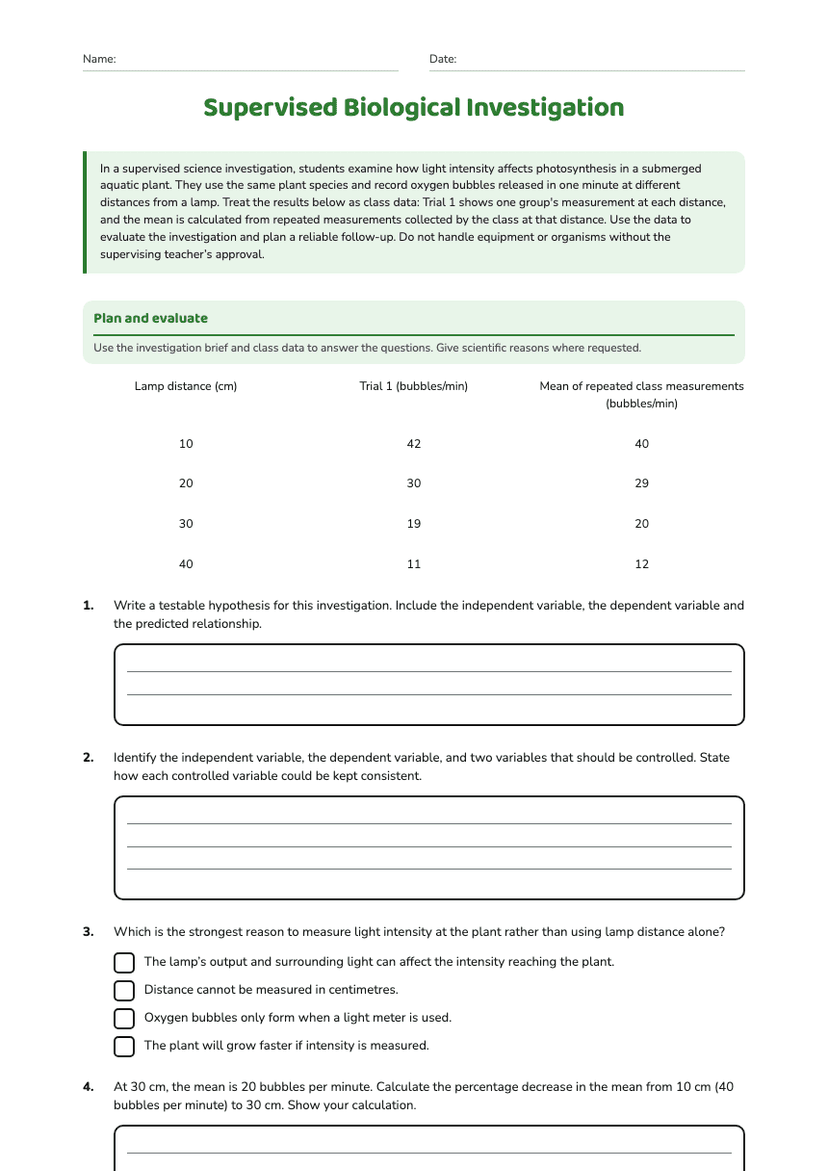
Supervised Biological Investigation
Free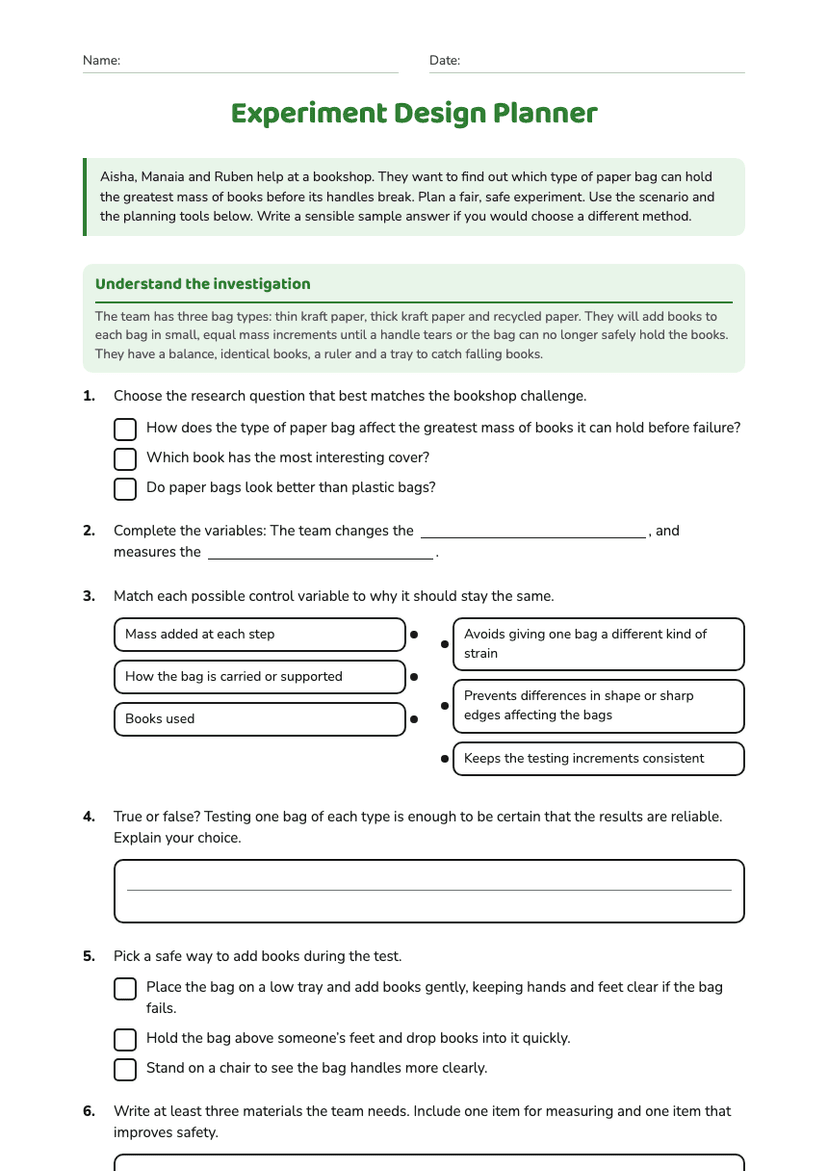
Experiment Design Planner
Free