Minibeasts and Habitats
A free science worksheet ready for your classroom. Open in Kuraplan to grab the print-ready PDF, customize it for your students, or generate a fresh version in seconds.
Minibeasts and Habitats
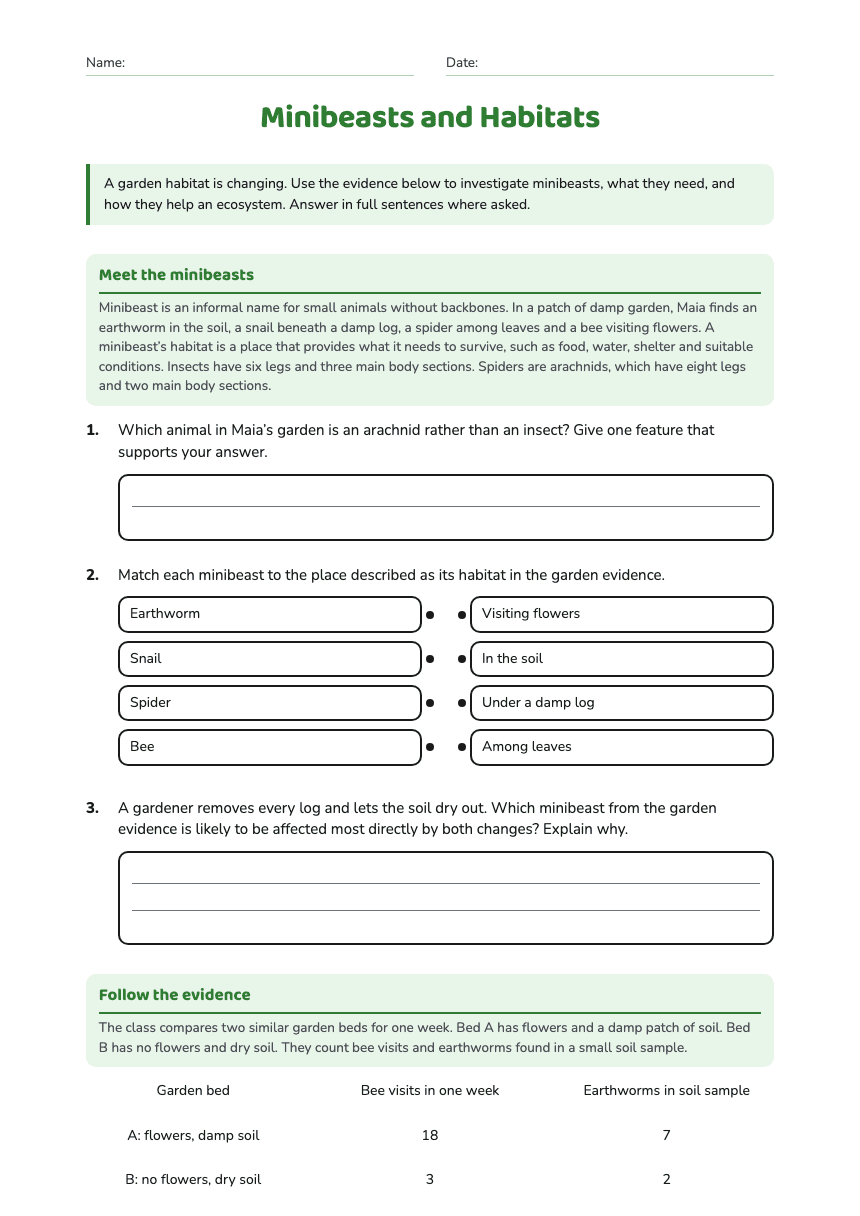
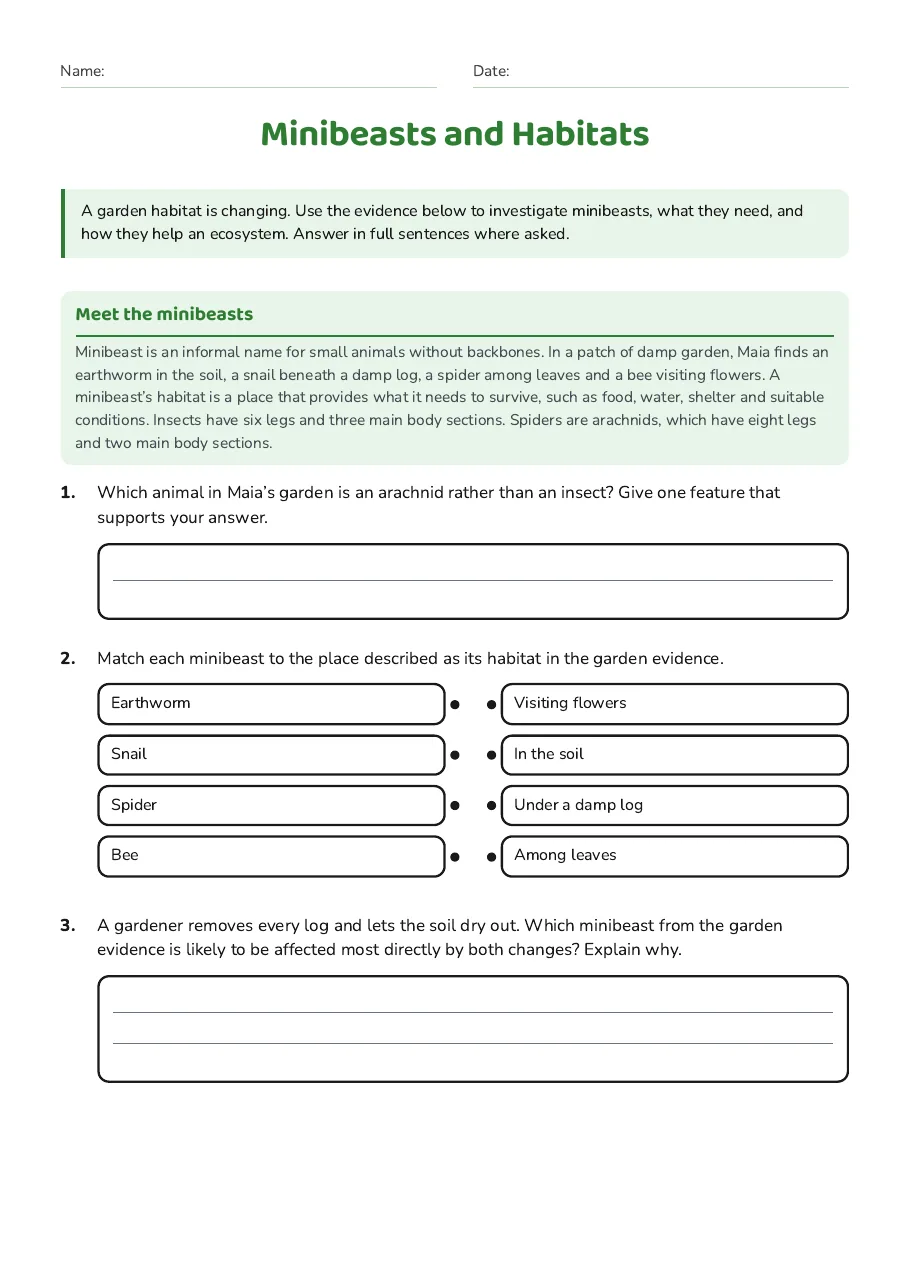
Meet the minibeasts
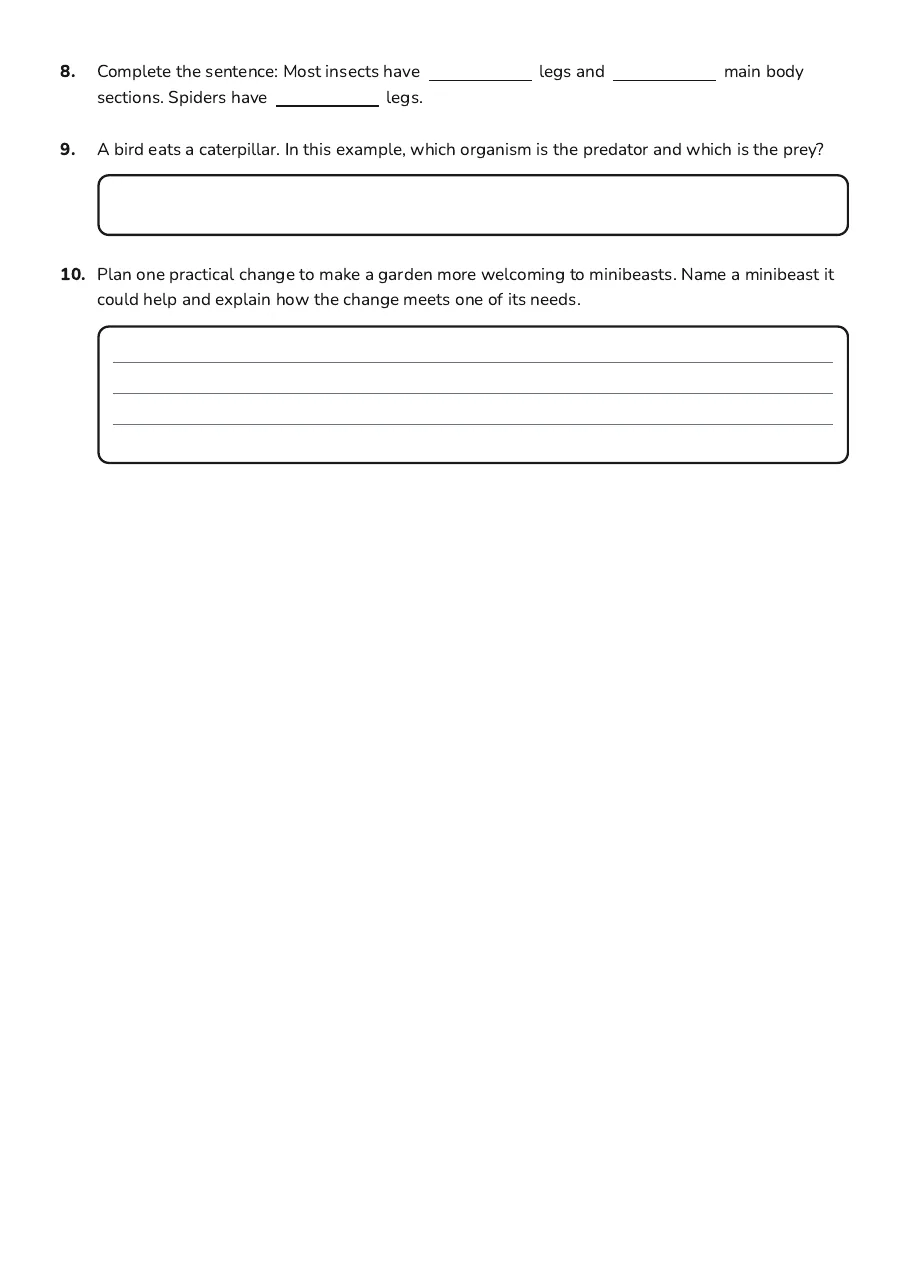
Minibeast is an informal name for small animals without backbones. In a patch of damp garden, Maia finds an earthworm in the soil, a snail beneath a damp log, a spider among leaves and a bee visiting flowers. A minibeast’s habitat is a place that provides what it needs to survive, such as food, water, shelter and suitable conditions. Insects have six legs and three main body sections. Spiders are arachnids, which have eight legs and two main body sections.
- Earthworm
- Snail
- Spider
- Bee
- Visiting flowers
- In the soil
- Under a damp log
- Among leaves
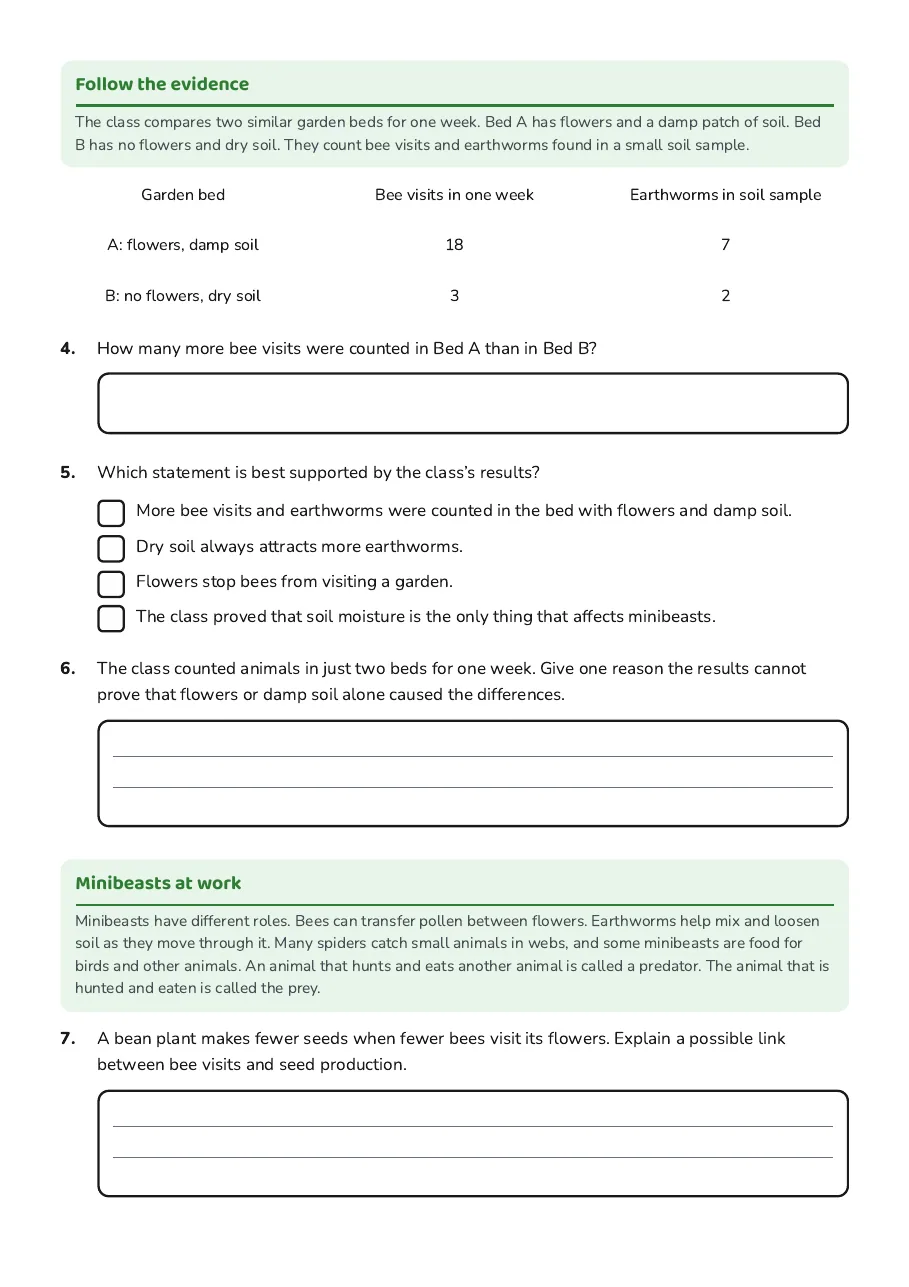
Follow the evidence
The class compares two similar garden beds for one week. Bed A has flowers and a damp patch of soil. Bed B has no flowers and dry soil. They count bee visits and earthworms found in a small soil sample.
Garden bed
Bee visits in one week
Earthworms in soil sample
A: flowers, damp soil
18
7
B: no flowers, dry soil
3
2
- More bee visits and earthworms were counted in the bed with flowers and damp soil.
- Dry soil always attracts more earthworms.
- Flowers stop bees from visiting a garden.
- The class proved that soil moisture is the only thing that affects minibeasts.
Minibeasts at work
Minibeasts have different roles. Bees can transfer pollen between flowers. Earthworms help mix and loosen soil as they move through it. Many spiders catch small animals in webs, and some minibeasts are food for birds and other animals. An animal that hunts and eats another animal is called a predator. The animal that is hunted and eaten is called the prey.
3 printable pages
Page 1
Page 2
Page 3
About This Worksheet
Free in Kuraplan
Sign up free, grab the PDF, and customize it for your class.
Print-Ready
Formatted for standard paper. Clean layout, easy to read.
AI-Generated
Created with Kuraplan's AI, designed for real classroom use.
For Teachers & Parents
Use in classrooms, for homework, tutoring, or homeschool.
Need a custom version of this worksheet?
Kuraplan's AI generates custom worksheets in seconds — differentiated for every learner, aligned to your curriculum.
Generate Custom Worksheets — Free