Molecular Gastronomy Exploration
A free science worksheet ready for your classroom. Open in Kuraplan to grab the print-ready PDF, customize it for your students, or generate a fresh version in seconds.
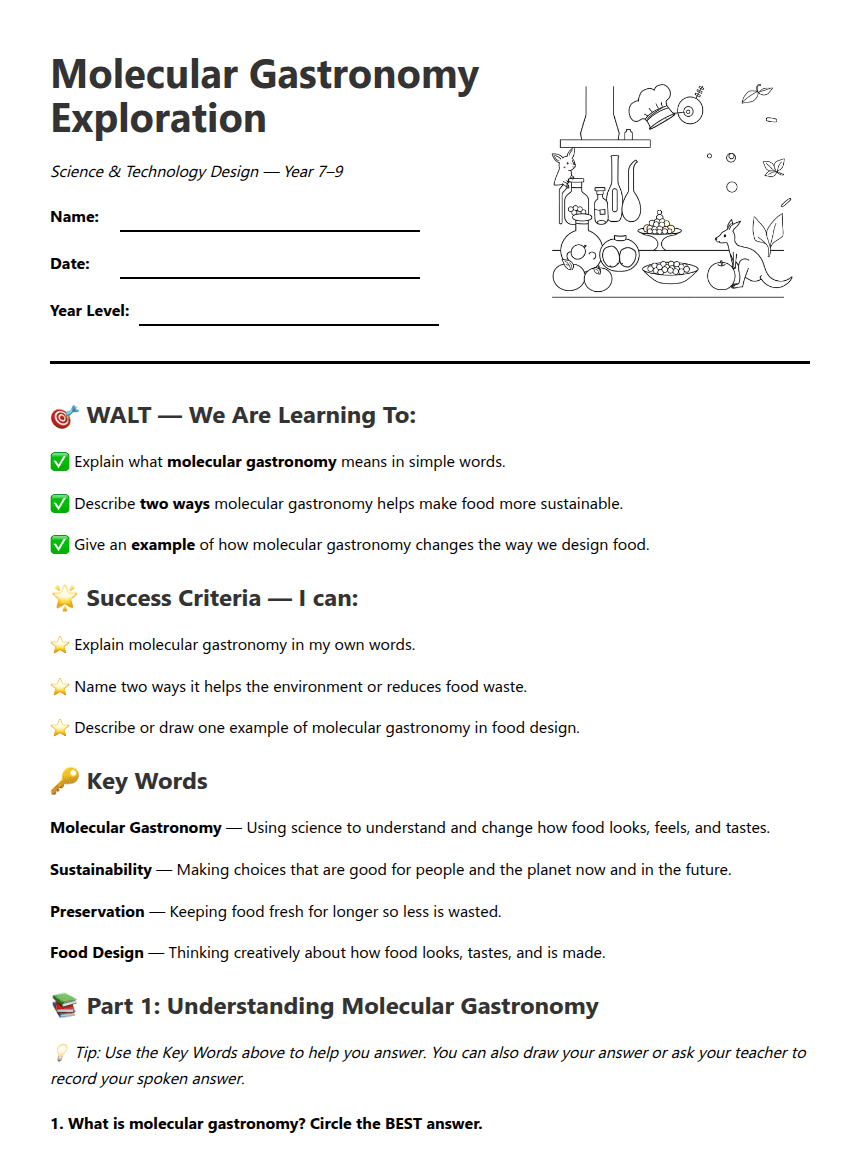
Molecular Gastronomy Exploration
Science & Technology Design — Year 7–9
🎯 WALT — We Are Learning To:
✅ Explain what molecular gastronomy means in simple words.
✅ Describe two ways molecular gastronomy helps make food more sustainable.
✅ Give an example of how molecular gastronomy changes the way we design food.
🌟 Success Criteria — I can:
⭐ Explain molecular gastronomy in my own words.
⭐ Name two ways it helps the environment or reduces food waste.
⭐ Describe or draw one example of molecular gastronomy in food design.
🔑 Key Words
Molecular Gastronomy — Using science to understand and change how food looks, feels, and tastes.
Sustainability — Making choices that are good for people and the planet now and in the future.
Preservation — Keeping food fresh for longer so less is wasted.
Food Design — Thinking creatively about how food looks, tastes, and is made.
📚 Part 1: Understanding Molecular Gastronomy
💡 Tip: Use the Key Words above to help you answer. You can also draw your answer or ask your teacher to record your spoken answer.
Sentence starter: "Molecular gastronomy is when chefs use science to..."
🌱 Part 2: Sustainability and Food Design
💡 Tip: Think about the words preservation and waste. You can draw your ideas in the boxes if writing is tricky.
Sentence starter: "One way molecular gastronomy helps sustainability is..."
Way 1:
Way 2:
Sentence starter: "An example of molecular gastronomy changing food design is..."
Sentence starter: "If food lasts longer, it helps because..."
🧪 Part 3: Hands-On Activity Reflection
After watching or making the fruit caviar or jelly beads activity, answer the questions below. You can draw or write your answers.
Sentence starter: "This activity helped me understand that..."
Sentence starter: "These food techniques could help people and the environment by..."
🚀 Extension: For Advanced Learners
Choose ONE or MORE of these challenges if you have finished and want to go further!
Sentence starter: "I think molecular gastronomy is / is not always a good idea because..."
About This Worksheet
Free in Kuraplan
Sign up free, grab the PDF, and customize it for your class.
Print-Ready
Formatted for standard paper. Clean layout, easy to read.
AI-Generated
Created with Kuraplan's AI, designed for real classroom use.
For Teachers & Parents
Use in classrooms, for homework, tutoring, or homeschool.
Need a custom version of this worksheet?
Kuraplan's AI generates custom worksheets in seconds — differentiated for every learner, aligned to your curriculum.
Generate Custom Worksheets — FreeMore Science Worksheets
Recycled Materials Picture Worksheet
Free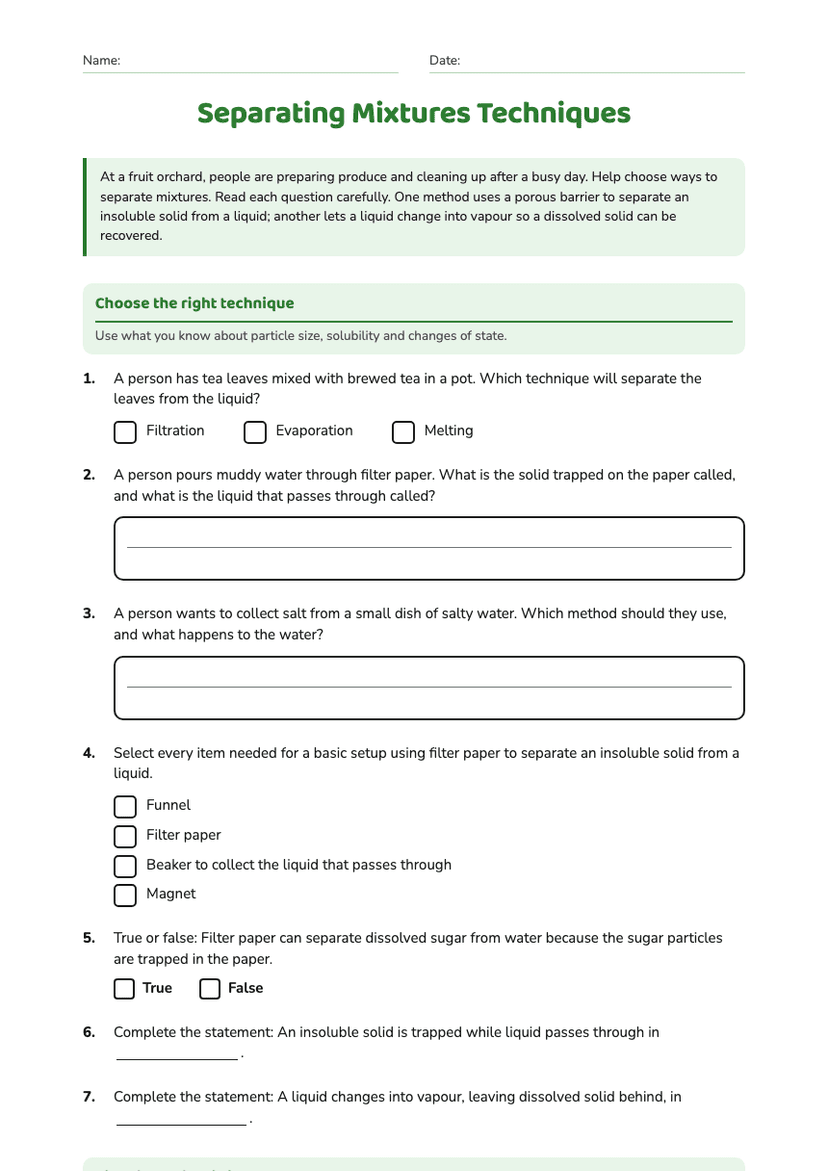
Separating Mixtures Techniques
Free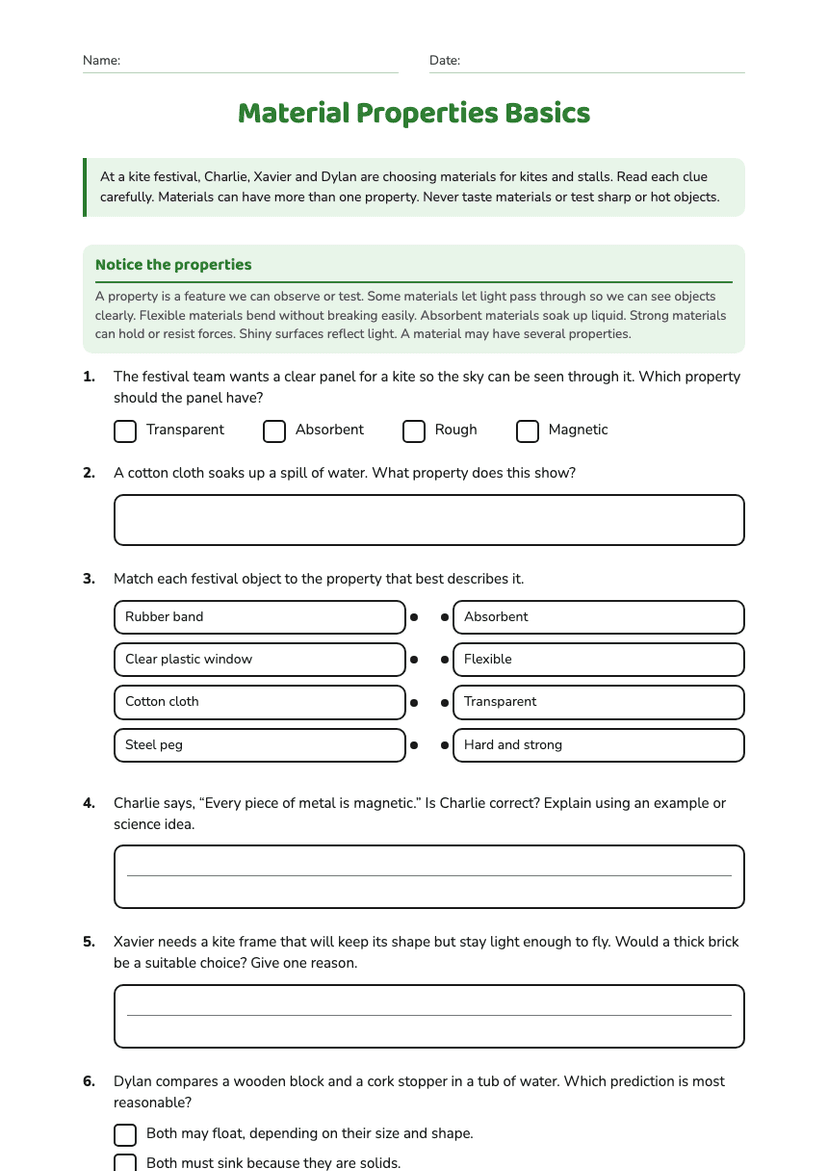
Material Properties Basics
Free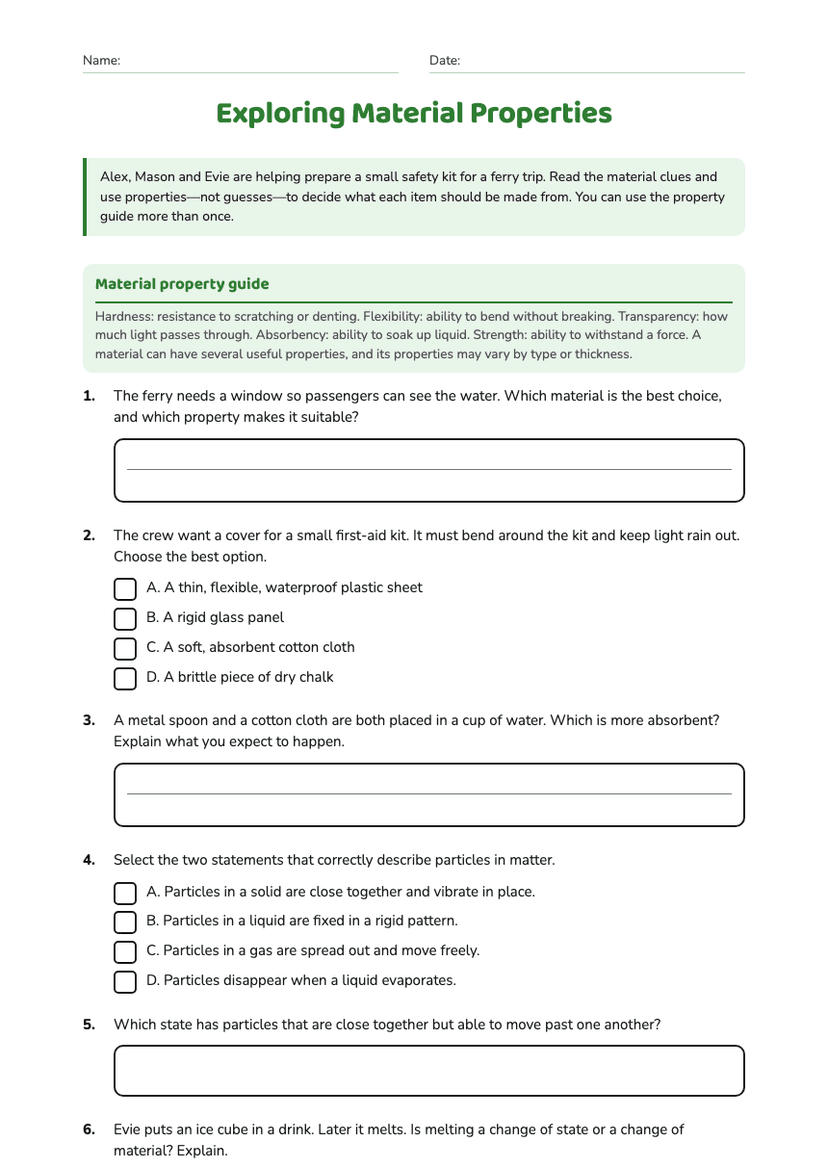
Exploring Material Properties
Free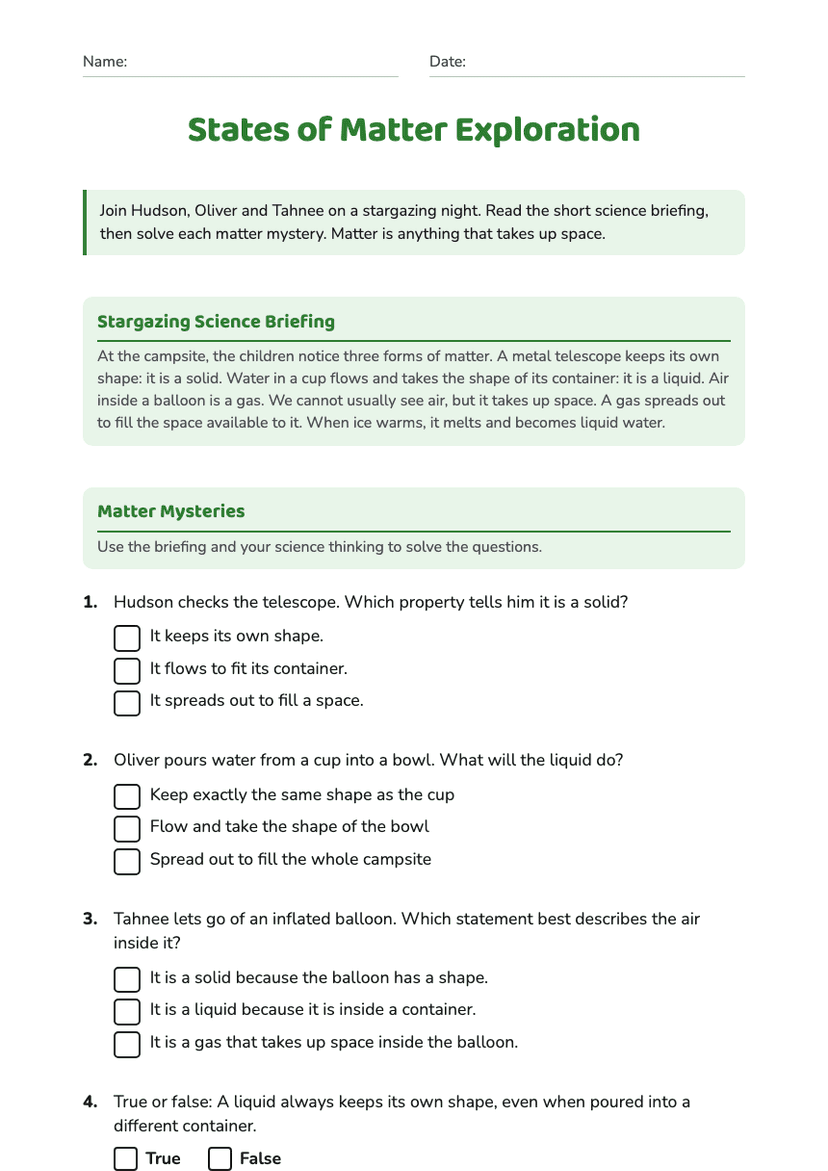
States of Matter Exploration
Free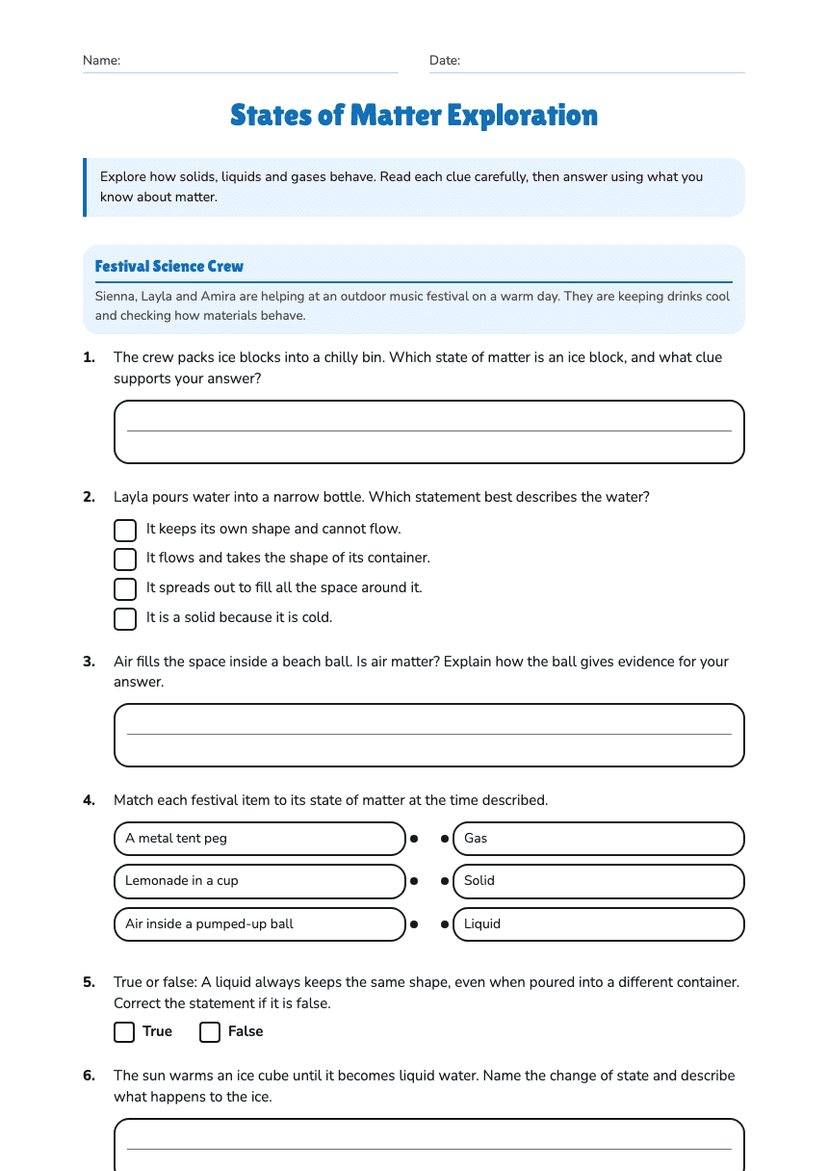
States of Matter Exploration
Free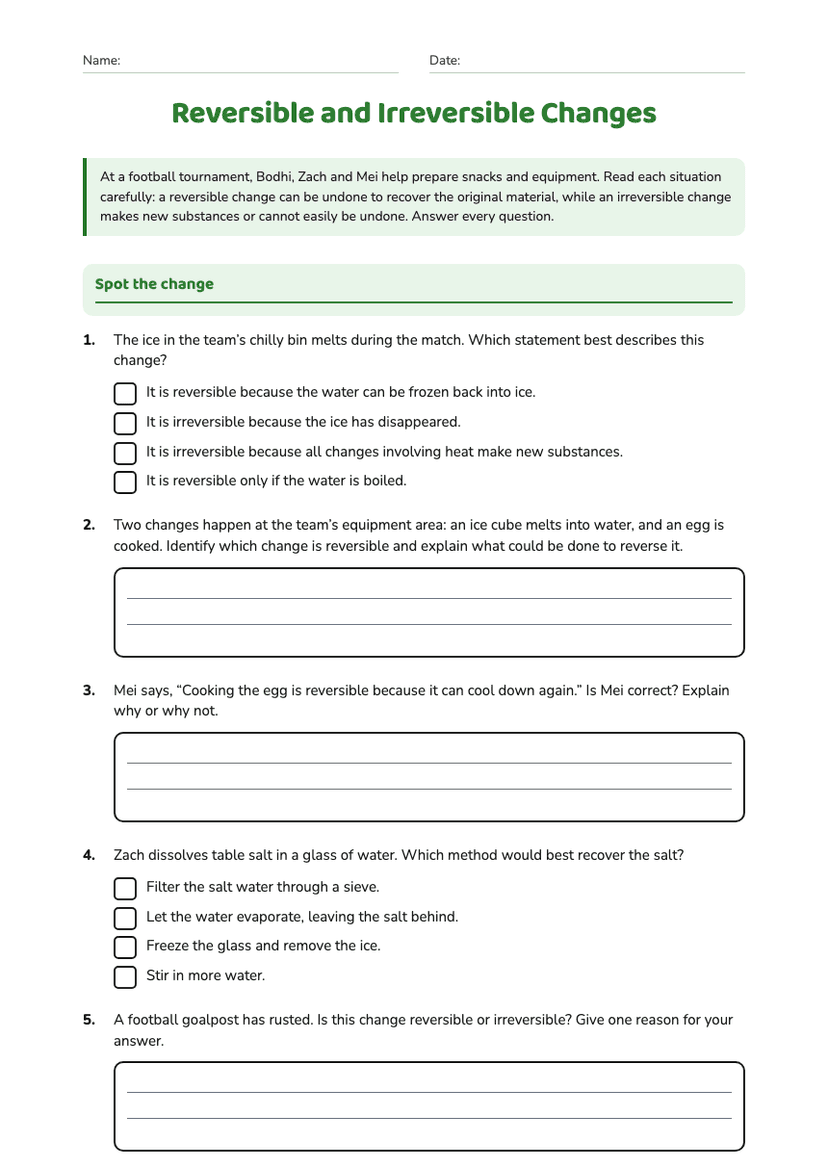
Reversible and Irreversible Changes
Free