Māori Storytelling Traditions
A free english worksheet ready for your classroom. Open in Kuraplan to grab the print-ready PDF, customize it for your students, or generate a fresh version in seconds.

Māori Storytelling Traditions
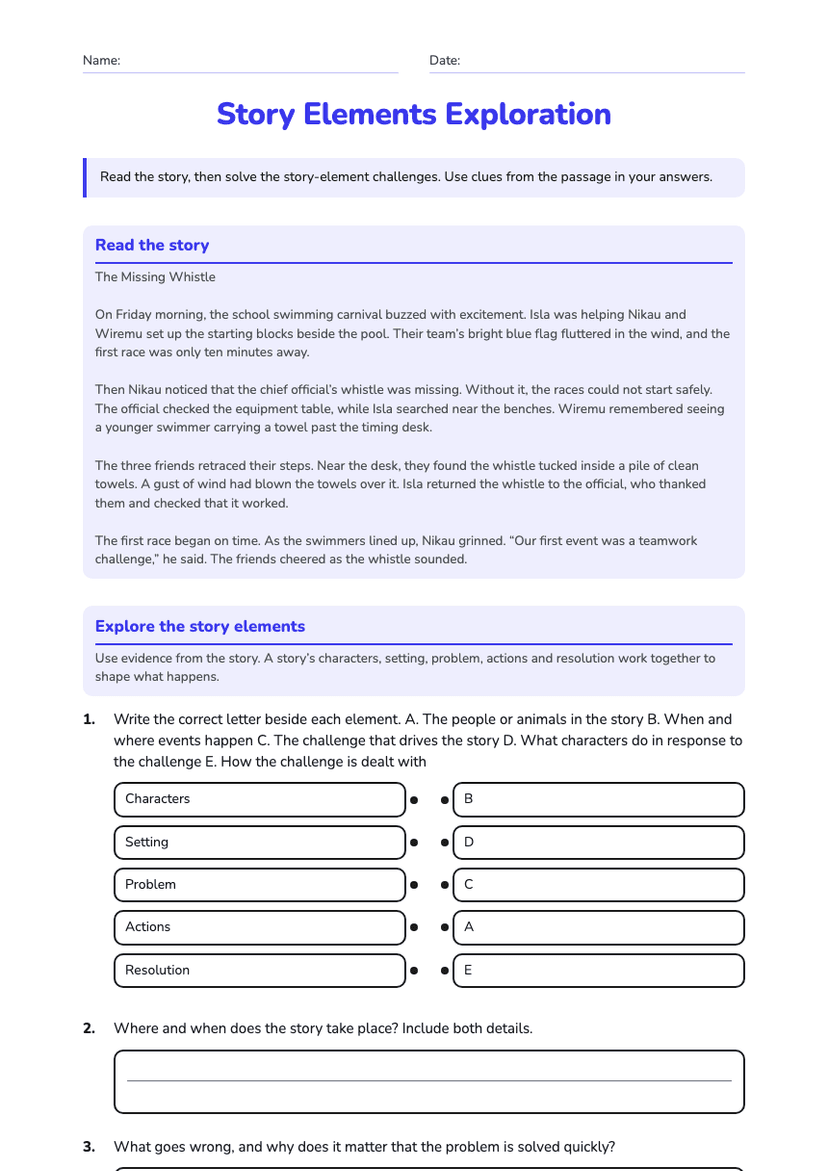
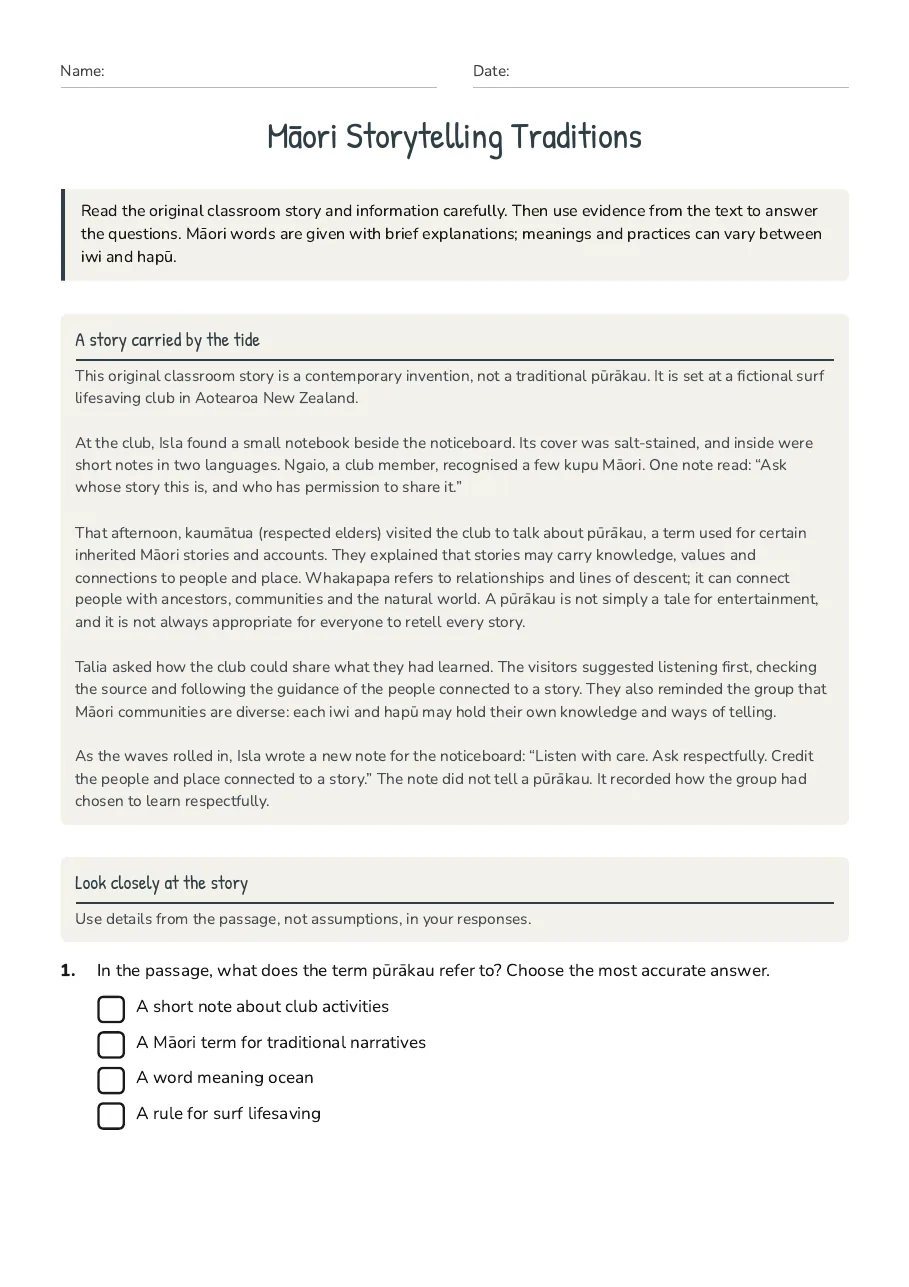
A story carried by the tide
This original classroom story is a contemporary invention, not a traditional pūrākau. It is set at a fictional surf lifesaving club in Aotearoa New Zealand. At the club, Isla found a small notebook beside the noticeboard. Its cover was salt-stained, and inside were short notes in two languages. Ngaio, a club member, recognised a few kupu Māori. One note read: “Ask whose story this is, and who has permission to share it.” That afternoon, kaumātua (respected elders) visited the club to talk about pūrākau, a term used for certain inherited Māori stories and accounts. They explained that stories may carry knowledge, values and connections to people and place. Whakapapa refers to relationships and lines of descent; it can connect people with ancestors, communities and the natural world. A pūrākau is not simply a tale for entertainment, and it is not always appropriate for everyone to retell every story. Talia asked how the club could share what they had learned. The visitors suggested listening first, checking the source and following the guidance of the people connected to a story. They also reminded the group that Māori communities are diverse: each iwi and hapū may hold their own knowledge and ways of telling. As the waves rolled in, Isla wrote a new note for the noticeboard: “Listen with care. Ask respectfully. Credit the people and place connected to a story.” The note did not tell a pūrākau. It recorded how the group had chosen to learn respectfully.
Look closely at the story
Use details from the passage, not assumptions, in your responses.
- A short note about club activities
- A Māori term for traditional narratives
- A word meaning ocean
- A rule for surf lifesaving
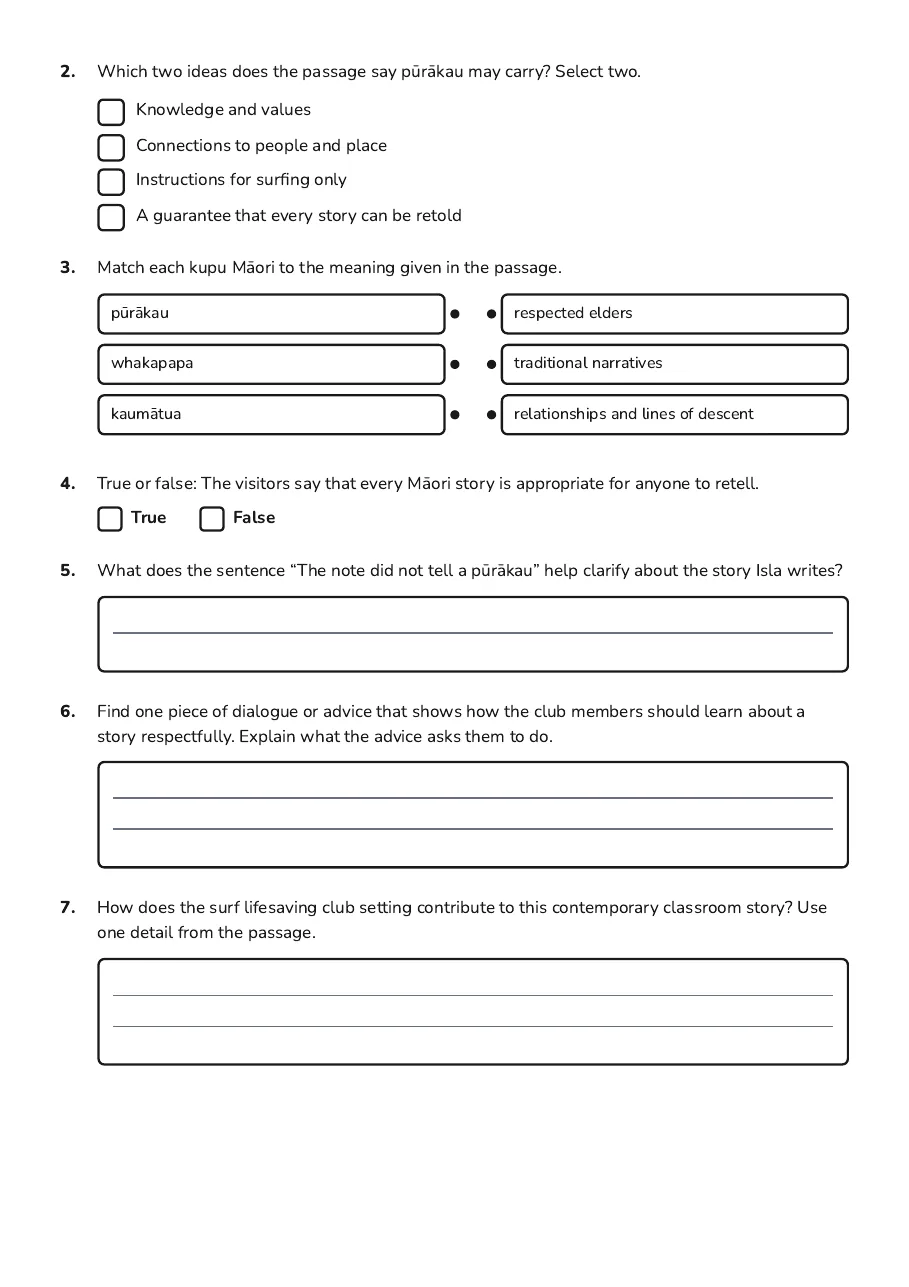
- Knowledge and values
- Connections to people and place
- Instructions for surfing only
- A guarantee that every story can be retold
- pūrākau
- whakapapa
- kaumātua
- respected elders
- traditional narratives
- relationships and lines of descent
3 printable pages
Page 1
Page 2
Page 3
About This Worksheet
Free in Kuraplan
Sign up free, grab the PDF, and customize it for your class.
Print-Ready
Formatted for standard paper. Clean layout, easy to read.
AI-Generated
Created with Kuraplan's AI, designed for real classroom use.
For Teachers & Parents
Use in classrooms, for homework, tutoring, or homeschool.
Need a custom version of this worksheet?
Kuraplan's AI generates custom worksheets in seconds — differentiated for every learner, aligned to your curriculum.
Generate Custom Worksheets — Free