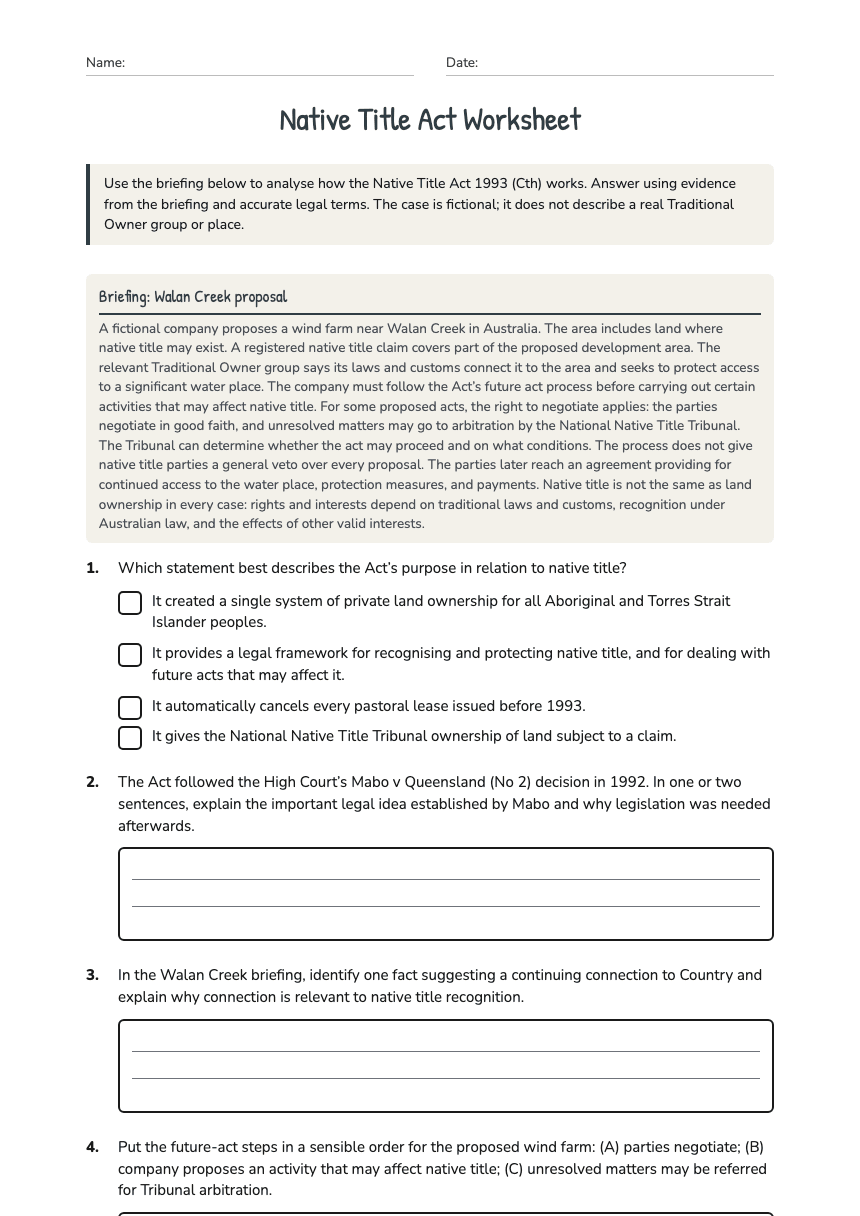
Native Title Act Worksheet
A free social sciences worksheet ready for your classroom. Open in Kuraplan to grab the print-ready PDF, customize it for your students, or generate a fresh version in seconds.
Native Title Act Worksheet
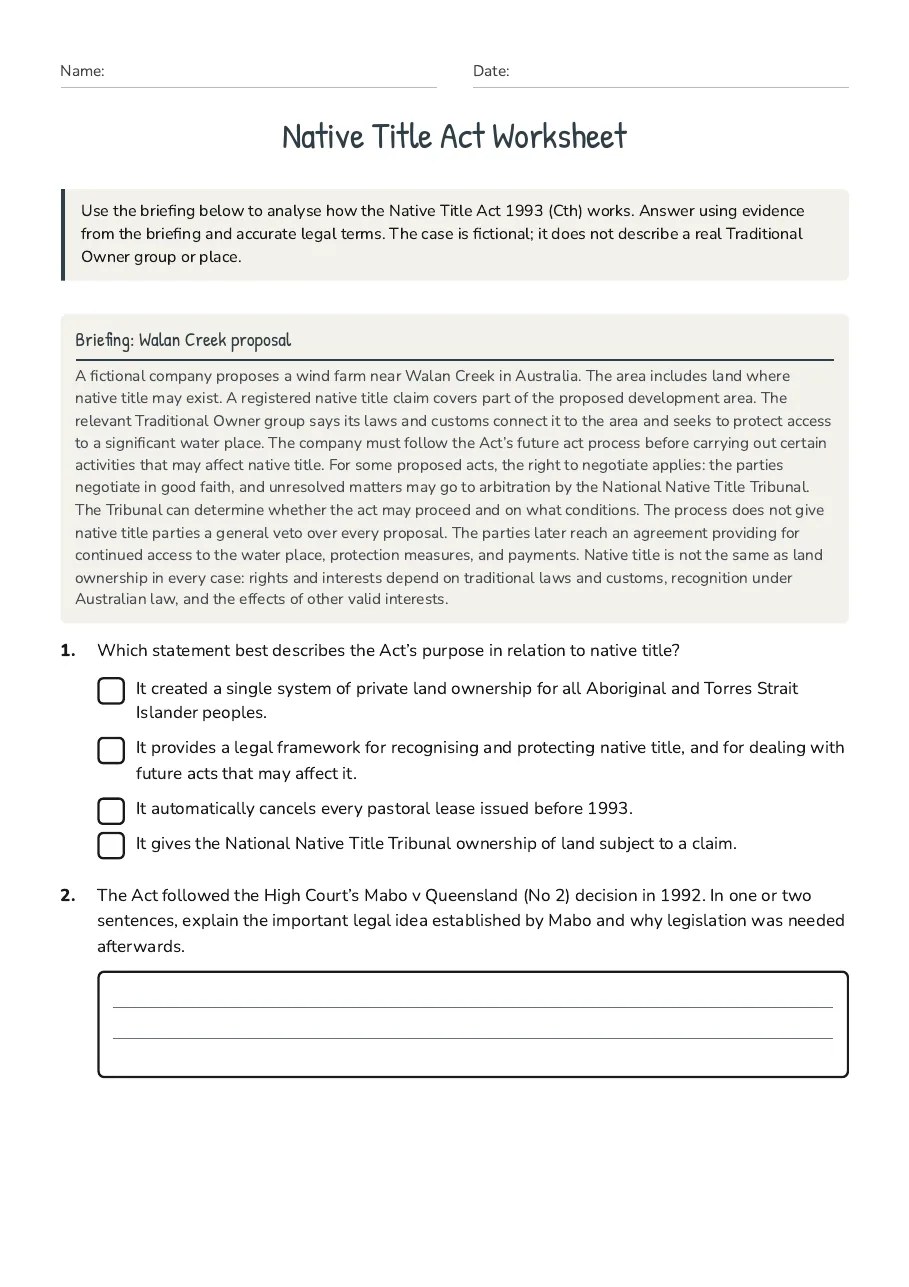
Briefing: Walan Creek proposal
A fictional company proposes a wind farm near Walan Creek in Australia. The area includes land where native title may exist. A registered native title claim covers part of the proposed development area. The relevant Traditional Owner group says its laws and customs connect it to the area and seeks to protect access to a significant water place. The company must follow the Act’s future act process before carrying out certain activities that may affect native title. For some proposed acts, the right to negotiate applies: the parties negotiate in good faith, and unresolved matters may go to arbitration by the National Native Title Tribunal. The Tribunal can determine whether the act may proceed and on what conditions. The process does not give native title parties a general veto over every proposal. The parties later reach an agreement providing for continued access to the water place, protection measures, and payments. Native title is not the same as land ownership in every case: rights and interests depend on traditional laws and customs, recognition under Australian law, and the effects of other valid interests.
- It created a single system of private land ownership for all Aboriginal and Torres Strait Islander peoples.
- It provides a legal framework for recognising and protecting native title, and for dealing with future acts that may affect it.
- It automatically cancels every pastoral lease issued before 1993.
- It gives the National Native Title Tribunal ownership of land subject to a claim.
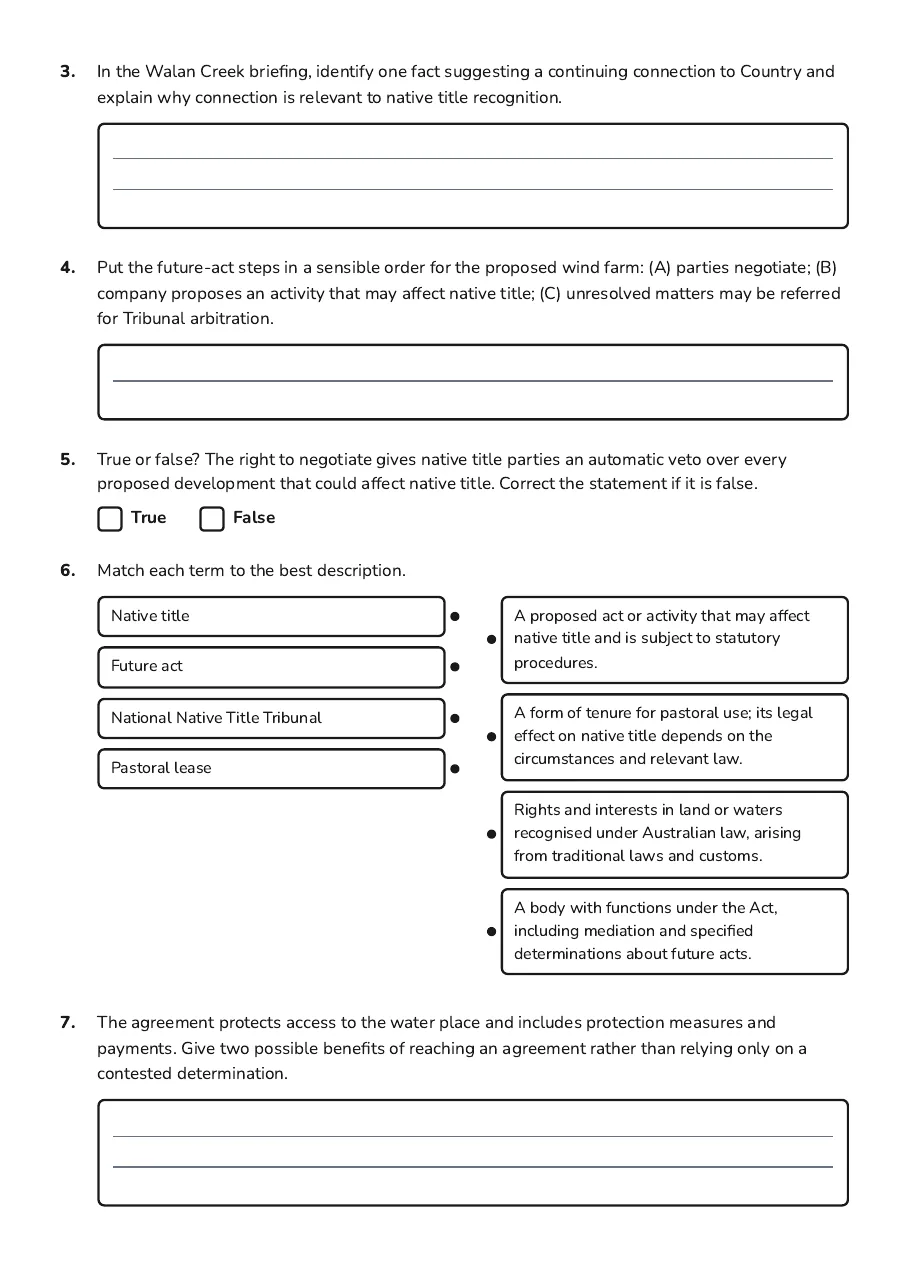
- Native title
- Future act
- National Native Title Tribunal
- Pastoral lease
- A proposed act or activity that may affect native title and is subject to statutory procedures.
- A form of tenure for pastoral use; its legal effect on native title depends on the circumstances and relevant law.
- Rights and interests in land or waters recognised under Australian law, arising from traditional laws and customs.
- A body with functions under the Act, including mediation and specified determinations about future acts.
3 printable pages
Page 1
Page 2
Page 3
About This Worksheet
Free in Kuraplan
Sign up free, grab the PDF, and customize it for your class.
Print-Ready
Formatted for standard paper. Clean layout, easy to read.
AI-Generated
Created with Kuraplan's AI, designed for real classroom use.
For Teachers & Parents
Use in classrooms, for homework, tutoring, or homeschool.
Need a custom version of this worksheet?
Kuraplan's AI generates custom worksheets in seconds — differentiated for every learner, aligned to your curriculum.
Generate Custom Worksheets — FreeMore Social Sciences Worksheets
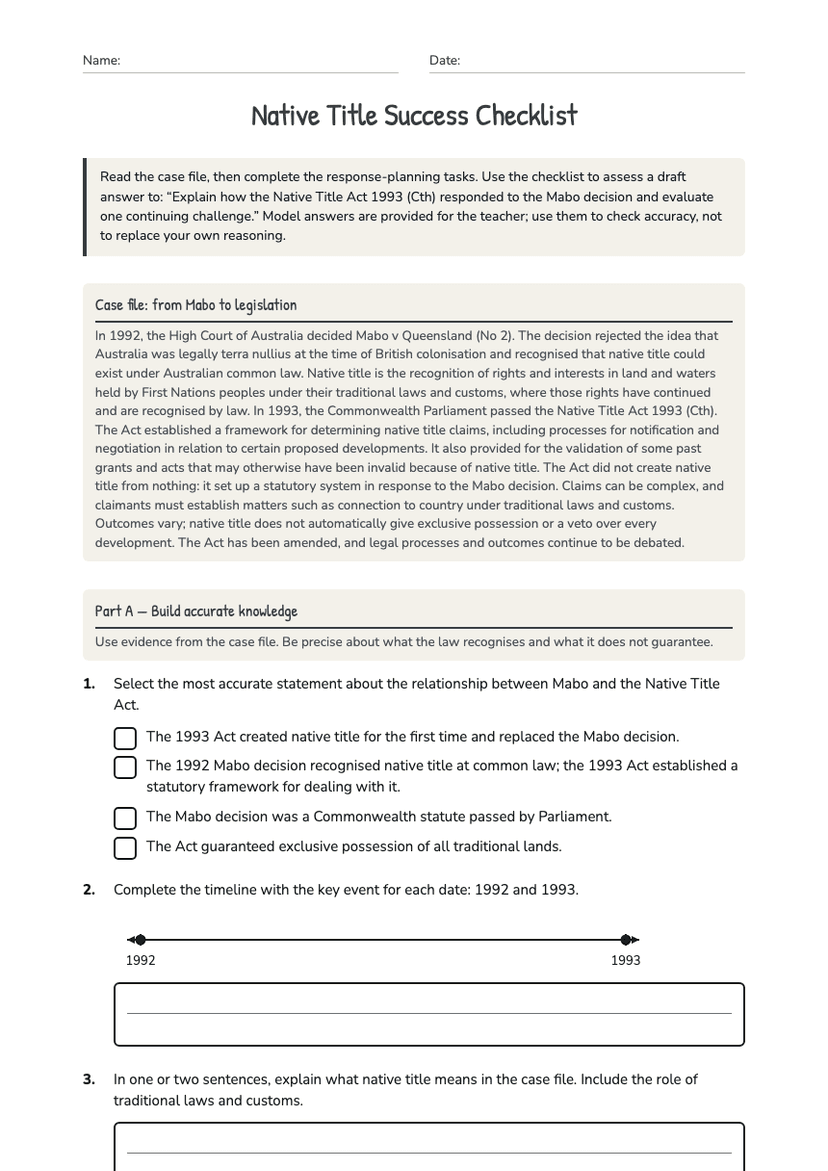
Native Title Success Checklist
Free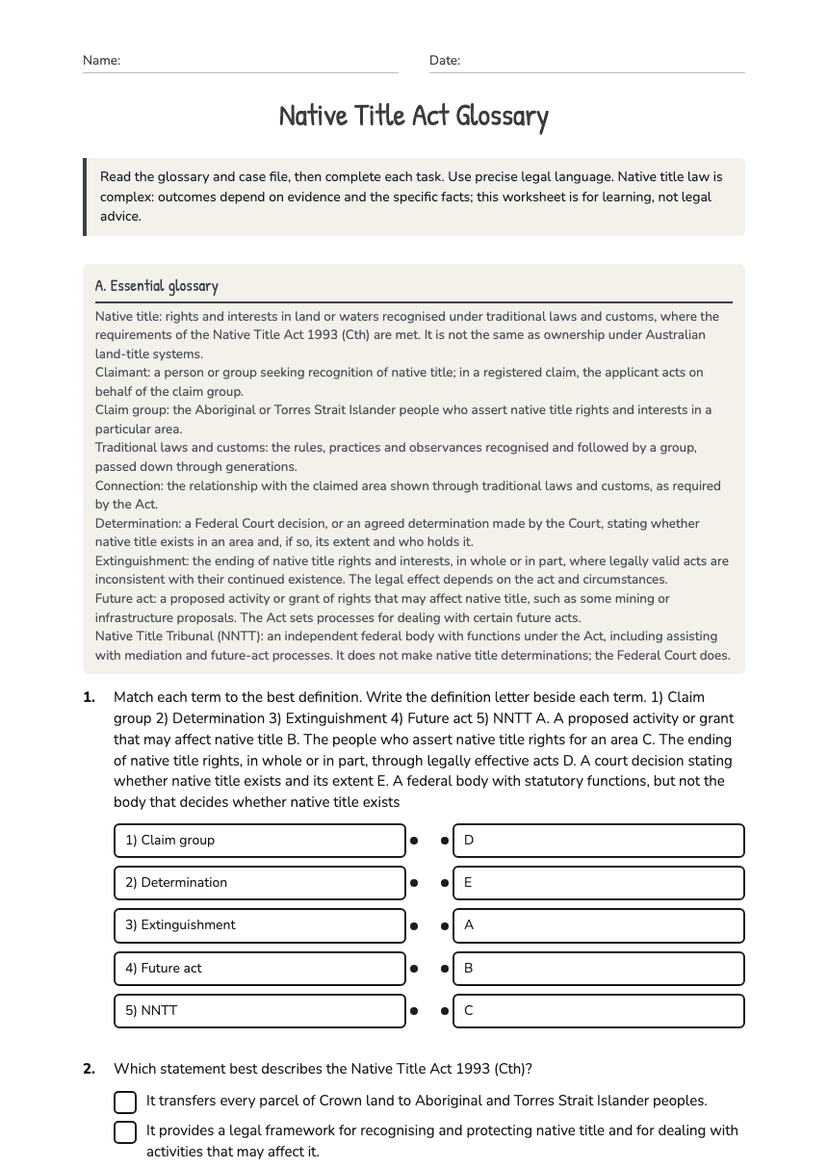
Native Title Act Glossary
Free
Native Regeneration Project Quiz
Free
Imaginative Texts Features
Free
Exploring Imaginative Texts
Free
Imaginative Narrative Introduction
Free
Native Title Act Summary
Free