Pā Harakeke Whānau Symbolism
A free te reo māori worksheet ready for your classroom. Open in Kuraplan to grab the print-ready PDF, customize it for your students, or generate a fresh version in seconds.
Pā Harakeke Whānau Symbolism
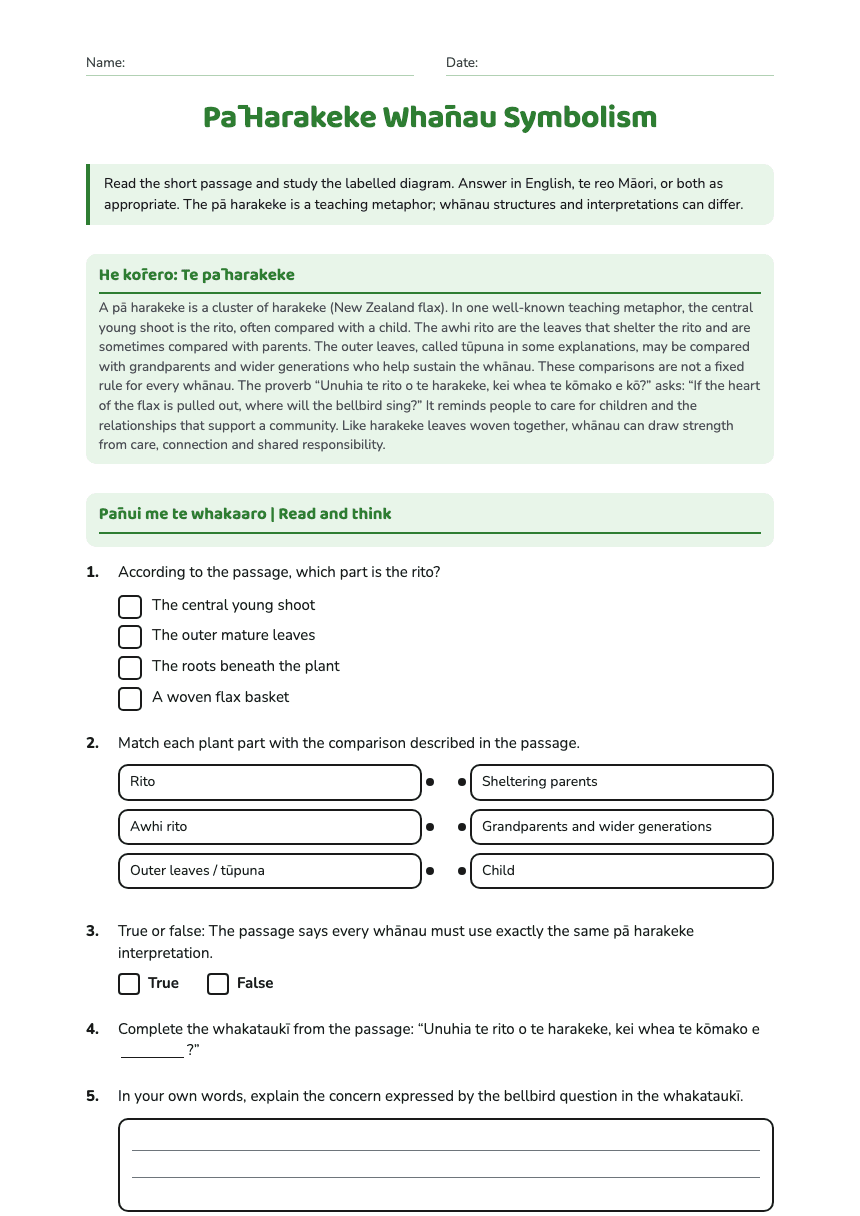
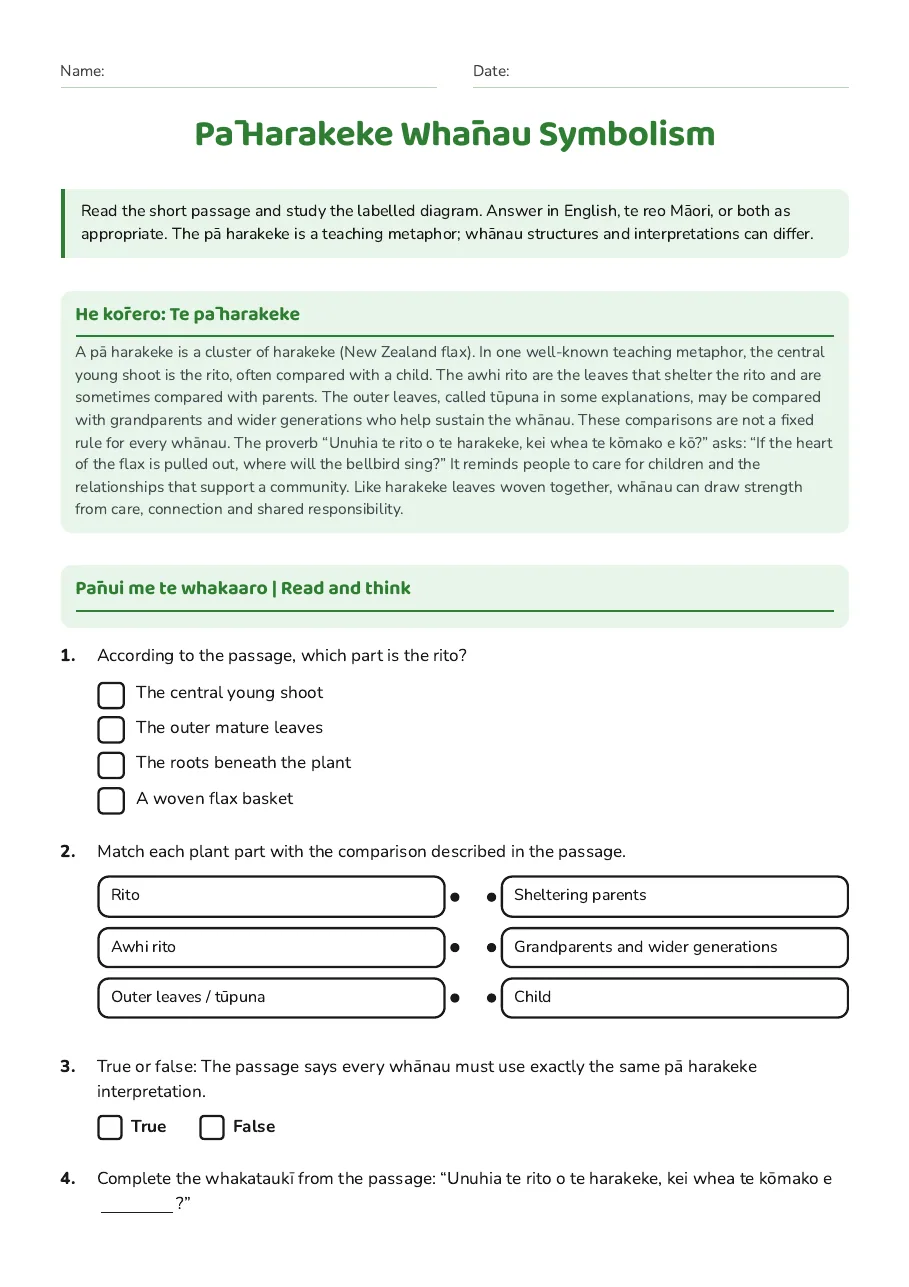
He kōrero: Te pā harakeke
A pā harakeke is a cluster of harakeke (New Zealand flax). In one well-known teaching metaphor, the central young shoot is the rito, often compared with a child. The awhi rito are the leaves that shelter the rito and are sometimes compared with parents. The outer leaves, called tūpuna in some explanations, may be compared with grandparents and wider generations who help sustain the whānau. These comparisons are not a fixed rule for every whānau. The proverb “Unuhia te rito o te harakeke, kei whea te kōmako e kō?” asks: “If the heart of the flax is pulled out, where will the bellbird sing?” It reminds people to care for children and the relationships that support a community. Like harakeke leaves woven together, whānau can draw strength from care, connection and shared responsibility.
Pānui me te whakaaro | Read and think
- The central young shoot
- The outer mature leaves
- The roots beneath the plant
- A woven flax basket
- Rito
- Awhi rito
- Outer leaves / tūpuna
- Sheltering parents
- Grandparents and wider generations
- Child
2 printable pages
Page 1
Page 2
About This Worksheet
Free in Kuraplan
Sign up free, grab the PDF, and customize it for your class.
Print-Ready
Formatted for standard paper. Clean layout, easy to read.
AI-Generated
Created with Kuraplan's AI, designed for real classroom use.
For Teachers & Parents
Use in classrooms, for homework, tutoring, or homeschool.
Need a custom version of this worksheet?
Kuraplan's AI generates custom worksheets in seconds — differentiated for every learner, aligned to your curriculum.
Generate Custom Worksheets — Free