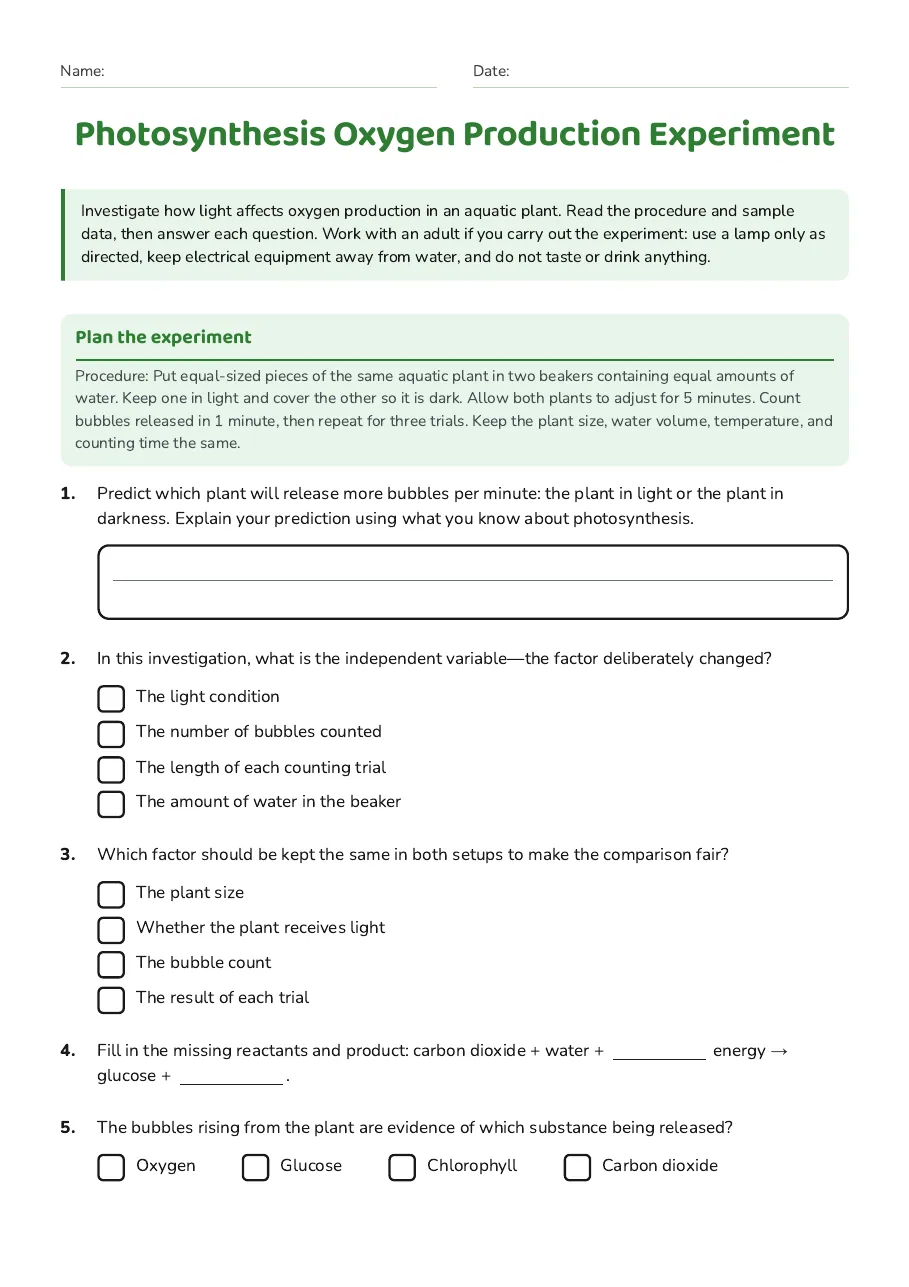
Photosynthesis Oxygen Production Experiment
A free science worksheet ready for your classroom. Open in Kuraplan to grab the print-ready PDF, customize it for your students, or generate a fresh version in seconds.
Photosynthesis Oxygen Production Experiment
Plan the experiment
Procedure: Put equal-sized pieces of the same aquatic plant in two beakers containing equal amounts of water. Keep one in light and cover the other so it is dark. Allow both plants to adjust for 5 minutes. Count bubbles released in 1 minute, then repeat for three trials. Keep the plant size, water volume, temperature, and counting time the same.
- The light condition
- The number of bubbles counted
- The length of each counting trial
- The amount of water in the beaker
- The plant size
- Whether the plant receives light
- The bubble count
- The result of each trial
- Oxygen
- Glucose
- Chlorophyll
- Carbon dioxide
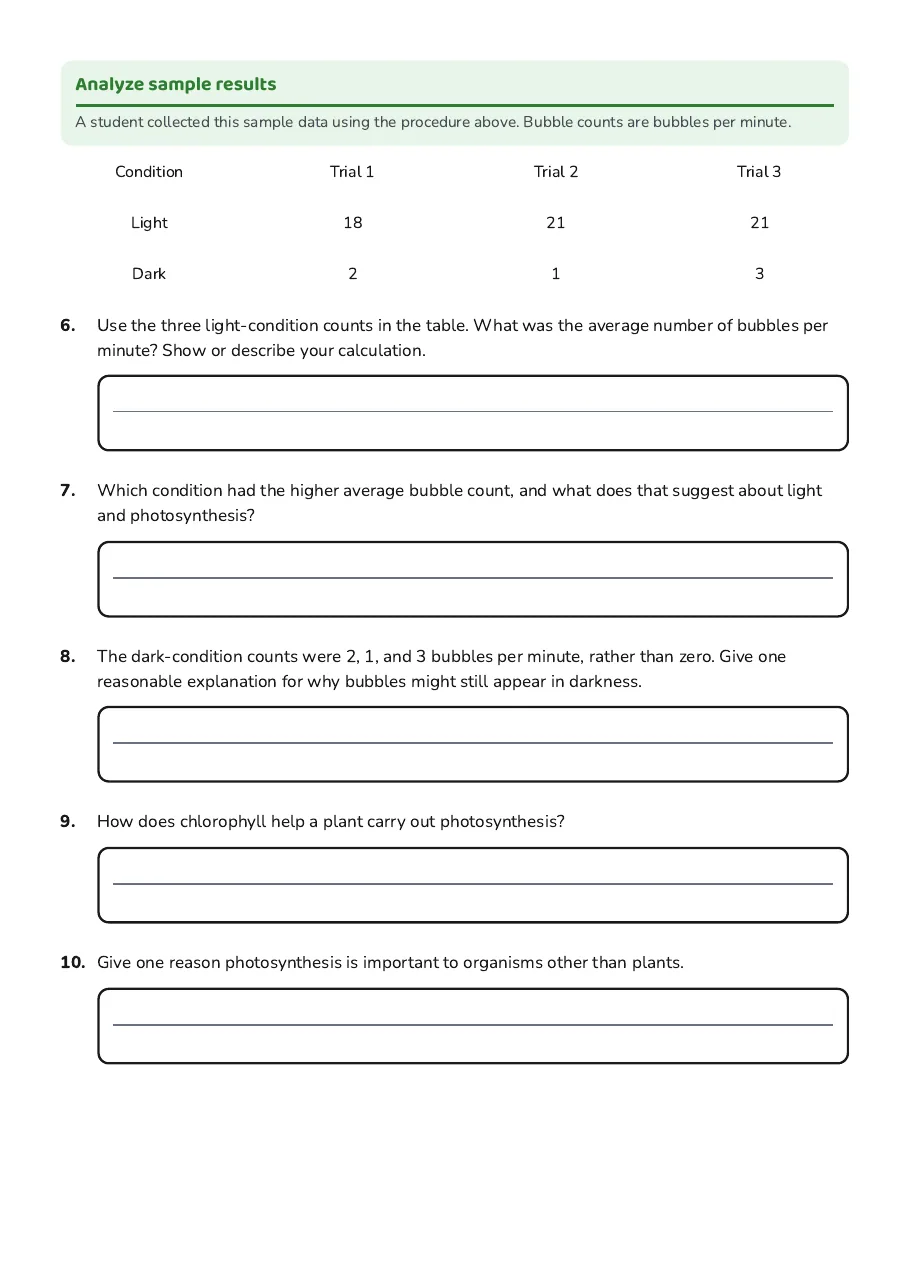
Analyze sample results
A student collected this sample data using the procedure above. Bubble counts are bubbles per minute.
Condition
Trial 1
Trial 2
Trial 3
Light
18
21
21
Dark
2
1
3
2 printable pages
Page 1
Page 2
About This Worksheet
Free in Kuraplan
Sign up free, grab the PDF, and customize it for your class.
Print-Ready
Formatted for standard paper. Clean layout, easy to read.
AI-Generated
Created with Kuraplan's AI, designed for real classroom use.
For Teachers & Parents
Use in classrooms, for homework, tutoring, or homeschool.
Need a custom version of this worksheet?
Kuraplan's AI generates custom worksheets in seconds — differentiated for every learner, aligned to your curriculum.
Generate Custom Worksheets — FreeMore Science Worksheets
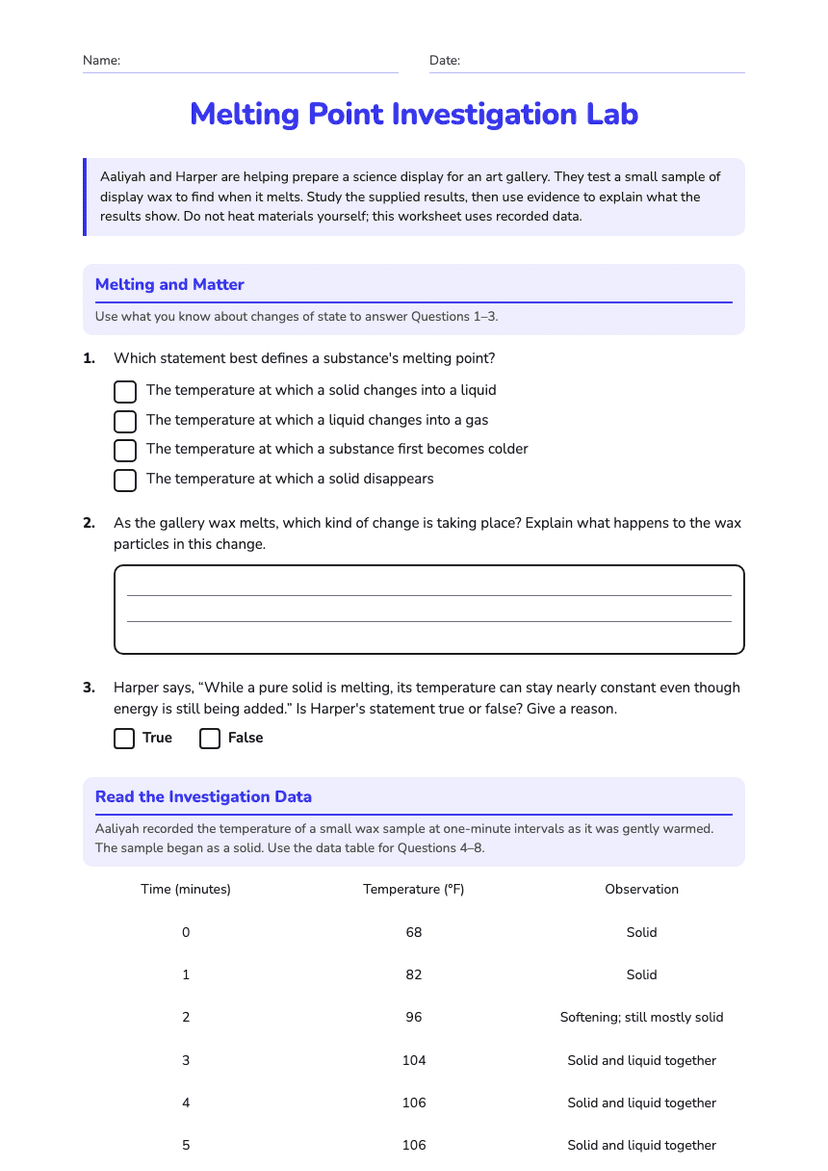
Melting Point Investigation Lab
Free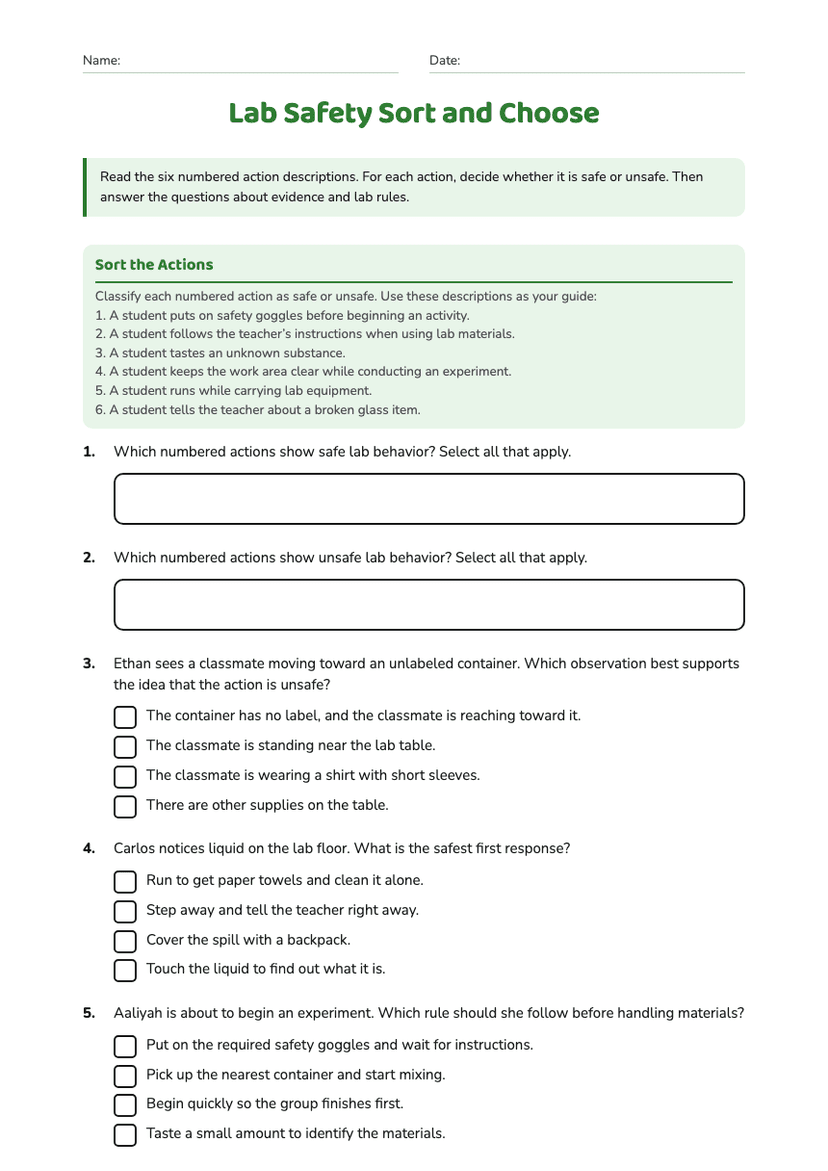
Lab Safety Sort and Choose
Free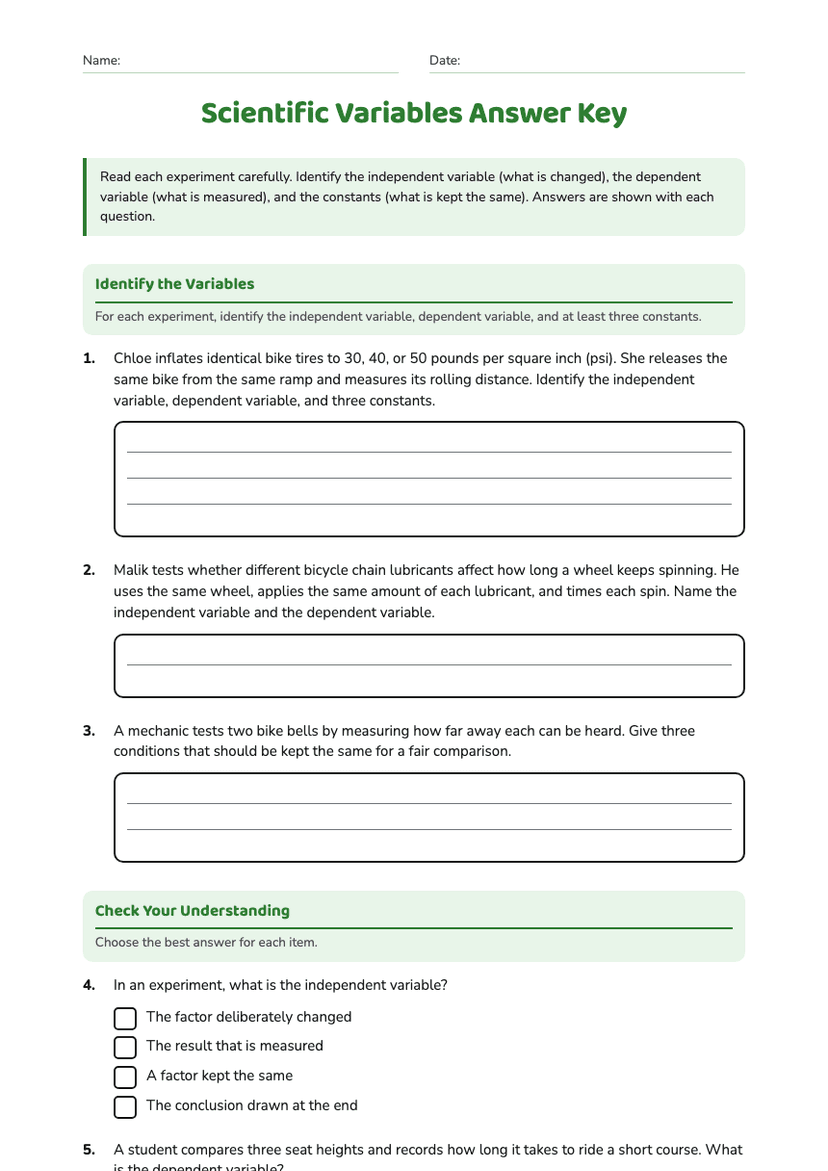
Scientific Variables Answer Key
Free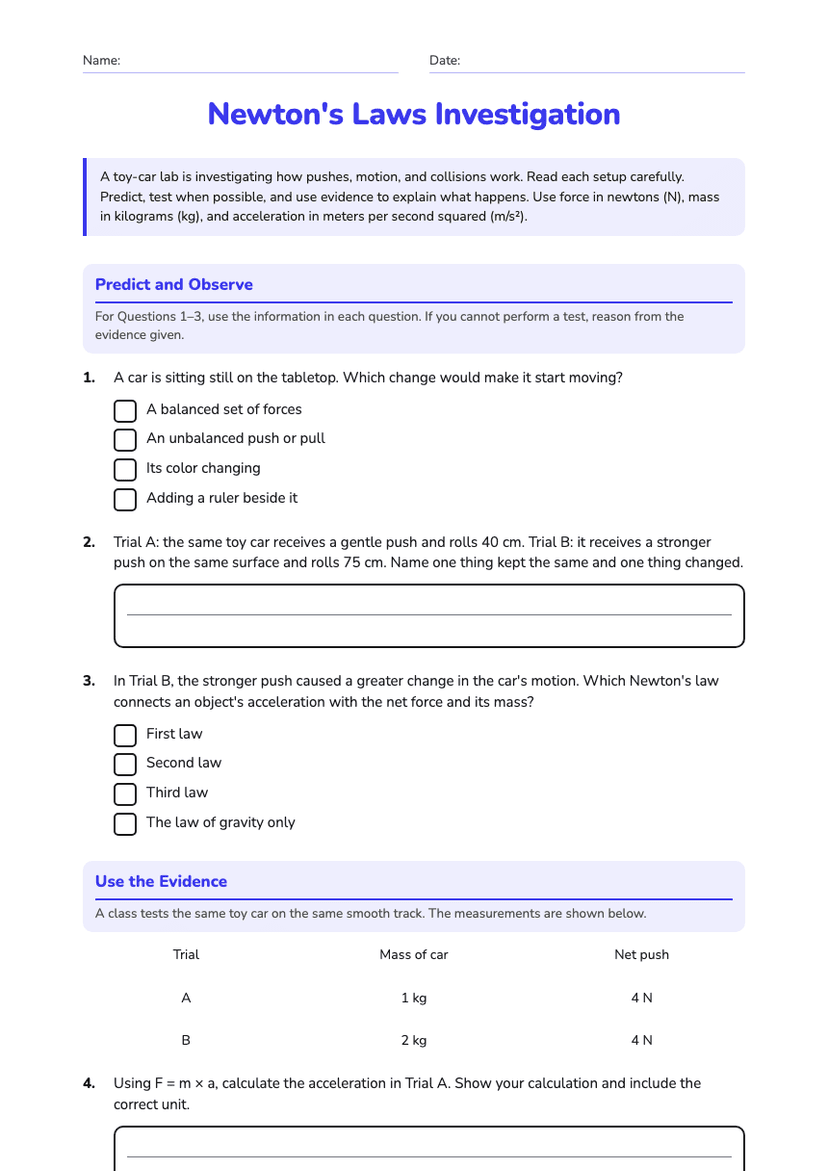
Newton's Laws Investigation
Free
Scientific Method Investigation Worksheet
Free
Science Engineering Project Worksheet
Free
Science Skills Assessment
Free