Pollution and Plants Worksheet
A free science worksheet ready for your classroom. Open in Kuraplan to grab the print-ready PDF, customize it for your students, or generate a fresh version in seconds.
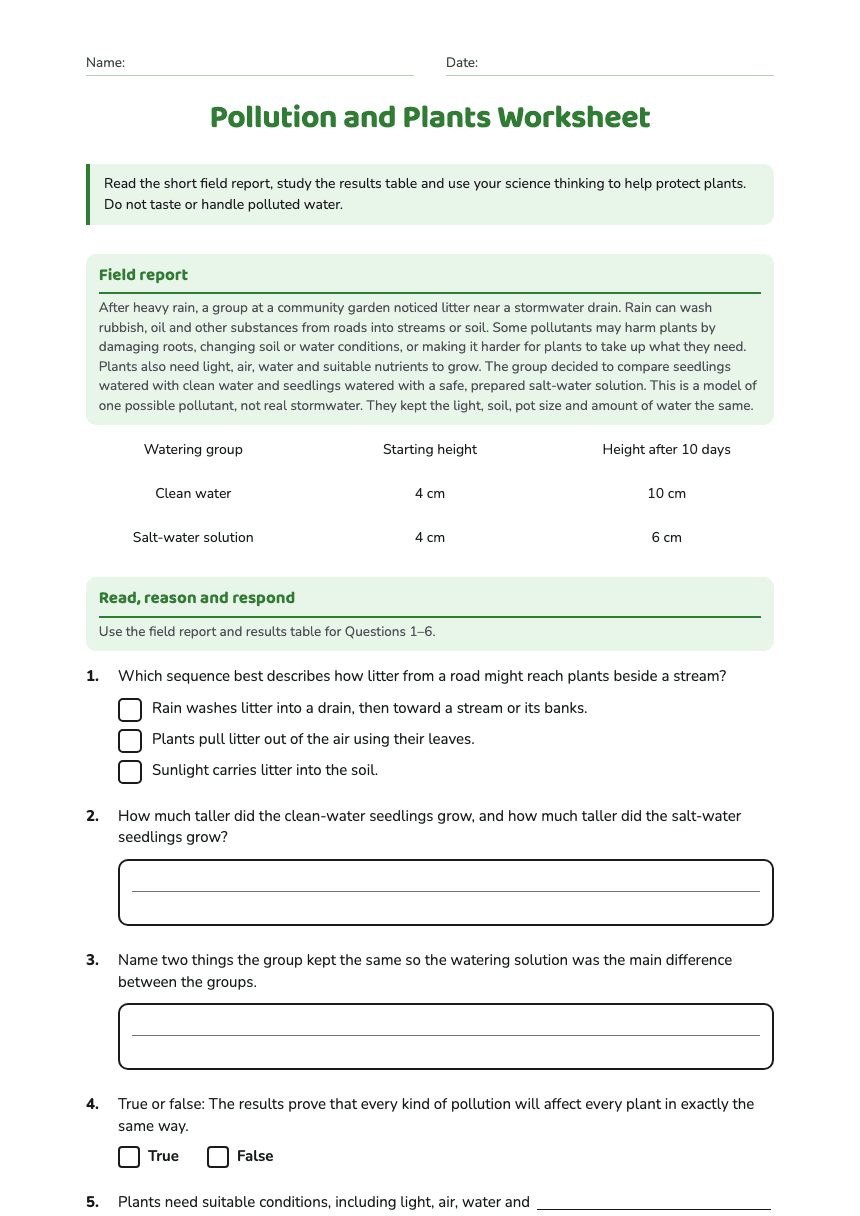
Pollution and Plants Worksheet
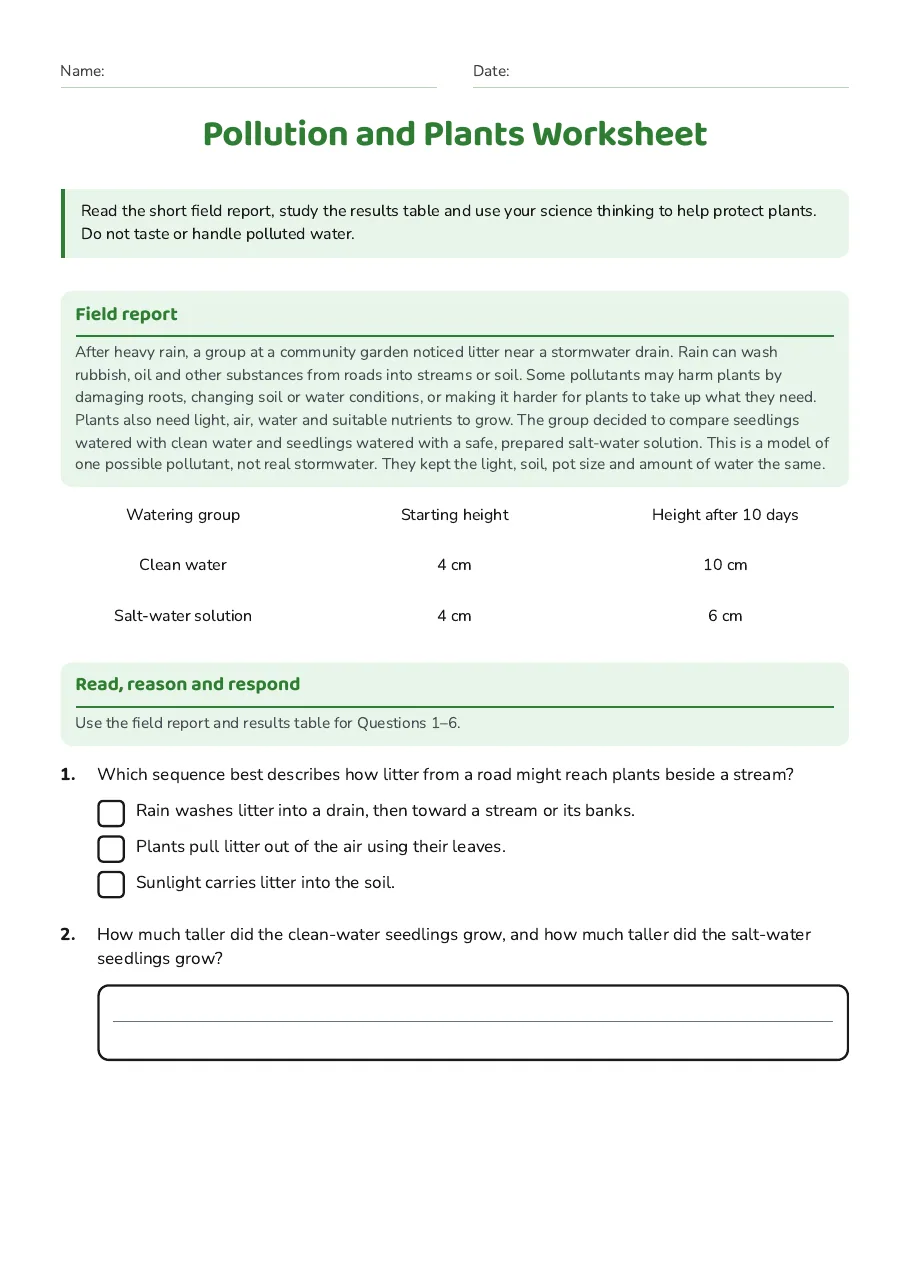
Field report
After heavy rain, a group at a community garden noticed litter near a stormwater drain. Rain can wash rubbish, oil and other substances from roads into streams or soil. Some pollutants may harm plants by damaging roots, changing soil or water conditions, or making it harder for plants to take up what they need. Plants also need light, air, water and suitable nutrients to grow. The group decided to compare seedlings watered with clean water and seedlings watered with a safe, prepared salt-water solution. This is a model of one possible pollutant, not real stormwater. They kept the light, soil, pot size and amount of water the same.
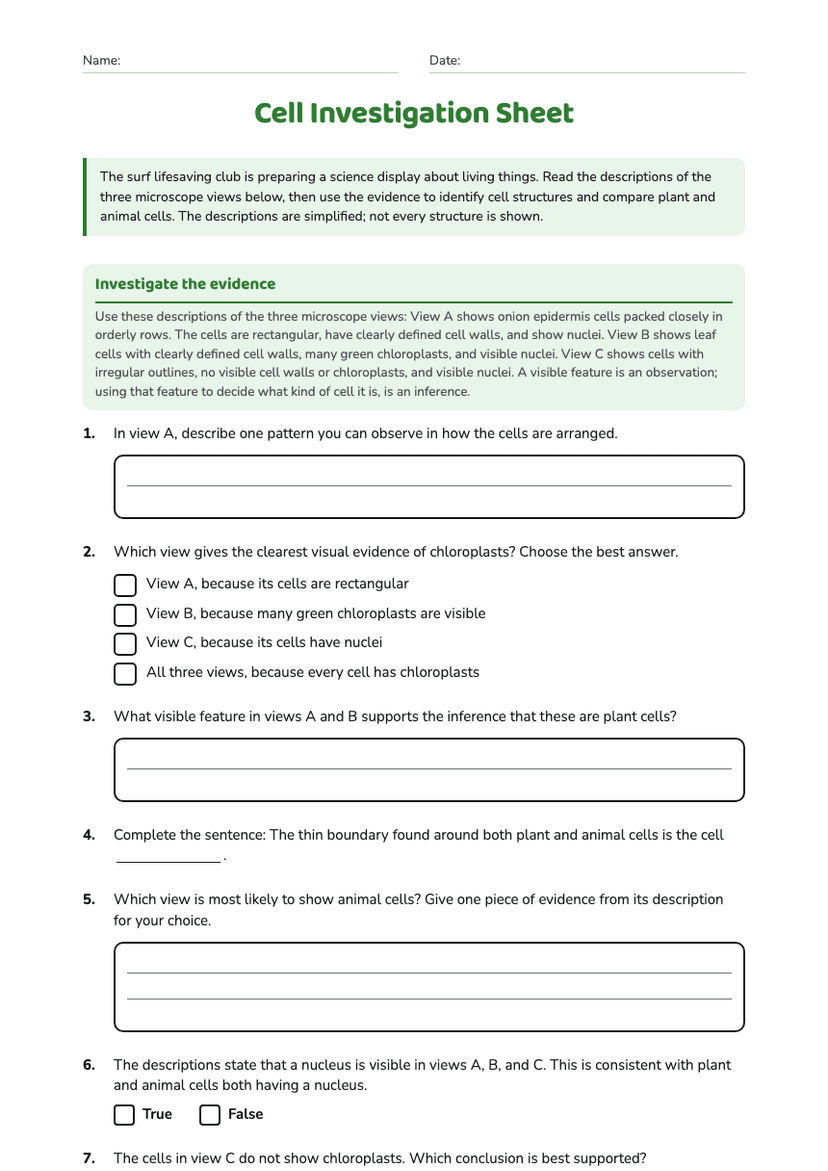
Watering group
Starting height
Height after 10 days
Clean water
4 cm
10 cm
Salt-water solution
4 cm
6 cm
Read, reason and respond
Use the field report and results table for Questions 1–6.
- Rain washes litter into a drain, then toward a stream or its banks.
- Plants pull litter out of the air using their leaves.
- Sunlight carries litter into the soil.
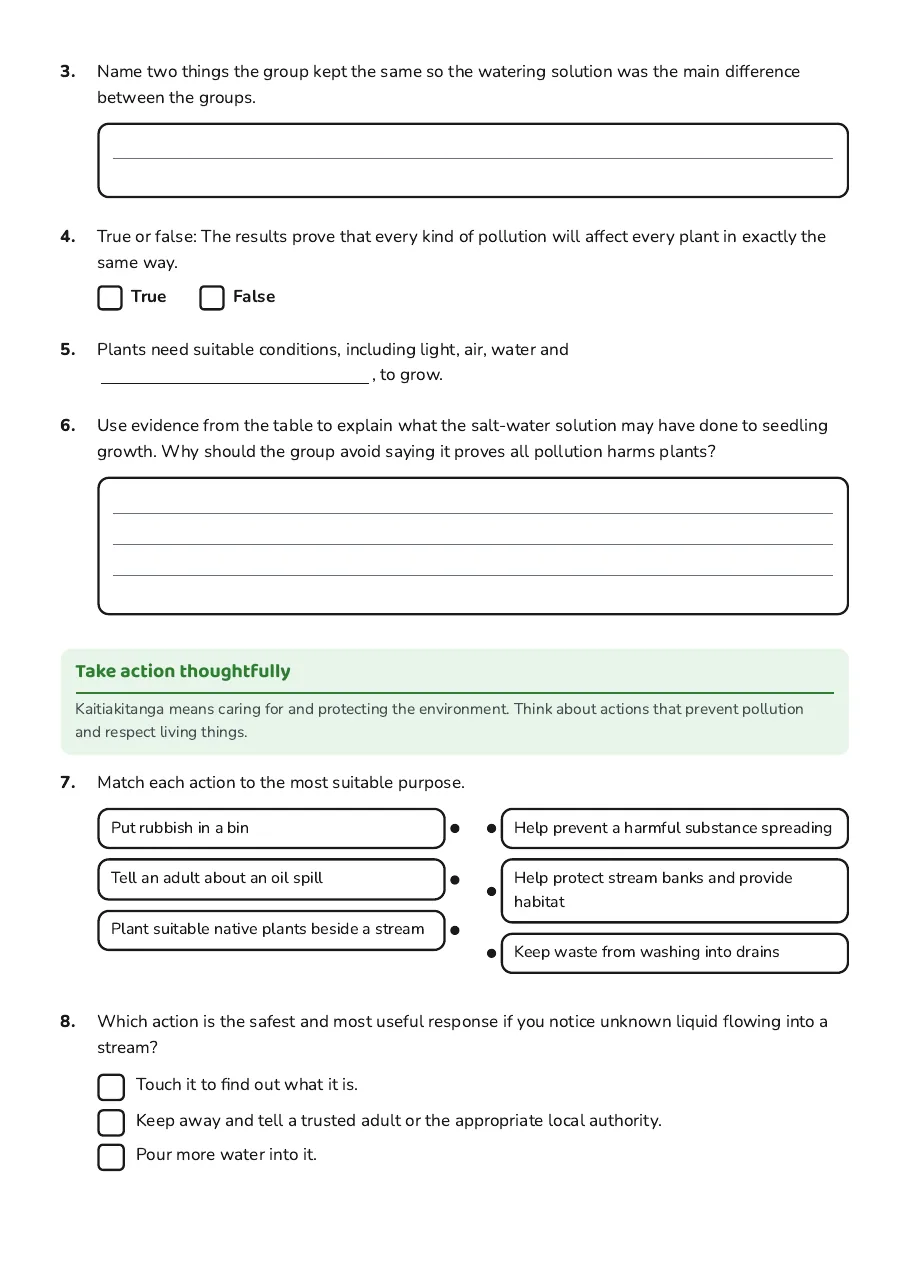
Take action thoughtfully
Kaitiakitanga means caring for and protecting the environment. Think about actions that prevent pollution and respect living things.
- Put rubbish in a bin
- Tell an adult about an oil spill
- Plant suitable native plants beside a stream
- Help prevent a harmful substance spreading
- Help protect stream banks and provide habitat
- Keep waste from washing into drains
- Touch it to find out what it is.
- Keep away and tell a trusted adult or the appropriate local authority.
- Pour more water into it.
3 printable pages
Page 1
Page 2
Page 3
About This Worksheet
Free in Kuraplan
Sign up free, grab the PDF, and customize it for your class.
Print-Ready
Formatted for standard paper. Clean layout, easy to read.
AI-Generated
Created with Kuraplan's AI, designed for real classroom use.
For Teachers & Parents
Use in classrooms, for homework, tutoring, or homeschool.
Need a custom version of this worksheet?
Kuraplan's AI generates custom worksheets in seconds — differentiated for every learner, aligned to your curriculum.
Generate Custom Worksheets — Free