Seed Germination Investigation
A free science worksheet ready for your classroom. Open in Kuraplan to grab the print-ready PDF, customize it for your students, or generate a fresh version in seconds.

Seed Germination Investigation
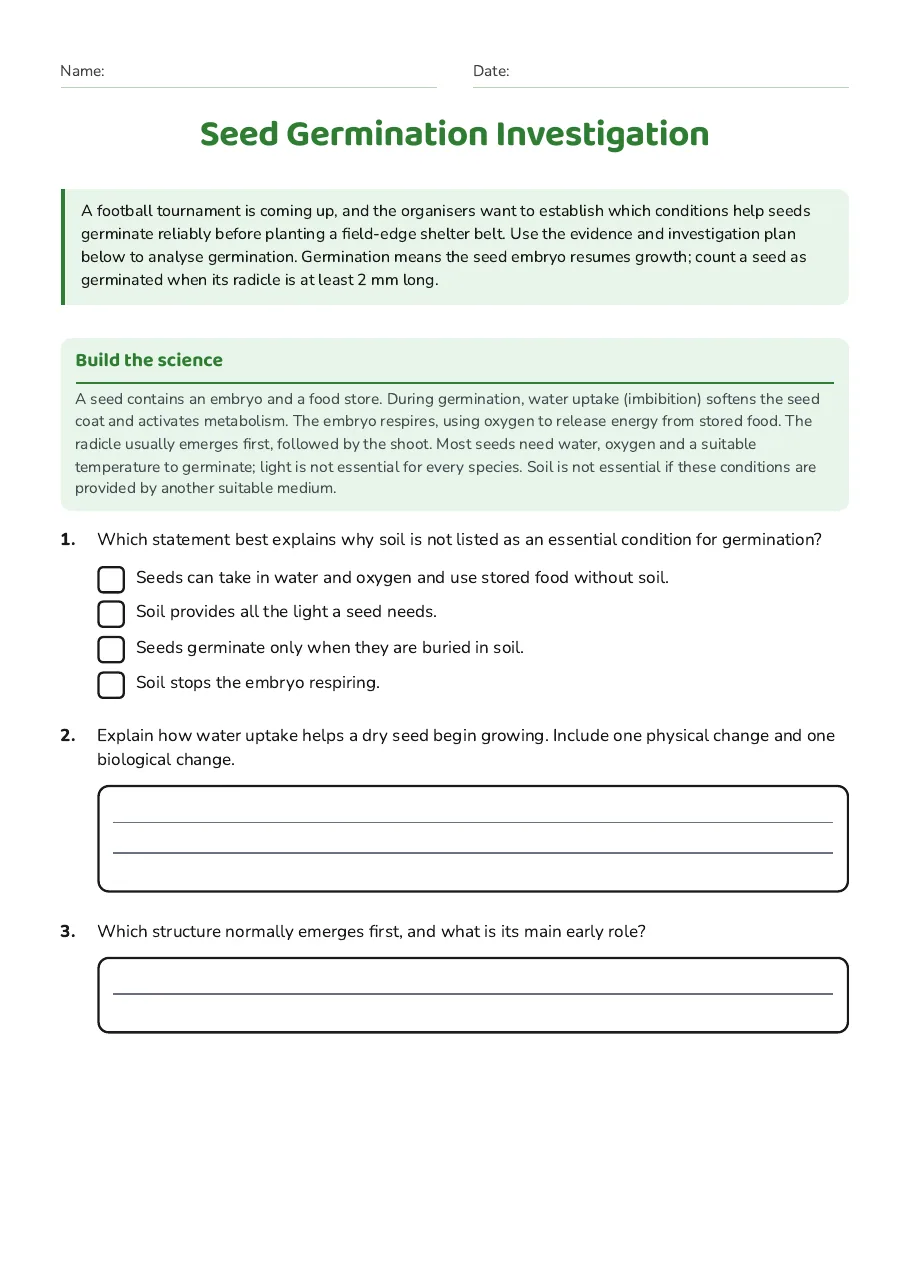
Build the science
A seed contains an embryo and a food store. During germination, water uptake (imbibition) softens the seed coat and activates metabolism. The embryo respires, using oxygen to release energy from stored food. The radicle usually emerges first, followed by the shoot. Most seeds need water, oxygen and a suitable temperature to germinate; light is not essential for every species. Soil is not essential if these conditions are provided by another suitable medium.
- Seeds can take in water and oxygen and use stored food without soil.
- Soil provides all the light a seed needs.
- Seeds germinate only when they are buried in soil.
- Soil stops the embryo respiring.
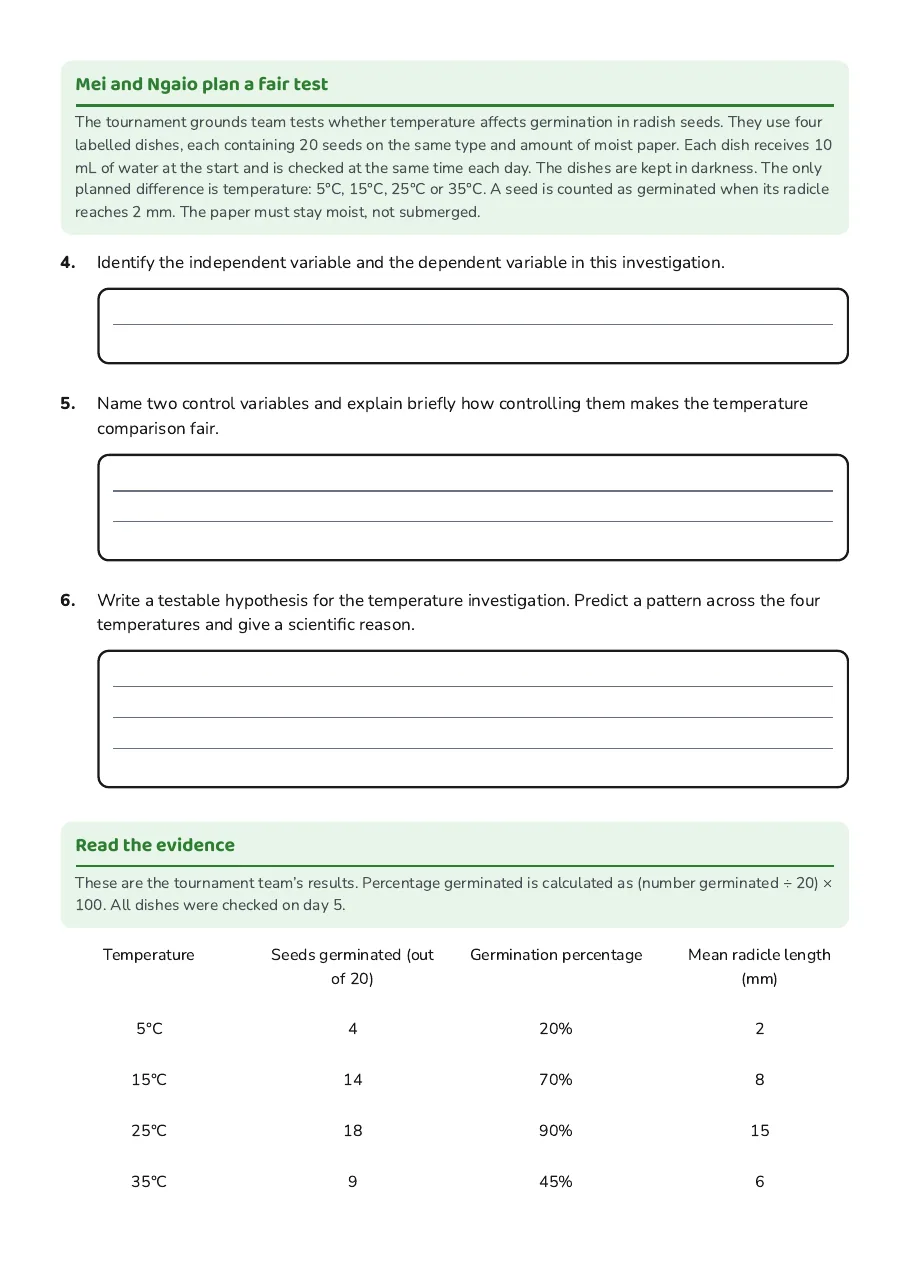
Mei and Ngaio plan a fair test
The tournament grounds team tests whether temperature affects germination in radish seeds. They use four labelled dishes, each containing 20 seeds on the same type and amount of moist paper. Each dish receives 10 mL of water at the start and is checked at the same time each day. The dishes are kept in darkness. The only planned difference is temperature: 5°C, 15°C, 25°C or 35°C. A seed is counted as germinated when its radicle reaches 2 mm. The paper must stay moist, not submerged.
Read the evidence
These are the tournament team’s results. Percentage germinated is calculated as (number germinated ÷ 20) × 100. All dishes were checked on day 5.
Temperature
Seeds germinated (out of 20)
Germination percentage
Mean radicle length (mm)
5°C
4
20%
2
15°C
14
70%
8
25°C
18
90%
15
35°C
9
45%
6
3 printable pages
Page 1
Page 2
Page 3
About This Worksheet
Free in Kuraplan
Sign up free, grab the PDF, and customize it for your class.
Print-Ready
Formatted for standard paper. Clean layout, easy to read.
AI-Generated
Created with Kuraplan's AI, designed for real classroom use.
For Teachers & Parents
Use in classrooms, for homework, tutoring, or homeschool.
Need a custom version of this worksheet?
Kuraplan's AI generates custom worksheets in seconds — differentiated for every learner, aligned to your curriculum.
Generate Custom Worksheets — FreeMore Science Worksheets
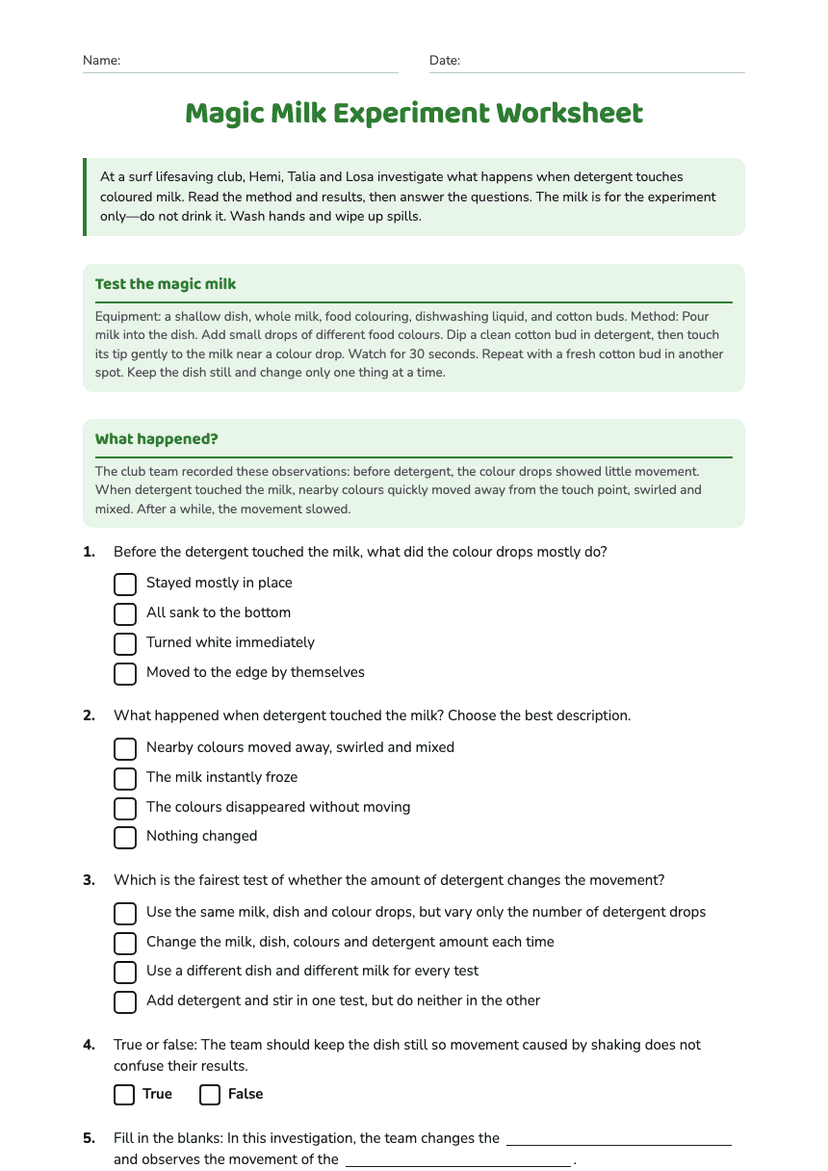
Magic Milk Experiment Worksheet
Free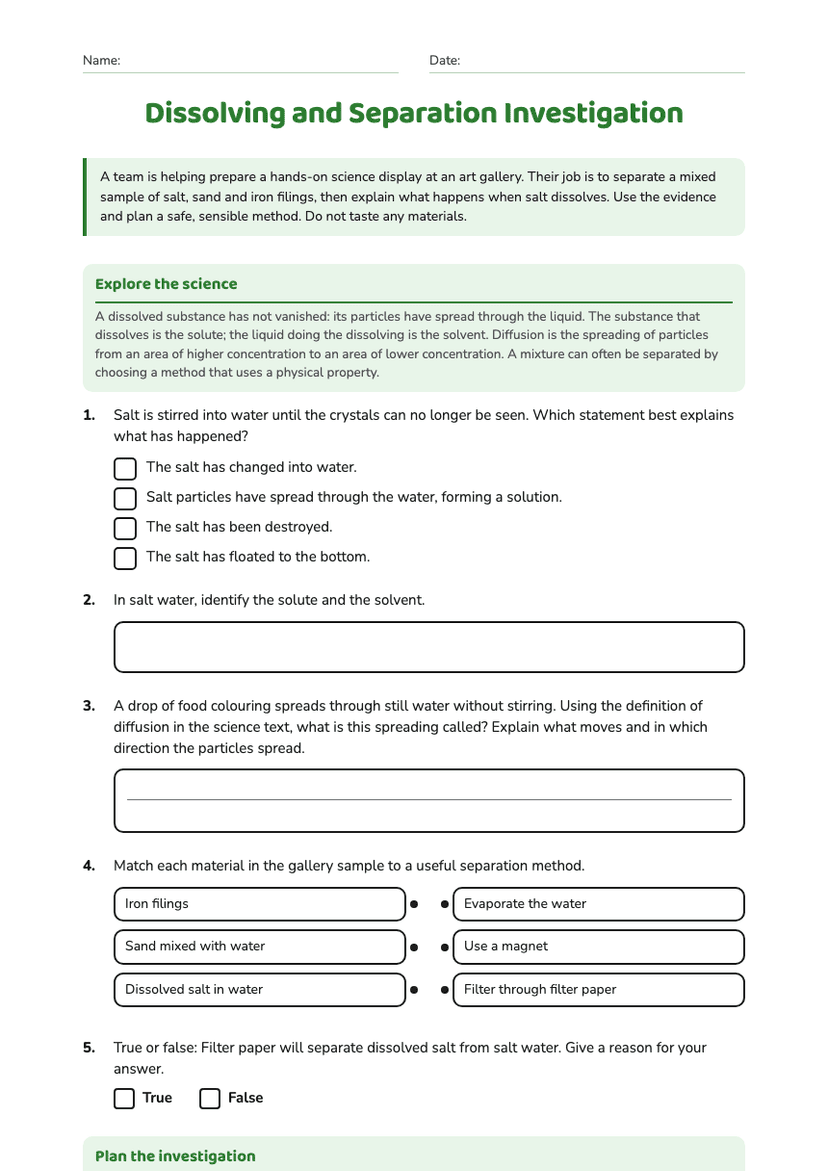
Dissolving and Separation Investigation
Free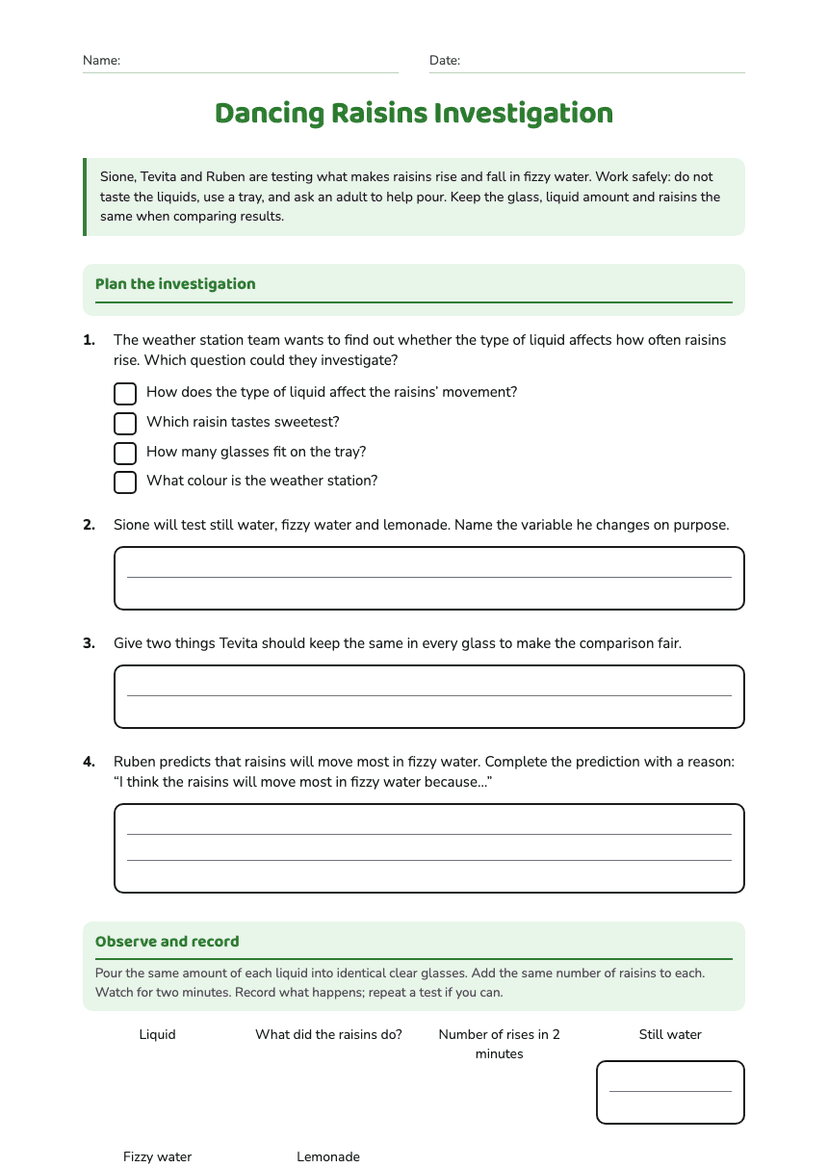
Dancing Raisins Investigation
Free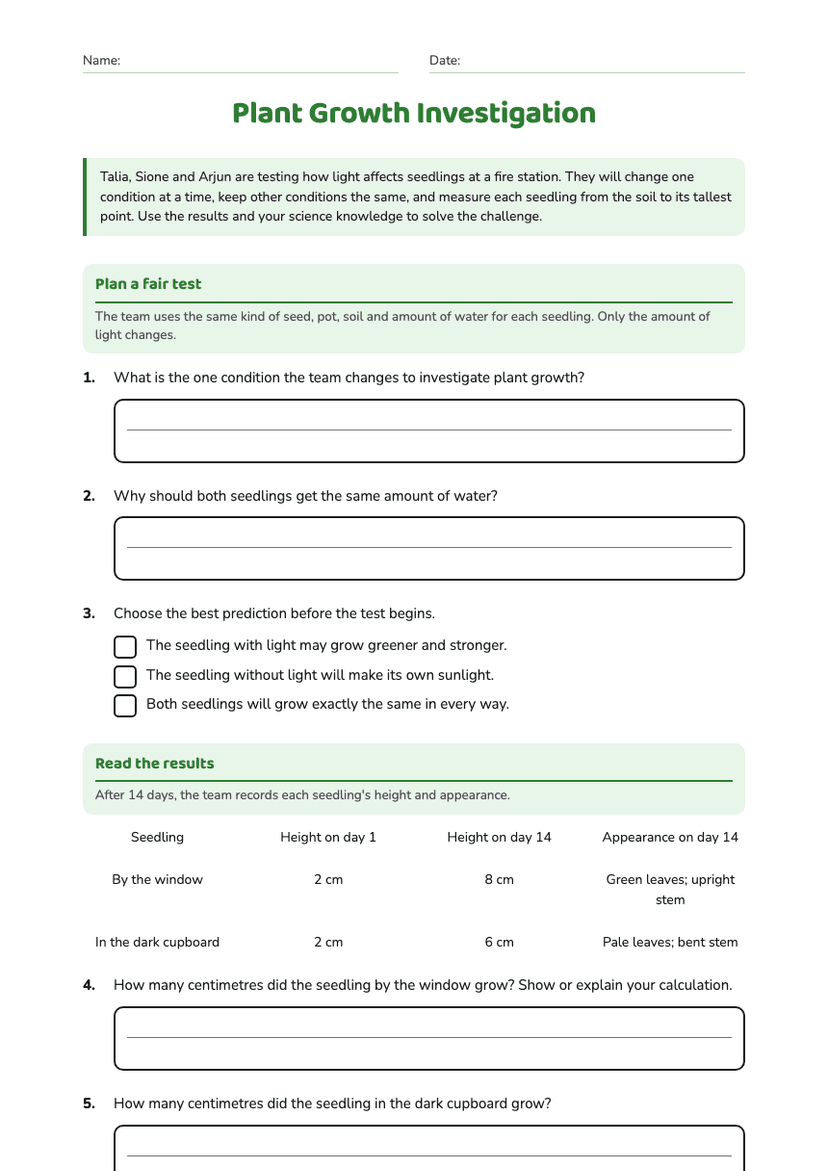
Plant Growth Investigation
Free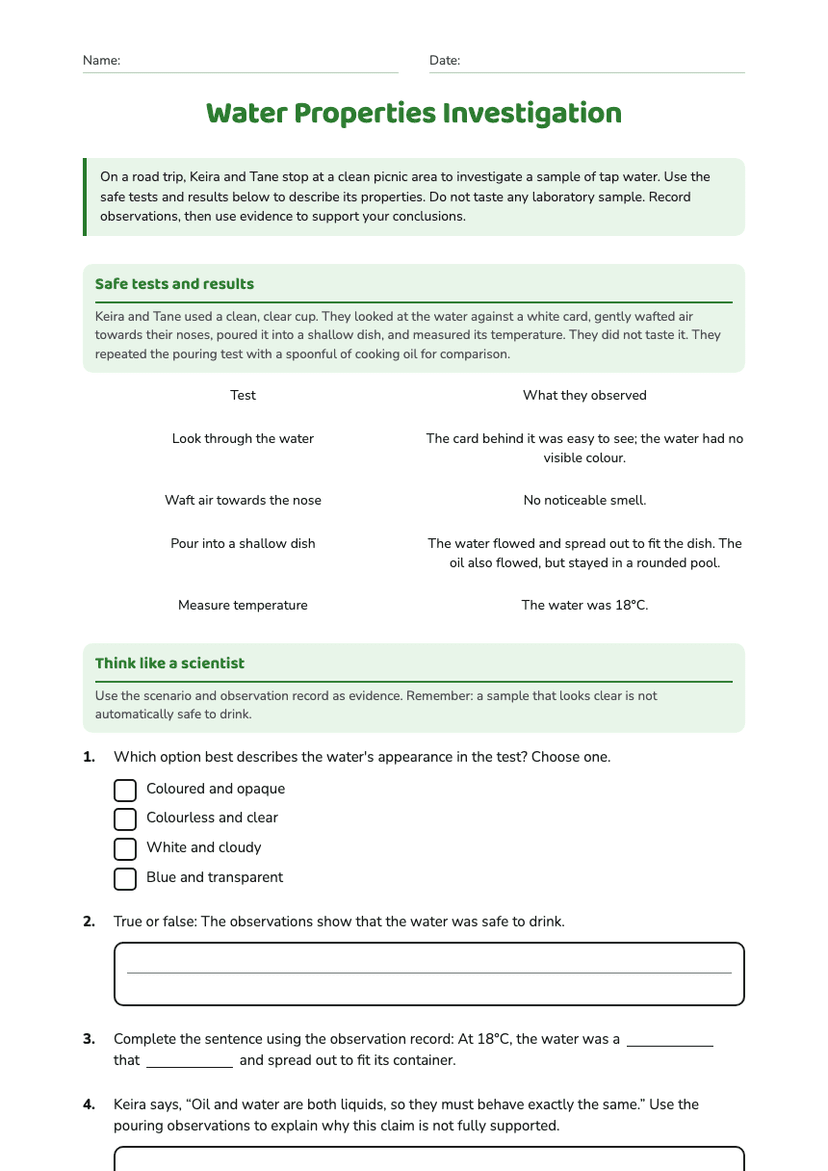
Water Properties Investigation
Free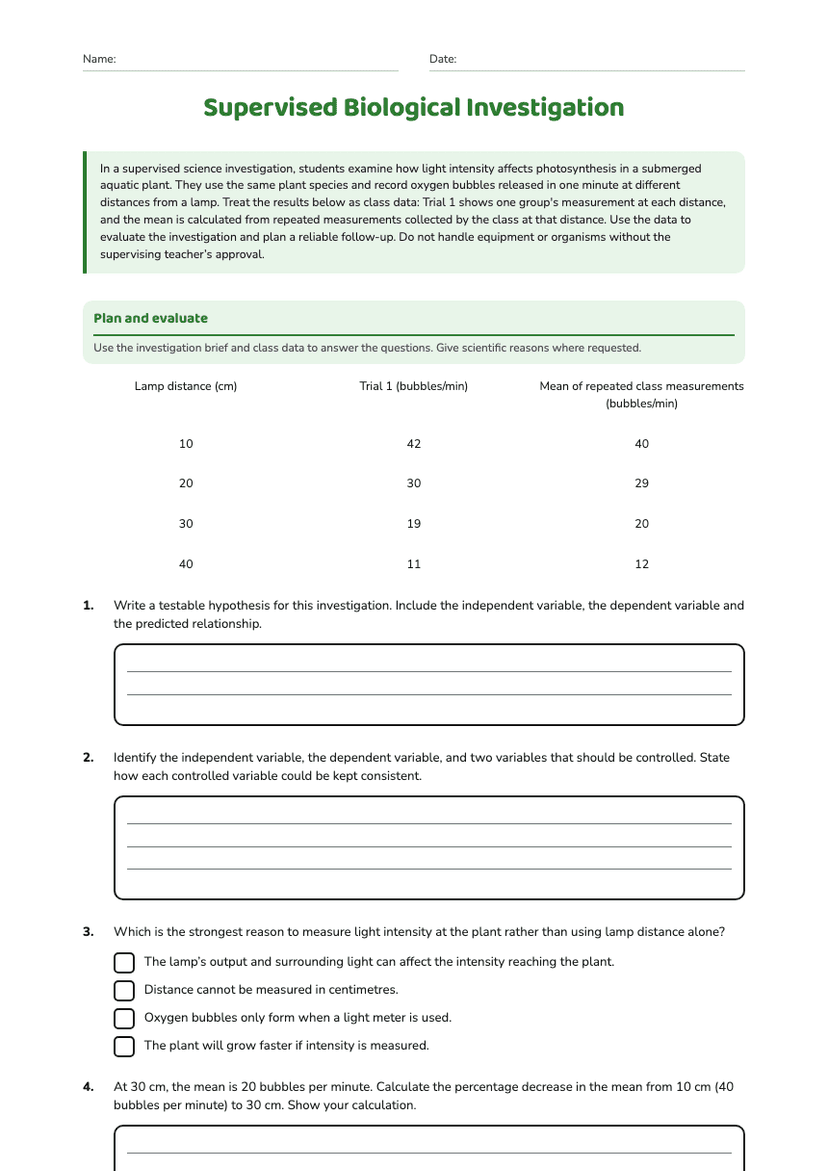
Supervised Biological Investigation
Free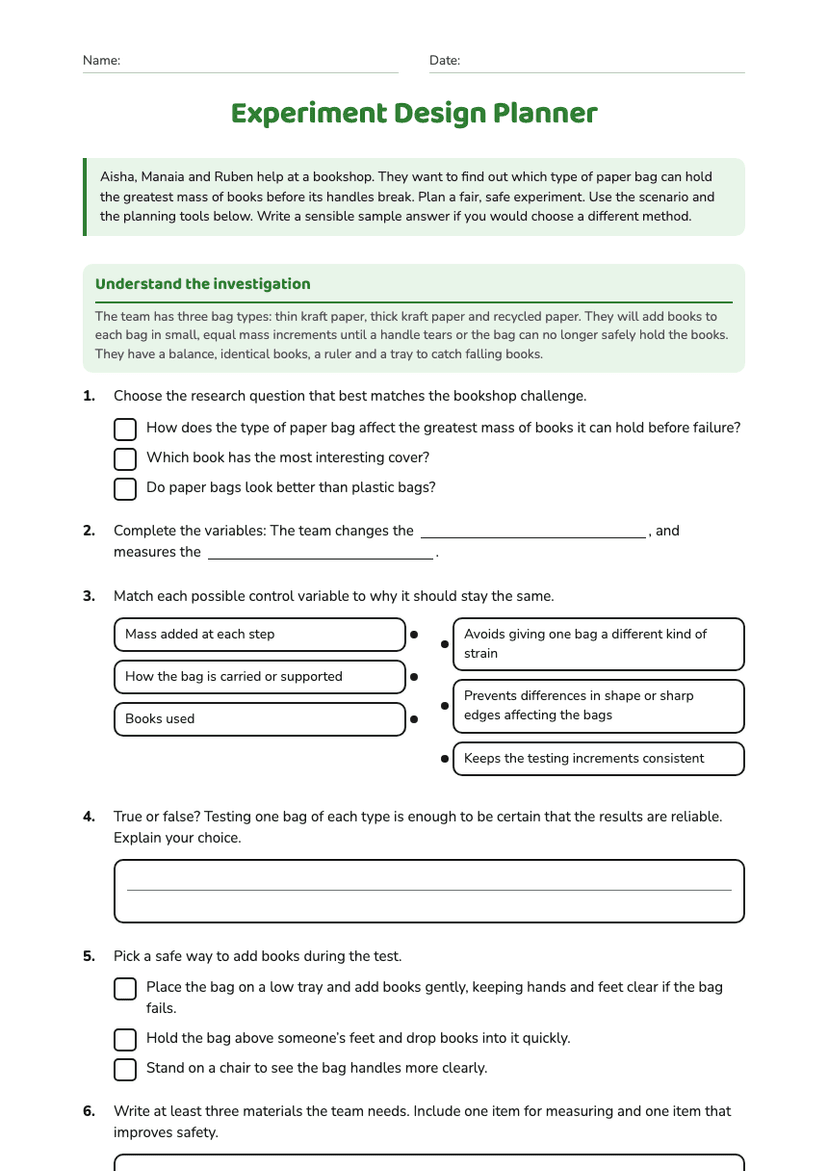
Experiment Design Planner
Free