Tectonic Hazards Reading Comprehension
A free science worksheet ready for your classroom. Open in Kuraplan to grab the print-ready PDF, customize it for your students, or generate a fresh version in seconds.
Tectonic Hazards Reading Comprehension
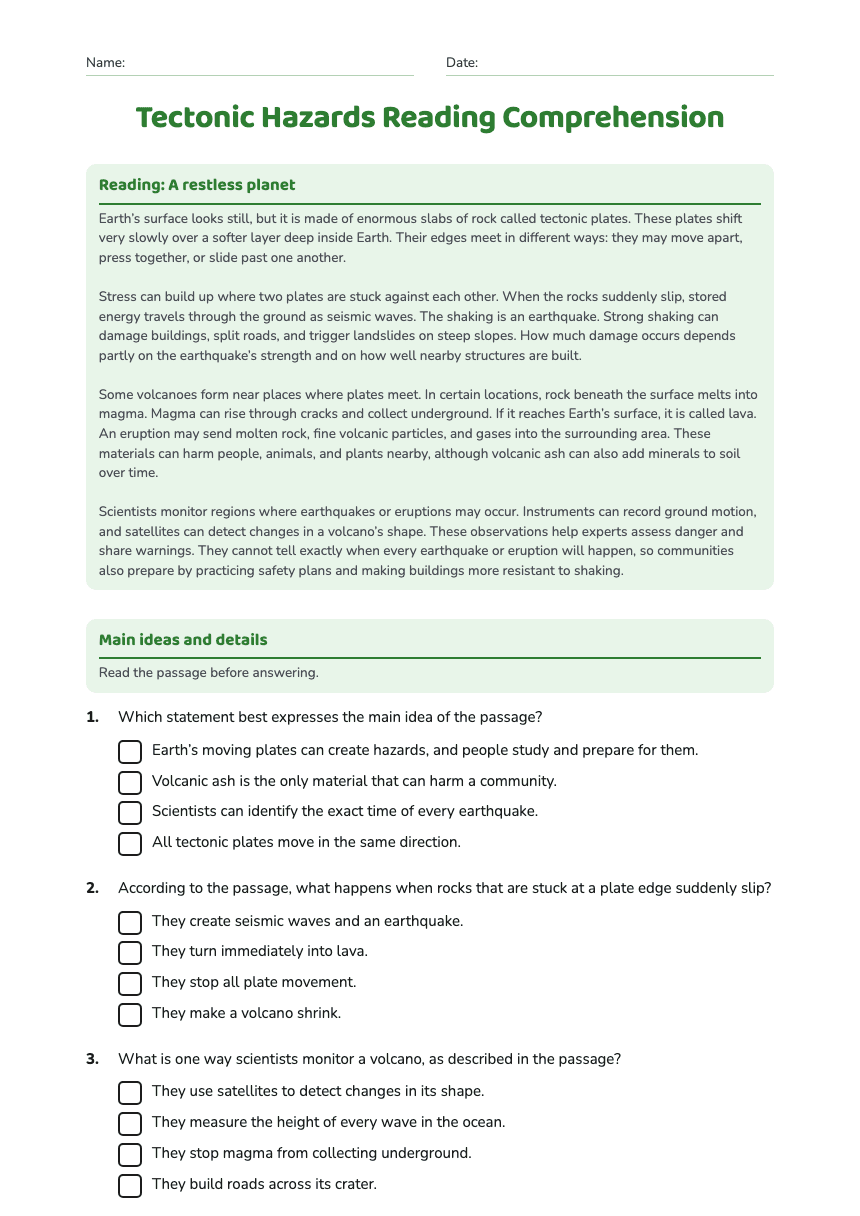
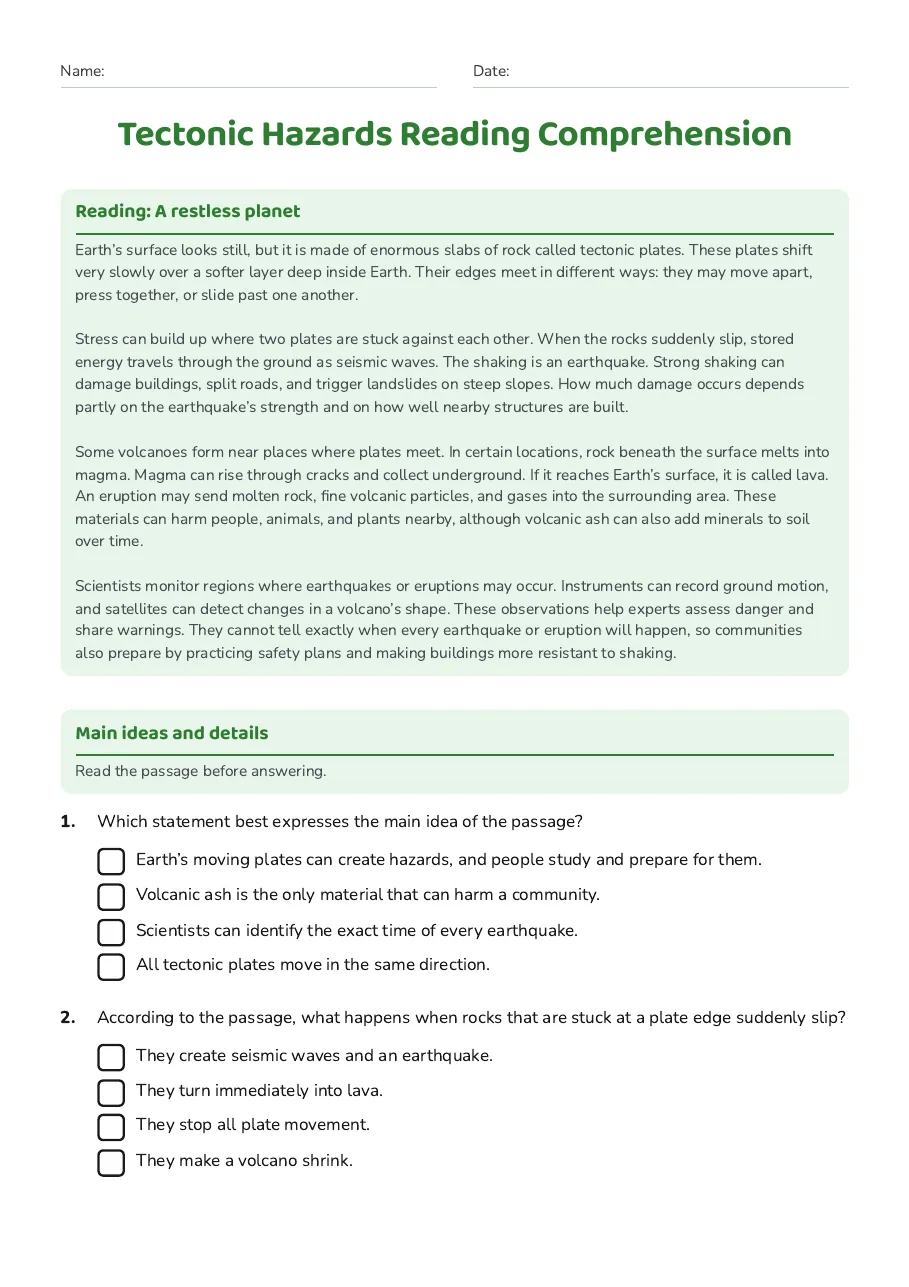
Reading: A restless planet
Earth’s surface looks still, but it is made of enormous slabs of rock called tectonic plates. These plates shift very slowly over a softer layer deep inside Earth. Their edges meet in different ways: they may move apart, press together, or slide past one another. Stress can build up where two plates are stuck against each other. When the rocks suddenly slip, stored energy travels through the ground as seismic waves. The shaking is an earthquake. Strong shaking can damage buildings, split roads, and trigger landslides on steep slopes. How much damage occurs depends partly on the earthquake’s strength and on how well nearby structures are built. Some volcanoes form near places where plates meet. In certain locations, rock beneath the surface melts into magma. Magma can rise through cracks and collect underground. If it reaches Earth’s surface, it is called lava. An eruption may send molten rock, fine volcanic particles, and gases into the surrounding area. These materials can harm people, animals, and plants nearby, although volcanic ash can also add minerals to soil over time. Scientists monitor regions where earthquakes or eruptions may occur. Instruments can record ground motion, and satellites can detect changes in a volcano’s shape. These observations help experts assess danger and share warnings. They cannot tell exactly when every earthquake or eruption will happen, so communities also prepare by practicing safety plans and making buildings more resistant to shaking.
Main ideas and details
Read the passage before answering.
- Earth’s moving plates can create hazards, and people study and prepare for them.
- Volcanic ash is the only material that can harm a community.
- Scientists can identify the exact time of every earthquake.
- All tectonic plates move in the same direction.
- They create seismic waves and an earthquake.
- They turn immediately into lava.
- They stop all plate movement.
- They make a volcano shrink.
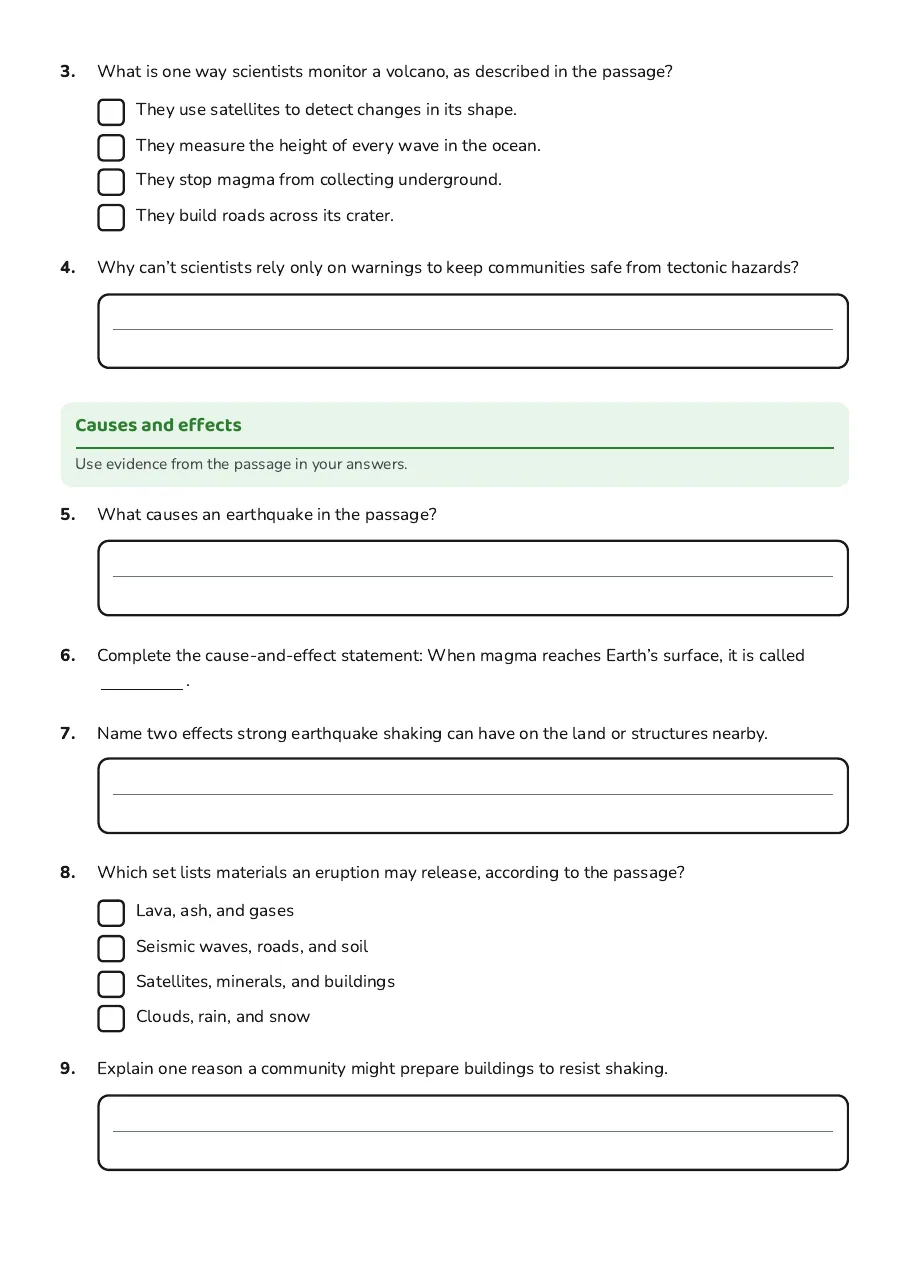
- They use satellites to detect changes in its shape.
- They measure the height of every wave in the ocean.
- They stop magma from collecting underground.
- They build roads across its crater.
Causes and effects
Use evidence from the passage in your answers.
- Lava, ash, and gases
- Seismic waves, roads, and soil
- Satellites, minerals, and buildings
- Clouds, rain, and snow
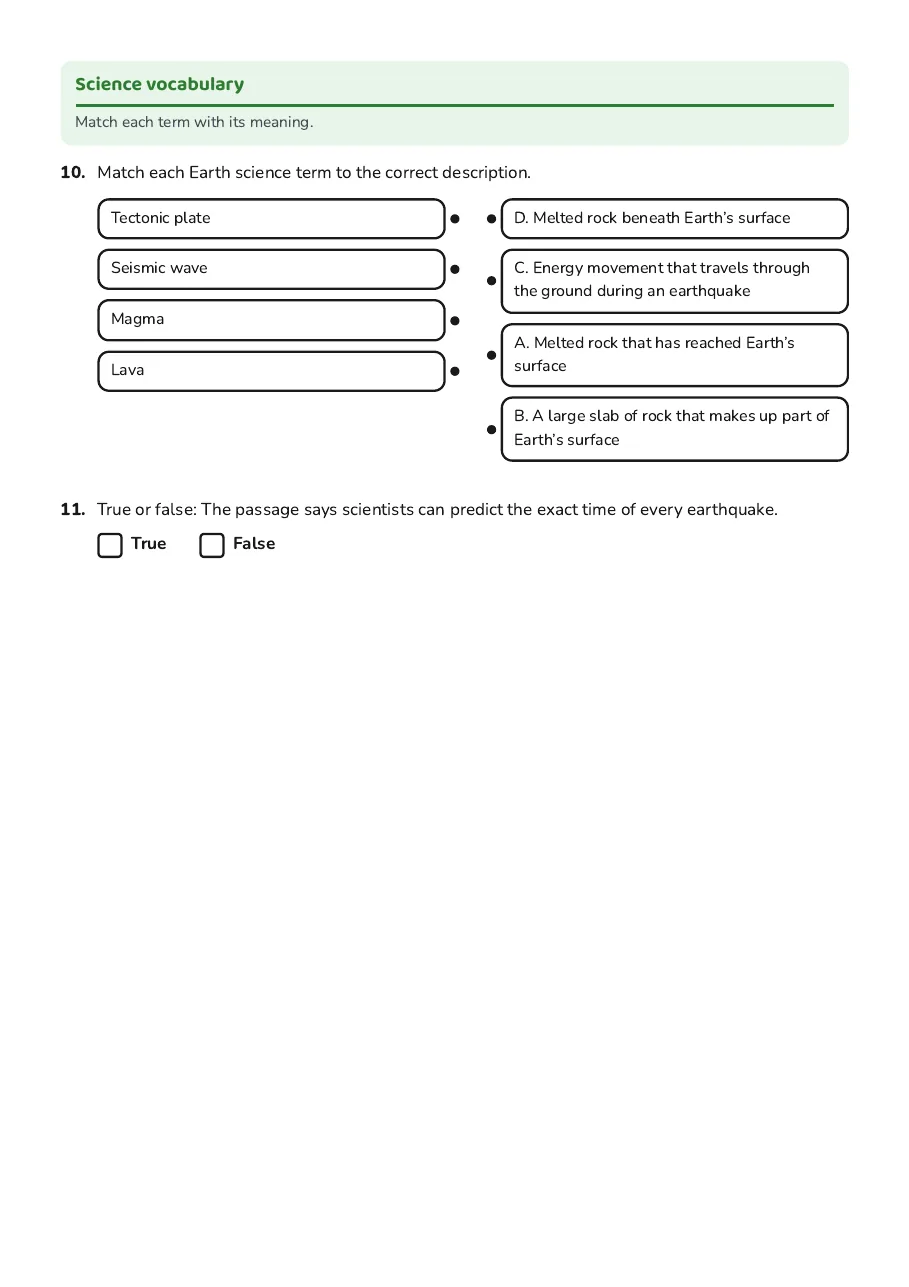
Science vocabulary
Match each term with its meaning.
- Tectonic plate
- Seismic wave
- Magma
- Lava
- D. Melted rock beneath Earth’s surface
- C. Energy movement that travels through the ground during an earthquake
- A. Melted rock that has reached Earth’s surface
- B. A large slab of rock that makes up part of Earth’s surface
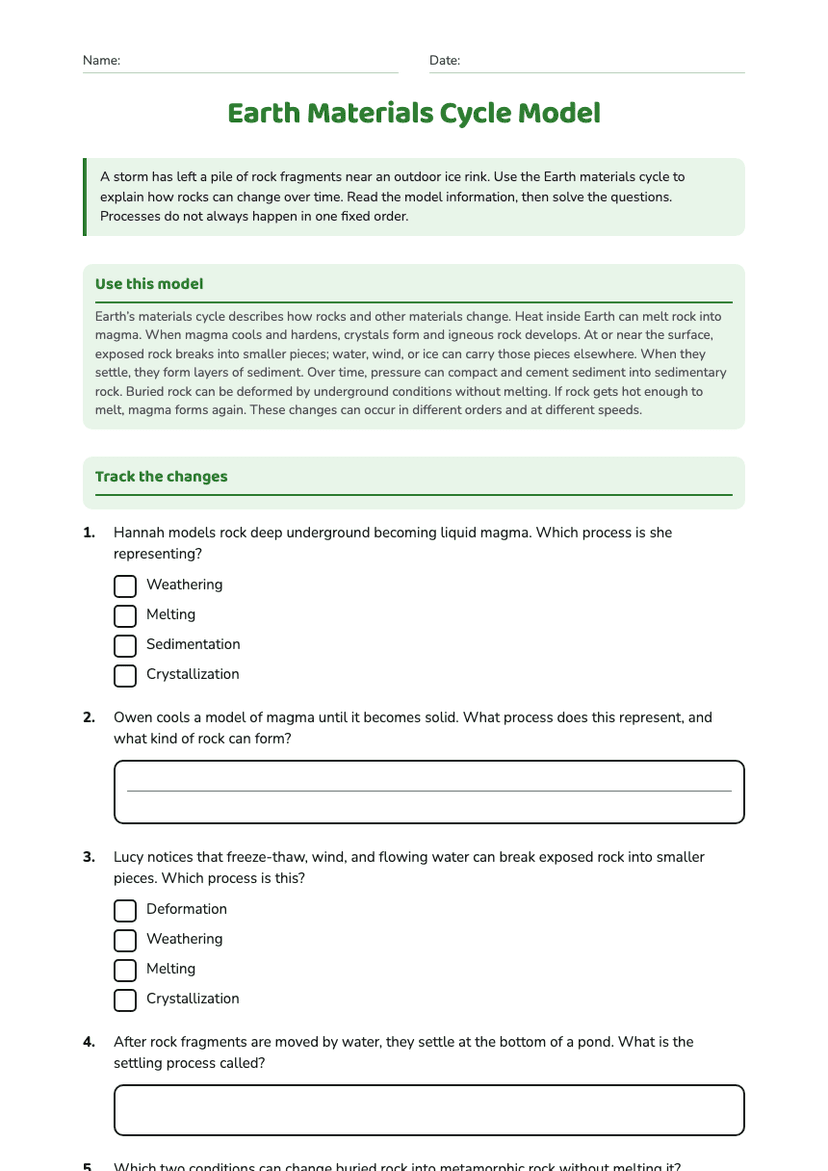
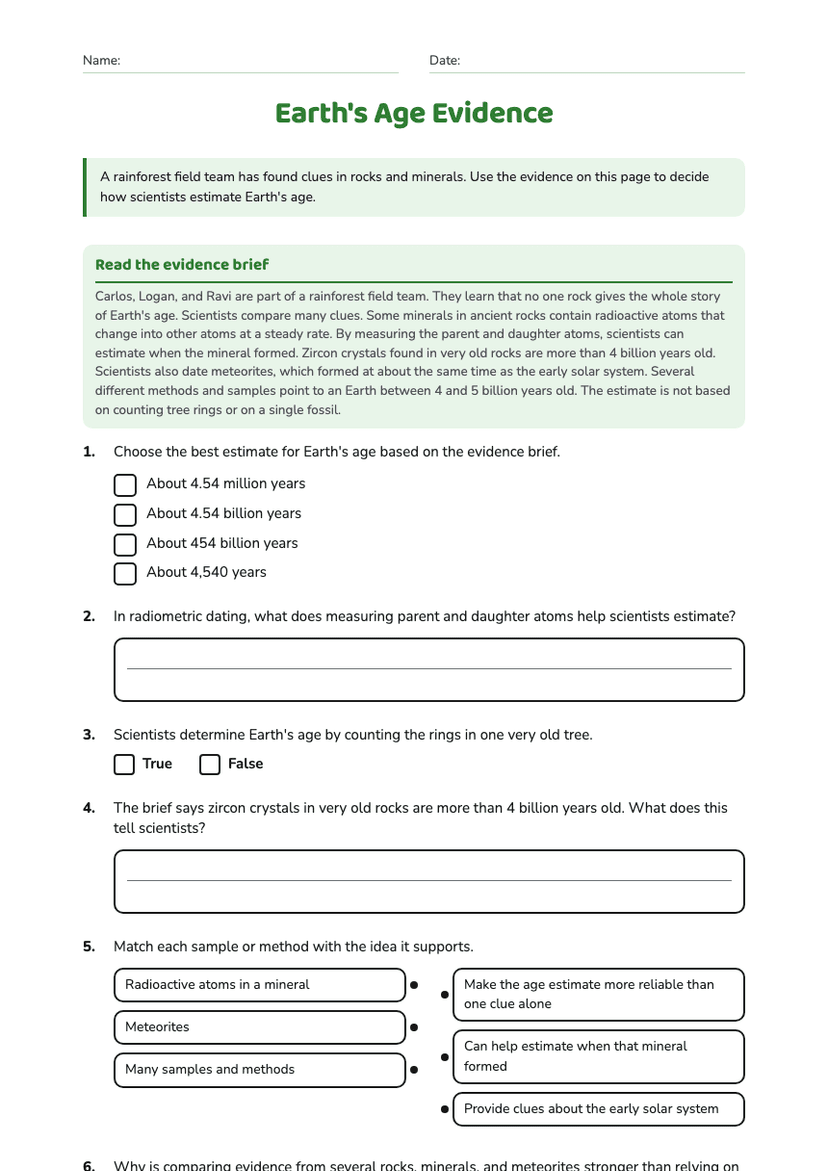
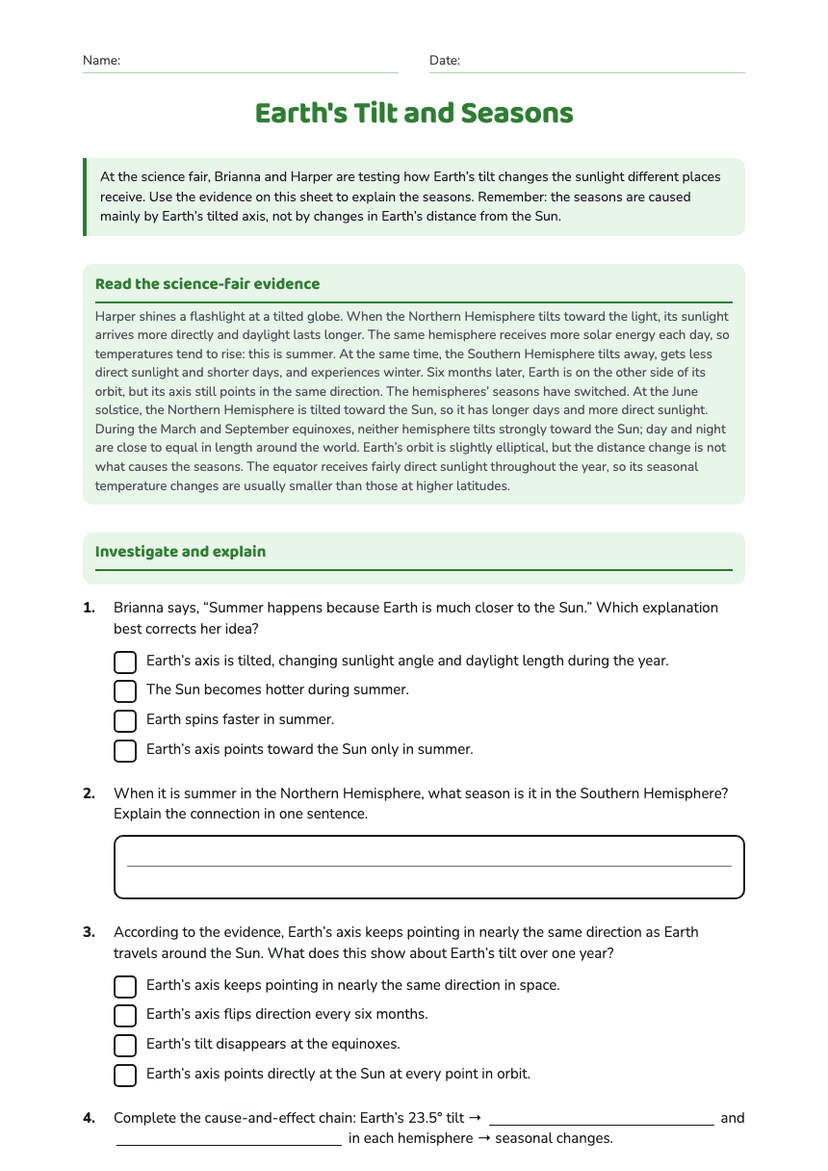
3 printable pages
Page 1
Page 2
Page 3
About This Worksheet
Free in Kuraplan
Sign up free, grab the PDF, and customize it for your class.
Print-Ready
Formatted for standard paper. Clean layout, easy to read.
AI-Generated
Created with Kuraplan's AI, designed for real classroom use.
For Teachers & Parents
Use in classrooms, for homework, tutoring, or homeschool.
Need a custom version of this worksheet?
Kuraplan's AI generates custom worksheets in seconds — differentiated for every learner, aligned to your curriculum.
Generate Custom Worksheets — Free