EnglishFreePrintable
Treaty of Waitangi Listening
A free english worksheet ready for your classroom. Open in Kuraplan to grab the print-ready PDF, customize it for your students, or generate a fresh version in seconds.
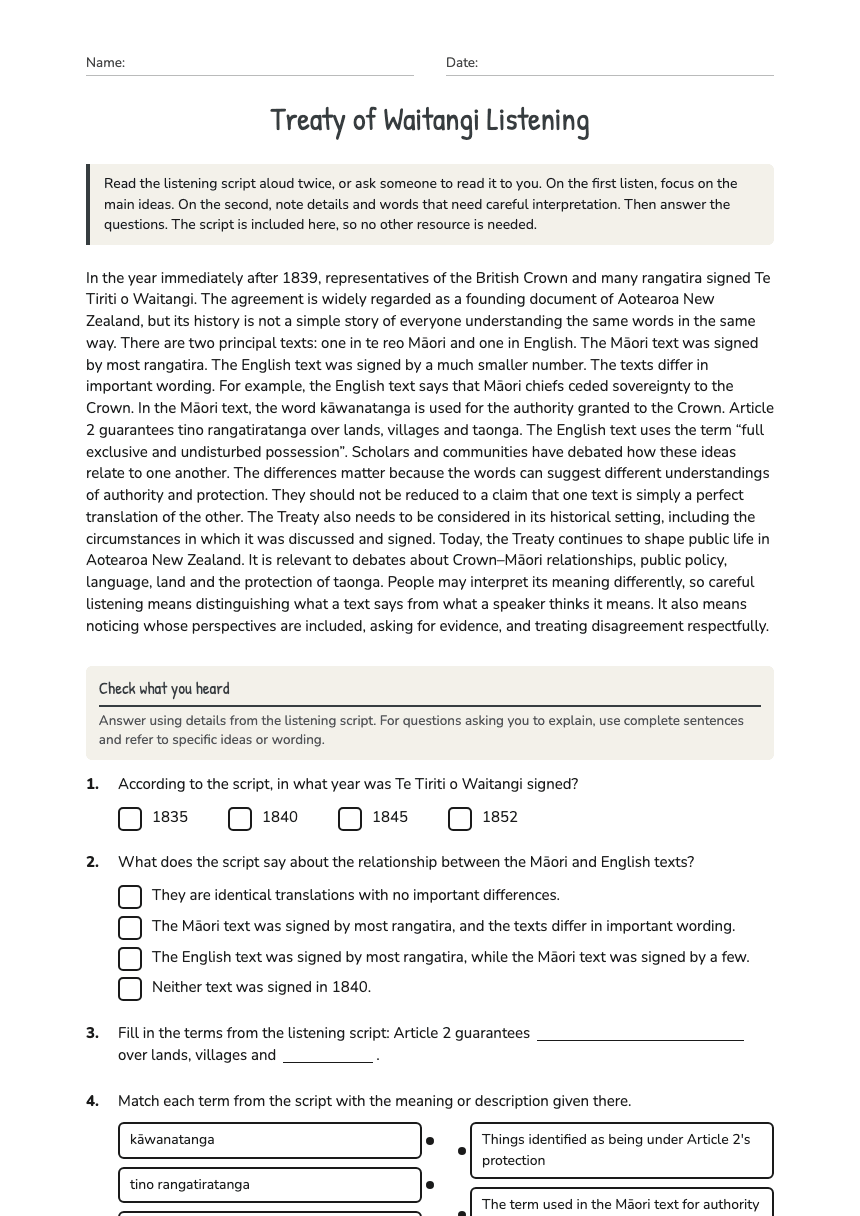
Name:Date:
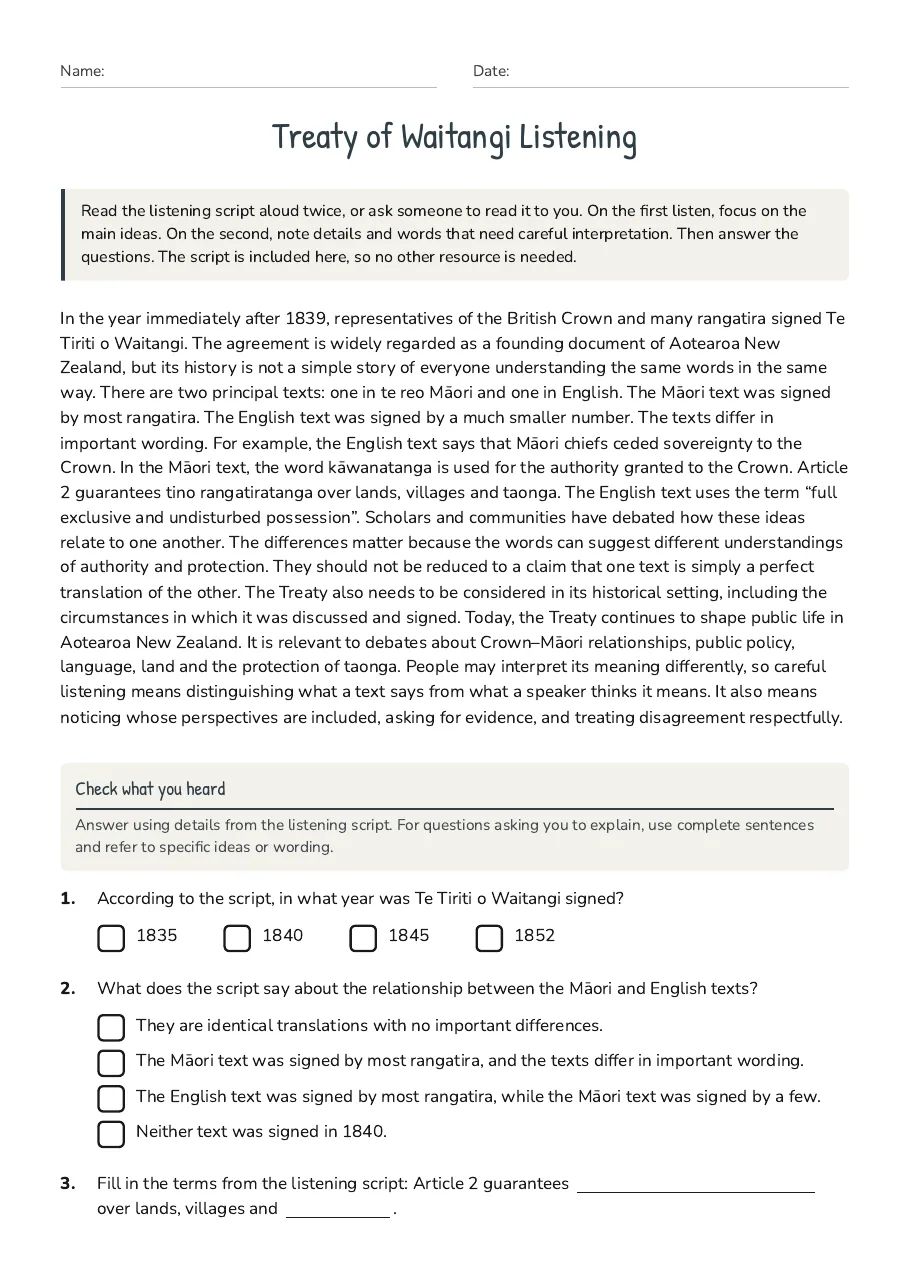
Treaty of Waitangi Listening
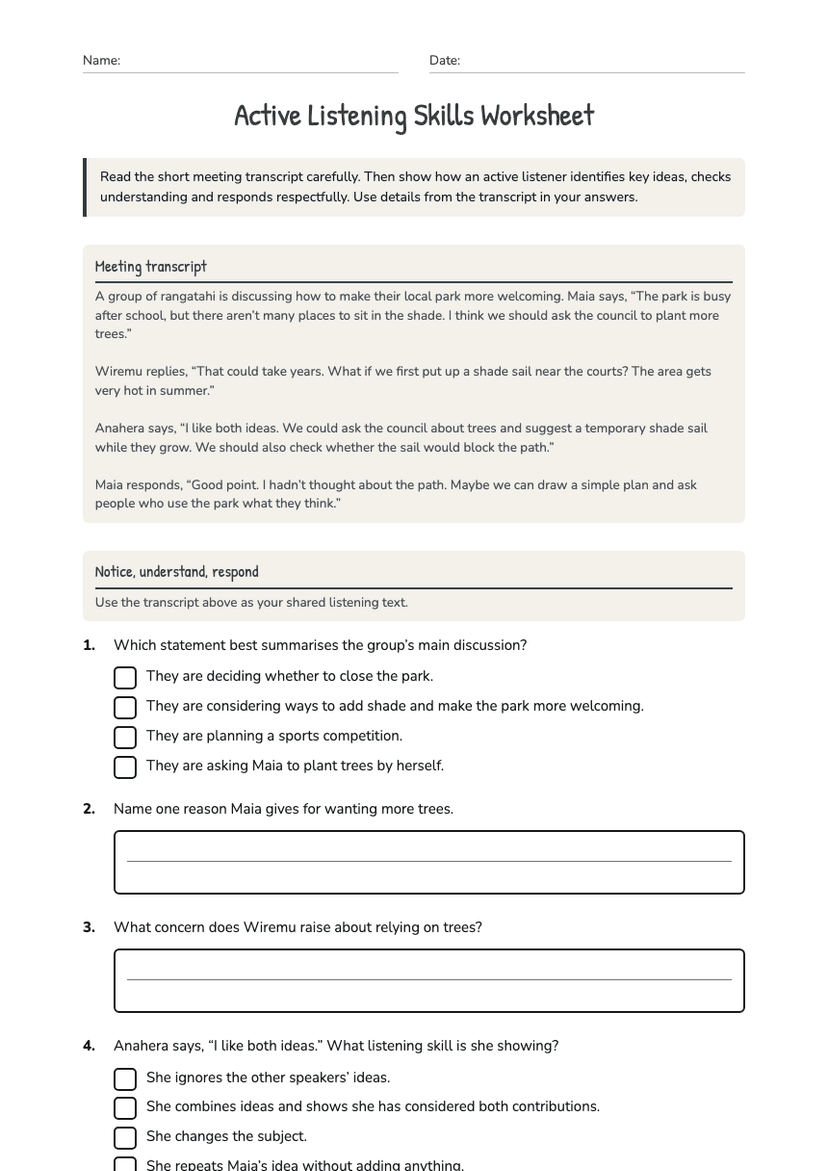
Read the listening script aloud twice, or ask someone to read it to you. On the first listen, focus on the main ideas. On the second, note details and words that need careful interpretation. Then answer the questions. The script is included here, so no other resource is needed.
In the year immediately after 1839, representatives of the British Crown and many rangatira signed Te Tiriti o Waitangi. The agreement is widely regarded as a founding document of Aotearoa New Zealand, but its history is not a simple story of everyone understanding the same words in the same way.
There are two principal texts: one in te reo Māori and one in English. The Māori text was signed by most rangatira. The English text was signed by a much smaller number. The texts differ in important wording. For example, the English text says that Māori chiefs ceded sovereignty to the Crown. In the Māori text, the word kāwanatanga is used for the authority granted to the Crown. Article 2 guarantees tino rangatiratanga over lands, villages and taonga. The English text uses the term “full exclusive and undisturbed possession”. Scholars and communities have debated how these ideas relate to one another.
The differences matter because the words can suggest different understandings of authority and protection. They should not be reduced to a claim that one text is simply a perfect translation of the other. The Treaty also needs to be considered in its historical setting, including the circumstances in which it was discussed and signed.
Today, the Treaty continues to shape public life in Aotearoa New Zealand. It is relevant to debates about Crown–Māori relationships, public policy, language, land and the protection of taonga. People may interpret its meaning differently, so careful listening means distinguishing what a text says from what a speaker thinks it means. It also means noticing whose perspectives are included, asking for evidence, and treating disagreement respectfully.
Check what you heard
Answer using details from the listening script. For questions asking you to explain, use complete sentences and refer to specific ideas or wording.
1.According to the script, in what year was Te Tiriti o Waitangi signed?
- 1835
- 1840
- 1845
- 1852
2.What does the script say about the relationship between the Māori and English texts?
- They are identical translations with no important differences.
- The Māori text was signed by most rangatira, and the texts differ in important wording.
- The English text was signed by most rangatira, while the Māori text was signed by a few.
- Neither text was signed in 1840.
3.Fill in the terms from the listening script: Article 2 guarantees over lands, villages and .
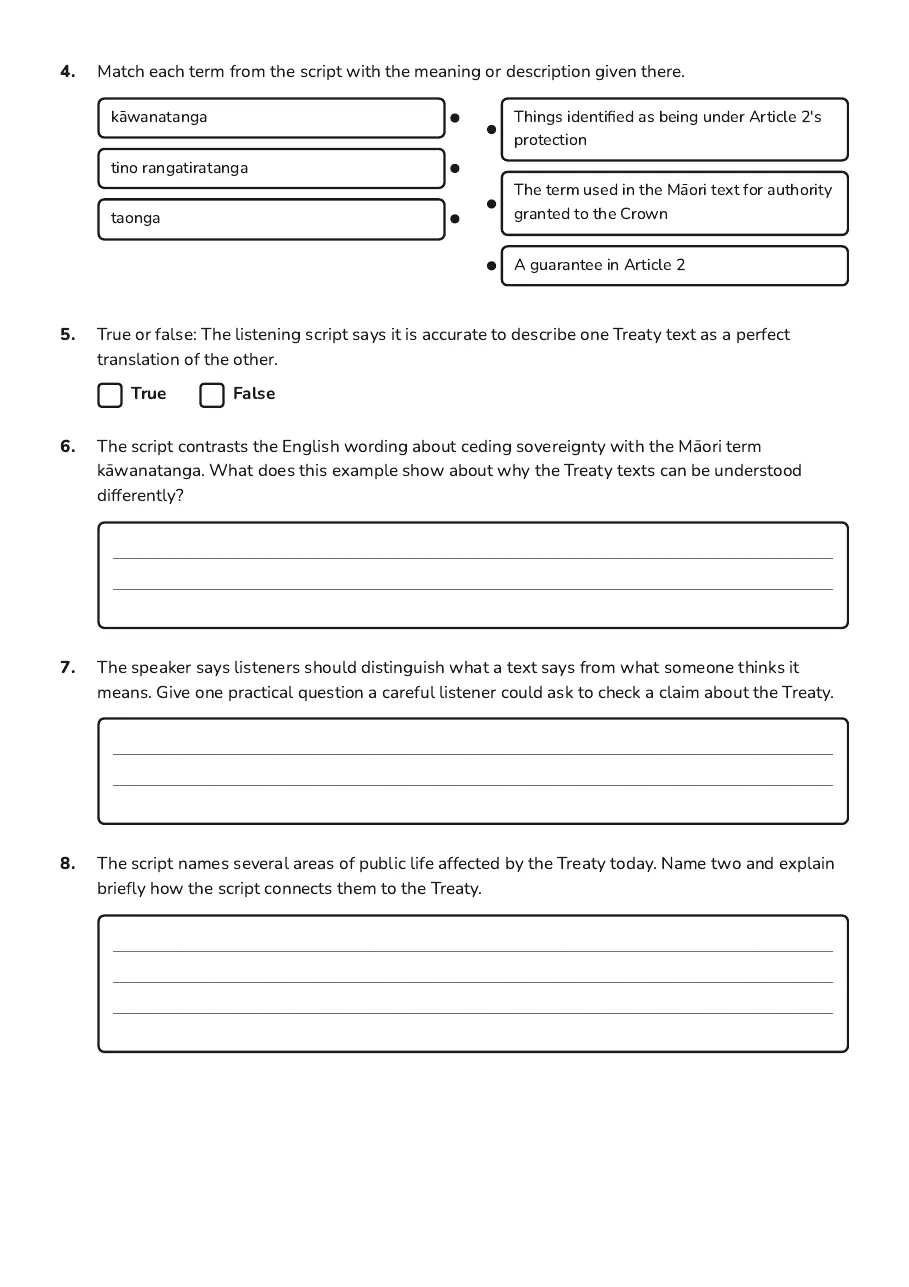
4.Match each term from the script with the meaning or description given there.
- kāwanatanga
- tino rangatiratanga
- taonga
- Things identified as being under Article 2's protection
- The term used in the Māori text for authority granted to the Crown
- A guarantee in Article 2
5.True or false: The listening script says it is accurate to describe one Treaty text as a perfect translation of the other.
TrueFalse
6.The script contrasts the English wording about ceding sovereignty with the Māori term kāwanatanga. What does this example show about why the Treaty texts can be understood differently?
7.The speaker says listeners should distinguish what a text says from what someone thinks it means. Give one practical question a careful listener could ask to check a claim about the Treaty.
8.The script names several areas of public life affected by the Treaty today. Name two and explain briefly how the script connects them to the Treaty.
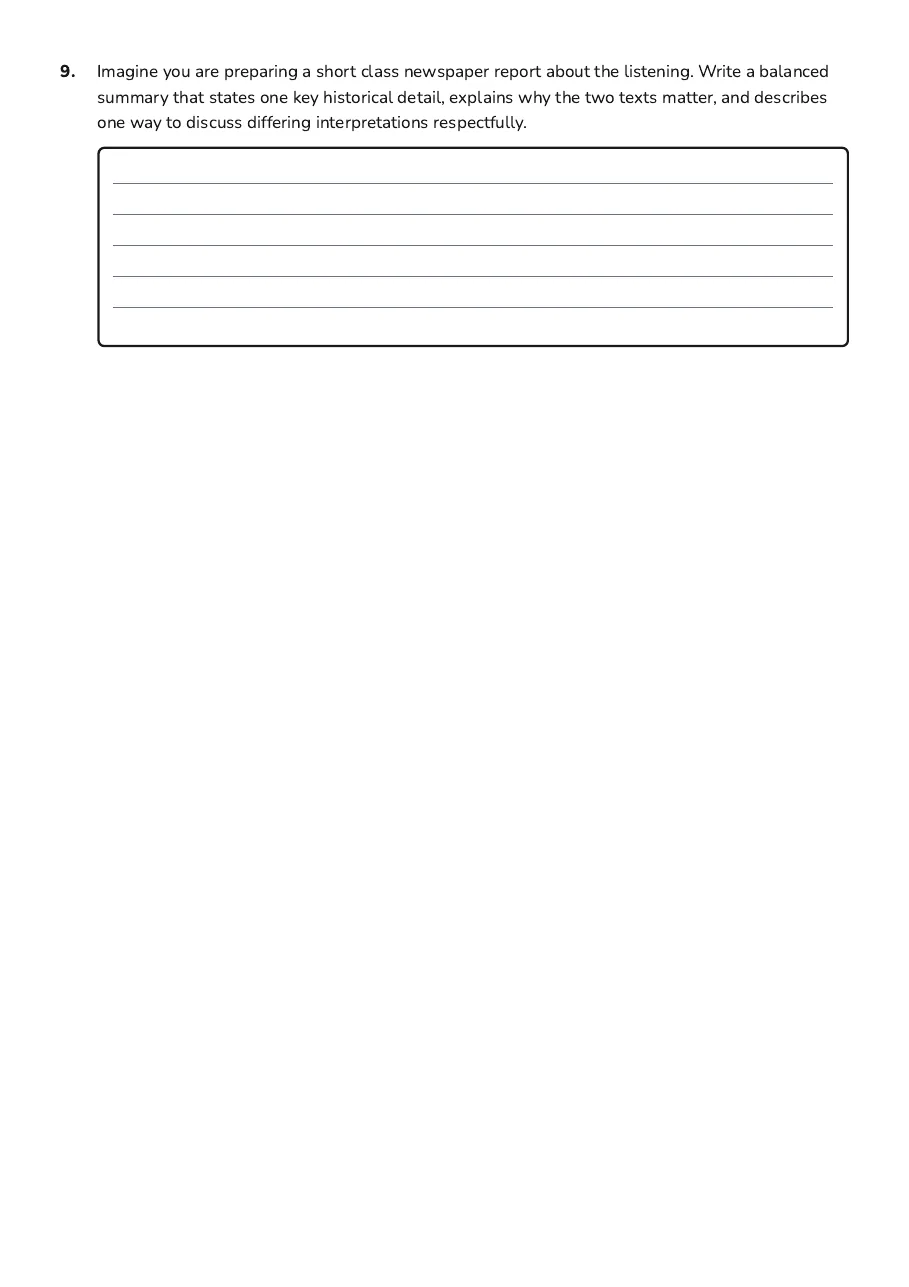
9.Imagine you are preparing a short class newspaper report about the listening. Write a balanced summary that states one key historical detail, explains why the two texts matter, and describes one way to discuss differing interpretations respectfully.
3 printable pages
Page 1
Page 2
Page 3
About This Worksheet
Free in Kuraplan
Sign up free, grab the PDF, and customize it for your class.
Print-Ready
Formatted for standard paper. Clean layout, easy to read.
AI-Generated
Created with Kuraplan's AI, designed for real classroom use.
For Teachers & Parents
Use in classrooms, for homework, tutoring, or homeschool.
Need a custom version of this worksheet?
Kuraplan's AI generates custom worksheets in seconds — differentiated for every learner, aligned to your curriculum.
Generate Custom Worksheets — Free No credit card Curriculum-aligned Under 60 seconds