Yeast Respiration Lab
A free science worksheet ready for your classroom. Open in Kuraplan to grab the print-ready PDF, customize it for your students, or generate a fresh version in seconds.
Yeast Respiration Lab
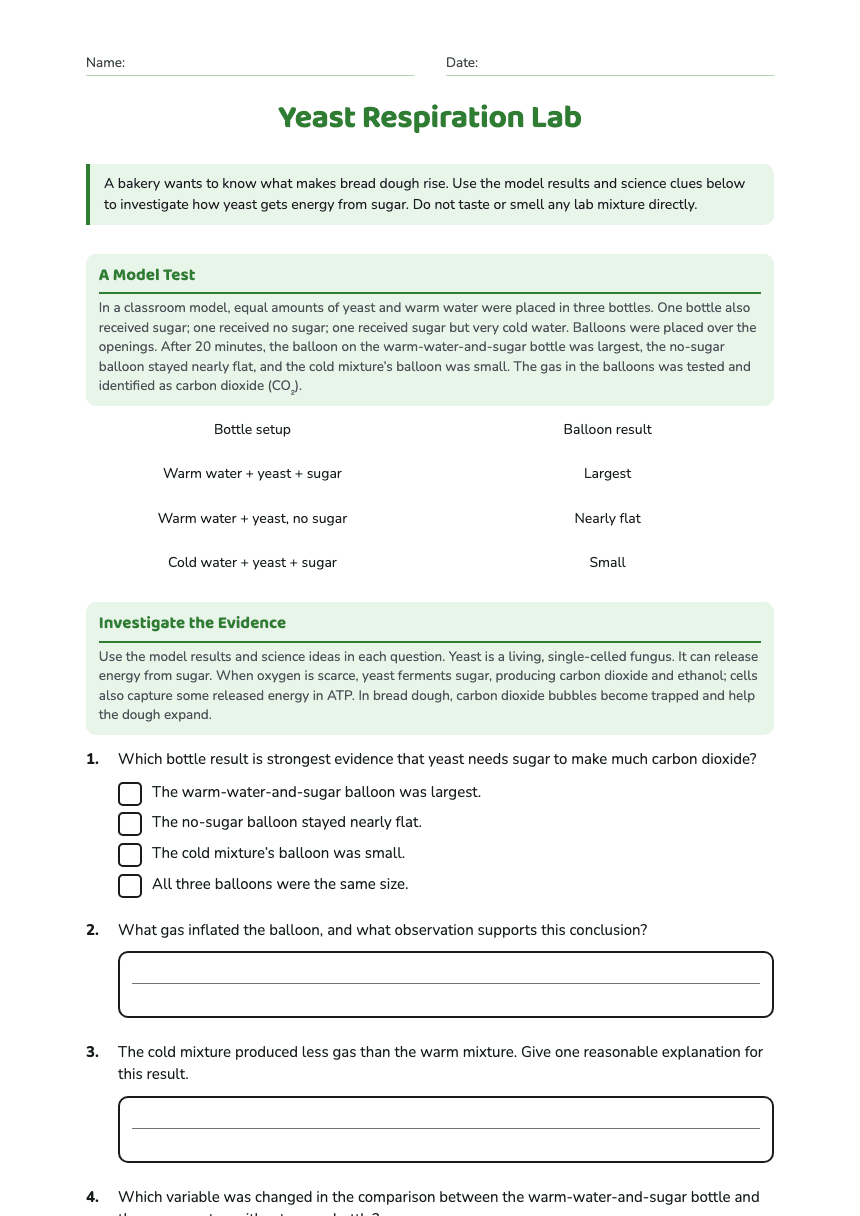
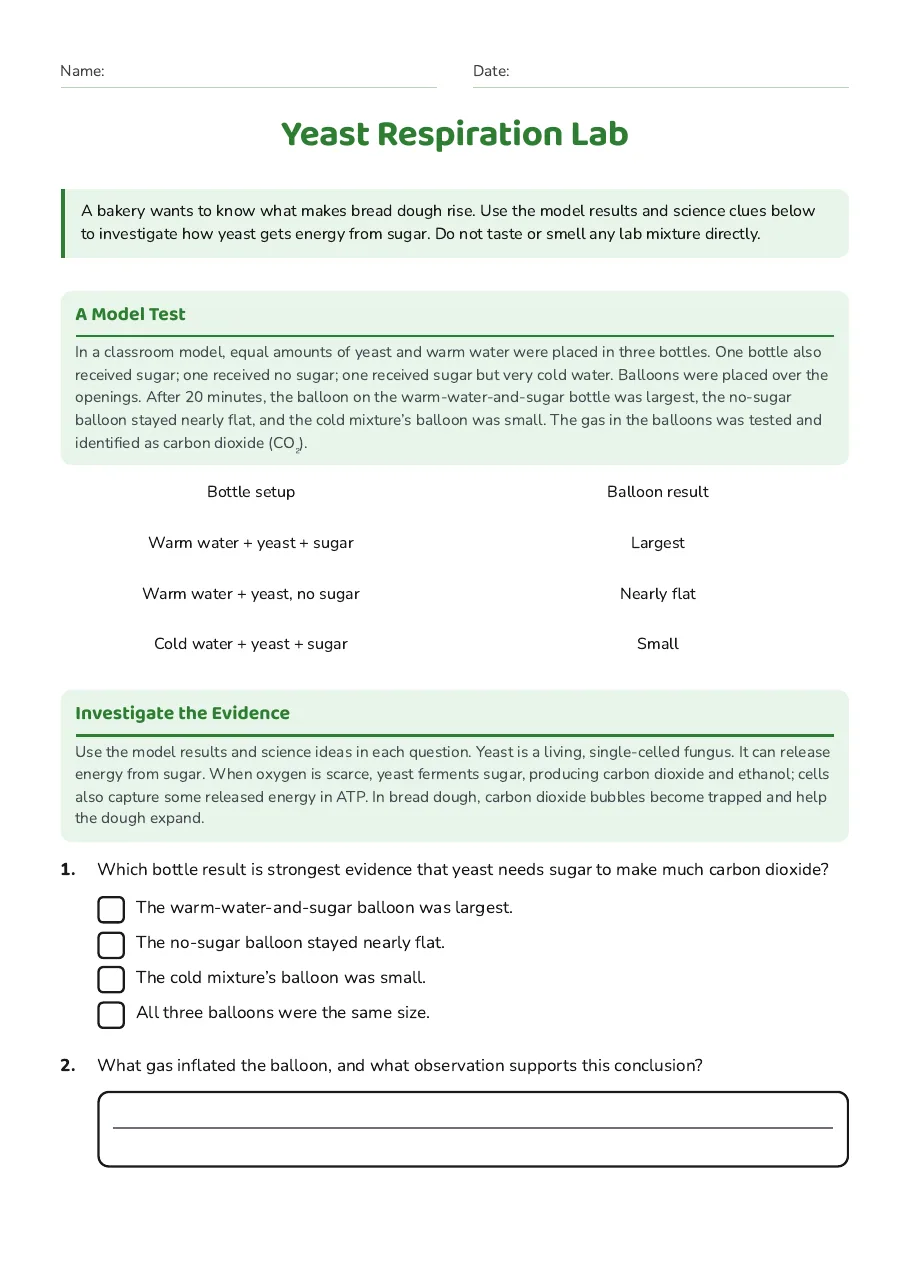
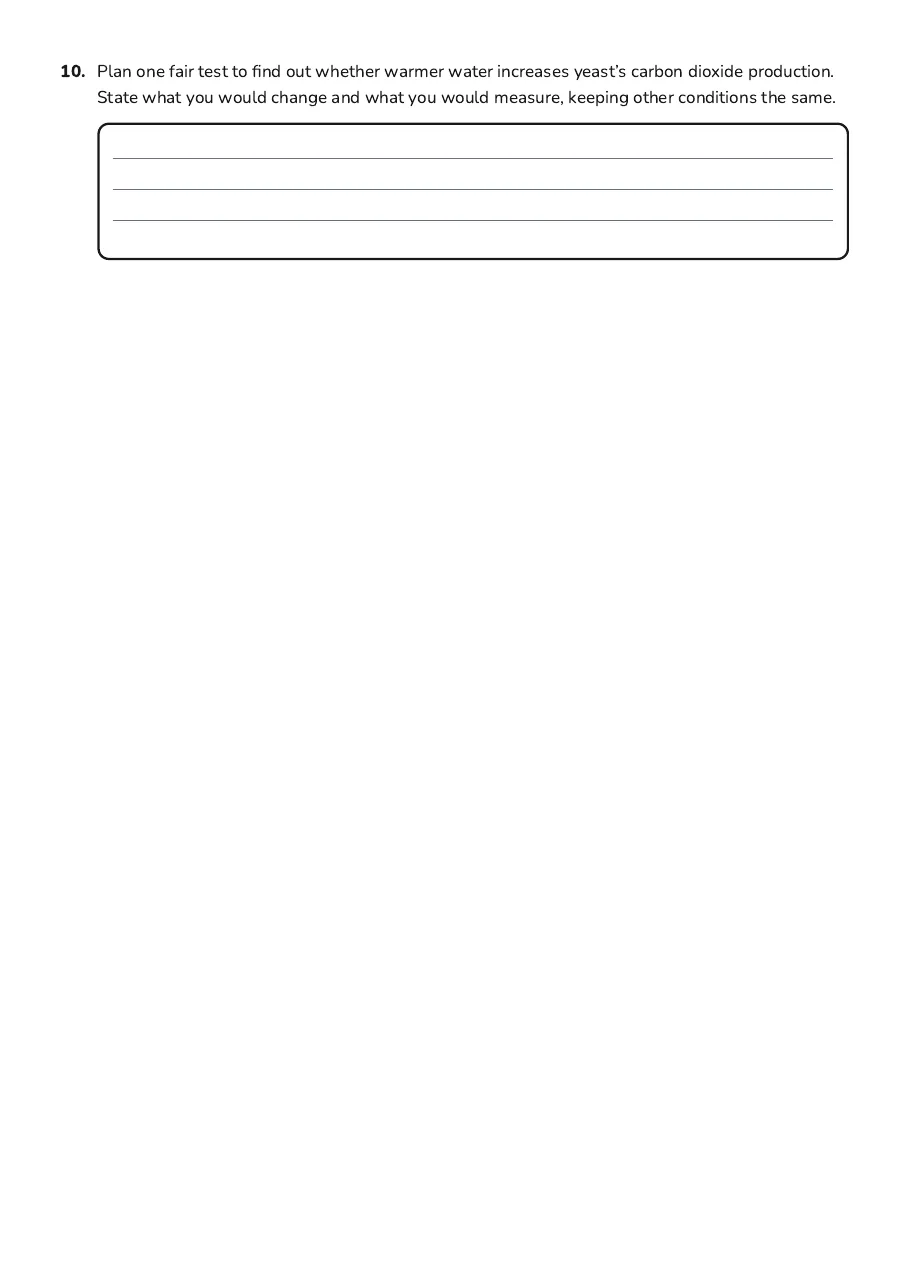
A Model Test
In a classroom model, equal amounts of yeast and warm water were placed in three bottles. One bottle also received sugar; one received no sugar; one received sugar but very cold water. Balloons were placed over the openings. After 20 minutes, the balloon on the warm-water-and-sugar bottle was largest, the no-sugar balloon stayed nearly flat, and the cold mixture’s balloon was small. The gas in the balloons was tested and identified as carbon dioxide (CO₂).
Bottle setup
Balloon result
Warm water + yeast + sugar
Largest
Warm water + yeast, no sugar
Nearly flat
Cold water + yeast + sugar
Small
Investigate the Evidence
Use the model results and science ideas in each question. Yeast is a living, single-celled fungus. It can release energy from sugar. When oxygen is scarce, yeast ferments sugar, producing carbon dioxide and ethanol; cells also capture some released energy in ATP. In bread dough, carbon dioxide bubbles become trapped and help the dough expand.
- The warm-water-and-sugar balloon was largest.
- The no-sugar balloon stayed nearly flat.
- The cold mixture’s balloon was small.
- All three balloons were the same size.
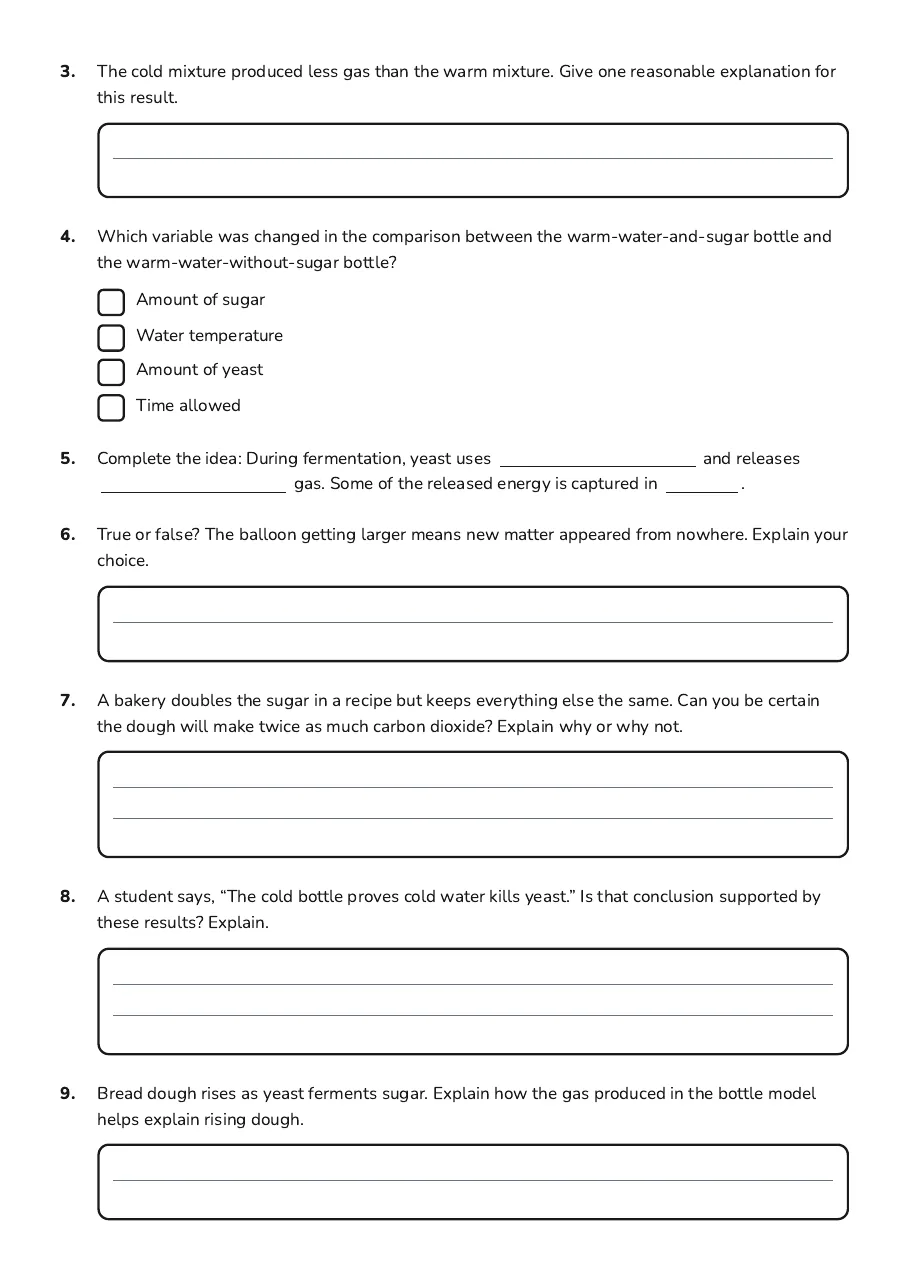
- Amount of sugar
- Water temperature
- Amount of yeast
- Time allowed
3 printable pages
Page 1
Page 2
Page 3
About This Worksheet
Free in Kuraplan
Sign up free, grab the PDF, and customize it for your class.
Print-Ready
Formatted for standard paper. Clean layout, easy to read.
AI-Generated
Created with Kuraplan's AI, designed for real classroom use.
For Teachers & Parents
Use in classrooms, for homework, tutoring, or homeschool.
Need a custom version of this worksheet?
Kuraplan's AI generates custom worksheets in seconds — differentiated for every learner, aligned to your curriculum.
Generate Custom Worksheets — FreeMore Science Worksheets
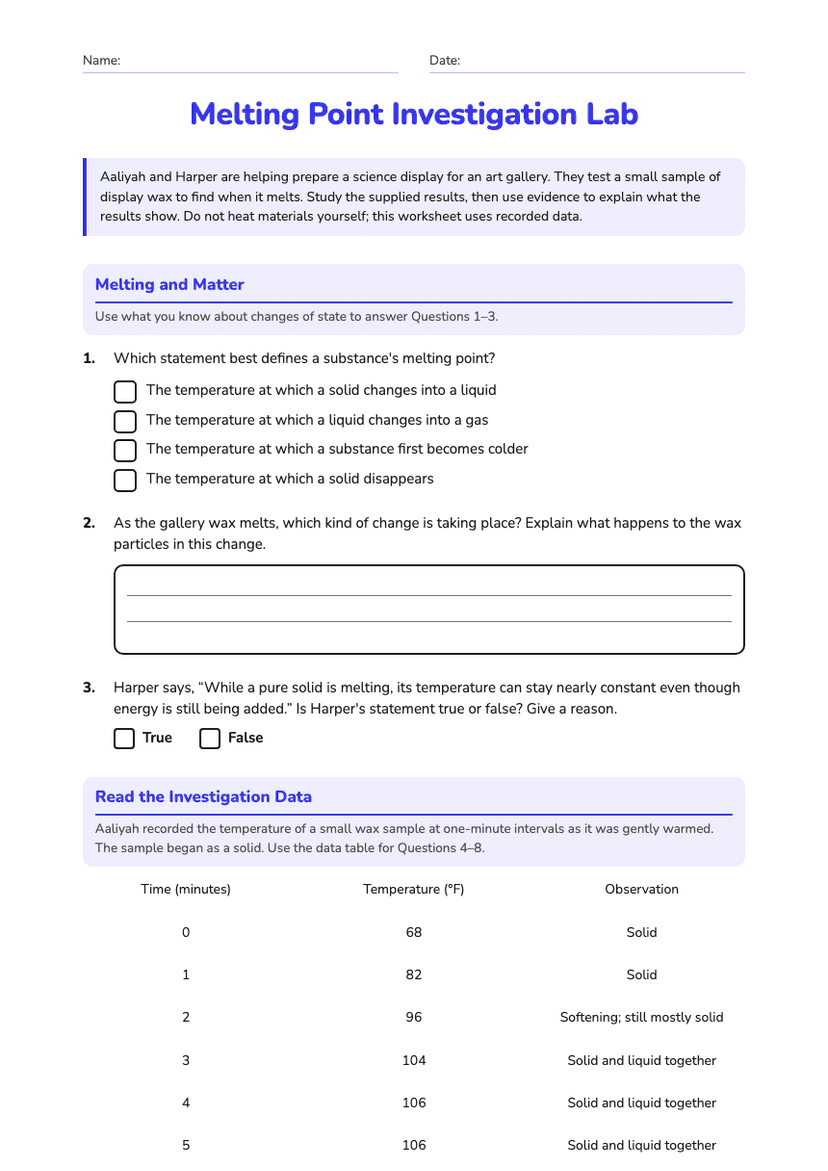
Melting Point Investigation Lab
Free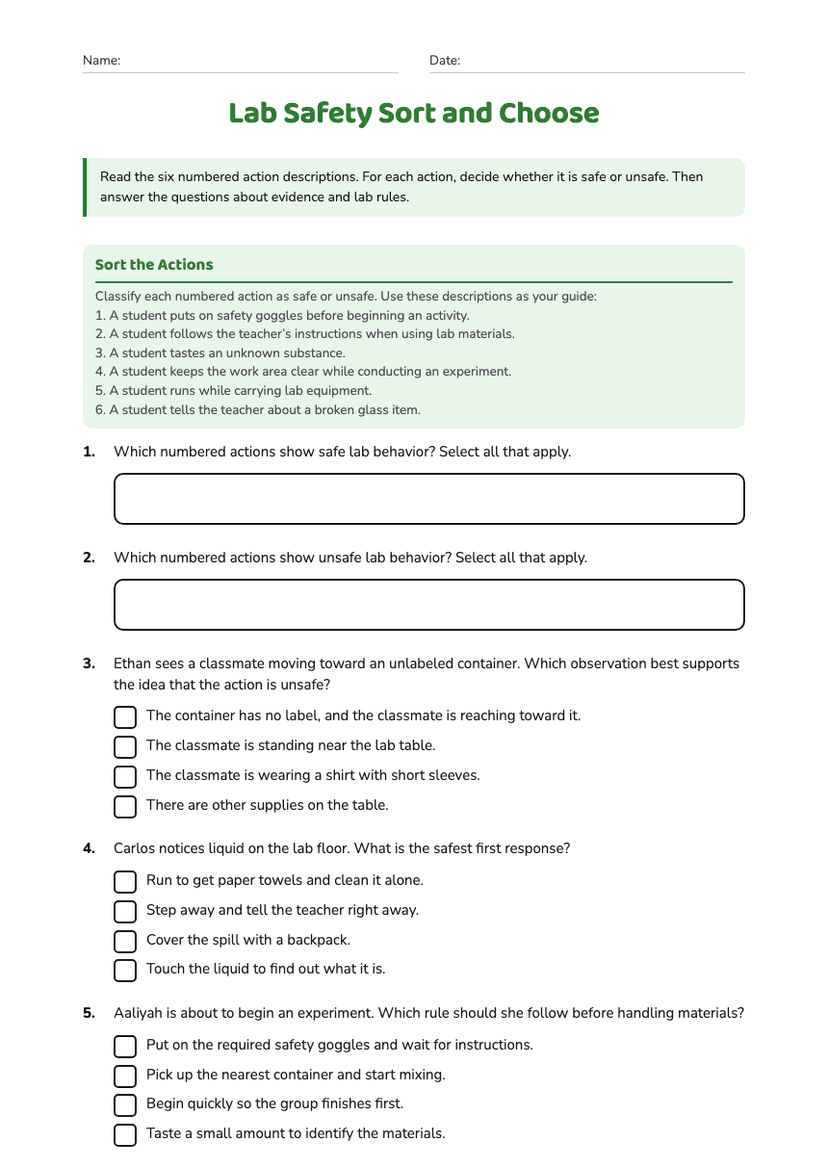
Lab Safety Sort and Choose
Free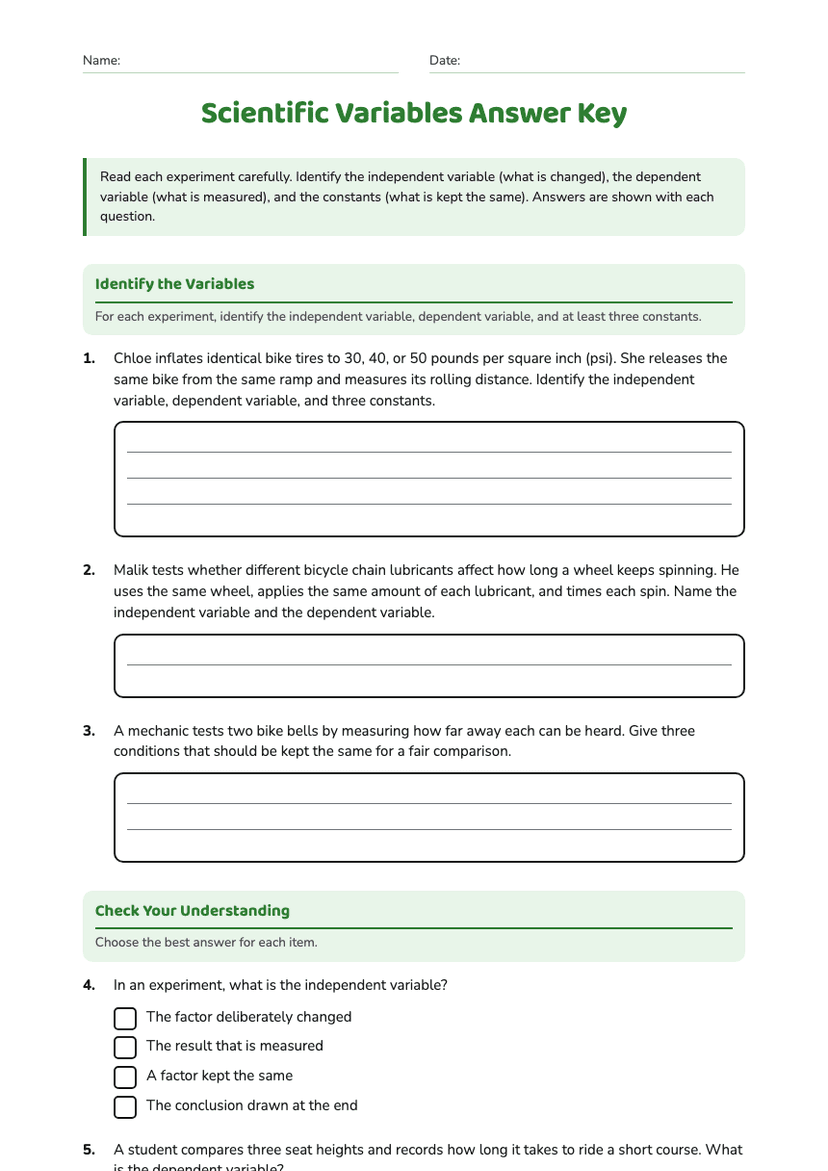
Scientific Variables Answer Key
Free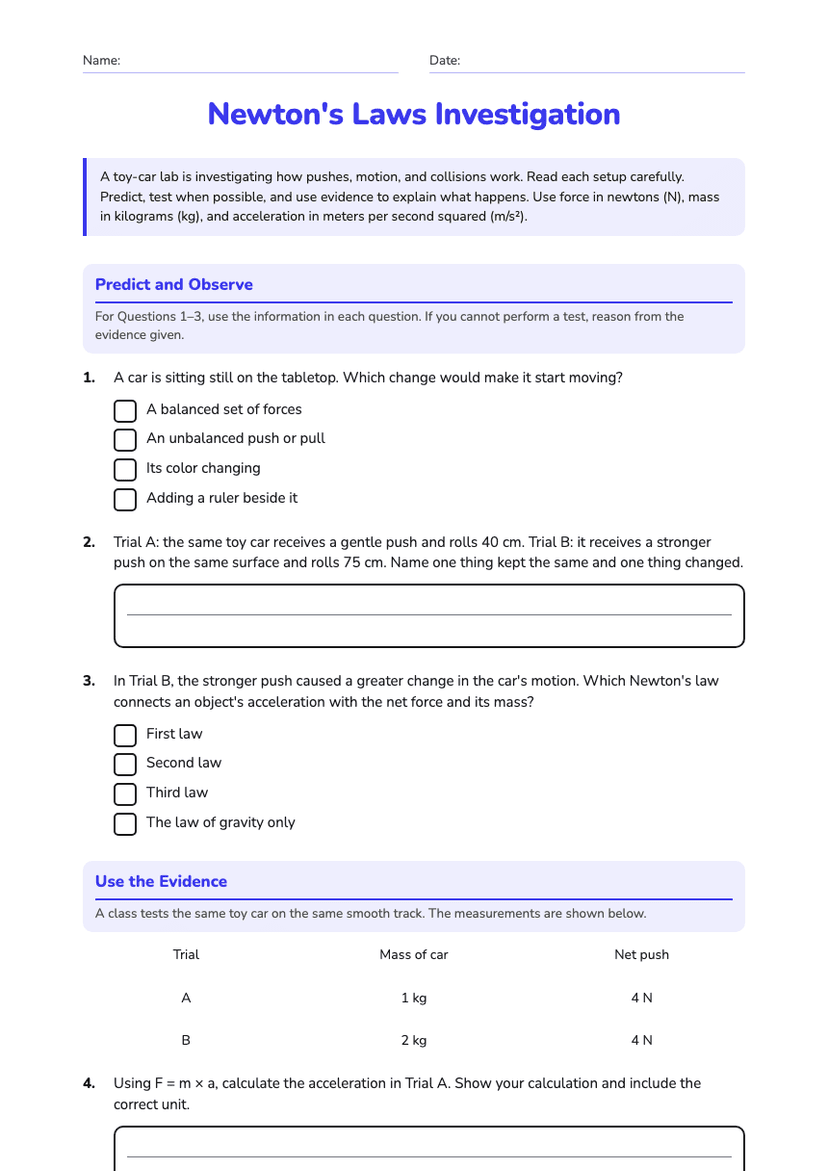
Newton's Laws Investigation
Free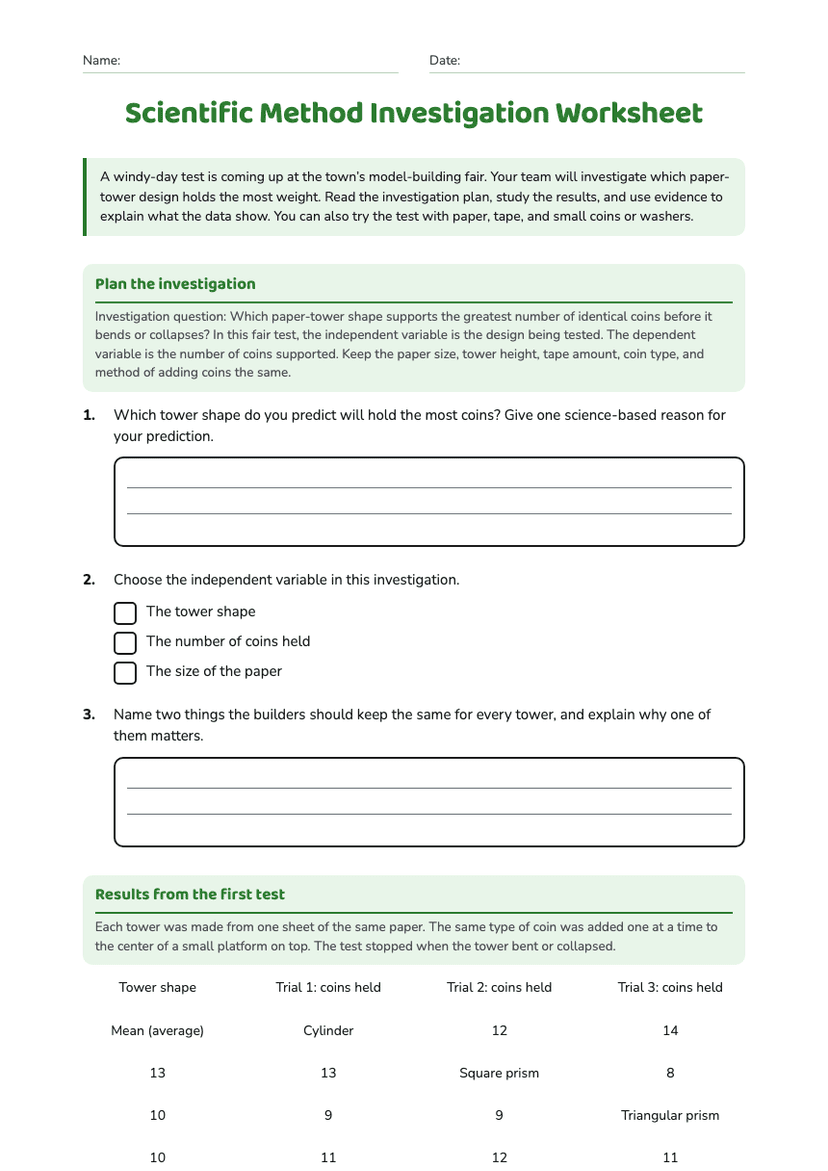
Scientific Method Investigation Worksheet
Free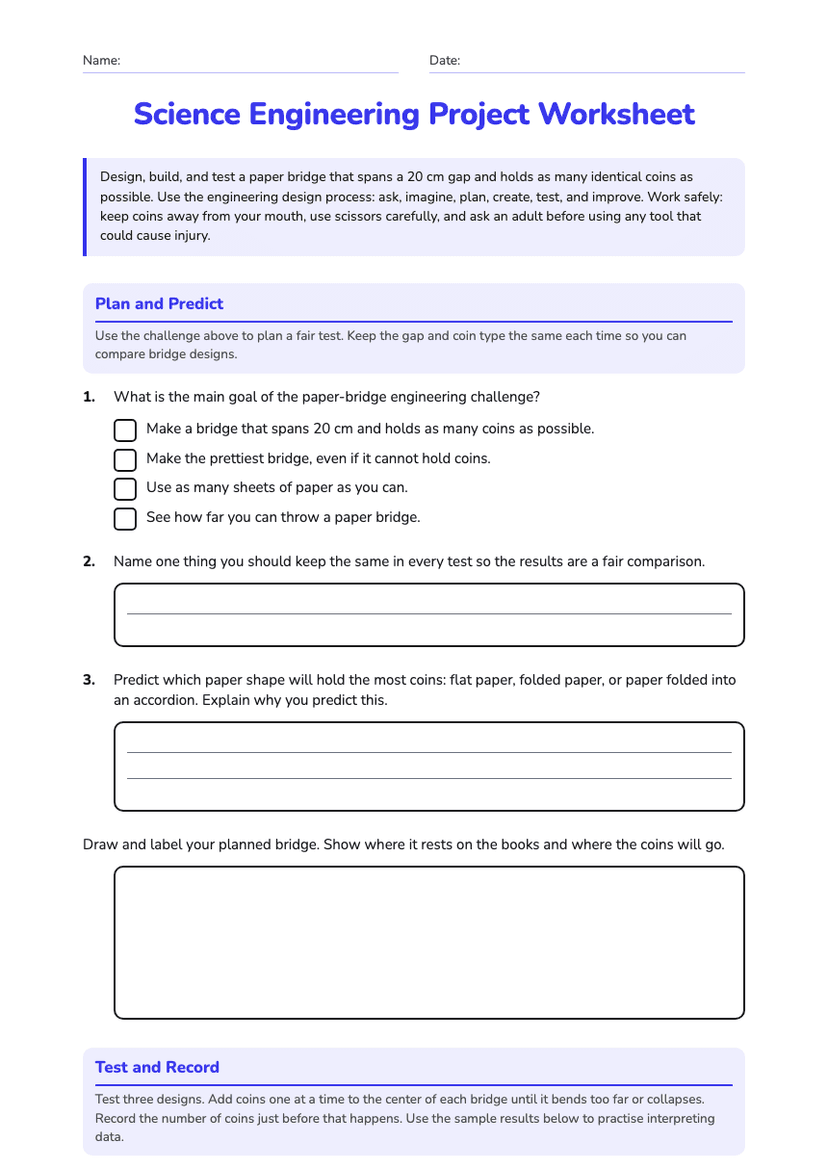
Science Engineering Project Worksheet
Free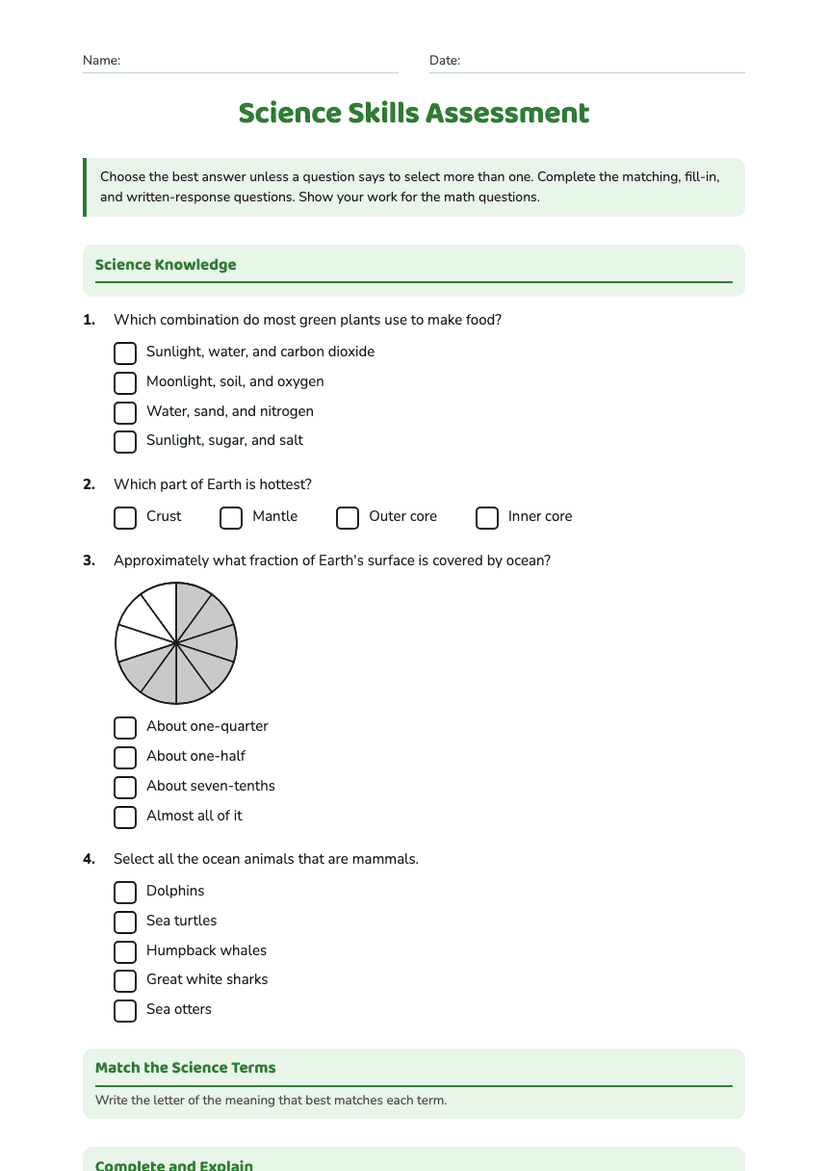
Science Skills Assessment
Free