Conformity and Nonconformity
A free health worksheet ready for your classroom. Open in Kuraplan to grab the print-ready PDF, customize it for your students, or generate a fresh version in seconds.
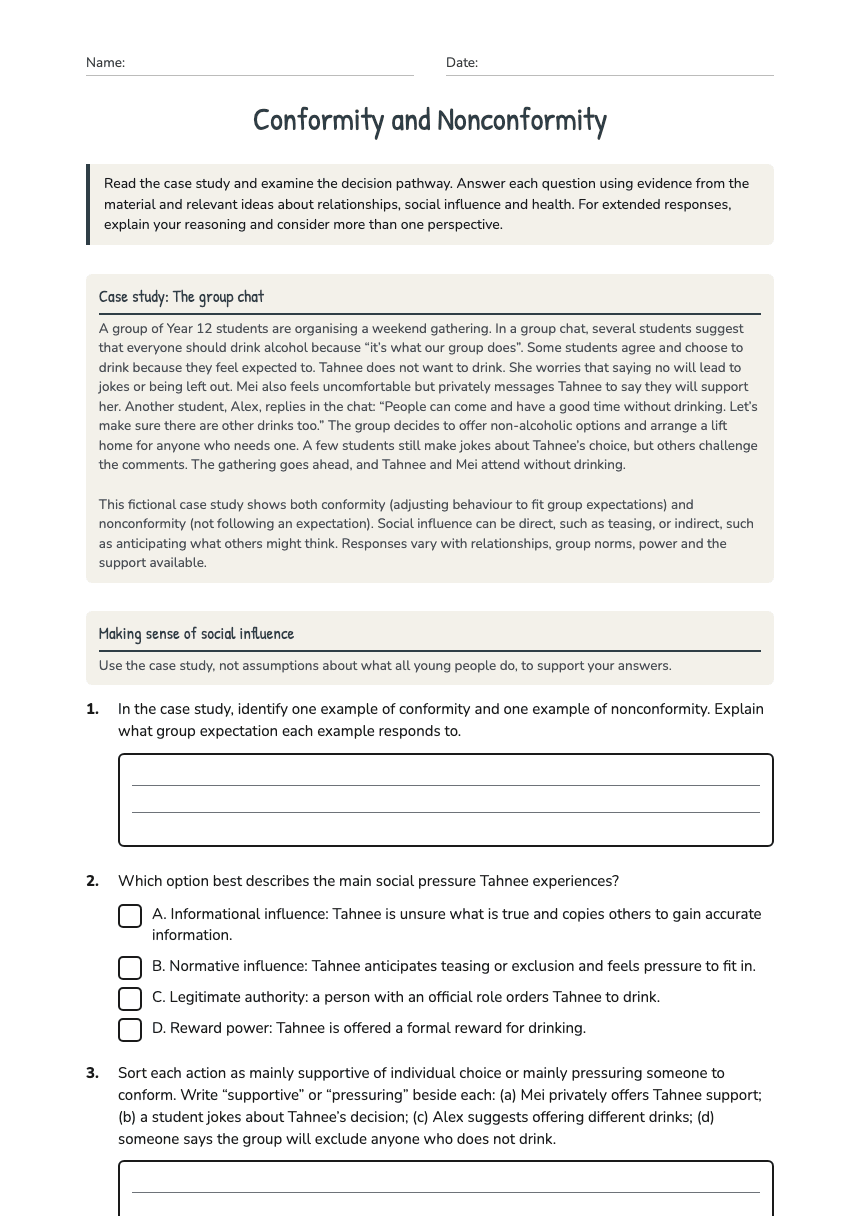
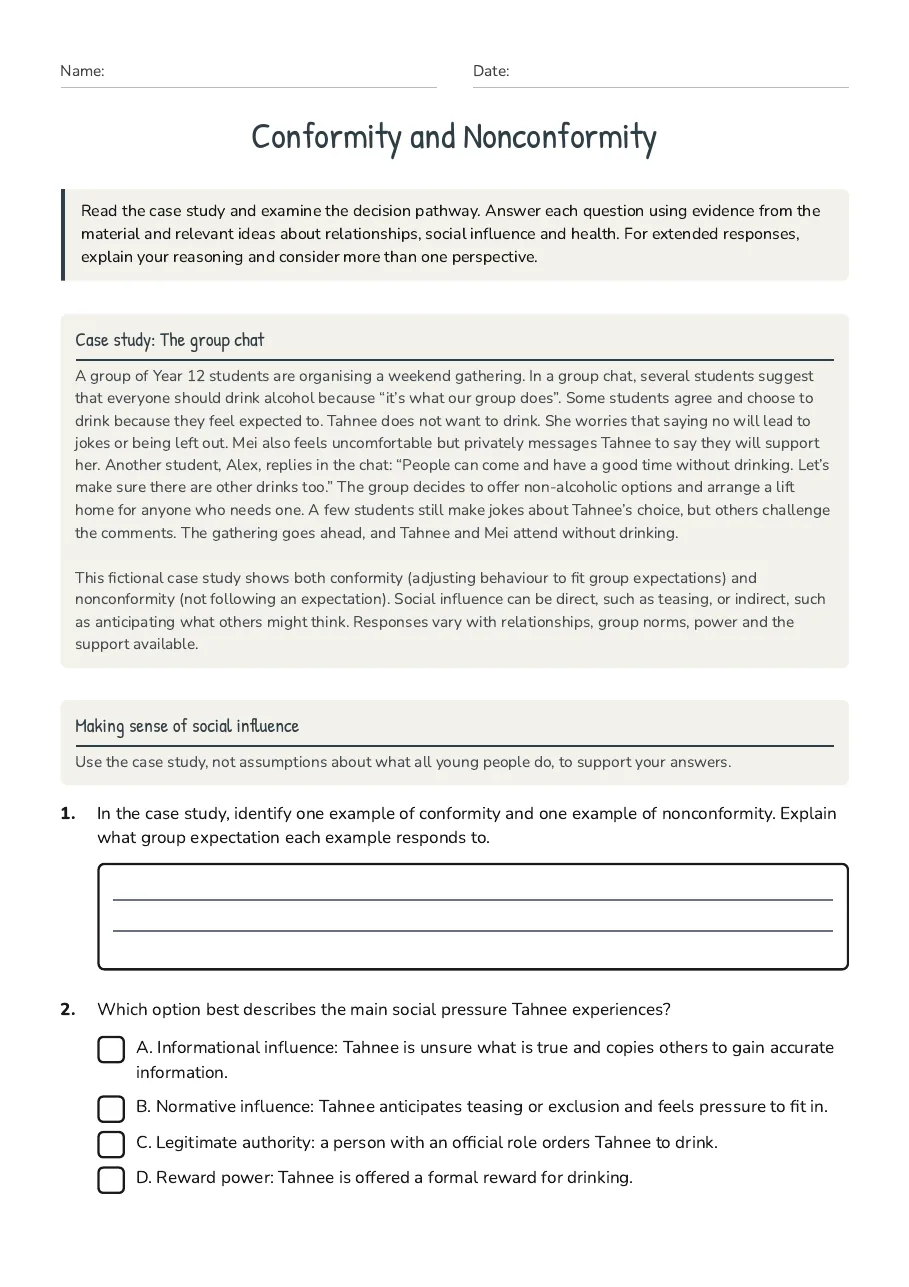
Conformity and Nonconformity
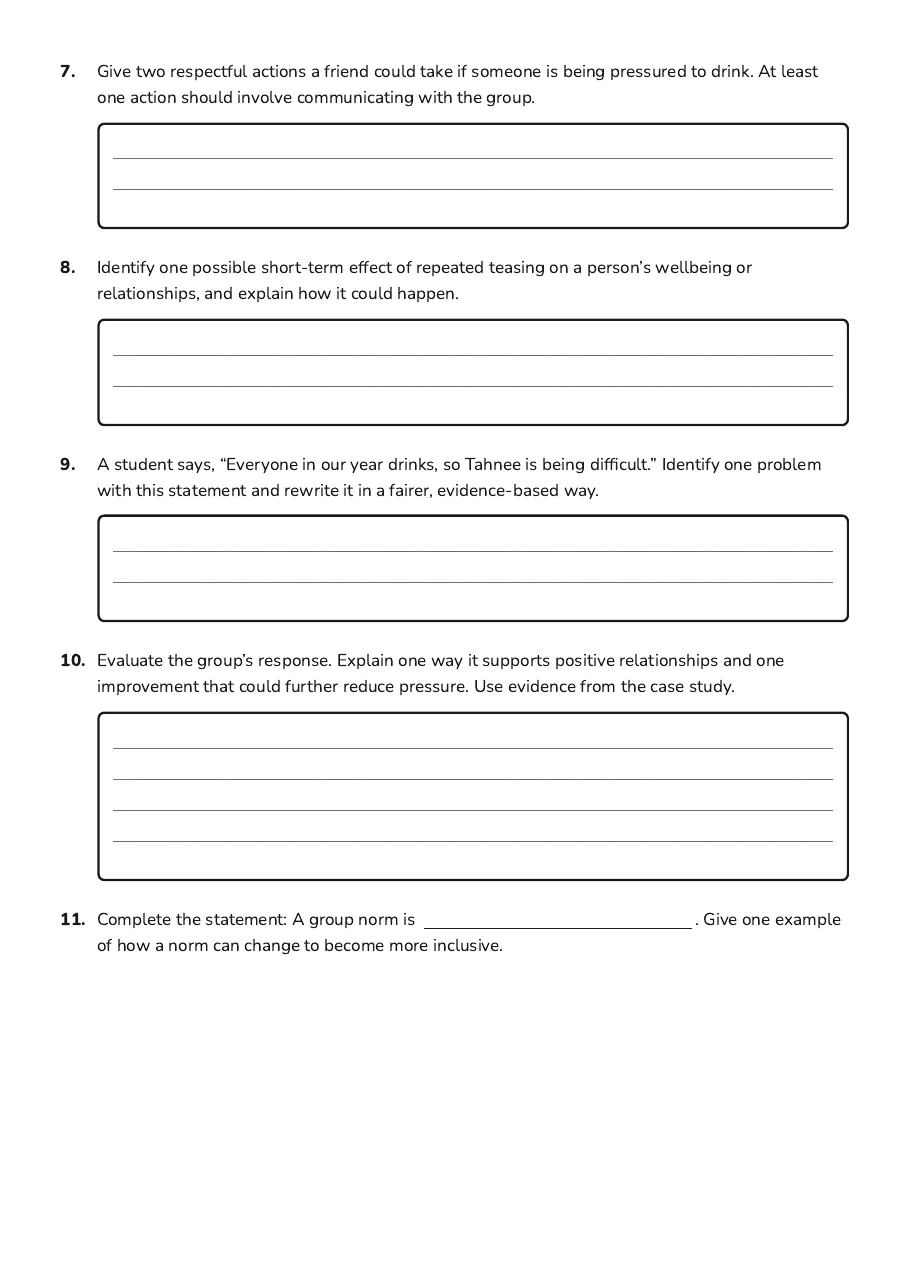
Case study: The group chat
A group of Year 12 students are organising a weekend gathering. In a group chat, several students suggest that everyone should drink alcohol because “it’s what our group does”. Some students agree and choose to drink because they feel expected to. Tahnee does not want to drink. She worries that saying no will lead to jokes or being left out. Mei also feels uncomfortable but privately messages Tahnee to say they will support her. Another student, Alex, replies in the chat: “People can come and have a good time without drinking. Let’s make sure there are other drinks too.” The group decides to offer non-alcoholic options and arrange a lift home for anyone who needs one. A few students still make jokes about Tahnee’s choice, but others challenge the comments. The gathering goes ahead, and Tahnee and Mei attend without drinking. This fictional case study shows both conformity (adjusting behaviour to fit group expectations) and nonconformity (not following an expectation). Social influence can be direct, such as teasing, or indirect, such as anticipating what others might think. Responses vary with relationships, group norms, power and the support available.
Making sense of social influence
Use the case study, not assumptions about what all young people do, to support your answers.
- A. Informational influence: Tahnee is unsure what is true and copies others to gain accurate information.
- B. Normative influence: Tahnee anticipates teasing or exclusion and feels pressure to fit in.
- C. Legitimate authority: a person with an official role orders Tahnee to drink.
- D. Reward power: Tahnee is offered a formal reward for drinking.
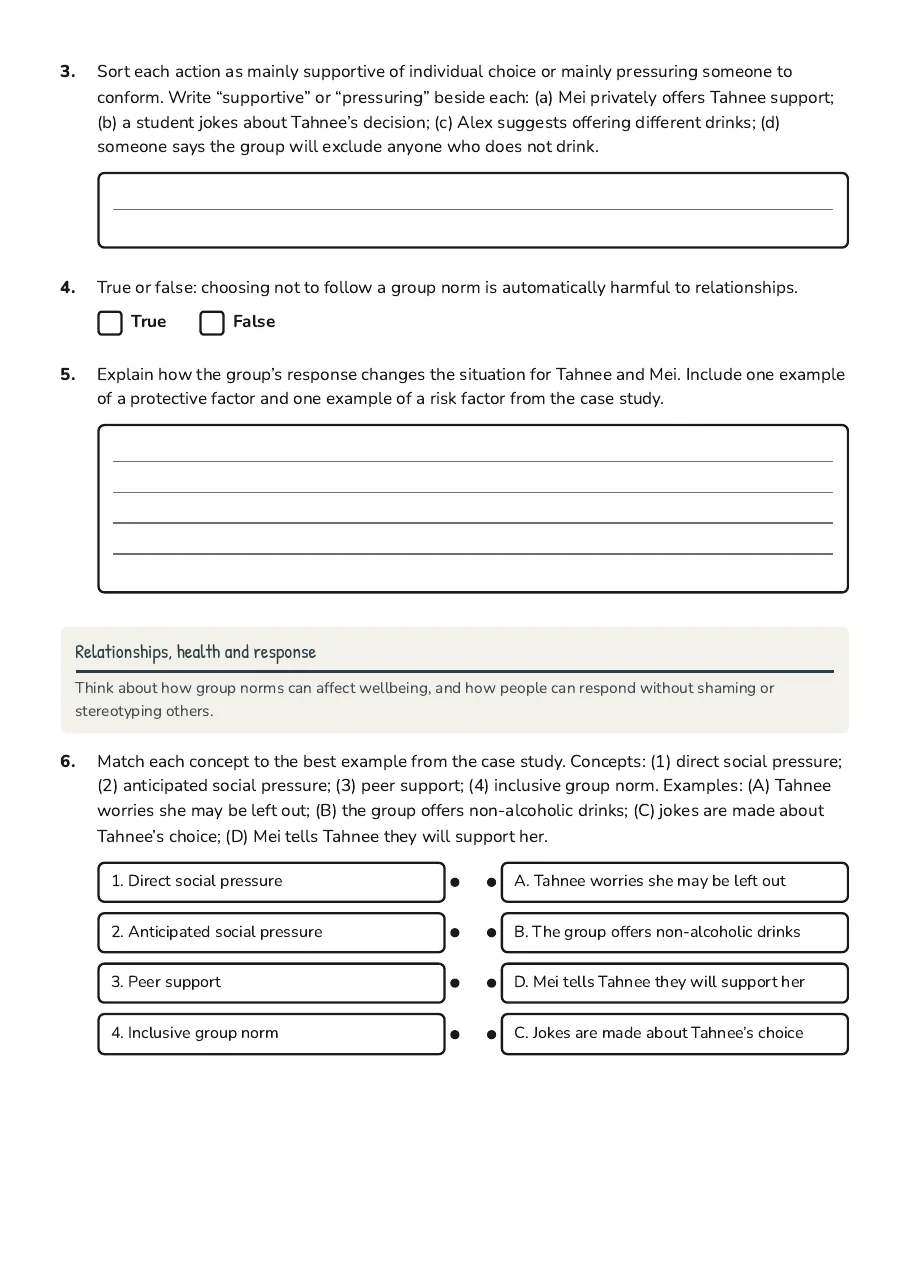
Relationships, health and response
Think about how group norms can affect wellbeing, and how people can respond without shaming or stereotyping others.
- 1. Direct social pressure
- 2. Anticipated social pressure
- 3. Peer support
- 4. Inclusive group norm
- A. Tahnee worries she may be left out
- B. The group offers non-alcoholic drinks
- D. Mei tells Tahnee they will support her
- C. Jokes are made about Tahnee’s choice
3 printable pages
Page 1
Page 2
Page 3
About This Worksheet
Free in Kuraplan
Sign up free, grab the PDF, and customize it for your class.
Print-Ready
Formatted for standard paper. Clean layout, easy to read.
AI-Generated
Created with Kuraplan's AI, designed for real classroom use.
For Teachers & Parents
Use in classrooms, for homework, tutoring, or homeschool.
Need a custom version of this worksheet?
Kuraplan's AI generates custom worksheets in seconds — differentiated for every learner, aligned to your curriculum.
Generate Custom Worksheets — FreeMore Health Worksheets
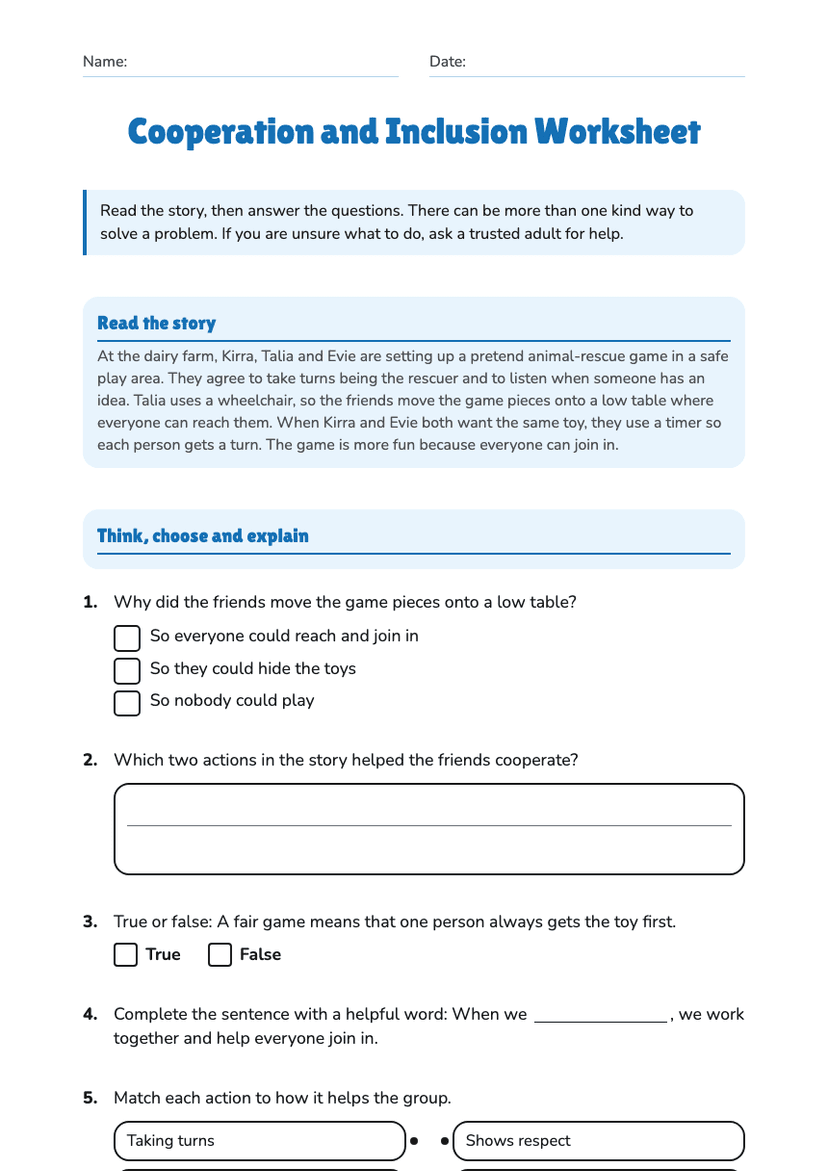
Cooperation and Inclusion Worksheet
Free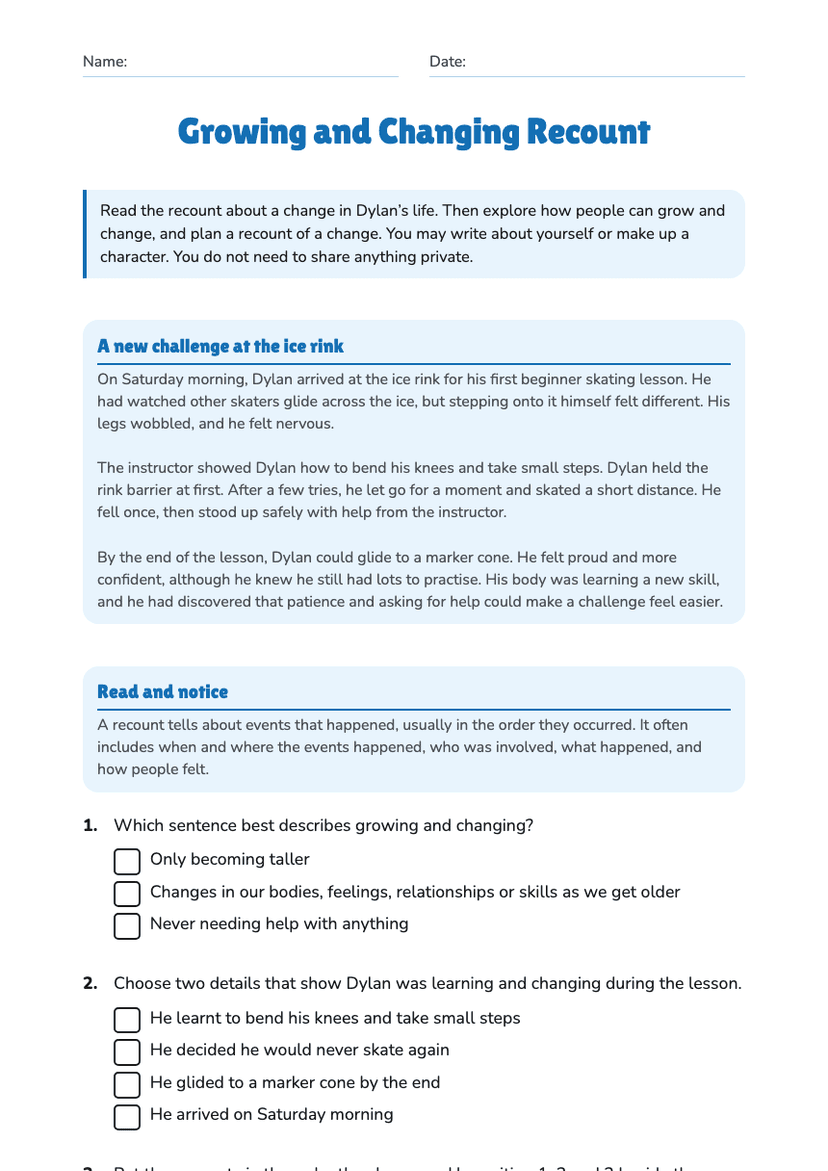
Growing and Changing Recount
Free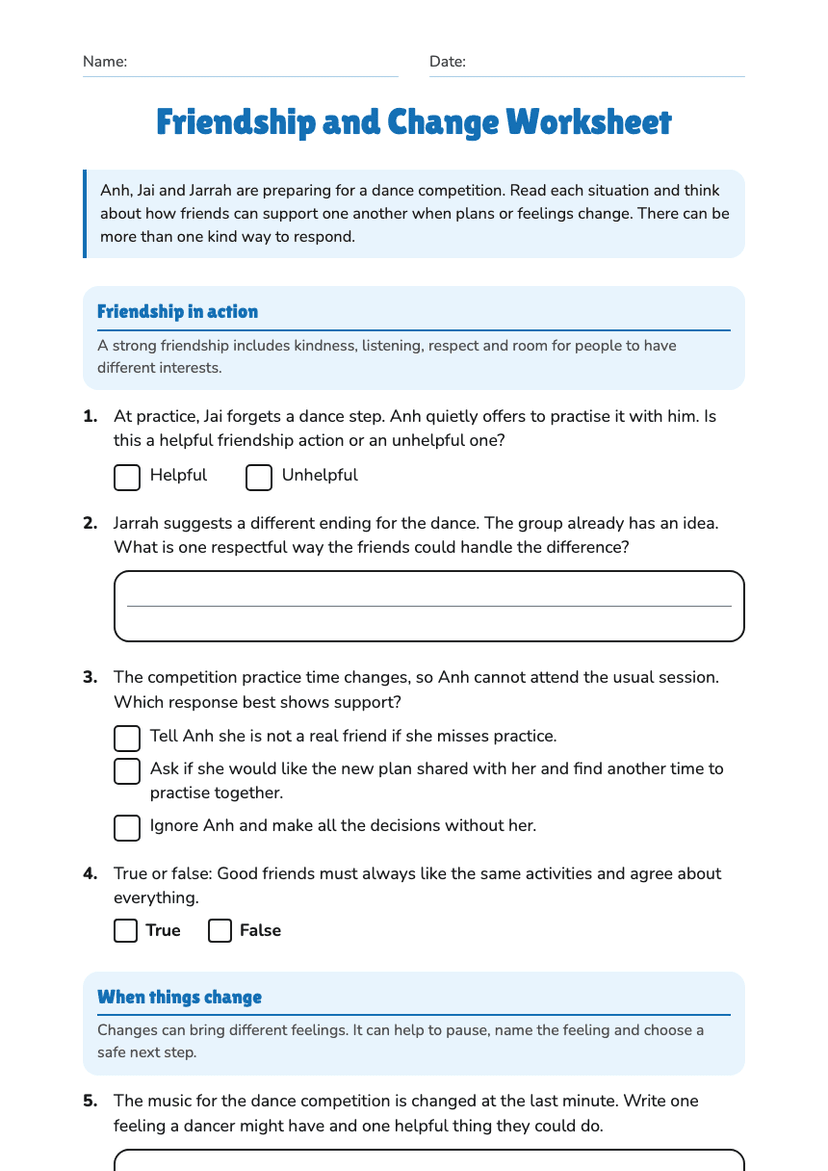
Friendship and Change Worksheet
Free
Understanding Respect Worksheet
Free
Healthy Relationships Exploration
Free
Relationships and Consent Reflection
Free
Encouraging Each Other
Free