It's Sunday night. The worksheet's still blank, your coffee's cold, and Monday's review is shaping up to be the same drills your students tuned out last week. You don't need more lesson plan ideas to scroll past. You need ten formats you can steal, run once, and reuse without rebuilding your whole unit.
That pressure isn't your imagination. The OECD TALIS 2024 report finds teachers spend approximately 23 hours per week teaching and 7 hours preparing lessons, with planning and preparation at 14% of working time. If you're new, it's worse. Novice teachers need extra time to build what experienced teachers pull from memory, so a clear format matters more than a clever hook.
Each idea below works the same way. You get a concrete example, the failure that usually kills it, and a quick variation for another grade or subject. Pick the one that fits next week's objective. Don't try to run three at once.
I recommend starting with the format that solves your immediate problem. Stuck on review? Use the escape room. Dreading discussion? Use the seminar. Need differentiation without three separate plans? Use the choice board. One good run will teach you more than a perfect plan on paper.
1. Project-Based Learning (PBL) Unit
Fourth graders design an accessible playground, measure the space, budget the equipment, and pitch it to the school board. That's PBL done right. One driving question carries several weeks of research, drafting, and revision toward a product someone sees.
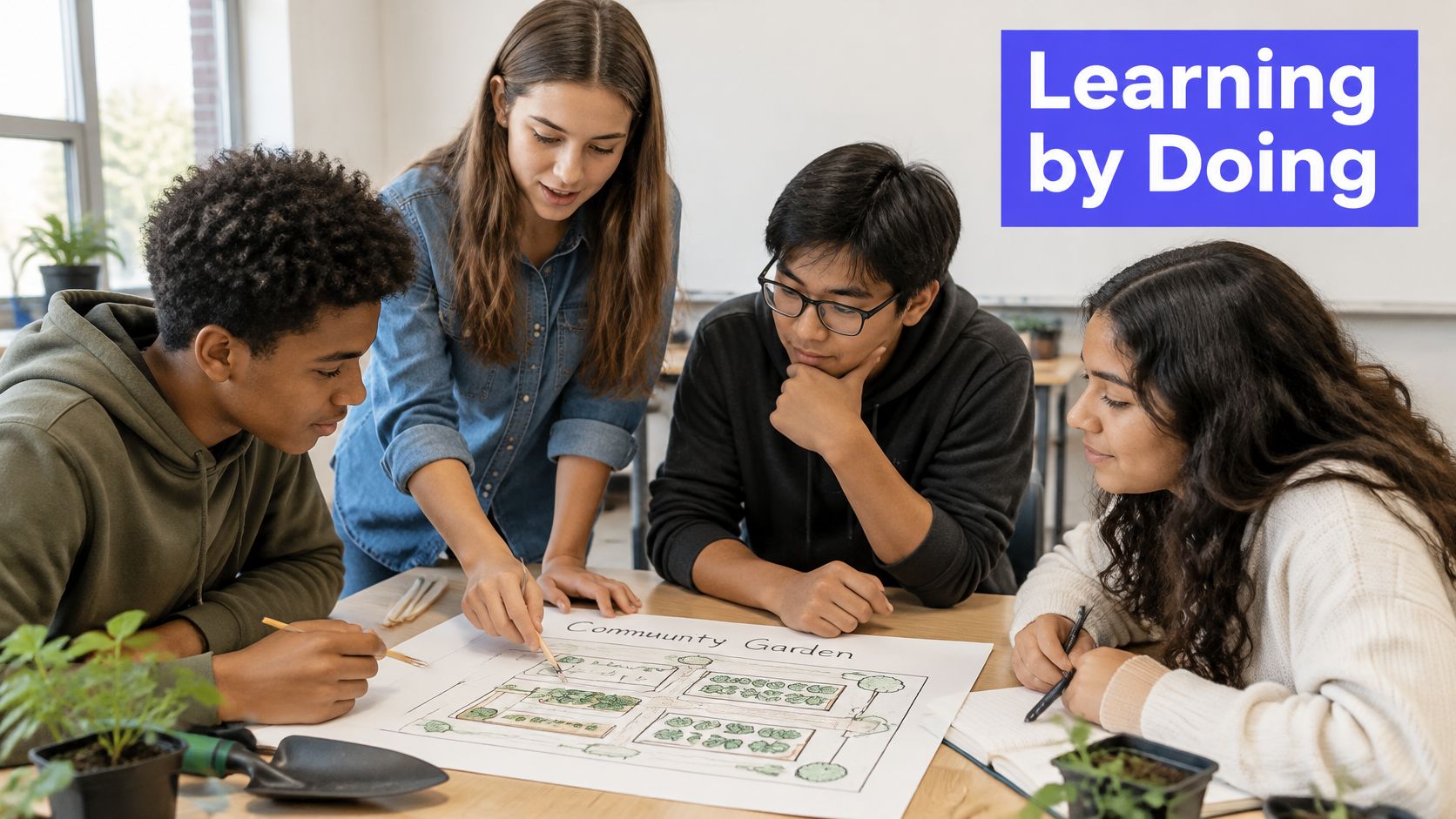
Write the driving question first, then check it forces the standards you have to teach. If students can finish without using those standards, the question's too loose. Middle schoolers creating a neighborhood water-quality report from samples they collected can't skip data analysis, and that's the point.
Where It Falls Apart
The common failure is one big deadline and no checkpoints. Groups drift for two weeks, then panic. Build in two or three checkpoints where you approve research, a rough draft, and a rehearsal before anyone builds the final product.
- Share the rubric on day one: Students can't hit criteria they haven't seen.
- Keep groups small: Three or four students leaves nowhere to hide.
- End with an audience: A board, a class next door, or families raises the effort fast.
Variation: Shrink it to one week. A local history podcast episode or a water-filtration prototype still shows what students can do with knowledge, not just recall it. You can draft the standards-aligned rubric in Kuraplan, then adjust the criteria to your class.
2. Classroom Escape Room
Seventh graders need a code to open the next box. The code only works if they solve the unit equations in the right order. Suddenly review isn't a worksheet. It's a race they chose to join.
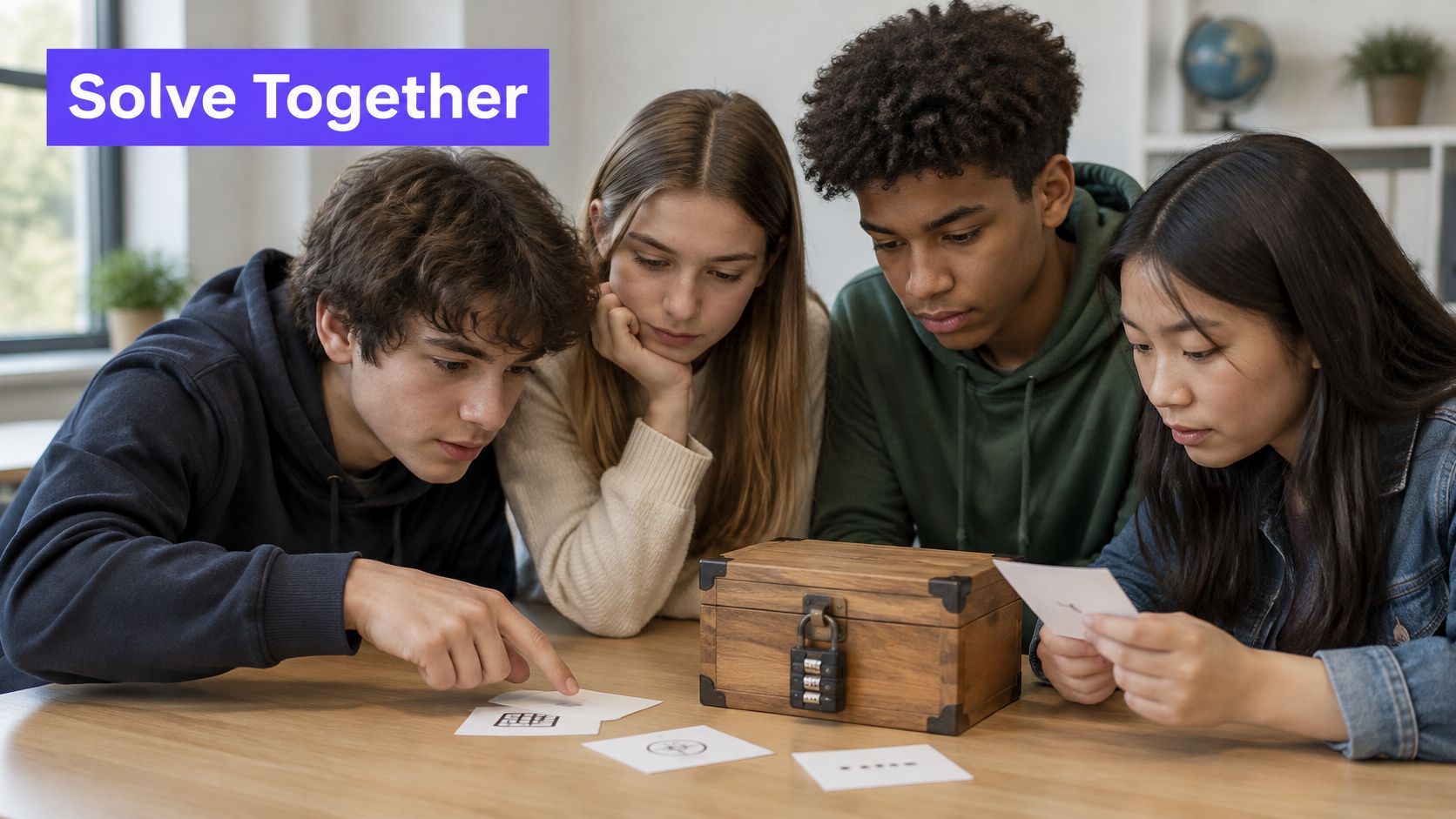
Teams move through sequenced puzzles, each one revealing the next clue. You can run it as a single review lesson or spread stations across a unit. History works just as well when students decode primary-source excerpts to find dates, names, or claims that form the combination.
Keep the Content in Charge
The failure here is puzzles students can brute-force. If they can guess a four-digit code or Google the answer, they're not reviewing. Make each answer require two steps of content knowledge, such as solving, then ordering by size.
Practical rule: Make the first puzzle almost too easy. Early momentum keeps weaker teams in the game long enough to learn something.
Use a digital lock or cheap combination lock so you can reset it next period. Paper envelopes with codes work too and cost nothing.
Variation: For younger students, drop the locks. Each solved task earns a puzzle piece, and the finished picture reveals the reward or the next lesson's topic.
3. Socratic Seminar
Ninth graders sit in a circle arguing about a short story's ending. You're not answering questions. You're watching who cites the text, who builds on a peer, and who hasn't spoken yet.
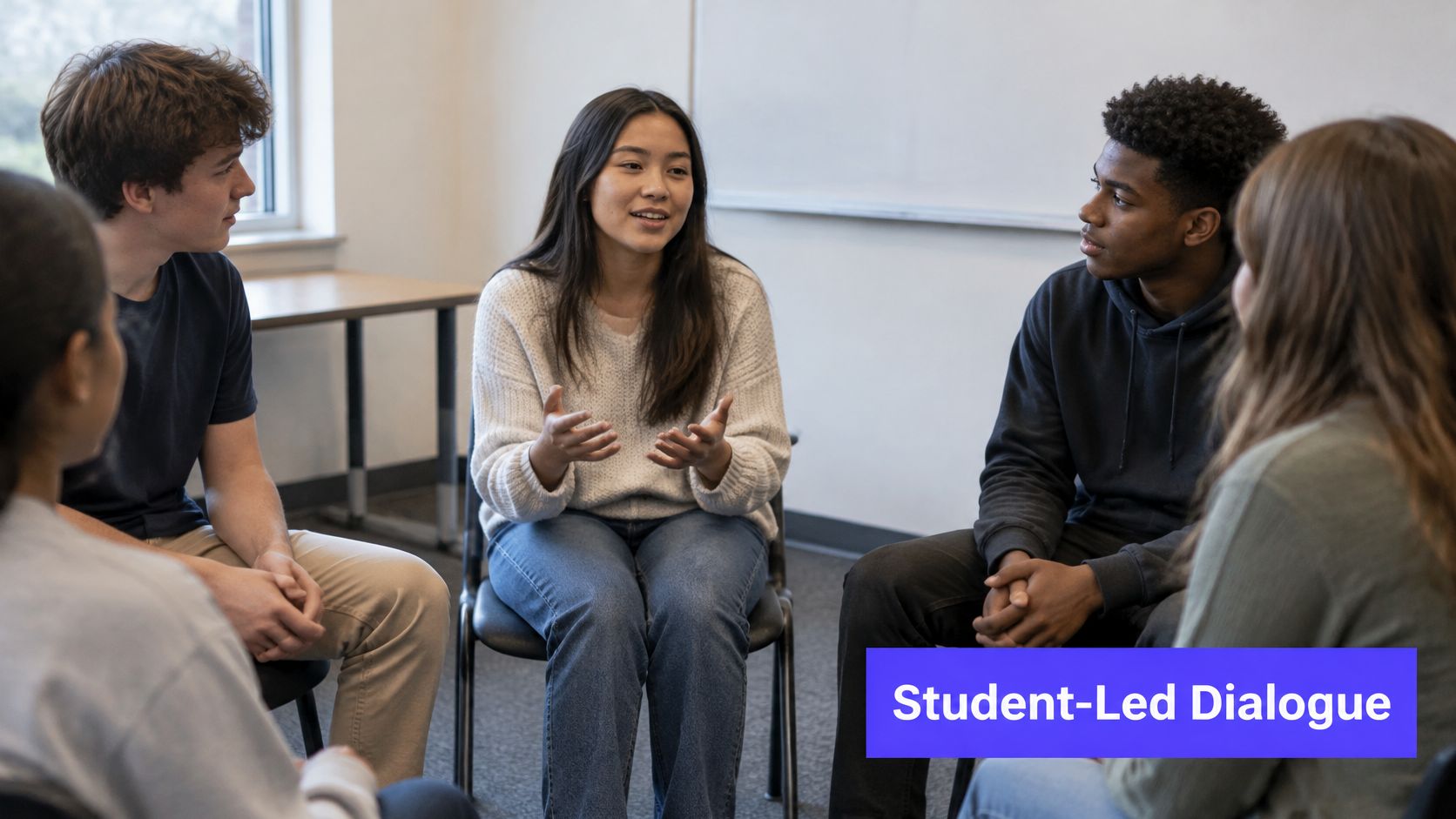
A seminar runs on three to five open questions, starting with one that has no single right answer. Students talk to each other, not to you. A civics class can debate a constitutional amendment from primary sources the same way, as long as everyone arrives with evidence marked up.
Don't skip teaching the norms. Model how to disagree with an idea, invite a quieter voice in, and quote a line before making a claim. The first seminar will feel slow. That's normal, and it gets faster once students trust the routine.
The Fishbowl Fix
The common failure is five confident students talking while twenty watch. Use inner and outer circles. The outer circle tracks evidence use and gives feedback, then swaps in halfway through.
Variation: Try it in science with a data table instead of a text. Ask which claim the data supports best and watch students argue from numbers.
4. Jigsaw Cooperative Learning
Biology students each master one body system in an expert group, then go home and teach it. Nobody else in that home group has their piece. If they don't teach it well, the group has a hole, and students feel that responsibility quickly.
Keep expert materials short enough to master in 15 to 20 minutes. Anything longer turns experts into summarizers who read aloud. Give each expert group the same three prompts, such as key parts, how it works, and one common misconception, so home teaching stays consistent.
What Makes It Stick
The failure is assuming peer teaching worked because the room sounded busy. It often didn't. Hand home groups a simple graphic organizer to capture each section, then give a short quiz that covers everyone's piece, not just their own.
Pair this with our guide to Think-Pair-Share routines that build accountability if your students need a smaller rehearsal before teaching a group. Literature classes can jigsaw a novel by chapters, with each expert summarizing and analyzing one section.
Variation: In math, make each expert group own one solution strategy for the same problem type. Home groups leave knowing four ways in, which helps when the first method stalls.
5. Choice Board Lesson
Fifth graders learning fractions pick a recipe challenge, a comic strip, or fraction bingo. Same objective, three routes. You're not writing three lessons. You're writing one objective with options that vary in format, support, and challenge.
That's differentiation without chaos, and our overview of differentiation teaching strategies for mixed classrooms covers how to level those options well. The Institute of Education Sciences guidance on Universal Design for Learning frames this as multiple means of engagement, representation, and action and expression, which is a useful check when you build a board.
Stop Choice Becoming Avoidance
Left alone, students pick the easiest box every time. Require at least one task from each difficulty level and use the same rubric across all options so the standard doesn't move.
- Vary the product: Write it, build it, draw it, or record a short explainer.
- Keep one required box: Everyone does the core task, then chooses around it.
- Cap the board: Six to nine choices is plenty for one lesson.
Variation: A high school chemistry review board can offer a lab task, a video analysis, and a written explanation. Older students still choose, but the cognitive work stays high.
6. Gallery Walk
History students post cause-and-effect maps around the room. Small groups rotate, read, and leave sticky notes adding evidence or asking where a claim came from. Nobody presents from the front, and the quiet students still leave thinking on the wall.
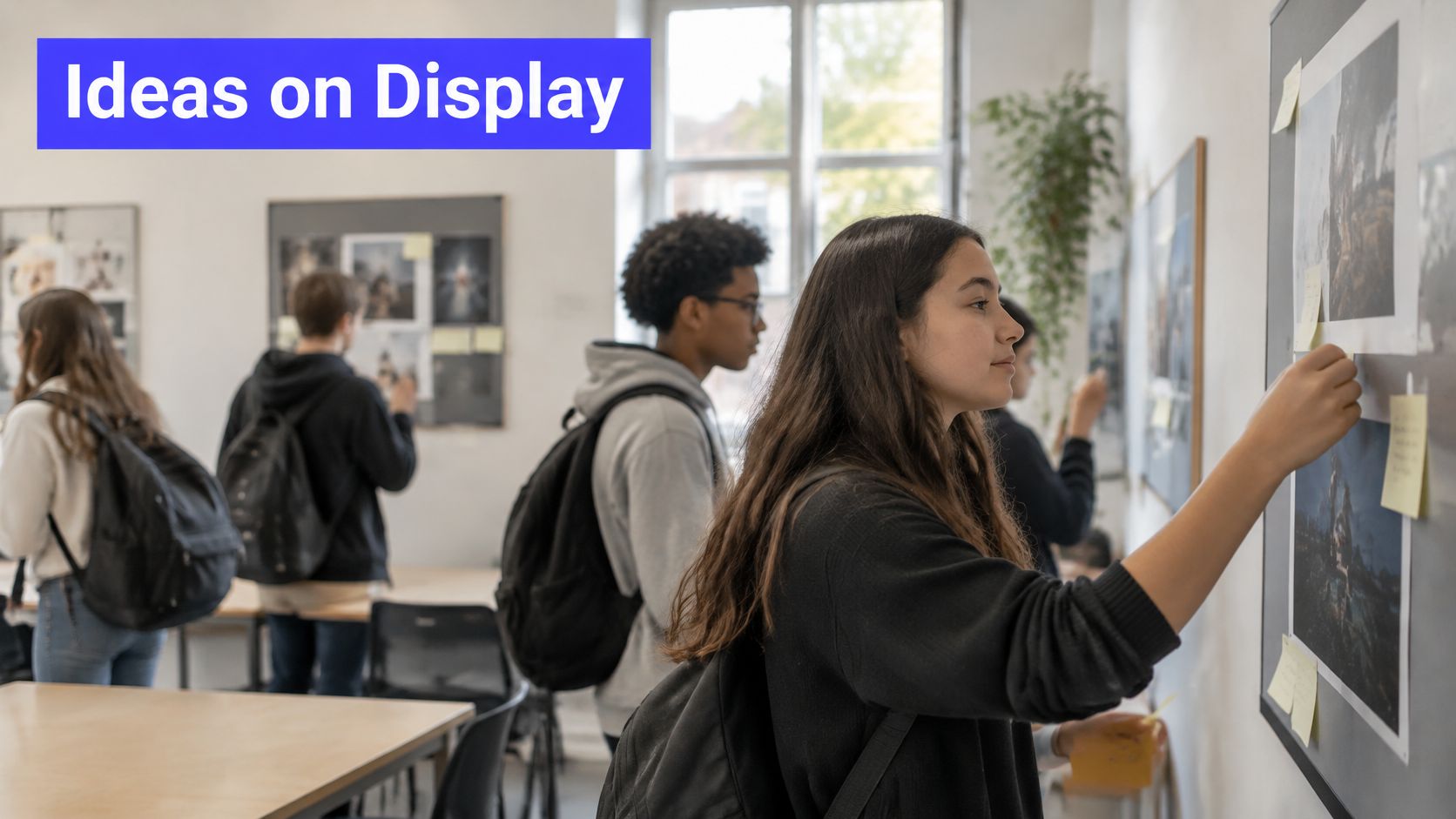
Give each station one specific question. Vague prompts like "respond to this" get you vague sticky notes. A math version works well when groups post different solution strategies for the same word problem and visitors have to name where the methods agree.
Make the Feedback Useful
Use different colored sticky notes for questions and compliments, so authors can sort fast when they return. Effective feedback needs to be clear, specific, and usable while there's still time to revise.
"Use evidence from the second paragraph to explain your claim" helps a student revise. "Add more detail" doesn't.
The failure is skipping the ending. Close with a five-minute debrief, name two strong patterns you saw, and let groups read their notes before they revise.
Variation: Post questions instead of finished work at the start of a unit. The walk becomes a diagnostic that shows you prior knowledge and misconceptions.
7. Design Thinking and Maker Lab Challenge
Third graders interview classmates about the lunch line, define why it's slow, sketch fixes, and test a new queue with tape on the floor. That's the full cycle, empathize, define, ideate, prototype, and test, without expensive kits.
Older students can prototype a low-cost tool for a local nonprofit, build a circuit to power a model house, or compete on a paper bridge that holds the most weight across a set span. The subject changes. The process doesn't, and failed prototypes become data instead of embarrassment.
Watch how a tight brief and quick testing rounds keep students iterating instead of decorating.
Keep It Cheap and Timed
The failure is a beautiful final product nobody can explain. Set a firm time limit and materials budget, use cardboard and recycled materials, and have students document each stage in a shared journal you can assess.
Variation: Start with a low-stakes, one-lesson challenge before a full unit. A better bookmark or desk organizer teaches the process without risking your pacing guide.
8. Flipped Classroom Lesson
Algebra students watch a five-minute video on solving systems of equations at home, answer one quick-check question, then spend class working problems in pairs while you circulate. You see the misconceptions live instead of on Friday's quiz.
Keep pre-class videos under ten minutes and tight. One concept, one worked example, one thing to try. If you're recording your own, ClipCreator.ai's educational video guide is a practical place to check your setup before you film a whole unit.
Plan for the Students Who Didn't Watch
Some won't, and some can't. That's the failure that sinks flipped lessons when teachers pretend otherwise. Offer printed notes or a transcript for students without home internet, and open class with a two-minute recap station for anyone who missed the video.
- Check fast: One question at the door tells you who needs support.
- Use class time well: Practice, discussion, and problem-solving, not re-lecturing.
- Match the practice: Worksheets should mirror the video's examples, then stretch.
Variation: A middle school science class can read a short article before a lab instead of watching video. The flip is about moving first exposure out, not about video itself.
9. Storytelling-Based Lesson
Second graders follow a caterpillar's journey through its life cycle, pause to predict what happens next, then sequence the stages with cards. The facts stick because they happened to someone, even if that someone is an insect.
Stories give abstract content a human context. A high school economics class can follow a fictional town's crisis, a factory closure, a sudden shortage, and trace supply and demand through choices characters make. Students remember the mayor's bad decision longer than a definition.
Tie Every Beat to the Objective
The failure is a charming story that wanders. Keep it short and map every event to a specific learning objective before you tell it. If a scene doesn't teach or set up the concept, cut it, however much you like it.
Build in prediction pauses. They cost thirty seconds and force reasoning instead of passive listening. Then flip the work.
Variation: End with students writing a short story that uses the same concept correctly. A fraction story where the math is wrong tells you exactly what to reteach tomorrow.
10. Role-Play and Simulation
A civics class runs a mock city council vote on zoning. The developer wants density, the neighbors want quiet, and the mayor wants the tax revenue without the headlines. Students have to use the content, because their role won't let them sit out.
Give each student a short role card with goals, constraints, and one secret piece of information. That secret creates real negotiation instead of scripted speeches. Biology classes can simulate predator-prey dynamics with counters and dice rounds, then graph how populations swing.
Our library of conversation role-play scenarios for classroom practice can save you writing every prompt from scratch.
The Debrief Is the Lesson
The failure is ending when the bell rings. The acting is the hook, but the learning lands in a structured debrief where students step out of role and name what the system rewarded or punished.
Leave time to debrief: Ask what decision they'd reverse now that they've seen the consequences, and watch the reasoning sharpen.
Offer observer roles with a tracking task for students who'd rather not perform.
Variation: Run a market simulation in math with play money and changing prices. Percentages stop being abstract when students lose money on a bad call.
How the 10 lesson plan ideas compare at a glance
| Item | Prep Effort | Core Skill Built | Best Use |
|---|---|---|---|
| Project-Based Learning (PBL) Unit | High; requires planning checkpoints and assessment | Critical thinking, collaboration, and communication | Extended, real-world projects with a public product |
| Classroom Escape Room | High; puzzles and props take preparation | Problem-solving, teamwork, and persistence | Engaging content review before assessments |
| Socratic Seminar | Moderate; requires strong texts and questions | Evidence-based reasoning and discussion | Deep analysis of complex texts or ideas |
| Jigsaw Cooperative Learning | Moderate; requires careful grouping and materials | Peer teaching and content synthesis | Covering multi-part topics through collaboration |
| Choice Board Lesson | Moderate; tasks and assessment need planning | Ownership and independent decision-making | Differentiating learning around a shared objective |
| Gallery Walk | Low to moderate; stations and prompts need preparation | Peer feedback and communication | Sharing work, reviewing content, or sparking discussion |
| Design Thinking and Maker Lab Challenge | High; materials and project stages need planning | Creative problem-solving and iteration | Applying concepts to hands-on, open-ended challenges |
| Flipped Classroom Lesson | Moderate; requires pre-class materials and checks | Independent learning and application | Moving direct instruction outside class to make room for practice |
| Storytelling-Based Lesson | Low to moderate; requires a relevant narrative | Comprehension and recall | Making concepts memorable through narrative |
| Role-Play and Simulation | Moderate to high; roles and scenarios need structure | Perspective-taking and applied reasoning | Exploring systems, decisions, and multiple viewpoints |
Pick One for Next Week and Build From There
You don't need all ten. You need one format that matches your next unit, run candidly, with notes on what your students really did. That's how lesson plan ideas become your repertoire instead of another saved tab.
Be honest about why planning eats your weekend. In the OECD TALIS 2018 results, lower-secondary teachers reported 6.5 hours per week planning and preparing lessons, equivalent to 17% of their total working time. That time doesn't shrink because you found a prettier template. It shrinks when you reuse a structure that already worked with real students.
Treat the plan as a decision framework, not a script. A 2025 rapid evaluation of AI in the classroom found teachers valued consistency from standardized plans but worried rigid scripts limited personalization and reduced professional agency. Build pivot points instead. If most students show mastery at the check, extend. If few do, reteach differently. Write those branches into the plan before the lesson, while you're calm.
That same caution applies if you use AI to draft. Education Week's reporting on AI lesson planning notes 38% of teachers in a nationally representative EdWeek Research Center survey reported using AI to plan lessons, yet an analysis it cites found only 2% of AI prompts asked students to evaluate. Speed isn't quality. Check standards alignment, factual accuracy, accessibility, and whether students will do any real thinking.
Adoption is already broad, so your review habits matter. The Hanover Research 2024 survey reported in THE Journal found 44% of surveyed K-12 educators and administrators reported using AI for lesson planning. Use the tool for drafts, worksheets, and visuals, then apply your judgment on cognitive demand and local context.
Build assessment in from the start, not at the end. The What Works Clearinghouse formative assessment cycle runs from objectives through instruction, assessment, data analysis, and targeted feedback, then repeats. Whichever format you pick, name what evidence you'll collect and what you'll do with it tomorrow.
Start small this week. Run the gallery walk for review, or the choice board for practice, and write down one thing you'd change. The second run will take half the planning time and work noticeably better, and that's the biggest time saver.
Pick one format above, then build the plan, worksheets, and slides around it in Kuraplan so objectives, differentiation, and rubrics come together in minutes instead of eating your Sunday. Start with a single lesson for next week, adjust it to your students, and reuse the structure once you've seen it work.