Plant Parts Unlabeled — free printable diagram
Free science resource for teachers · CC BY-NC 4.0
About this illustration
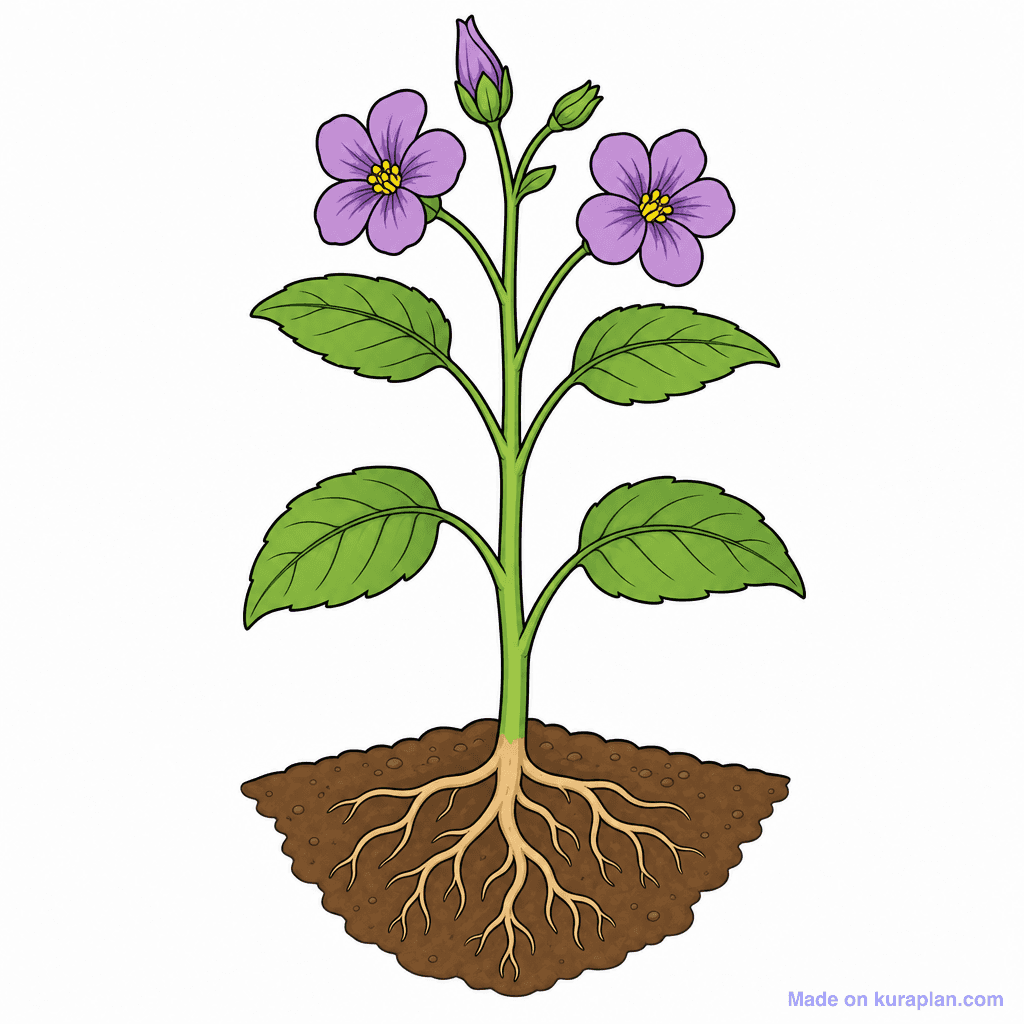
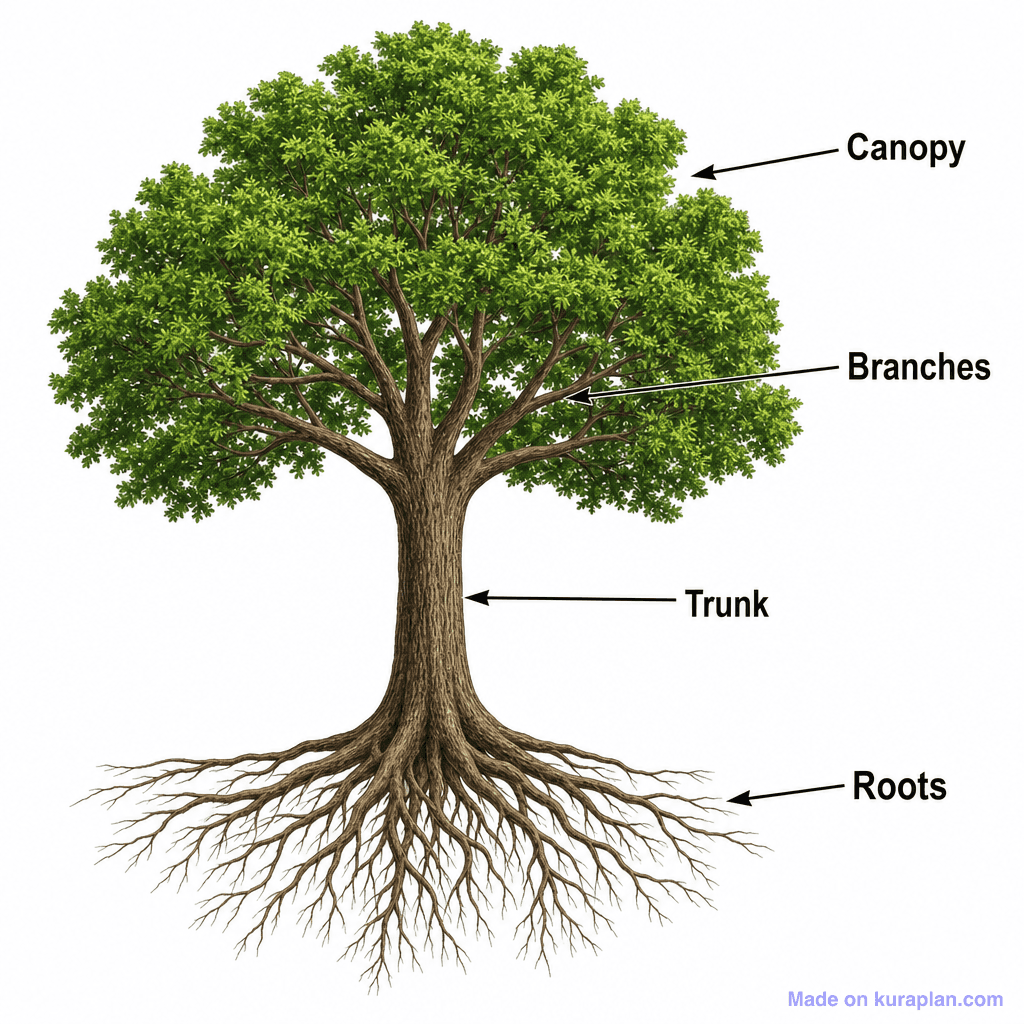
This illustration depicts a complete plant, showcasing its various parts both above and below the ground. Above the soil, a green stem branches out to several green leaves and two vibrant purple flowers with yellow centers, along with some flower buds. Below the soil, an intricate network of light brown roots is visible within the dark brown earth. This image is ideal for teaching elementary and middle school students about basic plant anatomy and functions in biology or life science lessons. It can be used for worksheets requiring students to label parts, as a visual aid in slides, or for identification activities. The visual style is a clear, flat illustration with distinct outlines and bright colors.
The parts of a plant and what each one does
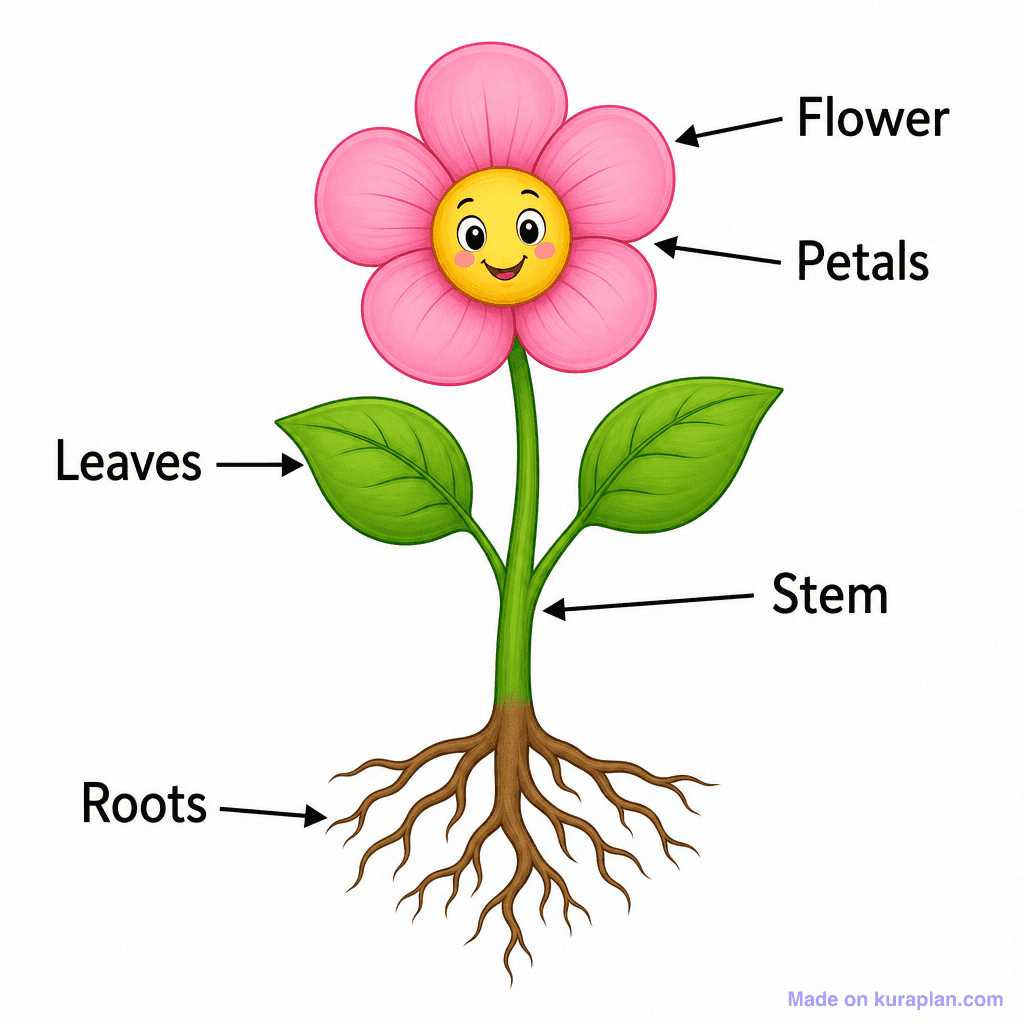
A labelled plant diagram is normally used to pair each part with its job, so the parts below are listed with the function a student is expected to give. Between them they cover everything a flowering plant needs: anchoring itself and taking up water, holding itself up and moving substances around, making its own food, and reproducing.
- Roots
- Anchor the plant and absorb water and minerals from the soil
- Stem
- Holds the plant up and carries water and food between the parts
- Leaves
- Make food by photosynthesis, using sunlight
- Flower
- The reproductive part — attracts pollinators
- Petals
- Attract insects and birds to the flower
- Seeds
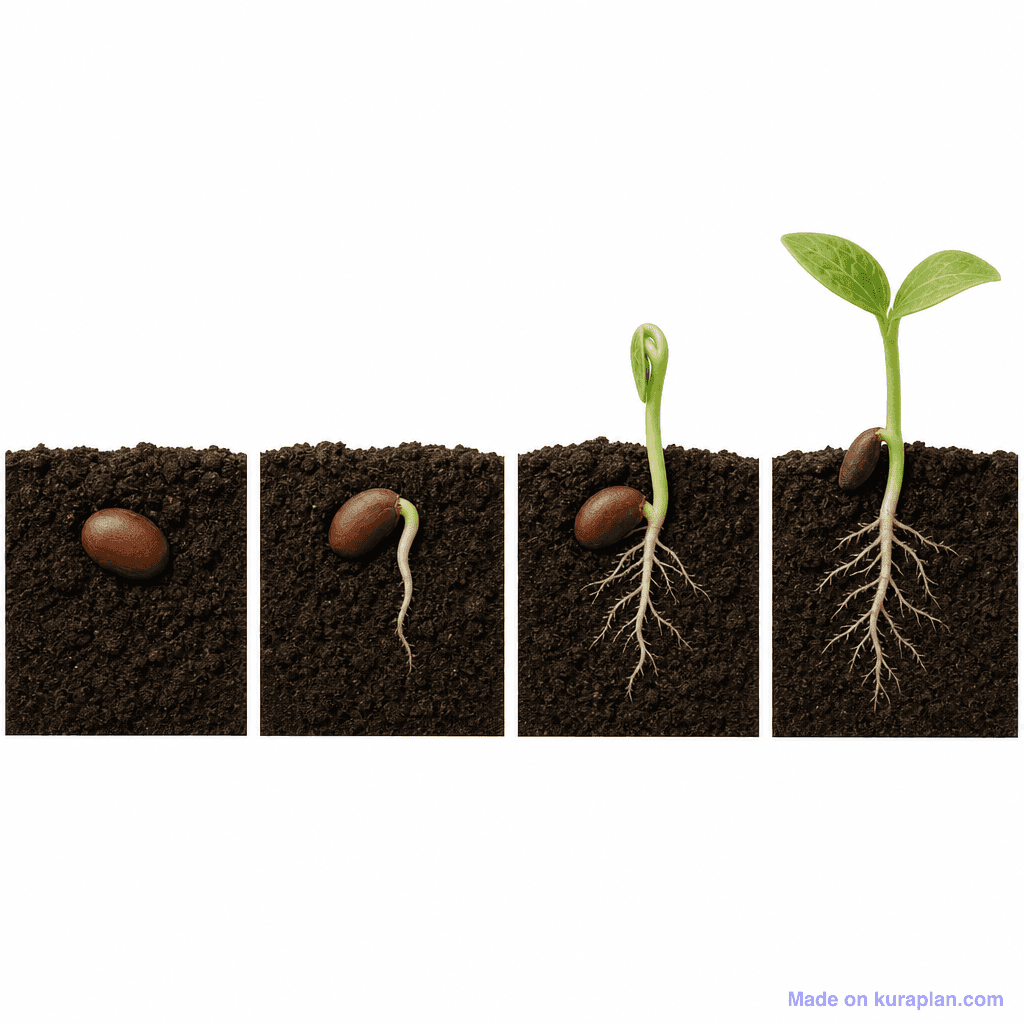
- Grow into new plants
- Fruit
- Surrounds and protects the seeds, and helps disperse them
- Feeding is split between two parts, and this is the point most worth making. The roots take up water and minerals from the soil; the leaves make the actual food. Neither does the other's job.
- Because of that split, "plant food" is a misleading phrase. A plant makes its own food in its leaves by photosynthesis — what is added to soil is minerals, not food.
- The stem is a two-way transport system: water travels up from the roots, and the sugars made in the leaves travel to wherever the plant needs them. At older key stages those two routes are named as the xylem and the phloem.
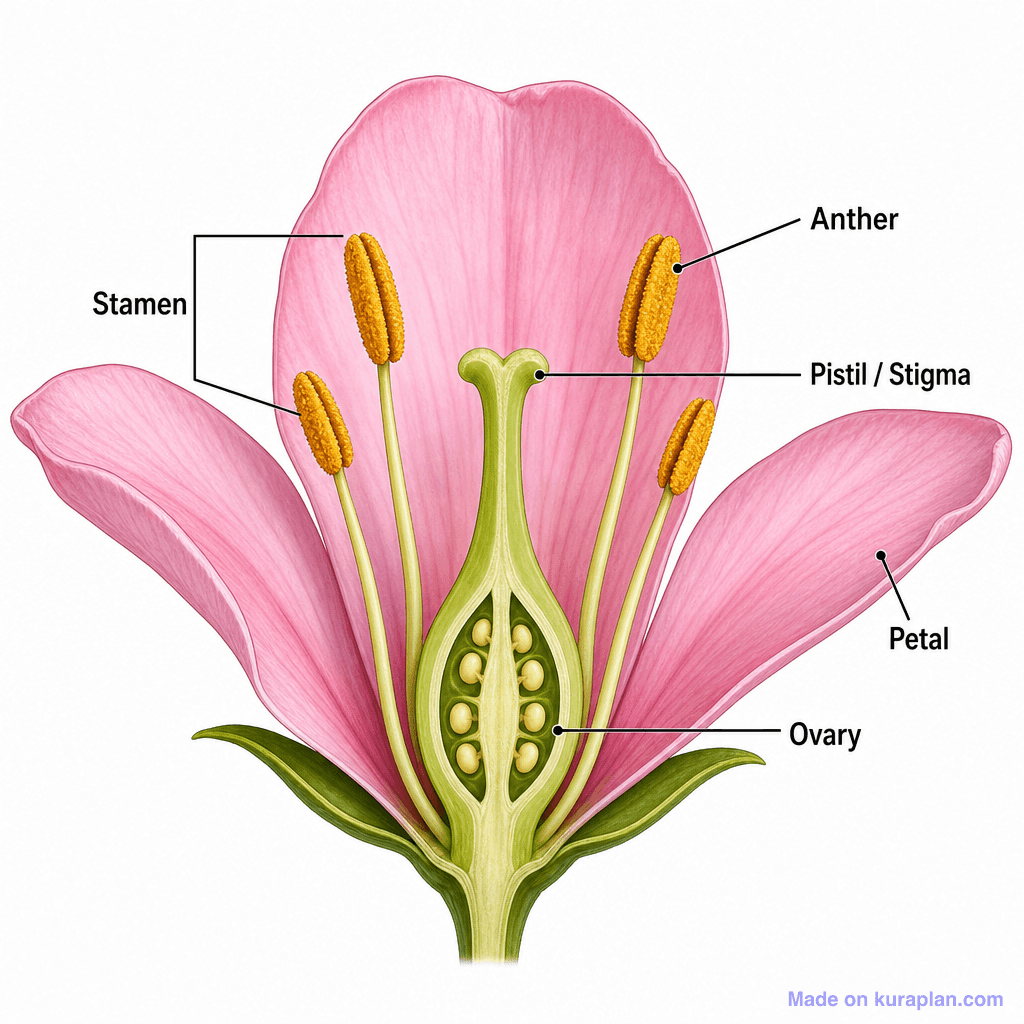
- The flower exists for reproduction. Pollination leads to seeds, the seeds are dispersed, and new plants grow — so flower, seed and fruit are best labelled as one sequence rather than three separate parts.
- Label first, then function. Asking students to write what each part does, after the labelling, is what turns the diagram from a vocabulary exercise into a science one.
- A good extension is to ask which part of a plant we eat for different foods: a carrot is a root, asparagus a stem, lettuce a leaf, broccoli a flower bud and a tomato a fruit. Celery is worth avoiding as the stem example even though it looks like one — the edible stalk is a leaf petiole, not a stem.
How to use
- 1Right-click the image and choose “Save image as”, or use the download button.
- 2Use it in your classroom worksheets, slides or printables — free under CC BY-NC 4.0.
- 3Attribute as “Image by Kuraplan” or link back to kuraplan.com. Not for commercial resale.
Turn this image into a worksheet
This illustration is already in Kuraplan's editor — describe the worksheet you need and the AI builds it around the image in seconds.
Related illustrations
More from Living Things — Plants
Free worksheets on Plant Parts Unlabeled
All free worksheetsBrowse by subject
21 subjects · 4,853 free illustrations
Maths
1,894 free illustrations
Cross-Curricular
835 free illustrations
English
612 free illustrations
Geography
549 free illustrations
Health
200 free illustrations
Social Studies
177 free illustrations
Religious Education
139 free illustrations
Music
128 free illustrations
Art
66 free illustrations
Drama
56 free illustrations
Social Sciences
48 free illustrations
History
47 free illustrations
Arts
26 free illustrations
PE
25 free illustrations
Te Reo Māori
24 free illustrations
Technology
16 free illustrations
Culture
7 free illustrations
Business
1 free illustrations
English
1 free illustrations
English (ELA)
1 free illustrations
Languages
1 free illustrations