Exploring Plants Worksheet
A free science worksheet ready for your classroom. Open in Kuraplan to grab the print-ready PDF, customize it for your students, or generate a fresh version in seconds.
Exploring Plants Worksheet
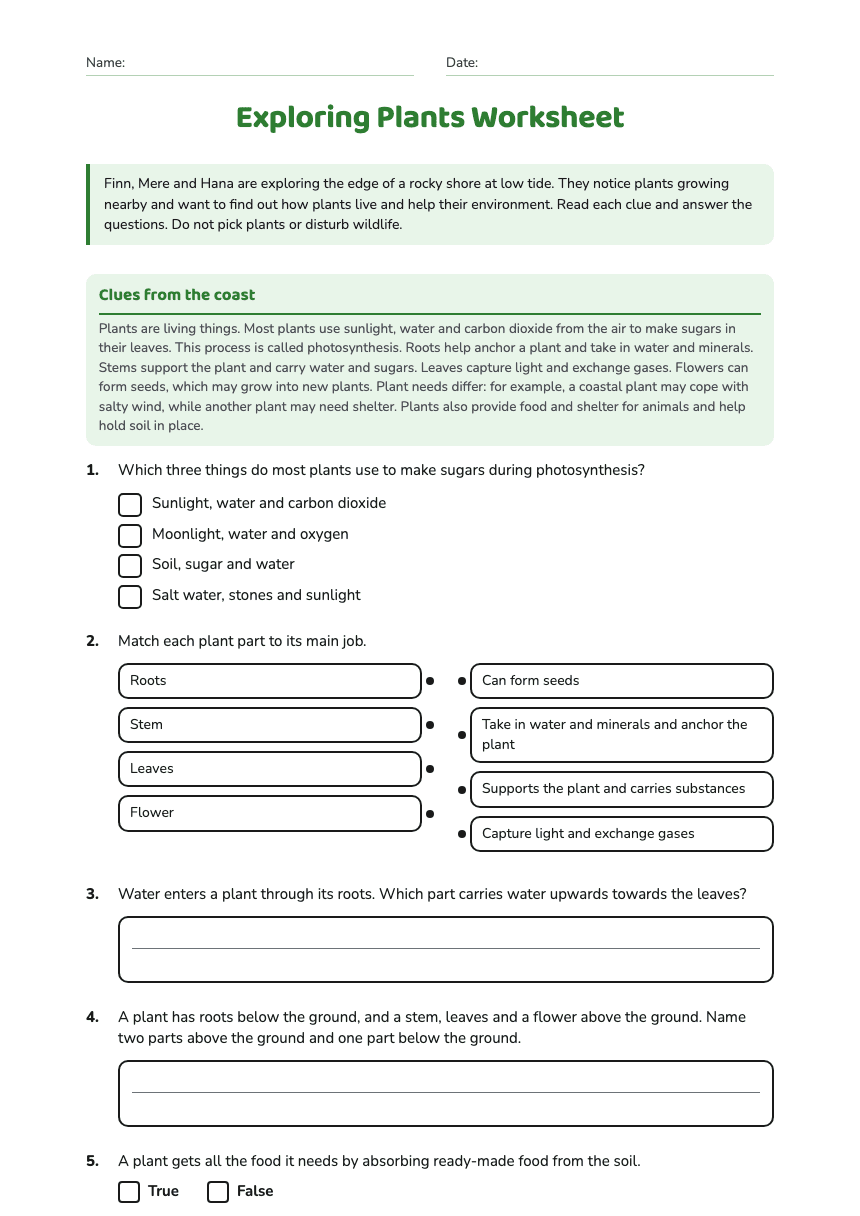
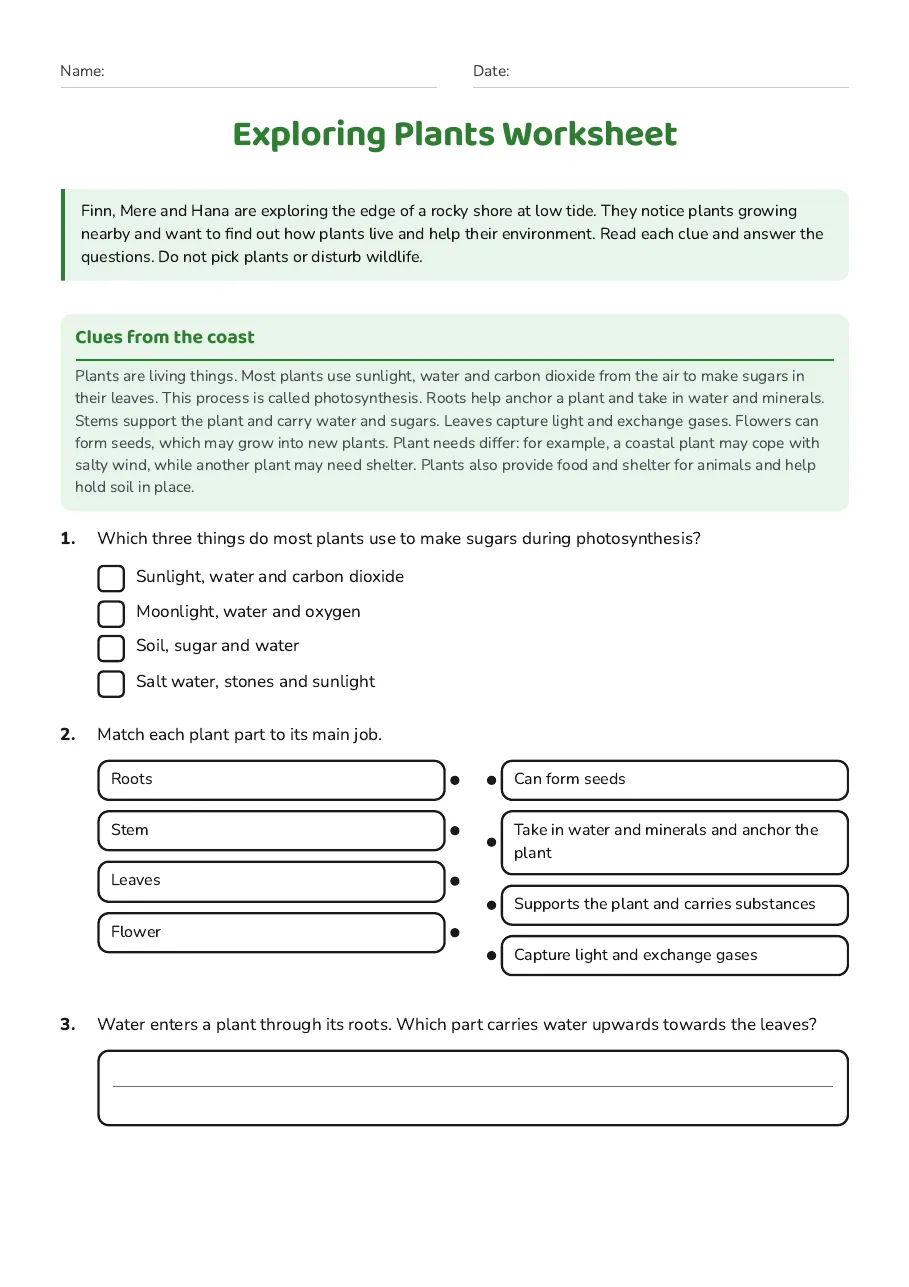
Clues from the coast
Plants are living things. Most plants use sunlight, water and carbon dioxide from the air to make sugars in their leaves. This process is called photosynthesis. Roots help anchor a plant and take in water and minerals. Stems support the plant and carry water and sugars. Leaves capture light and exchange gases. Flowers can form seeds, which may grow into new plants. Plant needs differ: for example, a coastal plant may cope with salty wind, while another plant may need shelter. Plants also provide food and shelter for animals and help hold soil in place.
- Sunlight, water and carbon dioxide
- Moonlight, water and oxygen
- Soil, sugar and water
- Salt water, stones and sunlight
- Roots
- Stem
- Leaves
- Flower
- Can form seeds
- Take in water and minerals and anchor the plant
- Supports the plant and carries substances
- Capture light and exchange gases
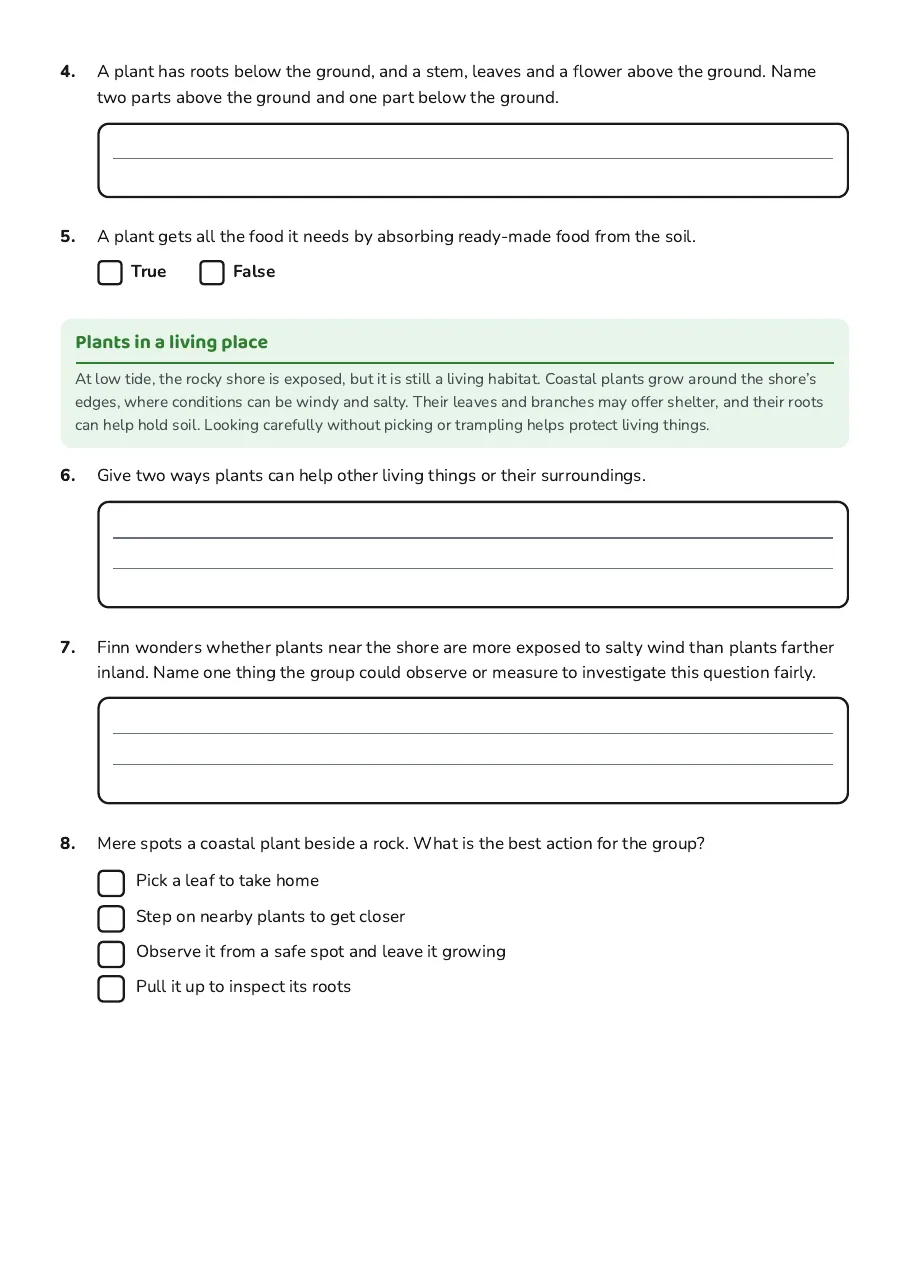
Plants in a living place
At low tide, the rocky shore is exposed, but it is still a living habitat. Coastal plants grow around the shore’s edges, where conditions can be windy and salty. Their leaves and branches may offer shelter, and their roots can help hold soil. Looking carefully without picking or trampling helps protect living things.
- Pick a leaf to take home
- Step on nearby plants to get closer
- Observe it from a safe spot and leave it growing
- Pull it up to inspect its roots
3 printable pages
Page 1
Page 2

Page 3
About This Worksheet
Free in Kuraplan
Sign up free, grab the PDF, and customize it for your class.
Print-Ready
Formatted for standard paper. Clean layout, easy to read.
AI-Generated
Created with Kuraplan's AI, designed for real classroom use.
For Teachers & Parents
Use in classrooms, for homework, tutoring, or homeschool.
Need a custom version of this worksheet?
Kuraplan's AI generates custom worksheets in seconds — differentiated for every learner, aligned to your curriculum.
Generate Custom Worksheets — FreeMore Science Worksheets
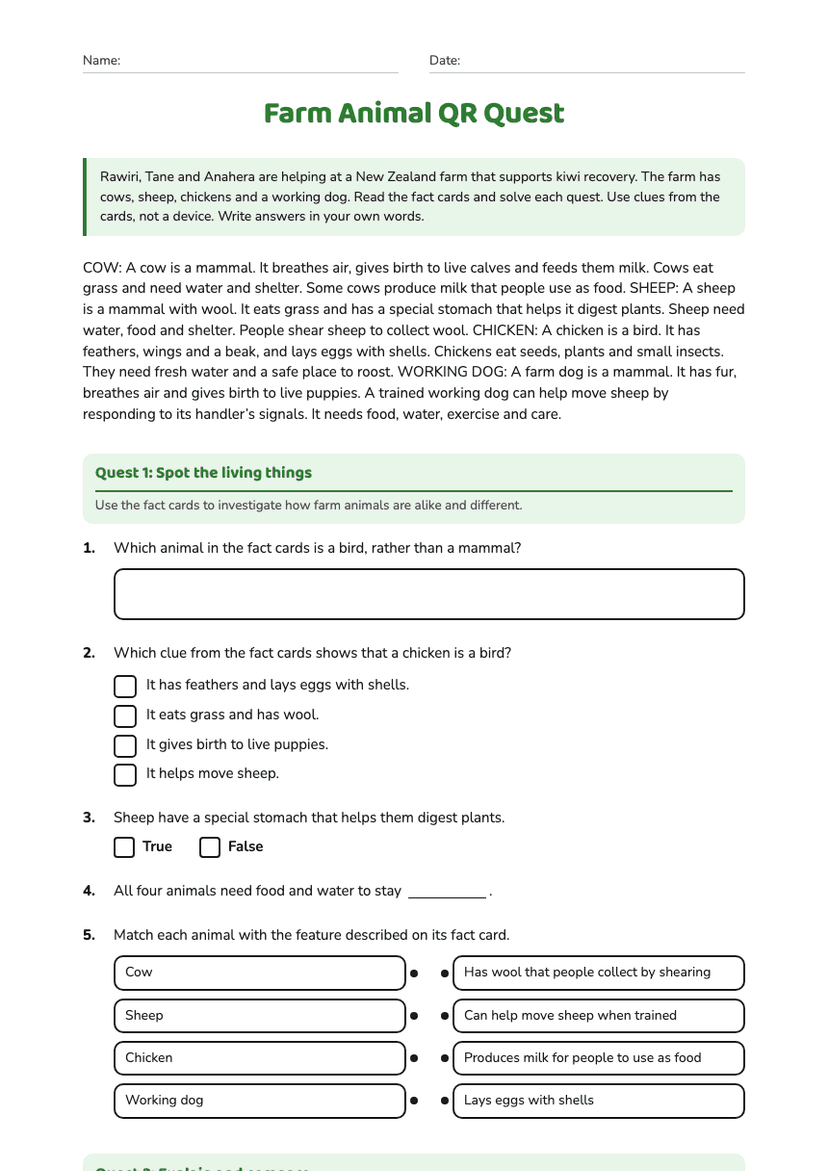
Farm Animal QR Quest
Free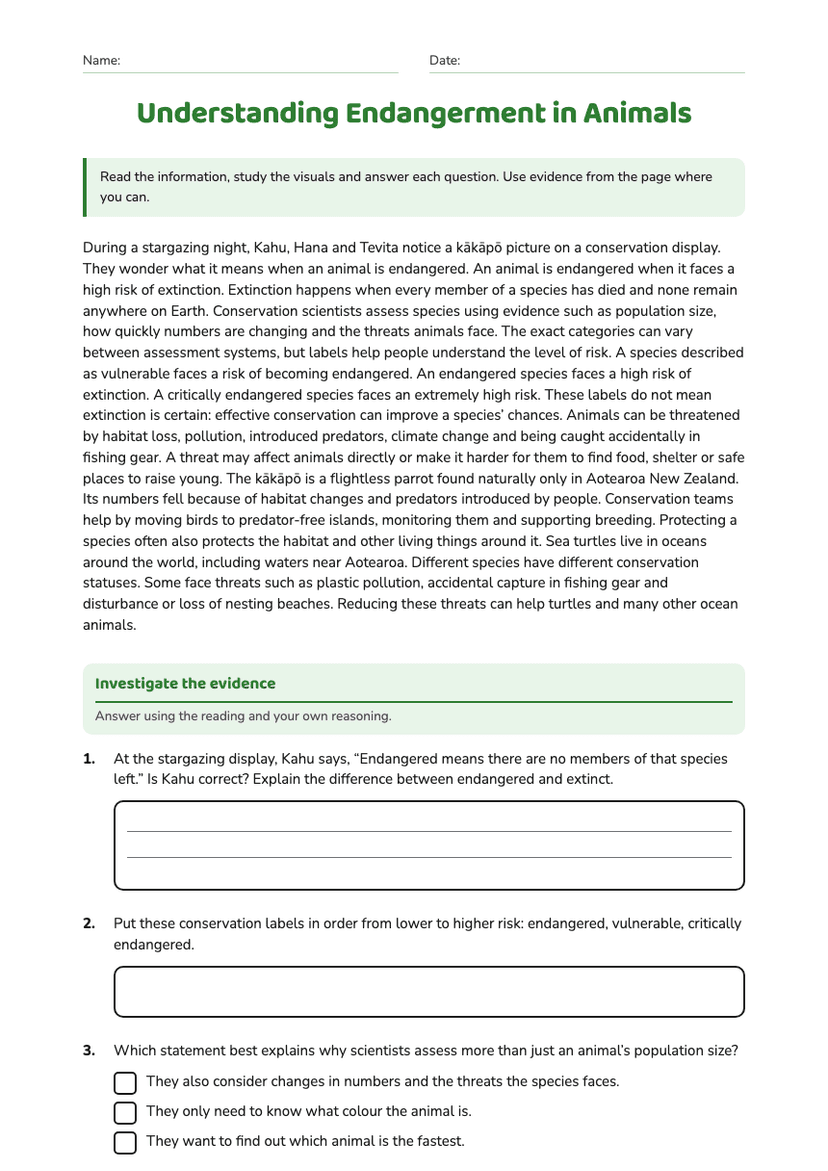
Understanding Endangerment in Animals
Free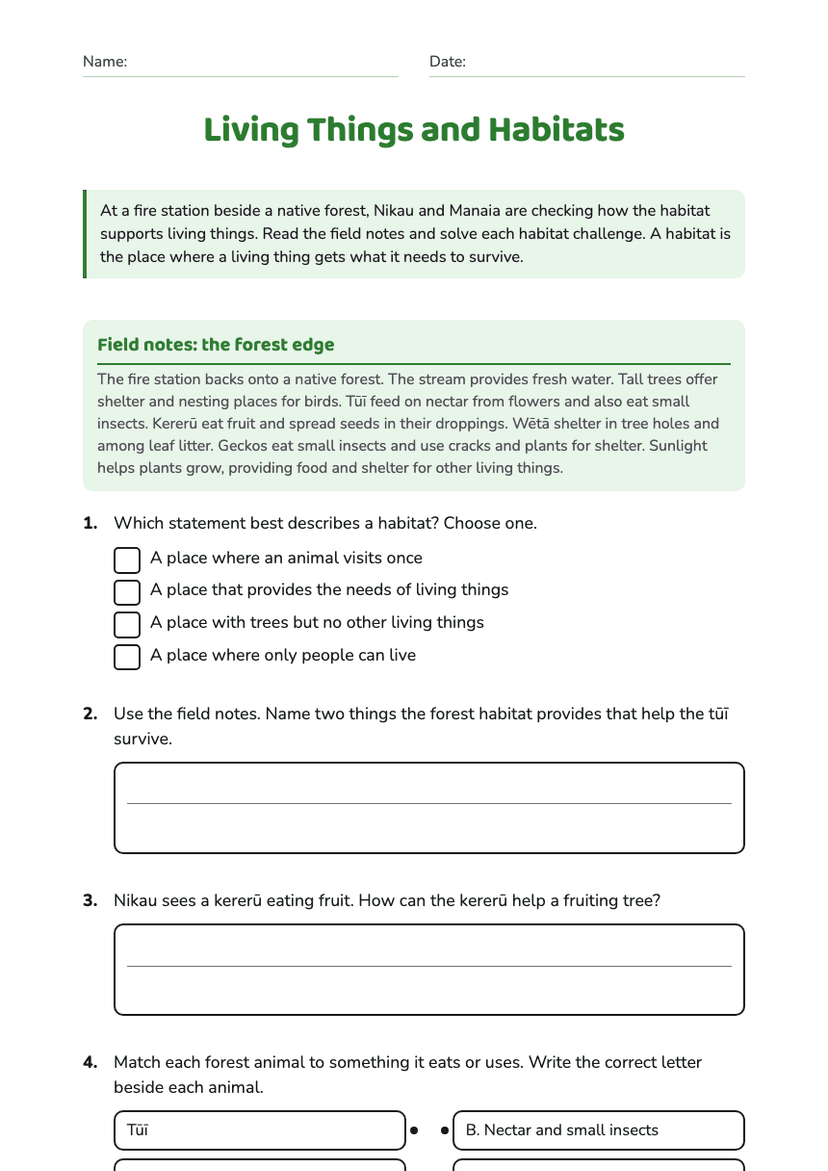
Living Things and Habitats
Free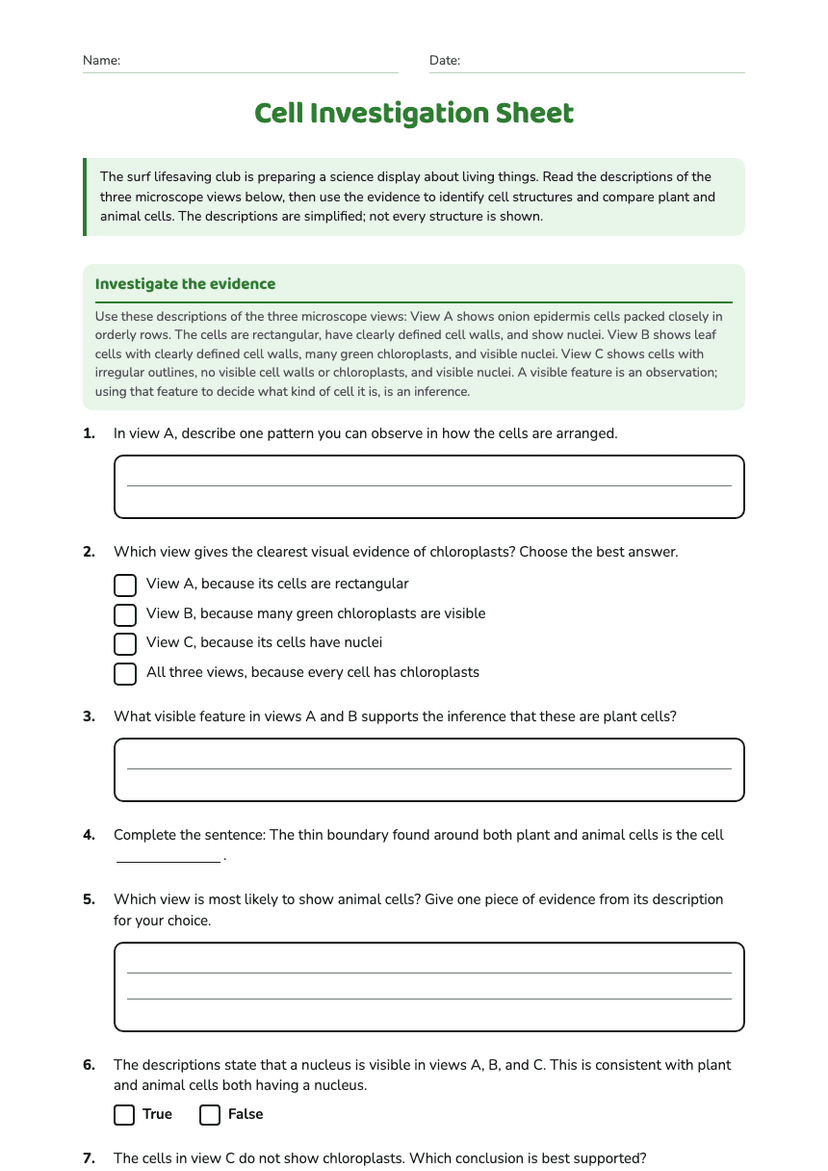
Cell Investigation Sheet
Free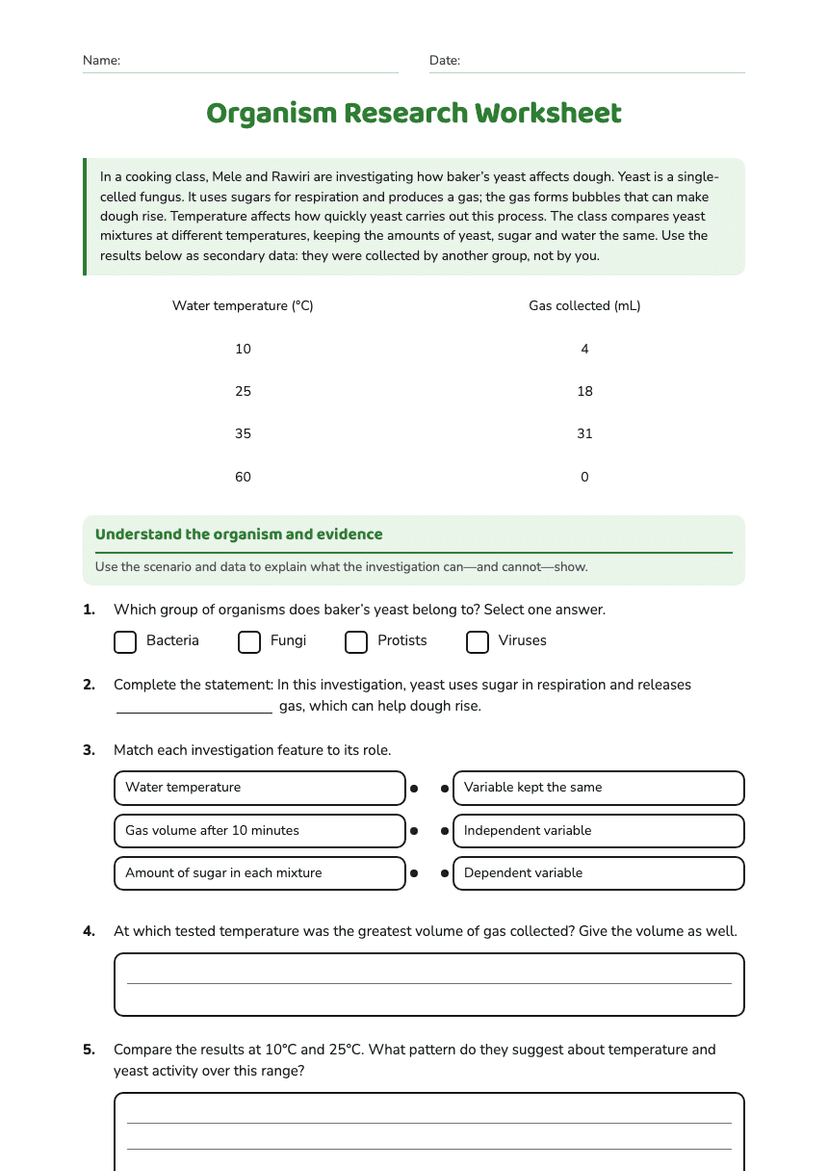
Organism Research Worksheet
Free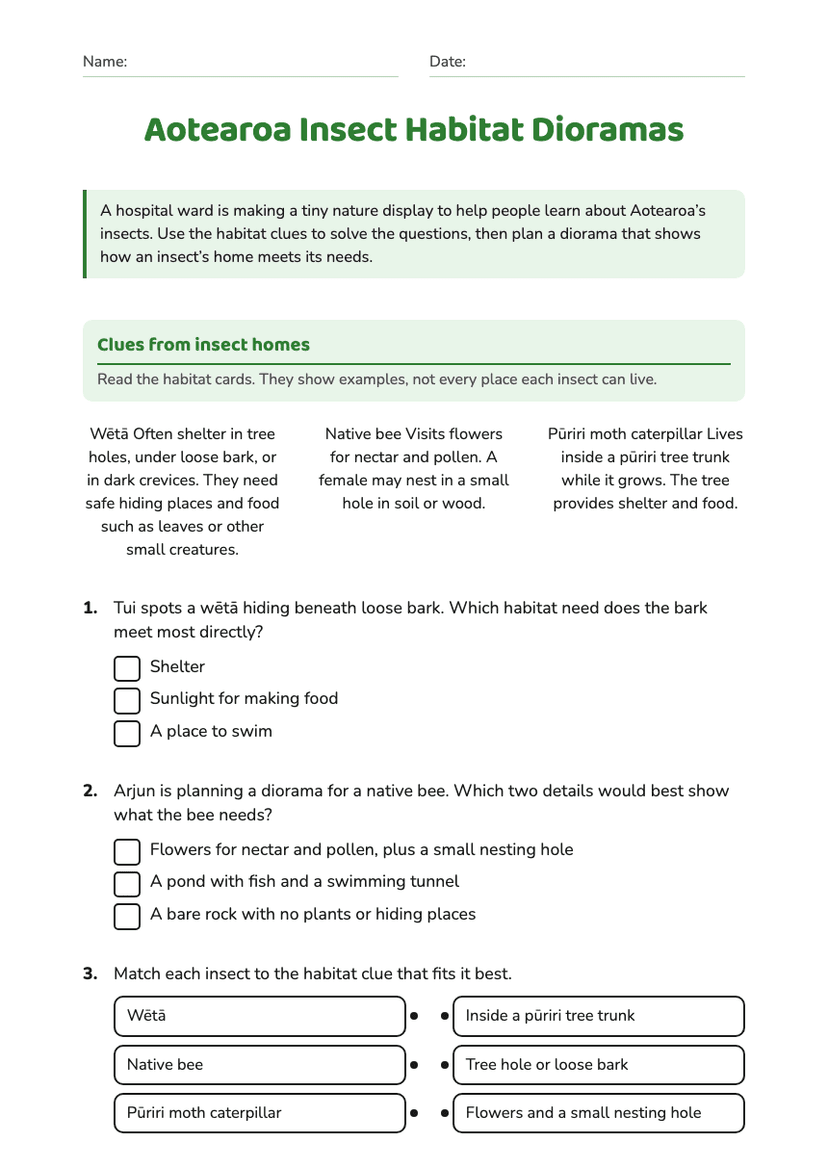
Aotearoa Insect Habitat Dioramas
Free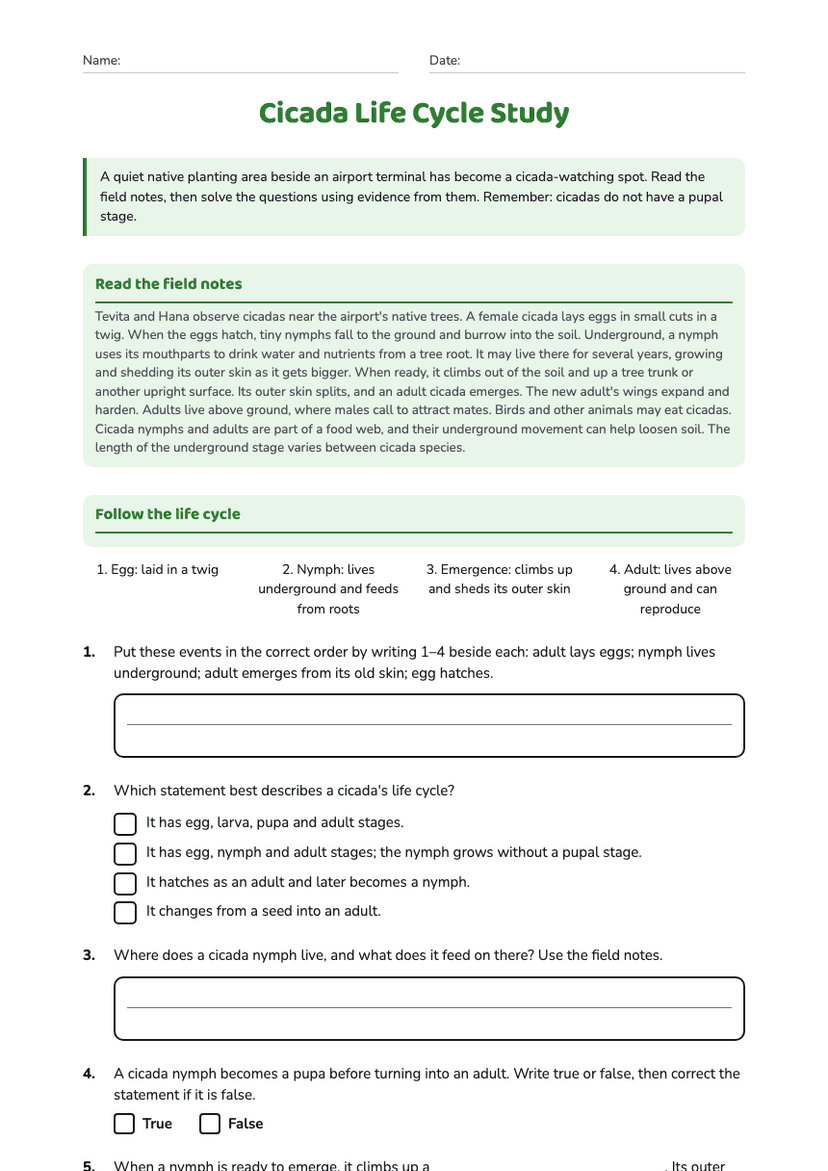
Cicada Life Cycle Study
Free