EnglishFreePrintable

Characterisation in Rarohenga: Chapters 1–12

A free english worksheet ready for your classroom. Open in Kuraplan to grab the print-ready PDF, customize it for your students, or generate a fresh version in seconds.
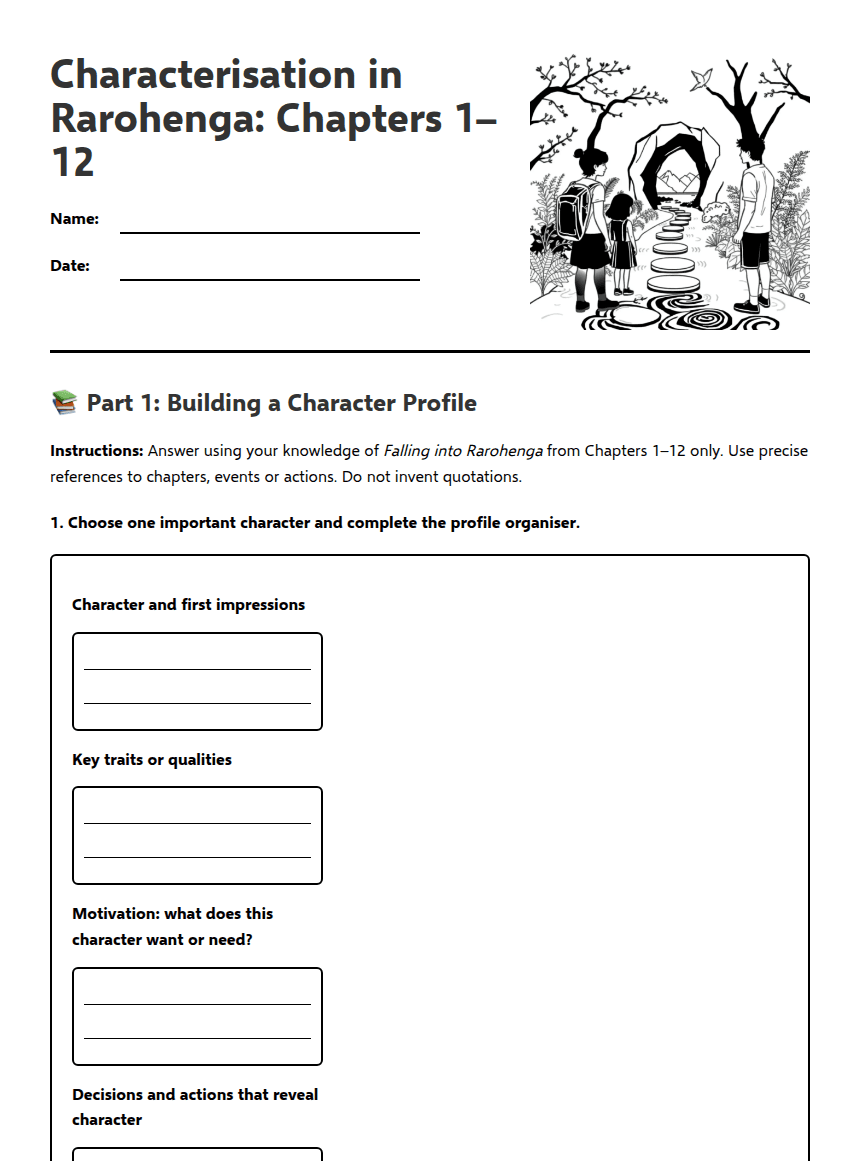
Characterisation in Rarohenga: Chapters 1–12 worksheet preview
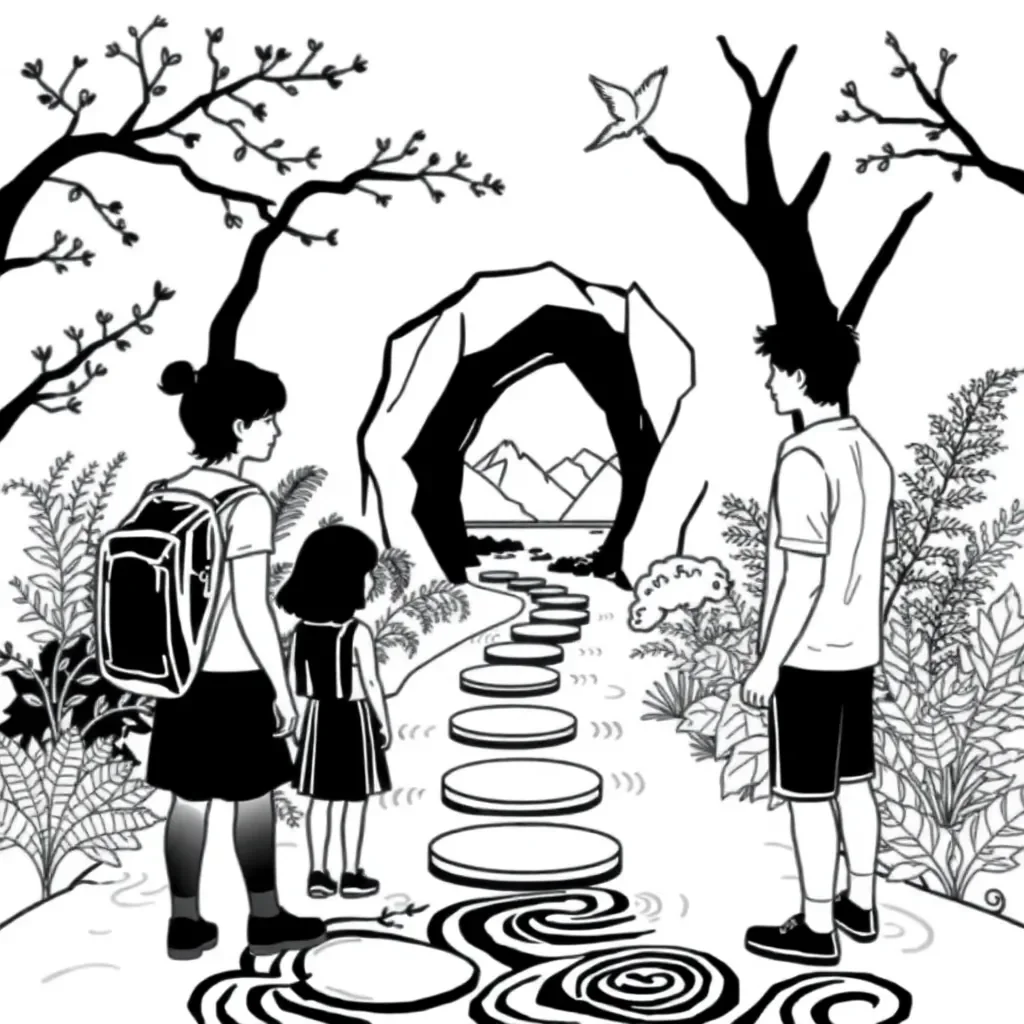
Characterisation in Rarohenga: Chapters 1–12

Worksheet illustration

📚 Part 1: Building a Character Profile

Instructions: Answer using your knowledge of Falling into Rarohenga from Chapters 1–12 only. Use precise references to chapters, events or actions. Do not invent quotations.

1. Choose one important character and complete the profile organiser.
Character and first impressions
Key traits or qualities
Motivation: what does this character want or need?
Decisions and actions that reveal character
Relationship with another character
What the reader can infer
2. Which method of characterisation is most useful for understanding your chosen character: dialogue, actions, thoughts, appearance, relationships or the narrator’s comments? Explain your choice.
3. Identify one viewpoint about your character that a reader could reasonably develop. Support it with a detail from Chapters 1–12.
4. Evidence table: record at least two short quotations or precise references from anywhere up to Chapter 12. Use quotation marks only when your wording is exact; otherwise give the chapter and describe the moment accurately.
Evidence 1: quotation or precise reference, with chapter
What this reveals about the character
Evidence 2: quotation or precise reference, with chapter
What this reveals about the character

✏️ Part 2: Comparing and Tracking Development

5. Compare two characters from Chapters 1–12. How are their motivations, decisions or responses to challenges similar and/or different?
Character A: motivation, decision or response
Character B: motivation, decision or response
Comparison: what does this show about their relationship or values?
6. Character change timeline: describe your chosen character at the beginning of the novel and at Chapter 12. Include one important moment in between.
Beginning: first impression or starting position
Turning point or important moment: chapter and explanation
By Chapter 12: what has changed, stayed the same or become more complicated?
7. Write a developed paragraph explaining how the author builds your interpretation of a character across Chapters 1–12. Refer to at least two details and explain their significance.
8. Which character has had the greatest influence on events or on other characters so far? Explain your view using evidence from Chapters 1–12.

🎭 Part 3: Creative Response and Reflection

9. Choose one task. Write either a diary entry from a character’s point of view or a text-message exchange between two characters. Show the character’s thoughts, motivation and response to a significant moment from Chapters 1–12. Do not reveal events beyond Chapter 12.

Planning prompts: What does the character know? What do they want? What might they hide from others? How can word choice reveal their personality?

10. Self-checklist: tick each statement when you have completed it.

I focused only on Chapters 1–12.

I analysed character traits, motivations, decisions or relationships.

I included at least two accurate quotations or precise references.

I explained what my evidence shows, rather than only retelling events.

I considered a viewpoint or interpretation and supported it.

I checked my spelling, punctuation and paragraphing.

Teacher guidance and answer guidance

Accept different interpretations when they are supported by accurate evidence from Chapters 1–12. Prompt students to identify the characterisation method being used, explain how a motivation leads to a decision, and connect a character’s actions to relationships or development. Ask: What detail makes you think that? Which chapter supports your idea? Has the character changed, or has the reader’s understanding changed?

For the evidence task, verify quotations against the class text and accept precise chapter references where students paraphrase. For the creative task, assess viewpoint, consistency with the character, use of relevant details and avoidance of spoilers beyond Chapter 12.

Curriculum alignment: NZ-TMA-ENGLISH-Y9-10-text-studies-105-DOC136; NZ-TMA-ENGLISH-Y9-10-text-studies-147-DOC136. This worksheet supports analysing features of a novel, developing interpretations, considering viewpoints and supporting responses with evidence.

About This Worksheet

Free in Kuraplan

Sign up free, grab the PDF, and customize it for your class.

Print-Ready

Formatted for standard paper. Clean layout, easy to read.

AI-Generated

Created with Kuraplan's AI, designed for real classroom use.

For Teachers & Parents

Use in classrooms, for homework, tutoring, or homeschool.

Need a custom version of this worksheet?

Kuraplan's AI generates custom worksheets in seconds — differentiated for every learner, aligned to your curriculum.

Generate Custom Worksheets — Free
No credit card Curriculum-aligned Under 60 seconds