Electrical Resistance Heat Investigation
A free science worksheet ready for your classroom. Open in Kuraplan to grab the print-ready PDF, customize it for your students, or generate a fresh version in seconds.
Electrical Resistance Heat Investigation
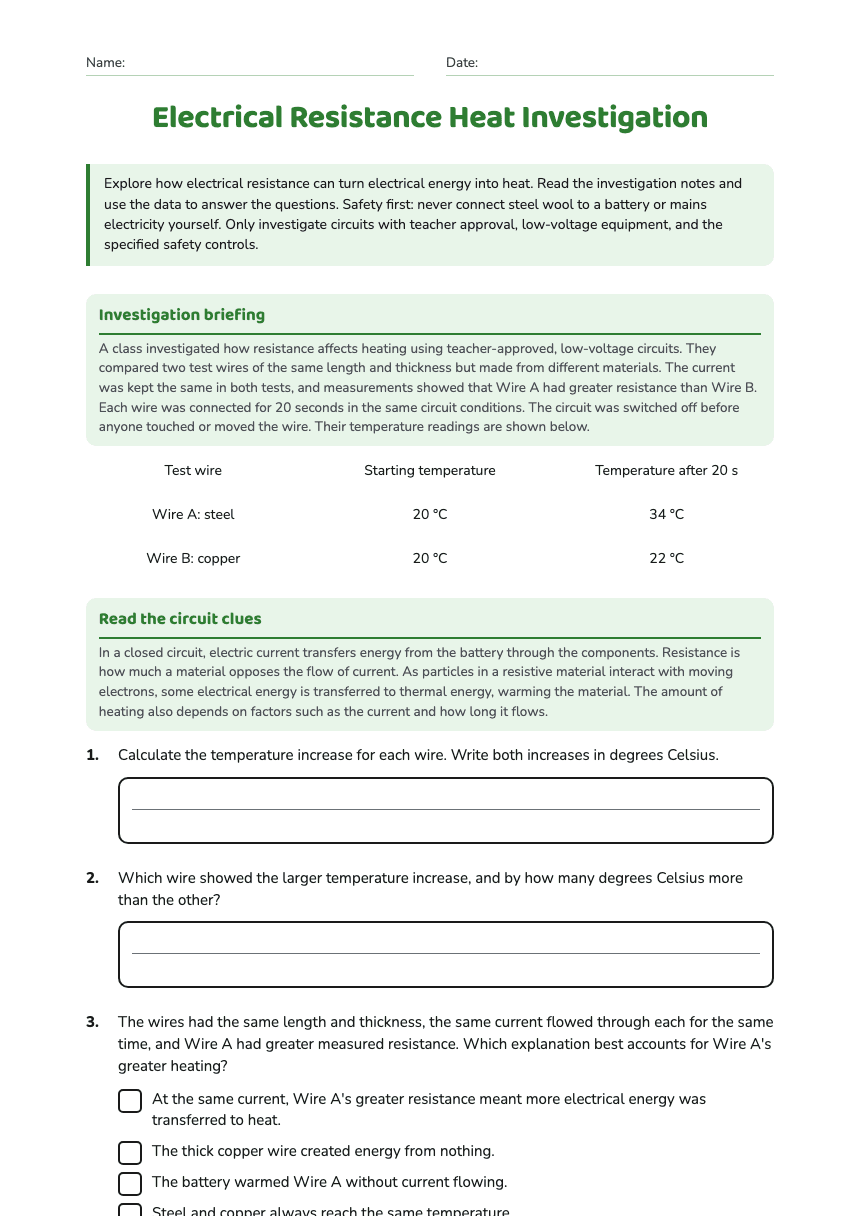
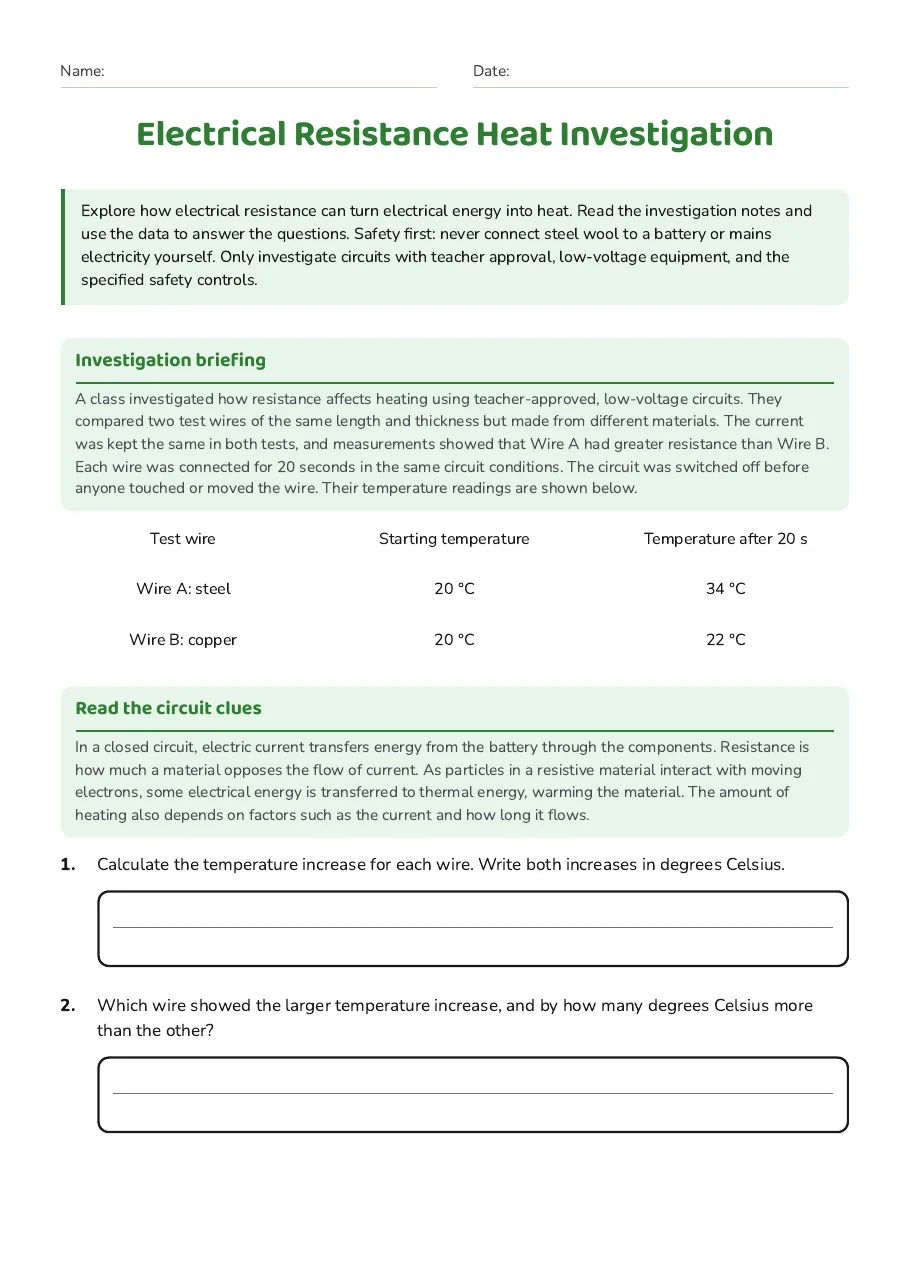
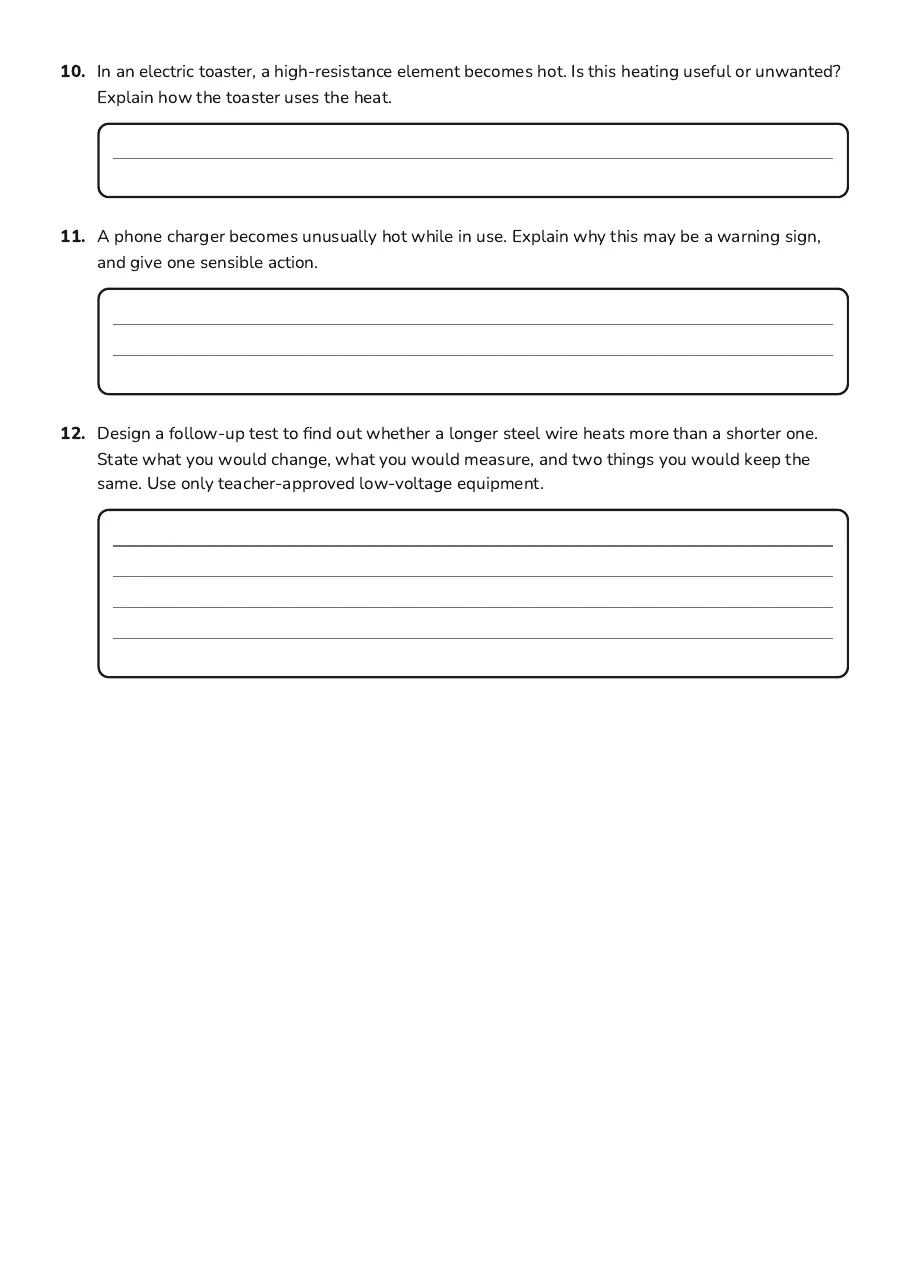
Investigation briefing
A class investigated how resistance affects heating using teacher-approved, low-voltage circuits. They compared two test wires of the same length and thickness but made from different materials. The current was kept the same in both tests, and measurements showed that Wire A had greater resistance than Wire B. Each wire was connected for 20 seconds in the same circuit conditions. The circuit was switched off before anyone touched or moved the wire. Their temperature readings are shown below.
Test wire
Starting temperature
Temperature after 20 s
Wire A: steel
20 °C
34 °C
Wire B: copper
20 °C
22 °C
Read the circuit clues
In a closed circuit, electric current transfers energy from the battery through the components. Resistance is how much a material opposes the flow of current. As particles in a resistive material interact with moving electrons, some electrical energy is transferred to thermal energy, warming the material. The amount of heating also depends on factors such as the current and how long it flows.
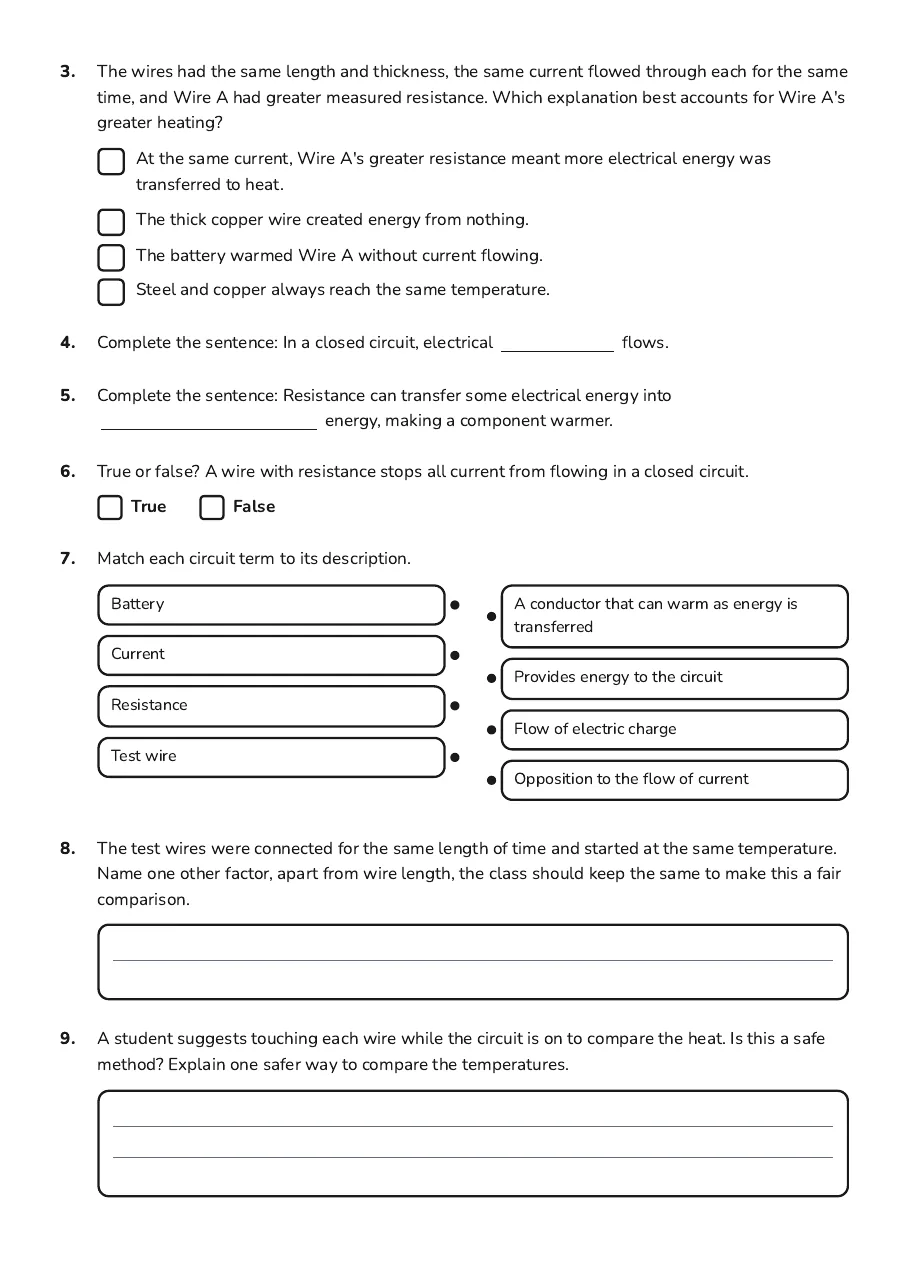
- At the same current, Wire A's greater resistance meant more electrical energy was transferred to heat.
- The thick copper wire created energy from nothing.
- The battery warmed Wire A without current flowing.
- Steel and copper always reach the same temperature.
- Battery
- Current
- Resistance
- Test wire
- A conductor that can warm as energy is transferred
- Provides energy to the circuit
- Flow of electric charge
- Opposition to the flow of current
3 printable pages
Page 1
Page 2
Page 3
About This Worksheet
Free in Kuraplan
Sign up free, grab the PDF, and customize it for your class.
Print-Ready
Formatted for standard paper. Clean layout, easy to read.
AI-Generated
Created with Kuraplan's AI, designed for real classroom use.
For Teachers & Parents
Use in classrooms, for homework, tutoring, or homeschool.
Need a custom version of this worksheet?
Kuraplan's AI generates custom worksheets in seconds — differentiated for every learner, aligned to your curriculum.
Generate Custom Worksheets — FreeMore Science Worksheets
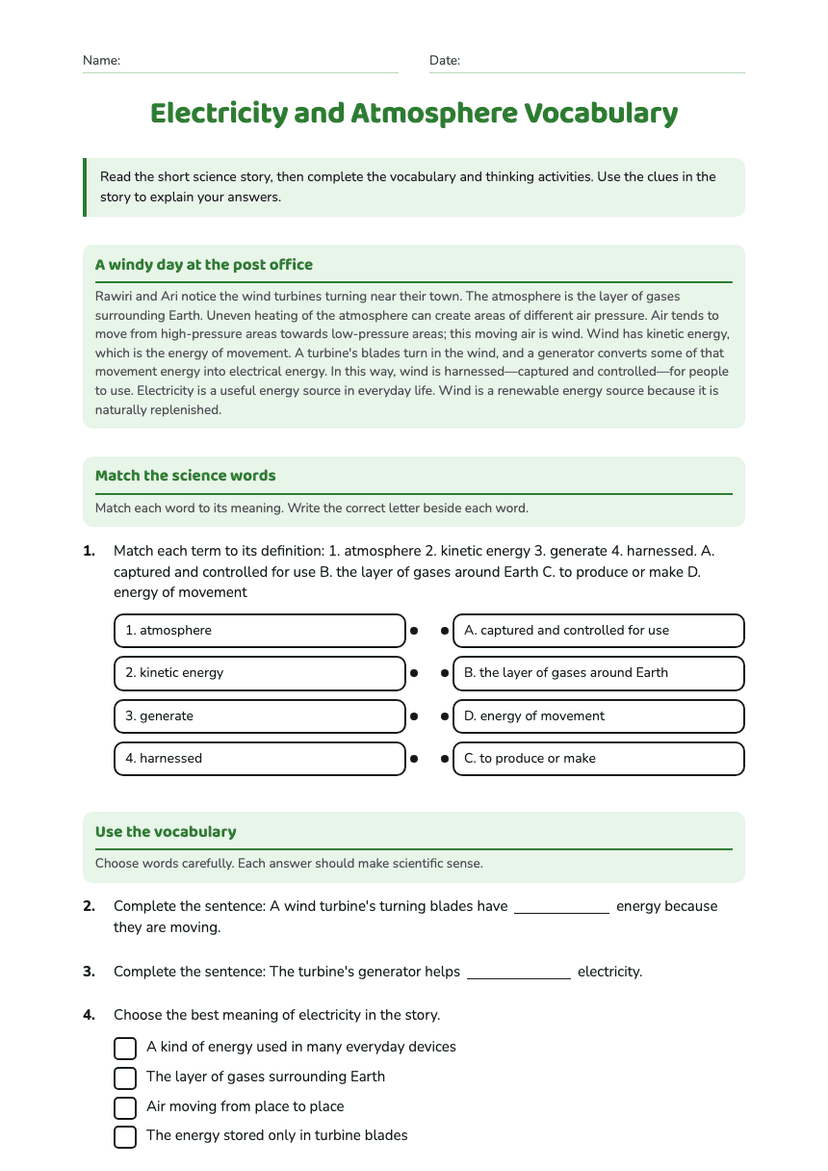
Electricity and Atmosphere Vocabulary
Free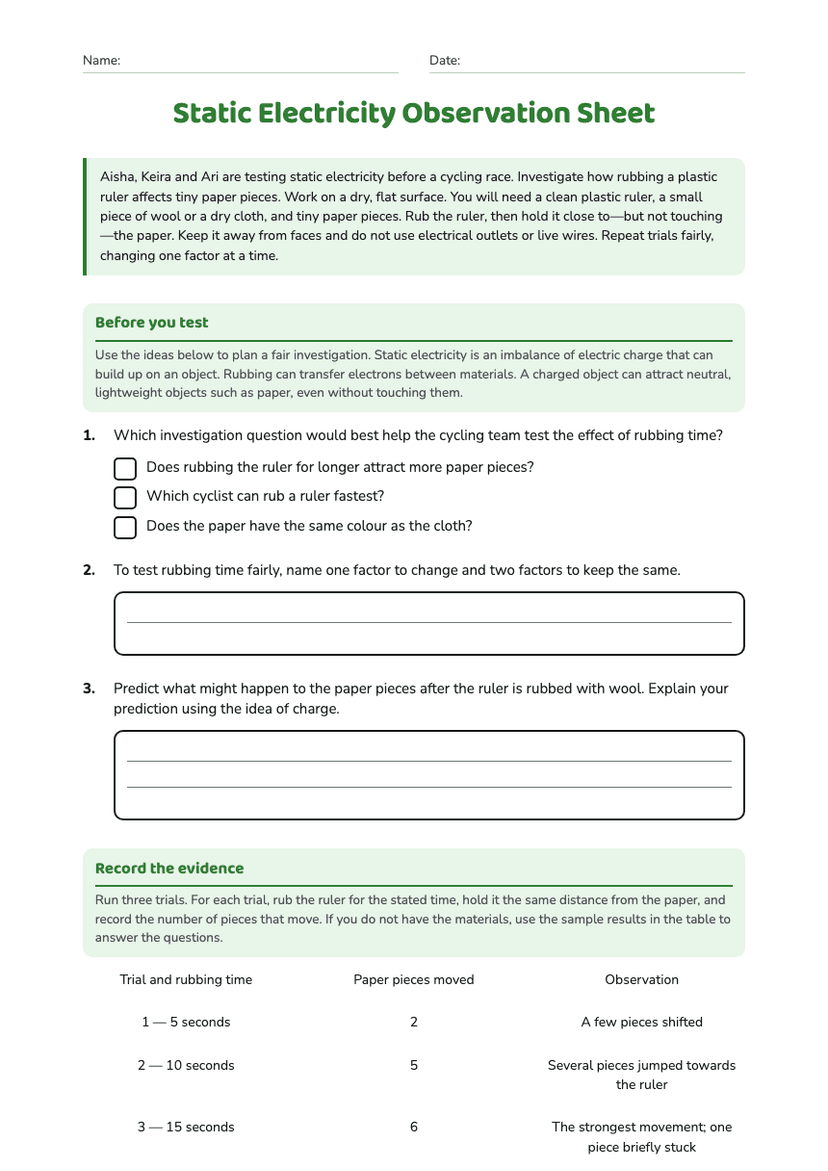
Static Electricity Observation Sheet
Free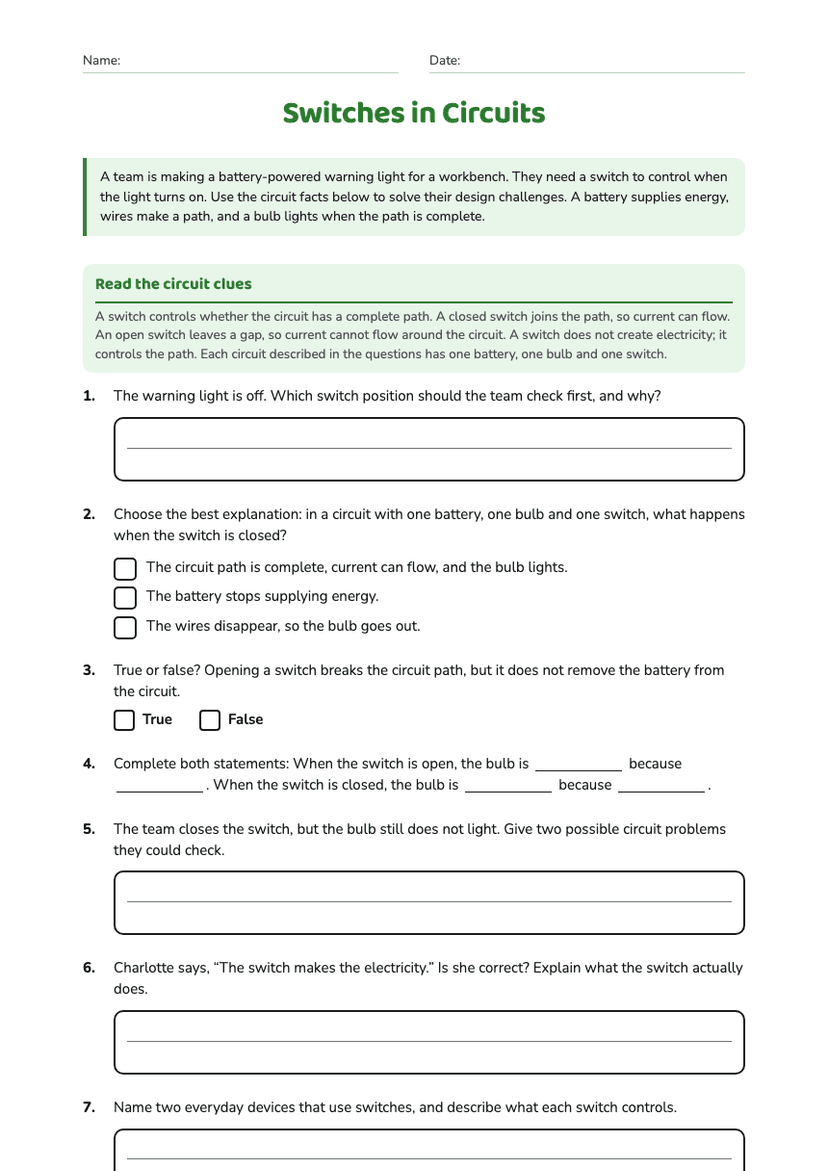
Switches in Circuits
Free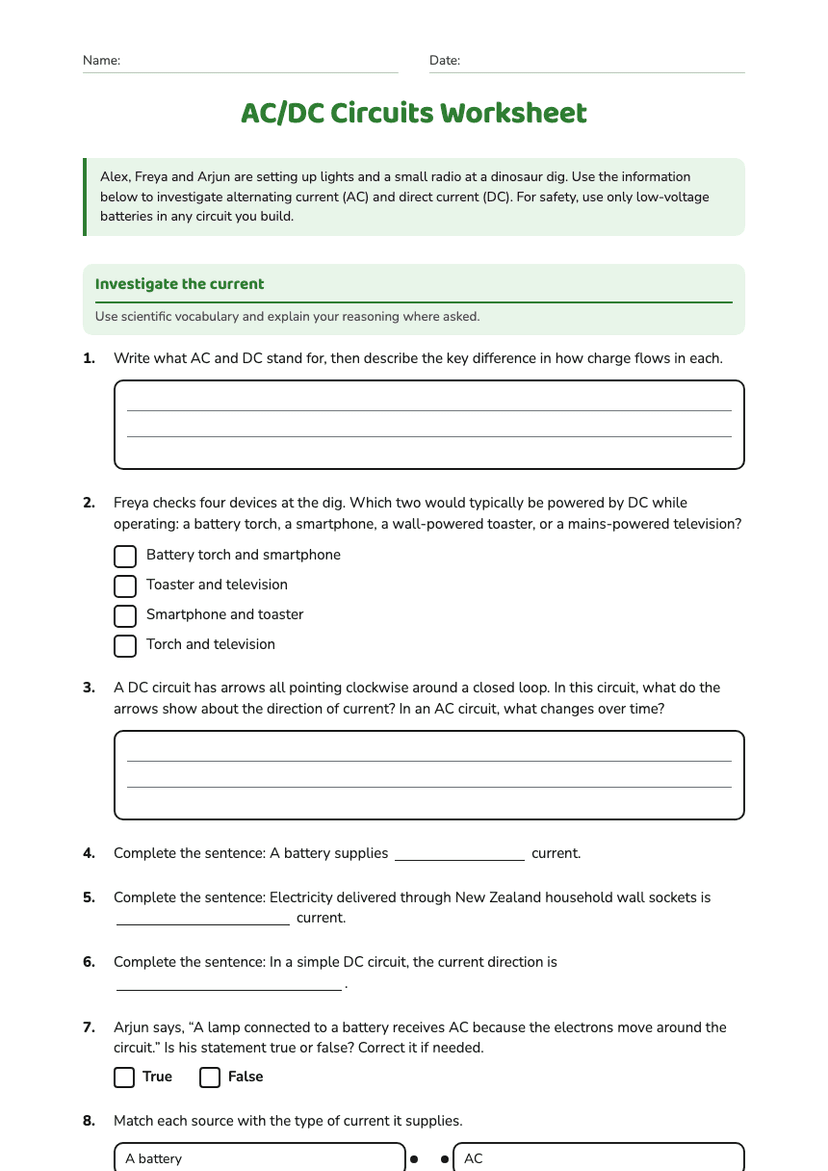
AC/DC Circuits Worksheet
Free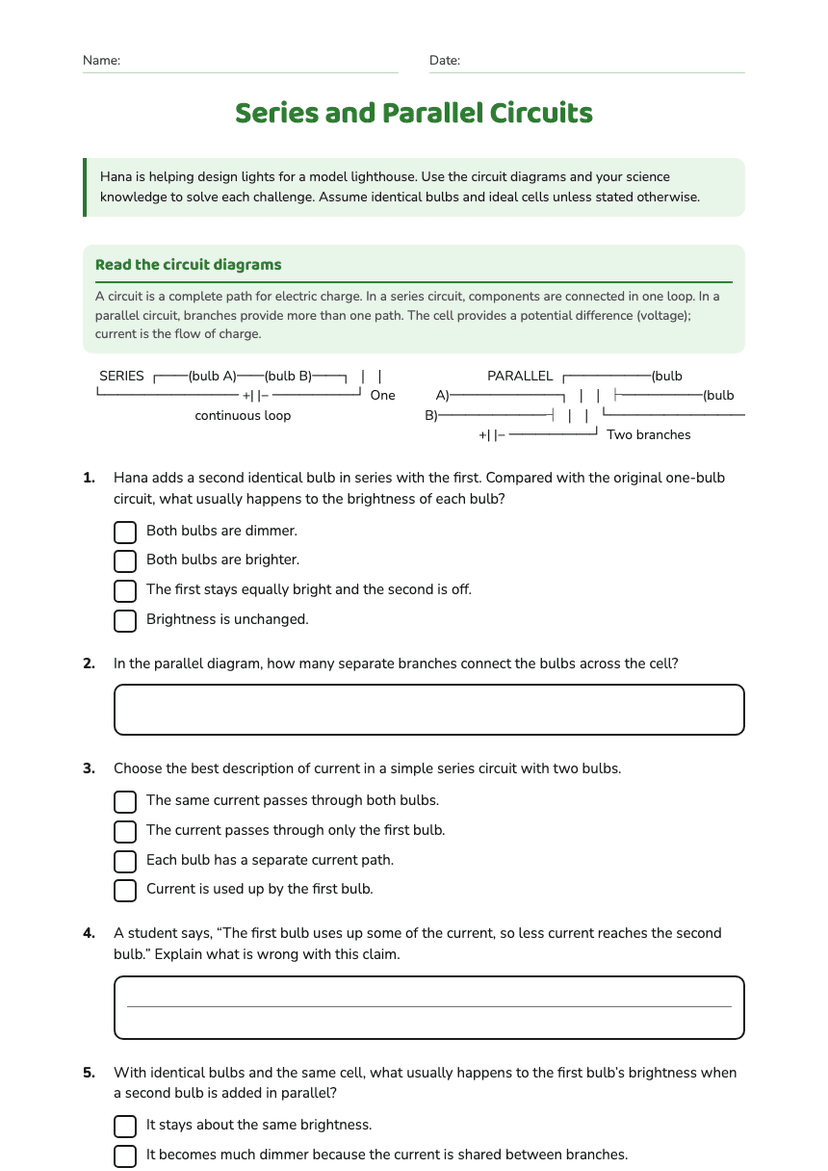
Series and Parallel Circuits
Free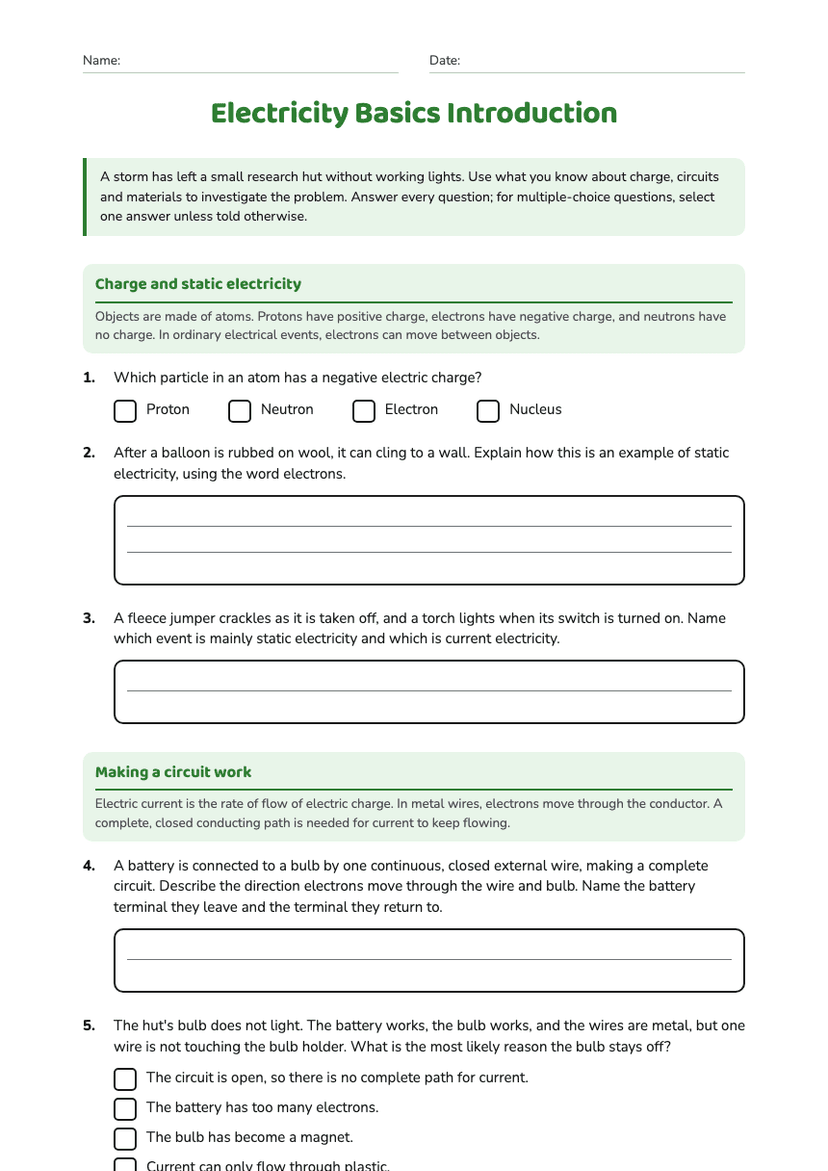
Electricity Basics Introduction
Free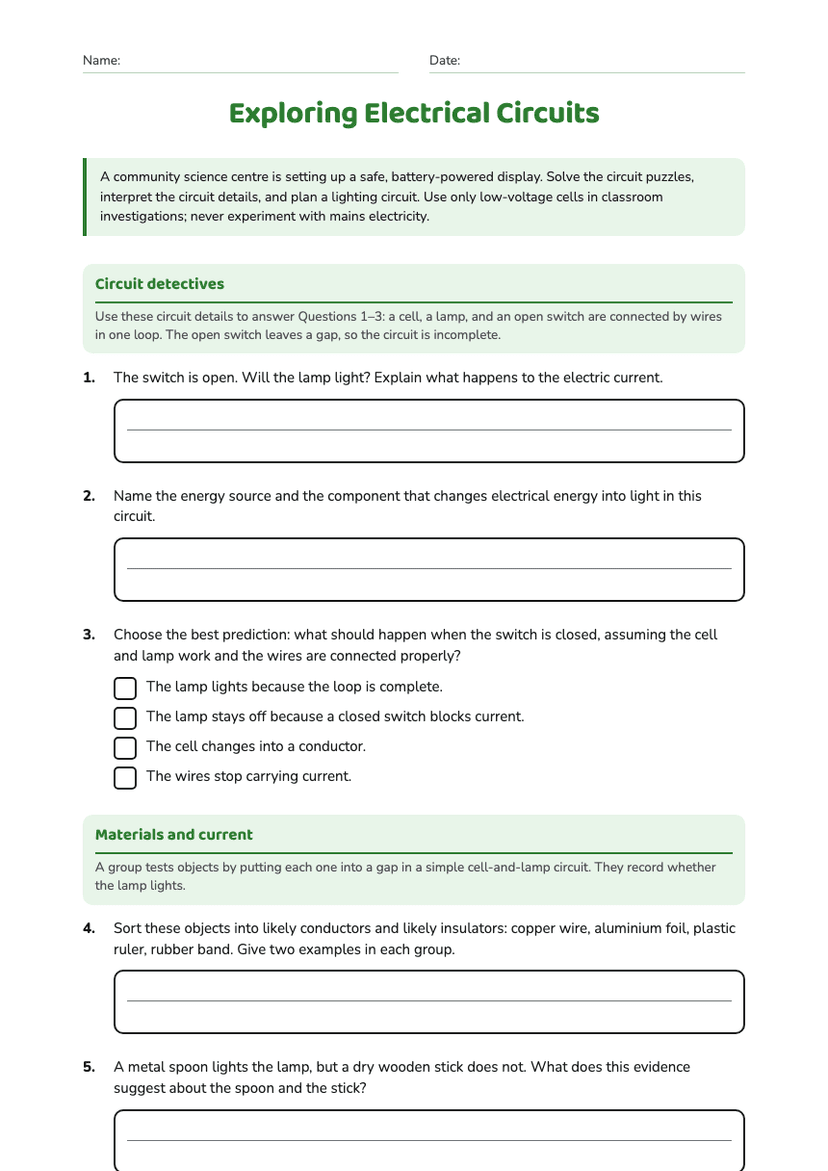
Exploring Electrical Circuits
Free