New Zealand Bird Habitats
A free science worksheet ready for your classroom. Open in Kuraplan to grab the print-ready PDF, customize it for your students, or generate a fresh version in seconds.
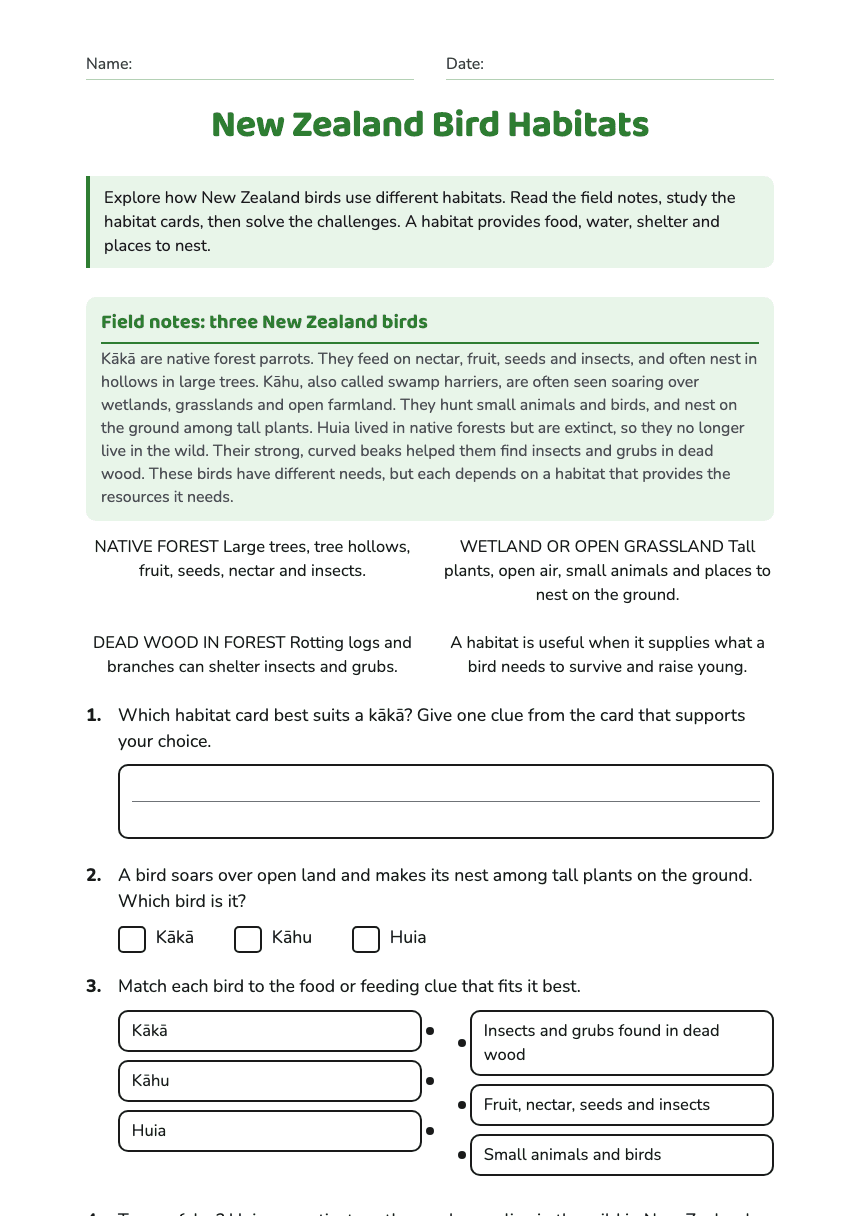
New Zealand Bird Habitats
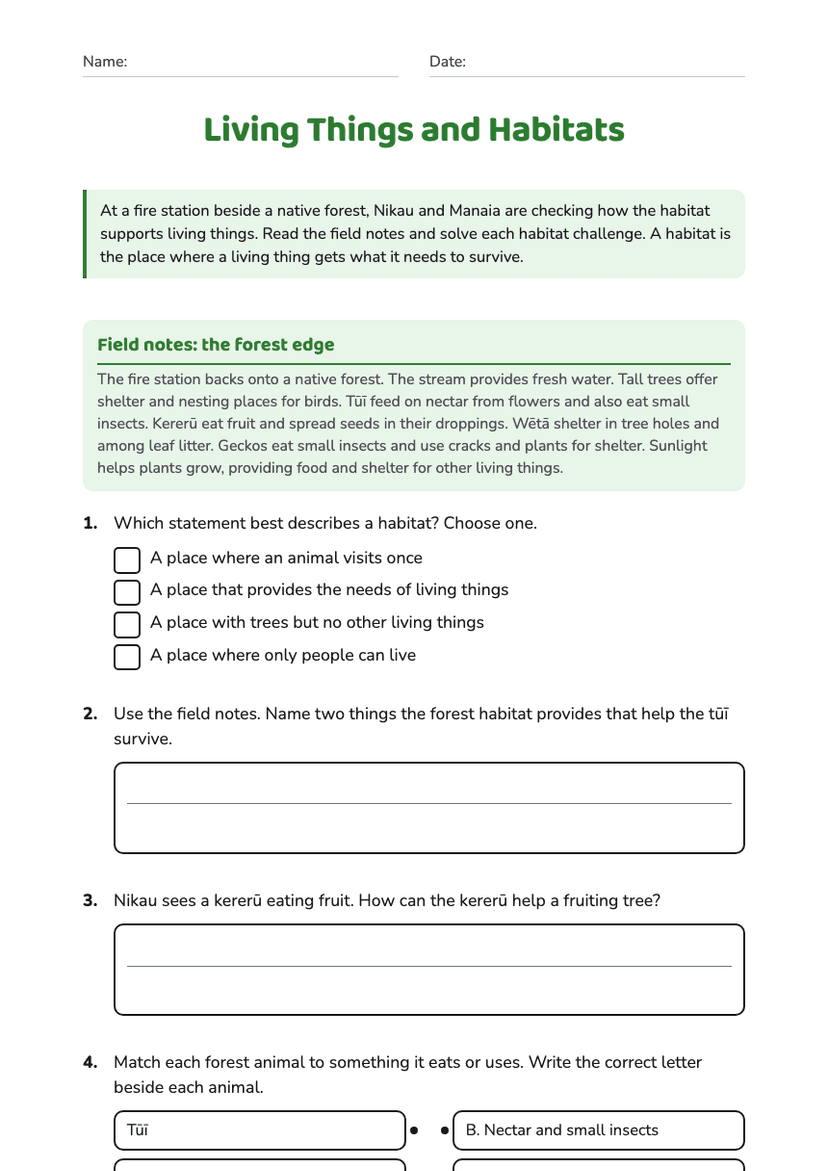
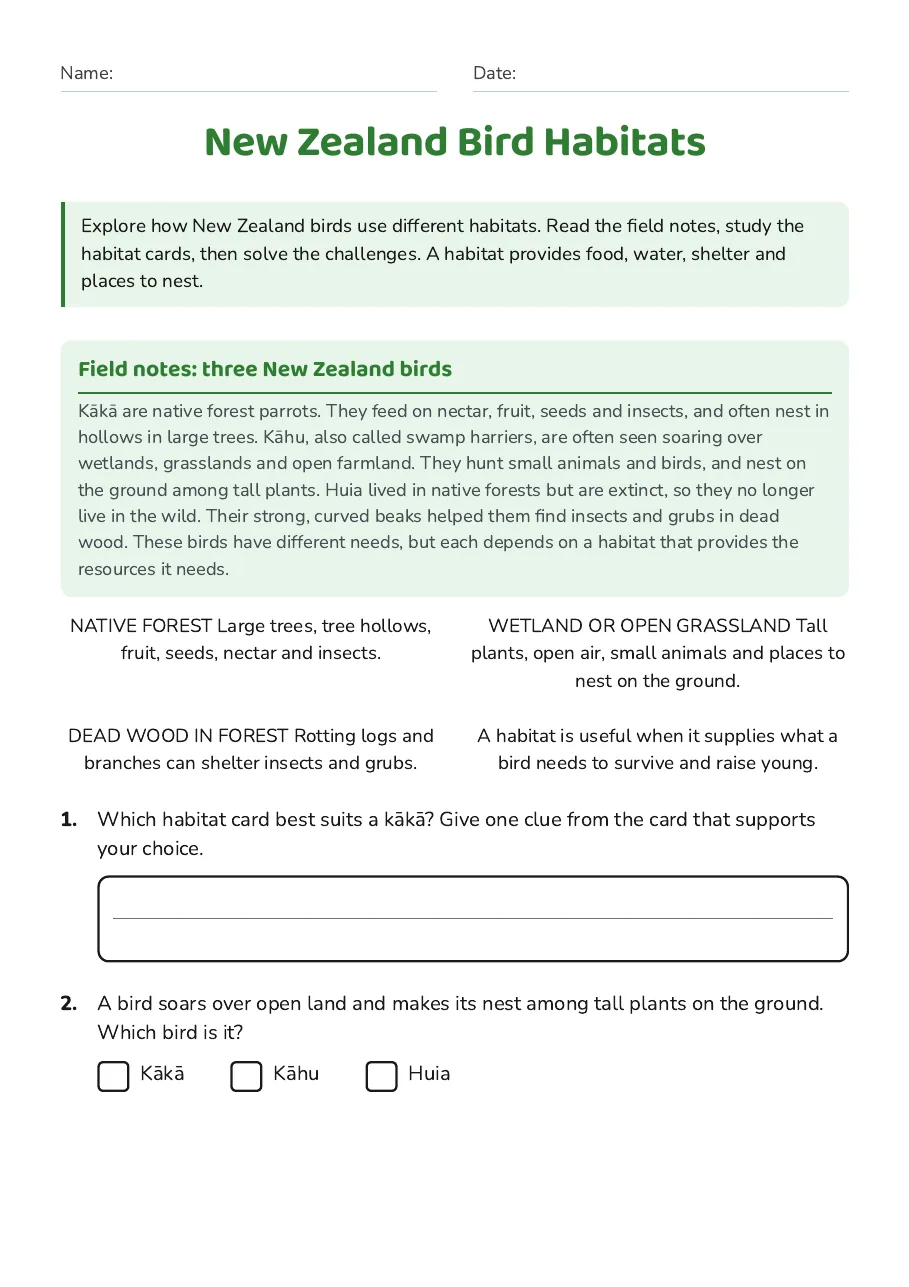
Field notes: three New Zealand birds
Kākā are native forest parrots. They feed on nectar, fruit, seeds and insects, and often nest in hollows in large trees. Kāhu, also called swamp harriers, are often seen soaring over wetlands, grasslands and open farmland. They hunt small animals and birds, and nest on the ground among tall plants. Huia lived in native forests but are extinct, so they no longer live in the wild. Their strong, curved beaks helped them find insects and grubs in dead wood. These birds have different needs, but each depends on a habitat that provides the resources it needs.
NATIVE FOREST Large trees, tree hollows, fruit, seeds, nectar and insects.
WETLAND OR OPEN GRASSLAND Tall plants, open air, small animals and places to nest on the ground.
DEAD WOOD IN FOREST Rotting logs and branches can shelter insects and grubs.
A habitat is useful when it supplies what a bird needs to survive and raise young.
- Kākā
- Kāhu
- Huia
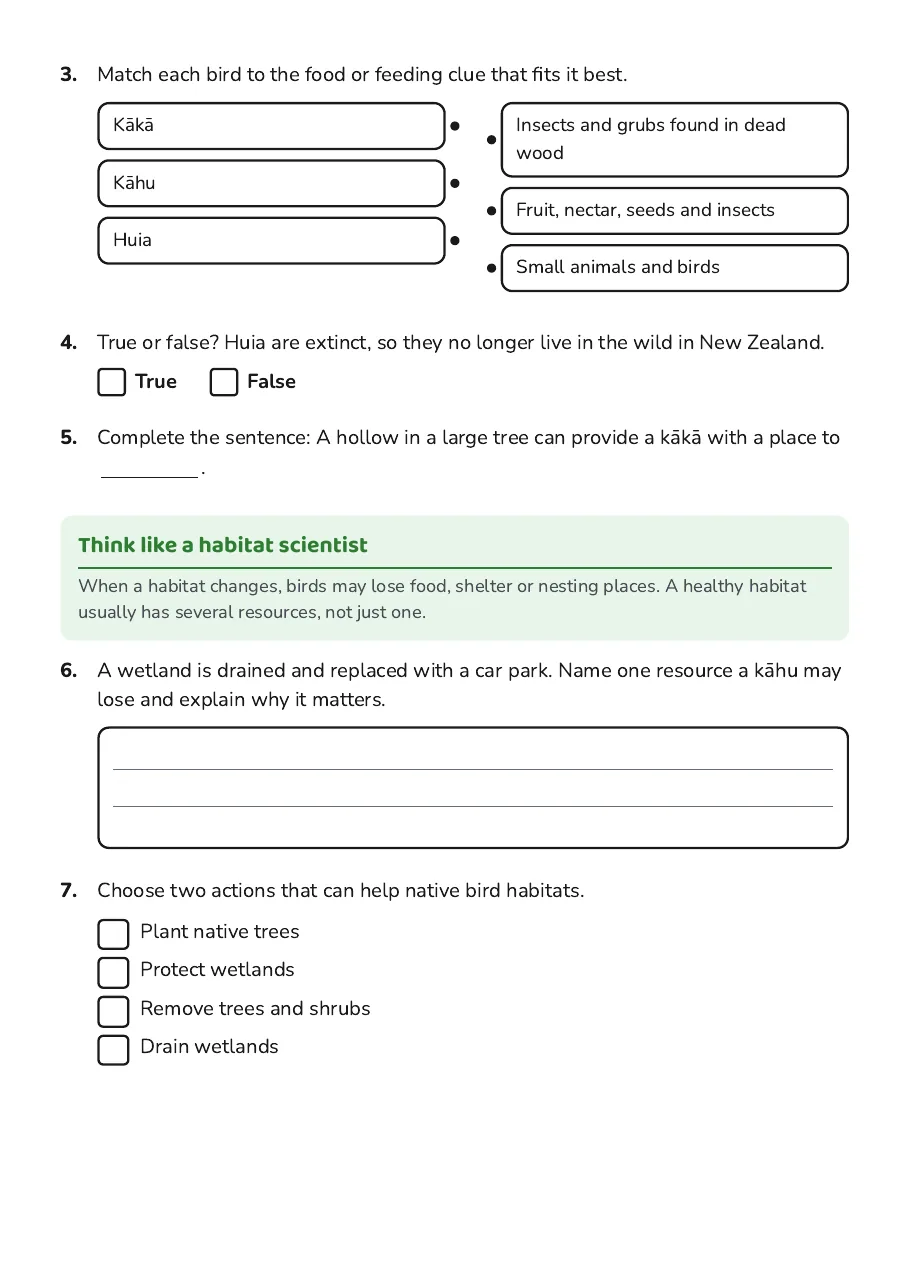
- Kākā
- Kāhu
- Huia
- Insects and grubs found in dead wood
- Fruit, nectar, seeds and insects
- Small animals and birds
Think like a habitat scientist
When a habitat changes, birds may lose food, shelter or nesting places. A healthy habitat usually has several resources, not just one.
- Plant native trees
- Protect wetlands
- Remove trees and shrubs
- Drain wetlands
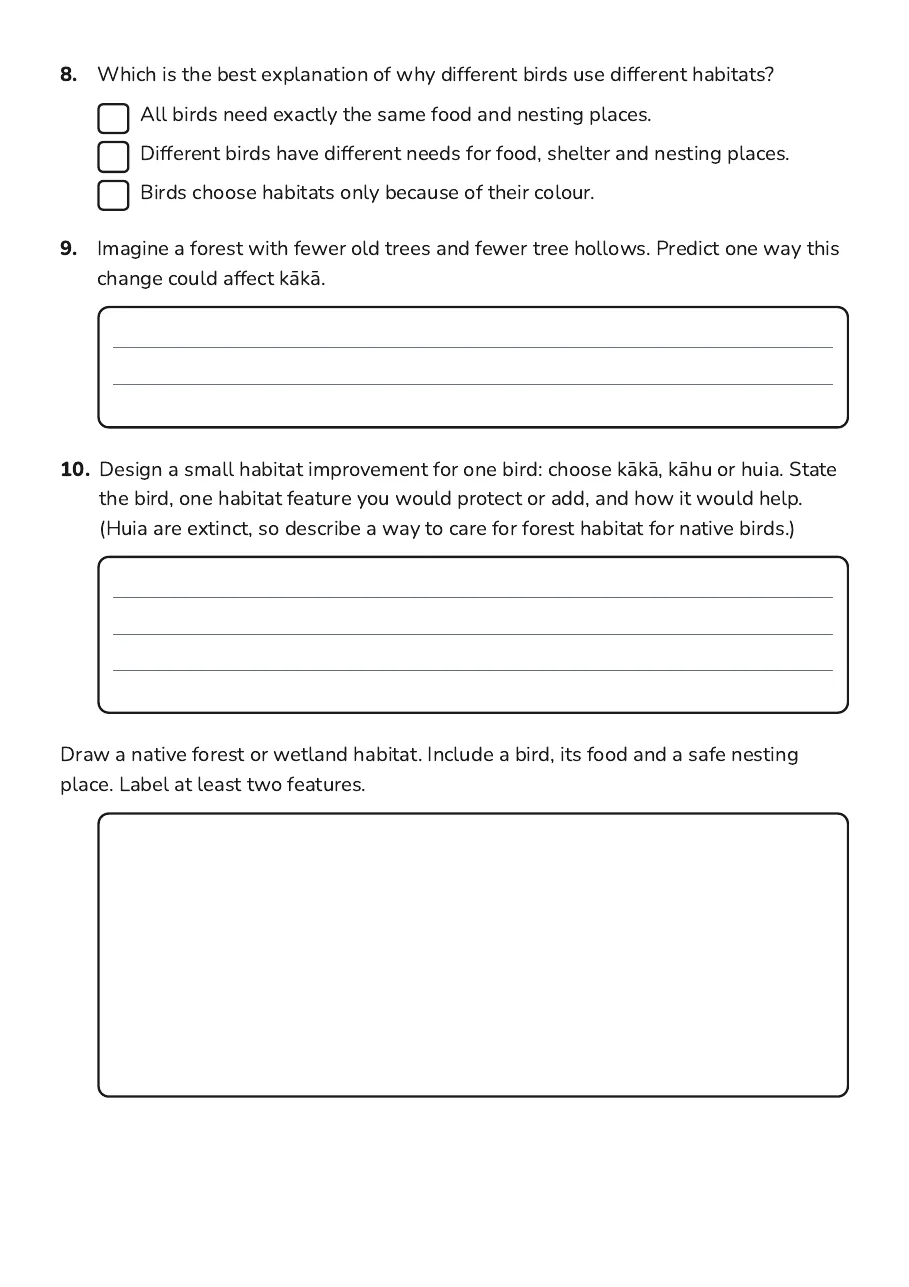
- All birds need exactly the same food and nesting places.
- Different birds have different needs for food, shelter and nesting places.
- Birds choose habitats only because of their colour.
3 printable pages
Page 1
Page 2
Page 3
About This Worksheet
Free in Kuraplan
Sign up free, grab the PDF, and customize it for your class.
Print-Ready
Formatted for standard paper. Clean layout, easy to read.
AI-Generated
Created with Kuraplan's AI, designed for real classroom use.
For Teachers & Parents
Use in classrooms, for homework, tutoring, or homeschool.
Need a custom version of this worksheet?
Kuraplan's AI generates custom worksheets in seconds — differentiated for every learner, aligned to your curriculum.
Generate Custom Worksheets — Free