Energy Drinks: Risks and Alternatives
A free health worksheet ready for your classroom. Open in Kuraplan to grab the print-ready PDF, customize it for your students, or generate a fresh version in seconds.
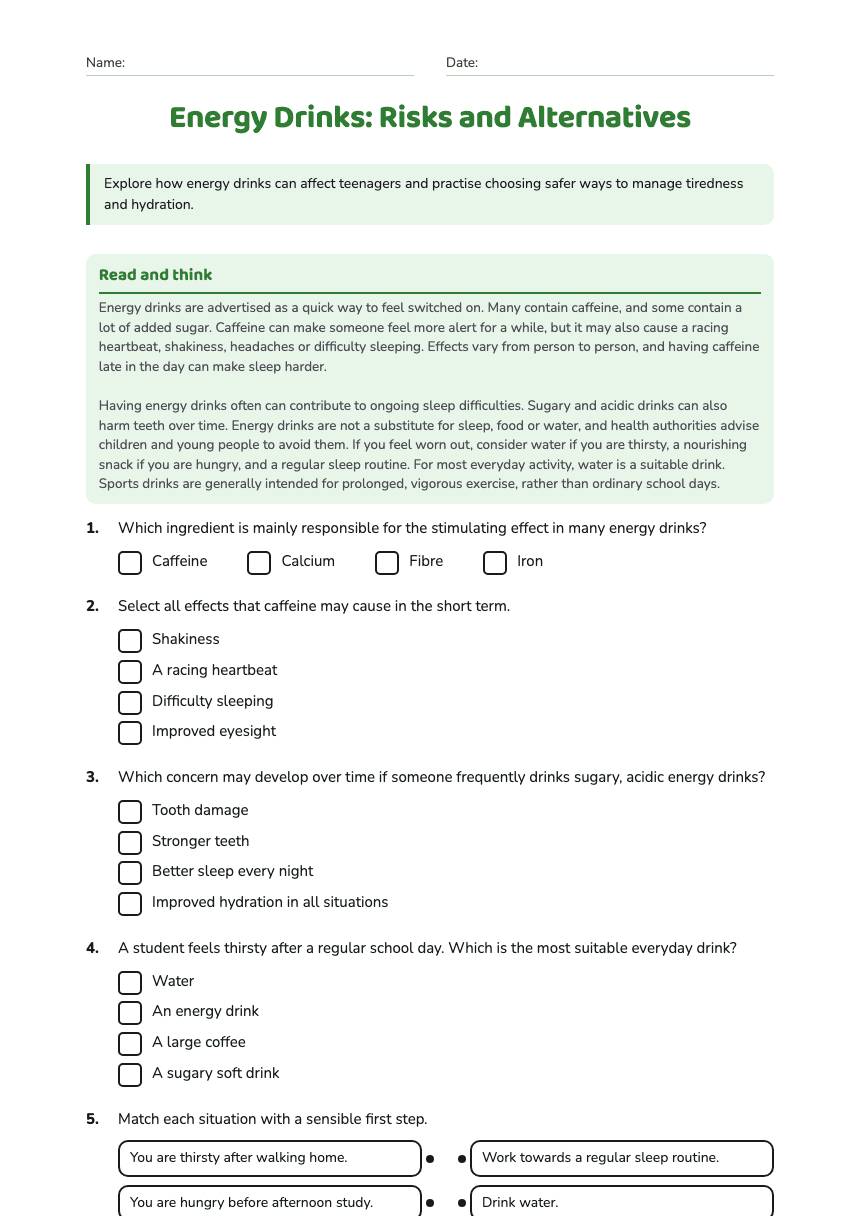
Energy Drinks: Risks and Alternatives
Read and think
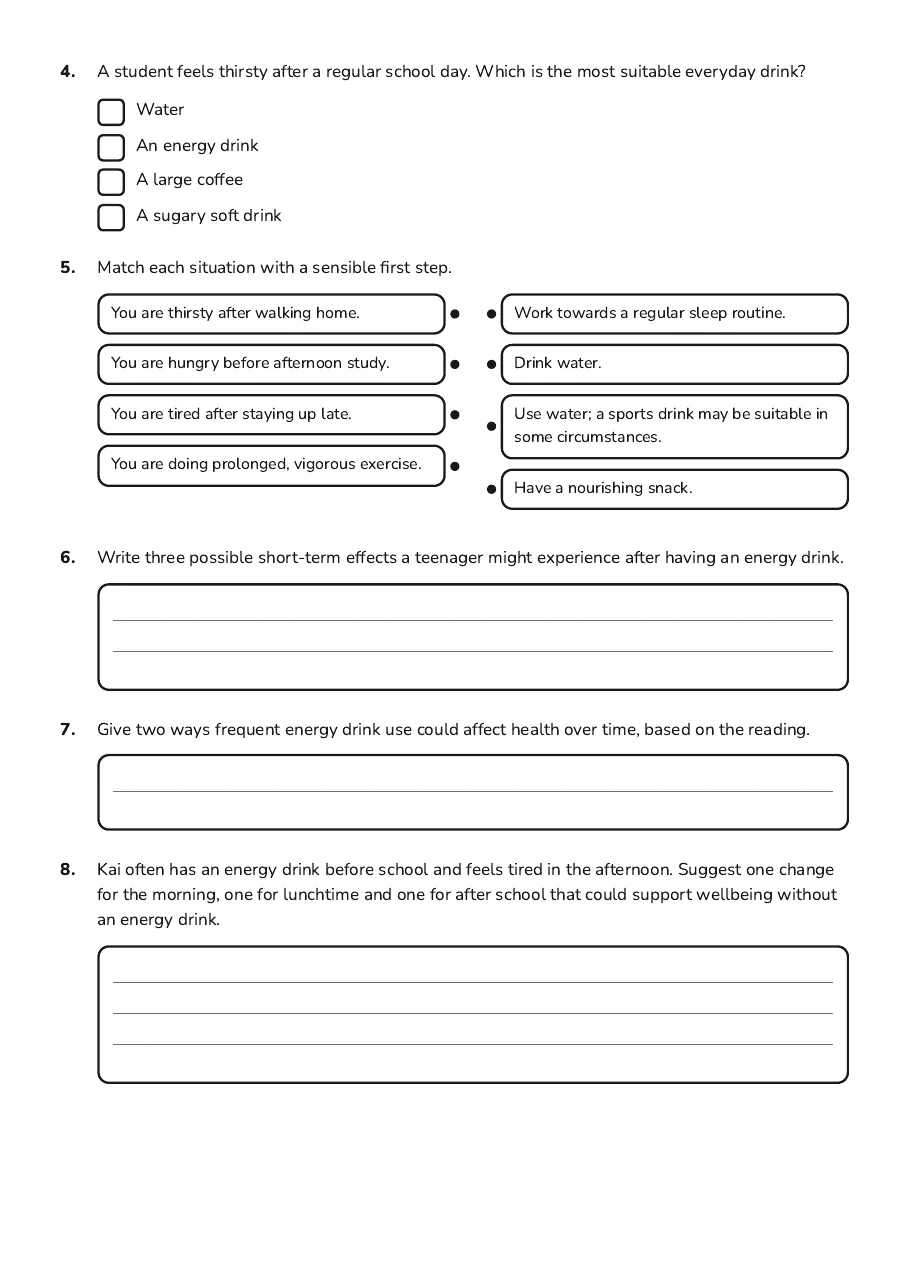
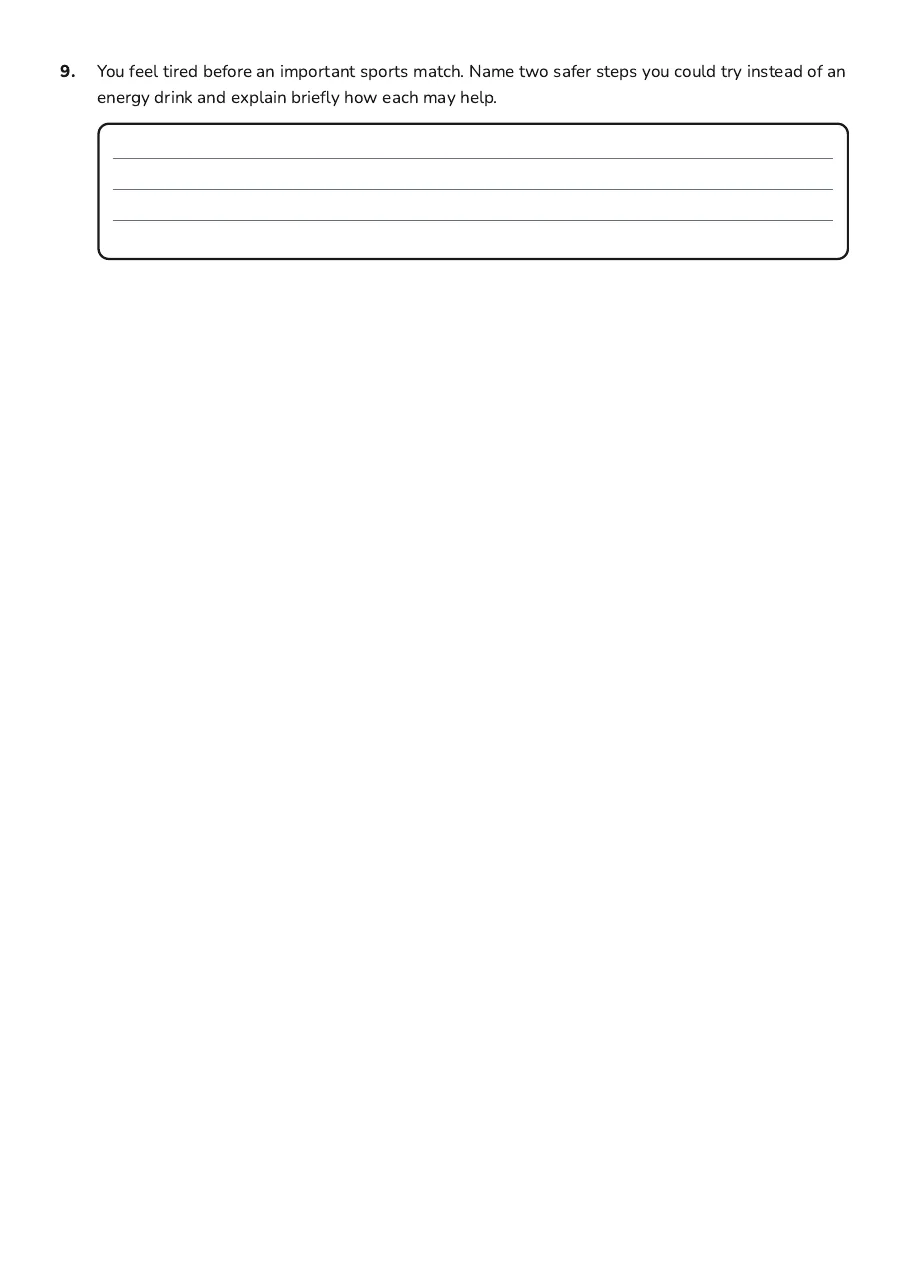
Energy drinks are advertised as a quick way to feel switched on. Many contain caffeine, and some contain a lot of added sugar. Caffeine can make someone feel more alert for a while, but it may also cause a racing heartbeat, shakiness, headaches or difficulty sleeping. Effects vary from person to person, and having caffeine late in the day can make sleep harder. Having energy drinks often can contribute to ongoing sleep difficulties. Sugary and acidic drinks can also harm teeth over time. Energy drinks are not a substitute for sleep, food or water, and health authorities advise children and young people to avoid them. If you feel worn out, consider water if you are thirsty, a nourishing snack if you are hungry, and a regular sleep routine. For most everyday activity, water is a suitable drink. Sports drinks are generally intended for prolonged, vigorous exercise, rather than ordinary school days.
- Caffeine
- Calcium
- Fibre
- Iron
- Shakiness
- A racing heartbeat
- Difficulty sleeping
- Improved eyesight
- Tooth damage
- Stronger teeth
- Better sleep every night
- Improved hydration in all situations
- Water
- An energy drink
- A large coffee
- A sugary soft drink
- You are thirsty after walking home.
- You are hungry before afternoon study.
- You are tired after staying up late.
- You are doing prolonged, vigorous exercise.
- Work towards a regular sleep routine.
- Drink water.
- Use water; a sports drink may be suitable in some circumstances.
- Have a nourishing snack.
3 printable pages
Page 1
Page 2
Page 3
About This Worksheet
Free in Kuraplan
Sign up free, grab the PDF, and customize it for your class.
Print-Ready
Formatted for standard paper. Clean layout, easy to read.
AI-Generated
Created with Kuraplan's AI, designed for real classroom use.
For Teachers & Parents
Use in classrooms, for homework, tutoring, or homeschool.
Need a custom version of this worksheet?
Kuraplan's AI generates custom worksheets in seconds — differentiated for every learner, aligned to your curriculum.
Generate Custom Worksheets — Free