Healthy Friendship Fact Sheet
A free health worksheet ready for your classroom. Open in Kuraplan to grab the print-ready PDF, customize it for your students, or generate a fresh version in seconds.
Healthy Friendship Fact Sheet
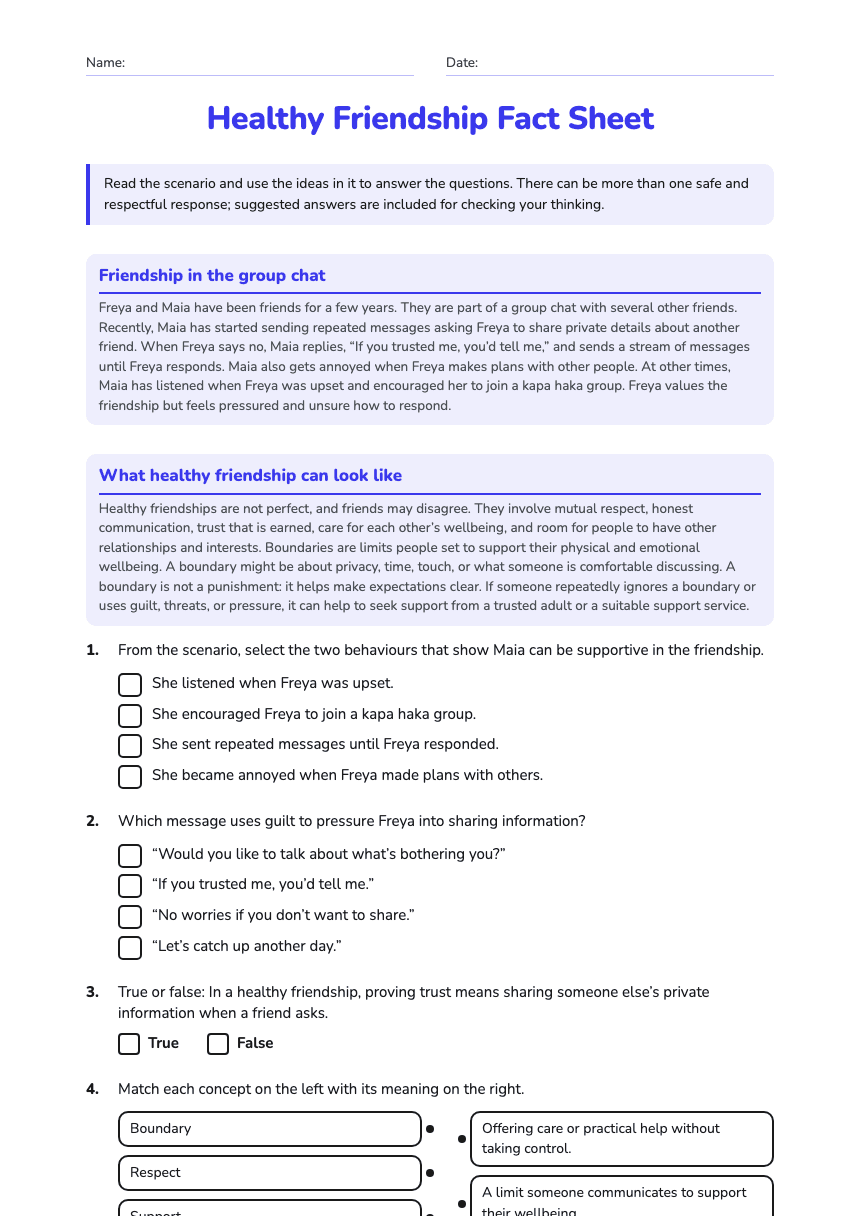
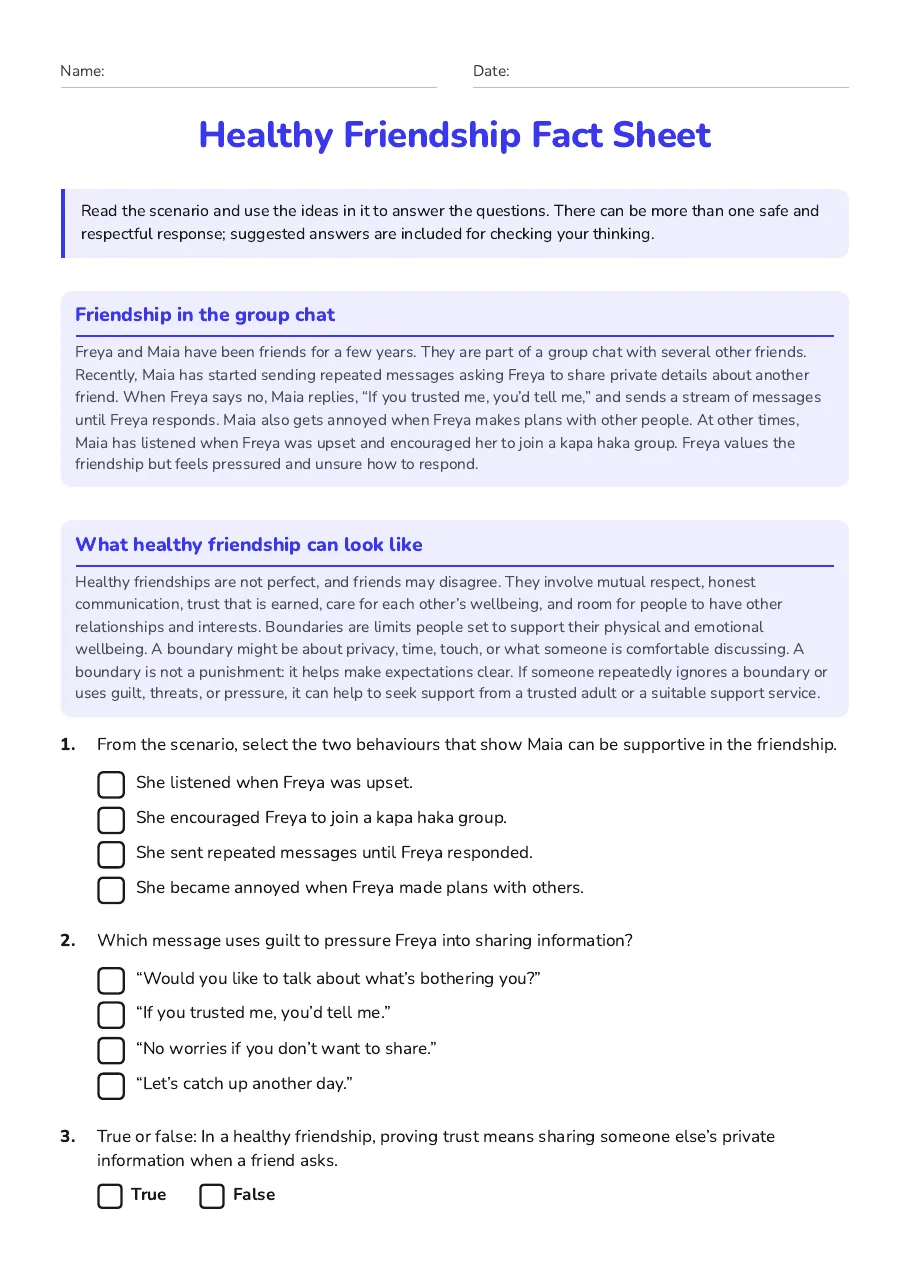
Friendship in the group chat
Freya and Maia have been friends for a few years. They are part of a group chat with several other friends. Recently, Maia has started sending repeated messages asking Freya to share private details about another friend. When Freya says no, Maia replies, “If you trusted me, you’d tell me,” and sends a stream of messages until Freya responds. Maia also gets annoyed when Freya makes plans with other people. At other times, Maia has listened when Freya was upset and encouraged her to join a kapa haka group. Freya values the friendship but feels pressured and unsure how to respond.
What healthy friendship can look like
Healthy friendships are not perfect, and friends may disagree. They involve mutual respect, honest communication, trust that is earned, care for each other’s wellbeing, and room for people to have other relationships and interests. Boundaries are limits people set to support their physical and emotional wellbeing. A boundary might be about privacy, time, touch, or what someone is comfortable discussing. A boundary is not a punishment: it helps make expectations clear. If someone repeatedly ignores a boundary or uses guilt, threats, or pressure, it can help to seek support from a trusted adult or a suitable support service.
- She listened when Freya was upset.
- She encouraged Freya to join a kapa haka group.
- She sent repeated messages until Freya responded.
- She became annoyed when Freya made plans with others.
- “Would you like to talk about what’s bothering you?”
- “If you trusted me, you’d tell me.”
- “No worries if you don’t want to share.”
- “Let’s catch up another day.”
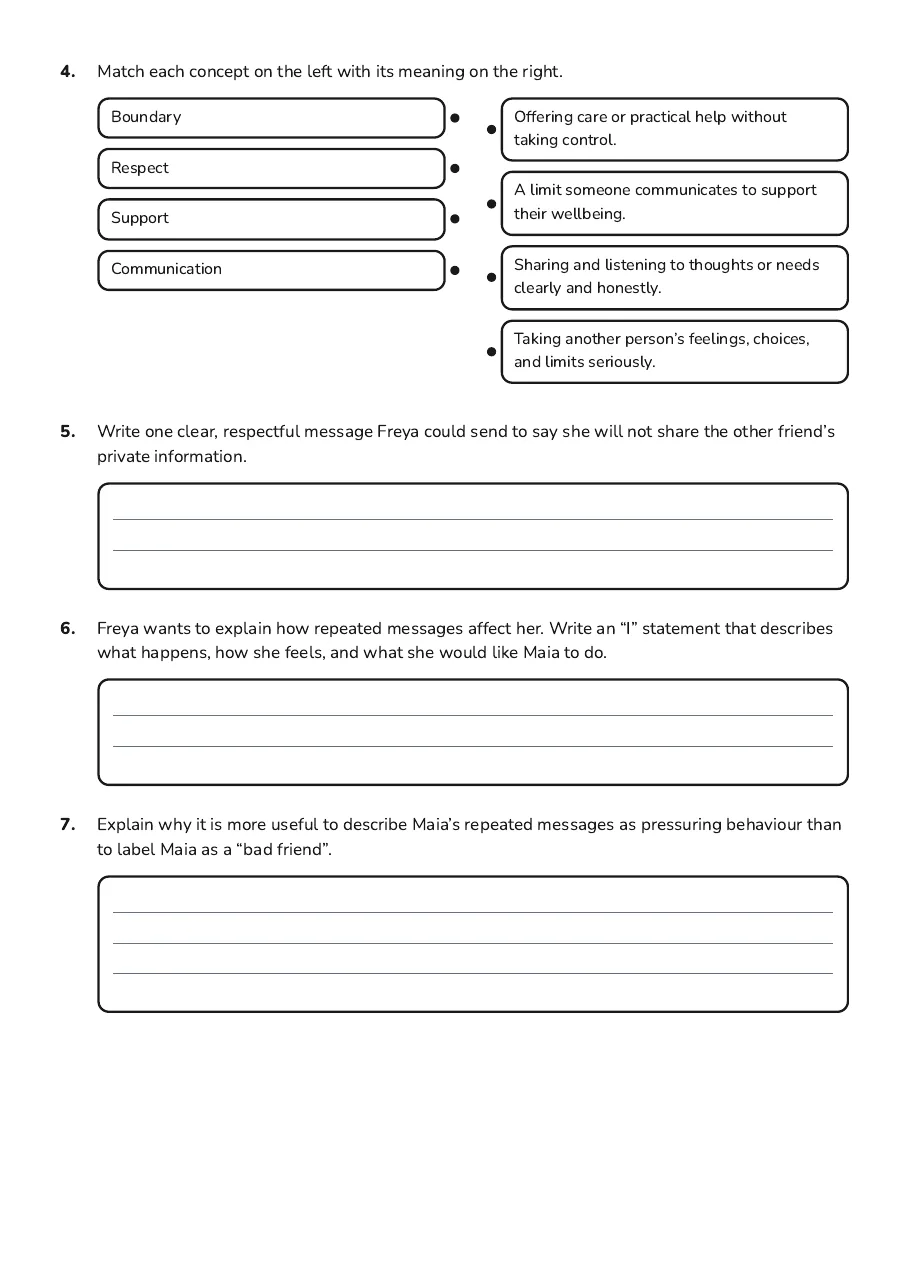
- Boundary
- Respect
- Support
- Communication
- Offering care or practical help without taking control.
- A limit someone communicates to support their wellbeing.
- Sharing and listening to thoughts or needs clearly and honestly.
- Taking another person’s feelings, choices, and limits seriously.
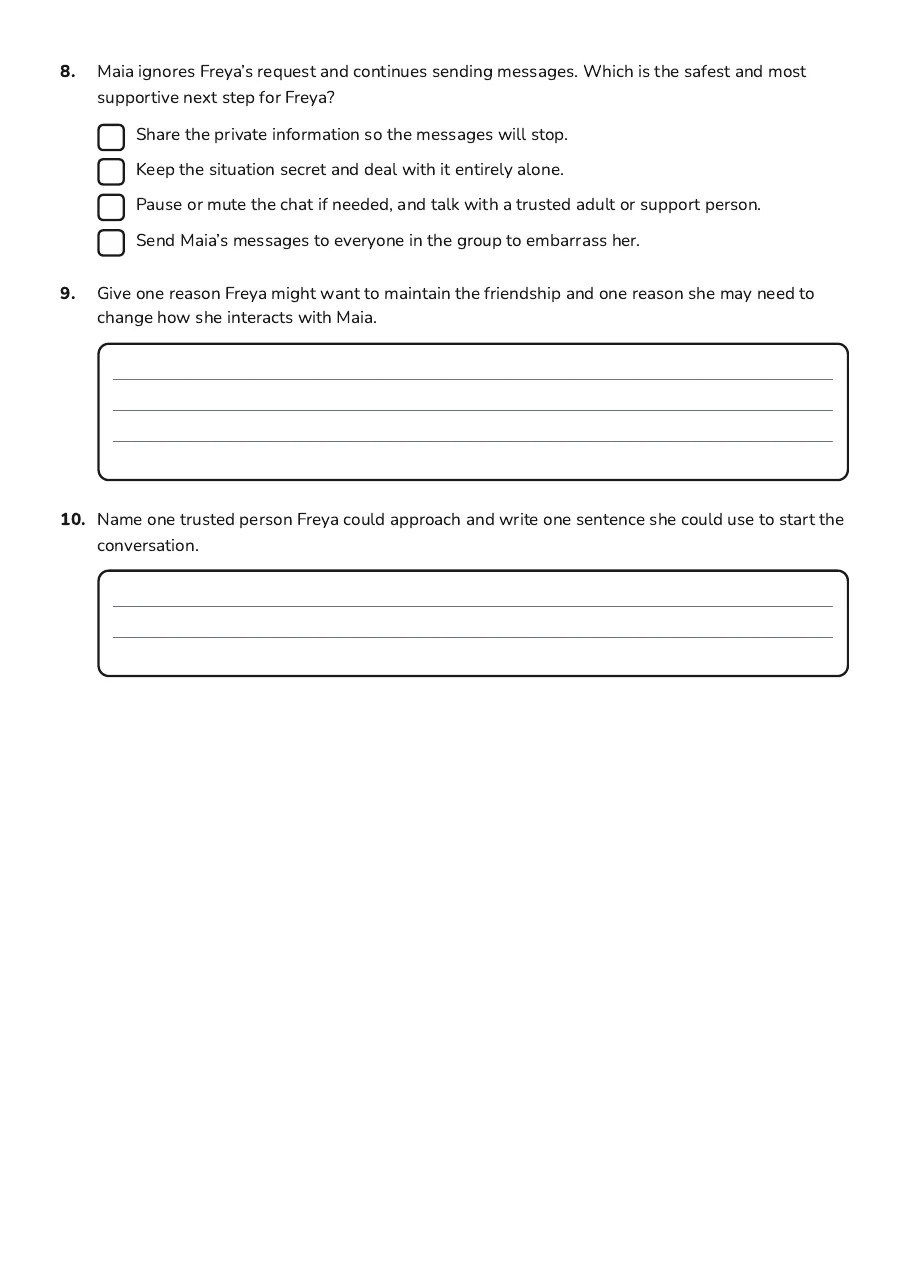
- Share the private information so the messages will stop.
- Keep the situation secret and deal with it entirely alone.
- Pause or mute the chat if needed, and talk with a trusted adult or support person.
- Send Maia’s messages to everyone in the group to embarrass her.
3 printable pages
Page 1
Page 2
Page 3
About This Worksheet
Free in Kuraplan
Sign up free, grab the PDF, and customize it for your class.
Print-Ready
Formatted for standard paper. Clean layout, easy to read.
AI-Generated
Created with Kuraplan's AI, designed for real classroom use.
For Teachers & Parents
Use in classrooms, for homework, tutoring, or homeschool.
Need a custom version of this worksheet?
Kuraplan's AI generates custom worksheets in seconds — differentiated for every learner, aligned to your curriculum.
Generate Custom Worksheets — FreeMore Health Worksheets
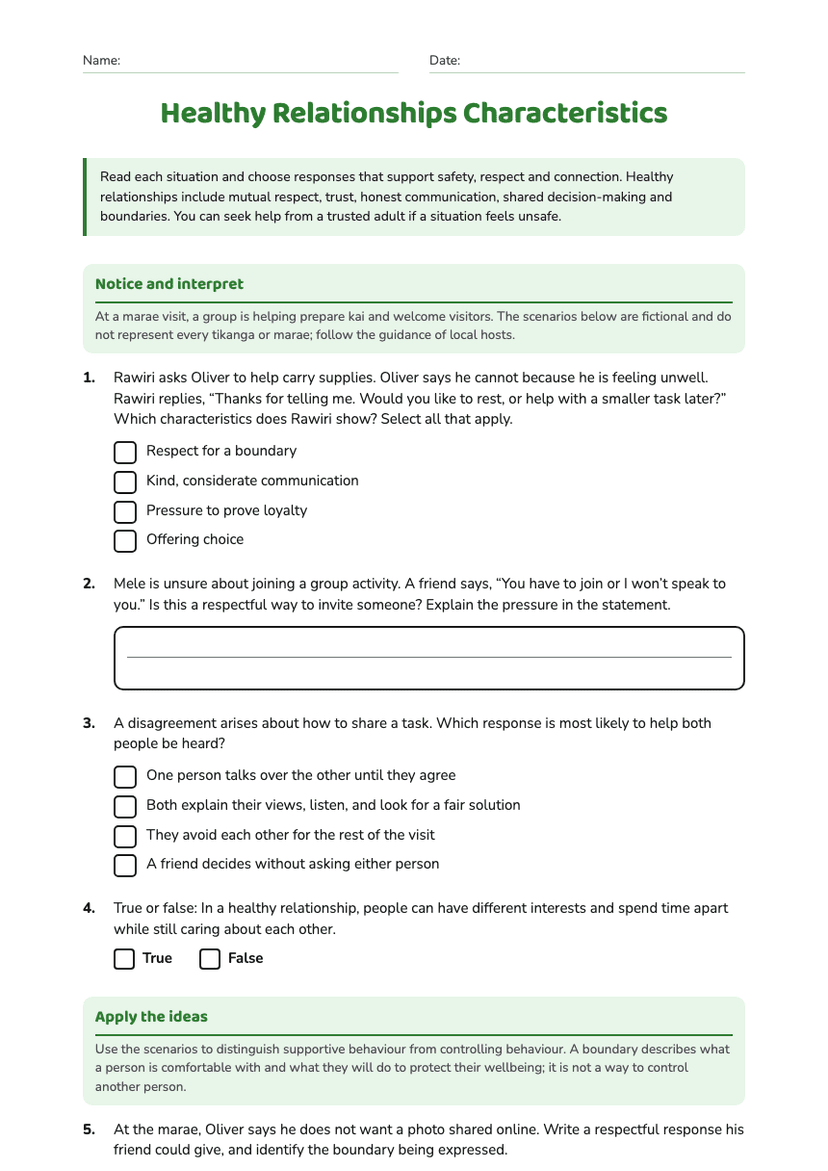
Healthy Relationships Characteristics
Free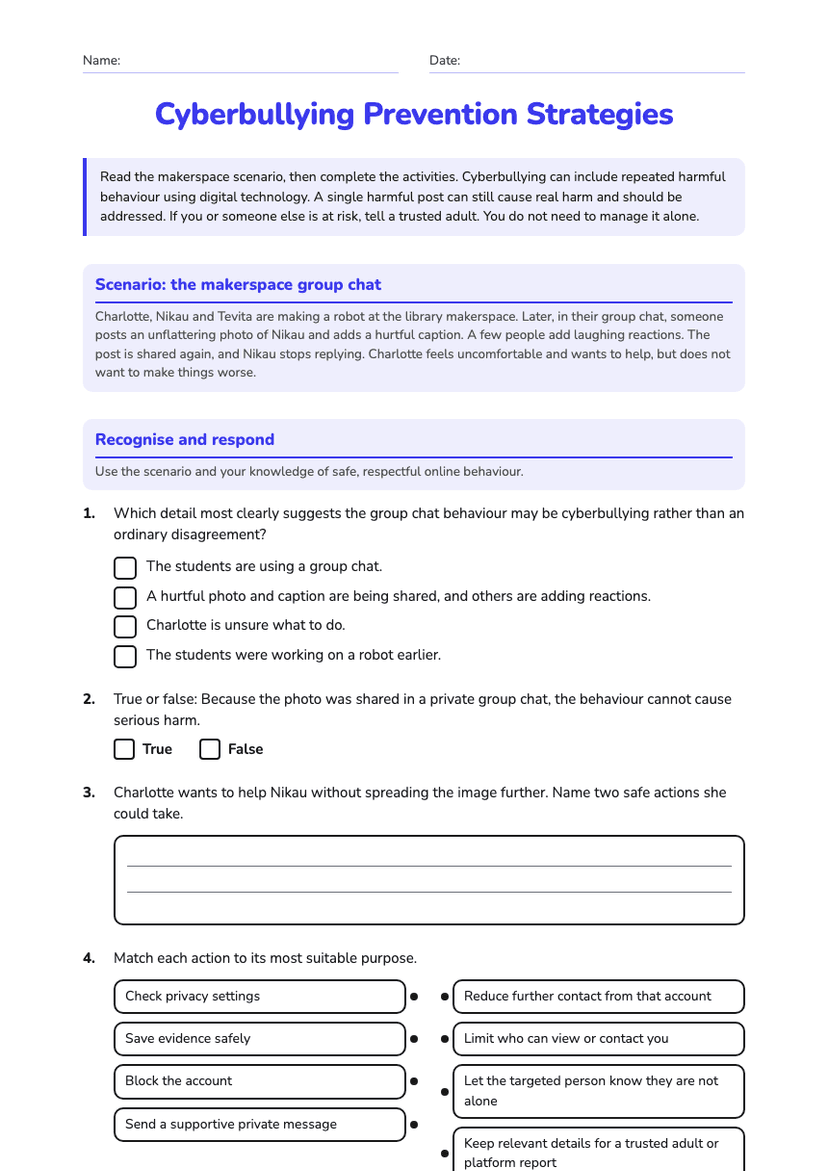
Cyberbullying Prevention Strategies
Free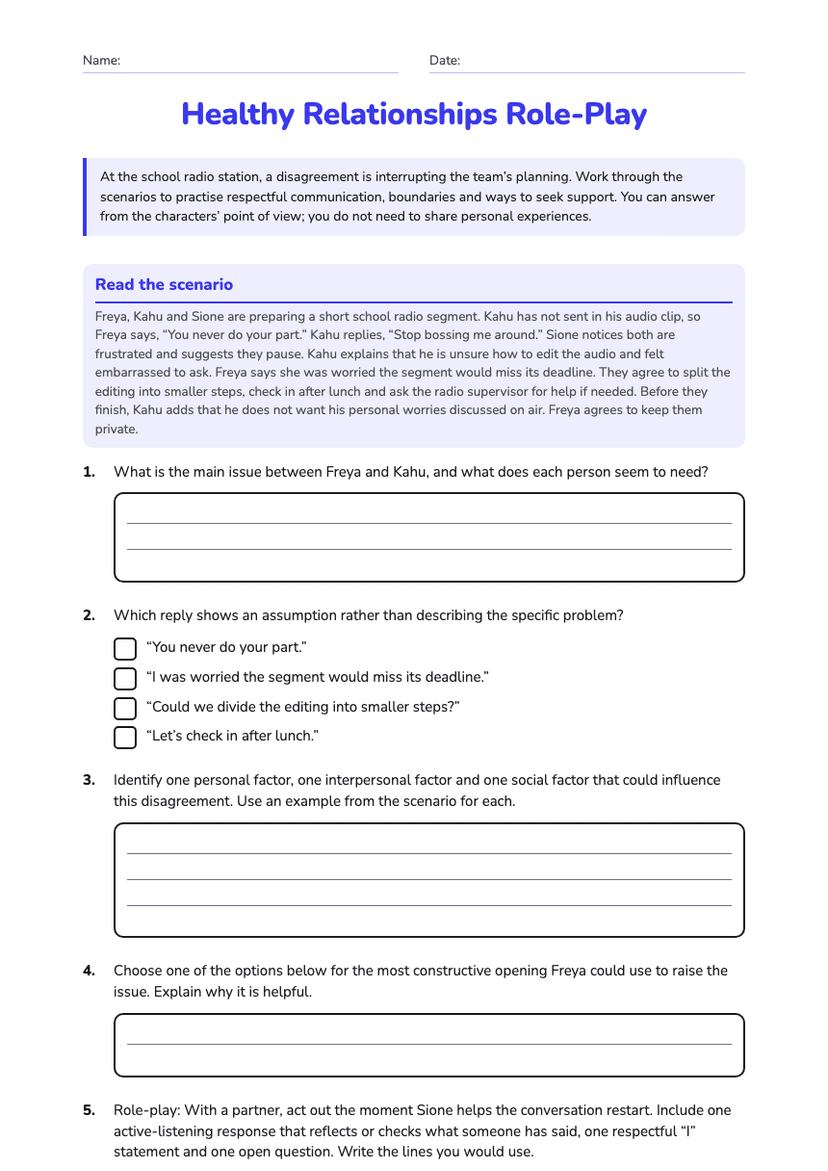
Healthy Relationships Role-Play
Free
Whakatauki Friendship Introduction
Free
Healthy Relationships & Hauora
Free
Respect Without Bias Worksheet
Free
Inclusion Reflection Worksheet
Free