Living Things and Habitats
A free science worksheet ready for your classroom. Open in Kuraplan to grab the print-ready PDF, customize it for your students, or generate a fresh version in seconds.
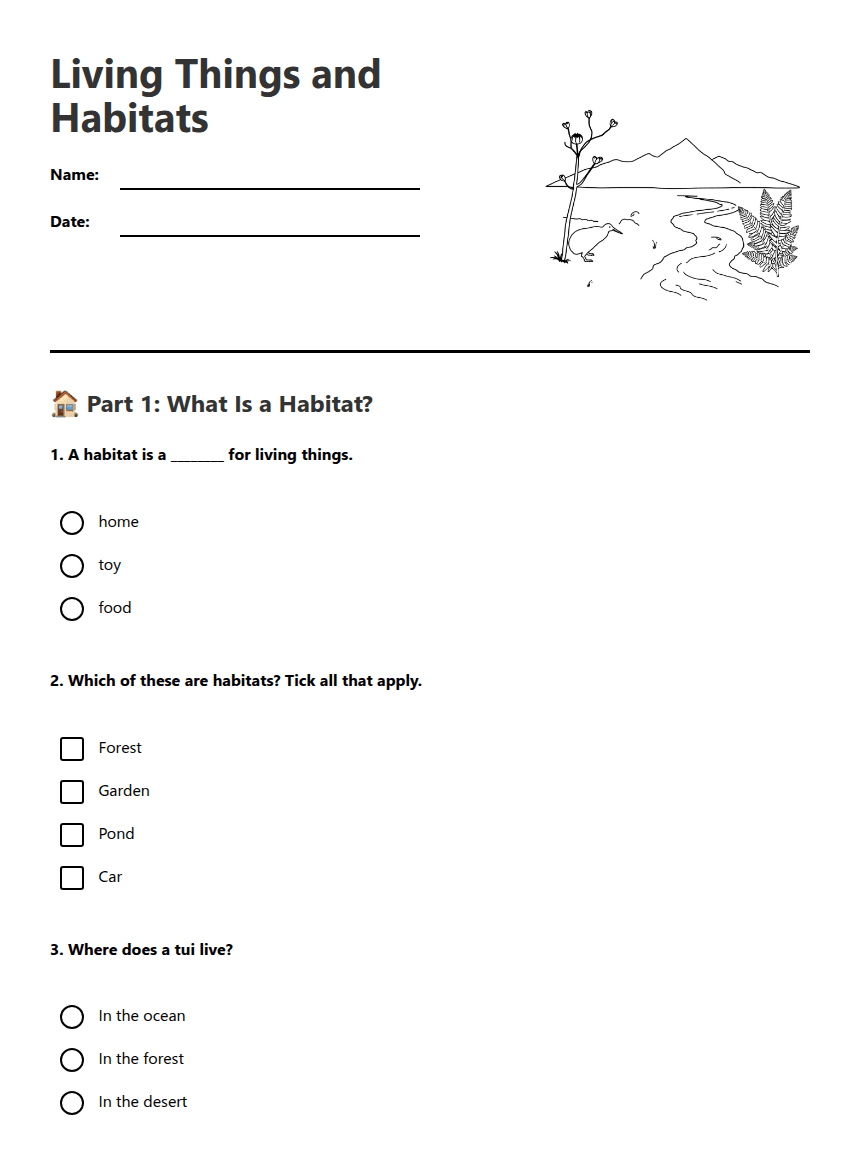
Living Things and Habitats
🏠 Part 1: What Is a Habitat?
🐛 Part 2: Living Things and Their Special Suits
The penguin's feathers help it live in cold places because __________________.
🌿 Part 3: Our Local Habitats
Living thing: _______________
This living thing is suited to the garden because: _______________
My animal: _______________
Special feature: _______________
This helps because: _______________
Living things are suited to their habitats because _______________
About This Worksheet
Free in Kuraplan
Sign up free, grab the PDF, and customize it for your class.
Print-Ready
Formatted for standard paper. Clean layout, easy to read.
AI-Generated
Created with Kuraplan's AI, designed for real classroom use.
For Teachers & Parents
Use in classrooms, for homework, tutoring, or homeschool.
Need a custom version of this worksheet?
Kuraplan's AI generates custom worksheets in seconds — differentiated for every learner, aligned to your curriculum.
Generate Custom Worksheets — FreeMore Science Worksheets
Meiosis and Genetic Variation
Free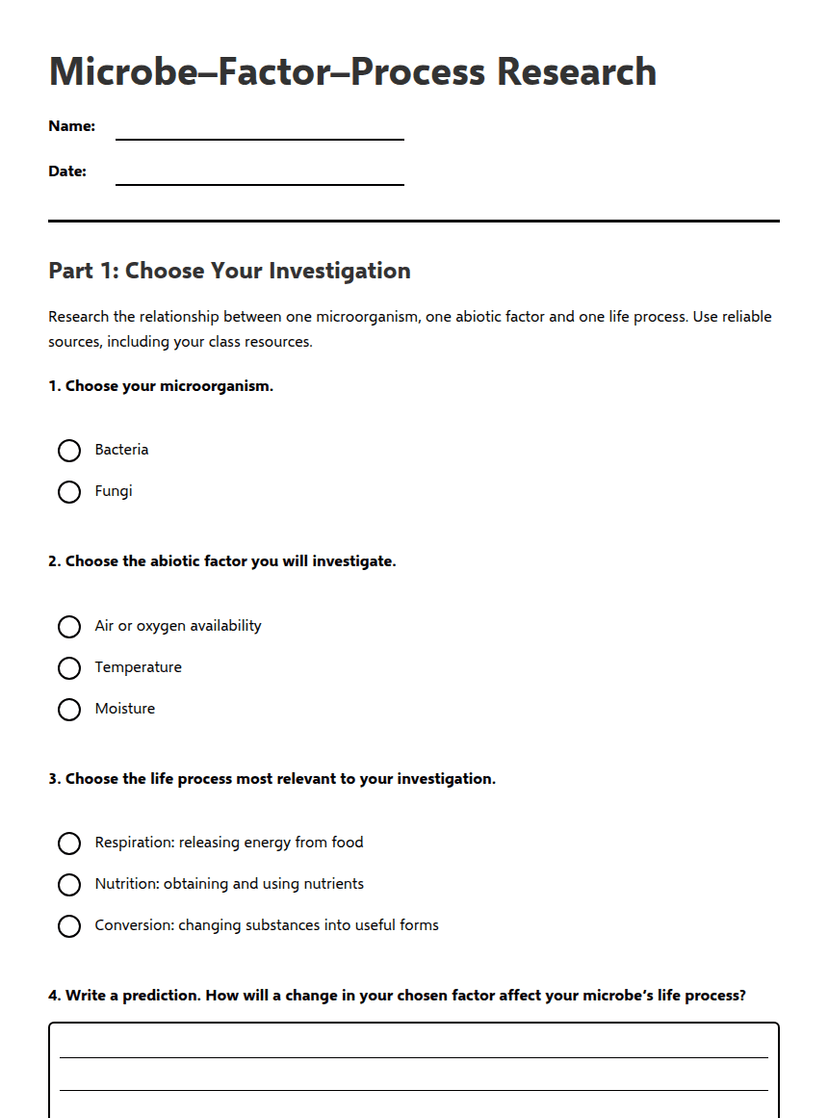
Microbe–Factor–Process Research
Free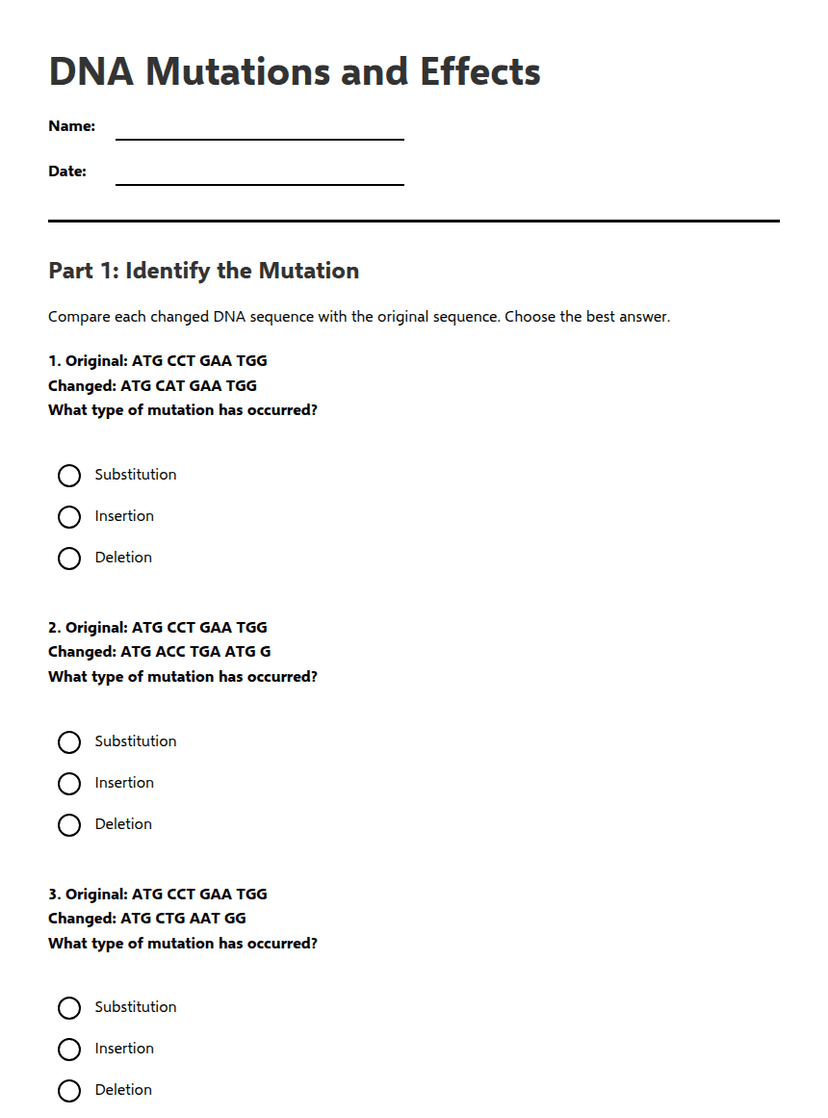
DNA Mutations and Effects
Free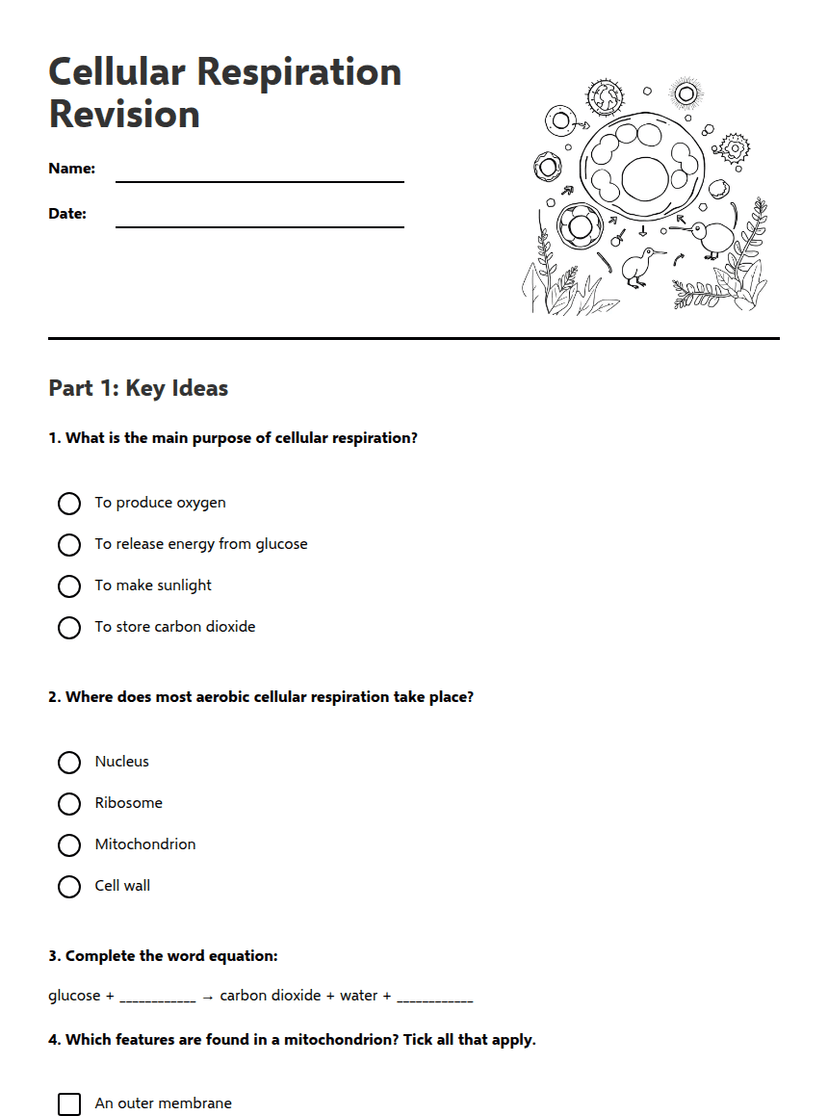
Cellular Respiration Revision
Free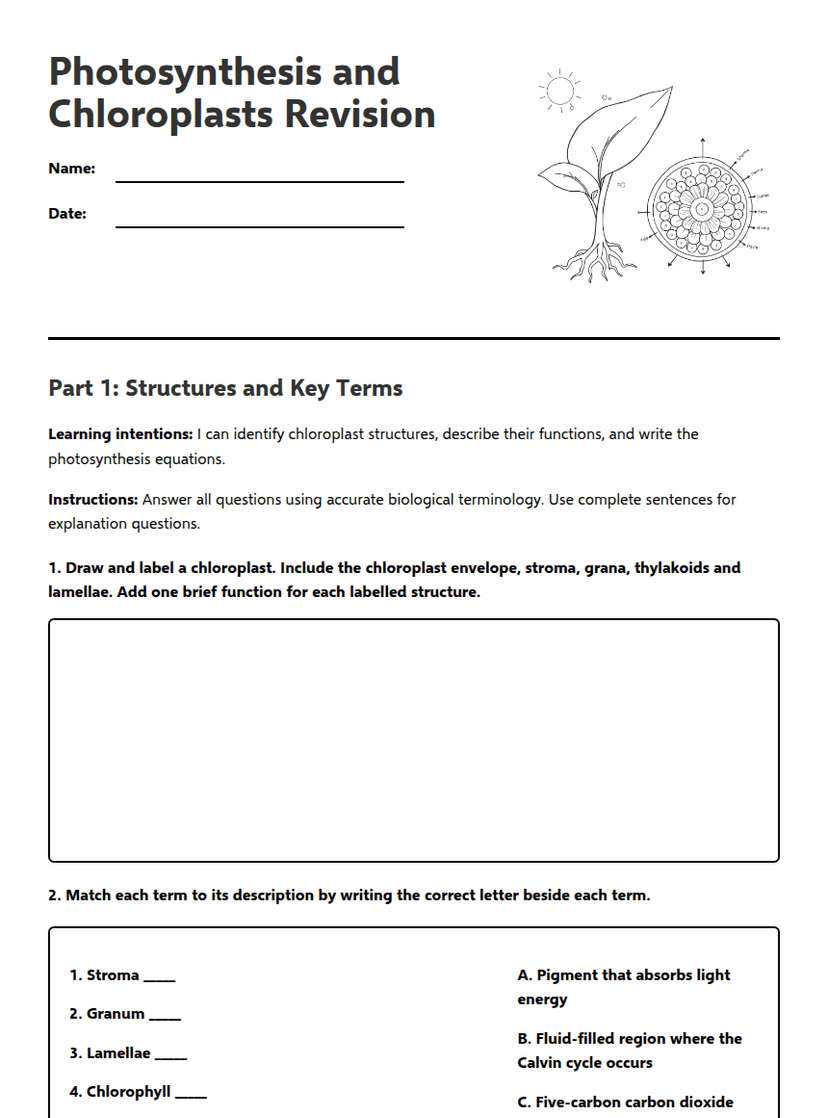
Photosynthesis and Chloroplasts Revision
Free
Photosynthesis and Chloroplasts
Free
Genetics Vocabulary and Inheritance
Free