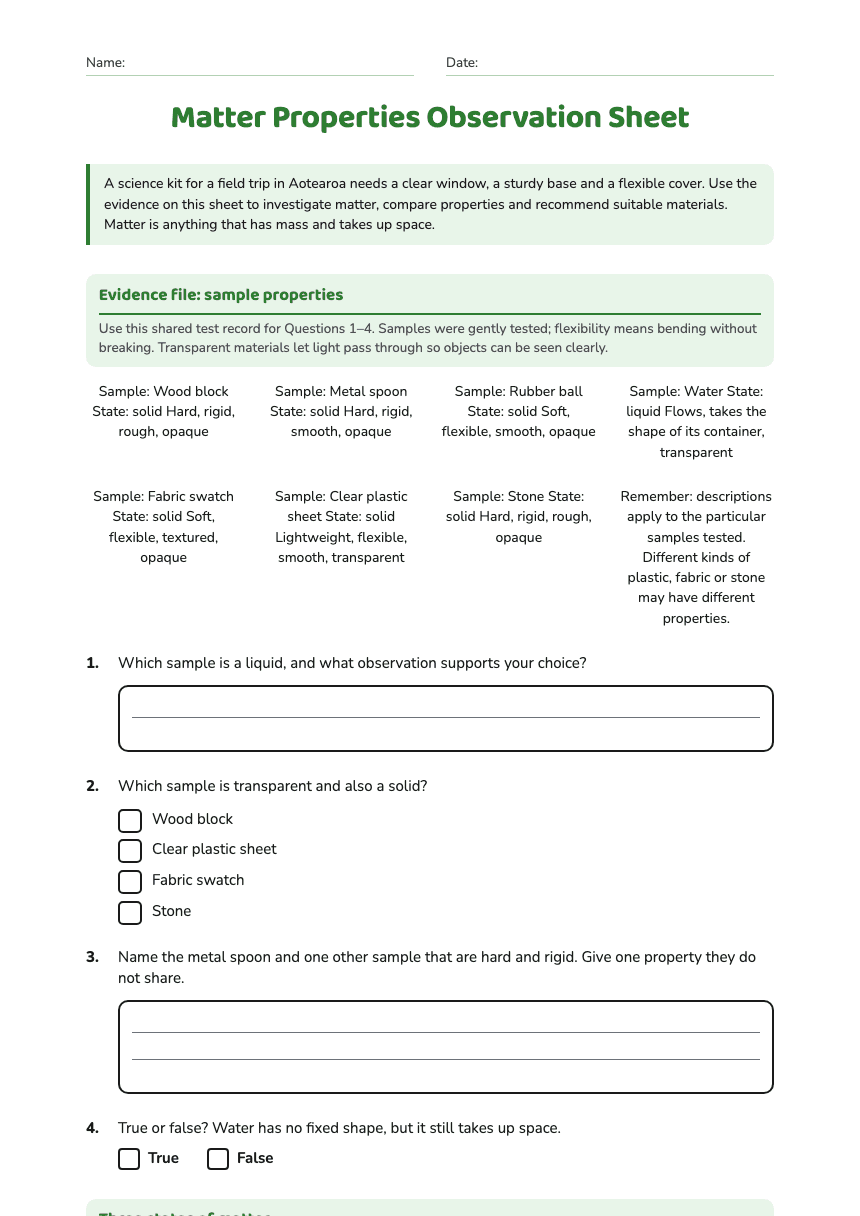
Matter Properties Observation Sheet
A free science worksheet ready for your classroom. Open in Kuraplan to grab the print-ready PDF, customize it for your students, or generate a fresh version in seconds.
Matter Properties Observation Sheet
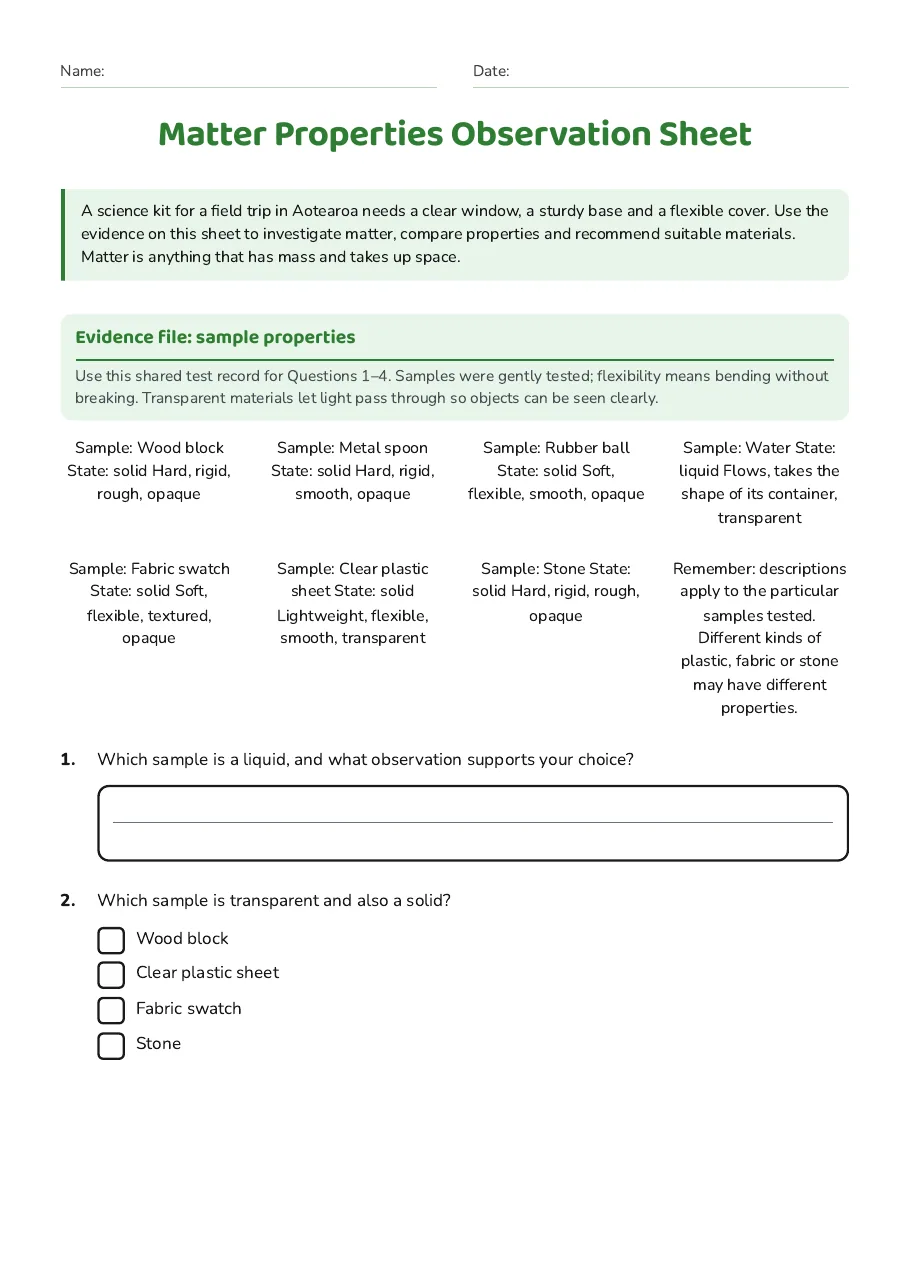
Evidence file: sample properties
Use this shared test record for Questions 1–4. Samples were gently tested; flexibility means bending without breaking. Transparent materials let light pass through so objects can be seen clearly.
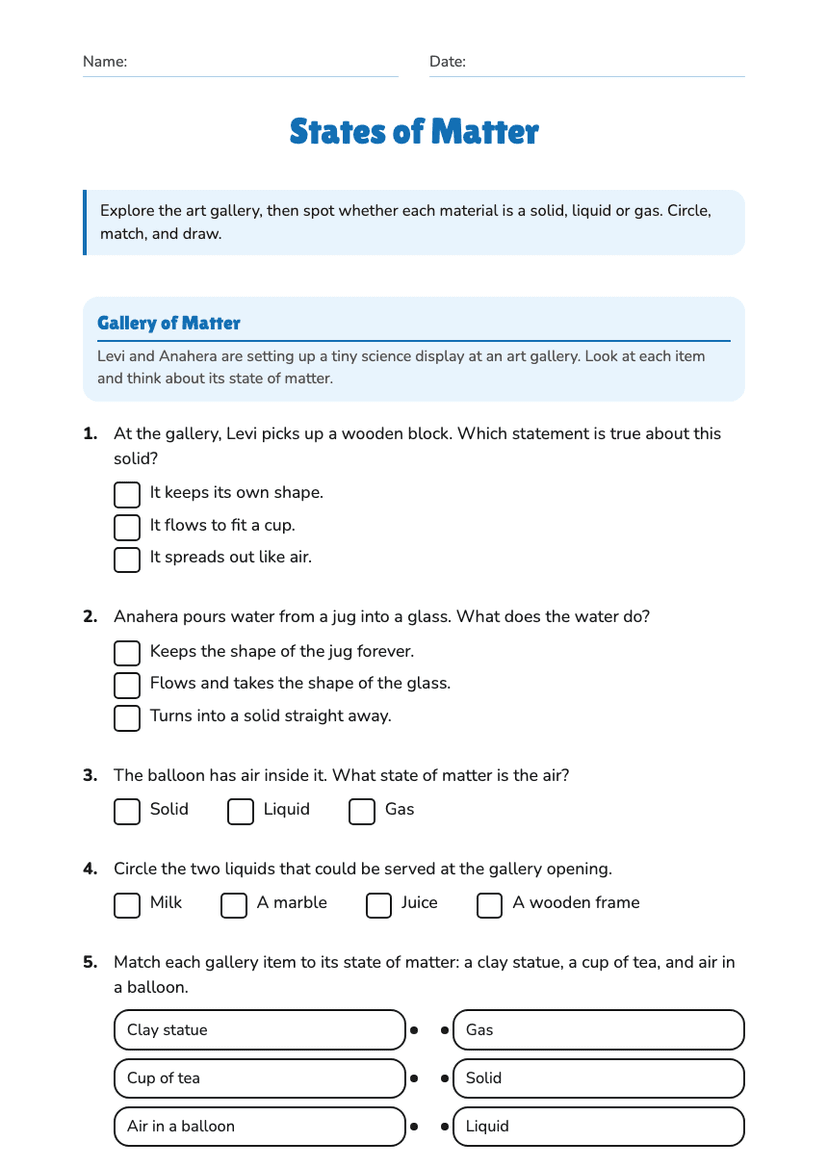
Sample: Wood block State: solid Hard, rigid, rough, opaque
Sample: Metal spoon State: solid Hard, rigid, smooth, opaque
Sample: Rubber ball State: solid Soft, flexible, smooth, opaque
Sample: Water State: liquid Flows, takes the shape of its container, transparent
Sample: Fabric swatch State: solid Soft, flexible, textured, opaque
Sample: Clear plastic sheet State: solid Lightweight, flexible, smooth, transparent
Sample: Stone State: solid Hard, rigid, rough, opaque
Remember: descriptions apply to the particular samples tested. Different kinds of plastic, fabric or stone may have different properties.
- Wood block
- Clear plastic sheet
- Fabric swatch
- Stone
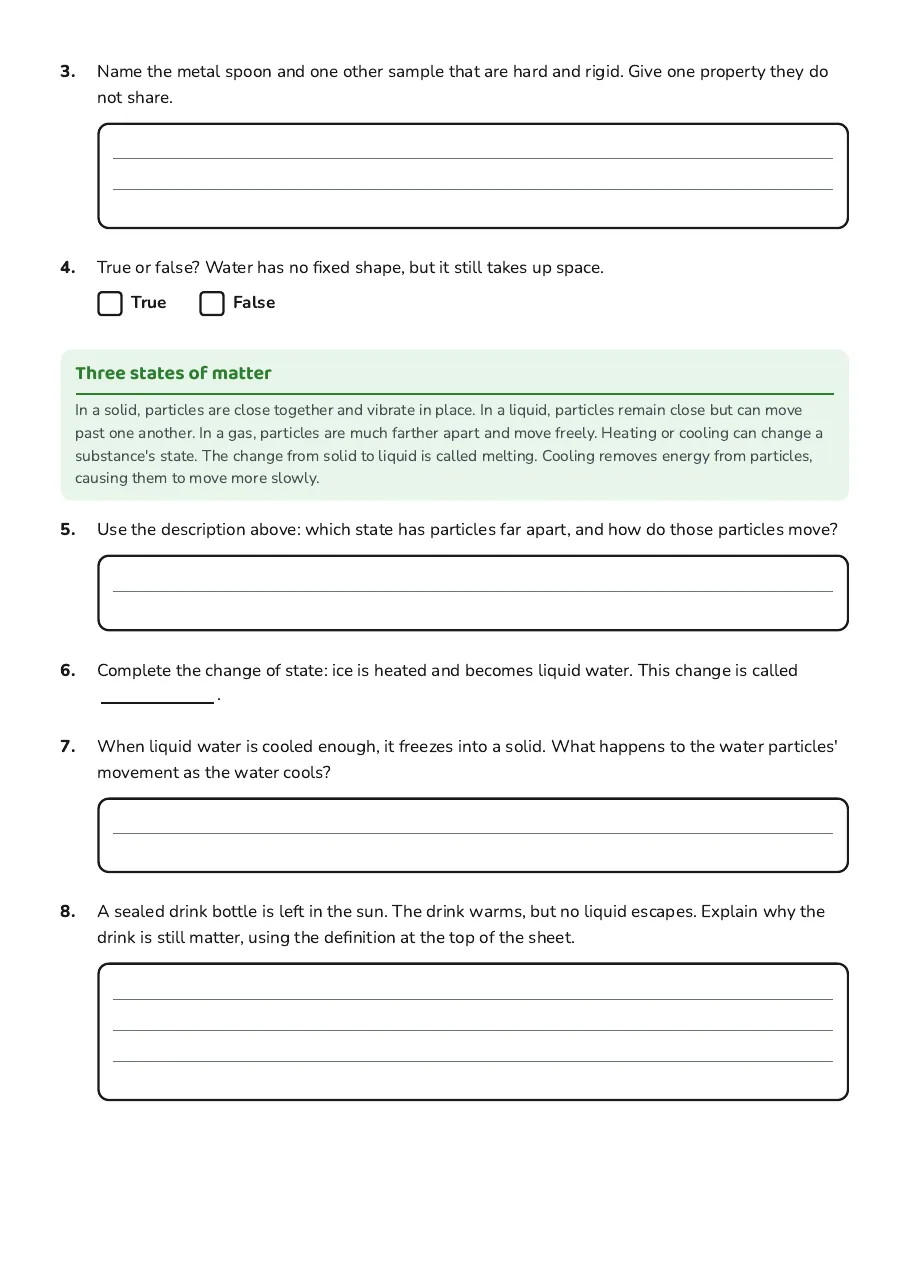
Three states of matter
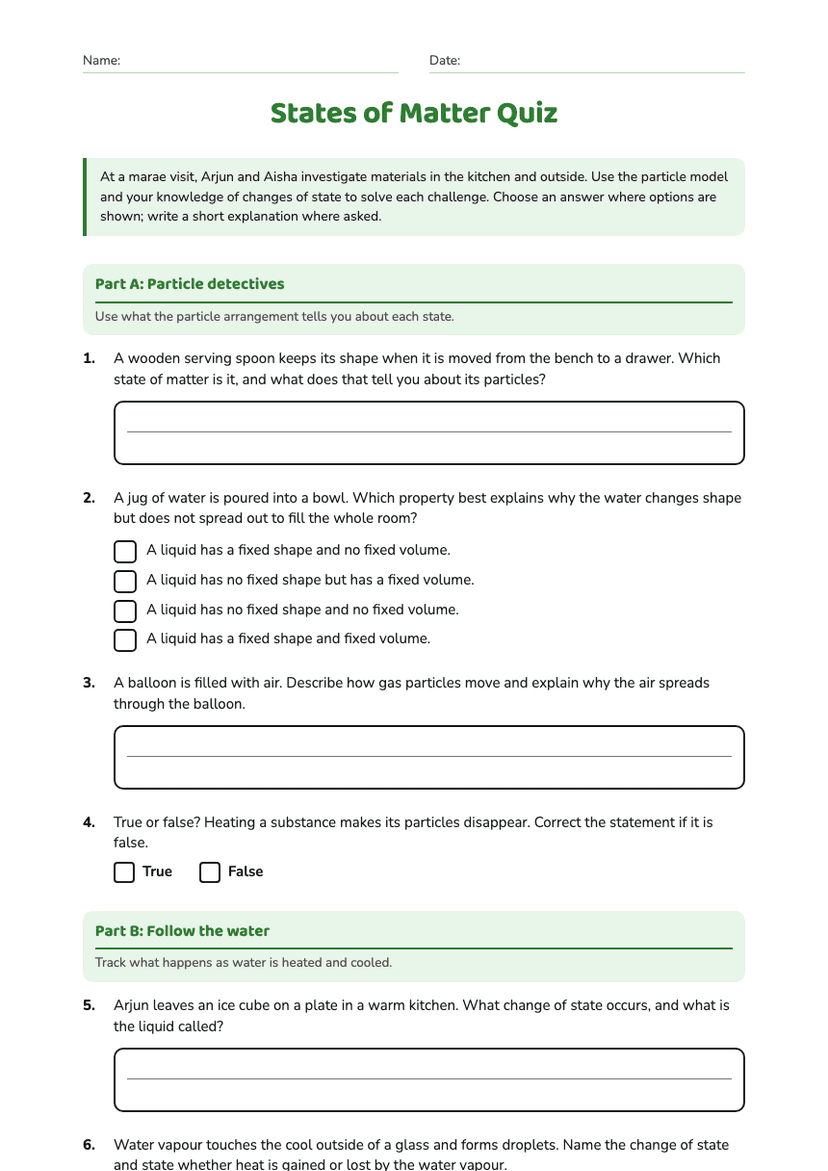
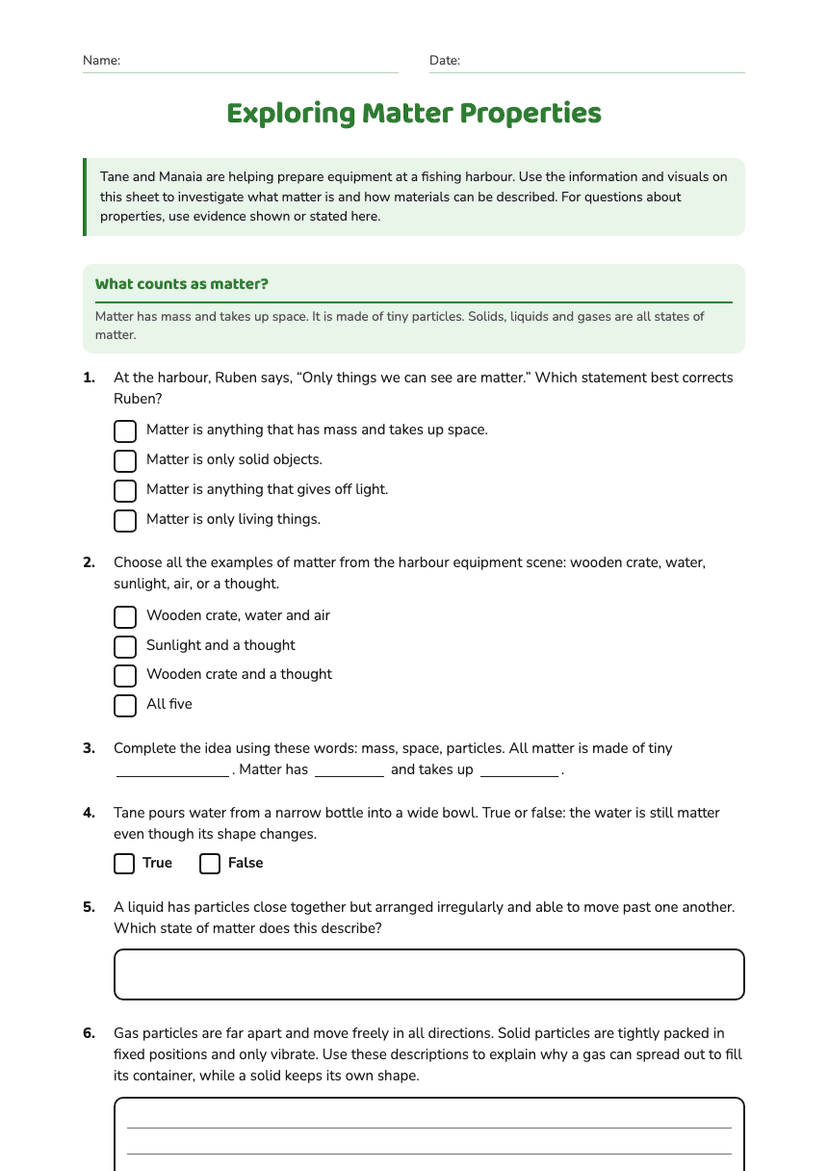
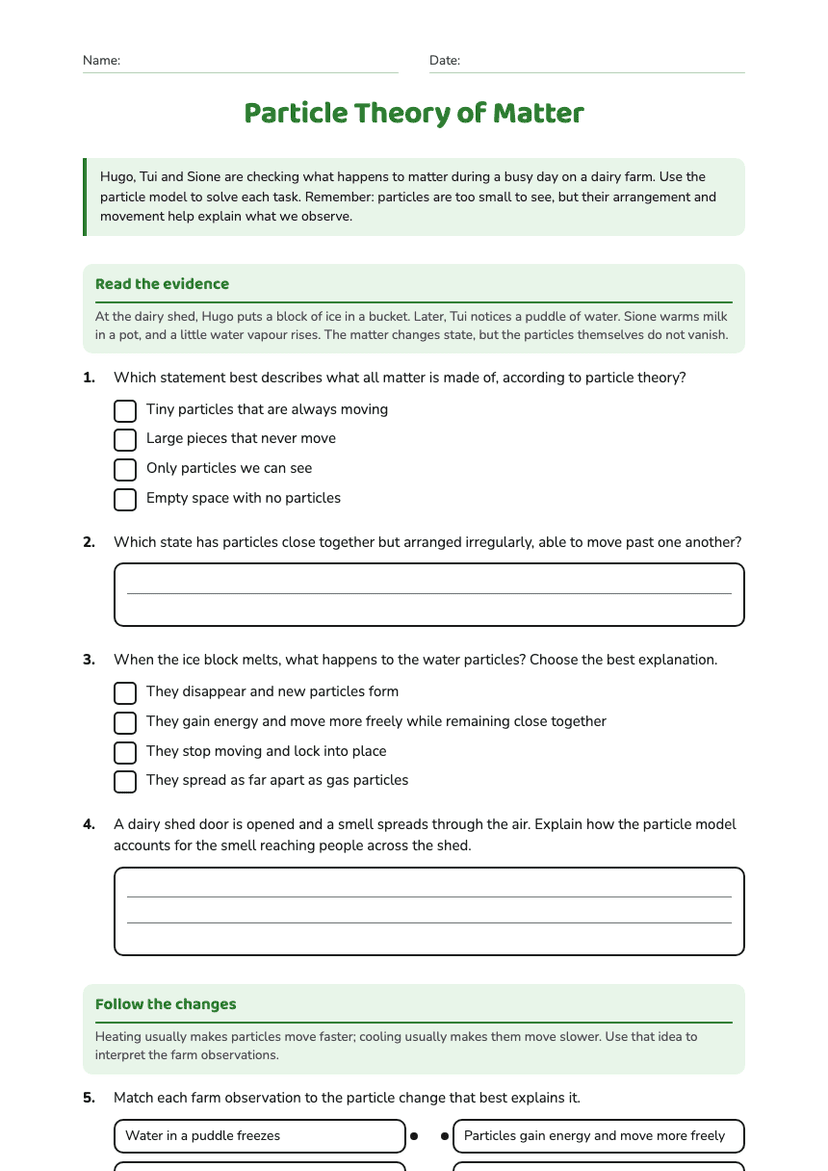
In a solid, particles are close together and vibrate in place. In a liquid, particles remain close but can move past one another. In a gas, particles are much farther apart and move freely. Heating or cooling can change a substance's state. The change from solid to liquid is called melting. Cooling removes energy from particles, causing them to move more slowly.
3 printable pages
Page 1
Page 2
Page 3
About This Worksheet
Free in Kuraplan
Sign up free, grab the PDF, and customize it for your class.
Print-Ready
Formatted for standard paper. Clean layout, easy to read.
AI-Generated
Created with Kuraplan's AI, designed for real classroom use.
For Teachers & Parents
Use in classrooms, for homework, tutoring, or homeschool.
Need a custom version of this worksheet?
Kuraplan's AI generates custom worksheets in seconds — differentiated for every learner, aligned to your curriculum.
Generate Custom Worksheets — Free