Movement and Resilience Worksheet
A free pe worksheet ready for your classroom. Open in Kuraplan to grab the print-ready PDF, customize it for your students, or generate a fresh version in seconds.
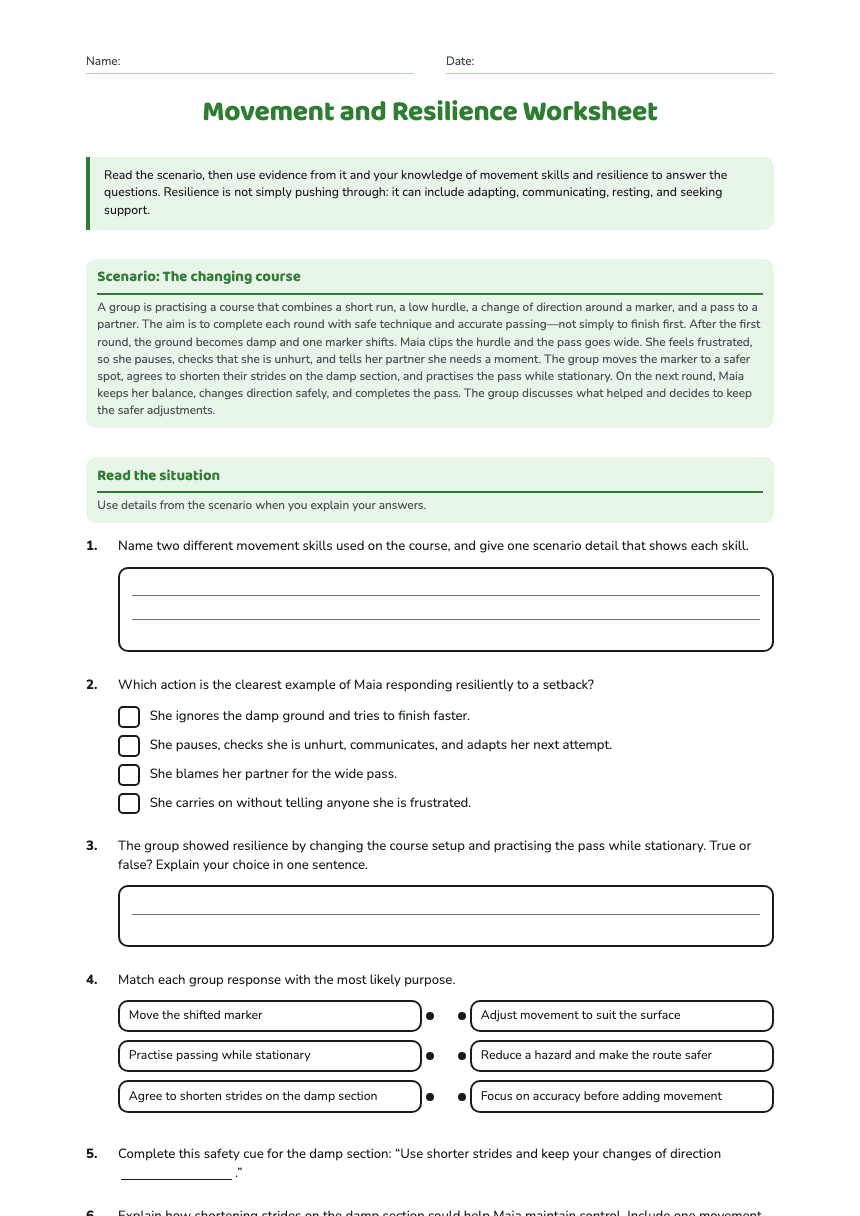
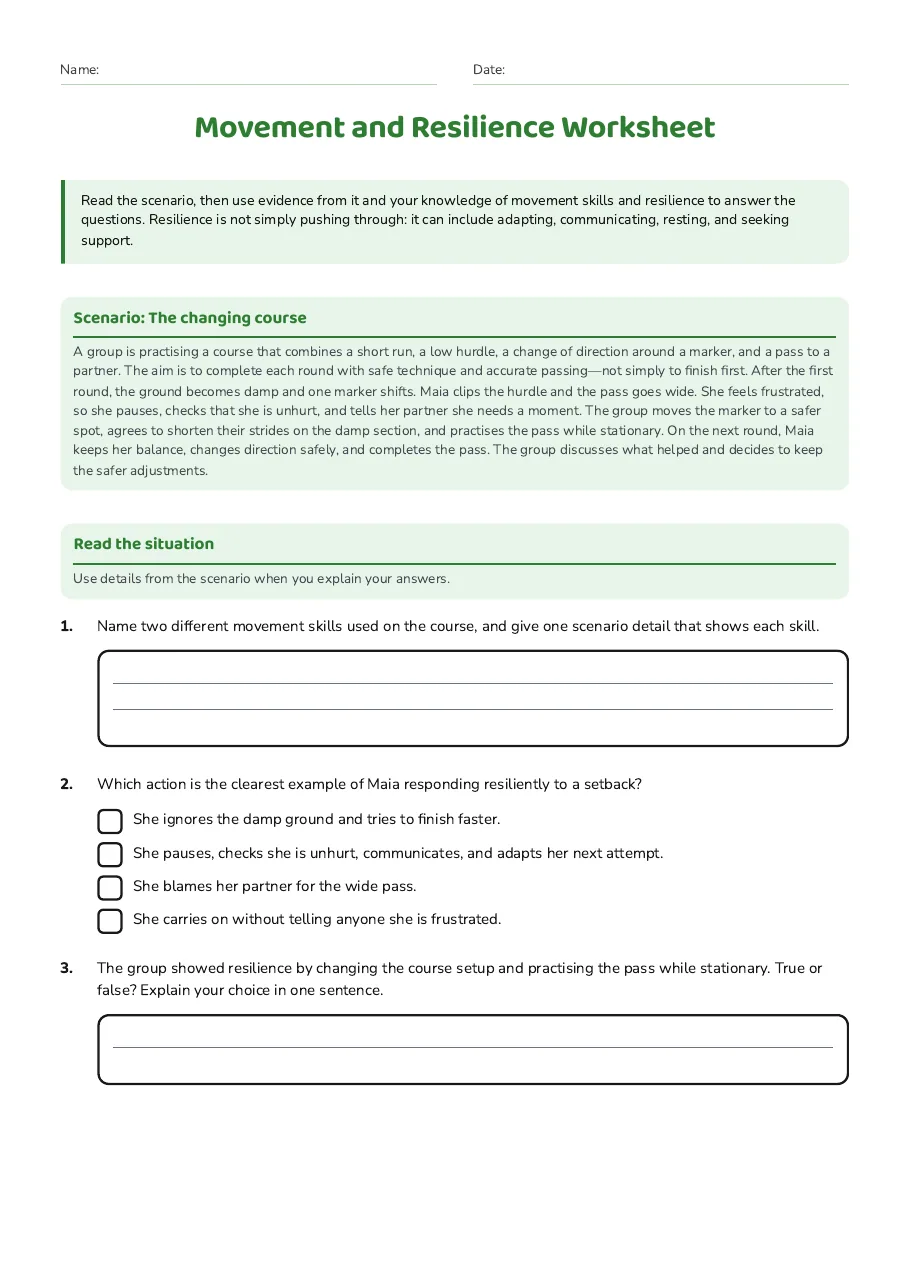
Movement and Resilience Worksheet
Scenario: The changing course
A group is practising a course that combines a short run, a low hurdle, a change of direction around a marker, and a pass to a partner. The aim is to complete each round with safe technique and accurate passing—not simply to finish first. After the first round, the ground becomes damp and one marker shifts. Maia clips the hurdle and the pass goes wide. She feels frustrated, so she pauses, checks that she is unhurt, and tells her partner she needs a moment. The group moves the marker to a safer spot, agrees to shorten their strides on the damp section, and practises the pass while stationary. On the next round, Maia keeps her balance, changes direction safely, and completes the pass. The group discusses what helped and decides to keep the safer adjustments.
Read the situation
Use details from the scenario when you explain your answers.
- She ignores the damp ground and tries to finish faster.
- She pauses, checks she is unhurt, communicates, and adapts her next attempt.
- She blames her partner for the wide pass.
- She carries on without telling anyone she is frustrated.
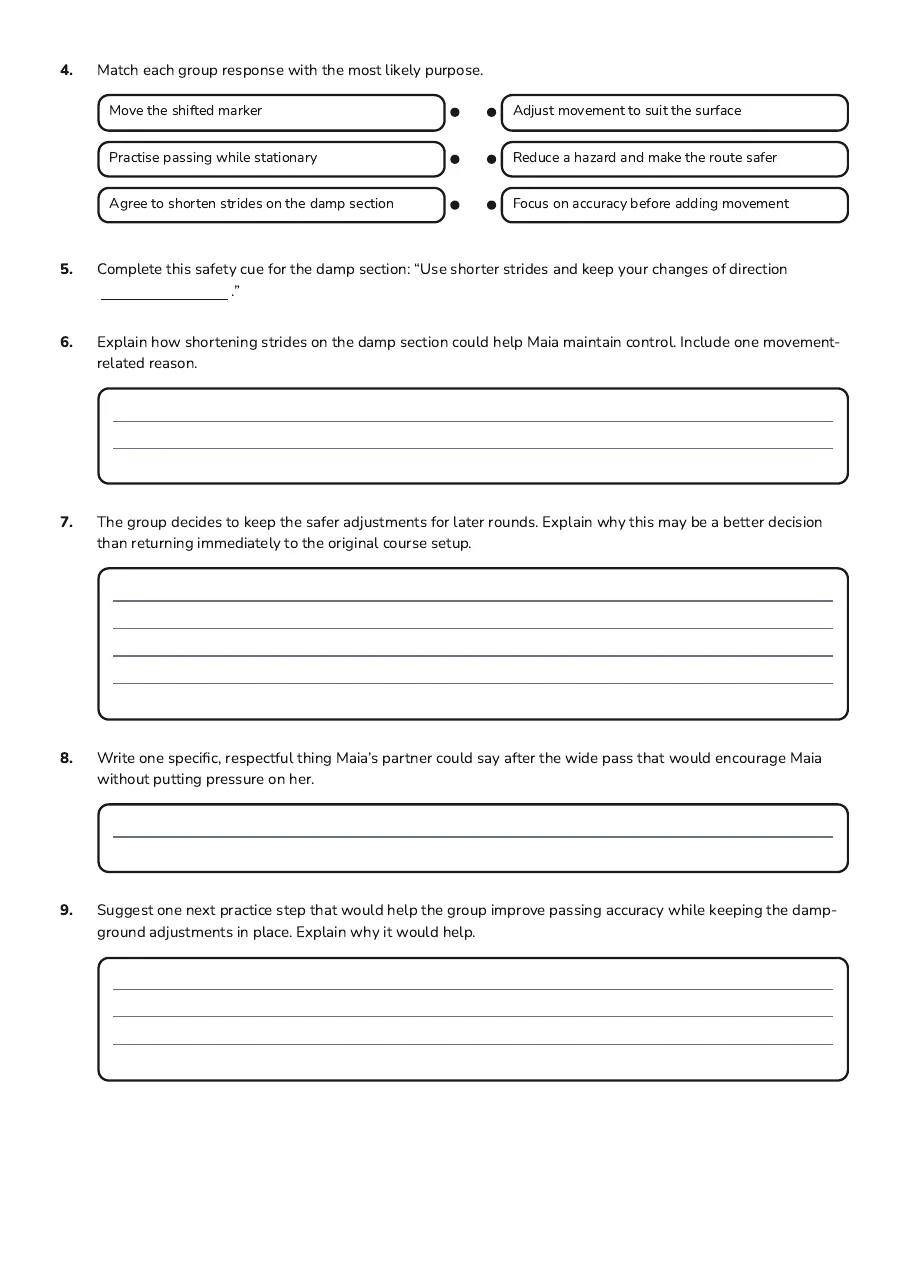
- Move the shifted marker
- Practise passing while stationary
- Agree to shorten strides on the damp section
- Adjust movement to suit the surface
- Reduce a hazard and make the route safer
- Focus on accuracy before adding movement
2 printable pages
Page 1
Page 2
About This Worksheet
Free in Kuraplan
Sign up free, grab the PDF, and customize it for your class.
Print-Ready
Formatted for standard paper. Clean layout, easy to read.
AI-Generated
Created with Kuraplan's AI, designed for real classroom use.
For Teachers & Parents
Use in classrooms, for homework, tutoring, or homeschool.
Need a custom version of this worksheet?
Kuraplan's AI generates custom worksheets in seconds — differentiated for every learner, aligned to your curriculum.
Generate Custom Worksheets — FreeMore PE Worksheets
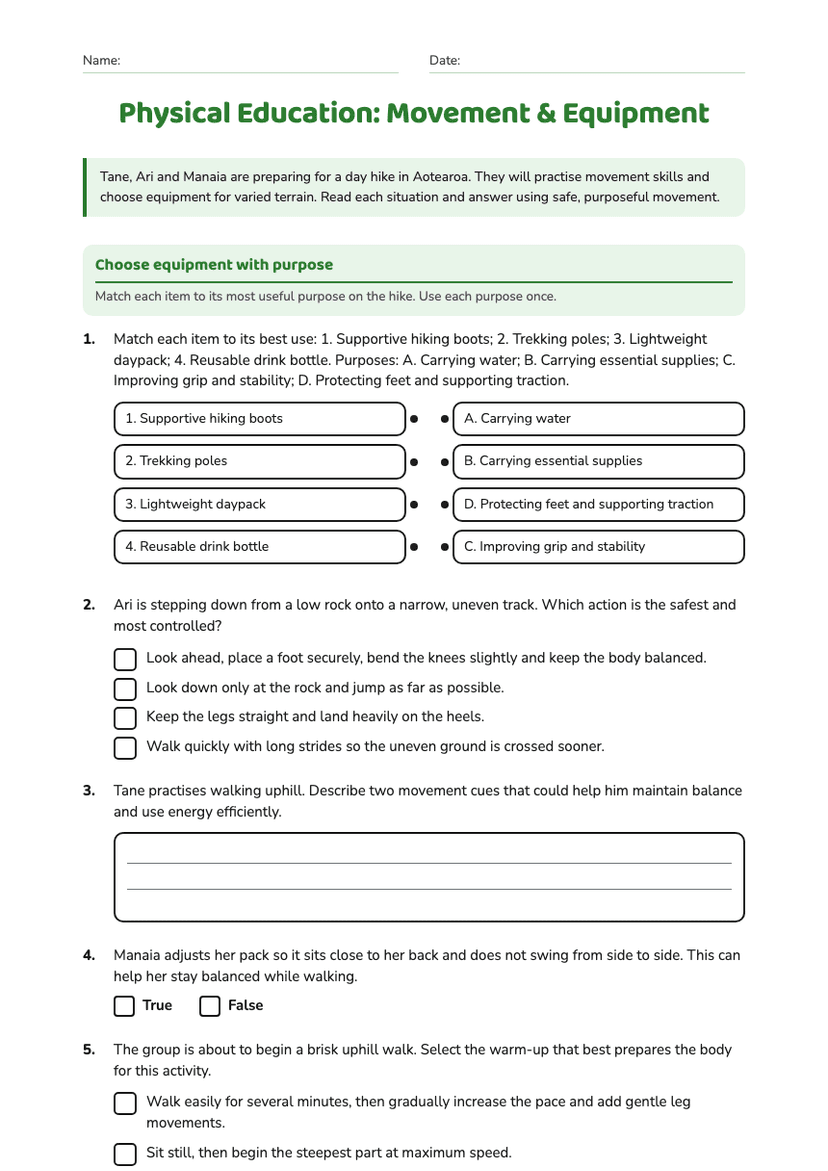
Physical Education: Movement & Equipment
Free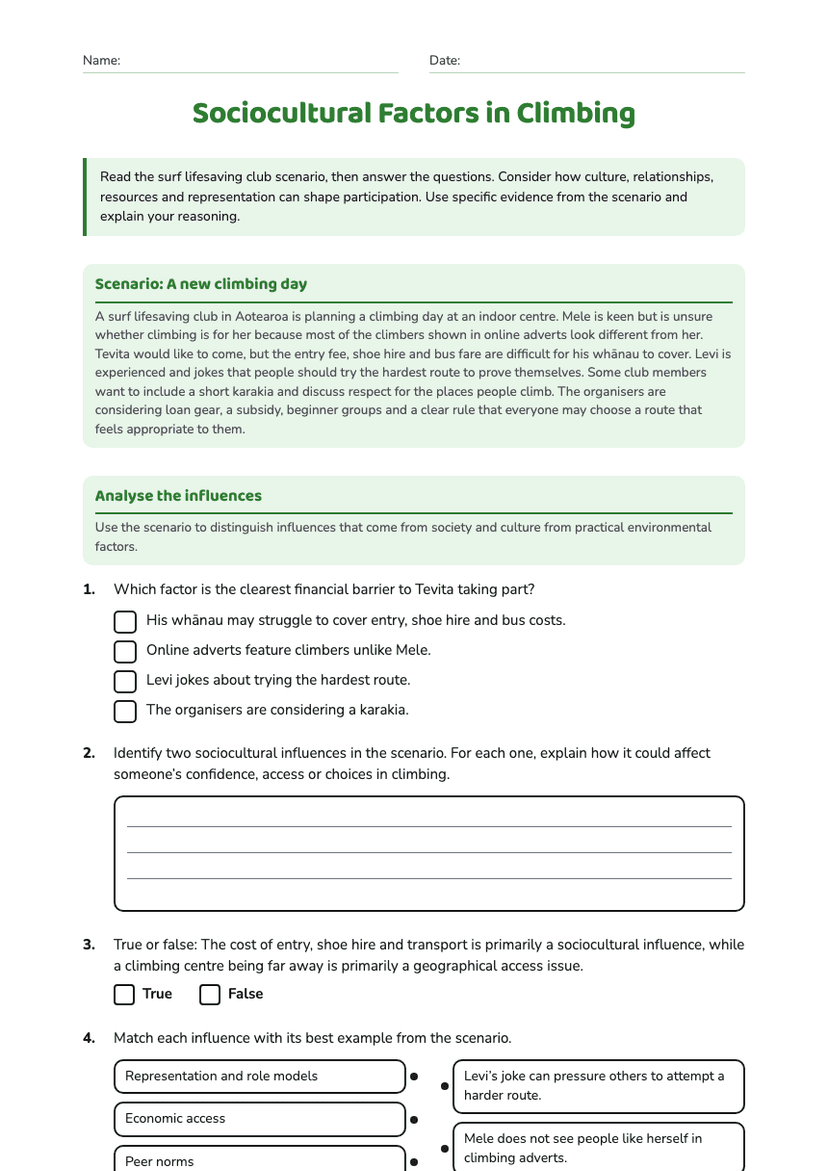
Sociocultural Factors in Climbing
Free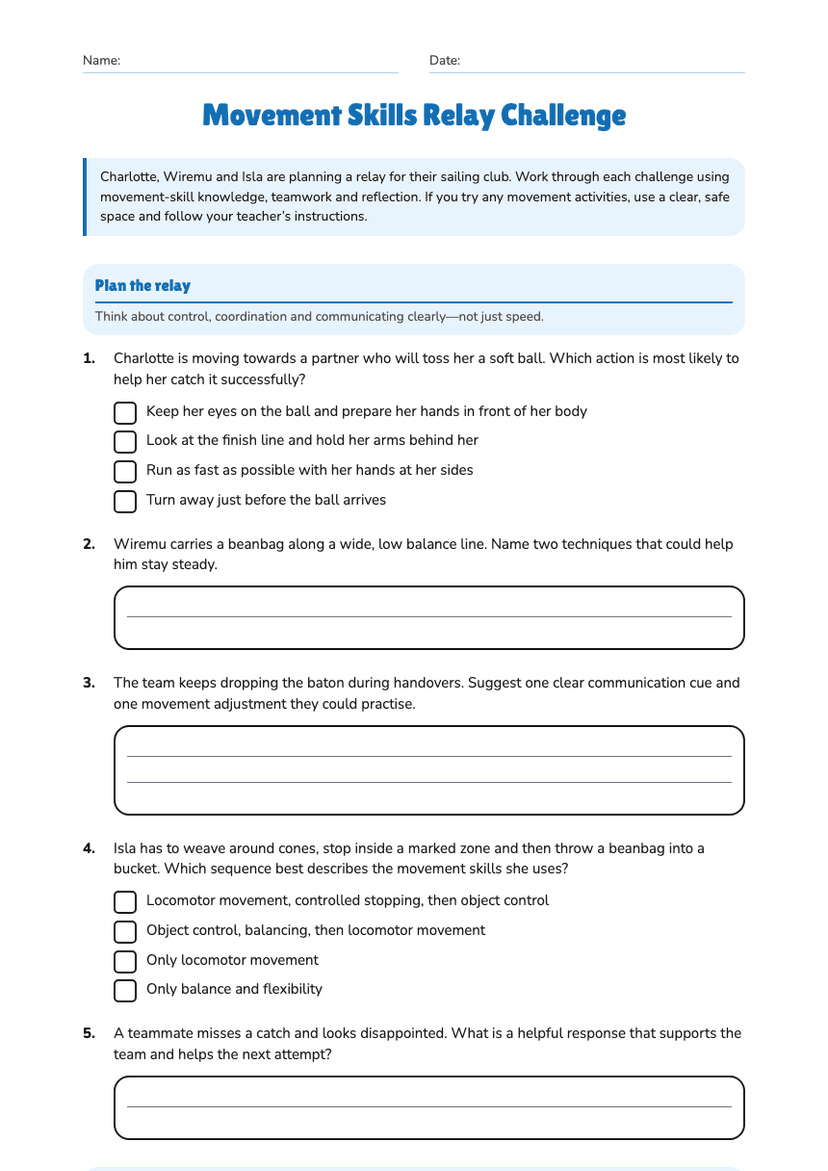
Movement Skills Relay Challenge
Free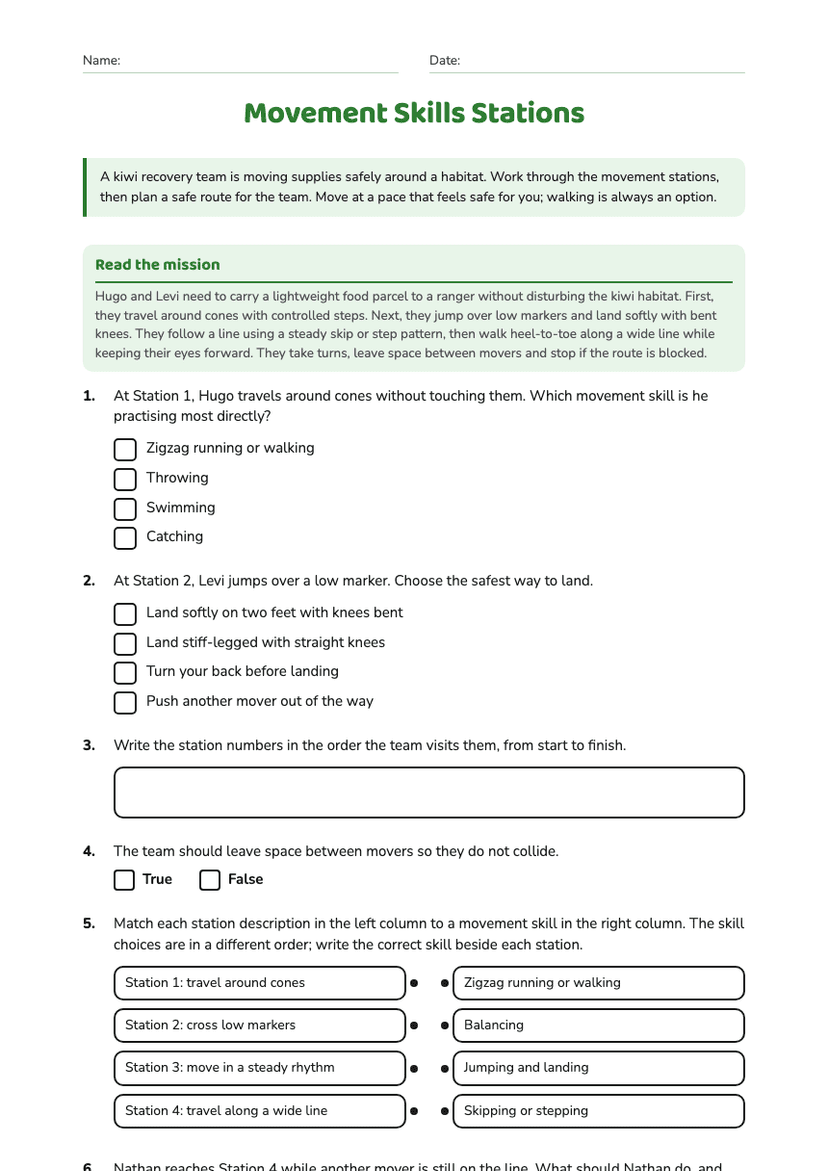
Movement Skills Stations
Free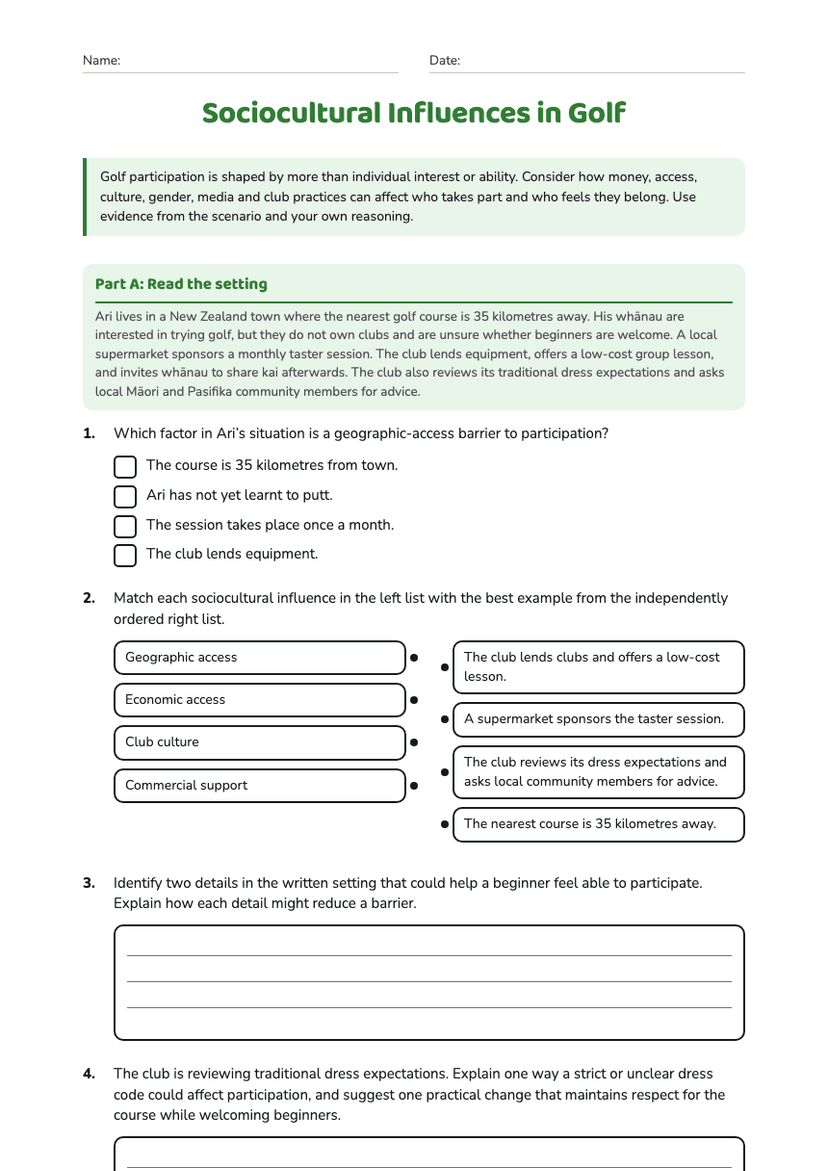
Sociocultural Influences in Golf
Free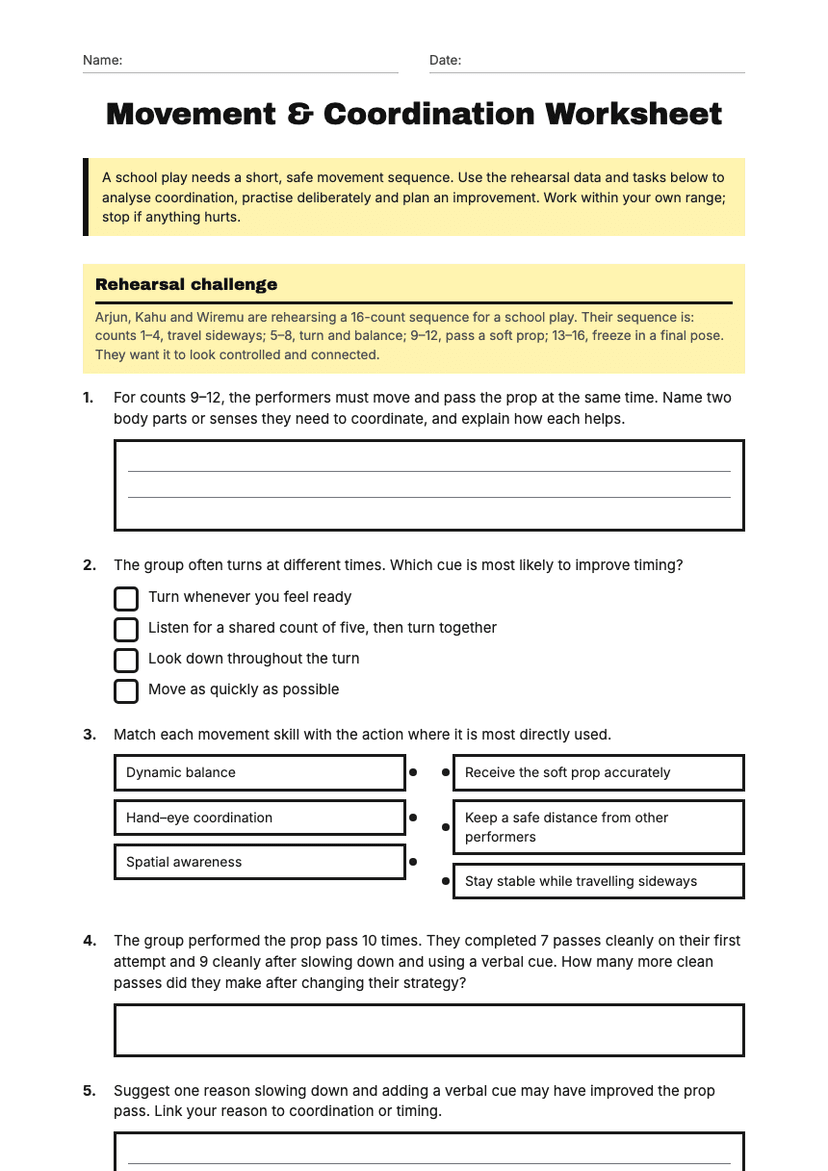
Movement & Coordination Worksheet
Free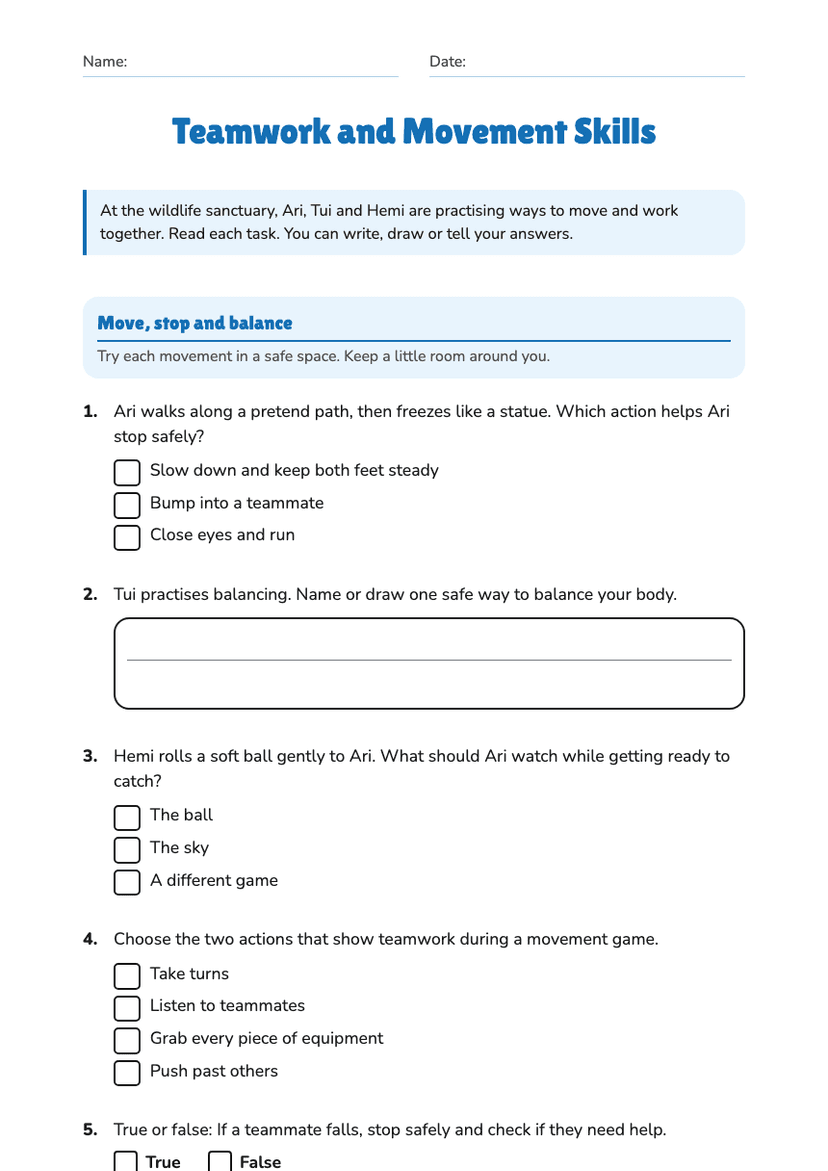
Teamwork and Movement Skills
Free