Pasifika Diet & Health Choices
A free health worksheet ready for your classroom. Open in Kuraplan to grab the print-ready PDF, customize it for your students, or generate a fresh version in seconds.
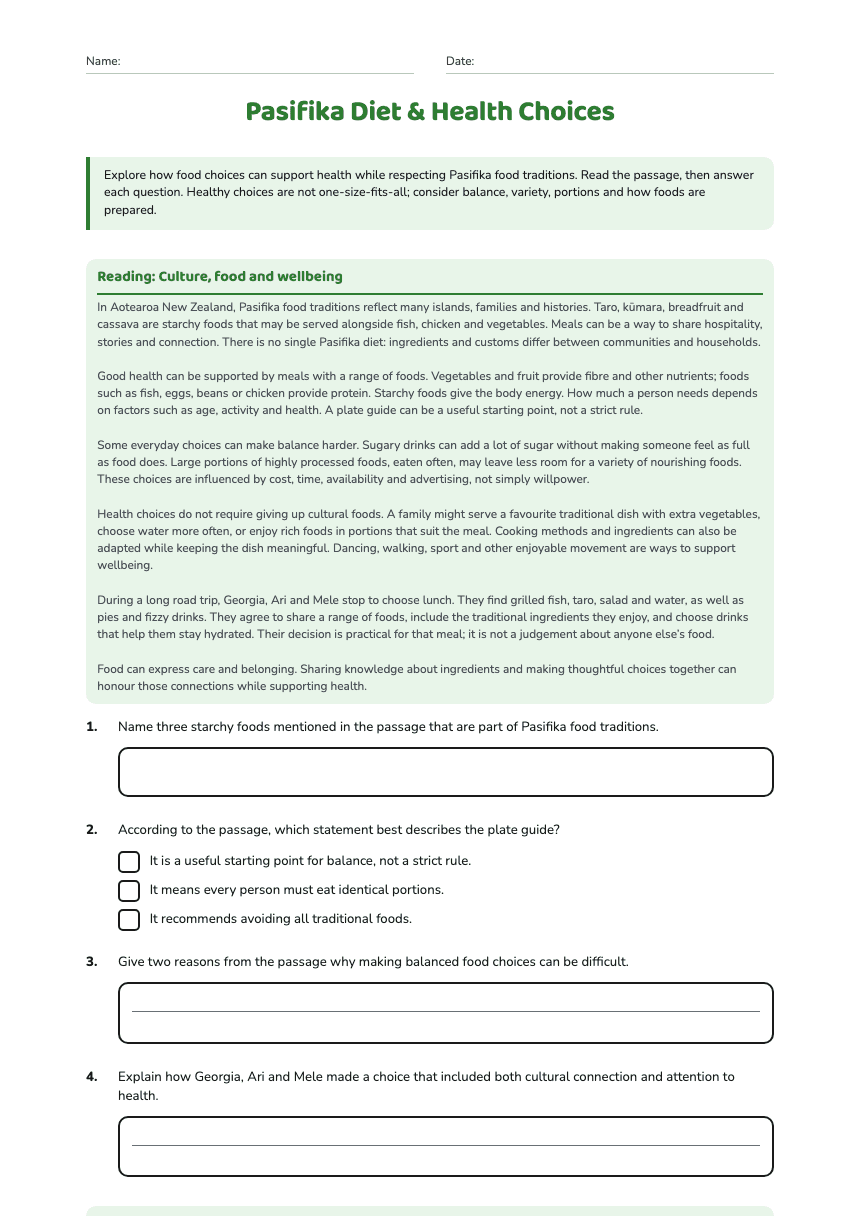
Pasifika Diet & Health Choices
Reading: Culture, food and wellbeing
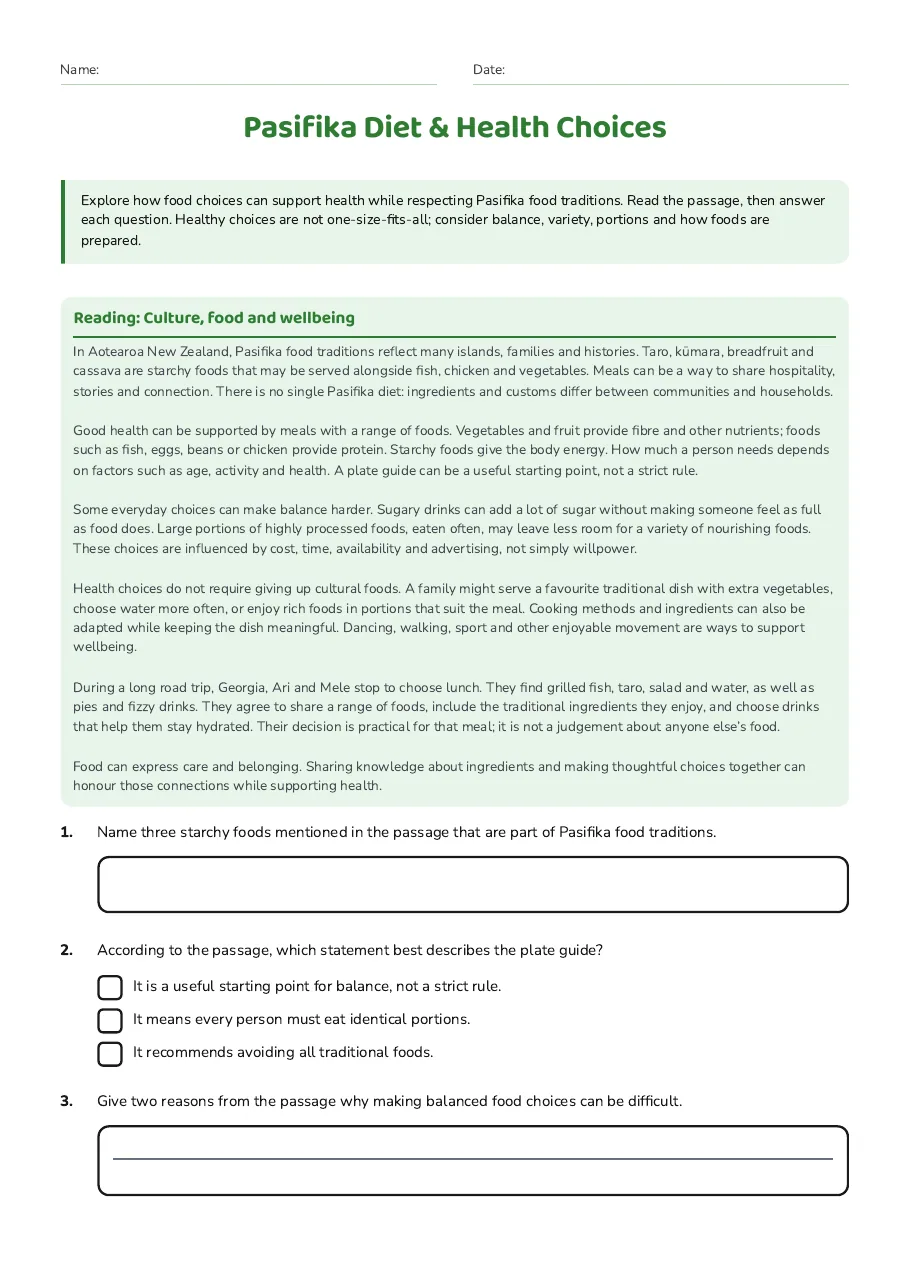
In Aotearoa New Zealand, Pasifika food traditions reflect many islands, families and histories. Taro, kūmara, breadfruit and cassava are starchy foods that may be served alongside fish, chicken and vegetables. Meals can be a way to share hospitality, stories and connection. There is no single Pasifika diet: ingredients and customs differ between communities and households. Good health can be supported by meals with a range of foods. Vegetables and fruit provide fibre and other nutrients; foods such as fish, eggs, beans or chicken provide protein. Starchy foods give the body energy. How much a person needs depends on factors such as age, activity and health. A plate guide can be a useful starting point, not a strict rule. Some everyday choices can make balance harder. Sugary drinks can add a lot of sugar without making someone feel as full as food does. Large portions of highly processed foods, eaten often, may leave less room for a variety of nourishing foods. These choices are influenced by cost, time, availability and advertising, not simply willpower. Health choices do not require giving up cultural foods. A family might serve a favourite traditional dish with extra vegetables, choose water more often, or enjoy rich foods in portions that suit the meal. Cooking methods and ingredients can also be adapted while keeping the dish meaningful. Dancing, walking, sport and other enjoyable movement are ways to support wellbeing. During a long road trip, Georgia, Ari and Mele stop to choose lunch. They find grilled fish, taro, salad and water, as well as pies and fizzy drinks. They agree to share a range of foods, include the traditional ingredients they enjoy, and choose drinks that help them stay hydrated. Their decision is practical for that meal; it is not a judgement about anyone else’s food. Food can express care and belonging. Sharing knowledge about ingredients and making thoughtful choices together can honour those connections while supporting health.
- It is a useful starting point for balance, not a strict rule.
- It means every person must eat identical portions.
- It recommends avoiding all traditional foods.
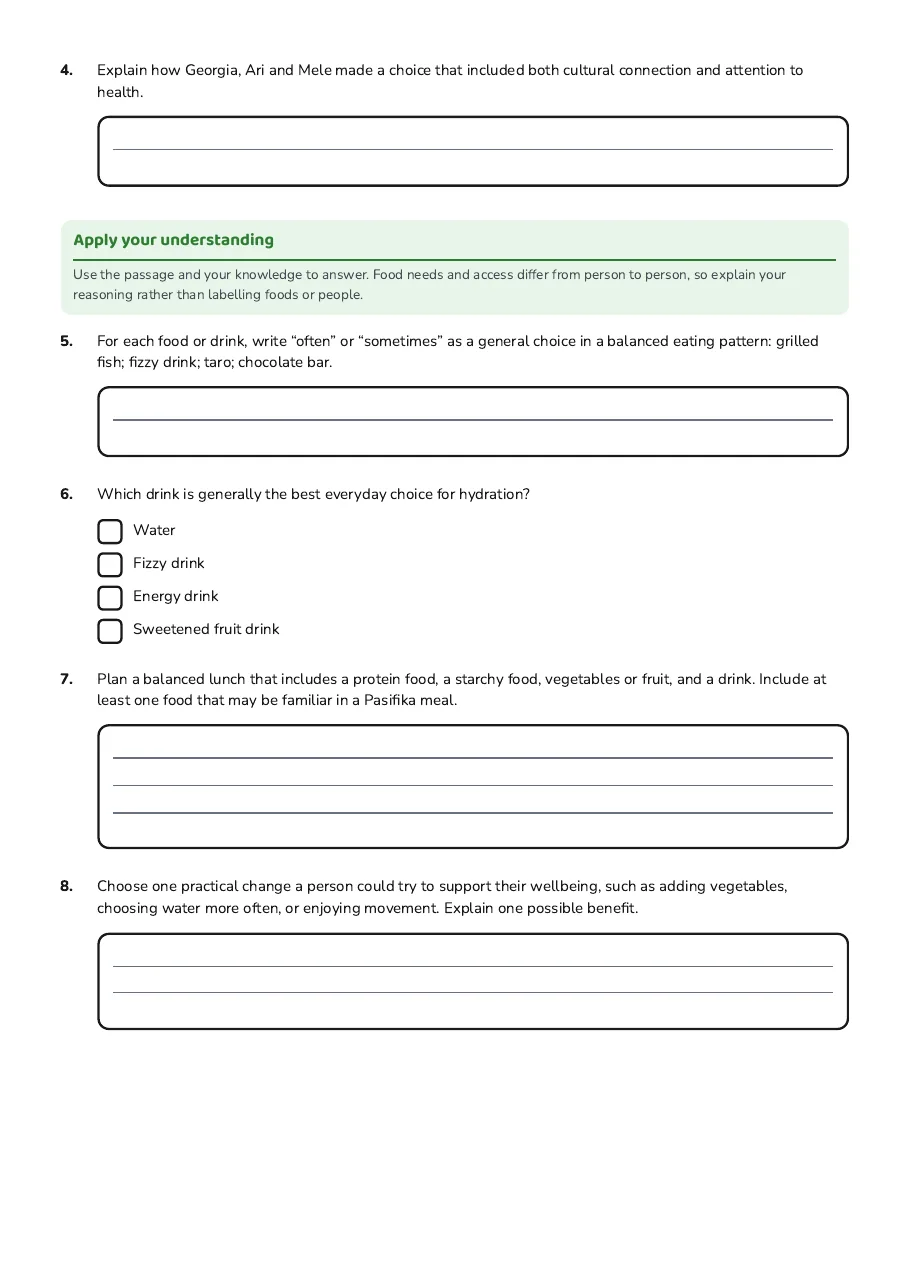
Apply your understanding
Use the passage and your knowledge to answer. Food needs and access differ from person to person, so explain your reasoning rather than labelling foods or people.
- Water
- Fizzy drink
- Energy drink
- Sweetened fruit drink
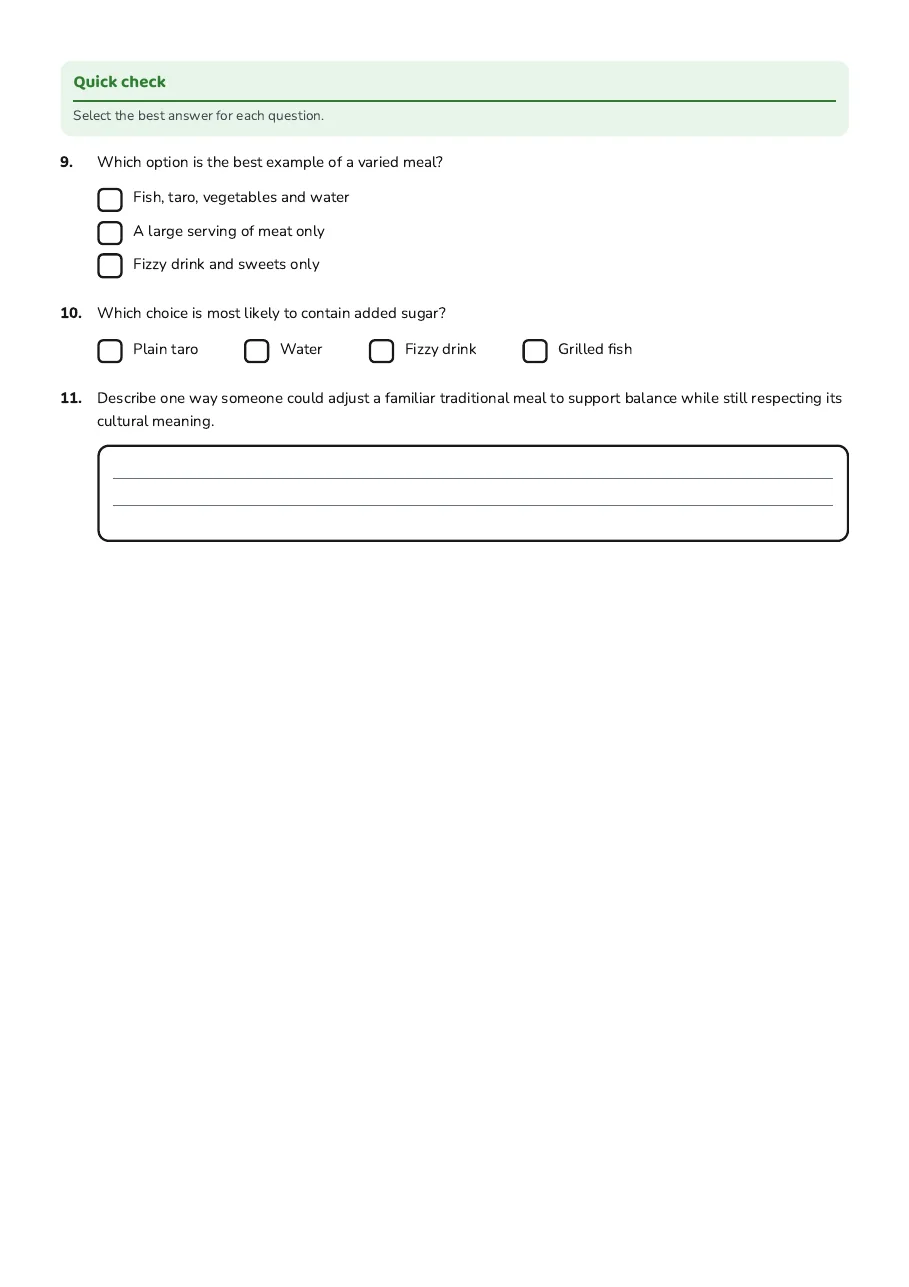
Quick check
Select the best answer for each question.
- Fish, taro, vegetables and water
- A large serving of meat only
- Fizzy drink and sweets only
- Plain taro
- Water
- Fizzy drink
- Grilled fish
3 printable pages
Page 1
Page 2
Page 3
About This Worksheet
Free in Kuraplan
Sign up free, grab the PDF, and customize it for your class.
Print-Ready
Formatted for standard paper. Clean layout, easy to read.
AI-Generated
Created with Kuraplan's AI, designed for real classroom use.
For Teachers & Parents
Use in classrooms, for homework, tutoring, or homeschool.
Need a custom version of this worksheet?
Kuraplan's AI generates custom worksheets in seconds — differentiated for every learner, aligned to your curriculum.
Generate Custom Worksheets — FreeMore Health Worksheets
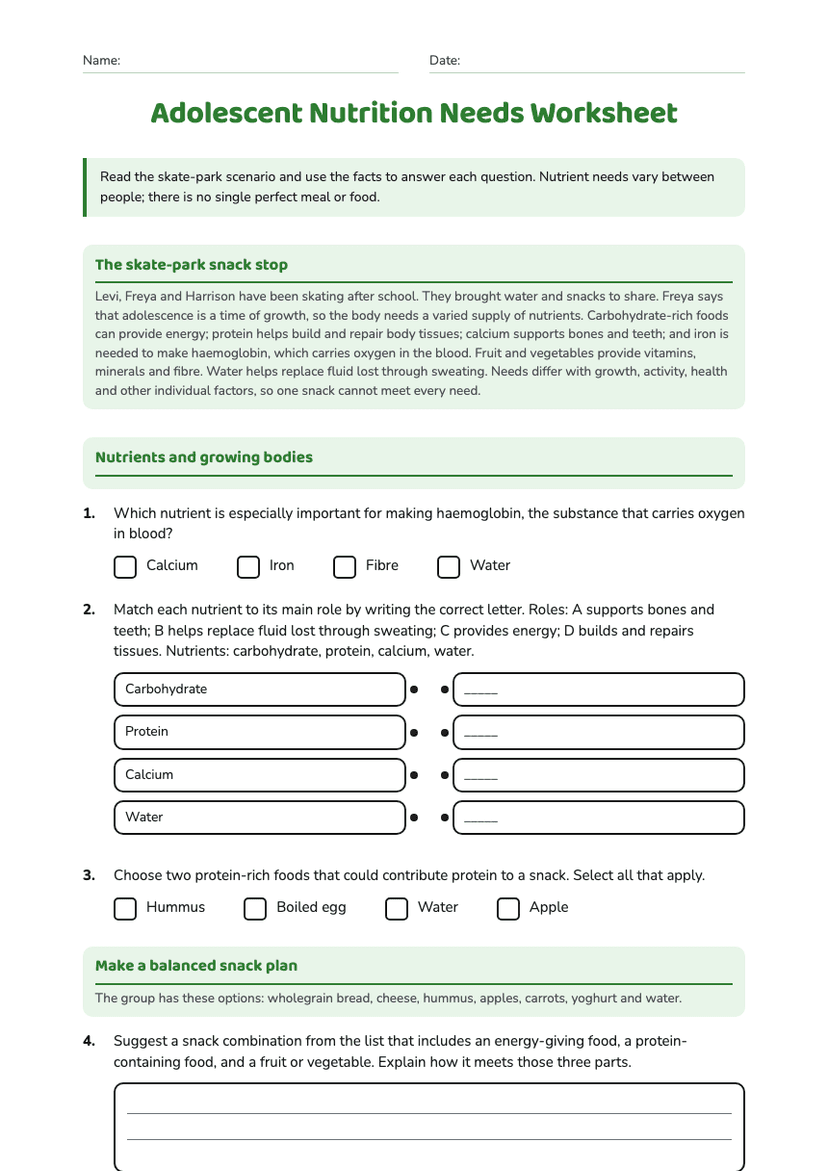
Adolescent Nutrition Needs Worksheet
Free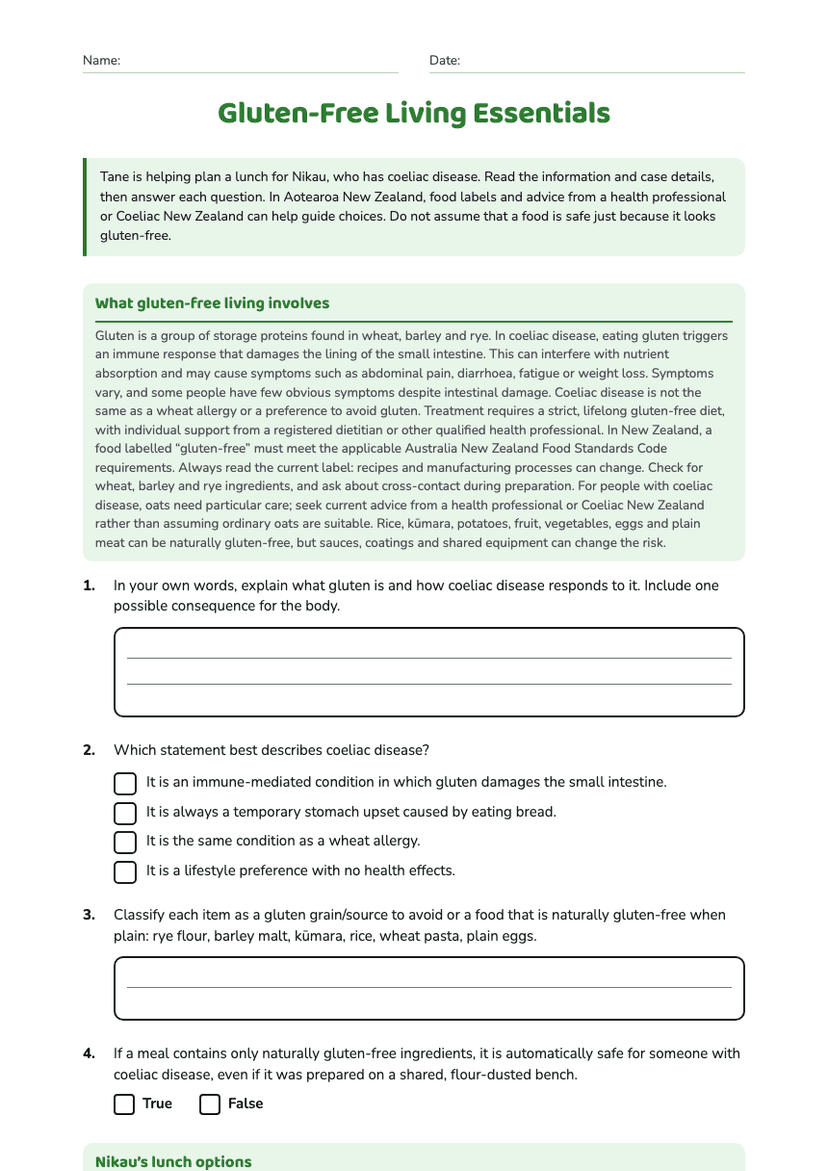
Gluten-Free Living Essentials
Free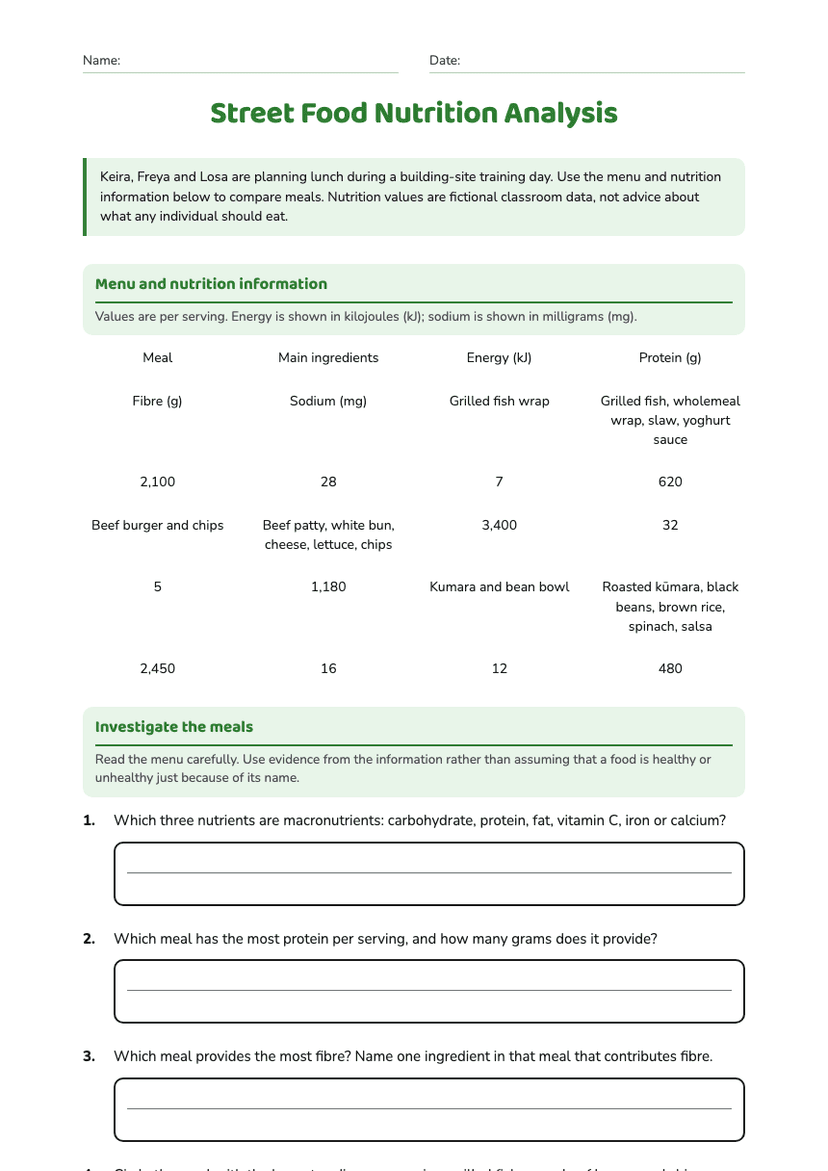
Street Food Nutrition Analysis
Free
Healthy Eating Essentials
Free
Nutrition Basics Worksheet
Free
Food Groups Sorting Activity
Free
Vegetarian vs Meat Nutrition
Free