Pornography, Media Literacy and Healthy Relationships
A free health worksheet ready for your classroom. Open in Kuraplan to grab the print-ready PDF, customize it for your students, or generate a fresh version in seconds.
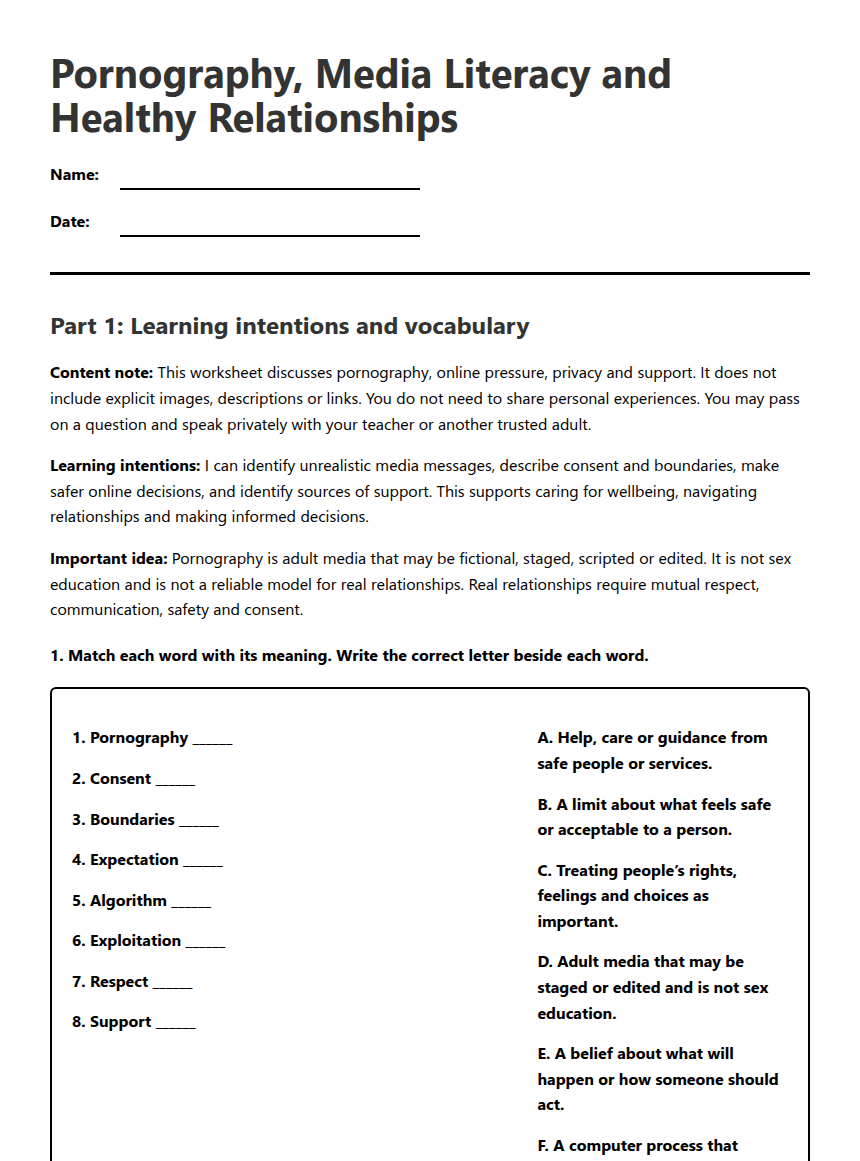
Pornography, Media Literacy and Healthy Relationships
Part 1: Learning intentions and vocabulary
Content note: This worksheet discusses pornography, online pressure, privacy and support. It does not include explicit images, descriptions or links. You do not need to share personal experiences. You may pass on a question and speak privately with your teacher or another trusted adult.
Learning intentions: I can identify unrealistic media messages, describe consent and boundaries, make safer online decisions, and identify sources of support. This supports caring for wellbeing, navigating relationships and making informed decisions.
Important idea: Pornography is adult media that may be fictional, staged, scripted or edited. It is not sex education and is not a reliable model for real relationships. Real relationships require mutual respect, communication, safety and consent.
Part 2: Media literacy and safer decisions
Part 3: Reflection and support
Getting support in Aotearoa New Zealand: Talk to a trusted adult, school counsellor or kaiako. Netsafe provides online safety advice and reporting support. Youthline offers support for young people. If someone is in immediate danger, call 111. You deserve help, safety and respect.
Teacher answer guide and safeguarding notes
Vocabulary answers: 1-D, 2-G, 3-B, 4-E, 5-F, 6-H, 7-C, 8-A.
Media literacy: Question 2 answers are the first, second and third statements, while the fourth and fifth are protective or accurate principles. For Question 3, accept answers that replace pressure or unrealistic expectations with mutual consent, communication, respect, privacy and realistic understanding of media production.
Scenario answers: Question 4: the second option. Question 5: the first, second and third options. Question 7: “leave/report/block; forward; safe; trusted adult.” Accept “stop engaging” or similar wording for the second blank. Question 8 should include a clear refusal, ending the conversation, blocking or reporting if safe, and seeking support. Never blame the recipient.
Safeguarding: Do not ask students to disclose whether they have viewed pornography or received sexual content. Avoid showing or requesting explicit material. Remind students not to forward content. If a student discloses harm, respond calmly, thank them, avoid promises of secrecy, follow school safeguarding procedures, and involve the appropriate pastoral or safeguarding lead. Save evidence only when safe and according to school policy. Check support information is current before teaching.
About This Worksheet
Free in Kuraplan
Sign up free, grab the PDF, and customize it for your class.
Print-Ready
Formatted for standard paper. Clean layout, easy to read.
AI-Generated
Created with Kuraplan's AI, designed for real classroom use.
For Teachers & Parents
Use in classrooms, for homework, tutoring, or homeschool.
Need a custom version of this worksheet?
Kuraplan's AI generates custom worksheets in seconds — differentiated for every learner, aligned to your curriculum.
Generate Custom Worksheets — FreeMore Health Worksheets
Healthy Relationships Characteristics
Free
Cyberbullying Prevention Strategies
Free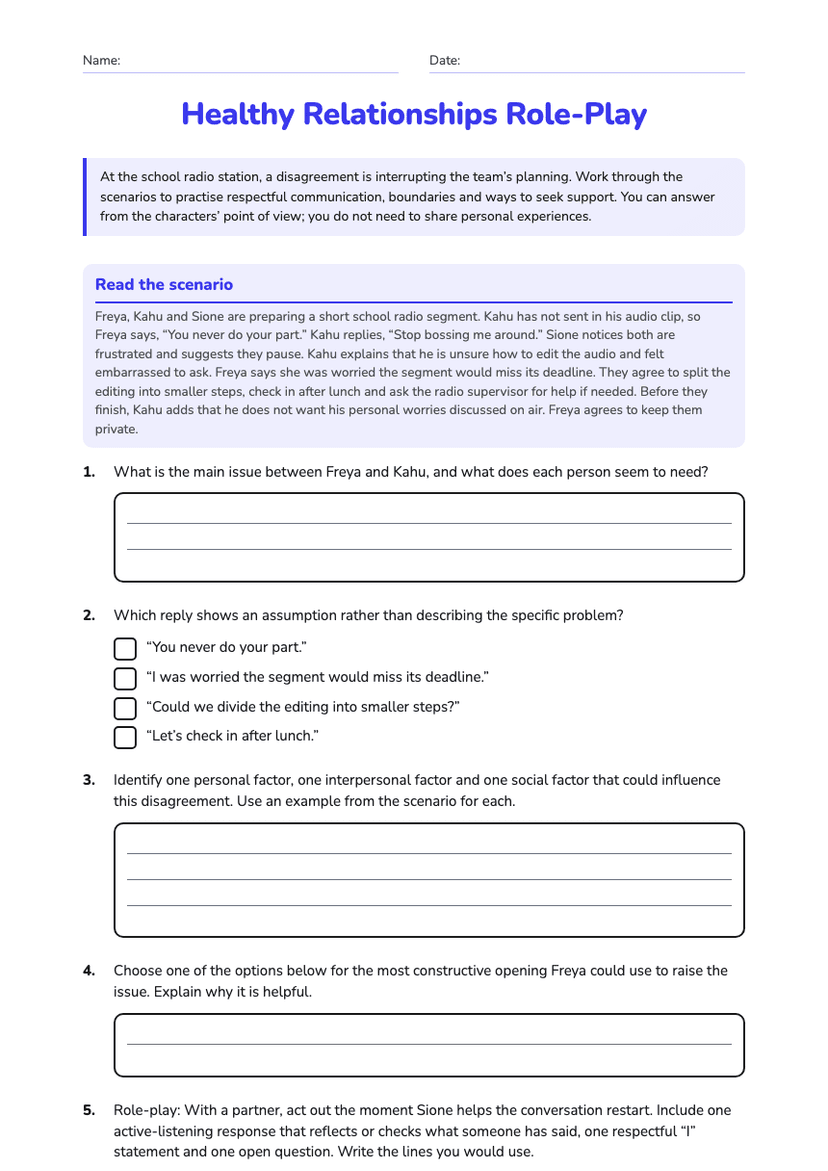
Healthy Relationships Role-Play
Free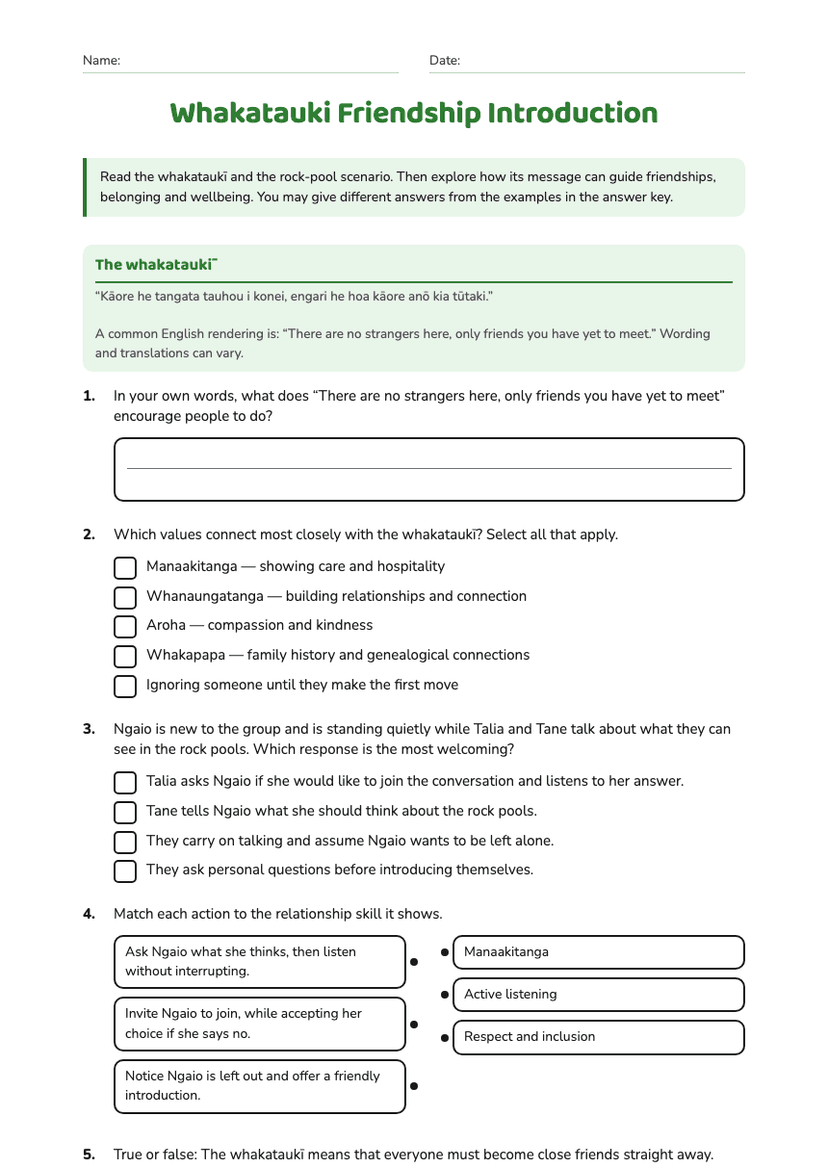
Whakatauki Friendship Introduction
Free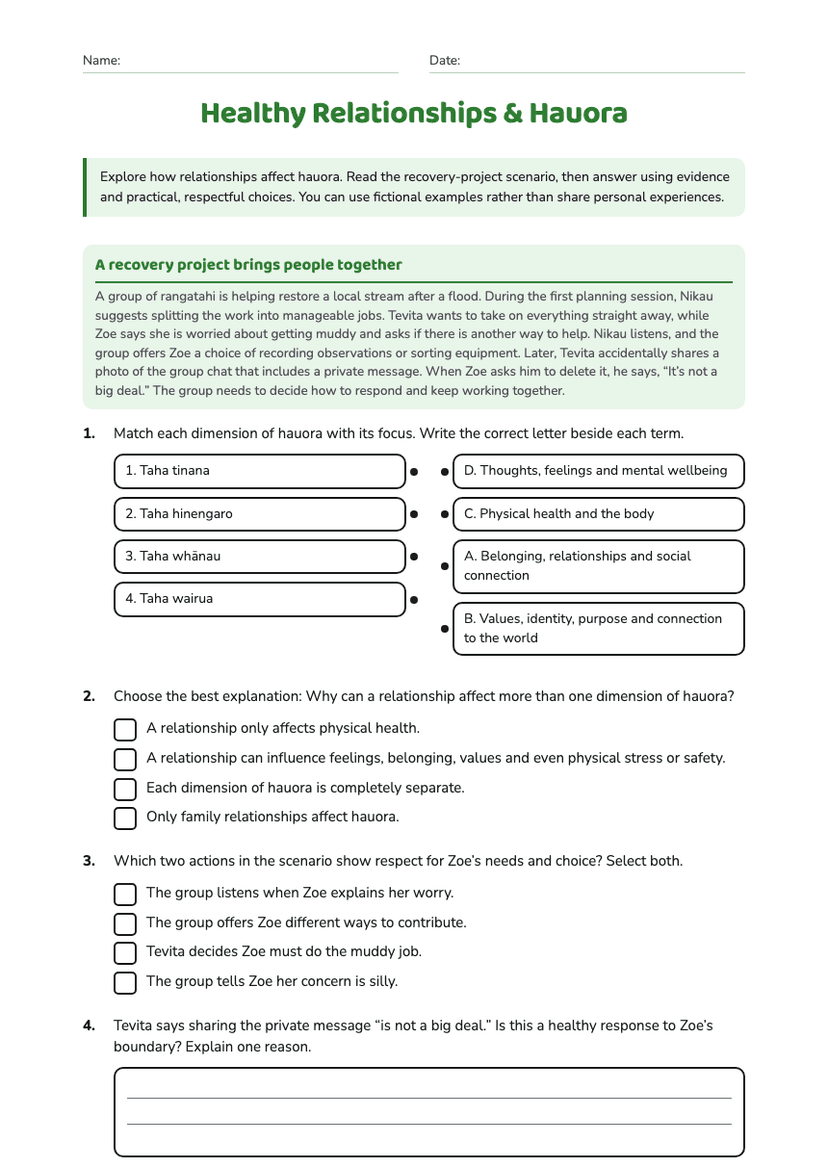
Healthy Relationships & Hauora
Free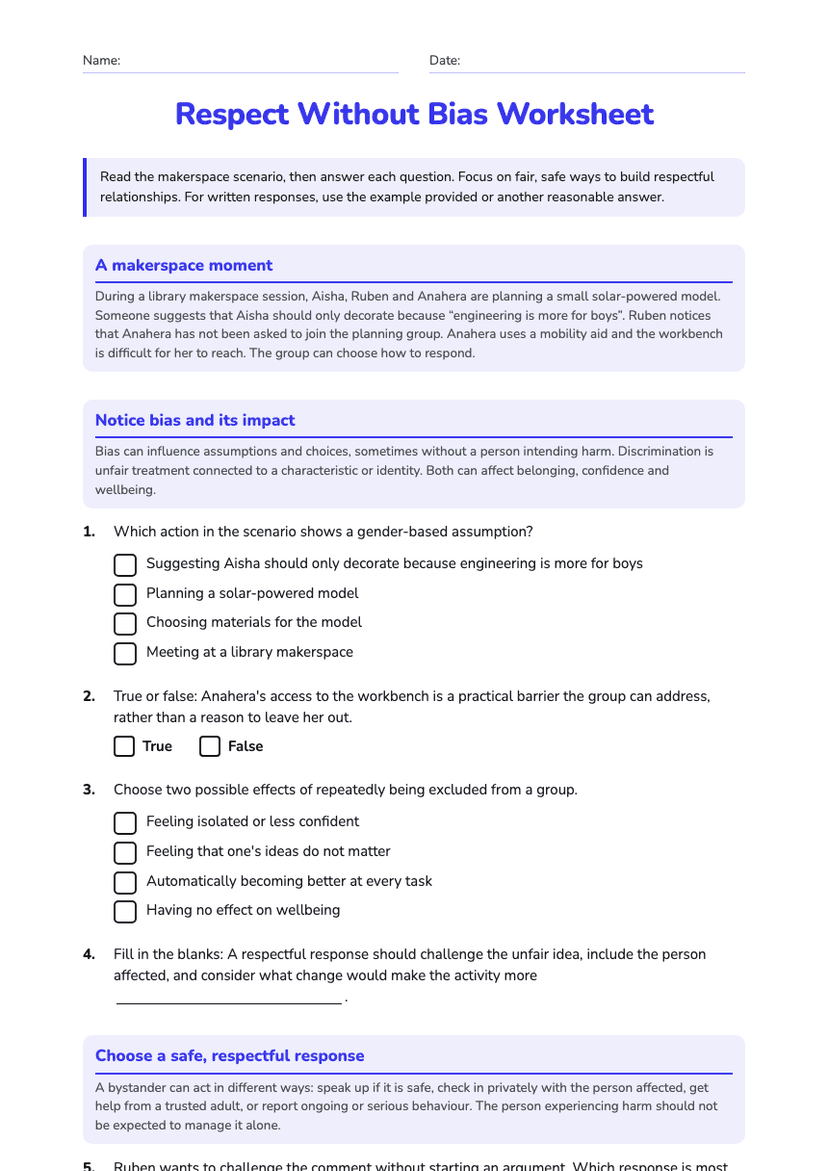
Respect Without Bias Worksheet
Free
Inclusion Reflection Worksheet
Free